Project Info — see federal construction definitions and cost guidance HUD cost data
Apollo: Complete Project Info & Build Overview
Apollo residential rebuild — a full-demolition rebuild and new residential construction project that was budgeted, planned, and delivered on time. See the Vernon project case study for a similar full-rebuild example.

Project Info: Apollo Residential Rebuild
The project info for the Apollo build tells the complete story of a full-demolition residential reconstruction — from land acquisition through final handover. In short, this project info covers a client-purchased property where the existing structure was demolished and a brand-new 3,000 sq ft double-story home was designed and built from the ground up.
The Apollo project gives you every detail you need — budget breakdowns, a project summary, timeline milestones, team roles, and a real client review. There is no reason to look elsewhere. Everything is documented here so you understand exactly how the Apollo project was planned, executed, and delivered.
Specifically, the project info includes three core areas: Budget, Project Summary, and Time Duration. Together, they give you a transparent, end-to-end picture of how this build came to life.
Core Project Info at a Glance

Budget Breakdown
The Apollo project budget covers two primary cost categories. Understanding both helps clients plan accurately for a rebuild of this scale.
-
✓
Materials: $XXXXX -
✓
Labor: $XXXX
In addition, the budget was tracked against milestones at each construction phase to avoid cost overruns.

Summary of Project
The project summary explains the vision, scope, and design decisions that shaped the Moonrise ADU project from day one.
-
✓
Existing house was demolished and fully rebuilt to modern standards. -
✓
Client purchased the property specifically to construct a purpose-built new space. -
✓
Architect XYZ designed the home — a 3,000 sq ft double-story building constructed to specification.

Time Duration
The project timeline was divided into two distinct phases. Each phase had defined milestones to keep work on schedule.
-
✓
Demolition & Removal: XX Days -
✓
Construction: X Days
Client Review
“Timely completed. Quality work!”
What Is Project Info — and Why Does It Matter?
Project info is the structured record of every key decision, cost, timeline, and outcome associated with a construction or development project. Specifically, it gives clients, contractors, and stakeholders a single point of reference for understanding what was built, how it was built, and what it cost.
For a demolition and rebuild project like Apollo, comprehensive project info is especially important. The scope is large. Consequently, small gaps in documentation can lead to budget misalignment or schedule slippage. Therefore, every phase — from the initial demolition through final construction sign-off — is captured here in detail.
In addition, clear project info builds trust. When a client can see exactly how their money was spent and exactly how long each phase took, the relationship between contractor and client becomes transparent — and that transparency is the foundation of quality work.
Phase-by-Phase Build Breakdown
The Apollo project moved through clearly defined phases. Each phase had its own deliverables, budget allocation, and timeline. Below is a detailed look at how the build progressed from start to finish. See the San Francisco rebuild case study for a comparable demolition-and-rebuild scope.
Phase 1 — Site Acquisition & Planning
The client purchased the property with a clear objective: remove the existing structure and replace it with a purpose-designed home. As a result, the planning phase focused on two priorities — securing the correct demolition permits and engaging Strattford residential rebuild Architects to produce the design brief.
Furthermore, the architectural design was developed in consultation with the client. The final specification called for a 3,000 sq ft double-story residence — maximizing the footprint of the lot while complying with California building codes.
Phase 2 — Demolition & Site Clearing
Demolition began once permits were in place. The existing structure was taken down safely, and all debris was removed from the site. This phase took XX days and was completed without incident.
Specifically, the demolition team focused on minimizing disruption to neighboring properties. In addition, recyclable materials were separated and diverted from landfill where possible — keeping the project environmentally responsible.
Phase 3 — New Construction
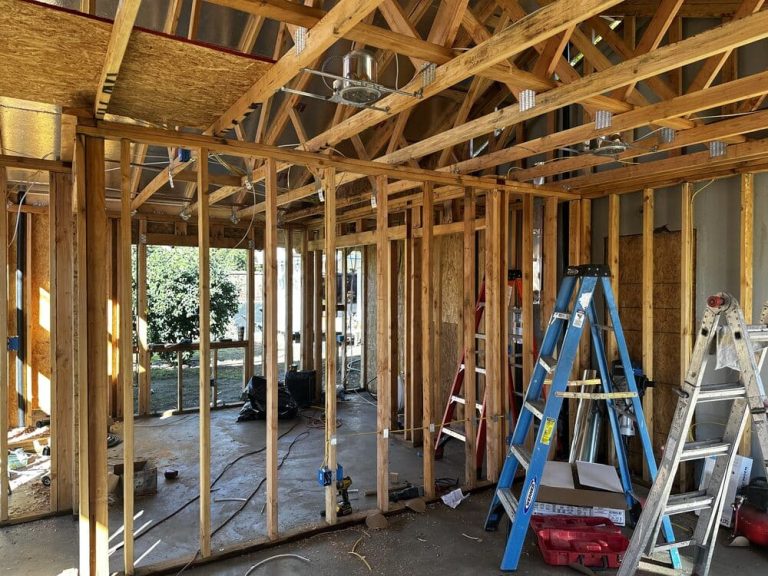
Construction commenced immediately after site clearance. The new double-story building was constructed to the Architect XYZ specification — 3,000 sq ft of living space across two levels. For another frame-to-finish timeline example, review the Ninth ADU project.
Similarly, the materials budget was managed against delivery schedules at each sub-phase to prevent delays. Labor was coordinated to overlap efficiently across trades — reducing idle time and keeping the project on track.
Understanding the Apollo residential rebuild budget
A clear budget is central to any project info record. For Apollo, costs were tracked across two primary categories: materials and labor. However, understanding what drives costs in each category helps future clients benchmark their own builds.
Materials Cost
Materials represent the largest share of the budget for a build of this scale. For example, a 3,000 sq ft double-story structure requires significant quantities of structural steel, concrete, timber framing, roofing materials, insulation, and finishing products. As a result, materials costs are planned early and locked against supplier quotes before construction begins.
Labor Cost
Labor costs cover all trade teams involved in the build — demolition crew, foundation specialists, framers, roofers, electricians, plumbers, and finishing trades. In contrast to materials, labor costs are more variable. Therefore, tight scheduling and phased trade management are essential to keeping labor spend within budget.
Above all, the Apollo project delivered on budget. Both materials and labor costs were managed within the agreed figures — a result the client specifically acknowledged in their review.
Our Working Process — Apollo ADU project — Apollo ADU project — Apollo ADU project — Apollo ADU project — Apollo ADU project — Apollo ADU project — Apollo ADU project — Apollo ADU project — Apollo ADU project — Apollo ADU project
Every project we take on follows a structured working process. Consequently, clients always know where their project stands. The Apollo build is a strong example of how this process delivers results. Below are the key stages every project moves through.
-
Step 1 — Client Consultation & Site Assessment
We begin by listening. Specifically, we meet with the client to understand their goals, assess the site conditions, and identify any constraints — including zoning, setbacks, and existing infrastructure. Furthermore, this step defines the project scope before any design work begins.
- Step 2 — Architectural Design & Planning Approval Our architectural partners develop full design documentation. For Apollo, Architect XYZ created the complete plans for the 3,000 sq ft double-story structure. As a result, planning approvals and building permits were submitted with a comprehensive and accurate application package. For a deeper walkthrough, see our Attached ADU Designs: Smart Plans, Costs, Permits.
-
Step 3 — Demolition & Site Preparation
Demolition and removal happens safely and efficiently. In addition, we handle all waste disposal and site clearing — so the construction team starts with a clean, fully prepared site. This stage was completed in XX days for the Apollo project.
-
Step 4 — Construction & Trade Coordination
Construction is managed with precision. Consequently, each trade team — framers, roofers, electricians, plumbers, and finishers — works to a coordinated schedule. Similarly, materials are delivered on time to avoid idle periods. Progress is reported to the client at every milestone.
-
Step 5 — Final Inspection, Handover & Review
Before handover, we conduct a thorough inspection against the original specification. Any outstanding items are resolved immediately. Above all, the client’s satisfaction is the final measure of success — as the Apollo client confirmed: “Timely completed. Quality work!”
Frequently Asked Questions About Project Info
What does project info typically include for a residential build?
Project info for a residential build typically includes the project summary (scope and design), a budget breakdown by cost category (materials and labor), a timeline with phase-by-phase durations, the architect or design team credited, and a client review or outcome statement. For the Apollo project, all of these elements are documented on this page.
How long does a demolition and rebuild project typically take?
Duration depends on the size and complexity of the build. For the Apollo project specifically, the timeline was divided into a demolition and removal phase (XX days) and a construction phase (X days). As a result, total project duration was clearly defined before work began, giving the client full visibility of the schedule.
What is the difference between materials cost and labor cost in a project budget?
Materials cost covers all physical supplies — structural components, cladding, roofing, insulation, and finishes. Labor cost covers the wages of every trade team involved in the build. In contrast to materials, labor costs fluctuate with scheduling and site conditions. Consequently, both categories are tracked separately to identify where budget is being consumed at each stage.
Who designed the Apollo — ADU Project Case Study residential build?
Architect XYZ designed the Apollo build. The design produced a 3,000 sq ft double-story residential structure. Furthermore, the architectural documentation was used to obtain all required planning approvals and building permits before construction commenced. For a deeper walkthrough, see our Affordable ADU Construction: Costs, Permits, and Savings.
Apollo Project — Key Facts
What the Client Said
“Timely completed. Quality work!”
— Apollo Project Client
Client satisfaction is not an afterthought — it is the standard. Therefore, every project we deliver is managed against a clear project info framework that keeps budgets controlled, timelines on track, and communication transparent. Furthermore, the client review for Apollo speaks directly to the two outcomes every client expects: timeliness and quality.
Conclusion
The Apollo project is a clear example of what thorough project info makes possible. Specifically, having a documented budget, a defined timeline, a credited design team, and a client review in one place gives every stakeholder the context they need — before, during, and after construction. As a result, the project was delivered on time and within budget, earning direct client commendation.
Furthermore, this page demonstrates how complete project info transforms a construction case study from a vague summary into a genuinely useful reference. Whether you are a prospective client, a trade partner, or a planning professional, the project info documented here tells the full story of the Apollo build — nothing left out.
If you are planning a demolition and rebuild of your own, explore our working process above or get in touch. Above all, every great build starts with great project info — and we are here to guide you through every step.