
The 800 sq ft ADU cost in 2025 typically runs between $160,000 and $420,000 to design, permit, and fully construct an accessory dwelling unit of this size. However, the exact number you pay depends heavily on your location, the type of ADU you build, and the finish level you choose. This guide breaks down every single cost component — hard costs, soft costs, financing, and hidden fees — so you can budget with confidence instead of guessing.
An accessory dwelling unit (ADU) is a secondary, independent residence built on the same lot as a primary home. Because 800 square feet sits right at the size cap in many California cities and is roomy enough for a full one-bedroom layout, it has become one of the most searched-for ADU sizes nationwide. As a result, homeowners need a far more detailed cost picture than a single average figure can provide — which is exactly what this page delivers.
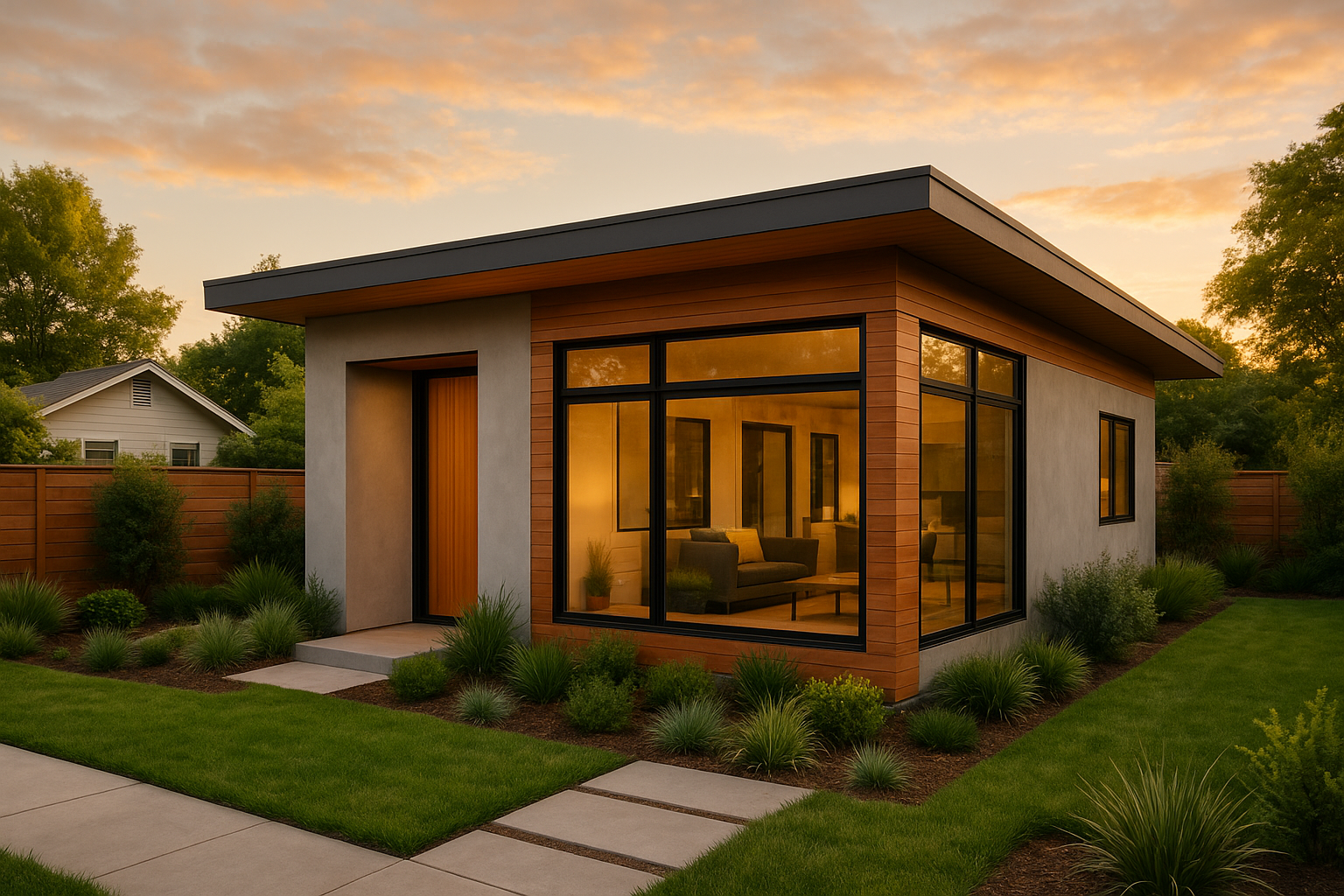
A well-designed 800 sq ft ADU can serve as a rental unit, guest suite, or multigenerational living space.
Quick Answer: 800 Sq Ft ADU Cost at a Glance
Detached ADU: $200,000–$420,000 | Attached ADU: $160,000–$300,000 | Garage Conversion: $60,000–$150,000 For a deeper walkthrough, see our 2-Car Garage ADU Conversion: Complete Planning Guide.
Typical cost per square foot: $200–$525, depending on region and finish tier.
What the 800 Sq Ft ADU Cost Actually Includes
Every ADU budget splits into two buckets: hard costs and soft costs. Hard costs cover the physical build — framing, roofing, plumbing, electrical, HVAC (heating, ventilation, and air conditioning), insulation, drywall, flooring, and fixtures. Soft costs, on the other hand, cover everything that happens before and alongside construction: architectural design, structural engineering, permits, soil testing, and project management.
For most projects, hard costs make up roughly 75 to 85 percent of the total budget. Soft costs, therefore, add another 10 to 20 percent on top of the construction contract. Many first-time ADU owners underestimate soft costs specifically, which is one of the most common reasons an 800 square foot ADU project runs over budget.
Hard Cost Breakdown for an 800 Sq Ft ADU
Soft Costs You Cannot Afford to Skip
Soft costs typically include architectural design fees ($8,000–$25,000), structural engineering ($2,500–$8,000), permit and plan-check fees ($3,000–$15,000), and utility connection fees ($5,000–$30,000). In addition, soil testing, title reports, and construction management fees can each add several thousand dollars more.
As a result, a realistic soft cost budget for an 800 sq ft ADU often lands between $25,000 and $80,000. Always add this figure to your contractor bid before comparing total project costs — otherwise you will be comparing incomplete numbers.
800 Sq Ft ADU Cost Per Square Foot, Explained
Because total budgets can feel abstract, it helps to look at the cost per square foot instead. Specifically, an 800 sq ft ADU generally falls into one of three pricing tiers, depending on the finish level you select.
Consequently, two 800 sq ft ADUs in the same city can cost $150,000 apart simply because of finish choices — flooring grade, countertop material, and appliance packages move the needle more than most homeowners expect.
How Location Changes Your 800 Square Foot ADU Budget
Location is, without question, the single most powerful variable in any ADU budget. Labor markets, material costs, and local impact fees vary dramatically from state to state and even from city to city within the same county.
In California, for example, an 800 sq ft detached ADU in Los Angeles or the Bay Area frequently costs $300,000 to $420,000 all-in. In contrast, a comparable unit in Texas, the Midwest, or the Southeast might land between $150,000 and $220,000. Therefore, national averages can be misleading — always obtain local contractor bids before finalizing your own 800 sq ft ADU cost estimate. For California homeowners specifically, the California Department of Housing and Community Development publishes updated ADU policy guidance and fee caps worth reviewing before you budget.
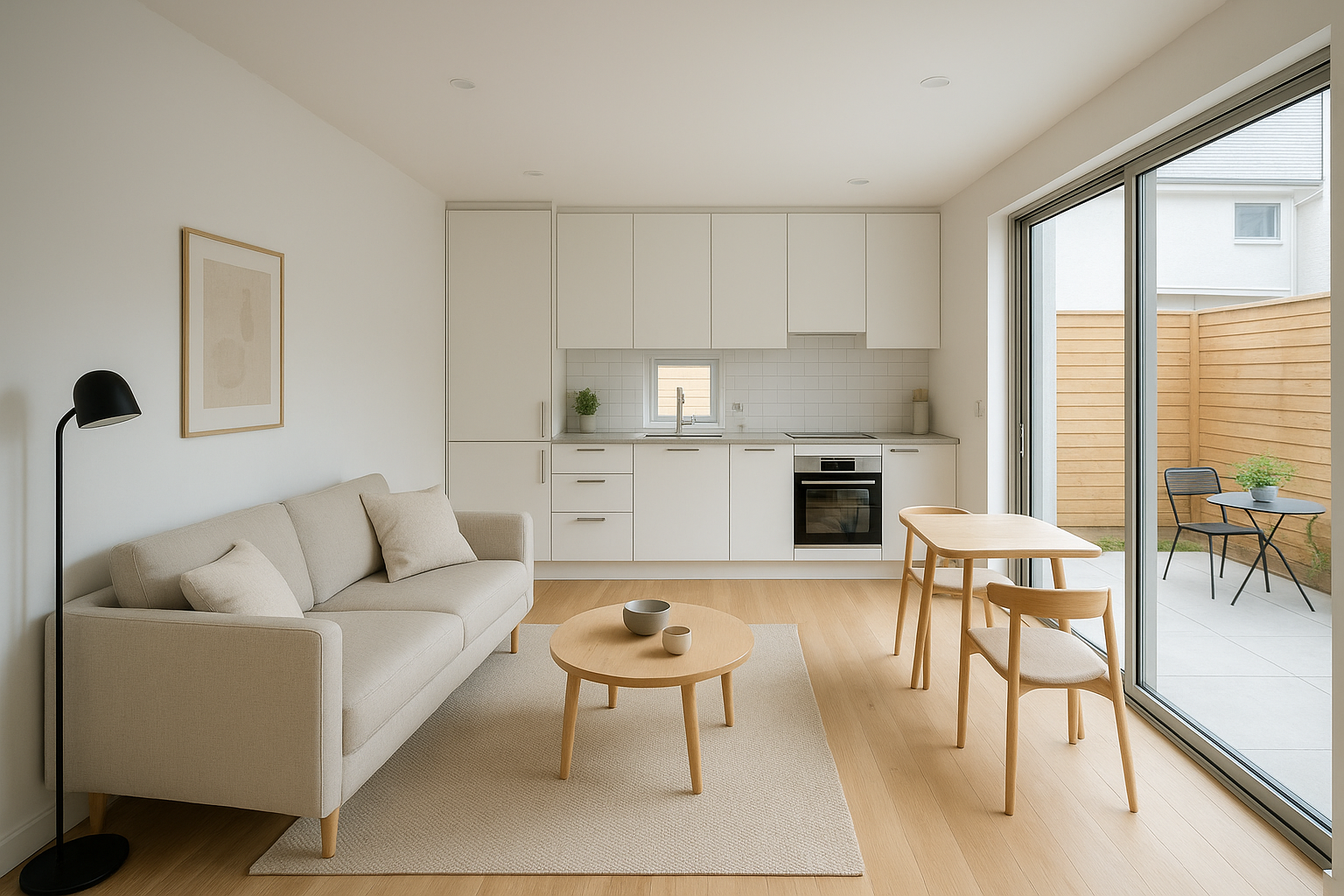
Interior layout choices in an 800 sq ft ADU directly affect finish costs and overall livability.
ADU Types and Their Cost Implications
The type of ADU you build has a significant impact on your final price. Below are the three most common options and how they compare at the 800 sq ft scale.
Detached ADU
Cost Range: $200K–$420K+
Standalone unit with its own foundation, exterior walls, and utility connections. Maximum privacy, highest cost.
Attached ADU
Cost Range: $160K–$300K
Shares a wall with the main home. Lower foundation and exterior costs, but may need seismic or structural upgrades.
Cost Range: $60K–$150K
Converts existing garage space. Most affordable option, though the existing structure may limit layout flexibility.
800 Sq Ft ADU vs Other Popular Sizes
If 800 square feet feels larger — or smaller — than you need, it helps to compare it against neighboring size tiers. For a smaller footprint, see our 500 sq ft ADU cost breakdown and companion 500 sq ft ADU design and build guide. For a larger multi-room layout, our 1,200 sq ft ADU cost overview walks through budget considerations at that scale.
Step-by-Step: How to Budget Your 800 Sq Ft ADU Project
Following a structured budgeting process helps you avoid surprises and gives lenders the documentation they need to approve financing. Here is a practical sequence to follow from start to finish.
- Determine your ADU type. First, decide whether you want a detached, attached, or garage-conversion ADU, since this single decision shapes nearly every cost that follows, from foundation work to utility hookups.
- Research local permit fees. Contact your city or county planning department to get current permit and impact fee schedules, since some jurisdictions have capped ADU fees specifically to encourage construction.
- Get design and engineering quotes. Hire an architect or ADU designer for preliminary plans, and obtain a structural engineering report early so you understand site-specific requirements before soliciting contractor bids.
- Collect at least three contractor bids. Always compare bids from licensed general contractors with ADU-specific experience in your market, because a wide spread between bids often signals scope ambiguity that needs resolving first.
- Add contingency and financing costs. Finally, build in a 10 to 15 percent contingency buffer, and if you are financing the project, include loan origination fees and interest carry in your total budget.
Financing an 800 Sq Ft ADU Build
Most homeowners finance their ADU using existing home equity. A home equity line of credit (HELOC) or a cash-out refinance are the most common routes, because they typically offer lower interest rates than unsecured construction loans. However, dedicated construction loans are also available for homeowners with limited equity but strong income.
Several states — particularly California — have launched ADU-specific loan programs through state housing agencies. These programs sometimes offer below-market rates or deferred repayment terms for qualifying homeowners. For project-specific guidance on navigating all these options, the team at The ADU Pro can help you model financing scenarios tailored to your local market and lender requirements.
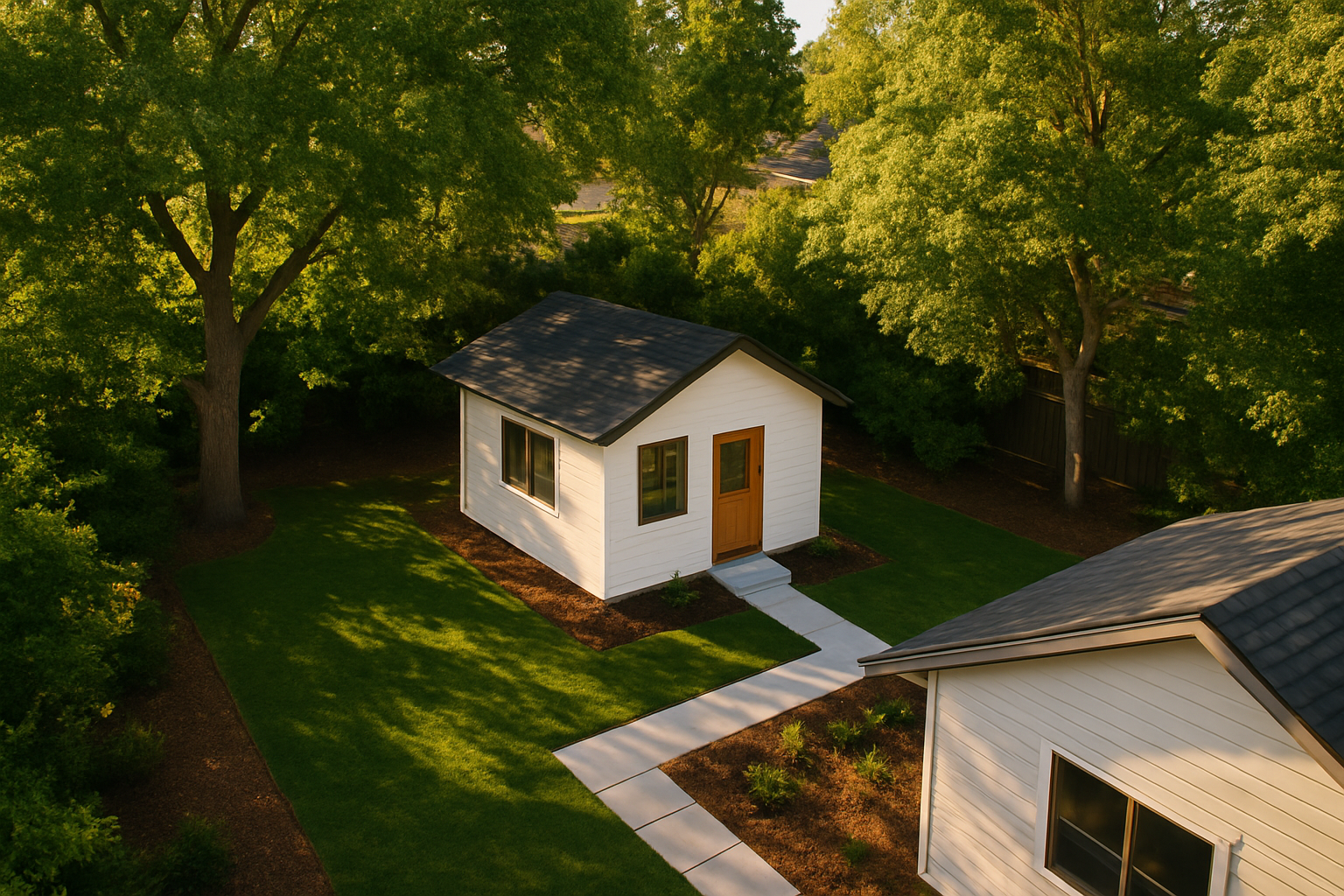
Site conditions visible from above — like tree proximity and access paths — directly influence ADU construction costs.
Common Budget Mistakes to Avoid
Even experienced homeowners make costly planning errors. Being aware of these pitfalls in advance can save you tens of thousands of dollars on your 800 sq ft ADU cost.
- Ignoring utility upgrade costs. Older homes often need electrical panel upgrades or new water meter connections before an ADU can be permitted, which can add $10,000 to $25,000 unexpectedly.
- Underestimating site preparation. Sloped lots, poor soil conditions, or limited access for equipment can significantly increase excavation and foundation costs.
- Choosing finishes too early. Locking in high-end finishes before you have contractor bids can inflate your budget before construction even starts; instead, select a finish tier and adjust once bids are in hand.
- Skipping the contingency fund. Change orders are nearly universal in construction, so a 10 to 15 percent contingency is not optional — it is essential.
- Forgetting exterior site costs. Landscaping, fencing, pathways, and drainage work are frequently excluded from contractor bids yet can add $5,000 to $20,000 to your final total.
Is the 800 Sq Ft ADU Cost Worth the Investment?
For most homeowners in high-demand rental markets, an 800 sq ft ADU delivers a strong return on investment. Rental income in many California cities ranges from $2,000 to $3,500 per month for an 800 sq ft unit, which means the project can pay for itself within 7 to 12 years while simultaneously increasing property value.
In lower-rent markets, the financial case is less clear-cut, although multigenerational living benefits and long-term property appreciation still make ADUs attractive. Consulting a local ADU specialist — such as the team at The ADU Pro — can help you model realistic return scenarios for your specific property. You can also explore a completed example, the Mirasol ADU project, to see how design choices translate into real-world cost outcomes.
Frequently Asked Questions About 800 Sq Ft ADU Cost
What is the average 800 sq ft ADU cost in 2025?
The average 800 sq ft ADU cost in 2025 ranges from $160,000 to $420,000 depending on location, construction type, and finish level. Detached ADUs on the West Coast tend to cost the most, while garage conversions are the most affordable option.
What is the cost per square foot to build an ADU?
ADU construction typically costs between $200 and $525 per square foot in 2025. High-cost metro areas like San Francisco or Los Angeles often push costs above $400 per square foot for a fully finished unit.
How much do ADU permits cost?
ADU permit fees generally range from $3,000 to $15,000 depending on the municipality. Some California cities have capped ADU permit fees to encourage construction, while other states may charge more.
Is a detached or attached ADU more expensive?
Detached ADUs are typically more expensive because they require a full foundation, separate utility connections, and exterior walls on all sides. Attached ADUs share at least one wall with the main home, which reduces material and labor costs.
Can I build an 800 sq ft ADU for under $200,000?
Yes, it is possible in lower-cost regions or with a garage conversion. However, in high-cost metro areas, staying under $200,000 for a detached 800 sq ft ADU is very difficult without reducing finish quality or system specifications.
What are the biggest cost drivers for an ADU?
The biggest cost drivers are labor rates in your area, site conditions such as slope or soil type, utility connection fees, and the quality of finishes chosen. Foundation type and whether the unit is detached or attached also significantly impact the final price.
How long does it take to build an 800 sq ft ADU?
Construction of an 800 sq ft ADU typically takes 6 to 12 months from permit approval to move-in. The permitting process itself can add another 2 to 6 months depending on local backlog and plan check requirements.
What financing options are available for building an ADU?
Common ADU financing options include home equity loans, HELOCs, cash-out refinancing, construction loans, and ADU-specific lending programs. Some states and municipalities also offer grant or low-interest loan programs to encourage ADU development.
Does an ADU increase property value?
Yes, an ADU generally increases property value, often by more than the cost of construction in high-demand rental markets. Appraisers typically assess the income potential of the unit when determining added value.
What is the cheapest type of ADU to build?
Garage conversions and junior ADUs are the least expensive types because they reuse existing structure and share utilities with the main home. A garage conversion can sometimes be completed for $50,000 to $100,000.
Are prefab or modular ADUs cheaper than stick-built?
Prefab and modular ADUs can reduce construction time and sometimes lower costs by 10 to 20 percent compared to stick-built units. However, site preparation, foundation, and utility hookup costs still apply and can offset much of the savings.
What soft costs should I budget for an ADU project?
Soft costs include architectural design fees, engineering reports, permit application fees, soil testing, and project management. These typically add 10 to 20 percent to the overall project budget and are often overlooked in early estimates.
How much does it cost to connect an ADU to utilities?
Utility connection fees for water, sewer, gas, and electricity can range from $5,000 to $30,000 or more depending on distance from existing lines and local utility rates. Some jurisdictions waive or reduce these fees for ADUs.
Does 800 sq ft ADU cost include landscaping or a fence?
Most contractor bids exclude landscaping, fencing, and exterior hardscaping unless specifically requested. Budgeting an extra $5,000 to $20,000 for these site finishing items keeps your total 800 sq ft ADU cost estimate accurate.
How does 800 sq ft ADU cost compare to building a home addition of the same size?
An 800 sq ft home addition often costs slightly more per square foot than a detached ADU because it requires tying into existing structural, electrical, and plumbing systems. An ADU, by contrast, usually has independent systems and can be permitted as a separate rental-ready unit.
Final Thoughts on 800 Sq Ft ADU Cost
Planning for the 800 sq ft ADU cost requires looking well beyond a single contractor bid. In summary, your all-in budget should account for design fees, permits, utility connections, site preparation, finishes, and a healthy contingency reserve. Because location has such a dramatic effect on pricing, local bids and local expertise remain irreplaceable.
When approached strategically, an 800 sq ft ADU is one of the most financially rewarding home improvements a property owner can make — delivering rental income, multigenerational flexibility, and long-term equity growth. Start with a clear budget framework, work with experienced local professionals, and give yourself the time to plan thoroughly before breaking ground on your own 800 sq ft ADU cost journey.