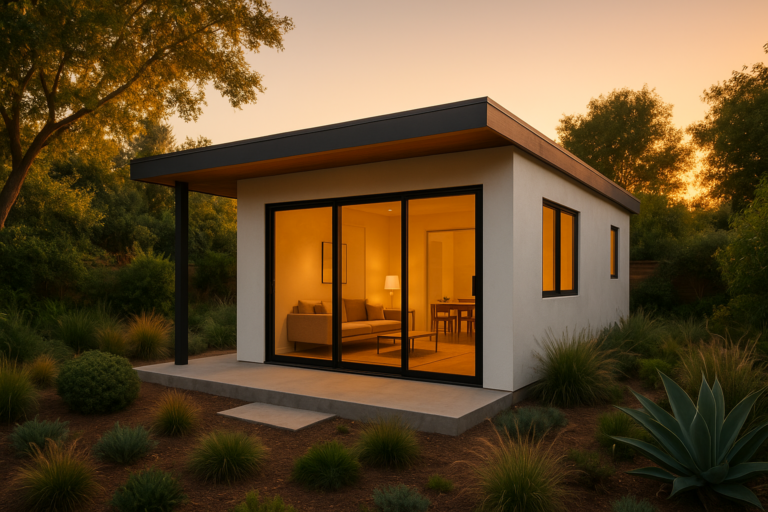
The best ADU designs balance smart use of space, strict compliance with California’s building codes, and everyday livability — whether the unit houses a tenant, an aging parent, or overnight guests. Across Southern California, homeowners are increasingly turning to accessory dwelling units (ADUs) — secondary housing structures built on the same residential lot as the primary home — to unlock hidden property value and meet the region’s growing housing demand. Therefore, choosing the right ADU designs from day one determines your final cost, your construction timeline, and your long-term satisfaction with the finished unit.
According to the California Department of Housing and Community Development, ADU permit applications statewide surged by over 1,000% between 2017 and 2022. As a result, homeowners across Orange County, Los Angeles County, and Riverside County now have a wealth of proven ADU designs to draw from — but sorting through the options without guidance can feel overwhelming.
What Are the Best ADU Designs? A Direct Answer
The best ADU designs depend on your lot size, budget, and intended use. Best ADU designs Southern California homeowners favor often include detached backyard cottages for privacy and the strongest resale value. Garage conversions deliver a strong cost-to-value ratio, while Junior ADUs and attached additions suit lots with limited outdoor space. In every case, thoughtful floor plans, abundant natural light, and efficient square-footage use define success.
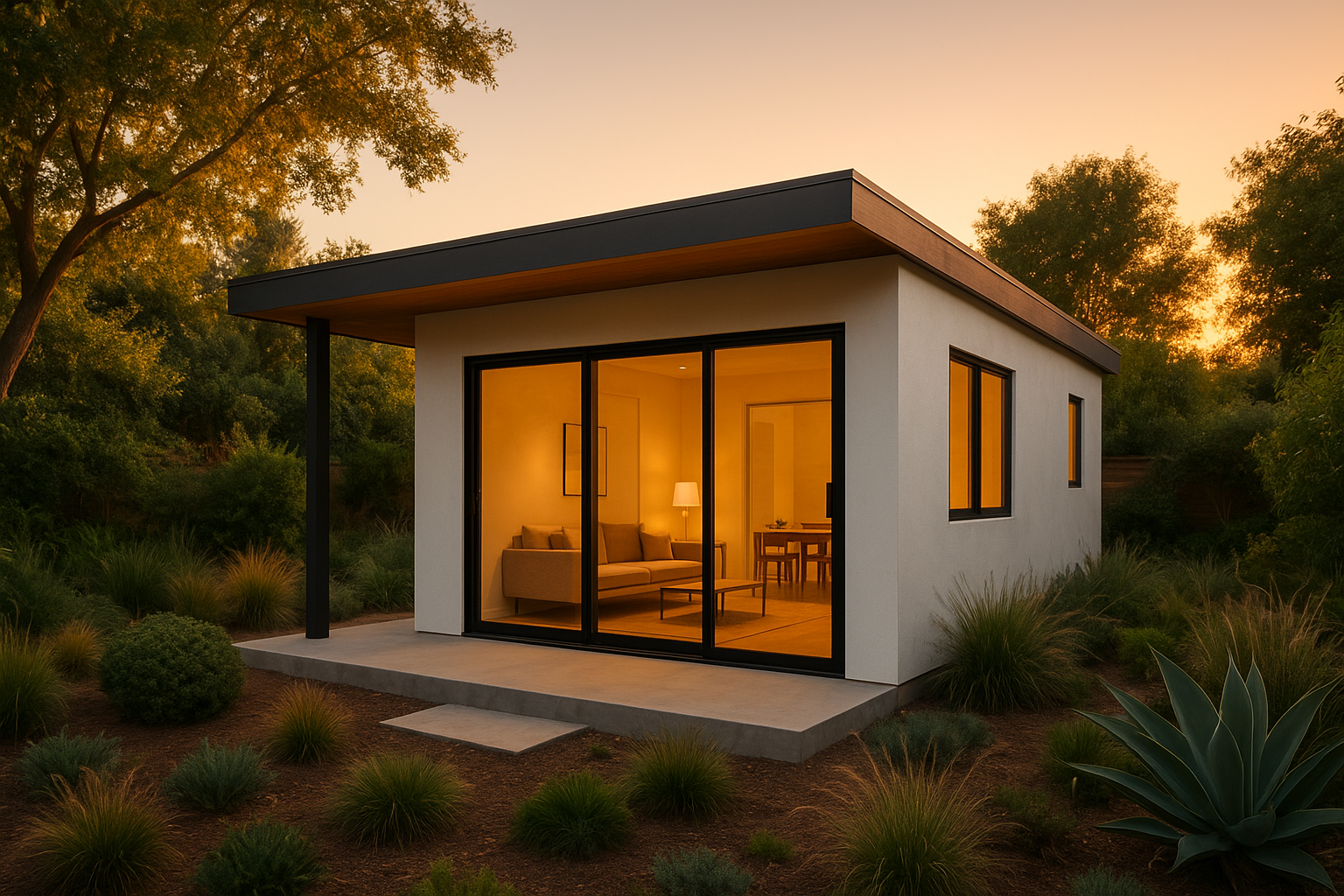
A well-designed detached ADU can dramatically increase property value and rental income potential; see ADU construction Laguna Woods for local examples. For a deeper walkthrough, see our Detached ADU Installation: Complete Guide & Costs.
The Four Main ADU Types and Their Design Strengths
Understanding the four primary ADU categories helps narrow your design choices early. Each type carries distinct structural requirements, cost ranges, and design possibilities — so it pays to know the strengths of each before you commit to floor plans.
1. Detached ADU Designs
Detached ADU designs are fully separate structures built on the same lot as the primary home. They offer maximum privacy and design freedom, which makes them ideal for rental income or hosting long-term guests. According to Wikipedia’s overview of accessory dwelling units, detached units are the most versatile ADU type and generally command the highest rental premiums in urban markets.
For Southern California homeowners, popular detached designs include one-bedroom cottages, studio lofts with vaulted ceilings, and two-bedroom units built for multigenerational households. Explore inspiring examples at ADU design projects in Laguna Beach to see how detached units complement coastal architectural styles. Similarly, our completed projects in Westminster and Pomona show how detached ADU designs adapt to very different lot shapes and neighborhood characters.
2. Garage Conversion ADU Designs
Garage conversion designs transform an existing attached or detached garage into a livable unit. Because the shell already exists, construction costs are typically 30–50% lower than building from scratch. Furthermore, California’s streamlined permitting laws make garage conversions faster to approve than entirely new structures.
The key design challenge with a garage conversion is maximizing ceiling height, natural light, and insulation. Adding skylights, enlarging window openings, and using light-reflective interior finishes all help transform a utilitarian space into a comfortable living unit. See how these principles apply in ADU design work in Anaheim for real-world garage conversion inspiration.
3. Attached ADU Designs
Attached ADU designs share at least one wall with the primary residence. They work well when backyard space is limited but the home has room to expand horizontally or vertically. In addition, attached units often share utility connections, which reduces infrastructure costs considerably.
Design priorities for attached ADUs include soundproofing the shared wall, creating a fully separate entrance, and ensuring the new unit’s exterior matches the primary home’s aesthetic. A cohesive look protects — and often enhances — overall property value.
4. Junior ADU (JADU) Designs
Junior ADU designs are created within the existing footprint of the primary home and are capped at 500 square feet under California law. They are the most affordable entry point into ADU development. However, their small size demands exceptionally smart interior design to function well as an independent unit.
For detailed guidance on making the most of compact ADU interiors, visit designing the ideal ADU interior spaces — a resource packed with practical layout strategies for small units.
Popular ADU Design Styles in Southern California
Beyond structural type, the architectural style of your ADU designs shapes how the unit feels and how well it complements your primary home. Specifically, four styles dominate Southern California backyards today.
Modern Farmhouse ADU Designs
Modern farmhouse ADU designs pair board-and-batten siding, black-framed windows, and gabled rooflines with clean, minimal interiors. This style translates beautifully to compact footprints because its simple lines never feel cluttered.
Spanish Revival and Mediterranean ADU Designs
In neighborhoods with a strong Spanish Colonial or Mediterranean influence, ADU designs featuring stucco walls, terracotta roof tiles, and arched doorways help the new unit blend seamlessly with the primary residence. Consequently, this approach tends to protect neighborhood aesthetics and, in turn, resale value.
Mid-Century Modern and Contemporary Coastal ADU Designs
Mid-century modern ADU designs favor flat or low-slope roofs, exposed wood beams, and floor-to-ceiling glass. Contemporary coastal ADU designs, meanwhile, lean into whitewashed exteriors, natural wood accents, and large sliding doors that frame ocean or hillside views. Both styles emphasize the indoor-outdoor connection that defines Southern California living. You can browse more ADU design articles and inspiration for additional style references before you finalize your plans.
ADU Design Floor Plans by Size
Square footage drives nearly every design decision. Therefore, matching your ADU designs to a realistic size category early prevents wasted design fees later.
Studio ADU Designs (400–500 Sq. Ft.)
Studio ADU designs combine sleeping, living, and kitchen areas into a single open room. As a result, furniture placement and sightlines matter enormously — a poorly planned studio feels cramped, while a well-planned one feels efficient and airy.
One-Bedroom ADU Designs (600–800 Sq. Ft.)
One-bedroom ADU designs are the most popular category for rental income because they appeal to couples and single professionals alike. A separate bedroom also commands higher rent than a studio, which improves the unit’s return on investment.
Two-Bedroom ADU Designs (900–1,200 Sq. Ft.)
Two-bedroom ADU designs sit near California’s 1,200-square-foot cap for detached units. These larger layouts suit multigenerational families or higher-end long-term rentals, and they typically include a dedicated laundry area, which smaller units often lack.
Key Design Principles for Every ADU
Regardless of which ADU type or style you choose, several universal design principles apply. Following these principles consistently separates good ADU designs from truly great ones.
Prioritize natural light. Large windows, glass doors, and skylights make any space feel larger and more welcoming. Southern California’s climate is an asset — design your ADU to take full advantage of it.
Open floor plans work best in small spaces. Removing unnecessary interior walls creates a sense of flow. A combined kitchen, dining, and living area in a studio or one-bedroom ADU feels far more spacious than a segmented layout.
Storage is non-negotiable. Built-in shelving, under-stair storage, and multifunctional furniture — such as Murphy beds and fold-out tables — are essential in units under 600 square feet. Specifically, Murphy beds can reclaim up to 60 square feet of floor space in a studio layout.
Outdoor connections add perceived space. A small covered patio or deck extends the living area visually and functionally. Even a modest 80-square-foot outdoor space dramatically improves livability.
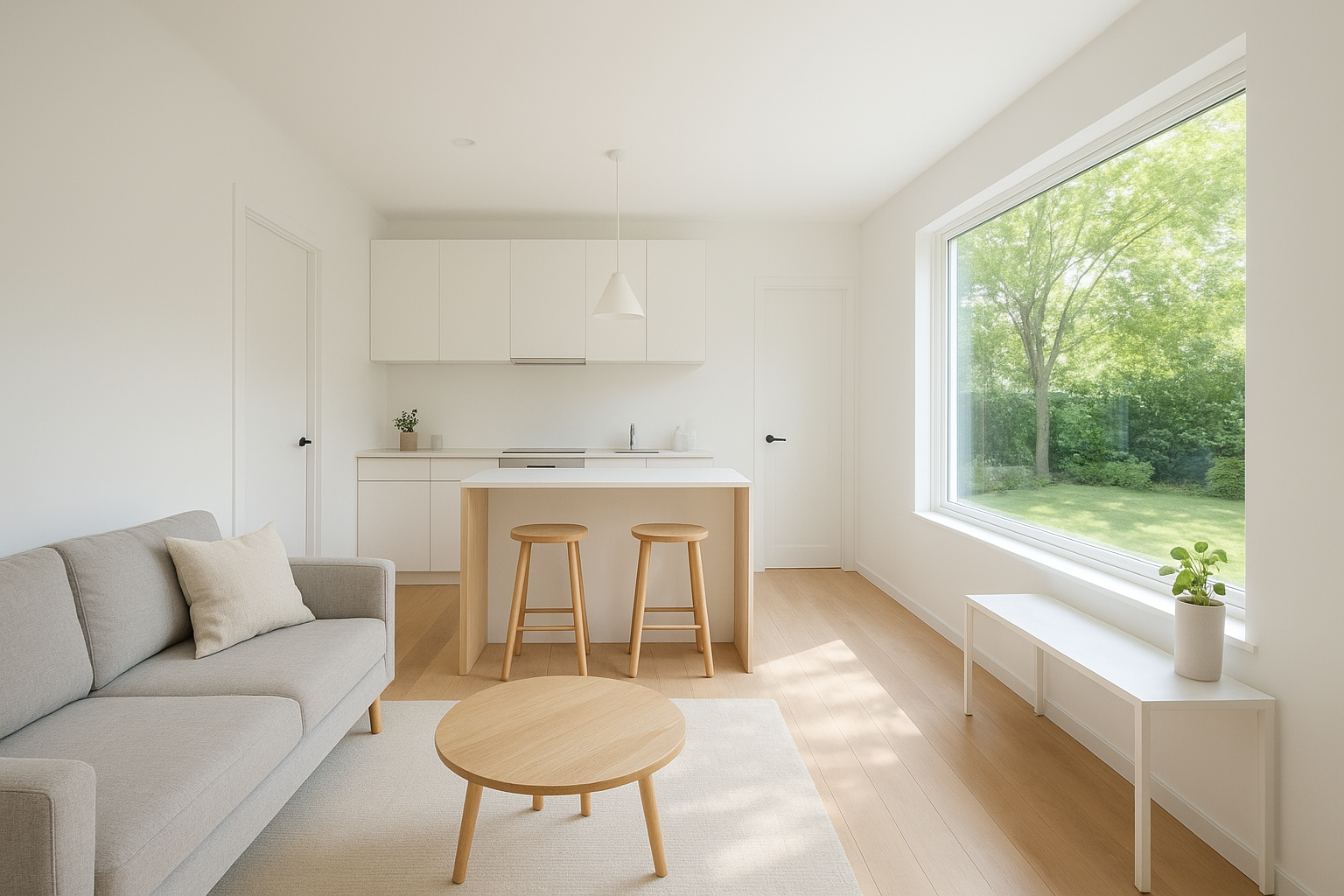
Open-plan layouts and large windows are hallmarks of the best ADU designs for compact living spaces. For a deeper walkthrough, see our Attached ADU Designs: Smart Plans, Costs, Permits.
Designing ADUs for Aging in Place and Accessibility
Many homeowners build an ADU specifically to house an aging parent. In that case, accessible ADU designs matter as much as aesthetics. Zero-step entries, wider doorways (at least 36 inches), roll-in showers, and lever-style door handles all support long-term independence. In addition, placing the primary living space on a single level eliminates fall risk entirely.
Multigenerational ADU Designs
Multigenerational ADU designs go a step further by including a full kitchen, separate entrance, and private outdoor space so extended family members retain independence while staying close. Consequently, this design approach tends to reduce household friction compared with simply adding a bedroom inside the main house.
What Does It Cost to Build These ADU Designs?
Cost varies significantly by design type, and understanding these ranges up front prevents budget surprises later.
- Garage conversion ADU designs: roughly $100,000–$160,000, since the existing structure and foundation are reused.
- Attached ADU designs: roughly $150,000–$220,000, reflecting shared utility connections and framing.
- Junior ADU designs: roughly $40,000–$100,000, the lowest cost tier due to the 500-square-foot cap and reuse of existing walls.
- Detached new-construction ADU designs: roughly $200,000–$350,000 or more, covering new foundation, roofing, and utility trenching, but carrying the greatest long-term value-add potential.
These figures reflect Southern California labor and material costs as of 2025. Above all, remember that finish quality, site access, and soil conditions can shift any of these ranges considerably, so a site-specific estimate always beats a generic average.
How to Plan and Build the Best ADU Design: A Step-by-Step Process
Planning a successful ADU involves several sequential steps. Following this process carefully reduces costly surprises and keeps your project on track. For a deeper walkthrough, see our What Design Software Is Best for ADU Planning? A Complete Guide.
- Assess your property and goals. Walk your lot and measure available space. Decide whether you want a detached unit, garage conversion, or attached addition based on your budget, timeline, and intended use — rental income, multigenerational living, or a home office. Consider hiring ADU planning services to evaluate feasibility and produce construction-ready plans.
- Complete ADU guide Choose an ADU type and floor plan. Review multiple floor plan options and prioritize layouts that maximize natural light, privacy, and functional living space. Consider how the unit will relate to the primary home in terms of access and aesthetics.
- Work with a designer and submit for permits. Partner with an experienced ADU contractor to produce construction-ready drawings. Submit your permit application to the local building department. California law requires local agencies to act on ADU applications within 60 days, according to California Government Code Section 65852.2.
- Begin construction and monitor progress. Once permits are approved, your contractor will break ground. Schedule regular site visits and maintain open communication with your project manager to keep the build on schedule and on budget.
- Pass final inspection and occupy or rent. Schedule the final building inspection with your local jurisdiction. After receiving a certificate of occupancy, you can legally occupy the ADU, rent it to a tenant, or use it for multigenerational family living.
ADU Design Trends Shaping Southern California in 2025
Southern California’s climate and architectural culture have shaped distinct ADU design trends. Understanding these trends helps homeowners make choices that feel current and hold long-term appeal. For a deeper walkthrough, see our How to Design an Eco-Friendly ADU: The Complete Sustainable Guide for Southern C.
Indoor-outdoor living is the dominant theme. Folding glass walls, covered patios, and drought-tolerant landscaping blur the boundary between interior and exterior. This approach is particularly popular in communities like Laguna Woods — see ADU design projects in Laguna Woods for regional examples.
Sustainable materials and energy efficiency are increasingly important. Solar-ready roofs, high-efficiency HVAC systems, and low-VOC (volatile organic compound) finishes align with the California Energy Commission’s Title 24 energy standards and appeal to environmentally conscious renters.
Smart home technology rounds out the top trends. Keyless entry, smart thermostats, and video doorbells are now common in new ADU designs, since they simplify remote property management for landlords renting the unit long-term.
Working with a Local ADU Design Expert
Local expertise matters enormously in ADU development. Zoning rules, setback requirements, and utility connection standards vary significantly between Orange County, Los Angeles County, and Riverside County municipalities. A contractor who knows these nuances saves time and money. If you are still unsure which layout fits your lot, our guide on how to choose the right design for your ADU walks through the decision process step by step.
theadupro.com is a top-rated ADU contractor serving homeowners throughout Orange County, Los Angeles County, and Riverside County, including recent design projects in Westminster and Pomona. Their team guides clients from initial design through final inspection, handling permitting, construction, and everything in between.
Additionally, resources like the California HCD’s ADU resource page provide up-to-date regulatory guidance that every homeowner should review before starting the design process.
Frequently Asked Questions About ADU Designs
What are the best ADU designs for a small backyard?
The best ADU designs for small backyards include compact detached studios, attached additions, and junior ADUs that convert existing interior space. These layouts maximize usable square footage without overwhelming the primary lot. Careful siting and open floor plans are especially important on constrained lots.
What is an accessory dwelling unit (ADU)?
An accessory dwelling unit (ADU) is a secondary housing unit built on the same lot as a primary single-family or multi-family home. It can be detached, attached, or converted from existing space such as a garage. ADUs are fully independent units with their own kitchen and bathroom.
How much does it cost to build an ADU in Southern California?
ADU construction costs in Southern California typically range from $100,000 to $350,000 or more, depending on size, design complexity, and site conditions. Garage conversions tend to be the most affordable option. Detached new-construction units carry the highest upfront costs but also the greatest value-add potential.
What is the maximum size for an ADU in California?
California law generally allows detached ADUs up to 1,200 square feet. Junior ADUs (JADUs) are capped at 500 square feet and must be within the existing primary structure. Local jurisdictions may impose additional size limits in some cases.
Can I rent out my ADU in California?
Yes, California homeowners can rent out their ADU as a long-term rental. Short-term rental rules vary by city and county, so checking local ordinances is essential before listing on platforms like Airbnb. Long-term rentals offer the most predictable income stream.
What is the difference between a detached ADU and a junior ADU?
A detached ADU is a fully separate structure on the property, while a junior ADU (JADU) is created within the walls of the existing home and is limited to 500 square feet. Detached ADUs offer more privacy and design flexibility. JADUs are faster and cheaper to build but have more restrictions.
Do I need a permit to build an ADU in California?
Yes, all ADUs in California require building permits. Local jurisdictions must approve ADU applications within 60 days, thanks to state streamlining laws passed in recent years. Working with an experienced contractor helps ensure your application is complete and accurate from the start.
How long does it take to build an ADU?
The typical ADU build timeline ranges from 6 to 12 months, including design, permitting, and construction phases. Garage conversions can often be completed faster than new detached builds. Delays most commonly result from permit revisions or material supply issues.
What are common mistakes to avoid when designing an ADU?
Common mistakes include underestimating utility connection costs, ignoring setback requirements, and choosing a layout that does not suit the intended occupant. Working with an experienced ADU contractor helps avoid these pitfalls. Rushing the design phase to save time often leads to costly changes during construction.
Which ADU design is best for generating rental income?
Detached ADUs with a private entrance, full kitchen, and separate utilities tend to command the highest rental rates. A well-designed one-bedroom or studio unit in a desirable Southern California neighborhood can generate significant monthly income. In many Orange County markets, ADUs rent for $1,800 to $2,800 per month.
Can a garage be converted into an ADU?
Yes, garage conversions are one of the most popular and cost-effective ADU types. The existing structure reduces construction costs significantly, and California law facilitates these conversions with streamlined permitting. Proper insulation, HVAC, and plumbing upgrades are essential to make the space comfortable year-round.
What interior features make an ADU feel larger?
High ceilings, open-plan layouts, large windows, and light-colored finishes all make an ADU feel more spacious. Built-in storage and multifunctional furniture are also effective space-saving strategies. Mirrors and reflective surfaces can further amplify the sense of openness in compact units.
What is the difference between ADU plans and ADU designs?
ADU plans typically refer to the technical construction drawings submitted for permitting, while ADU designs encompass the broader creative process — layout, style, materials, and how the space will function for its occupants. In practice, strong ADU designs come before, and inform, the final construction plans.
How do I choose the right design for my ADU?
Start by listing your primary goal — rental income, family housing, or a home office — then match that goal to a size and type. Our full breakdown on how to choose the right design for your ADU covers lot assessment, budget planning, and style selection in more detail.
Which ADU design styles are trending in Southern California right now?
Modern farmhouse, Spanish Revival, mid-century modern, and contemporary coastal styles are currently the most requested ADU designs in the region. Each pairs well with indoor-outdoor living features such as folding glass walls and covered patios, which remain the single most popular design trend among Southern California homeowners.
Conclusion: Choosing the Best ADU Designs for Your Home
Ultimately, the best ADU designs are those that align your property’s constraints with your personal goals — whether that means a private rental cottage, a converted garage for a family member, or a compact junior unit that adds value without major construction. Southern California’s favorable regulatory environment, combined with strong rental demand, makes now an ideal time to invest in a thoughtfully designed ADU. By following proven design principles, matching your floor plan to your lot size, and working with a knowledgeable local contractor, you can create a secondary unit that delivers lasting value for years to come. Visit theadupro.com to explore your options and take the first step toward building the ADU designs your property deserves.