
A home renovation ADU — an accessory dwelling unit added to your property through construction or conversion — is one of the highest-return upgrades available to Southern California homeowners today. Specifically, it means building a self-contained secondary living space on your existing lot, whether through new detached construction, a garage conversion, or an interior conversion. In a housing market as tight as Orange County, Los Angeles County, or Riverside County, this single renovation can generate rental income, increase resale value, and create room for extended family, all at once.
According to the California Department of Housing and Community Development, statewide ADU permits have grown dramatically since 2020, with tens of thousands approved every year. As a result, this momentum reflects a simple truth: a well-planned home renovation ADU delivers real, measurable returns — and this guide covers every detail a homeowner needs before breaking ground.
What Is a Home Renovation ADU?
A home renovation ADU is a secondary residential unit added to a single-family property. It must include its own kitchen, bathroom, and sleeping area. In essence, it functions as a fully independent home on the same lot as your primary residence, complete with its own utilities and a separate entrance in most designs.
Homeowners pursue this type of project for several reasons. Some want to house aging parents nearby while preserving privacy. Others want consistent rental income. Still others simply need more usable square footage without moving. Regardless of the motivation, the outcome is the same: a property that works harder for its owner, year after year.
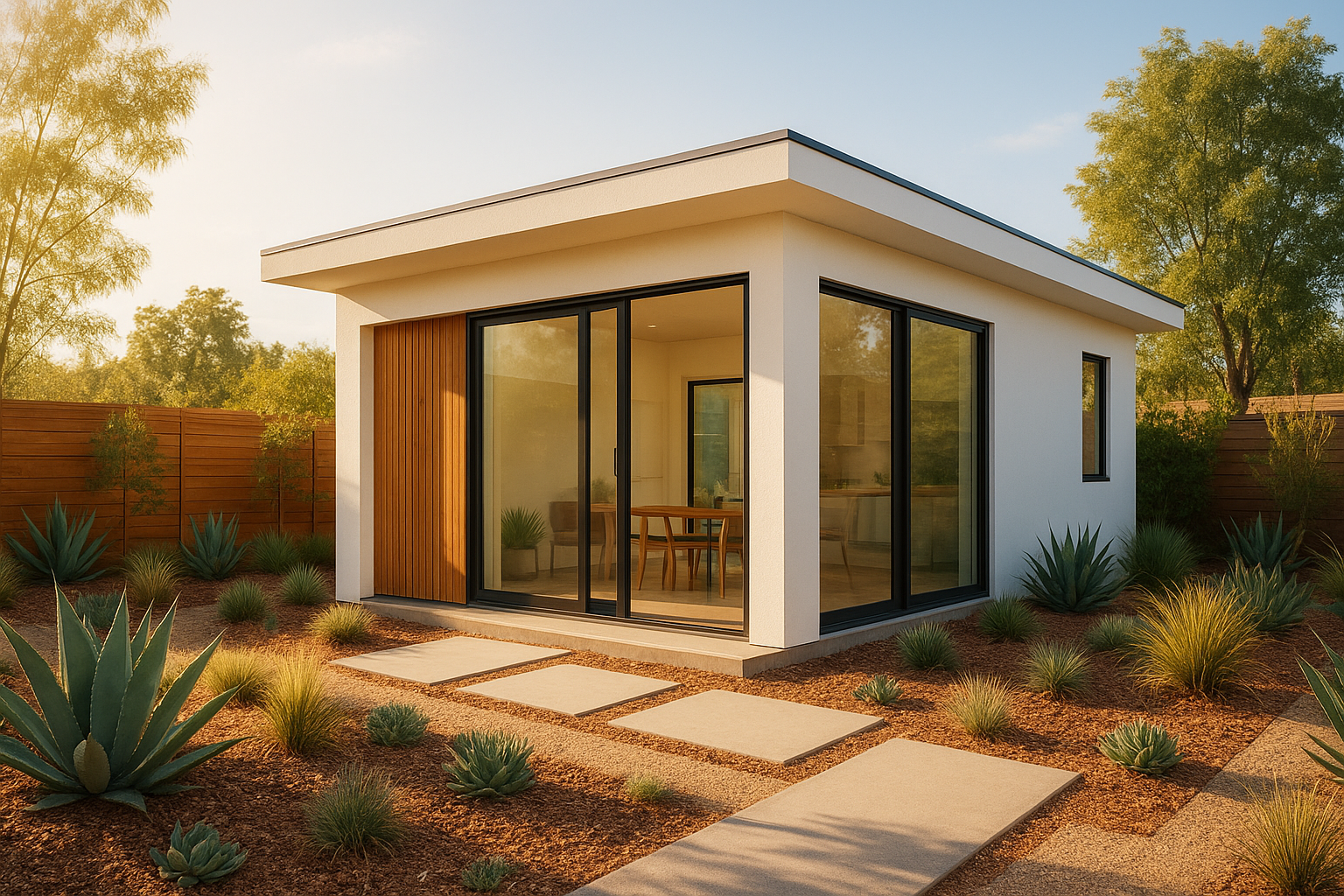
A well-designed home renovation ADU can transform underused backyard space into a fully functional living unit. See our Southern California home additions guide for related expansion options. For a deeper walkthrough, see our The Expert Guide to Home Extension Contractors 2026.
Home Renovation ADU vs. a Traditional Home Addition
A common point of confusion is how an ADU renovation differs from a standard home addition. A traditional addition — such as a new bedroom or expanded kitchen — simply extends the existing living space of the main house. It shares the home’s single kitchen and address, and it cannot be rented or sold separately.
An ADU renovation, in contrast, creates a legally independent unit with its own kitchen, bathroom, and often a separate utility meter. Consequently, it can be rented, used as a guest house, or occupied by family members without disrupting the main household’s layout. This distinction matters enormously for financing, permitting, and long-term value, since lenders and appraisers treat ADUs as income-generating assets rather than cosmetic upgrades.
Types of ADUs You Can Add During a Home Renovation
Not every property suits the same solution. Therefore, understanding the available ADU types helps you choose the most practical and cost-effective path forward for your specific home renovation ADU project.
Detached ADU: A fully separate structure built in the backyard or side yard. This option offers maximum privacy for both the homeowner and the tenant or family member, and it typically commands the highest rent.
Attached ADU: An addition connected to the main home, sharing at least one wall. This type is often more affordable than a detached build because it uses existing structure, foundation, and sometimes existing utility lines.
Garage Conversion ADU: Converting an existing attached or detached garage into a habitable living space. California law generally does not require replacing lost parking, making this one of the fastest and most budget-friendly renovation paths.
Junior ADU (JADU): Created from existing interior space within the primary home, capped at 500 square feet. JADUs are ideal for homeowners with unused rooms or oversized floor plans who want a lower-cost entry point.
For a deeper look at design options, explore the ADU design and construction resources on theadupro.com, and browse specific top ADU customization and design ideas to see how each type can be tailored to your lot.
How Much Does a Home Renovation ADU Cost?
Cost is typically the first question homeowners ask. Consequently, it helps to look at real price ranges rather than vague estimates. According to industry data compiled by Wikipedia’s ADU overview and local contractor reports, Southern California projects typically fall in these ranges:
- Garage conversion: $80,000 – $150,000
- Junior ADU (interior conversion): $50,000 – $100,000
- Attached addition ADU: $120,000 – $220,000
- Detached new-construction ADU: $180,000 – $350,000+
These figures vary based on lot conditions, local permit fees, material choices, and labor costs in your specific city. For example, permit fees in Irvine differ from those in Ontario or Glendale. Furthermore, utility connection costs — water, sewer, electrical — add to the total and are often underestimated by first-time renovators.
Return on Investment: Why the Numbers Work
Research consistently shows that ADUs increase property values by 20% to 30% in high-demand California markets. In addition, rental income from a Southern California ADU commonly ranges from $1,500 to $3,500 per month. Over five years, that income stream can fully recover construction costs — and then some; see our ADU financial return analysis for details.
Financing options are also more accessible than many homeowners realize. Home equity loans, cash-out refinancing, and California’s ADU Grant Program (for income-eligible homeowners) all provide viable paths to funding your home renovation ADU without draining savings.
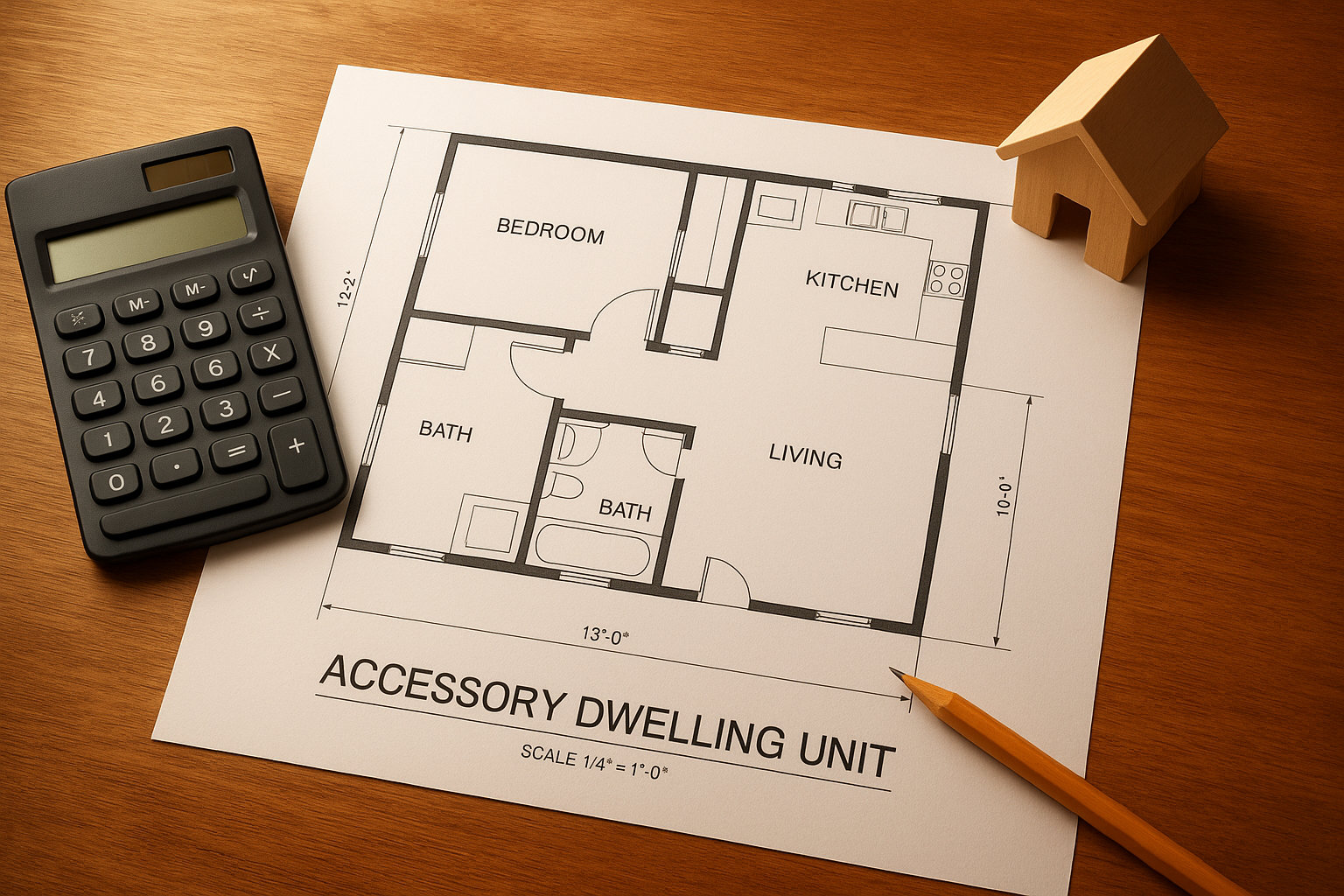
Careful planning and accurate cost estimation are essential first steps in any ADU construction project. Review our permitted ADU designs for permit-friendly layouts and common fee considerations.
Hidden Costs Homeowners Often Overlook
Beyond construction pricing, several soft costs quietly inflate a home renovation ADU budget. Specifically, expect fees for architectural design, structural engineering, soil testing, and school impact fees on larger units. Similarly, utility upgrades — such as a new electrical panel or sewer lateral — can add thousands of dollars that generic estimates never mention.
Above all, build in a contingency reserve of 10% to 15% of your total budget. Construction delays, material price shifts, and unforeseen site conditions — like poor soil or aging utility lines — are common enough that a cushion prevents a stalled project.
How to Plan and Build Your ADU: A Step-by-Step Guide
Building a home renovation ADU involves multiple phases. Therefore, understanding each step helps you set realistic expectations and avoid costly surprises — consult our ADU planning guide for a complete checklist. For a deeper walkthrough, see our How to Build an ADU: Step-by-Step Guide.
- Assess Your Property and Goals. Evaluate your lot size, existing structures, zoning designation, and personal objectives. Read our ADU planning checklist. Determine which ADU type fits your space and budget before committing to a design direction.
- Choose an ADU Type and Design. Work with an experienced ADU contractor or designer to create architectural plans that comply with local building codes, setback requirements, and height restrictions specific to your city.
- Submit Permit Applications. File your application with the local building department, including site plans, architectural drawings, and engineering documents. Learn specifics in our ADU permits guide. California law requires most ADU permits to be approved within 60 days of a complete application.
- Begin Construction with a Licensed Contractor. Hire a licensed, ADU-specialized contractor to manage foundation, framing, electrical, plumbing, insulation, and interior finishes. See our ADU construction resources for contractor vetting and build guidance. Consistent communication with your contractor prevents delays and budget overruns.
- Pass Final Inspections and Receive Certificate of Occupancy. Schedule required inspections at each construction phase. Once all inspections are passed, the building department issues a certificate of occupancy, legally authorizing the ADU as a habitable unit.
Navigating California ADU Regulations for Your Home Renovation
California has made significant legislative changes since 2020 to encourage ADU construction. As a result, many barriers that previously slowed home renovation ADU projects have been removed or reduced. Key updates include:
- Reduced setback requirements — in many cases, just 4 feet from rear and side property lines
- Elimination of owner-occupancy requirements (temporarily through 2025)
- Capped permit fees for ADUs under 750 square feet
- Streamlined approval timelines mandated by state law
However, local jurisdictions still apply their own design standards and inspection requirements. For this reason, working with a contractor who understands both state law and local rules is critical. The California HCD’s ADU resource page provides current statewide guidelines for homeowners.
City-Specific Considerations Across Southern California
Each city applies state ADU law differently. For instance, Glendale homeowners face specific design review requirements, while Irvine properties within planned communities may have HOA considerations to navigate. In Ontario and the Inland Empire, lot sizes are often larger, which can open up more detached ADU possibilities. Meanwhile, coastal communities like Laguna Beach and inland cities such as Temecula and La Habra each apply their own overlay zones and design guidelines.
Homeowners in Glendale can learn more through our ADU construction services in Glendale page. Similarly, those in Irvine will find tailored guidance on our ADU construction in Irvine resource, and Inland Empire residents can review our ADU contractor services in Ontario page for local specifics. In addition, coastal and southern-county homeowners can explore our dedicated ADU design guidance for Laguna Beach, our ADU contractor resources for Temecula, and our ADU design services in La Habra.
Choosing the Right ADU Contractor for Your Renovation
Not all contractors are equipped to handle the complexity of an ADU project. Specifically, ADU construction requires expertise in permitting, zoning, multi-trade coordination, and California-specific building codes. Choosing the wrong contractor can result in permit delays, code violations, or construction defects that are expensive to correct.
When evaluating contractors for your home renovation ADU, look for these qualities:
- A valid California contractor’s license (verify at CSLB.ca.gov)
- A portfolio of completed ADU projects in your county
- Transparent pricing and a detailed written contract
- In-house permitting support and design coordination
- Clear communication throughout every project phase
theadupro.com brings all of these qualities together as the top-rated ADU contractor serving Orange County, Los Angeles County, and Riverside County. Their team guides homeowners through every phase, from initial design through final inspection, ensuring a streamlined and stress-free experience.

Partnering with an experienced ADU contractor ensures your renovation stays on schedule, on budget, and fully compliant with local codes. For a deeper walkthrough, see our Investing in ADU Rental: Maximize Your ROI in 2025.
Design Considerations That Maximize Your ADU’s Value
Smart design decisions made early in the process can significantly increase both the livability and the market value of your home renovation ADU. In particular, these elements tend to deliver the strongest returns:
- Separate entrance: Privacy for both occupants makes the unit more rentable and more livable for family members.
- Energy efficiency: Solar-ready wiring, insulation upgrades, and energy-efficient appliances reduce operating costs and appeal to eco-conscious renters.
- Open floor plan: Maximizing perceived space in a compact unit makes it feel larger and more comfortable.
- Quality finishes: Durable, attractive materials attract better tenants and reduce long-term maintenance costs.
For inspiration and practical design guidance, browse the ADU design resources and ideas curated by theadupro.com’s team of experts.
Common Mistakes to Avoid During Your ADU Home Renovation
Even experienced homeowners stumble on avoidable errors. Notably, skipping the permit process to save time almost always backfires, since unpermitted units cannot be legally rented, financed, or sold with the property. Similarly, underestimating soft costs — design fees, utility hookups, and inspection cycles — is one of the most common budgeting mistakes.
In addition, hiring a general contractor without dedicated ADU experience often leads to zoning missteps and code violations. Above all, ignoring HOA rules or city-specific overlay zones can stall a project for months. Consequently, homeowners who invest time upfront in due diligence — verifying zoning, budgeting realistically, and vetting contractors — consistently finish their home renovation ADU on schedule and within budget.
Frequently Asked Questions About Home Renovation ADU
What is a home renovation ADU?
A home renovation ADU is an accessory dwelling unit added to an existing residential property through construction or conversion. It creates a secondary living space that can be used for rental income, family members, or a dedicated home office. The unit must include its own kitchen, bathroom, and sleeping area to qualify as a legal ADU.
How much does a home renovation ADU cost in Southern California?
Costs typically range from $80,000 for a garage conversion to $300,000 or more for a fully detached ADU, depending on size, materials, and local permit fees. Location within Orange County, Los Angeles County, or Riverside County also affects final pricing significantly.
Does adding an ADU increase home value?
Yes. Studies show ADUs can increase property value by 20% to 30% in high-demand California markets. The added square footage and income potential make the property significantly more attractive to future buyers.
What types of ADUs can I add during a home renovation?
Common ADU types include detached guest houses, garage conversions, attached additions, and junior ADUs (JADUs) created from existing interior space. Each type has different cost, timeline, and permit requirements depending on your property and city.
How long does it take to build an ADU in California?
From permit application to final inspection, a typical ADU project takes 6 to 12 months. Garage conversions are often faster, while detached new-construction ADUs take longer due to foundation work, utility connections, and additional inspections.
Do I need a permit for an ADU home renovation?
Yes, all ADU projects in California require building permits. California state law streamlines the approval process, but local jurisdictions still conduct plan checks and inspections before issuing a certificate of occupancy. Never skip the permit process — unpermitted ADUs create serious legal and financial risks.
Can I rent out my ADU for income?
Yes. Renting an ADU is one of the most popular reasons homeowners pursue this type of renovation. In Southern California, ADU rents commonly range from $1,500 to $3,500 per month depending on location and unit size. Over time, that income can fully offset construction costs.
What is the difference between a JADU and a standard ADU?
A junior ADU (JADU) is created from existing interior space within the primary home and is capped at 500 square feet. A standard ADU can be up to 1,200 square feet and may be detached or attached to the main structure, offering greater flexibility and rental potential.
Are there financing options for ADU construction?
Several financing options exist, including home equity loans, cash-out refinancing, construction loans, and California’s ADU Grant Program for qualifying homeowners. Consulting a lender familiar with ADU projects is highly recommended before committing to a budget.
What are the most common mistakes homeowners make when planning an ADU?
Common mistakes include underestimating total costs, choosing a contractor without ADU-specific experience, ignoring setback and zoning requirements, and failing to account for utility connection fees. Working with a specialized ADU contractor helps avoid all of these pitfalls from the start.
Can a garage conversion qualify as an ADU?
Yes. Garage conversions are among the most cost-effective ADU options available to Southern California homeowners. California law allows homeowners to convert an attached or detached garage into a habitable ADU without replacing the lost parking space in most jurisdictions.
How do California ADU laws affect my renovation plans?
California ADU laws, updated significantly since 2020, have made it easier and faster to build ADUs by reducing setback requirements, temporarily eliminating owner-occupancy mandates, and capping permit fees. Understanding these evolving laws is essential before starting your construction project.
What does ADU stand for?
ADU stands for accessory dwelling unit — a secondary, independent living space located on the same lot as a primary residence. It is sometimes called a granny flat, in-law unit, or backyard cottage, but “ADU” is the official term used in California building and zoning law.
Is owner-occupancy required for a home renovation ADU?
Currently, no. California temporarily suspended owner-occupancy requirements for ADUs through 2025, meaning homeowners can rent out both the main house and the ADU without living on-site. However, this rule is subject to change, so it is worth confirming current requirements with your local building department before finalizing plans.
Conclusion: Is a Home Renovation ADU Right for You?
A home renovation ADU is one of the smartest investments available to Southern California property owners today. It adds livable square footage, generates reliable rental income, increases resale value, and creates flexible space for multigenerational living — all on a lot you already own. Furthermore, California’s evolving ADU-friendly legislation has made the permitting process more accessible than ever before. Last updated: 2026-08-10. Author: The ADU Pro team (add an author bio with credentials and a link to an About page). Last updated: 2026-06-26. Author: The ADU Pro Team.
The key to a successful project is choosing the right team. From design through final inspection, working with an experienced, licensed ADU contractor ensures your renovation stays compliant, on schedule, and within budget. Whether you’re in Glendale, Irvine, Ontario, Laguna Beach, Temecula, La Habra, or anywhere across Orange County, Los Angeles County, or Riverside County, theadupro.com has the local expertise and proven track record to bring your home renovation ADU vision to life.