
Residential ADU solutions are the complete package of design, permitting, and construction services that turn an unused backyard, garage, or spare room into a fully legal, income-generating living space. Instead of piecing together an architect, a permit expediter, and a contractor on your own, a true residential ADU solution bundles every step — from the first site evaluation to the final city inspection — into one coordinated process.
In Southern California, demand for these services has surged dramatically. According to the California Department of Housing and Community Development, statewide ADU permit applications increased by more than 1,000% between 2016 and 2022. As a result, homeowners across Orange County, Los Angeles County, and Riverside County are discovering just how valuable a compact, well-planned living space can be — both financially and practically.
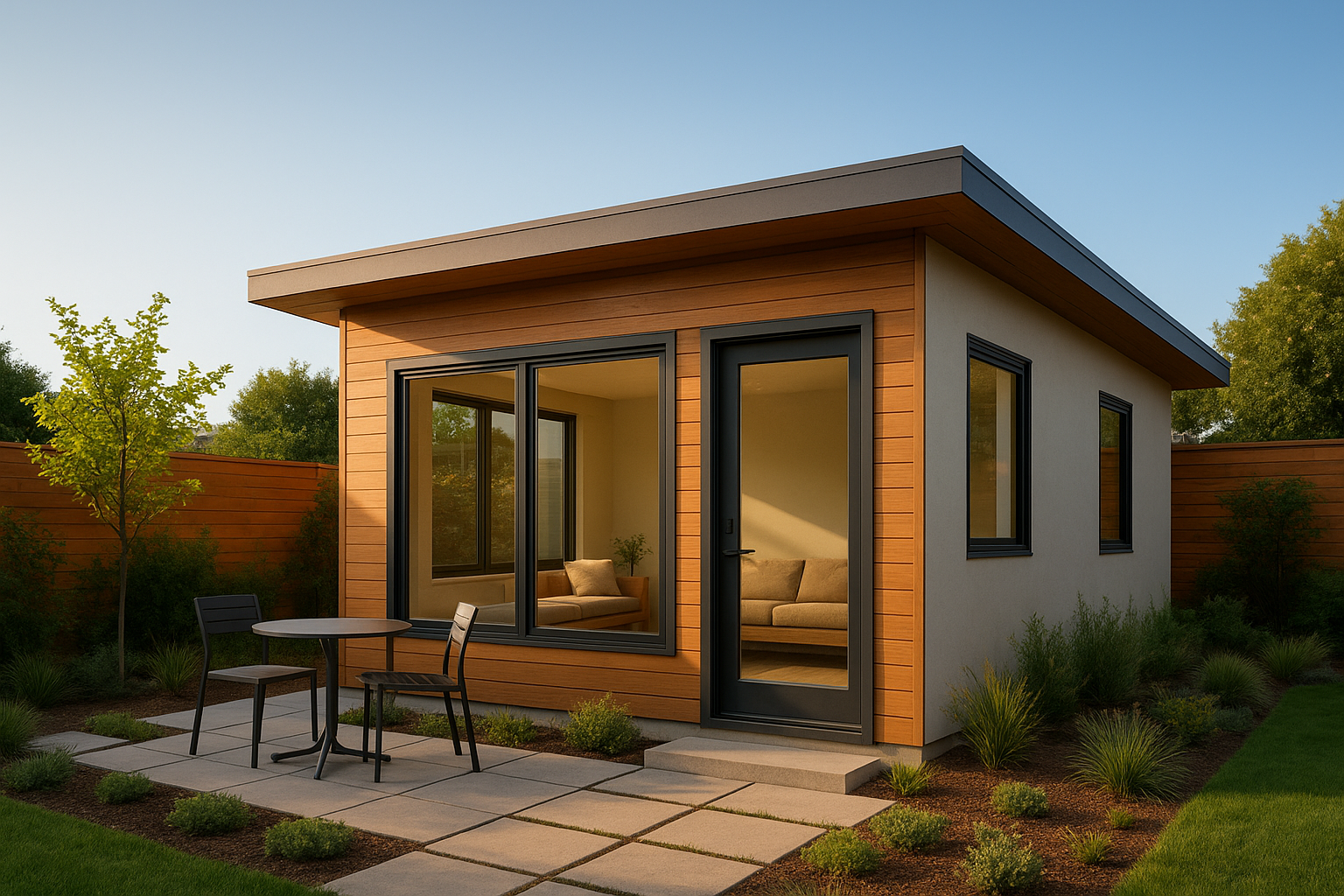
A well-designed detached ADU can transform an underused backyard into a fully functional living space — one of the most popular residential ADU solutions available today.
What Are Residential ADU Solutions, Exactly?
An accessory dwelling unit (ADU) is a secondary housing unit built on the same lot as a single-family or multifamily home. Residential ADU solutions, therefore, refer to the full range of professional services — design, engineering, permitting, and construction — required to bring that secondary unit to life.
Specifically, these solutions address every obstacle a homeowner faces along the way: navigating local zoning codes, coordinating subcontractors, scheduling inspections, and confirming that the finished unit meets state habitability standards. Furthermore, a full-service provider manages all of this under one roof, which reduces stress and helps homeowners avoid costly missteps.
Granny Flats, In-Law Suites, and Other Names You’ll Hear
Homeowners often search for “granny flats,” “in-law suites,” “backyard cottages,” or “casitas” without realizing these terms all describe the same basic concept as an ADU. In contrast to a formal legal definition, these are simply regional or colloquial names. Above all, what matters is that the structure meets your city’s zoning and building code requirements — regardless of what you call it.
For homeowners in cities like Santa Ana, Costa Mesa, and Laguna Woods, working with a locally experienced team makes a measurable difference. Local expertise typically means faster permit approvals, fewer plan-check corrections, and fewer surprises once construction begins.
Types of ADUs: Finding Your Ideal Accessory Dwelling Unit
Not every property is the same. As a result, residential ADU solutions come in several distinct forms, each suited to different lot sizes, budgets, and long-term goals.
Detached ADUs
A detached ADU is a fully independent structure built separately from the main home, offering maximum privacy for both the homeowner and the occupant. In California, detached ADUs can reach up to 1,200 square feet, which makes them large enough to function as a full guest house or a stand-alone rental.
Garage Conversions
Converting an existing garage is one of the most cost-effective approaches available. Because the structure already exists, costs are generally lower and timelines are shorter. Importantly, California law prohibits cities from requiring replacement parking when a garage is converted, removing one of the biggest historical barriers to this option.
Attached ADUs and Junior ADUs (JADUs)
An attached ADU shares a wall with the primary residence and functions similarly to a home addition. A junior ADU (JADU), in contrast, is built entirely within the existing home’s footprint and is capped at 500 square feet. Consequently, JADUs are an excellent option for homeowners who want additional living space without major exterior construction.
Interior Conversions: Basements and Attics
Many homeowners overlook a fourth option: converting an existing basement or attic into a self-contained unit. This approach typically requires added insulation, a separate entrance, and new plumbing lines, but it avoids the cost of new foundation work entirely. Therefore, it can be one of the fastest residential ADU solutions to permit in homes with adequate ceiling height and square footage.
How the ADU Development Process Works: A 5-Step Roadmap
Successfully completing an ADU project requires careful planning at every stage. Below is the proven five-step process used by experienced ADU contractors throughout Southern California.
- 1Assess Your Property and Set Goals. Evaluate your lot size, zoning designation, and existing structures. Then, decide whether your primary goal is rental income, multigenerational housing, or increasing resale value, since this initial step shapes every decision that follows.
- 2Work With a Designer or Architect. Hire a professional experienced in ADU design to create plans that satisfy California building codes and local zoning rules, because a good design balances functionality with aesthetic harmony alongside the existing home.
- 3Submit Permit Applications. File your completed plans with the local building department. Under California law, most jurisdictions must approve or deny a complete ADU permit application within 60 days, a significant improvement over prior timelines.
- 4Begin Construction With a Licensed Contractor. Work with a licensed, insured contractor to manage every phase — foundation, framing, electrical, plumbing, and finishing — while scheduled inspections confirm the work meets code at each milestone.
- 5Pass Final Inspection and Receive Certificate of Occupancy. Once all work is approved, you receive a Certificate of Occupancy, which legally certifies the ADU as a habitable space ready for use or rental.
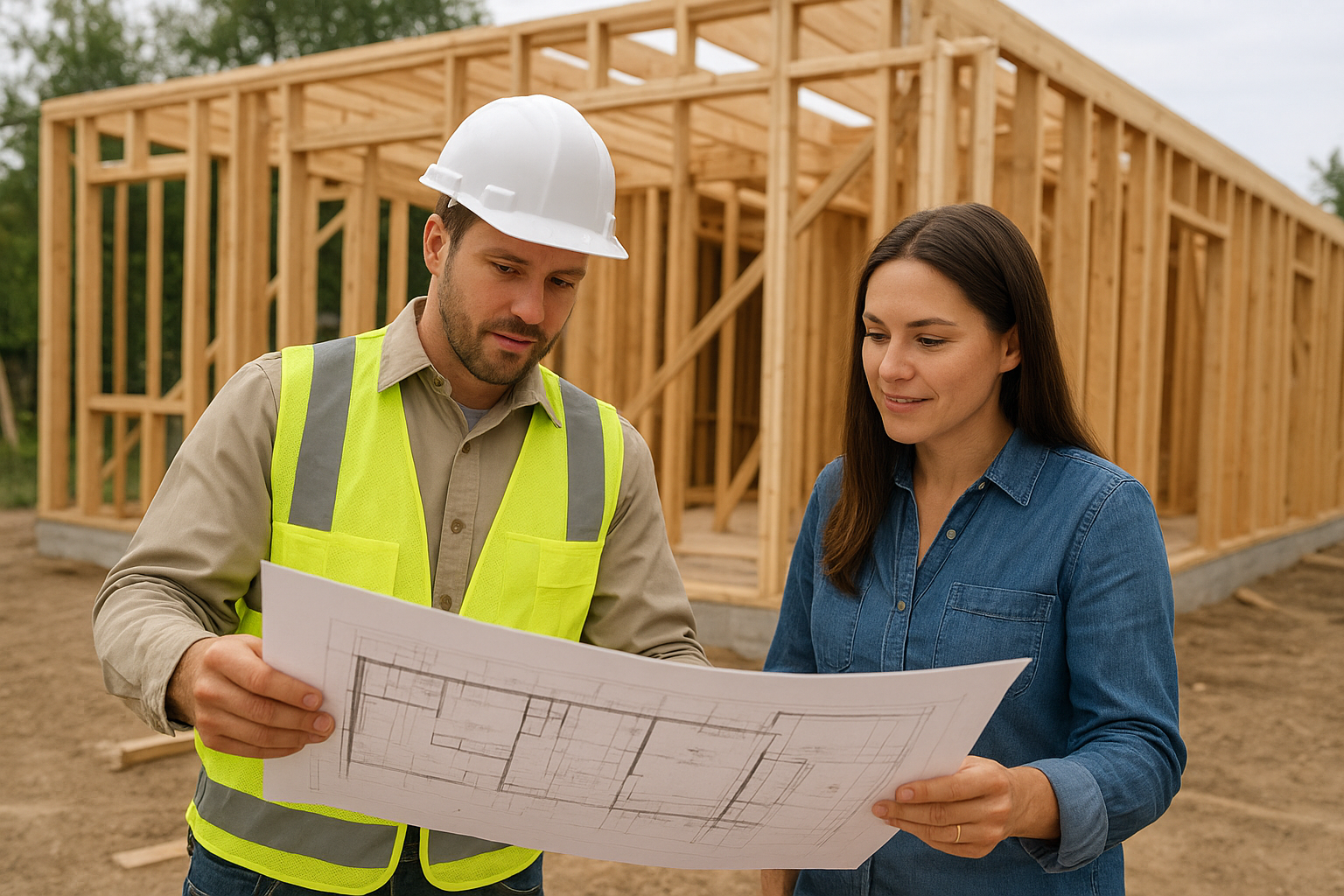
Collaborating closely with an experienced contractor at every phase is a critical part of any successful ADU project.
Residential ADU Solutions Cost Breakdown and ROI
Cost is usually the first question homeowners ask. Generally speaking, a basic garage conversion starts around $80,000, while a fully custom detached ADU can exceed $300,000 depending on size, materials, and site conditions. This wide range simply reflects how diverse residential ADU solutions can be — a studio garage conversion and a two-bedroom detached unit are very different projects.
However, the return on investment is compelling. A study by the University of California, further supported by research from the Terner Center for Housing Innovation, found that properties with ADUs in Los Angeles sold for an average of 35% more than comparable properties without them. In addition, rental income from an ADU can generate $1,500 to $3,500 per month in many Southern California markets, which helps homeowners recover construction costs within just a few years.
Financing options include cash-out refinancing, home equity lines of credit (HELOCs), construction loans, and ADU-specific loan programs offered by some California lenders. Consulting a financial advisor before committing to a project is always a smart move, particularly since financing terms vary widely between lenders.
California ADU Regulations Every Homeowner Should Know
California has passed a series of laws in recent years designed to make ADU development easier. In particular, Assembly Bills 68 and 881, along with Senate Bill 13, removed many of the restrictions that previously discouraged homeowners from building ADUs.
Key rules every homeowner should understand include:
- Setbacks: A minimum 4-foot rear and side setback applies to most ADUs, while front setbacks follow local zoning.
- Size limits: Detached ADUs may reach up to 1,200 square feet. Attached ADUs, meanwhile, are limited to 50% of the primary home’s square footage.
- Owner-occupancy: The owner-occupancy requirement was suspended through 2025, allowing non-owner-occupied properties to build ADUs as well.
- Permit timelines: Cities must process complete ADU applications within 60 days, a strict deadline that keeps projects moving.
Because regulations continue to evolve, working with a contractor who actively tracks these changes is essential. Teams serving areas like Santa Ana and Costa Mesa stay current with city-specific rules that can otherwise affect your project timeline and budget.
Choosing the Right Residential ADU Solutions Provider
Building an ADU involves far more complexity than a typical home renovation. Consequently, most homeowners benefit greatly from hiring a full-service contractor rather than managing every piece of the process themselves.
A dedicated ADU firm handles design coordination, permit submissions, subcontractor management, and city inspections — all under one roof. This integrated approach reduces delays, controls costs, and ensures the final product meets both code requirements and the homeowner’s original vision.
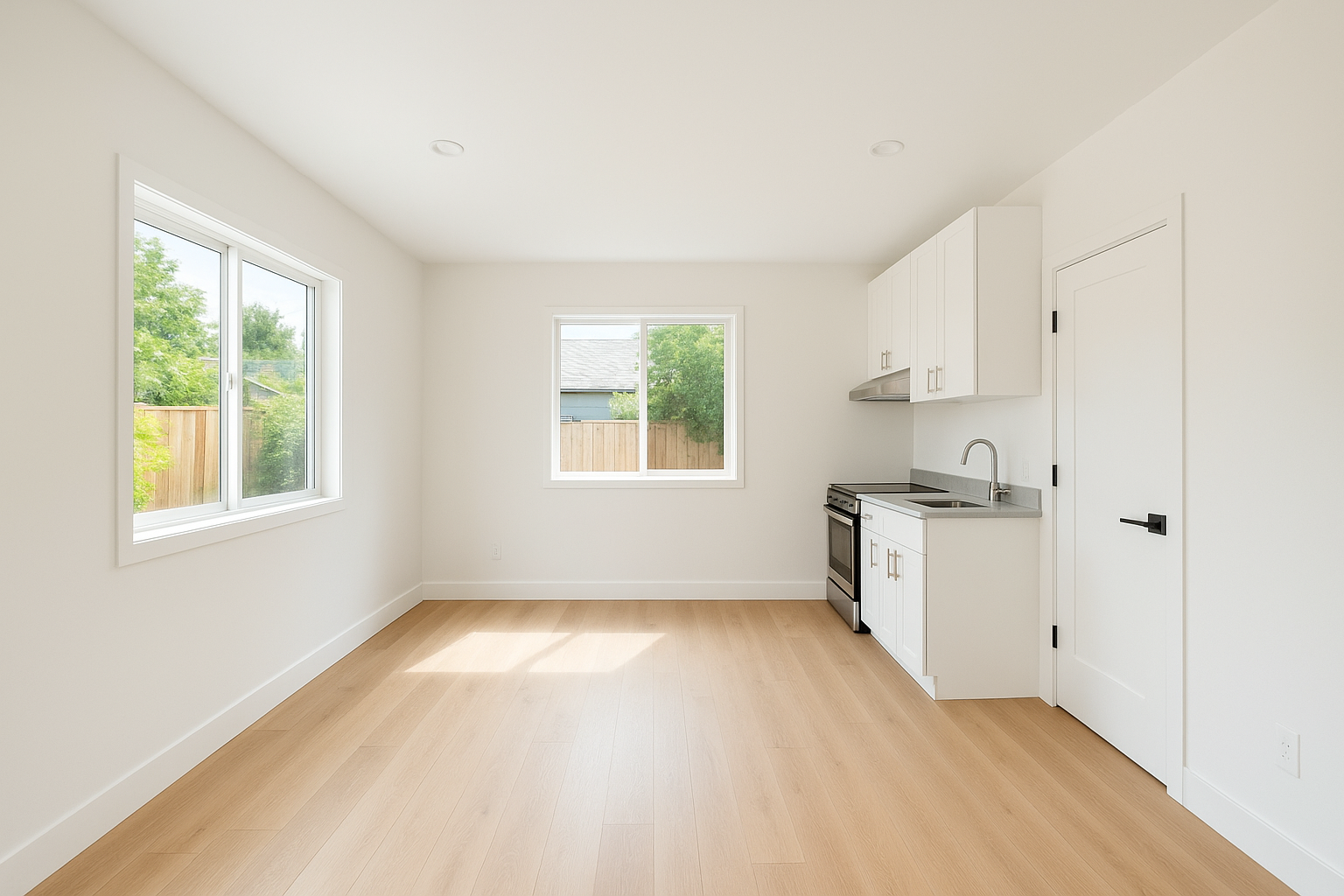
A finished ADU interior demonstrates how thoughtful design maximizes every square foot of a compact living space.
ADU Design Considerations Across Southern California Cities
Design requirements and aesthetic expectations vary considerably across Southern California cities. For example, a coastal city like Costa Mesa may enforce different architectural guidelines than an inland city like Murrieta. Therefore, tailoring your ADU design to the local context is both a practical and an aesthetic priority.
Homeowners in San Diego County face their own unique set of regulations. Exploring ADU design options for San Diego County is a smart starting point for anyone in that region. Similarly, understanding local setback rules, height limits, and utility connection requirements in each city prevents costly redesigns mid-project.
Local design teams also serve several additional communities, including:
- ADU design services in Pasadena, where historic-district guidelines often shape exterior finishes.
- ADU design specialists in Irvine, serving master-planned communities with strict HOA standards.
- A trusted ADU contractor in Temecula, where larger lot sizes often support bigger detached units.
- ADU design solutions in Aliso Viejo, tailored to hillside lots and coastal-adjacent zoning.
In addition, the California HCD’s ADU resource page provides city-by-city guidance that homeowners and contractors can reference throughout the planning phase.
Professional ADU Services vs. DIY: Which Approach Wins?
Some homeowners consider managing an ADU project themselves to save money. However, comparing the two paths side by side usually clarifies the decision quickly.
Full-Service Residential ADU Solutions
A single point of contact manages design, permitting, and construction. Consequently, timelines are typically shorter, code compliance is handled proactively, and warranty coverage protects you after move-in.
Self-Managed DIY Approach
You coordinate the architect, permit runner, and subcontractors separately. While this can occasionally lower fees, it also shifts scheduling risk, code research, and inspection coordination entirely onto you.
In most cases, the time savings and reduced risk of a professional residential ADU solution outweigh the modest fee difference — particularly for first-time builders unfamiliar with local permitting offices.
Common Mistakes That Derail Accessory Dwelling Unit Projects
Even experienced homeowners run into avoidable problems. Specifically, watch out for these common pitfalls:
- Skipping the utility capacity check. Older homes sometimes need panel or sewer-lateral upgrades before an ADU can be added.
- Underestimating soft costs. Permit fees, impact fees, and design fees can add 10–20% to a total budget.
- Choosing an unlicensed contractor. This risks incomplete work, code violations, and difficulty obtaining a Certificate of Occupancy.
- Ignoring resale plans. A design that doesn’t match neighborhood expectations can limit future buyer appeal.
Frequently Asked Questions About Residential ADU Solutions
What are residential ADU solutions?
Residential ADU solutions are end-to-end services that help homeowners plan, design, permit, and build accessory dwelling units on their existing property. These solutions cover everything from site evaluation and architectural design to construction and final city inspection.
What types of ADUs can I build on my property?
The most common types include detached ADUs, attached ADUs, garage conversions, interior conversions, and junior ADUs (JADUs). Each type has different size limits and permitting requirements under California law.
How much does it cost to build an ADU in Southern California?
Costs typically range from $80,000 for a basic garage conversion to over $300,000 for a fully custom detached ADU. Factors include size, materials, site conditions, and local permit fees. For regional guidance on sizing, design, and local rules, see Southern California ADUs.
Do I need a permit to build an ADU in California?
Yes, a building permit is required for every ADU type in California. However, state law has streamlined the process significantly, and many jurisdictions must approve complete ADU permit applications within 60 days.
How long does it take to complete an ADU project?
A typical ADU project takes 6 to 12 months from initial design to final inspection. Permitting timelines vary by city, but construction of a standard detached ADU generally takes 3 to 6 months once permits are approved.
Can I rent out my ADU for income?
Yes, California law expressly allows homeowners to rent ADUs to tenants. Rental income from an ADU can significantly offset mortgage or construction loan payments, often generating $1,500 to $3,500 per month in Southern California markets.
Will an ADU increase my property value?
Research consistently shows that ADUs increase property values. A University of California study found that properties with ADUs in Los Angeles sold for an average of 35% more than comparable properties without them.
What is a junior ADU (JADU)?
A junior ADU is a smaller unit of up to 500 square feet created within the existing walls of the primary residence. JADUs are cost-effective because they require less construction work and carry lower permit fees.
What are the setback requirements for an ADU in California?
State law requires a minimum 4-foot rear and side setback for most ADUs. Front setbacks follow local zoning rules, and some cities apply additional requirements, so checking with your local planning department is important.
Can I convert my garage into an ADU?
Yes, garage conversions are among the most popular and affordable residential ADU solutions. California law prohibits cities from requiring replacement parking spaces when a garage is converted, making this option even more accessible.
What is the maximum size allowed for an ADU?
Detached ADUs can be up to 1,200 square feet in California. Attached ADUs are generally limited to 50% of the primary dwelling’s square footage, up to a maximum of 1,200 square feet.
How do I finance an ADU construction project?
Common financing options include cash-out refinancing, home equity lines of credit (HELOCs), construction loans, and ADU-specific loan programs offered by some California lenders. A financial advisor can help you choose the best option for your situation.
What’s the difference between an ADU, a granny flat, and an in-law suite?
Nothing legally — these are simply different regional names for the same concept: a secondary dwelling unit on a residential lot. What actually matters is whether the structure meets your city’s specific ADU ordinance.
Do I need to live on my property to build an ADU?
Not currently. California suspended the owner-occupancy requirement through 2025, meaning non-owner-occupied properties can still add an ADU, though this rule is subject to future legislative changes.
Can I build more than one ADU on the same lot?
In many cases, yes. Some single-family lots qualify for both an ADU and a JADU, while certain multifamily properties can add multiple detached ADUs, subject to local zoning and lot-size rules.
Conclusion: Getting Started With Residential ADU Solutions
Residential ADU solutions represent one of the most practical and financially rewarding investments available to Southern California homeowners today. From detached guest houses and garage conversions to junior ADUs tucked inside an existing home, the options are diverse, and the benefits are well documented. Whether your goal is rental income, multigenerational living, or a higher resale price, a well-executed ADU project delivers measurable results.
Above all, success depends on working with a team that understands both the construction process and the regulatory landscape. For homeowners across Orange County, Los Angeles County, and Riverside County, theadupro.com provides the local expertise, transparent communication, and skilled craftsmanship needed to turn an ADU vision into a finished, permitted, income-generating reality. Last updated: June 2026. — The ADU Pro Team.