
ADU approval is the single most important milestone standing between your idea for a backyard rental unit and a finished, income-generating home. An accessory dwelling unit, commonly called an ADU (a self-contained secondary residence built on the same lot as an existing house), can only be legally built once a local building department signs off on your plans. In Southern California, thousands of homeowners start this journey every year — yet many stall for months because they misunderstand what the approval process actually requires. This guide walks through everything you need to know about winning ADU approval quickly, avoiding the mistakes that cause delays, and working with the right professionals to get your unit built.
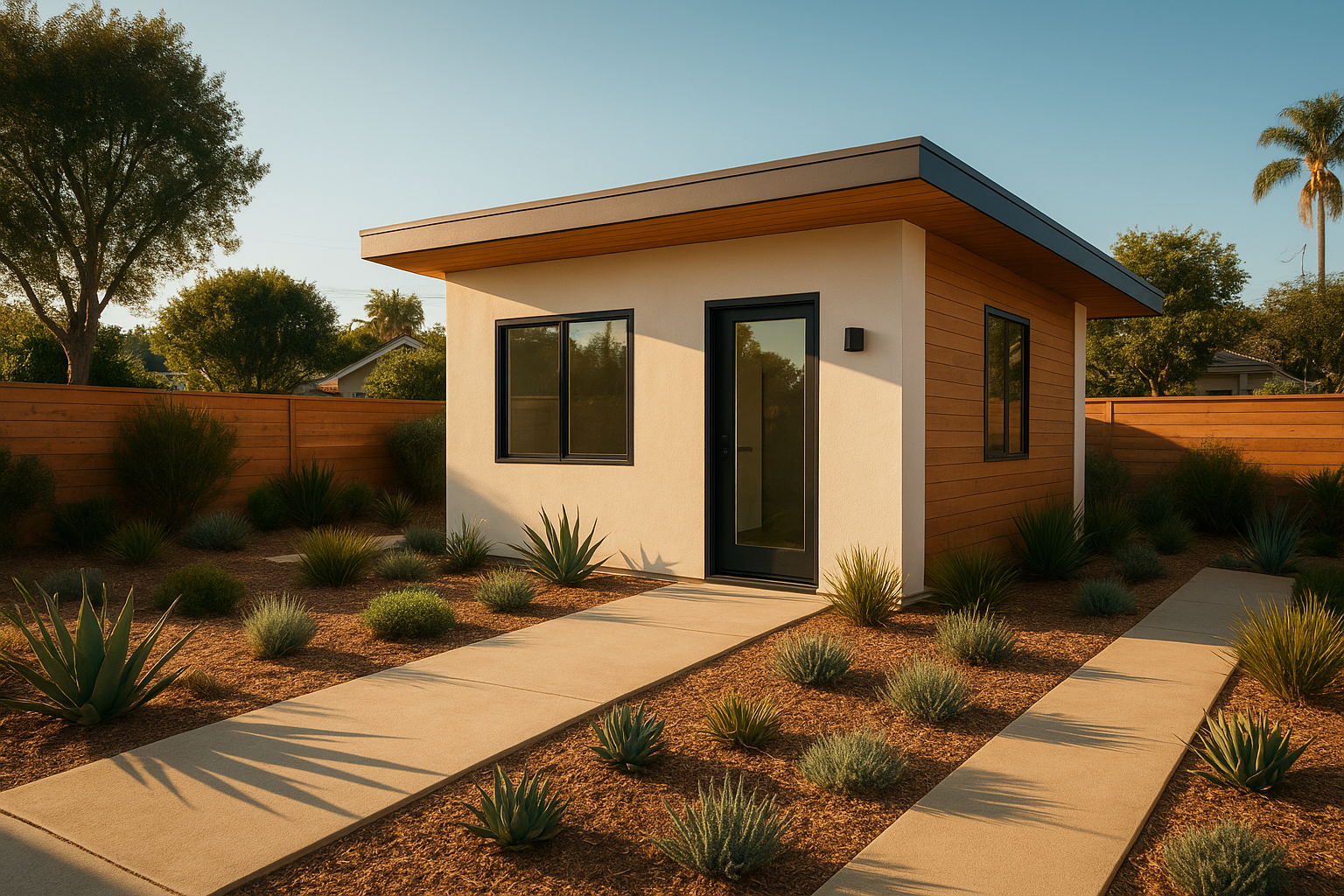
A completed detached ADU in Southern California — the end result of a well-managed ADU approval process.
What Is ADU Approval, Exactly?
ADU approval is the formal process by which your local building or planning department reviews and signs off on your accessory dwelling unit plans before construction can legally begin. In practice, it involves several overlapping reviews — zoning compliance, architectural plan check, structural review, energy compliance, and utility connection sign-off. Approval is granted only once every one of these boxes is checked.
California state law now requires local jurisdictions to approve or deny a complete ADU permit application within 60 days, according to the California Department of Housing and Community Development (HCD). That clock, however, only starts once your application is deemed “complete” — a subjective judgment made by the reviewing planner. Consequently, an incomplete submission can reset the entire timeline, which is precisely why preparation matters more than speed.
Furthermore, California’s ADU reform legislation — including AB 68, AB 881, and SB 13 — has removed many traditional barriers to ADU approval, such as owner-occupancy requirements and excessive parking mandates. As a result, homeowners today have far more flexibility than they did even five years ago. That said, taking full advantage of these reforms still requires knowing how to work within your specific city or county’s review system, since local implementation varies widely. For background on how an ADU is defined and regulated more broadly, see the Wikipedia overview of accessory dwelling units.
Why ADU Approval Gets Delayed
Before you can fix a problem, you need to understand it. Most ADU approval delays fall into three categories: incomplete applications, design non-compliance, and slow response times from the applicant. Each one compounds the others, so a small oversight early on can snowball into a months-long setback.
Specifically, missing documents are the number-one cause of correction notices. A typical ADU permit package must include a site plan, floor plan, elevation drawings, a Title 24 energy compliance report (California’s building energy efficiency standard), structural calculations, and utility connection details. Omitting even one of these triggers a correction notice — and each round of corrections can add two to four weeks to your ADU approval timeline.
In addition, design errors such as incorrect setback calculations or non-compliant ceiling heights cause a second wave of delays. California mandates a minimum 4-foot rear and side setback for most detached ADUs, but local jurisdictions may layer on additional requirements. Therefore, verifying both state and local standards before finalizing your drawings is essential to smooth ADU approval.
Finally, slow applicant responses compound every other issue. When a building department issues a correction notice, it typically gives you a limited window to respond. Missing that window can move your application to the back of the review queue. As a result, staying engaged and responsive throughout the review process is just as important as the initial submission.
Step-by-Step: How to Win ADU Approval Faster
The process below is designed to minimize back-and-forth with your local building department and keep your ADU approval on schedule. For a deeper look at what the full permit process involves, visit our guide on what the ADU permit process entails.
- Assess your property and confirm eligibility. Review your zoning designation, lot size, and existing structures before spending a dollar on design so you know your property genuinely qualifies for ADU approval under both state and local rules.
- Choose the right ADU type for your lot. Detached units, attached additions, garage conversions, and junior ADUs each carry different approval complexities, so selecting the right fit early avoids costly redesigns mid-process.
- Follow local design best practices before finalizing plans. Match your unit’s roofline, materials, and window placement to the main house and respect neighboring privacy lines, since design-review objections are a common reason ADU approval stalls in design-conscious cities.
- Prepare a complete and accurate permit package. Work with your designer or contractor to compile every required document — site plan, floor plan, elevations, Title 24 report, and structural calculations — before submitting, since a complete first submission is the single biggest time-saver in ADU approval.
- Submit your application and respond promptly to corrections. Use online portals where available, monitor your application status daily, and aim to respond to any correction notices within 24 to 48 hours to keep momentum on your side.
- Align your financing timeline with your approval timeline. Start your loan or funding application in parallel with your permit submission rather than waiting, so financing is ready the moment ADU approval clears.
- Schedule inspections promptly as each phase completes. Coordinate framing, electrical, plumbing, and final inspections without delay, because letting completed work sit uninspected creates unnecessary scheduling backlogs at the finish line.
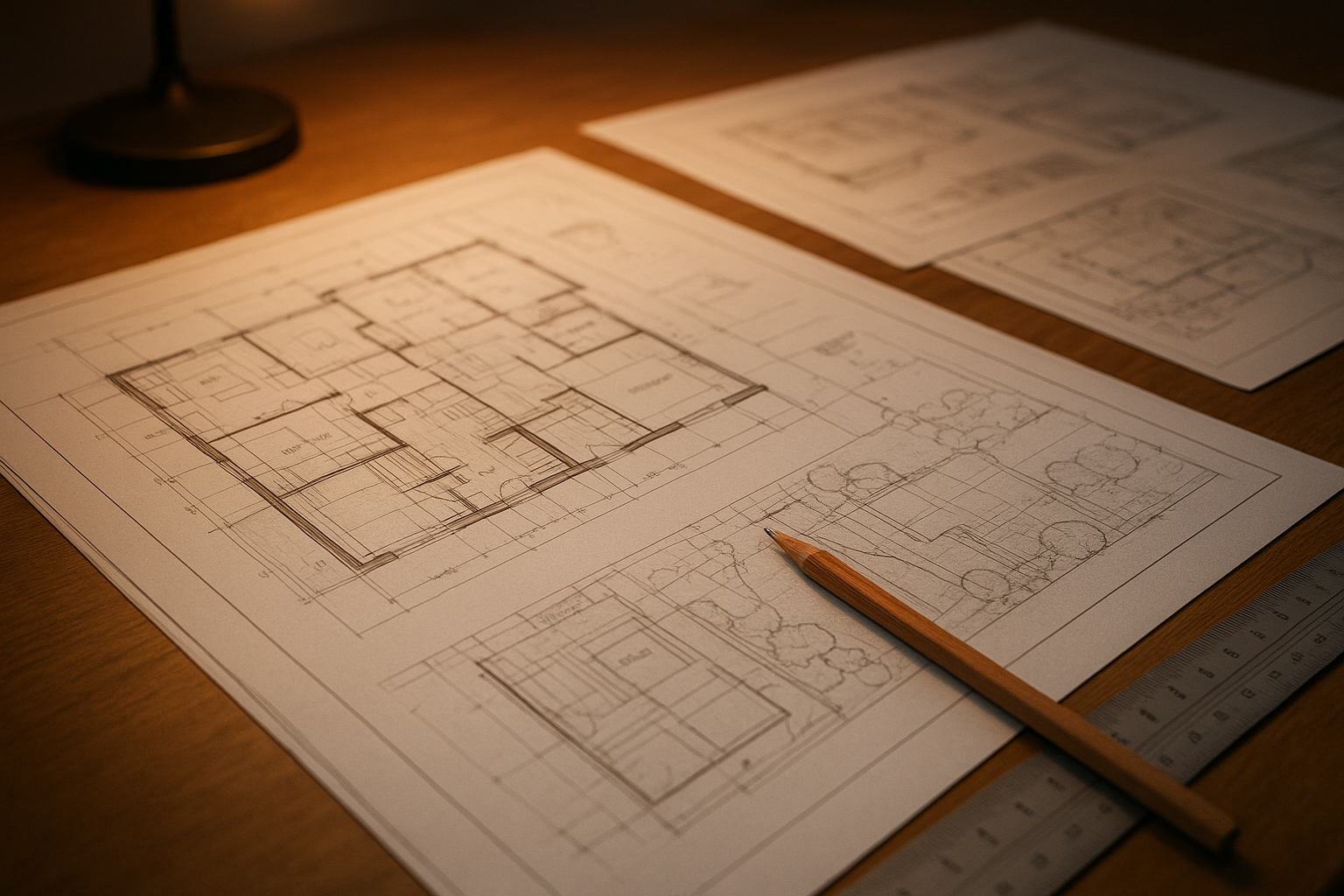
A thorough, accurate permit package is the foundation of fast ADU approval.
ADU Approval Best Practices for Site Planning and Design
Beyond paperwork, thoughtful site planning meaningfully improves your odds of fast ADU approval, particularly in jurisdictions with design-review boards or historic overlay zones. Reviewers look favorably on plans that respect the character of the neighborhood while still meeting the letter of state law.
- Orient windows away from neighboring yards to minimize privacy complaints during public comment periods, which some jurisdictions still allow even though ADUs are largely a ministerial (staff-level, non-discretionary) approval.
- Match exterior materials and rooflines to the primary residence wherever possible; several cities explicitly favor architectural consistency in their ADU design guidelines.
- Preserve mature trees and drainage patterns on the lot, since environmental review triggers can add unexpected weeks to an otherwise straightforward ADU approval.
- Plan utility connections early — sewer laterals, water meters, and electrical panel capacity should be assessed before the design is finalized, not after corrections arrive.
These practices matter because a technically compliant design that ignores neighborhood context can still generate friction during plan check, even under a ministerial approval framework. In short, good design and fast ADU approval are not competing goals — they reinforce each other.
Using Pre-Approved Plans to Accelerate ADU Approval
One of the most effective tools for speeding up ADU approval is using a pre-approved plan. Many California cities and counties — including several across Los Angeles and Orange County — offer standardized plan programs that have already passed architectural and structural review. Choosing one of these plans eliminates the architectural review stage entirely, potentially saving three to six weeks off your ADU approval timeline.
Moreover, pre-approved plans are often designed to meet state energy and accessibility standards, which means fewer Title 24 compliance issues during plan check. Our team at theadupro.com works with clients to identify whether a pre-approved plan fits their property — and when it does, the time savings toward ADU approval are substantial. You can also explore our ADU design process to see how we approach plan selection for each unique property.
In contrast, custom designs require full plan check review, which naturally takes longer. However, custom designs are sometimes necessary for unusual lot shapes, hillside properties, or homeowners with specific space requirements. In those cases, working with a contractor who has an established relationship with local plan checkers can still accelerate ADU approval considerably.
Impact Fees and Cost Considerations
Under California law, ADUs under 750 square feet are fully exempt from impact fees — a significant financial benefit tied directly to the approval process. For context, impact fees in some Southern California jurisdictions can exceed $20,000 for larger residential projects. Therefore, keeping your ADU under the 750-square-foot threshold is not just a design choice; it is a strategic decision that also tends to simplify ADU approval.
Junior ADUs (JADUs) — units of up to 500 square feet created within the existing home’s footprint — carry the fewest regulatory hurdles of all ADU types. As a result, they often represent the fastest path to ADU approval, particularly for homeowners who want rental income or a place for a family member without major construction.
How Expert Contractors Accelerate ADU Approval
Working with an experienced ADU contractor is arguably the most reliable way to streamline the entire approval journey. Contractors who specialize in ADU development — particularly in jurisdictions like Orange County, Los Angeles County, and Riverside County — know exactly what each local building department expects to see in a permit package.
Specifically, they understand which common errors trigger correction notices in each city, how to calculate setbacks correctly, and how to present structural and energy data in the format plan checkers prefer. This institutional knowledge dramatically reduces revision cycles. For more insight into how the right team makes a difference, see our page on the convenience of working with an ADU specialist.
Furthermore, experienced contractors often have established working relationships with local building departments. While this does not mean special treatment, it does mean smoother communication and faster resolution of minor issues that might otherwise stall ADU approval. You can also read about improving ADU development standards to understand the broader regulatory landscape these professionals navigate daily. If you are still deciding who to trust with your project, our page addressing whether theadupro.com is reliable for managing ADU permits and construction answers that question directly.
Completing Your Funding Application Without Delaying Approval
For homeowners using financing, ADU approval and funding timelines often intersect in ways that create additional delays. Specifically, many lenders require a permit approval letter before disbursing construction funds. Therefore, any delay in the approval process directly delays your access to financing.
Planning your funding application in parallel with your permit submission — rather than sequentially — is a smart way to keep both timelines aligned. Our team can help you understand how to complete your ADU funding application efficiently so financing is ready when ADU approval clears.

A successful garage conversion ADU — achieved through careful planning, expert permit preparation, and fast ADU approval.
ADU Approval Across Southern California: What Varies by City
Although state law sets a statewide floor for ADU approval, local implementation still varies meaningfully from city to city. Setback nuances, design-review triggers, and average review times differ across jurisdictions, so it helps to see how this plays out in specific markets we build in regularly.
- In coastal communities, projects often intersect with additional environmental review — see our ADU plans for Malibu properties for how we navigate that layer of ADU approval.
- Historic-district guidelines can affect exterior design requirements — our ADU plans for Pasadena homeowners page covers how we keep approval on track in those neighborhoods.
- Utility connection rules vary by water district — learn more on our ADU construction services in Los Alamitos page.
- Design-review boards remain active in some Orange County cities — see our ADU design services in Aliso Viejo for how thoughtful design keeps approval moving quickly.
Common Mistakes That Slow Down ADU Approval
Even well-intentioned homeowners make avoidable mistakes that add months to their ADU approval timeline. Understanding these pitfalls in advance is a key part of any streamlining strategy.
- Submitting incomplete applications. As noted earlier, missing documents are the leading cause of correction notices. Always verify your checklist against the building department’s published requirements before submitting.
- Ignoring local amendments to state law. California state ADU law sets a floor, not a ceiling. Local jurisdictions can add requirements on top of state minimums, so always check both before assuming ADU approval will be automatic.
- Starting construction before approval. Unpermitted work can result in stop-work orders, fines, and mandatory demolition. It also voids your ability to legally rent or sell the unit later.
- Underestimating utility upgrade requirements. Many ADU projects require electrical panel upgrades, new water meter connections, or sewer lateral work. Failing to account for these in your permit package causes costly mid-project surprises.
- Choosing a contractor without ADU-specific experience. General contractors unfamiliar with ADU regulations often submit non-compliant plans, triggering multiple correction cycles that delay approval significantly.
Additionally, the California HCD publishes enforcement guidance that homeowners can use to appeal unlawful local denials. If your jurisdiction is imposing requirements that exceed state law, you have legal recourse — and knowing this can itself be a powerful tool in securing ADU approval on your terms.
Frequently Asked Questions About ADU Approval
Understanding ADU requirements in California
ADU approval means your local building department has formally reviewed and accepted your accessory dwelling unit plans as compliant with zoning, structural, and energy codes. California state law now mandates that most ADU applications be approved or denied within 60 days of a complete submission.
How long does ADU approval take in California?
Under California law, local agencies must act on a complete ADU permit application within 60 days. However, incomplete applications or design revisions can extend this timeline significantly — sometimes by several months.
What is the biggest cause of ADU approval delays?
Incomplete or inaccurate permit applications are the most common cause. Missing site plans, incorrect setback calculations, or absent utility information often trigger correction notices that add weeks to the process.
Can I use a pre-approved ADU plan to speed up approval?
Yes. Many California cities offer pre-approved ADU plan programs that skip the architectural review stage. Using these plans can reduce approval time by several weeks and lower design costs considerably.
Do I need an architect to get ADU approval?
Not always. For smaller or simpler ADUs, a licensed contractor or designer may prepare the required drawings. However, larger or more complex projects often benefit from a licensed architect to ensure full code compliance.
What permits are required for ADU approval in Southern California?
Most ADU projects require a building permit plus potential mechanical, electrical, and plumbing sub-permits. Some jurisdictions also require a grading or utility connection permit depending on the project scope.
How does hiring an experienced ADU contractor help speed up approval?
An experienced ADU contractor knows local building department requirements, common correction triggers, and how to prepare complete, accurate permit packages. This expertise dramatically reduces revision cycles and overall approval time.
What is a junior ADU and does it have a faster approval process?
A junior ADU (JADU) is a unit of up to 500 square feet created within an existing home’s footprint. JADUs often have a simpler approval process because they require fewer structural changes and have reduced impact fees under California law.
Are ADU impact fees waived in California?
Under California law, ADUs under 750 square feet are fully exempt from impact fees. This exemption significantly lowers upfront costs and is one of the most impactful financial benefits available to ADU builders today.
What is the setback requirement for ADU approval in California?
California state law requires a minimum 4-foot rear and side setback for most detached ADUs. However, local jurisdictions may have additional requirements, so verifying with your city or county planning department is essential before finalizing your design.
Can a garage conversion qualify for ADU approval?
Yes. Garage conversions are one of the most popular and cost-effective ADU types in Southern California. They typically involve converting an existing attached or detached garage into a livable unit with proper insulation, plumbing, and electrical upgrades.
What documents do I need to submit for ADU approval?
A typical ADU permit package includes a site plan, floor plan, elevation drawings, a Title 24 energy compliance report, structural calculations, and utility connection plans. Submitting a complete package on the first attempt is the cornerstone of fast ADU approval.
What is the difference between ADU approval and a standard building permit?
ADU approval refers to the entire review process specific to accessory dwelling units, including zoning and ADU-specific state law compliance, while a standard building permit is the construction authorization issued once that broader review is complete. In practice, ADU approval must happen before your building permit can be issued.
How can I appeal a denied ADU application in California?
If your ADU approval is denied for reasons that exceed state law, you can file a written appeal with your local planning commission and, if necessary, escalate the complaint to California HCD, which has authority to intervene when local agencies impose unlawful restrictions.
Does ADU approval affect my property value?
Yes. A fully approved and permitted ADU adds legally recognized square footage and rental potential to your property, which typically increases resale value more than an unpermitted structure that a buyer’s lender or appraiser cannot legally count.
Conclusion: Take Control of Your ADU Approval Timeline
Winning fast ADU approval is not about cutting corners — it is about being thoroughly prepared, strategically informed, and partnered with the right professionals. By submitting a complete permit package, following local design best practices, responding promptly to corrections, leveraging pre-approved plans where available, and working with a contractor who knows your local building department inside and out, you can dramatically reduce your project timeline and avoid the costly delays that derail so many ADU builds.
Southern California homeowners in Orange County, Los Angeles County, and Riverside County have more regulatory support for ADU approval than ever before. Therefore, the biggest remaining variable is execution — and that is where expertise makes all the difference. Whether you are planning a detached guest house, a garage conversion, or a junior ADU, the team at theadupro.com is ready to guide you through every phase of the process, from design to final inspection, with the efficiency and craftsmanship that has made us a top-rated ADU contractor in the region.