
To build a guest house is one of the smartest investments a Southern California homeowner can make in 2025. Whether your goal is generating rental income, housing aging parents, or simply adding flexible living space, a well-planned guest house delivers lasting value — financial and personal. This guide walks you through every stage of the process, from early planning to the final inspection.
Build a Guest House: What It Is and Why Build One?
A guest house is a secondary residential unit located on the same property as a primary home. In California, it is legally classified as an accessory dwelling unit (ADU) — a fully self-contained living space with its own kitchen, bathroom, and sleeping area. The terms are used interchangeably in everyday conversation, but “ADU” is the official regulatory term.
Homeowners choose to build a guest house for several compelling reasons. According to the California Department of Housing and Community Development, ADU construction permits statewide have grown by over 1,000% since 2017 — a clear signal that more families are recognizing the value. Specifically, guest houses can generate $1,500 to $3,500 per month in rental income in Southern California markets, helping offset mortgage costs significantly. See our ADU construction guide for a complete build overview.
Furthermore, multigenerational living is a growing priority. Many homeowners want a private, comfortable space for elderly parents or adult children — close but independent. A guest house solves that problem elegantly. See our ADU house guide for configuration options.
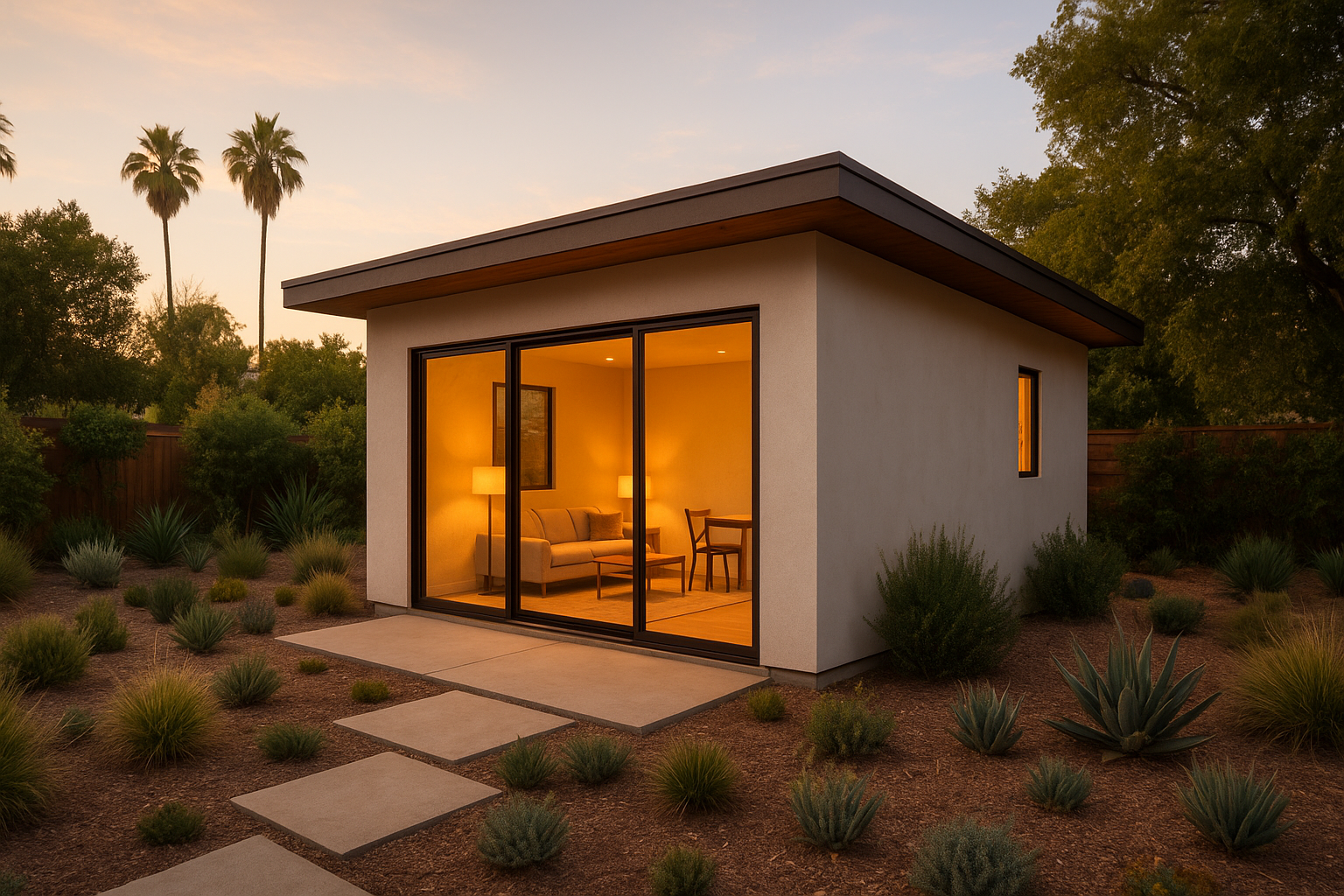
A detached guest house adds private living space and significant property value to a Southern California home.
Types of Guest Houses to Consider
Before you break ground, it helps to understand your options. Not every property suits every type of build, and your goals should shape your choice. Here are the four primary configurations:
Detached Guest House: A standalone structure in your backyard. This offers maximum privacy and is the most desirable option for rental purposes. It also tends to add the most property value. See our ADU construction guide for a detailed, step-by-step build process.
Attached Addition: Built directly onto your existing home, sharing at least one wall. This is often more cost-effective than a detached build but may offer less privacy.
Garage Conversion: Converts an existing attached or detached garage into a livable unit. This is frequently the most affordable path, as the shell structure already exists.
Junior ADU (JADU): A smaller unit (up to 500 sq ft) carved out of existing interior space, such as a converted bedroom suite. JADUs are the fastest and most budget-friendly option.
For a deeper look at whether adding a secondary unit makes financial sense for your situation, see our guide on whether it’s worth it to add a guest house to your home.
How to Build a Guest House: Step-by-Step
Planning and executing a guest house project involves several distinct phases. Following these steps in order will help you avoid costly mistakes and keep your project on track. For design examples and local code adaptations, see our ADU homes guide.
- Define Your Goals and Budget. Start by clarifying your purpose. Are you building for rental income, family use, or resale value? Each goal influences design choices and budget priorities. Research local construction costs and arrange financing — whether through a HELOC, construction loan, or California’s CalHFA ADU Grant Program — before you go further.
- Research Local Zoning and ADU regulations. California state law sets baseline ADU rules, but your city or county may have additional requirements. Check setbacks, height limits, parking rules, and owner-occupancy requirements with your local building department before committing to a design.
- Choose a Design and Hire a Licensed Contractor. Select the guest house type that fits your property and goals. Then engage a licensed ADU contractor who understands local codes and a custom ADU design team. A qualified team handles architectural plans, structural engineering, and design coordination — saving you time and reducing permit revision delays.
- Submit Permit Applications. Your contractor prepares and submits a complete permit application to your local jurisdiction. Under California law, agencies must approve or deny a complete ADU application within 60 days — a major improvement over older timelines.
- Begin Construction and Pass Inspections. Once permits are approved, construction begins. Inspections are required at key milestones — foundation, framing, rough electrical, rough plumbing, and insulation — before walls close. Your contractor coordinates these with the building department.
- Obtain a Certificate of Occupancy. After passing the final inspection, your local agency issues a Certificate of Occupancy (CO). This document legally certifies the guest house is habitable and ready for use or rental.
Understanding California’s ADU Permit Timeline
In practice, total project timelines range from 6 to 18 months. Design and planning typically takes 1–3 months, permitting 2–6 months, and construction 3–9 months. However, projects in cities with streamlined ADU review processes — such as Los Angeles — can move significantly faster. For permitting details and fee breakdowns, see ADU costs and permits.
For a detailed breakdown of backyard construction timelines and what affects them, explore our backyard cottage construction cost and timeline guide.
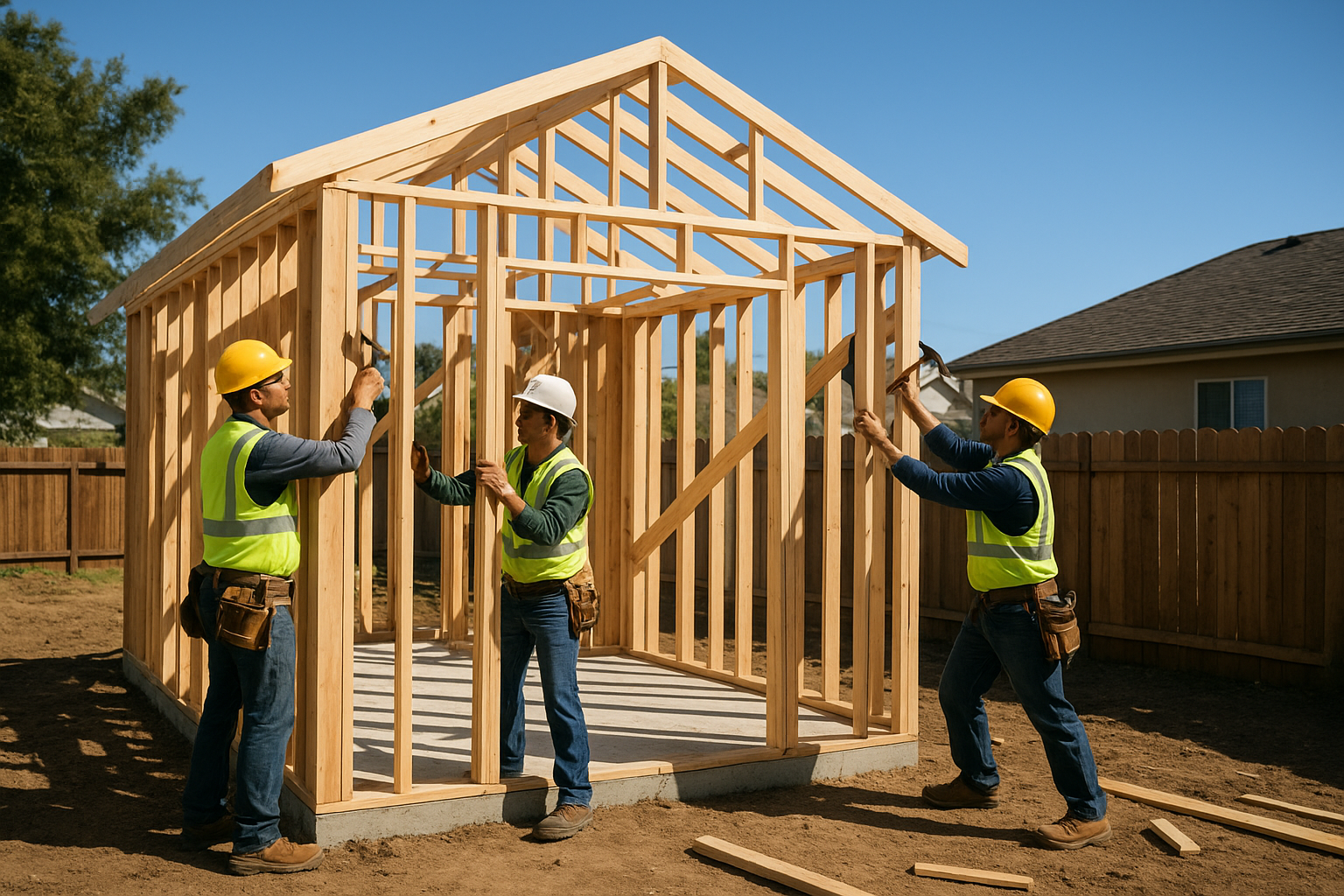
The framing phase is one of the most visible milestones when you build a guest house — progress becomes tangible quickly. Consult our Home ADU guide for timeline details.
How Much Does It Cost to Build a Guest House?
Cost is, understandably, one of the first questions homeowners ask. In Southern California, building a guest house typically ranges from $150,000 to $400,000 for a detached unit. Several factors drive that range:
- Size: Larger units cost more. A 400 sq ft studio runs far less than an 800 sq ft one-bedroom.
- Site conditions: Sloped lots, poor soil, or limited access can increase foundation and grading costs.
- Finishes and fixtures: Premium cabinetry, flooring, and appliances add up quickly.
- Utility connections: Running new electrical, plumbing, and gas lines from the main house adds cost, especially on large lots.
- Permit and impact fees: These vary by jurisdiction and can range from a few thousand dollars to over $20,000.
For a more granular cost breakdown, our article on 800 sq ft ADU costs and budgeting for 2025 provides detailed numbers. Additionally, if you’re considering a smaller creative workspace alongside your guest house, our backyard studio designs and cost guide is worth reviewing.
Return on Investment: Is It Worth Building?
The short answer is yes — for most Southern California homeowners. Research from Zillow Research and local appraisers consistently shows that a permitted ADU can increase a home’s market value by $100,000 to $200,000 or more in high-demand markets like Orange County and Los Angeles. Meanwhile, monthly rental income in these areas commonly ranges from $1,800 to $3,500 depending on location and unit size.
Consequently, many homeowners recover their construction investment within 7 to 12 years through rental income alone — while simultaneously enjoying an appreciating asset.
Choosing the Right Contractor to Build Your Guest House
Selecting the right contractor is arguably the single most important decision in your project. An ADU contractor — rather than general residential construction — brings critical advantages. Specifically, they understand California’s evolving ADU regulations, maintain relationships with local plan checkers, and know how to design for maximum livability within code constraints.
When evaluating contractors, look for these qualities:
- A valid California contractor’s license (verify at the CSLB website)
- Demonstrated experience with ADU and guest house projects specifically
- Transparent, itemized project quotes — not vague estimates
- Clear communication and a dedicated project manager
- References from recent clients in your area
theadupro.com serves homeowners across Orange County, Los Angeles County, and Riverside County, offering end-to-end ADU development — from initial design through final inspection. Their team handles permitting, construction, and project management, making the process straightforward for homeowners who want professional results without the guesswork. You can explore a completed project example at their Mirasol project showcase.
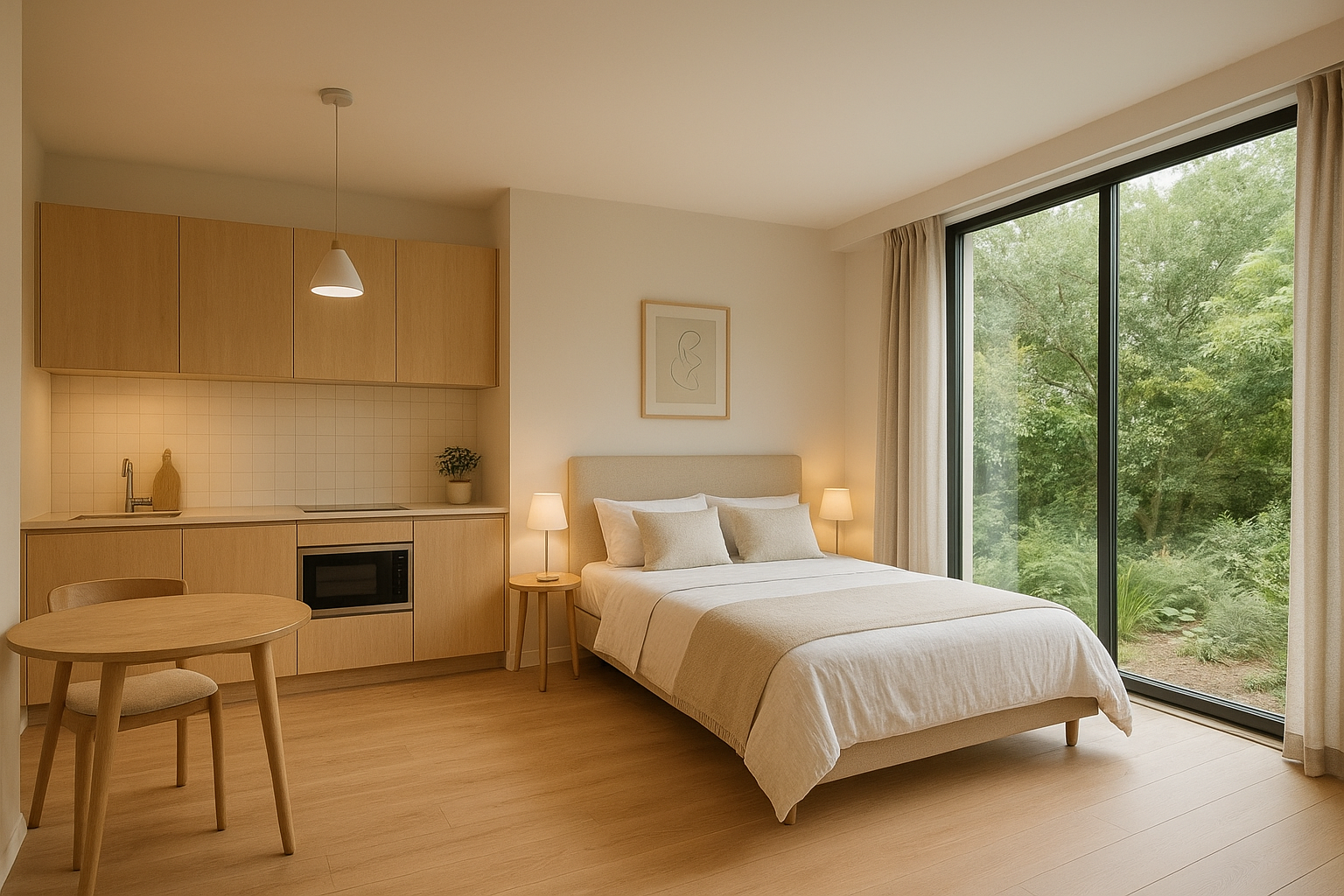
A well-designed guest house interior maximizes every square foot while feeling open, comfortable, and livable.
Frequently Asked Questions About Building a Guest House
How much does it cost to build a guest house in Southern California?
In Southern California, building a guest house typically costs between $150,000 and $400,000 depending on size, finishes, and site conditions. Smaller detached units under 500 sq ft may come in closer to $100,000–$150,000, while larger builds with premium finishes can exceed $400,000. For a full breakdown of expected fees and local permit costs, see our ADU costs and permits guide.
Do I need a permit to build a guest house in California?
Yes, a building permit is required to build a guest house in California. However, state law has streamlined the ADU permitting process, requiring local agencies to approve or deny complete applications within 60 days.
What is the difference between a guest house and an ADU?
A guest house and an accessory dwelling unit (ADU) are essentially the same structure — a secondary residential unit on a single-family property. “Guest house” is colloquial, while “ADU” is the legal and regulatory term used in California building codes.
How long does it take to build a guest house?
The total timeline ranges from 6 to 18 months. This includes design and planning (1–3 months), permitting (2–6 months), and construction (3–9 months). Timelines vary by jurisdiction and project complexity.
Can I rent out my guest house in California?
Yes, California law explicitly allows homeowners to rent out a permitted ADU or guest house. Rental income in Southern California commonly ranges from $1,800 to $3,500 per month depending on location and unit size. Learn practical steps for preparing a rental-ready unit in our Home ADU guide.
What size can a guest house be in California?
California law allows detached ADUs up to 1,200 square feet. Junior ADUs (JADUs) are capped at 500 square feet and must be carved from the existing primary structure.
Does building a guest house increase property value?
Yes. Studies suggest ADUs can add between $100,000 and $200,000 or more to a home’s market value in high-demand California markets. The exact increase depends on location, unit size, and finish quality.
What are the setback requirements for a guest house in California?
California state law requires a minimum 4-foot rear and side setback for detached ADUs. Local jurisdictions may impose additional requirements, so always verify with your city or county building department before finalizing your design.
Can I build a guest house if I have a small backyard?
Yes. Even smaller lots can accommodate a guest house. Junior ADUs, garage conversions, and compact detached units are all viable options for properties with limited outdoor space.
What financing options are available to build a guest house?
Common options include home equity loans, HELOCs, cash-out refinancing, construction loans, and California’s CalHFA ADU Grant Program. A financial advisor can help you identify the best fit for your situation and goals.
What is the best type of guest house to build?
The best type depends on your goals. Detached guest houses offer the most privacy and rental appeal. Garage conversions are typically the most cost-effective. Attached additions suit multigenerational households particularly well.
Do I need an architect to build a guest house?
While not always legally required, working with a licensed architect or designer is strongly recommended. They ensure your plans meet local codes, maximize your space, and reduce costly revision requests during the permitting phase.
Conclusion: Your Path to Building a Guest House
The decision to build a guest house is a significant one — but for Southern California homeowners, it is rarely a regrettable one. With the right planning, a qualified contractor, and a clear understanding of local regulations, a guest house project can deliver decades of value through rental income, increased property worth, and flexible living arrangements. In summary, define your goals early, research your local ADU rules, budget realistically, and partner with an experienced team. See our design and build ADU guide for end-to-end project details. The result will be a high-quality addition to your property that serves your family’s needs for years to come. For homeowners in Orange County, Los Angeles County, or Riverside County, theadupro.com offers the end-to-end expertise to guide you from concept to Certificate of Occupancy.