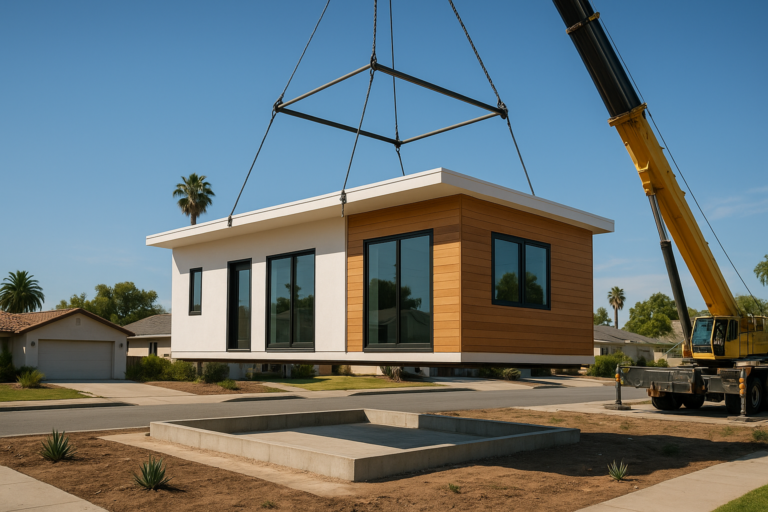
Pre built homes California homeowners rely on today are changing how Southern California families add space, income, and value to their properties. Instead of waiting a year or more for traditional stick-built construction, many homeowners in Orange County, Los Angeles County, and Riverside County turn to factory-built and modular units that arrive on-site largely finished. This shift is tied to California’s push for accessory dwelling units (ADUs), smaller secondary homes built on an existing residential lot. Below, we explain what pre built homes are, typical costs, and how to choose the right path for your property.
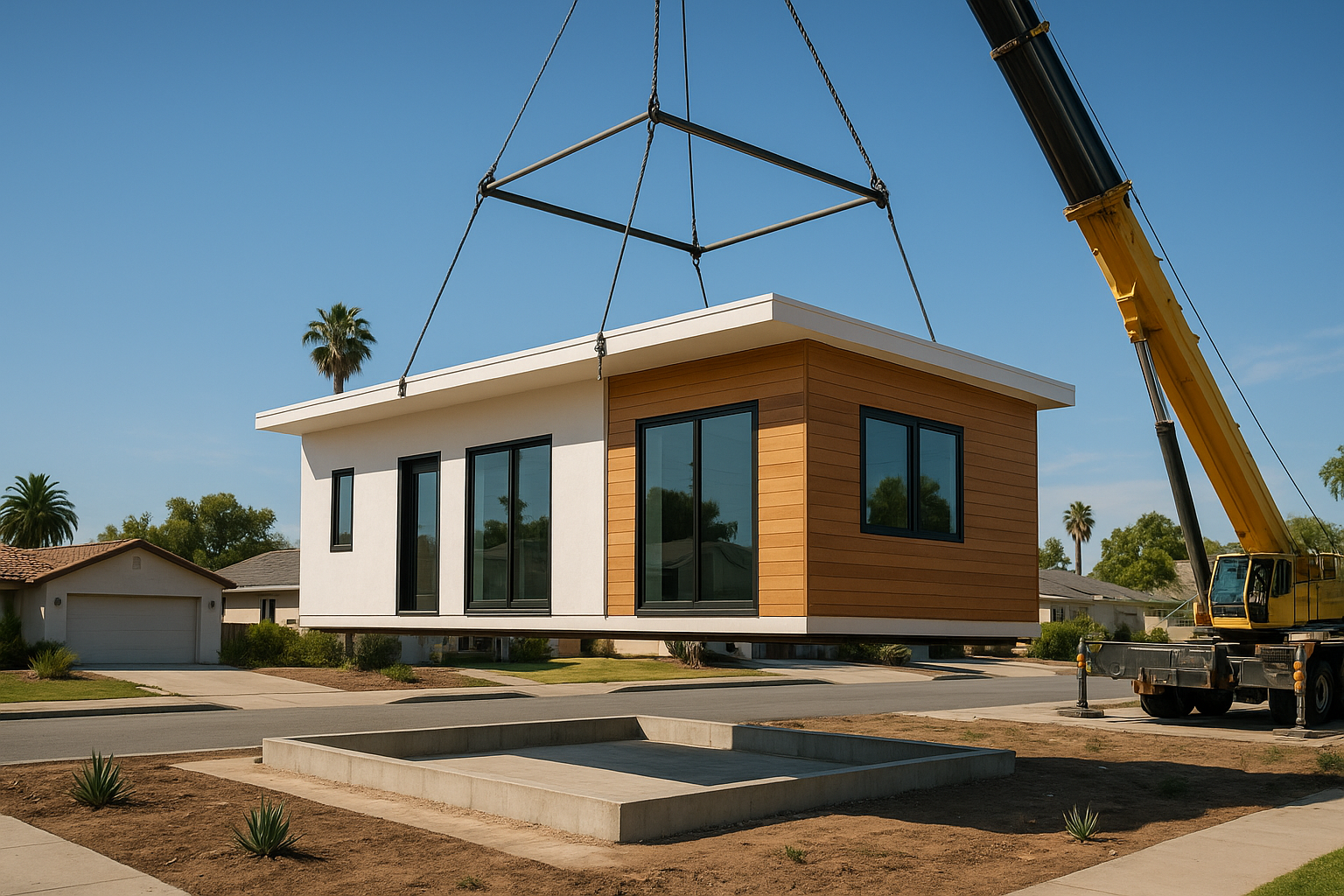
Modular sections of a pre built home being set onto a finished foundation during installation.
What Are Pre Built Homes in California?
Pre built homes in California are residential structures constructed largely off-site in a controlled factory setting, then transported to the property for final assembly. Unlike traditional construction, most of the framing, wiring, and interior finishing happens before the unit ever reaches your lot. As a result, weather delays and on-site labor shortages have far less impact on the overall timeline.
There are two main categories homeowners encounter: modular homes, which are built to the same state building code as site-built houses, and manufactured homes, which follow a federal HUD code. Specifically, this distinction affects financing, appraisal, and how the unit is classified once it’s placed on your property.
Types of Pre Built Homes California Property Owners Can Choose
Homeowners exploring pre built homes California options generally fall into a few practical categories, each suited to different goals and budgets. Prefab ADU guide: Detached prefab ADUs are popular for rental income or multigenerational living, since they sit as a separate unit at the back of the lot. Junior ADUs, in contrast, are smaller, often converted from part of the existing home, and share some utility connections with the main house.
Full-size modular homes are also available for larger lots or new construction, offering two, three, or even four-bedroom layouts. For a deeper look at pricing tiers and configurations, our guide on prefab ADU options, costs, and types covers the most common builds requested across Southern California.
Quick answer: CA prefab homes are factory-constructed modular or manufactured units installed on a permanent foundation, typically costing $120,000 to $350,000 and completed in three to six months, faster than most traditional builds.
Prefab Homes vs. Traditional ADU Construction
Choosing between prefab homes and a traditionally built ADU often comes down to timeline, budget, and site conditions. Traditional construction allows more customization since everything is built in place, but it also depends heavily on weather, contractor scheduling, and material availability. Prefab construction, on the other hand, moves through the factory on a fixed production schedule, which tends to keep timelines more predictable.
That said, site work still matters for prefab projects. Grading, foundation prep, and utility trenching happen locally regardless of how the structure itself was built. Homeowners in cities like Santa Ana often work with local specialists; if you’re in that area, our ADU builder Santa Ana resource walks through what site prep typically involves.
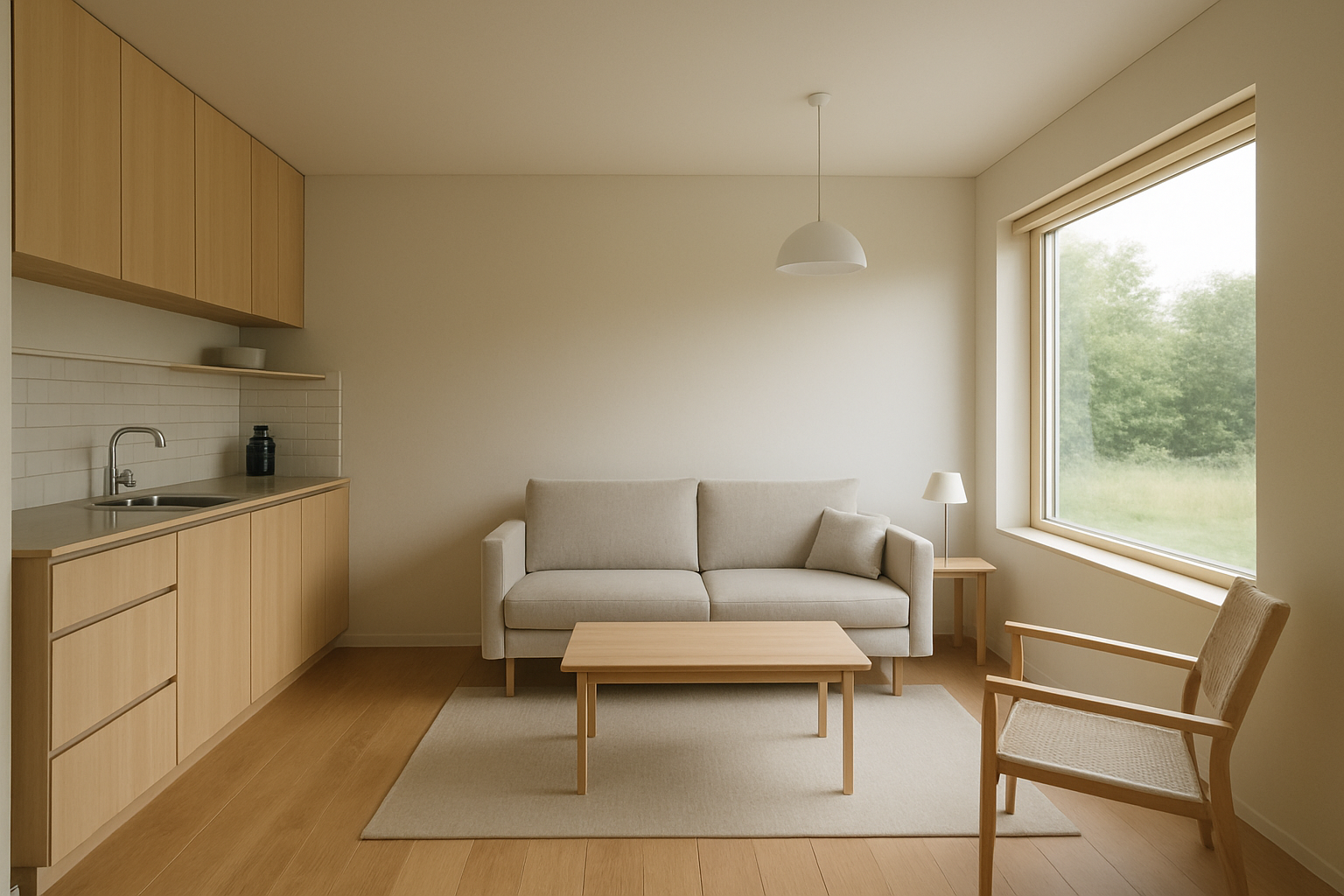
A finished interior of a compact prefab ADU used as a rental unit in Southern California.
How Much Do Prefabricated Homes Cost in California?
According to industry cost surveys, prefabricated homes in California typically range from $120,000 to $350,000 depending on square footage, finish level, and site complexity. In addition, delivery, crane placement, foundation work, and utility hookups can add another 20 to 40 percent on top of the base factory price. Consequently, getting a full site evaluation early on helps avoid budget surprises later.
Financing also plays a role in total cost. Because modular homes built to state code can often be financed like traditional mortgages, buyers sometimes see better long-term rates than with manufactured homes on non-permanent foundations. It’s worth comparing loan options before committing to a specific builder or floor plan.
Step-by-Step: How to Add a Pre Built Home to Your Property
Here is a general process for homeowners considering pre built homes California builders commonly follow, from initial planning through final move-in. See region-specific guidance at ADU building San Bernardino for local permitting and site-prep notes.
- Check zoning and lot requirements. Confirm your property’s zoning allows the size and type of unit you want, and check setback, height, and lot coverage rules with your local planning department.
- Evaluate your site and utilities. Arrange a soil and site evaluation to determine foundation needs, then confirm water, sewer, and electrical connections are accessible or can be extended affordably.
- Select a floor plan and builder. Choose a factory-built floor plan that fits your lot and budget, then select a licensed contractor experienced with California modular and manufactured home installations.
- Secure permits and financing. Submit building permit applications with your contractor and finalize a construction loan or financing arrangement before the factory build begins.
- Coordinate delivery and final inspection. Schedule factory completion, transport, and crane placement, then complete foundation attachment, utility hookups, and final building inspection before move-in.
California Regulations and Permitting for Modular Homes
California’s building codes treat modular and manufactured homes differently, which affects the permitting path each project follows. Modular units generally go through the same local plan check and inspection process as any other home, since they’re built to the state’s Title 24 code. Manufactured homes, meanwhile, are inspected under HUD’s federal code before leaving the factory, then undergo a separate local approval for foundation and utility connections.
For current statewide guidance on accessory dwelling units, the California Department of Housing and Community Development publishes updated rules that apply to most prefab ADU projects. Homeowners in newer growth areas, such as Palmdale, should also check local amendments; our ADU building Palmdale guide covers regional permitting notes specific to that market.
Design Planning Tools for Pre Built and Modular Homes
Before ordering a unit, many homeowners use design software to visualize layout options and confirm the floor plan fits their lot. This step helps avoid costly mid-project changes, especially when working with a fixed factory production schedule. If you’re unsure where to start, our comparison of design software for ADU planning walks through the most useful tools for early-stage layout decisions.
In addition, prefabrication as a construction method has roots going back decades; the broader concept is well documented on Wikipedia’s overview of prefabrication, which explains how factory efficiency translates into shorter build times across housing types, including manufactured housing as detailed in this manufactured housing reference.
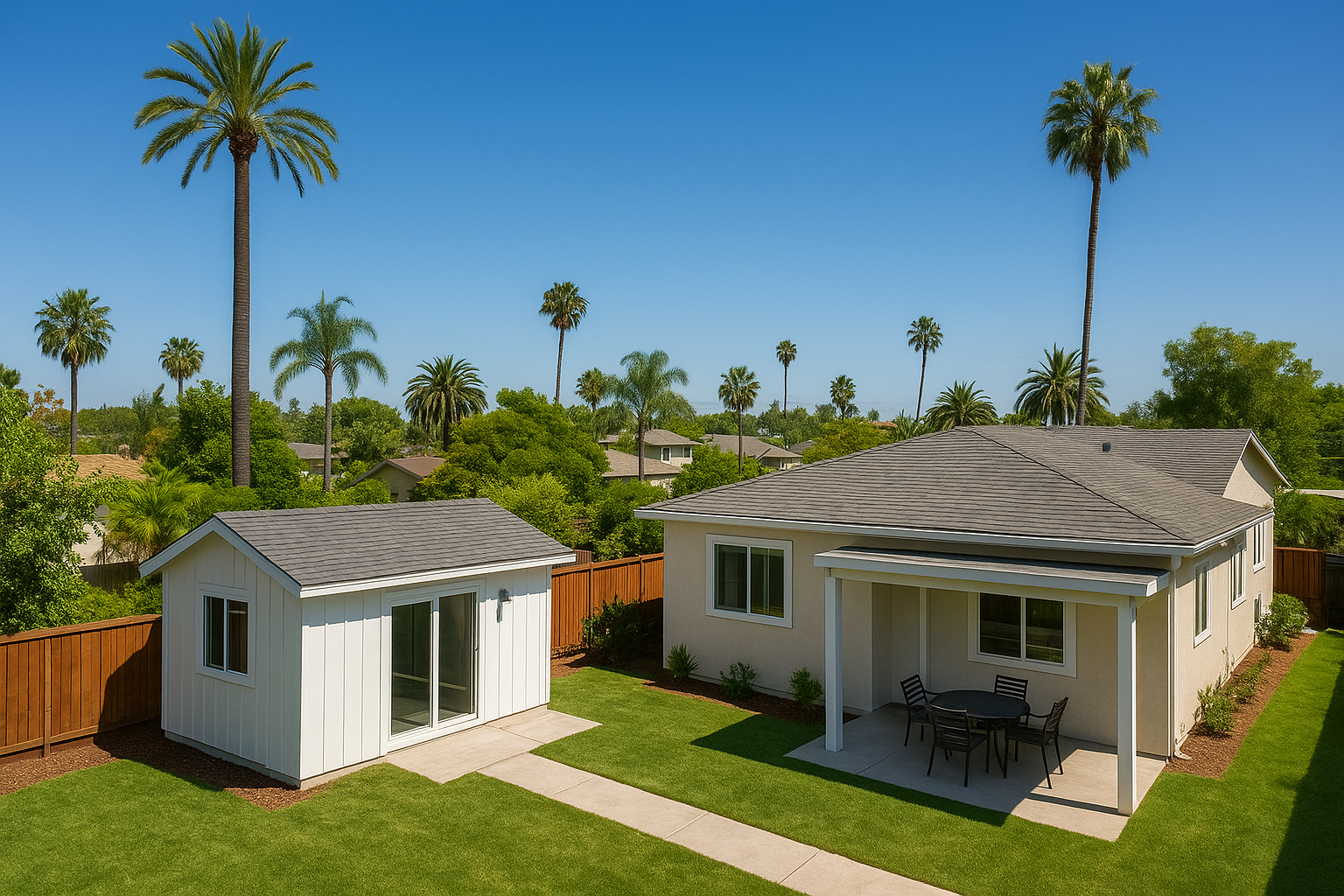
A detached prefab ADU positioned behind a main residence on a Southern California lot.
Choosing the Right Pre Built Homes California Builder
Selecting a builder matters just as much as choosing the floor plan itself; consider ADU construction Laguna Hills for local project examples. A contractor experienced with local codes can prevent permit delays, coordinate utility connections, and manage the crane placement process safely. Above all, look for a firm that handles design, permitting, and construction under one roof, since that reduces miscommunication between separate vendors.
The team at theadupro.com specializes in end-to-end ADU development across Orange County, Los Angeles County, and Riverside County, guiding homeowners from initial design through final inspection. Similarly, homeowners in San Diego County looking for regional expertise can review our ADU builder Carlsbad page for local project examples.
Frequently Asked Questions About Pre Built Homes California
What are pre built homes California residents typically choose?
Pre built homes California residents typically choose are modular or manufactured structures built off-site in a factory, then transported and assembled on a foundation. They include detached ADUs, junior ADUs, and full-size single-family homes.
How much do pre built homes cost in California?
Prices generally range from $120,000 to $350,000 depending on size, finishes, and site work. Delivery, permitting, foundation, and utility hookups can add significantly to the base factory price.
Are prefab homes cheaper than site-built homes?
Prefab homes are often 10 to 20 percent less expensive than comparable site-built construction because of factory efficiency and shorter build timelines. However, site prep and transportation costs can narrow that gap in some areas.
Do pre built homes require a building permit in California?
Yes, nearly all pre built homes require local permits covering foundation, electrical, plumbing, and final inspection. Manufactured homes built to HUD code may follow a slightly different approval path than modular units built to state building code.
How long does it take to install a pre built home?
Factory construction typically takes 6 to 12 weeks, while on-site installation and hookups add another 4 to 8 weeks. As a result, most projects finish in three to six months from order to occupancy.
What is the difference between modular and manufactured homes?
Modular homes are built to the same state and local building codes as traditional houses, while manufactured homes follow a federal HUD code. In practice, this means modular units can often be financed and appraised more like conventional homes.
Can a pre built home be used as an ADU in California?
Yes, prefab and modular units are among the most popular ways to add an accessory dwelling unit in California. State ADU laws generally allow factory-built units as long as they meet local zoning and building code requirements.
Do pre built homes hold their value in California?
Modular homes built on permanent foundations tend to appreciate similarly to traditional homes, especially in high-demand Southern California markets. Manufactured homes on rented land, in contrast, may appreciate more slowly.
What financing options exist for pre built homes California buyers use?
Buyers commonly use construction loans, home equity lines, cash-out refinances, or manufacturer financing programs. Some lenders also offer specialized modular home mortgages once the unit is permanently attached to a foundation.
What mistakes should homeowners avoid when buying a prefab home?
Common mistakes include skipping soil and site evaluations, underestimating utility connection costs, and choosing a builder without local permitting experience. Working with a licensed contractor familiar with California codes helps avoid costly delays.
How do pre built homes compare to garage conversions for adding space?
Pre built homes usually offer faster construction and more design consistency than garage conversions, which depend on the existing structure’s condition. Garage conversions, however, can sometimes be less expensive since they reuse existing walls and roofing.
Final Thoughts on Pre Built Homes California Options
Prefabricated Homes CA homeowners choose today offer a practical path to more living space, rental income, or room for extended family, often with shorter timelines than traditional construction. Whether you’re comparing modular units, manufactured homes, or prefab ADUs, the right choice depends on your lot, budget, and long-term goals. Above all, working with a builder who understands local zoning and permitting can make the difference between a smooth project and a delayed one.
If you’re ready to explore what a pre built or prefab ADU could look like on your property, the team at theadupro.com can walk you through design, permitting, and construction across Orange County, Los Angeles County, and Riverside County. Author: The ADU Pro team — licensed ADU contractors with local permitting experience. Last updated: 2026-07-26.