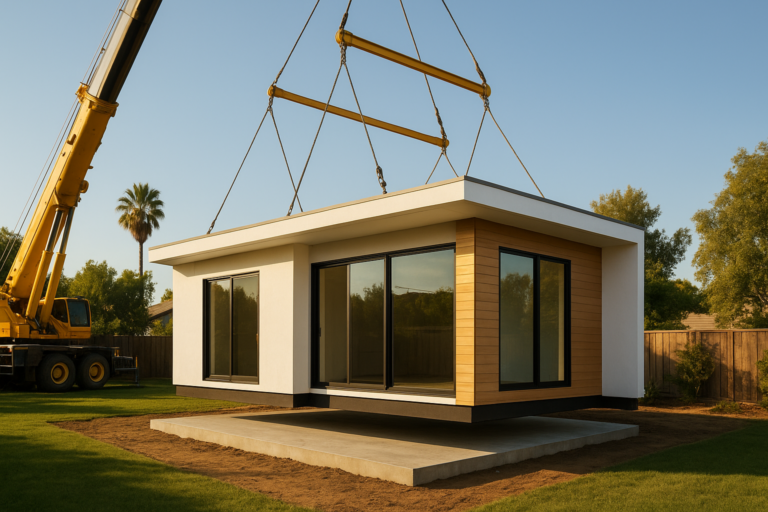
California prefab houses are transforming how homeowners across Los Angeles, the Bay Area, San Diego, and the Inland Empire add living space, replace aging homes, or build accessory dwelling units without enduring years of traditional construction delays. Because factory-built sections arrive nearly finished, these homes typically move from foundation to move-in far faster than a comparable site-built project. In addition, families exploring accessory dwelling units, backyard guest houses, or full replacement homes often find that prefab construction offers a practical middle ground between cost, speed, and craftsmanship. This guide goes further than most overviews online — it breaks down every prefab type, real 2025 pricing by region, the full permitting process, financing options, seismic and wildfire performance, and the buying mistakes that trip up first-time owners, so you can decide with confidence whether a prefab build fits your property and budget.
Quick answer: California prefab houses are factory-manufactured homes — modular, manufactured, or panelized — built off-site to state or federal code, then transported and assembled on a permanent foundation. They generally cost 10 to 20 percent less and build 30 to 50 percent faster than a comparable site-built home. However, the exact price still depends on size, finish level, region, and how much your specific lot needs in site work.
What Are California Prefab Houses?
California prefab houses are structures built in sections inside a factory, then shipped to the home site for final assembly. Unlike modular components, which get craned into place as complete rooms, a manufactured home arrives as one or more finished units on a steel chassis. Both approaches fall under the broader category of prefabricated construction, meaning most of the building process happens indoors, away from weather delays and subcontractor scheduling gaps.
Because factories build in controlled conditions, quality control is often more consistent than on a traditional job site. Specifically, humidity, materials storage, and framing tolerances are easier to manage indoors than on an open lot exposed to rain or heat. As a result, many California homeowners now consider prefab construction not just for backyard guest houses, but for full main residences and rental units alike.
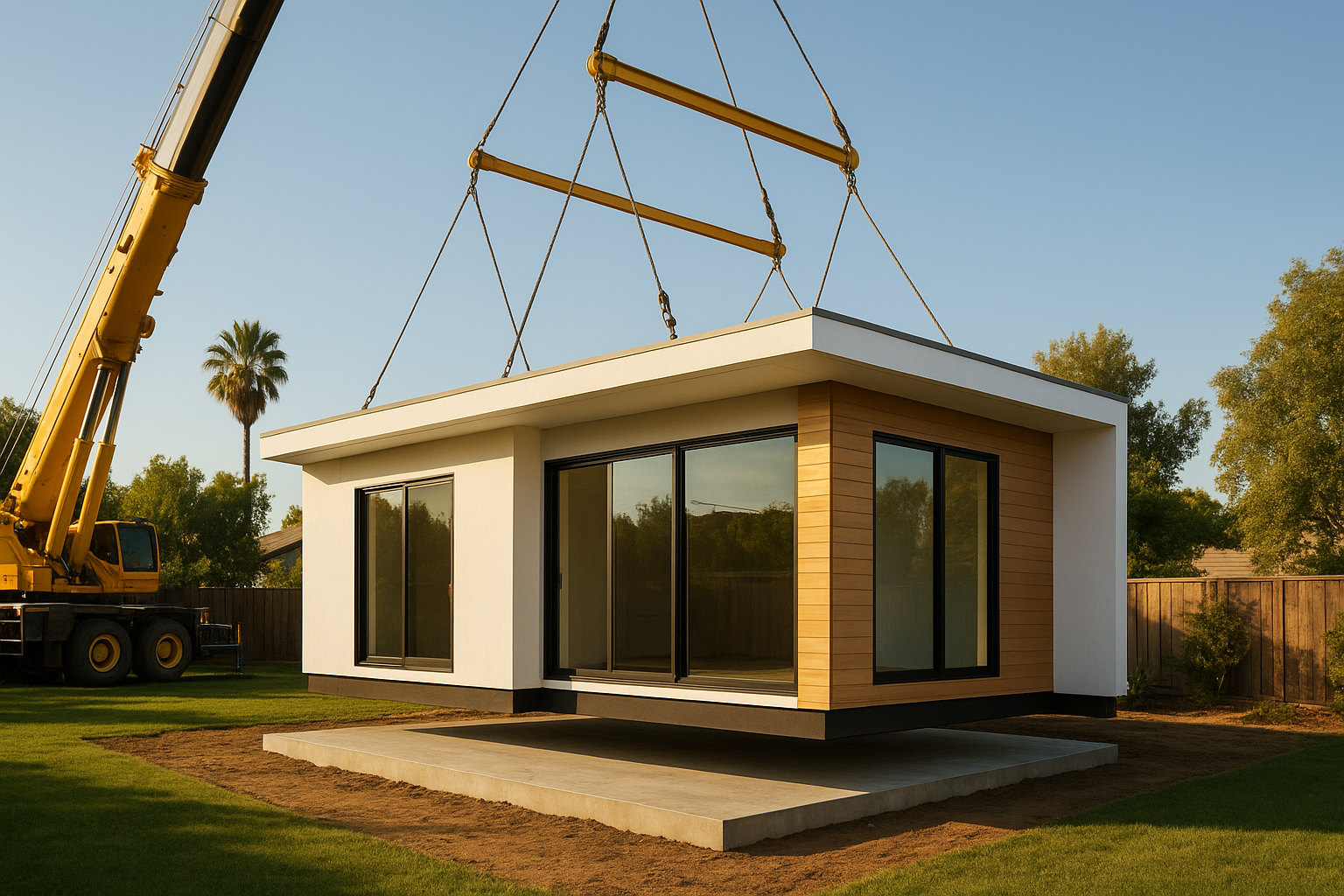
California prefab houses are often lifted into place by crane once the foundation and utilities are ready.
Types of Prefabricated Homes You Can Build in California
Not every prefab home is built the same way. Understanding the differences helps you match the right structure to your lot, budget, and local building department’s requirements. In particular, six formats dominate the California market today:
- Modular homes: Built to California’s state building code, then permanently affixed to a foundation just like a site-built house. These typically qualify as real property and hold value similarly to traditional homes.
- Manufactured homes: Built under federal HUD code, often more affordable, and sometimes classified as personal property rather than real estate, which affects financing and resale.
- Panelized homes: Wall and roof panels are built off-site, then assembled and finished on the lot, offering more customization than fully modular units.
- Prefab ADUs: Smaller factory-built units designed specifically for backyard living spaces, guest suites, or rental income, usually delivered as one or two finished sections.
- Container homes: Repurposed or purpose-built steel shipping containers converted into livable units, popular for compact lots and industrial-style designs.
- Kit and tiny prefab homes: Smaller-footprint structures, sometimes under 400 square feet, shipped as a kit or single module for owners prioritizing minimal cost and maximum speed.
For a deeper breakdown of pricing and configurations, our guide on prefab ADU options, costs, and types compares each format side by side.
California Prefab Home Pricing: Costs by Type, Size, and Region
California prefab houses typically cost between $150 and $300 per square foot once you include delivery, crane setup, and site work. A 600-square-foot prefab ADU might land between $90,000 and $180,000 depending on finishes and utility connections, while a full-size prefab home can run considerably higher once you add multiple bedrooms, a garage tie-in, or upgraded finishes.
However, the base factory price rarely covers everything. Foundation work, permit fees, grading, and utility hookups are separate line items that many first-time buyers overlook. If budget is your main concern, our article on building an ADU without a huge budget walks through affordable configurations that still meet code.
Regional Cost Differences Across California
Pricing shifts meaningfully by region, mainly because labor rates, delivery distance, and local permit fees vary widely. In the Los Angeles and Orange County metro areas, expect the higher end of the per-square-foot range due to denser permitting queues and higher crane and trucking costs. In contrast, the Central Valley and Inland Empire often see slightly lower costs because factories can deliver modules with shorter transport routes. Meanwhile, the Bay Area frequently carries the steepest premiums of all, driven by tighter lot access, stricter environmental review, and higher construction labor wages. San Diego County typically lands in the middle, though coastal setback rules can add engineering costs on bluff or flood-adjacent parcels.
Financing a Prefab Home Purchase in California
Buyers can use construction loans, home equity lines of credit, or manufacturer financing programs, and some lenders offer modular-specific mortgages once the home is permanently affixed to a foundation. Notably, financing terms often hinge on whether the home is classified as real property or personal property — manufactured homes on leased land, for example, may only qualify for chattel loans rather than a traditional mortgage. Therefore, it pays to confirm classification with your lender and county assessor before signing a purchase agreement, since this single detail can change your interest rate by several points.
Prefab Homes vs. Traditional Site-Built Construction
Traditional construction gives you more flexibility for custom layouts, but it also takes longer and exposes the project to weather delays and subcontractor scheduling gaps. In contrast, factory-based building compresses much of the build timeline because factory crews work on your home while your site is still being prepared; consider prefab homes California as a faster option. As a result, many owners save several months compared to a fully custom build.
- Timeline: Prefab typically takes 4 to 8 months total; site-built construction often runs 9 to 14 months for a comparable home.
- Cost predictability: Factory pricing locks in materials and labor early, whereas site-built projects face more exposure to material price swings.
- Customization: Site-built homes allow more mid-project design changes; prefab homes require finalized plans before factory production begins.
- Weather risk: Prefab construction happens indoors, so rain, wind, and heat rarely delay the factory build phase.
Design flexibility has improved significantly in recent years, too. Homeowners planning layouts often use digital tools to visualize options before committing to a factory order; see our guide on design software for ADU planning for a closer look at popular platforms.
Step-by-Step: How to Build a Prefab Home in California
Building a prefab home follows a fairly predictable sequence. Below is the full process most California homeowners follow from planning through move-in day.
- Assess your property and zoning. Review setbacks, lot coverage, and utility access carefully, since these factors determine what size and type of prefab house your property can legally support before you spend money on plans.
- Choose a prefab type and floor plan. Compare modular, manufactured, panelized, and container options based on budget and timeline, then select a plan that genuinely fits your household’s day-to-day needs and future resale goals.
- Secure financing and confirm classification. Talk with a lender early to confirm whether your prefab home will be classified as real property or personal property, since that decision shapes your available loan products.
- Secure permits and approvals. Submit plans to your local building department for foundation, electrical, and plumbing permits before the factory build begins, and confirm your factory’s plans already meet HCD or HUD standards.
- Prepare the site and foundation. Grade the lot and pour the foundation while the home is manufactured, so the site is fully ready the day the modules arrive on the delivery truck.
- Deliver and install the modules. A crane sets the factory-built sections in place, and crews connect utilities, seal the seams between sections, and complete structural tie-downs required for seismic safety.
- Complete final inspections. Inspectors verify the foundation connection, utility hookups, and fire safety systems before issuing the certificate of occupancy that lets you legally move in.
- Register your warranty and insurance. Confirm your builder’s structural warranty terms and secure homeowners insurance coverage specific to your prefab classification before finalizing the move-in date.
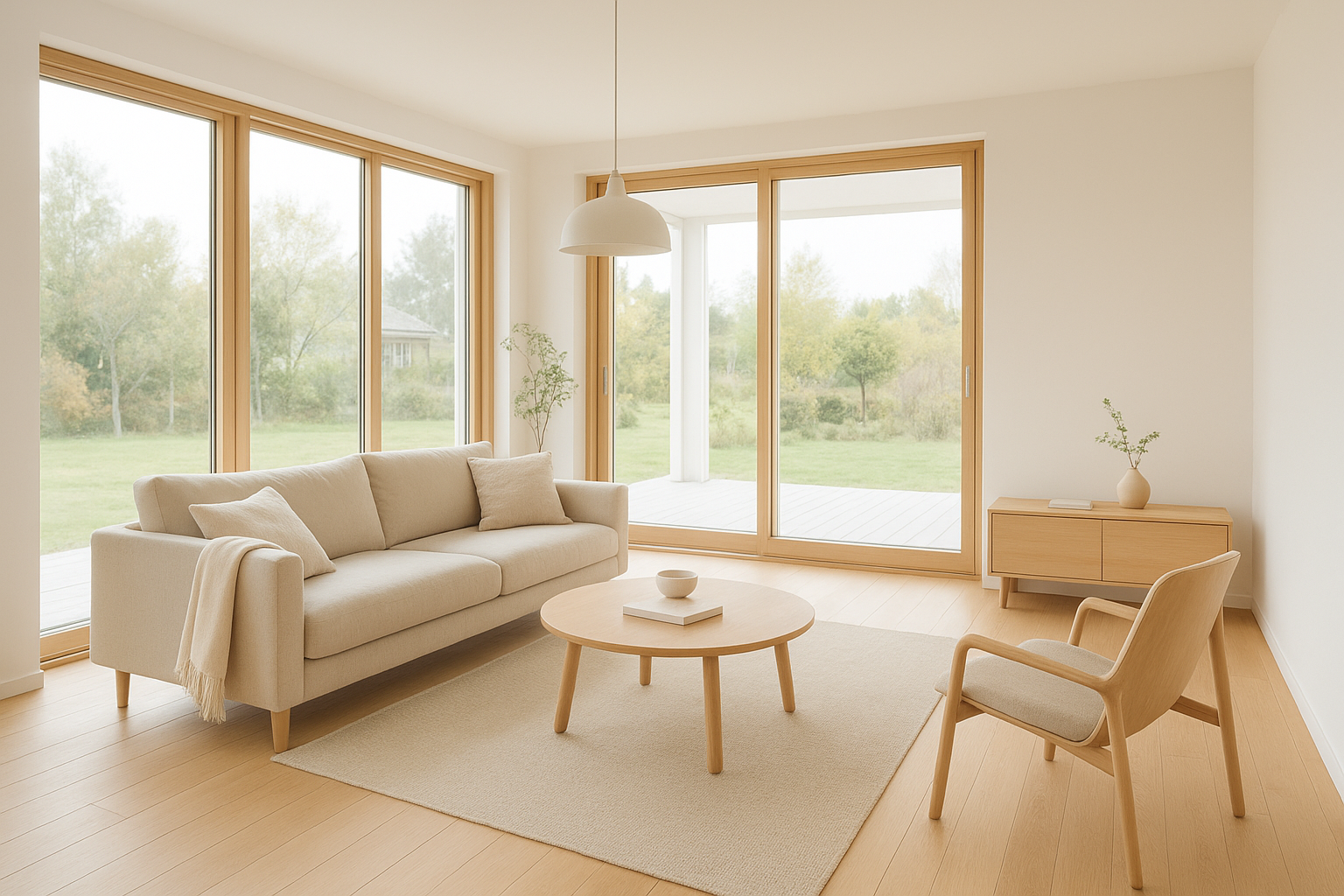
Once installed, many prefab homes are indistinguishable from site-built interiors.
Permits and Regulations for Prefab Homes in California
Every prefab home installation still requires local permits, even though the structure itself is built off-site. Modular homes are inspected under the California Building Standards Code, while manufactured homes fall under federal HUD standards enforced through the California Department of Housing and Community Development and, at the national level, the U.S. Department of Housing and Urban Development. According to HUD, roughly 9% of new single-family homes nationwide now start as manufactured or modular units, a share that has grown steadily as buyers look for faster build times.
Local building departments still review foundation design, setbacks, and utility connections. Consequently, working with a contractor familiar with your city’s specific process, such as those listed under our construction resources, helps avoid costly delays.
Are Prefab Homes in California Earthquake and Wildfire Resistant?
Yes, when engineered correctly. Modular homes must meet the same seismic bracing and shear-wall requirements as site-built homes under state code, since inspectors treat the finished structure identically once it’s affixed to its foundation. In wildfire-prone zones, however, additional rules apply: homes built within a designated Fire Hazard Severity Zone need ignition-resistant materials, dual-pane windows, and ember-resistant vents regardless of whether the structure was factory-built or site-built. Above all, buyers in foothill or canyon-adjacent communities should confirm their chosen factory offers a wildfire-compliant exterior package before finalizing plans.
Environmental Benefits and Energy Efficiency of Prefab Construction
Most prefab houses meet or exceed California’s Title 24 energy code because factory conditions allow tighter insulation and sealing tolerances than field framing typically achieves. Many builders also offer solar-ready or fully all-electric packages, which helps buyers meet the state’s building electrification goals without added engineering. In addition, factory construction generates significantly less material waste than site-built projects, since offcuts and scrap are recycled centrally rather than hauled from dozens of individual job sites.
Furthermore, CALGreen requirements — California’s statewide green building code — apply to prefab and site-built homes alike, covering water efficiency, indoor air quality, and construction waste diversion. Because factories already build to a repeatable standard, many exceed these baseline requirements without extra cost to the buyer.
Choosing a Prefab ADU Builder in Southern California
Selecting the right contractor matters as much as selecting the right prefab type. Look for a licensed team with a track record of local permitting success across Orange County, Los Angeles County, and Riverside County, since each jurisdiction handles ADU approvals slightly differently. Refer to our ADU plan guide for Southern California homeowners when vetting local contractors.
theadupro.com specializes in end-to-end ADU development throughout Southern California, guiding homeowners from design and permitting through full construction and final inspection. For example, homeowners in North Orange County can review a completed local project through our ADU construction in Fullerton case study, or visit theadupro.com to discuss a prefab or traditional build for your property.
More California Prefab Resources Worth Comparing
If you want to cross-check pricing and configurations before committing to a builder, these additional resources cover the same market from different angles:
- Prefab homes in California: costs, types, and best options
- Prefabricated homes CA: a complete buyer’s guide
- CA prefab homes: 2025 costs and types buyer’s guide
- Pre-built homes in California: types, costs, and options
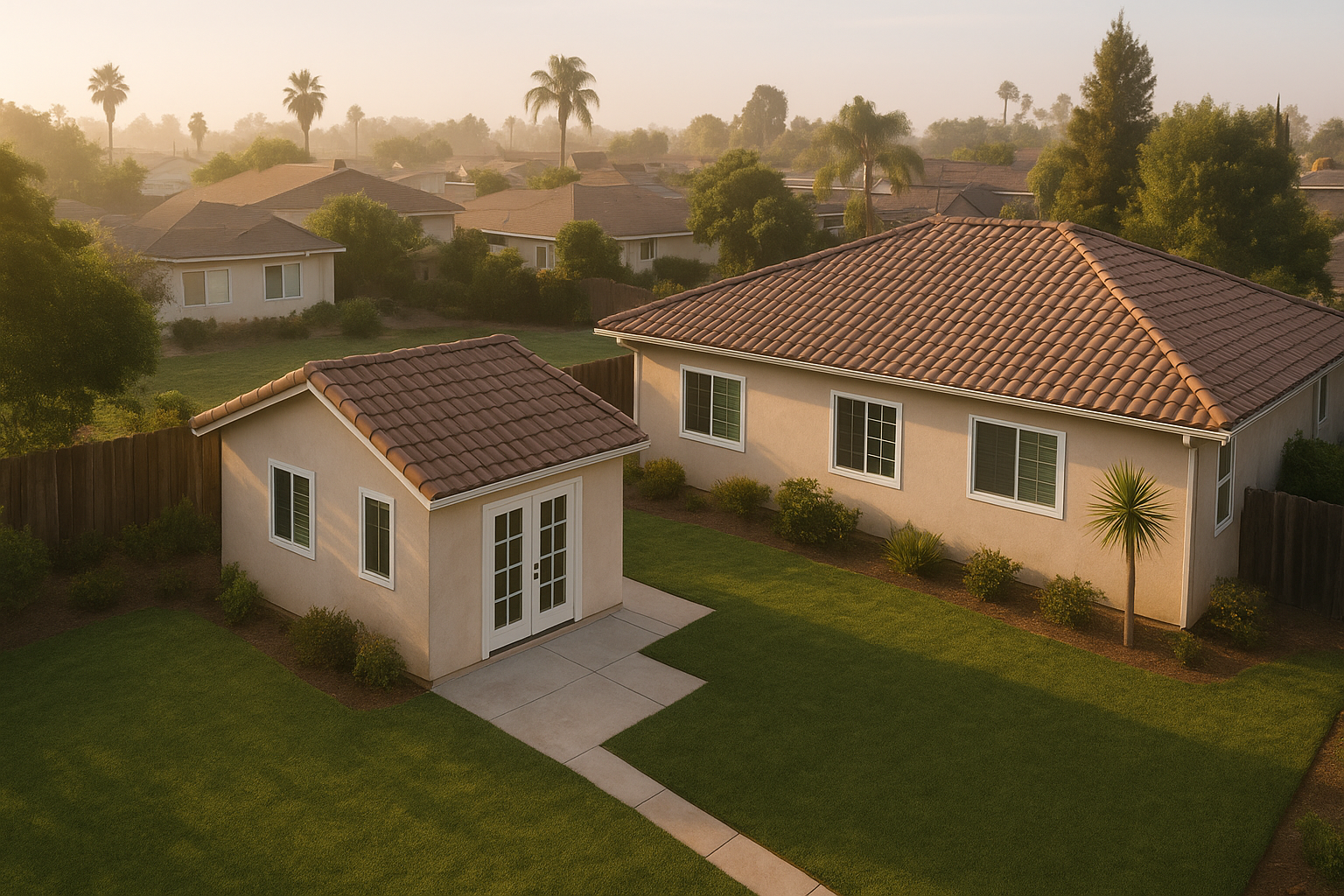
A backyard prefab ADU adds functional living space without a full site-built timeline.
Common Mistakes to Avoid When Buying a California Prefab House
Even experienced buyers stumble on a few recurring issues. Specifically, watch out for these:
- Underestimating site prep costs: Grading, retaining walls, and utility trenching can add tens of thousands of dollars beyond the factory quote.
- Skipping a soils report: Poor soil conditions can force a more expensive foundation type after plans are already submitted.
- Assuming factory pricing covers everything: Delivery, crane setup, and utility hookups are almost always billed separately.
- Ignoring financing classification: Buyers who don’t confirm real property versus personal property status early sometimes get stuck with unfavorable loan terms.
- Choosing a builder without local permitting experience: A contractor unfamiliar with your city’s process can add months to your timeline.
Frequently Asked Questions About California Prefab Houses
What are California prefab houses?
California prefab houses are homes built mostly in a factory setting, then transported to a lot and assembled on a permanent foundation. They include modular, manufactured, and panelized homes built to state or federal code.
How much do California prefab houses cost?
Most California prefab houses cost between $150 and $300 per square foot, including site work and delivery. Final price depends on size, finish level, region, and how much grading or utility work your lot needs.
How long does it take to build a prefab home in California?
A prefab home typically takes 4 to 8 months from order to move-in, compared to 9 to 14 months for a comparable site-built home. Permitting timelines often add the most variability to the schedule.
Are prefab houses legal in California?
Yes, prefab houses are legal throughout California as long as they meet HCD or HUD construction standards and local zoning rules. Cities and counties still require permits, inspections, and foundation approval.
What’s the difference between modular and manufactured homes?
Modular homes are built to the same state building code as site-built homes and are inspected locally. Manufactured homes follow a separate federal HUD code and are inspected at the factory.
Can I use a prefab house as an ADU in California?
Yes, many homeowners use prefab units as accessory dwelling units for rental income or multigenerational living. Local ADU ordinances still apply, covering setbacks, size limits, and parking.
Do prefab homes need a permit in California?
Yes, every prefab home installation needs local building permits for the foundation, utility connections, and site work. The factory-built structure itself is inspected separately under state or HUD standards.
What are common mistakes when buying a California prefab house?
Common mistakes include underestimating site prep costs, skipping a soils report, and assuming factory pricing covers delivery, crane setup, and utility hookups. These add-on costs can shift a budget significantly.
Are prefab houses cheaper than traditional construction?
Prefab houses are generally 10 to 20 percent less expensive than comparable site-built homes because factory production reduces labor time and material waste. Savings vary based on site conditions and design complexity.
What financing options exist for prefab homes in California?
Buyers can use construction loans, home equity lines, or manufacturer financing programs, and some lenders offer specific modular home mortgages. Financing terms often depend on whether the home is classified as real property.
How energy efficient are California prefab houses?
Most prefab houses meet or exceed California’s Title 24 energy code because factory conditions allow tighter insulation and sealing tolerances. Many builders also offer solar-ready or all-electric packages.
What foundation works best for a prefab home?
A permanent concrete slab or raised foundation is standard for modular homes classified as real property. The right choice depends on soil type, slope, and local seismic requirements.
How do I choose a prefab home builder in Southern California?
Look for a licensed contractor with local permitting experience, transparent pricing, and completed projects in your county. Checking references and past inspection records helps confirm reliable craftsmanship.
Do California prefab houses hold their resale value?
Modular homes classified as real property tend to appreciate similarly to site-built homes, since appraisers treat them the same once affixed to a permanent foundation. Manufactured homes on leased land, however, often appreciate more slowly.
Are prefab homes built to withstand California earthquakes and wildfires?
Yes, modular homes must meet the same seismic code as site-built homes, and builders in Fire Hazard Severity Zones must use ignition-resistant materials and ember-resistant vents to pass inspection.
What warranty coverage comes with a California prefab house?
Most manufacturers offer a structural warranty of one to ten years, while site-installed elements like the foundation and utility hookups are typically covered separately by your local contractor.
Can I build a container home or tiny prefab home in California?
Yes, both are permitted, though container homes require additional structural engineering and insulation upgrades, while tiny prefab homes under a certain size may qualify for simplified ADU permitting in many jurisdictions.
Final Thoughts on Building Prefab in California
California prefab houses offer a faster, often more affordable route to added living space than traditional construction, whether you’re planning a full replacement home or a backyard ADU. That said, success still depends on choosing the right prefab type, budgeting for site work beyond the factory price, confirming financing classification early, and working with a contractor who understands local permitting, seismic rules, and wildfire codes. As demand for flexible housing continues to grow across Southern California and beyond, prefab construction is becoming a mainstream option rather than a niche one — and homeowners who plan carefully, ask the right questions, and compare builders tend to see the smoothest results.