Pre built homes in California have become one of the fastest-growing housing solutions for homeowners who want extra living space without the long timelines of traditional stick-built construction. As a result, more property owners across Los Angeles, Orange County, and the Inland Empire are exploring factory-built units as an alternative to conventional additions. However, choosing the right type of pre-built structure requires understanding zoning rules, permitting steps, and construction quality standards specific to California. This guide breaks down what pre built homes in California actually are, how they compare to on-site builds, and what homeowners should expect from cost to installation. This guide reflects expertise from The ADU Pro team; add an author bio and a "Last updated" date on the page to strengthen E-E-A-T signals.
Quick Answer: Pre built homes in California are factory-manufactured housing units — including modular homes, manufactured homes, and prefabricated ADUs — that are built off-site and then transported to a homeowner’s property for final installation. They typically cost less and build faster than site-built homes, though they must still meet California’s building codes, foundation requirements, and local permitting rules.
What Are Pre Built Homes in California?
Pre built homes in California are structures assembled in a factory setting under controlled conditions, then shipped in sections or as a complete unit to the final property. In particular, this category covers modular homes, manufactured homes, and prefabricated accessory dwelling units (ADUs) — a term for a secondary living space on a residential lot.
Unlike older assumptions about “trailer homes,” today’s factory-built housing must meet strict engineering standards. Modular units, for example, are held to the same state and local building codes as traditional construction, according to the California Department of Housing and Community Development. Manufactured homes, meanwhile, follow the federal HUD code overseen by the U.S. Department of Housing and Urban Development. Consequently, quality and code compliance depend heavily on which category a homeowner chooses.
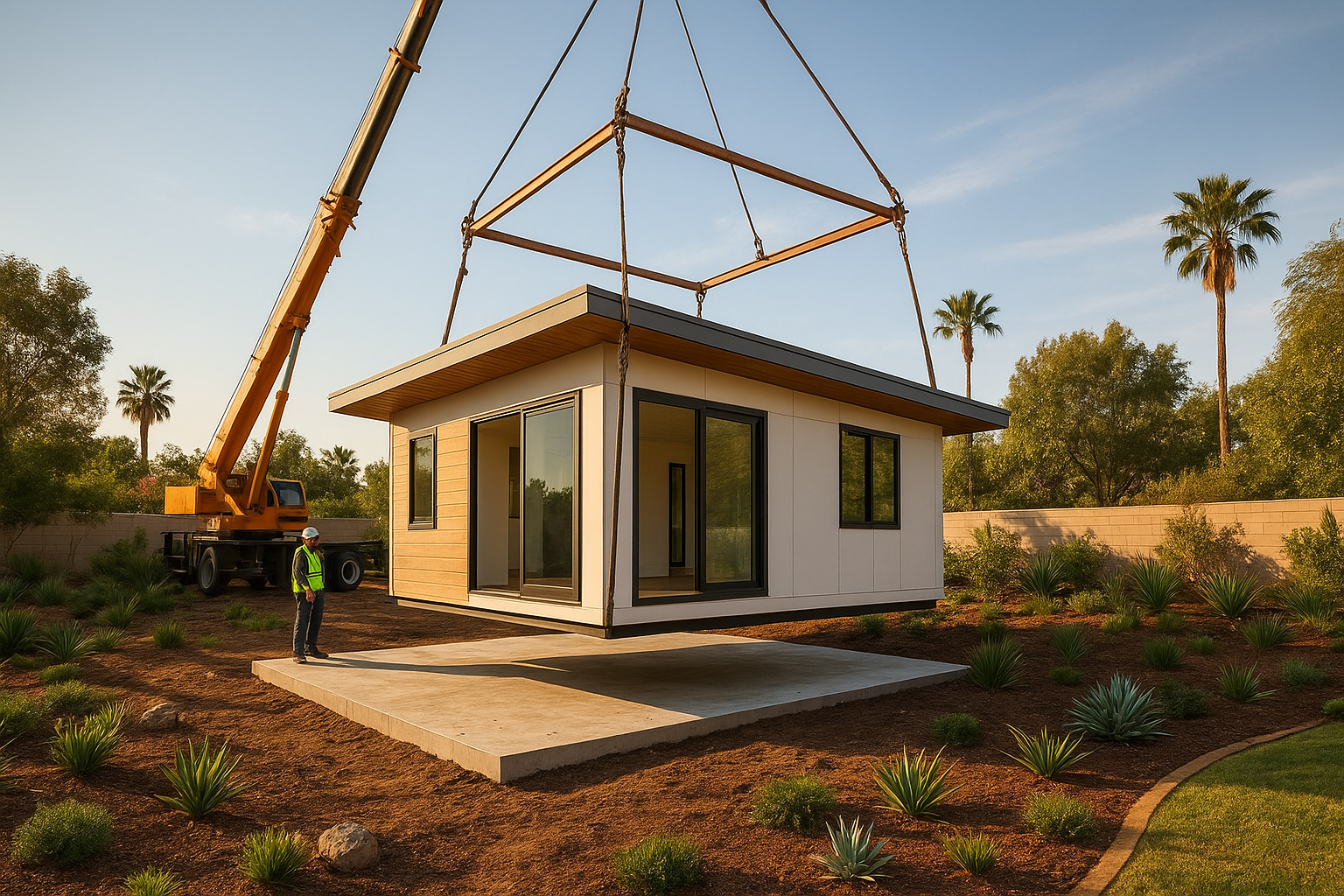
Installation day for a pre built home in California often takes only hours once the foundation is ready.
Types of Pre Built Homes in California: Modular, Manufactured, and Prefab ADUs
Homeowners researching pre built homes in California generally encounter three main categories, each with distinct construction standards and placement rules.
- Modular homes: Built in sections to state and local codes, then craned onto a permanent foundation. These often look identical to traditional homes once installed.
- Manufactured homes: Constructed under the federal HUD code, typically on a steel chassis. Many are permanently affixed to a foundation despite their transportable base.
- Prefab ADUs: Smaller factory-built units designed specifically as accessory dwellings, guest houses, or junior ADUs on an existing property.
For a deeper breakdown of pricing tiers and configurations, our guide on prefab ADU options, costs, and types covers each category in more detail.
Prefabricated and Modular Housing Options for Southern California Lots
Lot size and zoning heavily influence which prefab option makes sense. Narrow side yards may only accommodate a small junior ADU, whereas larger backyards can support a full detached modular unit. In addition, homeowners in cities like Carlsbad or Santa Ana should confirm setback rules before ordering a unit, since delivery access and crane placement depend on street width and yard clearance.
Local contractors familiar with Southern California permitting can often shortcut this process. For example, our teams serving Carlsbad and Santa Ana routinely coordinate zoning checks alongside factory order timelines so homeowners avoid costly delays.
Furthermore, planning software has made early-stage design easier for homeowners comparing layouts before committing to a manufacturer. Our resource on choosing ADU design software walks through several tools worth considering during this phase.
How Pre-Built Homes Compare to Traditional ADU Construction
Compared with fully site-built construction, prefabricated housing generally finishes faster because weather delays and sequential labor scheduling are minimized in a factory environment. According to general industry data referenced by Wikipedia’s overview of modular building, factory production can reduce total build time by 30 to 50 percent versus conventional methods.
On the other hand, site-built ADUs allow greater design flexibility for irregular lots or custom architectural details. Therefore, the right choice depends on whether a homeowner prioritizes speed and cost predictability or maximum design customization. Many Southern California homeowners find a middle ground: a modular shell customized with site-built finishing touches.
How to Get a Pre-Built Home Installed on Your Property
Getting a pre built home in California from order to move-in generally follows a predictable sequence. Below is the typical process homeowners can expect in our mother-in-law suite guide.
- Assess lot and zoning eligibility: Review your property’s zoning designation, lot size, and setback requirements to confirm a pre-built unit can legally be placed on the site.
- Choose the type of pre-built unit: Compare modular, manufactured, and prefab ADU options based on budget, size needs, and how quickly you want the project completed.
- Secure permits and approvals: Submit building plans to your local planning department and obtain foundation, electrical, plumbing, and occupancy permits before delivery.
- Prepare the foundation and utilities: Grade the site, pour the foundation, and run water, sewer, and electrical lines so the unit can be connected immediately after placement.
- Schedule delivery and installation: Coordinate crane or trailer delivery with your contractor, then have the manufactured sections set, joined, and sealed on the prepared foundation.
- Complete final inspections and hookups: Schedule building department inspections for structural, electrical, and plumbing systems, then finalize utility hookups before move-in.
What Do Pre Built Homes in California Cost?
Pricing for pre built homes in California typically ranges from $150 to $350 per square foot, depending on size, finish level, and site conditions. Foundation work, utility trenching, and permitting fees usually add another 15 to 25 percent on top of the base unit price. In particular, hillside lots or properties with limited crane access tend to push costs toward the higher end of that range.
For comparison, data referenced by the U.S. Census Bureau’s manufactured housing survey shows factory-built units often cost meaningfully less per square foot to produce than traditional site-built homes, though final installed pricing narrows that gap once site work is included. Consequently, homeowners should request a full itemized estimate covering delivery, crane fees, and utility hookups before comparing quotes from different manufacturers.
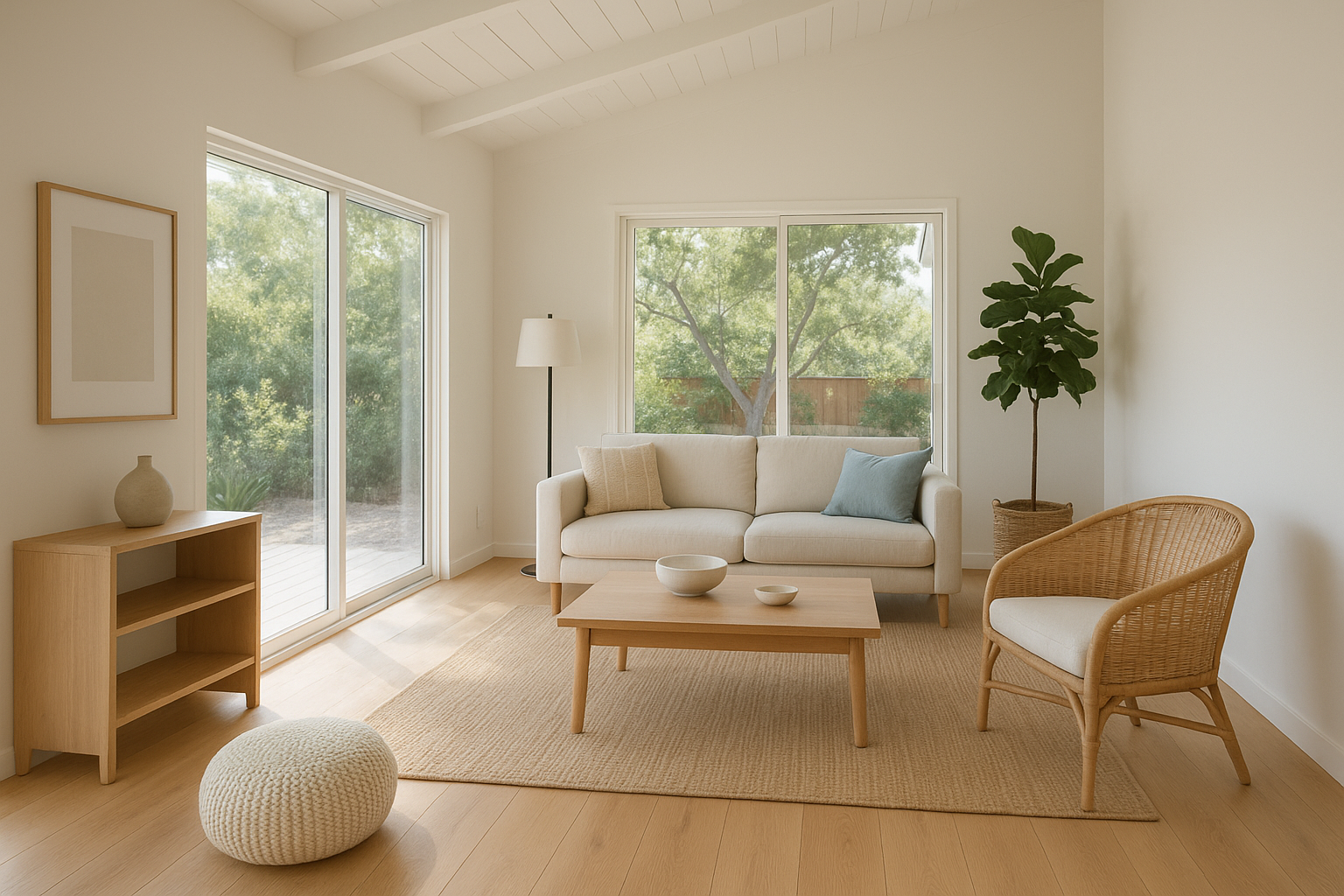
Interior finishes on prefab ADUs now rival traditional site-built construction in quality and design; consider the best ADU features when planning finishes.
Choosing a Builder for Your Prefab or ADU Project
Above all, the manufacturer is only half the equation — the local contractor handling site prep, permitting, and installation determines whether a pre-built home project stays on schedule. Homeowners should verify licensing, ask for references from recent local projects, and confirm the contractor has direct experience navigating county-specific permitting offices.
As a full-service ADU and prefab construction firm serving Orange County, Los Angeles County, and Riverside County, theadupro.com guides homeowners through design, permitting, and final inspection for detached units, garage conversions, attached additions, and junior ADUs. For a broader look at rules and benefits across the state, see our complete ADU housing guide for California.
Frequently Asked Questions About Pre Built Homes in California
What are pre built homes in California?
Pre built homes in California are housing units manufactured off-site in a factory and then transported to a homeowner’s property for final assembly. They include modular homes, manufactured homes, and prefabricated ADUs, all of which must meet California building and safety standards.
How much do pre built homes cost in California?
Costs typically range from $150 to $350 per square foot depending on size, finishes, and site work. Foundation, utility hookups, and permitting fees usually add 15 to 25 percent on top of the base unit price.
Are pre built homes cheaper than traditional construction?
In most cases, yes, because factory production reduces labor time and material waste. However, savings vary based on lot conditions, local permitting requirements, and the level of customization chosen.
How long does it take to build a prefab home in California?
Factory construction usually takes 8 to 16 weeks, while site preparation and installation add another 4 to 8 weeks. Total project timelines commonly range from 4 to 7 months from design approval to move-in.
Do pre built homes need a permit in California?
Yes, pre built homes require local building permits, foundation approval, and utility connection sign-offs, even though the structure itself is manufactured off-site. Requirements vary by county and city jurisdiction.
What’s the difference between modular and manufactured homes?
Modular homes are built to the same state and local codes as site-built houses and are placed on permanent foundations. Manufactured homes follow the federal HUD code and often sit on a chassis, though many are also permanently affixed.
Can I put a pre built home in my backyard as an ADU?
Yes, many homeowners use prefabricated units as accessory dwelling units for rental income or multigenerational housing. Local zoning still governs setbacks, size limits, and utility requirements for backyard installations.
Are pre built homes durable in California’s climate?
Quality manufacturers engineer units to meet California’s seismic, wind, and fire safety codes. Durability depends heavily on installation quality, foundation type, and ongoing maintenance.
What are common mistakes homeowners make with prefab homes?
Common mistakes include underestimating site prep costs, skipping zoning checks before ordering a unit, and choosing a manufacturer without verifying local delivery and crane access. Working with an experienced local contractor helps avoid these issues.
Do pre built homes increase property value?
Adding a well-built prefab unit or ADU can raise property value, particularly when it adds usable square footage or rental potential. The value increase depends on local market demand and construction quality.
What financing options exist for pre built homes in California?
Homeowners commonly use construction loans, home equity lines of credit, or renovation refinance products to fund prefab and ADU projects. Some manufacturers also offer in-house financing partnerships.
How do I choose a builder for a pre built home project?
Look for a contractor with direct experience in California permitting, foundation work, and utility coordination for prefab units. Checking licensing, past projects, and client reviews helps confirm reliability before signing a contract.
Final Thoughts
In summary, pre built homes in California offer a faster, often more cost-predictable path to additional living space compared with traditional construction. Whether a homeowner chooses a modular unit, a manufactured home, or a prefab ADU, success depends on confirming zoning eligibility, budgeting for site work, and partnering with a contractor who understands local permitting. As a result, doing this groundwork early helps avoid delays and unexpected costs down the line. For homeowners across Orange County, Los Angeles County, and Riverside County, working with an experienced local team remains the most reliable way to turn a pre built home concept into a finished, code-compliant space.