
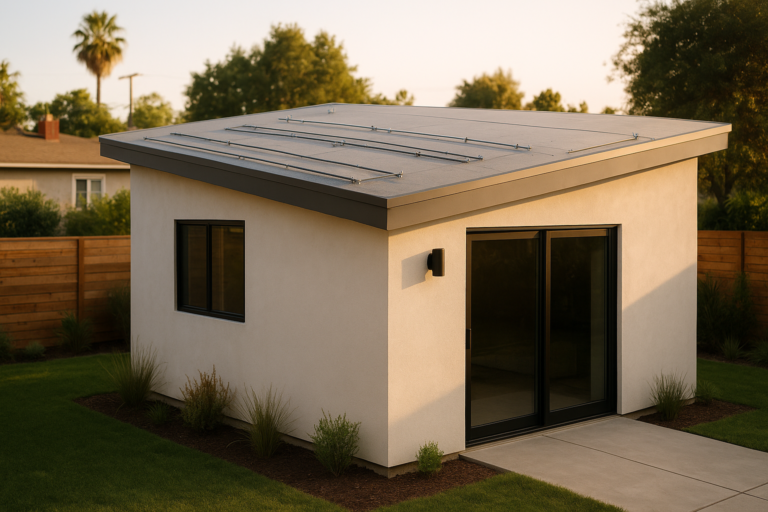
Solar ready ADU construction is quickly becoming the standard approach for Southern California homeowners who want flexibility without paying for solar panels before they are ready to use them. In practice, this means the accessory dwelling unit’s electrical panel, conduit, and roof structure are built to accept solar equipment later, even though the panels themselves may not go up on day one. For many families planning a detached ADU, attached addition, or garage conversion, this approach saves money and avoids reopening finished walls down the road.
Direct Answer
Solar ready ADU construction means installing the wiring, electrical panel capacity, and roof reinforcement needed for solar panels during the initial build, so the system can be added later without major rework. It is typically far cheaper than retrofitting a finished ADU for solar after the fact.
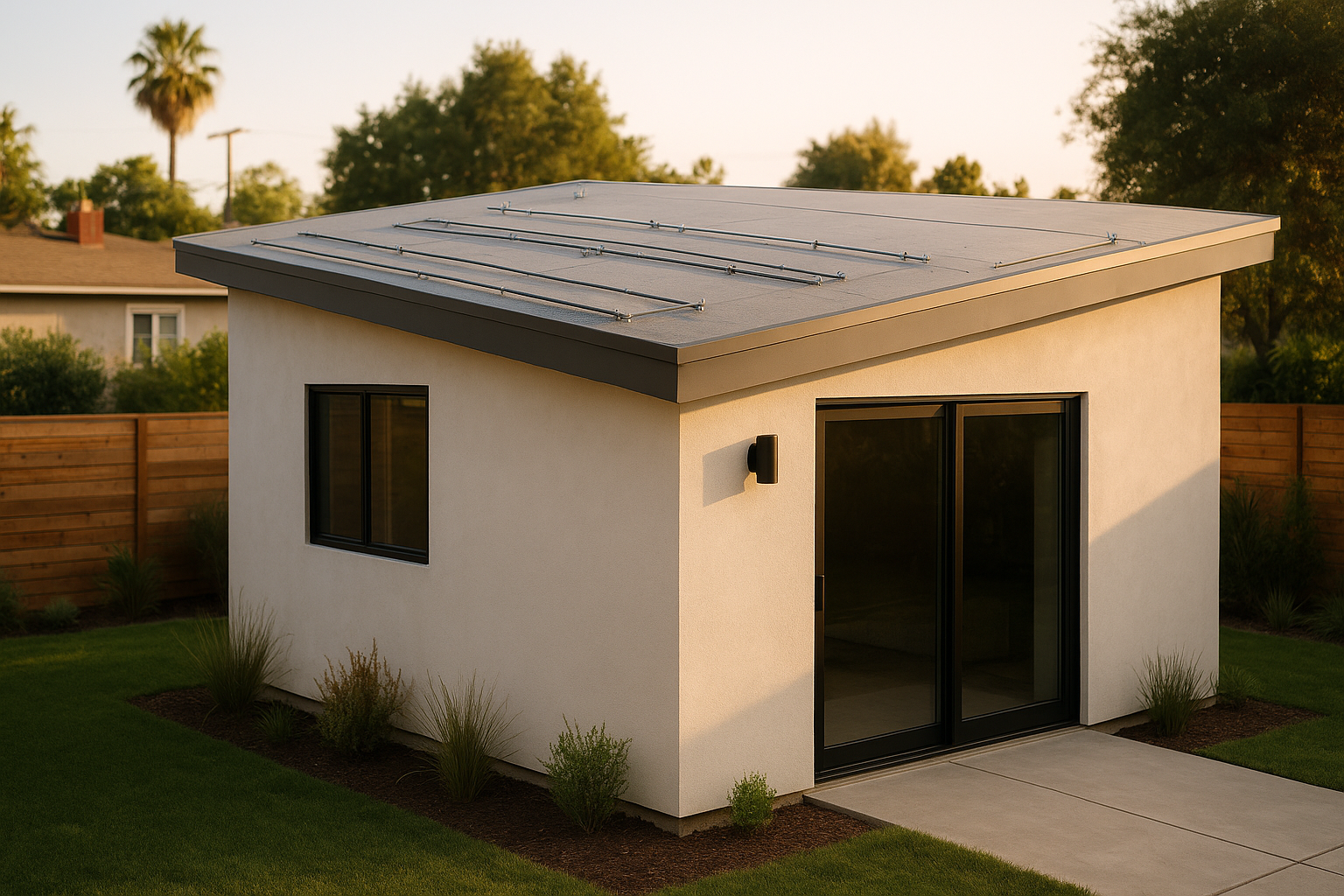
Solar ready ADU construction prepares the roof and electrical system for panels long before installation day.
What Is Solar Ready ADU Construction?
Solar ready ADU construction is a building approach that prepares an accessory dwelling unit for solar panels without installing them immediately. Specifically, it involves running empty conduit from the main electrical panel to the roofline, sizing the panel with extra breaker space, and confirming the roof framing can support future panel weight.
As a result, homeowners who are not ready to buy solar equipment can still future-proof their ADU. In contrast, skipping these steps often means cutting into finished drywall or re-roofing later just to add a basic solar array.
Why Solar Ready ADU Design Matters in Southern California
Southern California’s building codes make solar ready ADU design especially relevant. Under the state’s Title 24 energy standards, many new residential structures, including some ADUs, must either include solar panels or meet an approved exemption. Therefore, confirming where your project falls under this requirement early is essential, since it directly shapes the electrical plan.
Furthermore, the region’s strong solar resource means panels installed later tend to pay for themselves faster than in cloudier climates. According to the U.S. Department of Energy, a well-sited residential solar system can offset a significant share of a household’s electricity use over its lifespan.
In addition, rental ADUs with lower utility costs can be more attractive to tenants, which may support steadier occupancy for homeowners generating rental income.
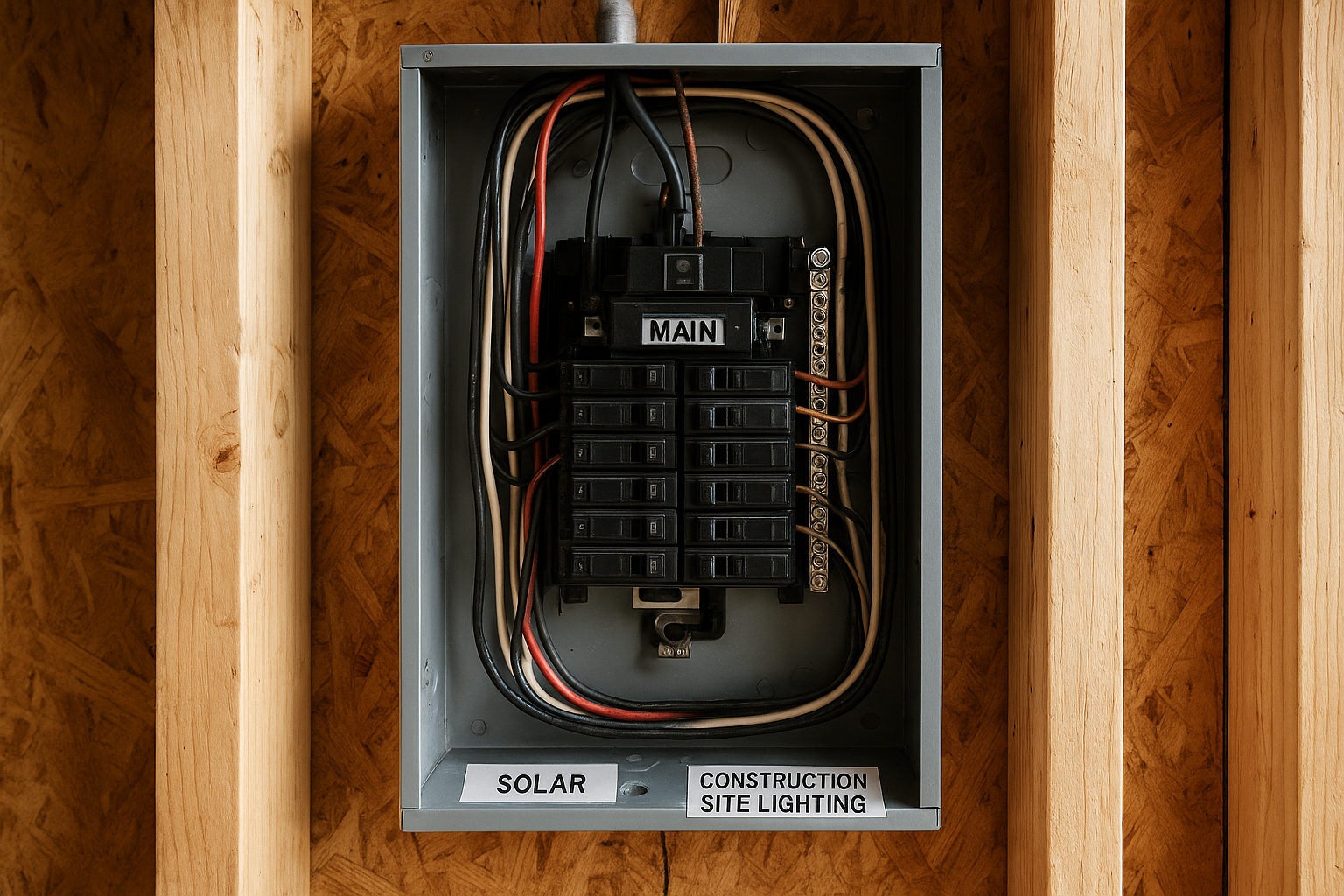
Reserved breaker space is a core part of solar ready ADU construction.
Key Components of a Solar-Ready ADU
A genuinely solar-ready ADU includes a handful of specific components, not just a vague promise of “future solar.” Above all, the electrical panel needs reserved capacity, since adding a solar inverter after the fact often requires a costly panel upgrade if space was not planned ahead of time.
Similarly, conduit pathways from the panel to the attic or roof deck should be installed and capped during framing. This way, a future solar installer can simply pull new wire through existing conduit instead of opening finished ceilings.
Finally, the roof structure itself matters. Engineers typically confirm that rafters or trusses can handle the dead load of panels, mounting rails, and hardware, particularly on smaller ADU roofs where structural margins are tighter than on a main house.
Step-by-Step: Planning Solar Ready ADU Construction
Planning for solar does not need to be complicated. Below is the general sequence most Southern California design-build teams follow when preparing an ADU for future solar.
- Assess the site and roof orientation. A contractor evaluates roof pitch, shading from trees or neighboring structures, and orientation to determine realistic future solar capacity.
- Size the electrical panel for future load. The design team specifies a subpanel with enough amperage and reserved breaker space for a solar inverter and, optionally, a battery.
- Install conduit during rough-in. Electricians run empty conduit from the panel to the roofline before drywall goes up, avoiding future demolition.
- Reinforce roof framing where needed. If the structural engineer flags added panel weight as a concern, framing is reinforced during the build rather than after the roof is finished.
- Document everything for later permitting. Keeping panel specs and electrical plans on file speeds up the permit process whenever solar panels are eventually installed.
Net-Zero ADU Construction and Title 24 Compliance
Net-zero ADU construction goes a step beyond solar readiness by combining high-performance insulation, energy-efficient windows, and tight building envelopes with eventual solar generation. Consequently, a net-zero focused ADU uses less energy to begin with, so a smaller solar array can offset a larger share of its consumption.
California’s Title 24 energy code, maintained by the California Energy Commission, sets minimum efficiency and, in many cases, solar requirements for new residential construction. For more detail on the current standards, the California Energy Commission’s Title 24 program page outlines compliance paths relevant to ADUs.
Because every city applies these standards slightly differently, it helps to work with a contractor familiar with local plan check requirements in your specific jurisdiction.
Solar Ready vs. Solar Installed ADUs: What’s the Difference?
Solar ready and solar installed are not the same thing, though homeowners sometimes use the terms interchangeably. A solar ready ADU has the infrastructure in place but no active panels generating electricity yet. A solar installed ADU has a fully operational system from day one.
In contrast, choosing solar ready first allows homeowners to spread costs over time, financing construction now and adding panels once budget allows. On the other hand, installing solar immediately means higher upfront costs but faster energy savings and, in some cases, eligibility for current incentive programs that could change in future years.
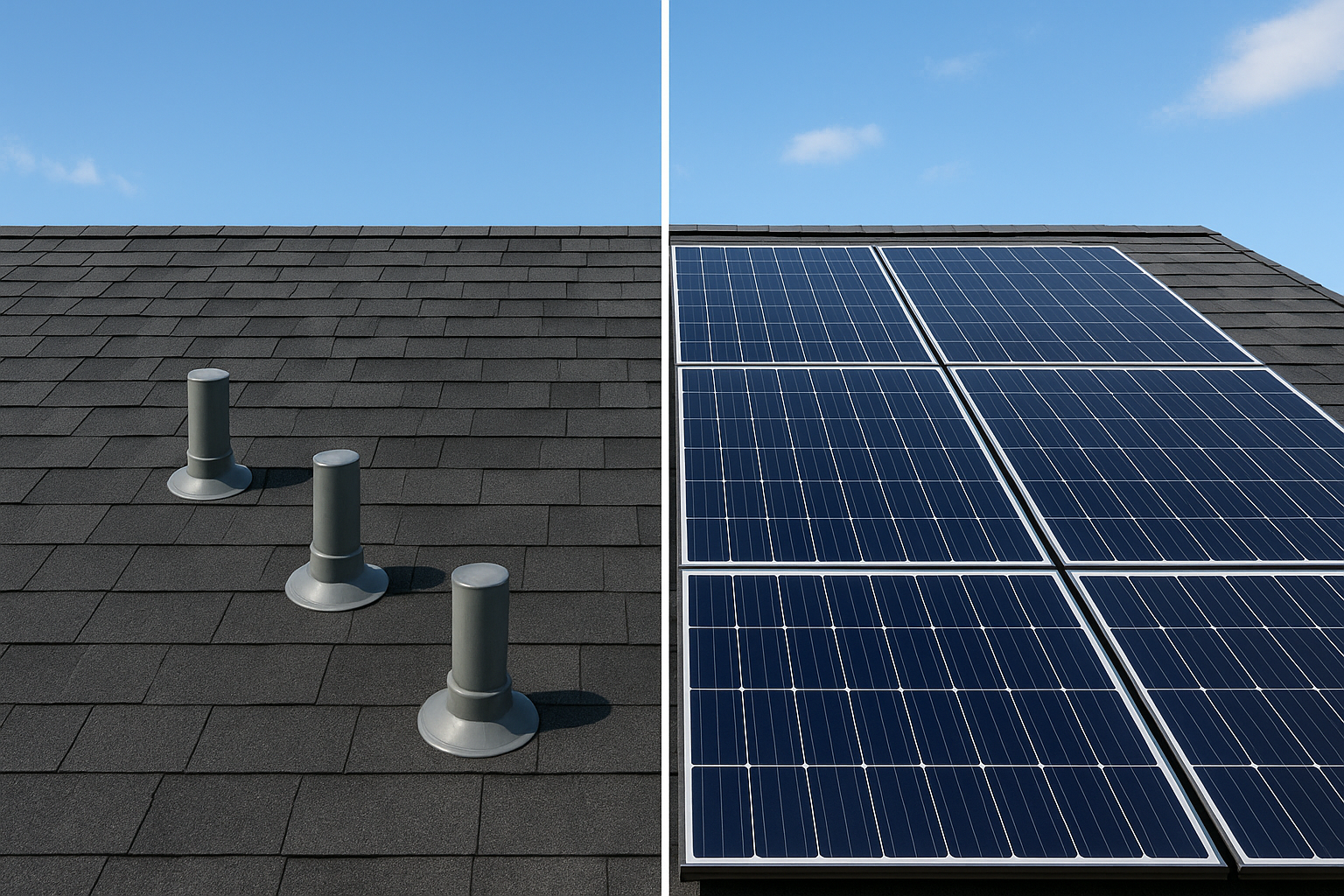
Solar ready ADU construction leaves the roof prepared, while a solar installed ADU has panels already generating power.
Cost Considerations for Solar Ready ADU Construction
Many homeowners assume solar readiness adds significant cost, but in most cases the added expense is modest compared to the overall ADU budget. Typically, reserved panel capacity and conduit runs add a few hundred to a few thousand dollars, depending on roof complexity and distance from the electrical panel.
By comparison, retrofitting a finished ADU for solar later can mean reopening ceilings, re-routing wiring externally, or even replacing an undersized electrical panel entirely. As a result, most contractors recommend deciding on solar readiness during the initial design phase rather than after construction is complete.
For homeowners weighing financing options, a design-build ADU contractor can often coordinate with third-party lenders offering HELOCs or ADU-specific construction loans, which may help spread both construction and future solar costs over time.
Choosing a Contractor for Solar Ready ADU Construction in Southern California
Not every contractor builds with future solar in mind by default, so it helps to ask directly during the design phase. Specifically, ask whether the proposed electrical panel includes reserved breaker space, whether conduit will be run during rough-in, and whether the roof structure has been evaluated for future panel loads.
Homeowners in Orange County exploring custom layouts can review examples like ADU design work in Anaheim or ADU design projects in Placentia to see how site-specific plans account for roof orientation. Those further east can look at ADU contractor services near Indio, while homeowners in Los Angeles County may find ADU construction in Santa Fe Springs a useful regional reference point.
Additionally, pairing a solar ready approach with efficient materials, such as those discussed on solar panels for ADUs, can help homeowners plan a realistic path from a solar ready shell to a fully solar powered unit.
Common Mistakes to Avoid
One frequent mistake is assuming “solar ready” simply means a south-facing roof, without verifying electrical capacity or conduit placement. Another is waiting until after framing is complete to discuss solar, which often rules out the easiest and cheapest wiring paths.
Likewise, some homeowners skip the structural review entirely, only to learn later that the roof needs reinforcement before panels can be safely mounted. Addressing these details during initial design, rather than after the fact, tends to save both time and money.
Frequently Asked Questions
What is solar ready ADU construction?
Solar ready ADU construction means building an accessory dwelling unit with the electrical conduit, roof structure, and panel capacity needed for a future solar array, even if panels are not installed right away. This lets homeowners add solar later without tearing into finished walls or roofing.
Does a solar ready ADU cost more to build?
Solar ready wiring and structural reinforcement typically add a modest amount to the overall build, often a few hundred to a few thousand dollars depending on roof design. This is far less than retrofitting solar infrastructure after construction is complete.
Is solar required on new ADUs in California?
California’s Title 24 energy code requires solar panels on most new residential construction, though many detached ADUs qualify for exemptions depending on size and conditions. A licensed contractor can confirm whether your specific ADU plan triggers the solar mandate.
How is solar ready construction different from installing solar panels now?
Solar ready construction prepares the electrical panel, conduit runs, and roof framing for solar, while installing panels now means the system is operational immediately. Many homeowners choose solar ready first to spread out costs and add panels once budget allows.
What roof features matter most for solar ready ADU construction?
South or west-facing roof planes with minimal shading, adequate structural load capacity, and clear conduit pathways matter most for future solar performance. Roof pitch and orientation are typically evaluated during the initial site assessment.
Can a garage conversion ADU be solar ready?
Yes, a garage conversion can include solar ready upgrades such as upgraded electrical panels and roof reinforcement, though existing roof orientation may limit future panel placement. A contractor should assess the existing structure before finalizing solar ready plans.
How long does solar ready ADU construction take?
Adding solar ready features typically does not extend the overall ADU timeline, since conduit and panel upgrades happen during normal electrical rough-in. Most ADU projects in Southern California still take roughly seven to twelve months from design through final inspection.
What electrical panel size supports future solar in an ADU?
Most solar ready ADUs use at least a 100-amp subpanel with reserved breaker space for a future solar inverter connection. A licensed electrician determines the exact panel size based on the ADU’s square footage and anticipated energy use.
Will solar ready construction help with property value?
Homes with energy-efficient, solar ready ADUs can appeal to buyers and renters seeking lower utility costs, which may support resale value over time. Actual value impact varies by neighborhood, rental demand, and local market conditions.
Do I need a permit for solar ready wiring in an ADU?
Yes, electrical conduit and panel upgrades for solar readiness are included in the standard ADU building permit and are inspected along with the rest of the electrical system. No separate permit is needed until actual solar panels are installed later.
What is the difference between solar ready and net-zero ADU construction?
Solar ready construction prepares the ADU for a future solar system, while net-zero construction combines high-efficiency insulation, windows, and appliances with solar generation to offset most or all energy use. Solar ready is often one component of a broader net-zero approach.
Does The ADU Pro build solar ready ADUs in Orange County and Los Angeles County?
The ADU Pro designs and builds custom ADUs across Orange County, Los Angeles County, and western Riverside County, incorporating solar ready wiring and net-zero focused construction methods on request. Site assessments determine which solar ready features fit a specific lot and roof.
In summary, solar ready ADU construction gives Southern California homeowners a practical middle ground between building a basic unit and committing to full solar from the start. By reserving electrical capacity, running conduit during rough-in, and confirming roof structure early, a solar ready ADU can be upgraded later with far less cost and disruption. For homeowners planning a detached ADU, attached addition, or garage conversion in Orange County, Los Angeles County, or western Riverside County, discussing solar readiness during the design phase remains one of the simplest ways to future-proof the investment. More background on accessory dwelling units generally is available through resources like Wikipedia’s overview of secondary suites, while project-specific questions are best answered by a licensed local contractor familiar with your city’s permit process.

