

ADU permit application support is the hands-on process of preparing, submitting, and shepherding an accessory dwelling unit (ADU) building permit through your local city’s review department. For Southern California homeowners in Orange County, Los Angeles County, and western Riverside County, this step often determines whether a project moves forward smoothly or stalls for months. Consequently, understanding how permit support works — and what can go wrong without it — is essential before you break ground.
Permit paperwork is rarely the exciting part of adding an ADU. However, it is the part that most often derails timelines, inflates costs, and frustrates homeowners who assumed a “simple” garage conversion would move quickly. This guide walks through what ADU permit application support actually includes, how the process unfolds step by step, and what to watch for when choosing a team to manage it.
Direct Answer: ADU permit application support means a design-build team prepares your plans, engineering, and compliance documents, then submits and manages the application with your city until the permit is issued. It typically takes 8 to 16 weeks in most Southern California jurisdictions, depending on plan completeness and local workload.
What Is ADU Permit Application Support?
ADU permit application support is a packaged service that covers everything between finished design drawings and an approved building permit. In particular, it includes compiling architectural plans, structural engineering, Title 24 energy compliance forms (California’s building energy efficiency standard, explained further below), and any site-specific documents a city requires.
Rather than homeowners navigating a city’s planning counter alone, a design-build contractor manages submittals, tracks plan check comments, and responds to correction requests on the homeowner’s behalf. As a result, the homeowner has a single point of accountability instead of juggling an architect, engineer, and city reviewer separately. Firms offering permit-ready ADU design services typically fold this coordination directly into the design phase so plans are built to pass review the first time.

Reviewing plans together is a core part of adu permit application support before city submittal.
Why ADU Permitting Is Harder Than Homeowners Expect
Many homeowners assume permitting an ADU is a quick formality similar to a kitchen remodel permit. In reality, ADUs involve full structural review, utility coordination, and sometimes second-story or garage-to-habitable-space conversions that trigger additional code checks. Furthermore, state law under California Government Code Section 65852.2 sets a 60-day review window for complete ADU applications, but “complete” is the key word — incomplete submittals restart the clock.
Each city also layers on its own fee schedule, submittal portal, and interpretation of setback and height rules. For example, coastal cities like Malibu and Laguna Beach require an additional coastal development review on top of standard building permits. Homeowners researching ADU plans for Malibu properties or ADU plans in Laguna Beach should budget extra time for this layer of review specifically.
In contrast, inland cities in Riverside County often move faster but may have stricter parking or lot-coverage interpretations. Consequently, no two cities process an application the same way, which is exactly why dedicated permit application support matters.
The ADU Permit Application Process: 7 Steps to Approval
Although every city has its own quirks, the overall path from design to permit follows a predictable sequence. Below is the typical order a design-build team follows when managing ADU permit application support from start to finish.
- Site assessment and feasibility review. A qualified team visits the property to measure the lot, confirm zoning, check setbacks, and verify utility access before any design work begins.
- Custom plan development and engineering. Architectural floor plans are drafted to fit the lot, then structural engineers prepare calculations and drawings that satisfy local building code requirements.
- Permit application assembly and city submittal. Plans, engineering, Title 24 forms, and site documents are compiled into a complete package and submitted through the city’s permit portal or counter.
- Plan check review and corrections. City reviewers evaluate the submittal against building, fire, and zoning codes, then issue correction comments that must be addressed and resubmitted.
- Permit issuance and fee payment. Once corrections are resolved, the city approves the plans, collects permit fees, and issues the official building permit needed to start construction.
- Scheduled inspections during construction. Building inspectors visit the site at foundation, framing, electrical, plumbing, and insulation stages to confirm the work matches the approved permitted plans.
- Final inspection and certificate of occupancy. After the last inspection passes, the city issues final sign-off, allowing the ADU to be legally occupied or rented.
Homeowners who want help tracking this sequence can start with a structured intake, such as the one used at this ADU application step, which pairs permit planning with financing readiness so both tracks move together instead of stalling each other.
ADU Permit Timelines by County
Timelines vary meaningfully across Southern California. The table below reflects typical ranges reported by homeowners and contractors working across the region; actual timelines depend on application completeness and current department workload.
| County | Typical Plan Check | Typical Total Timeline |
|---|---|---|
| Orange County | 4–8 weeks | 8–14 weeks |
| Los Angeles County | 5–10 weeks | 10–16 weeks |
| Western Riverside County | 3–7 weeks | 8–12 weeks |
Common Permit Delays — and How Application Support Prevents Them
Most permit delays trace back to a small set of recurring issues. First, missing or incomplete Title 24 energy forms are a frequent cause of correction letters. Second, structural calculations that don’t match the architectural drawings force a resubmittal cycle that can add three to five weeks. Third, unclear setback or lot-coverage measurements often trigger a request for a revised survey.
Dedicated permit application support addresses each of these proactively. For instance, in-house structural engineering coordination means calculations are built to match the drawings from the start rather than reconciled after a rejection. Similarly, teams familiar with a specific city’s plan checkers can anticipate the exact documentation that reviewer typically requests, reducing back-and-forth. According to California’s Department of Housing and Community Development, statewide ADU production has grown significantly since 2020 reforms streamlined permitting rules — yet local processing speed still varies widely by jurisdiction, which is why localized experience matters as much as general ADU knowledge. You can review the state’s ADU guidance directly on the California HCD website.
Homeowners evaluating a garage conversion or detached unit in Orange County can see how localized plan preparation works in practice through resources like ADU design services in Orange, where plans are tailored to that city’s specific submittal checklist.
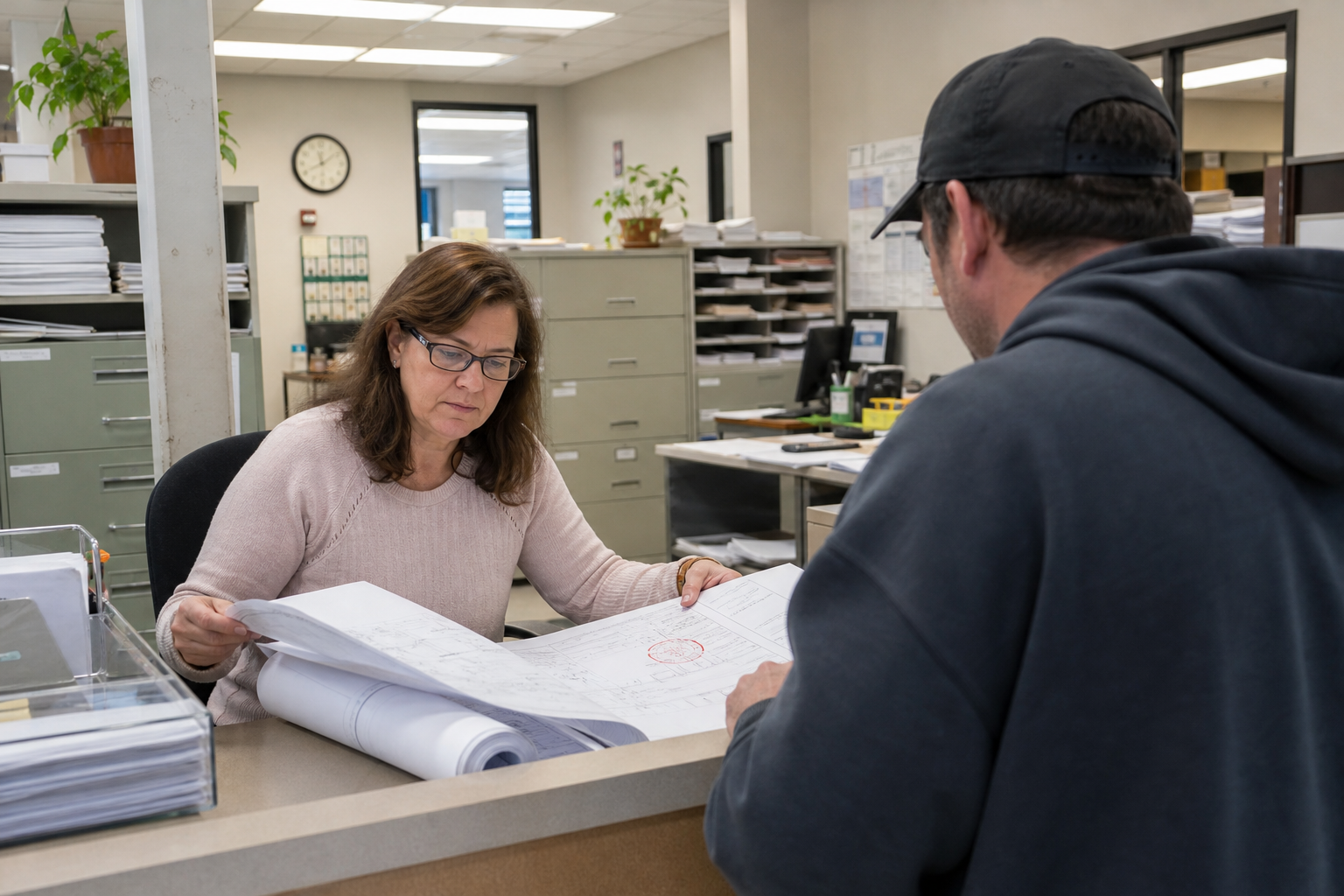
Each submittal passes through a city plan check stage before the permit is issued.
Finding the Right ADU Permit Application Support Partner
Not every contractor manages permitting the same way. Therefore, homeowners should ask specific questions before committing: Does the team handle structural engineering in-house, or outsource it? Who responds directly to city correction letters? Is permit tracking included in the contract, or billed as an extra?
Above all, look for a licensed, accountable team with a track record in your specific city. A valid California Contractors State License Board (CSLB) license is non-negotiable, and third-party performance scores — such as a contractor’s standing on BuildZoom — can offer an additional, independent signal of reliability beyond marketing claims. For a broader overview of ADU fundamentals before diving into local permitting rules, Wikipedia’s entry on the accessory dwelling unit concept provides useful background terminology referenced throughout the industry.
At theadupro.com, permit application support is built into every project from the first site assessment, with in-house structural engineering and direct city coordination handled under one contract rather than split across separate vendors.
Frequently Asked Questions About ADU Permit Application Support
What is ADU permit application support?
ADU permit application support is the service of preparing, submitting, and managing a building department application for an accessory dwelling unit on a homeowner’s behalf. It typically includes assembling plans, engineering, and compliance documents, then tracking the application through city review until approval.
How long does the ADU permit process take in Southern California?
Most ADU permits in Orange County, Los Angeles County, and western Riverside County take between eight and sixteen weeks from submittal to issuance. Timelines vary by city workload, plan completeness, and whether the ADU requires additional engineering review.
Why do ADU permit applications get rejected or delayed?
Applications are most often delayed because plans are missing structural calculations, Title 24 energy forms, or accurate site measurements. Incomplete utility information and unclear setback compliance are also common causes of plan check corrections.
What documents are required for an ADU permit application?
A complete application generally includes architectural floor plans, a site plan showing setbacks and lot coverage, structural engineering drawings, Title 24 energy compliance forms, and any required utility or fire department sign-offs. Some jurisdictions also request a soils report for detached units.
Does every city in Orange County have the same ADU permit requirements?
No, each city sets its own plan check fees, submittal formats, and review timelines even though all must follow California’s statewide ADU law. For example, Laguna Beach and Malibu add coastal development review steps that inland cities do not require.
How much does ADU permit application support cost?
Permit application support is usually bundled into a design-build contract rather than billed separately, with plan preparation and city coordination included alongside construction pricing. Standalone permit-only packages, when offered, commonly range from a few thousand dollars depending on ADU size and city fees.
Can I apply for an ADU permit myself without a contractor?
Yes, homeowners can submit their own ADU permit application, but it requires understanding local zoning codes, structural requirements, and plan check procedures. Many homeowners choose professional permit application support to avoid repeated corrections and submittal errors.
What is the difference between plan check and permit issuance?
Plan check is the city’s technical review of submitted drawings for code compliance, while permit issuance happens after all corrections are resolved and fees are paid. Construction cannot legally begin until the permit is issued and posted on site.
Will my ADU need separate utility permits?
Most ADUs require separate electrical, plumbing, and mechanical permits that are reviewed alongside the main building permit. Detached units with new water or sewer laterals may also need approval from the local water district.
What happens after my ADU permit is approved?
Once the permit is issued, construction can begin and the city will schedule a series of required inspections at key milestones, such as foundation, framing, and final. A certificate of occupancy or final sign-off is issued once all inspections pass.
Can an HOA block my ADU permit?
State law limits an HOA’s ability to outright ban ADUs, but an HOA can still enforce reasonable design standards that do not make the unit infeasible. Homeowners should review their CC&Rs early so design plans anticipate any architectural review requirements.
Does building an ADU trigger a property tax reassessment?
Adding an ADU typically results in a partial reassessment of only the new construction value, not the entire property. The existing home retains its prior assessed value under California’s property tax rules.
What is Title 24 compliance and why does it matter for ADU permits?
Title 24 is California’s building energy efficiency standard, and every ADU permit application must include documentation proving the design meets its insulation, window, and energy requirements. Non-compliant plans are one of the most common reasons for plan check corrections.
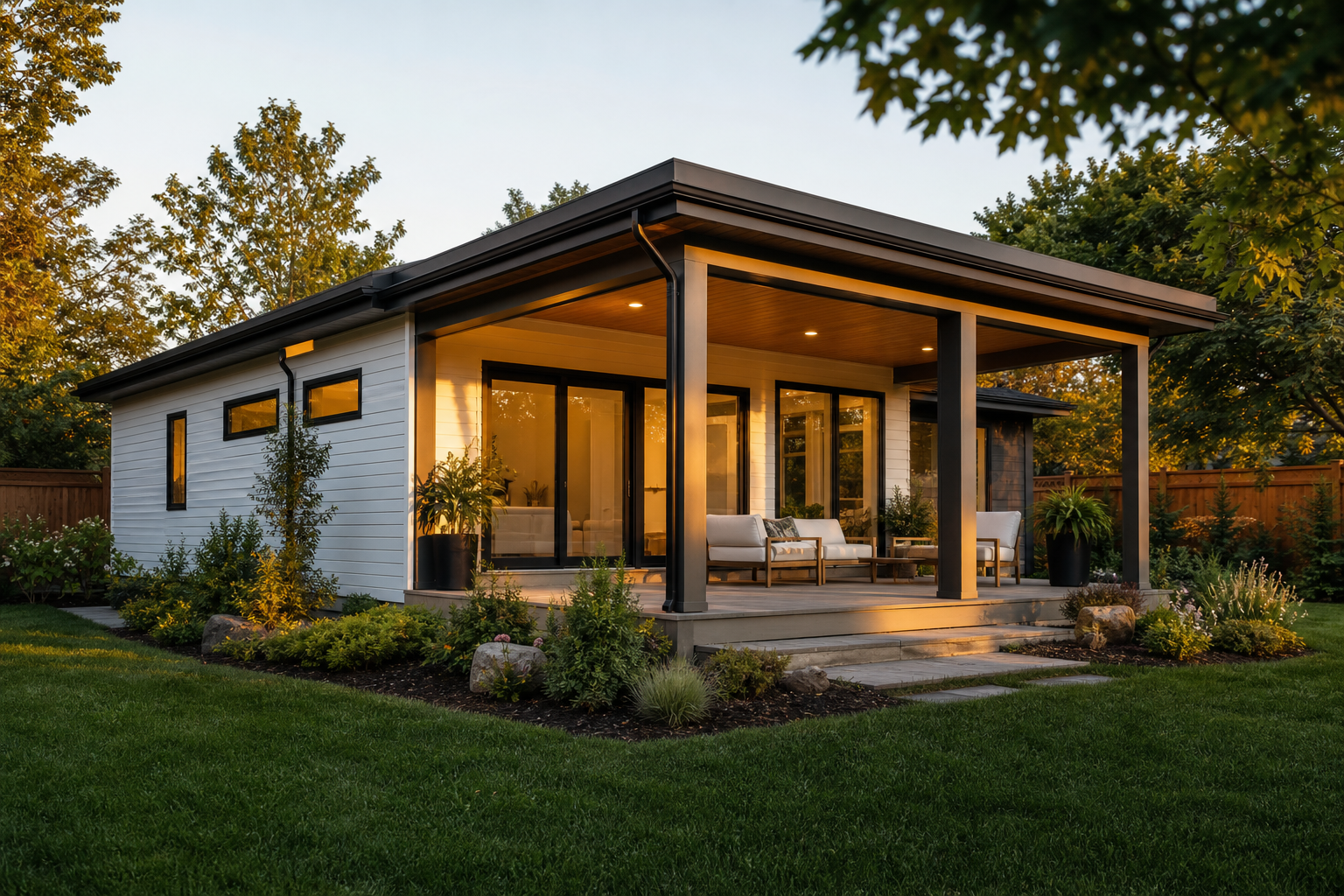
A finished detached ADU, the end result of a completed permit application and construction process.
Final Thoughts on ADU Permit Application Support
Ultimately, adu permit application support is the thread that connects a finished design to a buildable, legally occupiable ADU. Without it, even well-drawn plans can stall for months in plan check corrections. With experienced support, however, the path from site assessment to final inspection follows a predictable, manageable sequence.
Whether you’re exploring a detached unit, a garage conversion, or a second-story addition, choosing a team that handles design, engineering, permitting, and construction together — rather than separately — remains the most reliable way to keep your project on schedule and on budget.


