
An accessory dwelling unit California is a self-contained secondary residence built on the same parcel as a primary home — and it has become one of the most powerful tools available to California homeowners for generating rental income, housing family members, or increasing property value. Because California’s housing shortage has driven sweeping legislative reform since 2017, building an ADU today is more accessible than ever before.
This guide covers everything you need to know in 2025: types of ADUs, state law requirements, permitting steps, costs, and financing options. Whether you are just exploring the idea or ready to break ground, this resource will help you move forward with confidence.
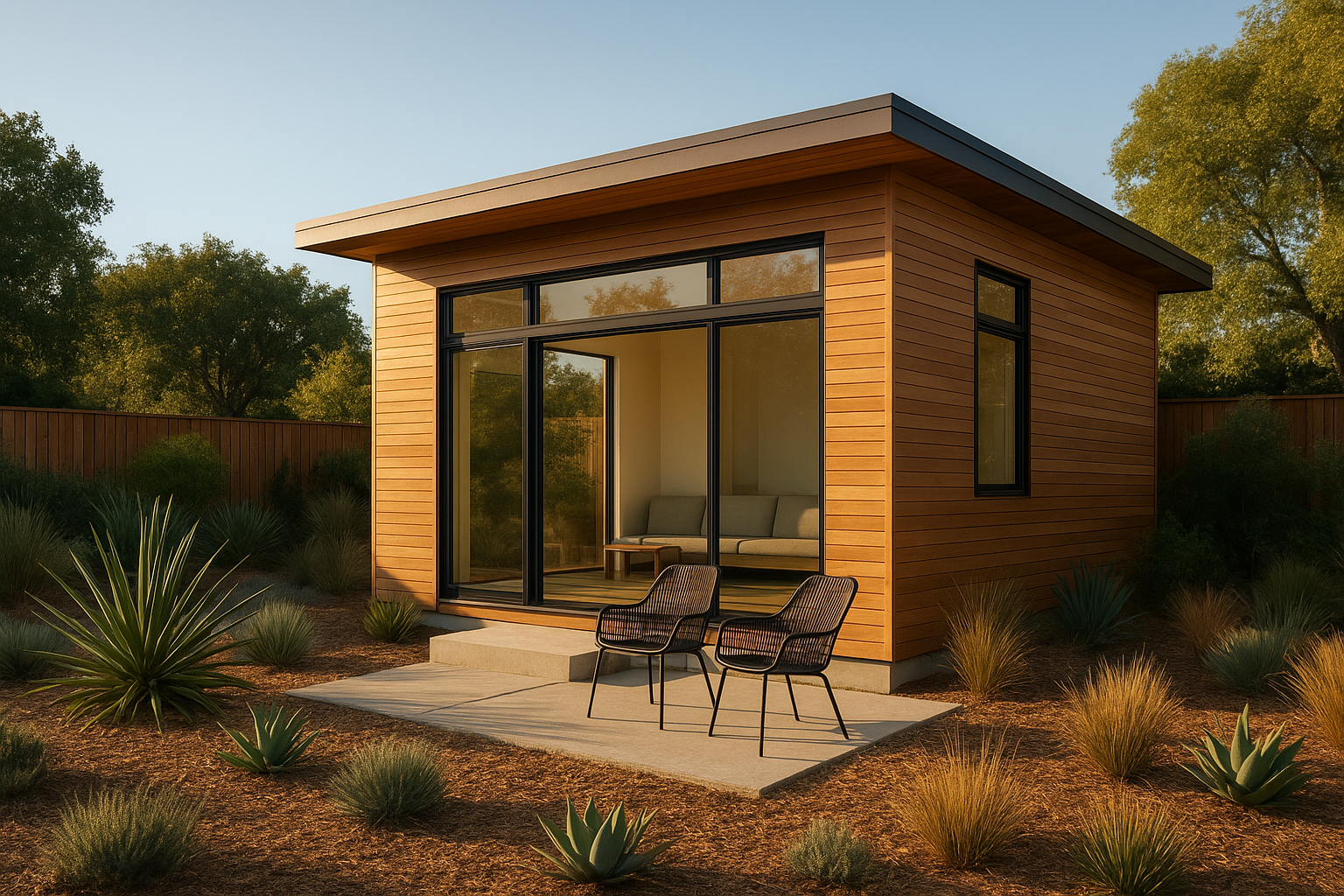
A detached accessory dwelling unit in a California backyard — one of the most popular ADU types for rental income. For a deeper walkthrough, see our Accessory Dwelling Unit Cost Estimate: 2026 Pricing Guide.
Types of ADUs Allowed Under California Law
California state law recognizes several distinct ADU types, and understanding the differences is essential before you begin planning. Each type has its own size limits, setback rules, and owner-occupancy requirements.
Detached ADU: A fully separate structure in the backyard or side yard. Maximum size is 1,200 sq ft. This is the most flexible and highest-value option for rental income.
Attached ADU: An addition connected to the primary home, sharing at least one wall. It follows the same 1,200 sq ft cap and 4-foot setback rule.
Garage Conversion ADU: Converting an existing attached or detached garage into a living unit. This is typically the most cost-effective approach because the structure already exists.
Junior ADU (JADU): A unit of up to 500 sq ft created within the existing footprint of the primary home. A JADU may share a bathroom with the main residence, but requires owner-occupancy.
Additionally, multifamily property owners can convert non-livable spaces — such as storage rooms, laundry rooms, or carports — into ADUs. In practice, this option has unlocked thousands of new units across California’s urban centers.
What Does California State Law Require?
California has passed a series of landmark ADU laws — including AB 68, AB 881, SB 9, and AB 1033 — that significantly limit what local governments can restrict. As a result, most single-family and multifamily zoned properties in the state are now eligible for at least one ADU.
Key statewide standards include:
- Setbacks: A minimum 4-foot rear and side yard setback applies to all new detached ADUs. Front setbacks follow local rules.
- Height limits: Detached ADUs can be up to 16 feet tall in most cases, and up to 18 or 25 feet when within half a mile of transit or on a lot with a multifamily structure.
- Permit timeline: Local agencies must approve or deny a complete ADU application within 60 days. For a deeper walkthrough, see our Accessory Dwelling Unit San Diego: Complete 2025 Guide.
- Impact fees: ADUs under 750 sq ft are fully exempt. Larger ADUs pay proportional fees only.
- Owner-occupancy: No owner-occupancy requirement for standard ADUs through at least January 1, 2025, under AB 3182.
For the most current regulatory guidance, the California Department of Housing and Community Development publishes updated ADU guidance documents that local jurisdictions must follow.
Step-by-Step: How to Build an ADU in California
Building an ADU involves several distinct phases. Therefore, understanding the full sequence before you start will save time and money.
Assess Your Property and Goals
First, determine what type of ADU suits your lot size, budget, and purpose. Are you building for rental income, a family member, or a home office? Your answer will shape every decision that follows.
Review Local Zoning and State Law
Next, review both your city’s ADU ordinance and current California state law. Local rules can be more permissive than state minimums but cannot be more restrictive. Check setbacks, height limits, and allowed unit sizes for your specific zone.
Hire a Designer or Use Pre-Approved Plans
Many California cities now offer pre-approved ADU plan libraries that dramatically reduce design time. Alternatively, working with a specialist like The ADU Pro can streamline both design and permitting in complex jurisdictions.
Submit Your Permit Application
Submit complete architectural and structural plans to your local building department. Because state law mandates a 60-day review window, a thorough application upfront avoids costly delays.
Build and Pass Final Inspections
Finally, hire a licensed contractor, begin construction, and schedule inspections at each required phase. The project is complete once the building department issues a certificate of occupancy.
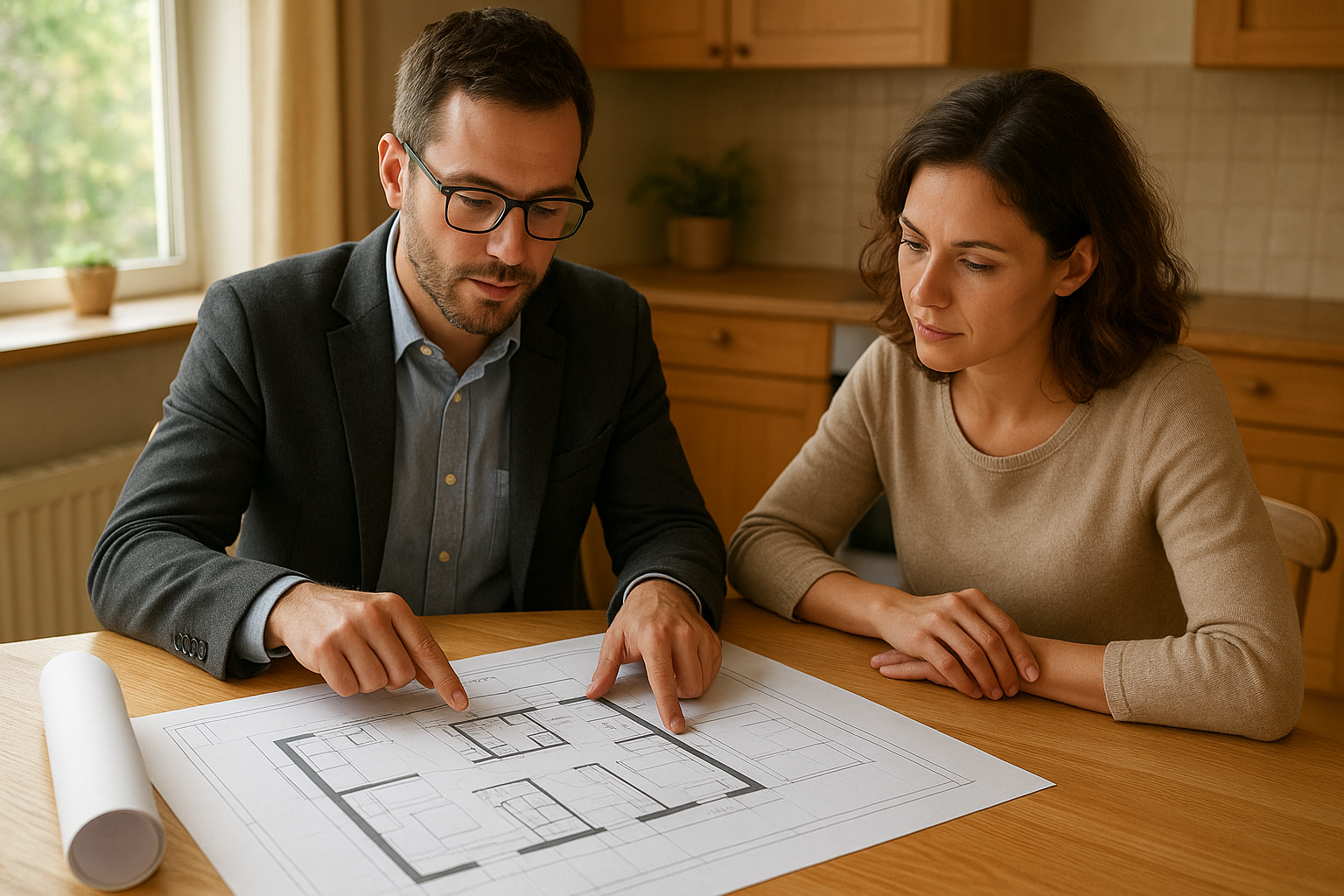
Thorough planning and a complete permit application are the keys to a smooth ADU approval process. For a deeper walkthrough, see our Jurupa Valley ADU: Complete Guide to Building in 2025.
How Much Does an ADU Cost in California?
Cost is one of the first questions homeowners ask, and the answer varies considerably by region, unit type, and construction method. However, the following ranges provide a realistic baseline for 2025.
In high-cost markets like San Francisco, Los Angeles, and San Diego, costs trend toward the upper end of these ranges. In contrast, inland cities like Sacramento or Fresno often fall closer to the lower bounds. Prefabricated or modular ADUs can also reduce construction time and cost significantly.
Financing Your ADU Build
Most homeowners finance their ADU using home equity, because California’s rising property values have given many owners substantial borrowing power. The most common options include:
- HELOC (Home Equity Line of Credit): Flexible draw periods make this ideal for phased construction.
- Cash-out refinance: Replaces your existing mortgage with a larger loan, providing a lump sum for construction.
- Construction loan: Short-term financing that converts to a permanent mortgage upon project completion.
- CalHFA ADU Grant Program: Has offered eligible low-to-moderate income homeowners up to $40,000 for pre-development costs. Check current availability at your local lender.
Additionally, resources like The ADU Pro can help homeowners navigate both financing options and the full permitting process from start to finish.
Common Mistakes to Avoid
Even with California’s streamlined ADU laws, homeowners still make avoidable mistakes that delay projects and inflate costs. Being aware of these pitfalls in advance can save months of frustration.
- Submitting incomplete plans: An incomplete application resets the 60-day clock. Always verify your local checklist before submitting.
- Ignoring utility connections: New water, sewer, and electrical connections can add $20,000–$50,000 to a project. Therefore, budget for them early.
- Choosing the wrong contractor: Always verify a contractor’s license with the California Contractors State License Board (CSLB) before signing any agreement.
- Overlooking HOA rules: Although state law limits HOA restrictions on ADUs, some rules around aesthetics and access may still apply. Confirm before designing.
Is Building an ADU Worth It in California?
For most California homeowners, the answer is yes. A detached ADU in Los Angeles, for example, can generate $1,800–$3,500 per month in rental income. Meanwhile, studies consistently show that ADUs add 20–30% to a property’s resale value in high-demand markets.
Beyond financial returns, ADUs provide flexible housing for aging parents, adult children, or caregivers — a growing priority for California families. As a result, demand for ADU construction continues to rise statewide, and legislative support shows no signs of slowing.
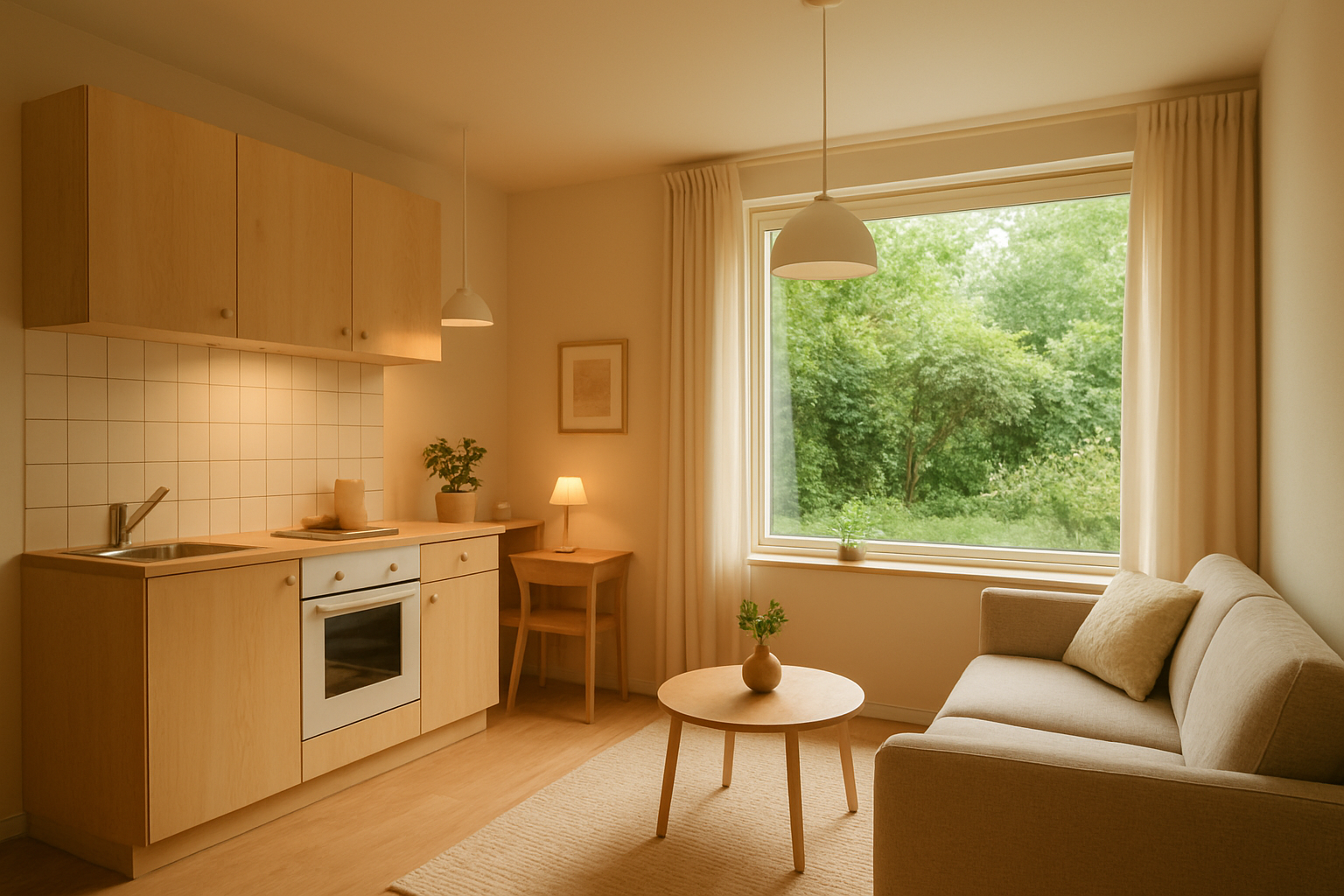
A well-designed ADU interior maximizes livability even in compact square footage.
Conclusion
Building an accessory dwelling unit California homeowners can be proud of requires careful planning, a solid understanding of state law, and the right team of professionals. However, the financial and lifestyle rewards make the effort worthwhile for most property owners. From garage conversions to custom detached cottages, California’s ADU-friendly legal landscape gives you more options than ever in 2025.
Start by assessing your property, reviewing your local ordinance, and consulting with an ADU specialist to determine the best path forward for your specific situation.
Frequently Asked Questions About Accessory Dwelling Units in California
What is an accessory dwelling unit in California?
An accessory dwelling unit in California is a secondary residential unit on the same lot as a primary home. It must have its own kitchen, bathroom, and sleeping area, and can be detached, attached, or converted from existing space. State law has made ADUs permissible on virtually all single-family and many multifamily properties.
Do I need a permit to build an ADU in California?
Yes, a building permit is required. However, state law mandates that local agencies approve or deny applications within 60 days of receiving a complete submission. Many cities have also created streamlined or over-the-counter ADU permit processes.
How much does it cost to build an ADU in California?
Costs range from roughly $50,000 for a basic JADU to over $400,000 for a large detached new-construction ADU in a high-cost area. Garage conversions typically fall between $80,000 and $150,000, making them the most affordable option for most homeowners.
What is the maximum size of an ADU in California?
Detached and attached ADUs can be up to 1,200 square feet. Junior ADUs are capped at 500 square feet and must be created within the existing footprint of the primary residence.
Can I rent out my ADU in California?
Yes. Under current state law, there is no owner-occupancy requirement for standard ADUs, meaning you can rent out both the primary home and the ADU simultaneously. Short-term rental rules, however, vary by city.
What is a Junior Accessory Dwelling Unit (JADU)?
A JADU is a unit of up to 500 sq ft carved out of the existing primary home. It may share a bathroom with the main house and requires the owner to live on the property. JADUs are a low-cost entry point for homeowners who want rental income without major construction.
Are there setback requirements for ADUs in California?
Yes. State law requires a minimum 4-foot rear and side yard setback for new detached ADUs. Front setbacks follow local zoning. ADUs replacing an existing legally permitted structure may be exempt from certain setback rules.
Can I build an ADU on a multifamily property in California?
Yes. California law allows at least one detached ADU per multifamily lot and permits conversion of non-livable spaces into ADUs. The number of allowed conversions scales with the number of existing dwelling units on the property.
How long does it take to get an ADU permit in California?
State law requires a decision within 60 days of a complete application. However, total project time from design to final occupancy typically ranges from 6 to 18 months, depending on the jurisdiction, construction type, and contractor availability.
Do impact fees apply to ADUs in California?
ADUs under 750 sq ft are fully exempt from impact fees. For ADUs at or above 750 sq ft, fees must be proportional to the primary dwelling’s square footage and cannot be charged at the same rate as a new single-family home.
Can I sell my ADU separately from the main house in California?
Under AB 1033 (effective 2024), some jurisdictions may allow ADUs to be sold as separate condominiums. Local adoption varies, so contact your city’s planning department to confirm whether this option is available in your area.
What financing options are available for building an ADU in California?
Common options include HELOCs, cash-out refinancing, construction loans, and the CalHFA ADU Grant Program, which has provided up to $40,000 for eligible homeowners’ pre-development costs. Additionally, some lenders now offer ADU-specific loan products tailored to California homeowners.