
ADU grants can significantly reduce the upfront cost of adding a guest house, garage conversion, or junior unit to your Southern California property. For homeowners in Orange County, Los Angeles, and the Inland Empire, understanding where this funding comes from and how to qualify is often the difference between a stalled project and a completed accessory dwelling unit.
Quick Answer: ADU grants are non-repayable funds, typically from state or local housing agencies, that help cover pre-development costs like design, permits, and soil testing. They rarely cover full construction costs, so most homeowners pair grants with a loan or refinance to complete their project.
What Are ADU Grants?
ADU grants are funds provided by government housing agencies, cities, or utility companies specifically to help homeowners build an accessory dwelling unit — a self-contained secondary living space on a residential lot. Unlike a loan, grant money generally does not require repayment as long as the homeowner meets program conditions, such as owner-occupancy or income limits.
In particular, these programs were created in response to California’s housing shortage. As a result, state lawmakers and local agencies have introduced multiple funding mechanisms to encourage more ADU construction across single-family neighborhoods.

Reviewing eligibility requirements is the first step toward securing ADU grants.
How Do ADU Grant Programs Work in California?
Most ADU grant programs work by reimbursing or directly covering specific “soft costs” incurred before construction begins. These often include architectural design fees, permit fees, impact fees, and geotechnical reports. For example, the CalHFA ADU Grant Program has offered eligible homeowners up to $40,000 toward these pre-development expenses, though funding rounds open and close based on annual state budget allocations.
Consequently, timing matters. Because demand typically exceeds available funds, programs often pause new applications once the allotted budget is exhausted for the year. Homeowners should therefore monitor agency announcements closely rather than assuming funding is always open.
According to the California Department of Housing and Community Development (HCD), statewide ADU permit applications grew from roughly 1,300 in 2016 to more than 23,000 by 2022, reflecting the growing role these units play in addressing housing supply. This surge has, in turn, increased competition for available grant dollars.
Types of ADU Funding Programs Available
Beyond state-level grants, homeowners have access to several other funding sources. Understanding each option helps clarify what a project actually needs.
- State grants: Programs like the CalHFA ADU Grant have historically covered pre-development costs for qualifying homeowners.
- Local city incentives: Some Southern California cities offer fee waivers or small rebates to encourage ADU permits.
- Utility rebates: Certain utility providers offer incentives for energy-efficient ADU construction, such as solar-ready or all-electric units.
- Financing tools: Home equity loans, cash-out refinances, and construction loans fill the gap that grants do not cover. Our guide on easy ADU financing for real estate success explains these options in more depth.
For a broader overview of what’s currently available, see our detailed breakdown of grants available for building an ADU.
Step-by-Step: How to Apply for ADU Grants
Applying for ADU grants involves a fairly predictable sequence. Following these steps in order reduces the risk of disqualification or missed deadlines.
- Research active grant programs through agencies such as CalHFA and your local city housing department to confirm current availability.
- Confirm your eligibility by reviewing income limits, ownership requirements, and intended use rules for each program.
- Gather required documentation, including proof of income, your property deed, a preliminary site plan, and a contractor’s cost estimate.
- Submit your application accurately and well before the funding round closes, since many programs work on a first-come, first-served basis.
- Coordinate with your contractor so construction milestones align with the grant’s disbursement schedule.
Our step-by-step resource on how to find and apply for free ADU funding walks through each stage with additional detail specific to Southern California applicants.
ADU Grants vs. Other Financing Options
Grants and loans serve different purposes, so most successful ADU projects use a combination of both. A grant lowers your upfront costs but rarely funds the entire build. In contrast, financing tools like construction loans or home equity lines of credit cover the remaining balance and are repaid over time with interest.
Therefore, before committing to a design, it helps to map out a realistic budget that separates grant-eligible soft costs from total construction expenses. Our comparison of financing options for building an ADU breaks down interest rates, terms, and qualification criteria for each alternative.
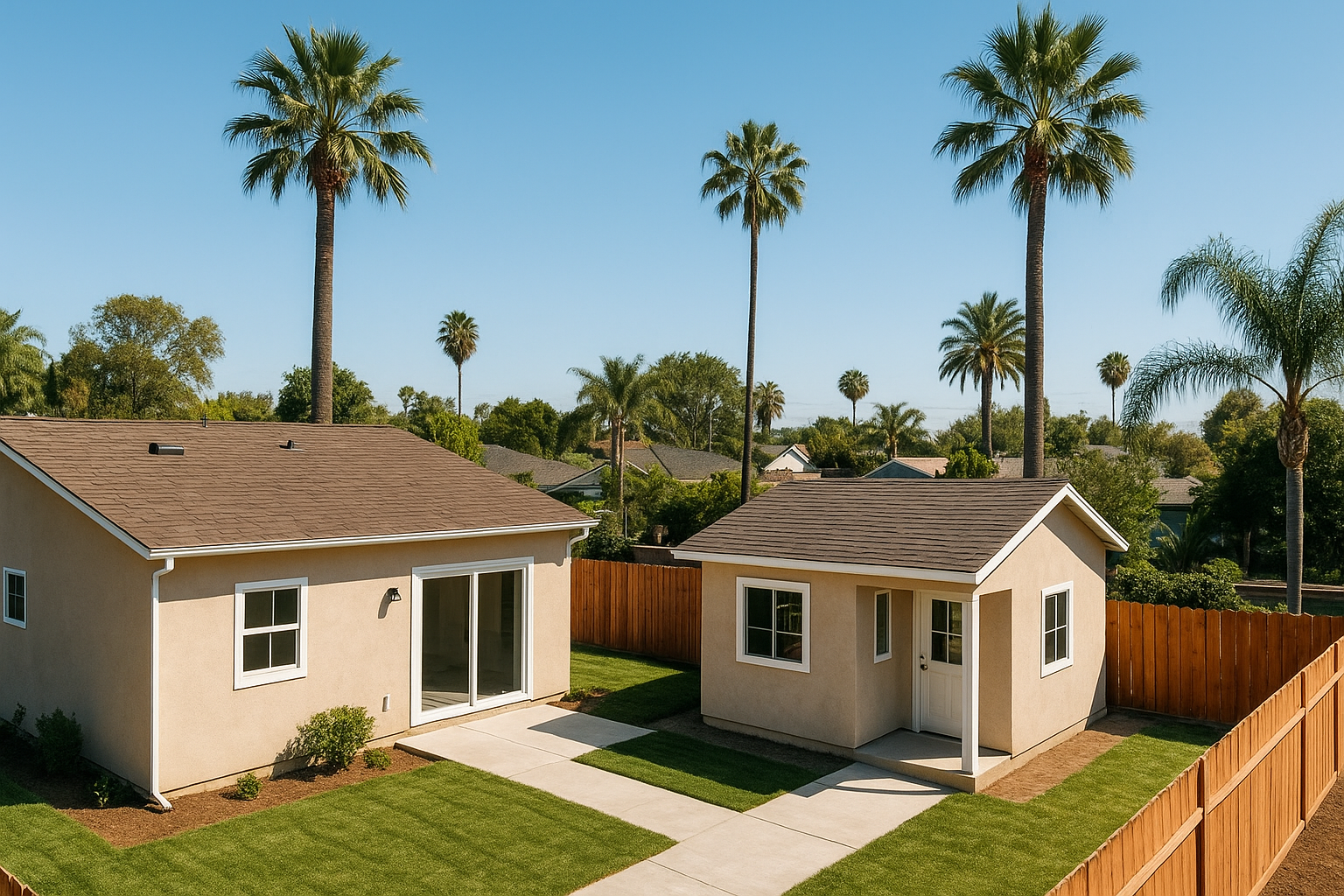
A finished detached ADU, partly funded through available adu grants and financing.
Common Mistakes When Applying for ADU Grants
Even well-organized homeowners run into avoidable problems. For instance, starting construction before receiving formal grant approval can immediately disqualify a project from reimbursement. Similarly, missing a funding round deadline often means waiting an entire year for the next cycle.
In addition, some applicants underestimate documentation requirements, submitting incomplete paperwork that delays review. Above all, failing to confirm current program status before budgeting is one of the most frequent errors, since grant availability shifts frequently based on state funding levels.
For a current overview of qualification requirements, our guide to the ADU grant program for 2025 outlines what documentation reviewers typically expect.
Working With an Experienced ADU Contractor
Because grant timelines and construction schedules must align closely, working with an experienced contractor matters. TheADUPro serves homeowners across Orange County, Los Angeles County, and Riverside County, guiding clients through design, permitting, funding coordination, and full construction of detached guest houses, garage conversions, attached additions, and junior ADUs.
Consequently, having a team that understands both California’s evolving ADU regulations and available funding sources helps homeowners avoid the common pitfalls described above. You can learn more about our end-to-end process by visiting theadupro.com.
Frequently Asked Questions About ADU Grants
What are ADU grants?
ADU grants are non-repayable funds offered by government agencies or utility programs to help homeowners cover part of the cost of designing, permitting, or building an accessory dwelling unit. Unlike loans, grant money typically does not need to be paid back if program conditions are met.
How much money can I get from ADU grants?
Amounts vary by program, but some California grants have offered up to $40,000 toward pre-development soft costs like permits, architectural drawings, and soil testing. Smaller local or utility rebates may range from a few hundred to several thousand dollars.
Who qualifies for ADU grant funding?
Eligibility usually depends on household income, property location, and whether the ADU will be used as the owner’s primary residence or a rental unit. Many programs prioritize low- to moderate-income homeowners.
Are ADU grants still available in 2025?
Availability changes frequently because state grant programs open and close based on budget allocations. It is important to check current status directly with agencies like CalHFA or consult a local ADU contractor for updated funding sources.
How do ADU grants differ from ADU loans?
Grants provide funds that generally do not require repayment, while loans must be paid back with interest over time. Homeowners often combine both to fully finance a project.
How long does it take to get approved for an ADU grant?
Approval timelines vary widely, from a few weeks for simple rebate programs to several months for state-administered grants with heavy demand. Applying early in a funding cycle improves your chances of approval.
What documents are needed to apply for ADU grants?
Most programs require proof of income, property ownership documents, a project scope or design plan, and sometimes a cost estimate from a licensed contractor. Some programs also require a signed affidavit about intended use of the unit.
Can I use ADU grants alongside other financing options?
Yes, many homeowners combine ADU grants with home equity loans, cash-out refinances, or construction loans to cover the full project budget. Grants typically only cover a portion of soft costs, not the entire build.
What is the biggest mistake homeowners make with ADU grants?
The most common mistake is starting construction before grant approval, which can disqualify the project. Another frequent error is missing application deadlines because funding rounds often close quickly.
Do ADU grants cover the full cost of construction?
No, ADU grants generally cover only a portion of pre-development or soft costs rather than full construction expenses. Homeowners should budget for additional financing to complete the project.
Where can I find current ADU grant programs?
Check the California Department of Housing and Community Development, CalHFA, local city housing departments, and utility company rebate pages for current offerings. A local ADU contractor can also track active programs on your behalf.
Does building an ADU with grant funding affect property taxes?
Adding an ADU typically triggers a reassessment of the new construction value, which can increase property taxes on that portion of the home. Grant funding itself does not change this, since taxes are based on the completed structure’s value.

Final approval paperwork marks the last step before construction funding begins.
Final Thoughts on ADU Grants
In summary, ADU grants offer real, meaningful savings for Southern California homeowners, particularly when it comes to covering pre-development costs like permits and design fees. However, because most programs only fund a portion of a project and availability shifts throughout the year, success depends on early research, complete documentation, and careful timing with your construction schedule. According to Wikipedia’s overview of accessory dwelling units, ADUs have become an increasingly common housing solution nationwide, and California’s grant landscape reflects that growing demand. Whether you’re just starting to explore funding or ready to break ground, partnering with an experienced ADU contractor like TheADUPro helps ensure grant timelines, permits, and construction stay aligned from start to finish.