ADU insulation installation services determine whether your accessory dwelling unit stays comfortable year-round or turns into an expensive energy drain. In Southern California, where summer heat and winter chill both test a building’s envelope, proper insulation is not optional — it is required under Title 24 energy standards. However, many homeowners do not realize how insulation choices affect comfort, monthly utility bills, and even resale value. This guide explains what ADU insulation installation services actually include, how much they cost, and why choosing the right contractor matters as much as choosing the right material.
Quick answer: ADU insulation installation services cover selecting the right material (batt, spray foam, or blown-in), sealing air leaks, and meeting Title 24 R-value requirements for walls, ceilings, and floors. Costs typically fall between $2 and $7 per square foot, and the work is usually scheduled within the broader ADU construction timeline rather than as a standalone project.
What Are ADU Insulation Installation Services?
ADU insulation installation services are the combined material, labor, and inspection steps that bring an accessory dwelling unit’s thermal envelope up to California code. Specifically, this includes measuring wall and ceiling cavities, choosing an insulation product rated for the climate zone, and installing it with proper air sealing. In addition, the work covers coordinating a city inspection before drywall or interior finishes cover the insulation.
Because insulation is a code-required component, it cannot simply be added as an afterthought. For example, the California Energy Commission’s Title 24 Building Energy Efficiency Standards set minimum R-values for new residential construction, including ADUs. As a result, a qualified contractor plans insulation early in the design phase rather than treating it as a last-minute checklist item.
Why ADU Insulation Matters for Energy Efficiency
Insulation slows the transfer of heat between the inside and outside of a building. Consequently, a properly insulated ADU stays cooler in summer and warmer in winter without forcing the HVAC system to work overtime. According to the U.S. Department of Energy, home insulation and air sealing can reduce heating and cooling costs by up to 15 percent in many homes, based on data from the Department of Energy’s insulation guidance.
For rental ADUs, this efficiency directly affects tenant satisfaction. Similarly, for family-occupied units, lower energy bills mean the space stays affordable to run long term. Above all, insulation quality influences whether the ADU actually performs the way it was designed to.
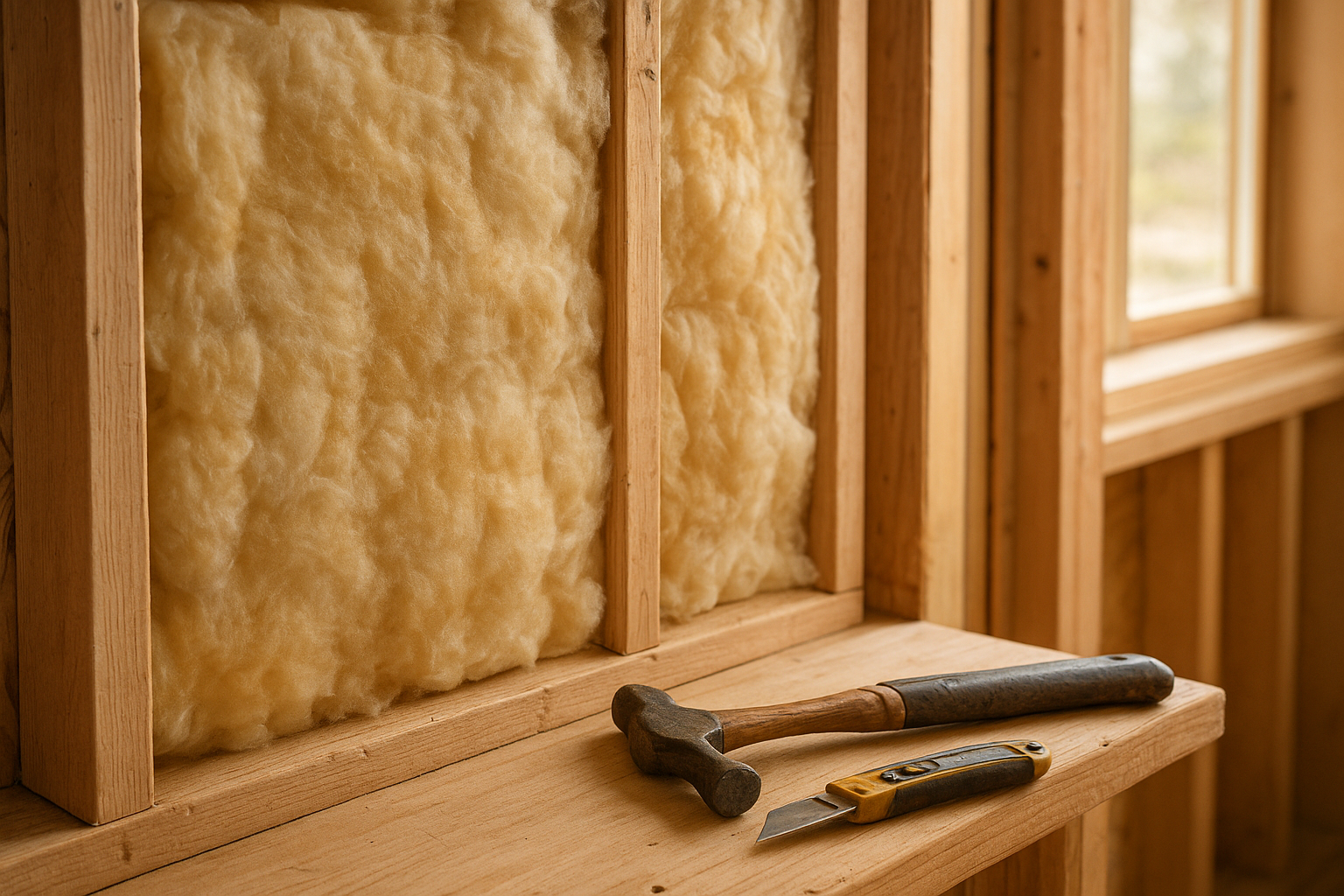
Batt insulation is one common material used in ADU insulation installation services.
Types of Insulation Materials Used in ADU Construction
Several insulation materials are common in Southern California ADU projects, and each has trade-offs. Fiberglass batt is the most familiar option and remains budget-friendly for standard wall cavities. Blown-in cellulose, in contrast, fills irregular spaces well and is often used in ceilings or retrofit garage conversions.
Spray foam insulation costs more upfront but provides superior air sealing and a higher R-value per inch. Therefore, it is frequently chosen for net-zero-focused builds where minimizing air leakage matters as much as raw insulation value. A knowledgeable contractor recommends material based on the ADU’s framing, climate zone, and budget rather than a one-size-fits-all approach.
How Professional ADU Insulation Installation Works
Understanding the process helps homeowners know what to expect on the job site. Below is the typical sequence a licensed contractor follows.
- Site assessment and R-value planning: The contractor evaluates the ADU’s climate zone, wall and ceiling assemblies, and orientation to determine which insulation materials and R-values will satisfy Title 24 requirements.
- Air sealing and moisture barrier preparation: Crews seal gaps around framing, windows, and penetrations and install vapor barriers before insulation goes in to prevent moisture intrusion and energy loss.
- Insulation material installation: Batt, spray foam, or blown-in insulation is fitted into walls, ceilings, and floor cavities according to manufacturer specifications and local building code requirements.
- Inspection and energy compliance verification: A city building inspector checks the installed R-values and workmanship before drywall or interior finishes are allowed to close the wall cavities.
- Final Title 24 documentation and closeout: The contractor compiles energy compliance documentation for the permit file, supporting final inspection and certificate of occupancy approval for the completed ADU.
ADU Insulation Costs in Southern California
Insulation pricing generally ranges from $2 to $7 per square foot installed, depending on material and application. For instance, a typical 750 square foot detached ADU might spend $3,000 to $6,500 on insulation alone, not including the labor bundled into a full construction contract. Garage conversions sometimes cost slightly more per square foot because existing framing may need furring or added depth to reach code-required R-values.
It is worth noting that insulation is rarely priced as a standalone line item in a design-build project. Instead, it is typically folded into the overall construction budget alongside framing, electrical, and drywall. Homeowners exploring financing coordination for ADU construction should ask their contractor how insulation and energy compliance costs factor into the total project estimate.
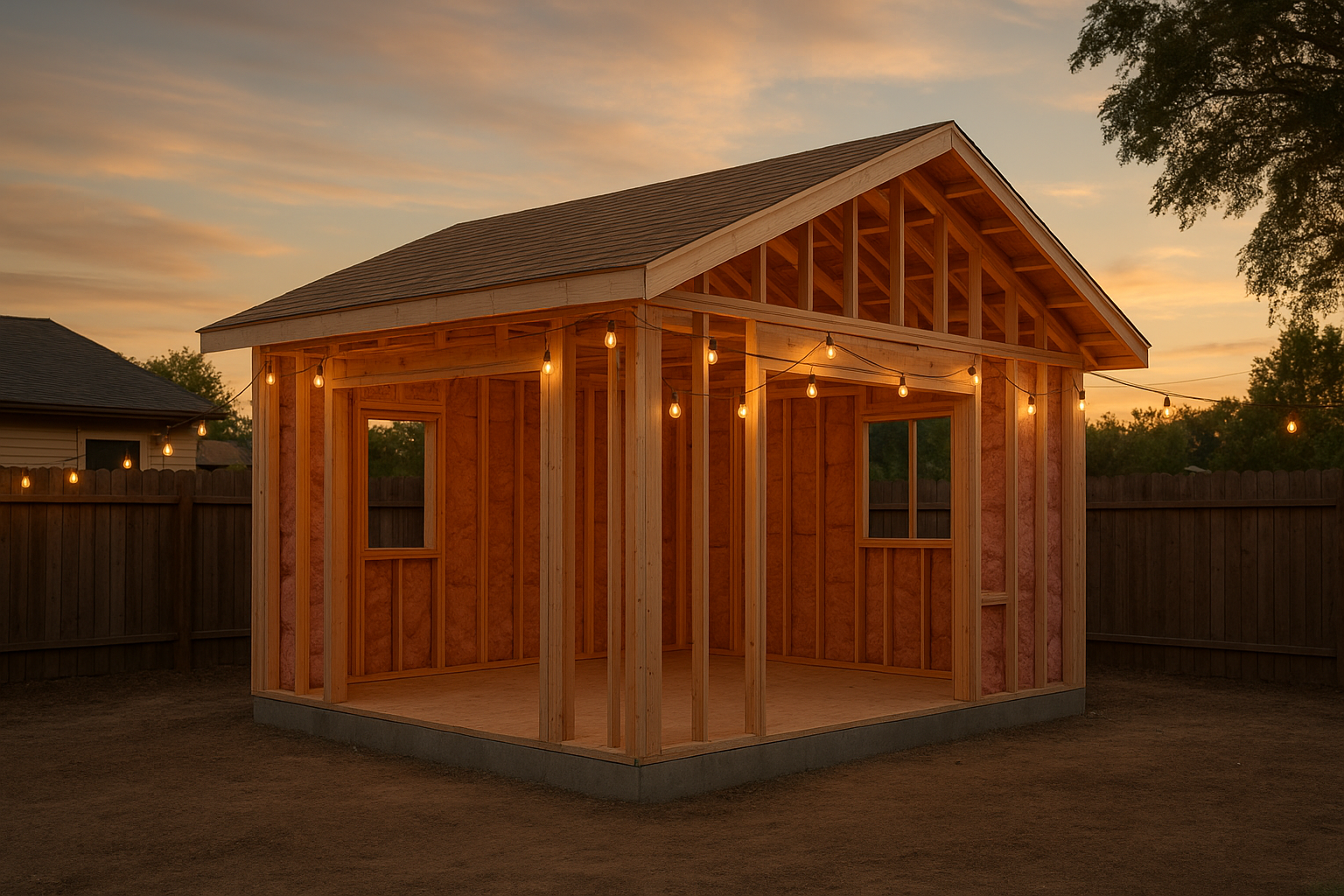
Insulation work happens early in the ADU construction sequence, before drywall closes the walls.
Title 24 Compliance and Net-Zero ADU Construction
California’s Title 24 standards require specific R-values for walls, ceilings, and floors based on climate zone, and ADUs are not exempt from these rules. In particular, insulation performance feeds directly into the broader energy compliance calculation that also includes windows, HVAC equipment, and, in some cases, solar offsets.
Net-zero-focused construction takes this a step further by pairing high-performance insulation with energy-efficient windows and optional solar systems to minimize a unit’s net energy consumption. Consequently, insulation choices made early in design can influence whether a net-zero goal is realistically achievable within budget.
Choosing an ADU Insulation Installation Contractor
Not every general contractor handles insulation and energy compliance with the same attention to detail. Therefore, homeowners should ask specifically how a contractor plans insulation type, verifies R-values, and coordinates city inspections before signing a contract. In-house structural engineering and permit handling, rather than outsourcing these steps, often leads to fewer scheduling delays.
The ADU Pro, based in Chino and serving Orange County, Los Angeles County, and western Riverside County, coordinates ADU insulation installation services as part of its full design-build process. This includes structural engineering, permitting, and Title 24 compliance handled by one accountable team rather than multiple disconnected subcontractors. Homeowners considering a project nearby can review examples such as ADU construction in Los Alamitos, ADU design work in Aliso Viejo, or ADU design services in Irvine for a sense of local project scope.
For homeowners specifically weighing garage conversions, insulation planning around existing ceiling framing is worth reviewing early. Related resources like the ceiling construction topic page and ADU design examples in Laguna Beach can offer additional context on how design decisions and insulation planning intersect.
Frequently Asked Questions About ADU Insulation Installation Services
What do ADU insulation installation services include?
ADU insulation installation services typically include material selection, air sealing, vapor barrier installation, and fitting insulation into walls, ceilings, and floors to meet Title 24 requirements. They are usually coordinated as part of the overall design-build construction schedule.
How much do ADU insulation installation services cost in Southern California?
Insulation costs generally run between $2 and $7 per square foot depending on material and ADU size. A typical 750 square foot detached ADU may spend $3,000 to $6,500 on insulation alone, not including labor bundled into the broader construction contract.
What R-value is required for ADU walls and ceilings under Title 24?
California’s Title 24 standards generally require R-13 to R-21 in walls and R-30 or higher in ceilings, depending on climate zone. A licensed contractor confirms exact requirements based on the ADU’s specific location.
How long does insulation installation take during ADU construction?
Insulation installation itself usually takes one to three days once framing and rough-in work pass inspection. However, it is scheduled within a larger construction timeline that can run several months from permit issuance to final inspection.
What insulation types work best for detached ADUs?
Fiberglass batt and blown-in cellulose are common, cost-effective choices for detached ADU walls and ceilings. Spray foam offers higher performance and air sealing but at a higher price point.
Can garage conversions use the same insulation methods as new ADUs?
Garage conversions can use similar batt or spray foam products, but existing framing depth and moisture conditions often require adjusted approaches. In contrast to new construction, garages sometimes need added vapor barriers or furring to reach code-required R-values.
Why does insulation matter for ADU rental income potential?
Well-insulated units keep utility bills lower, which makes a rental unit more attractive to tenants and can support higher rent. Poor insulation, on the other hand, often leads to tenant complaints and higher vacancy turnover.
What common mistakes happen with ADU insulation installation?
Common mistakes include skipping air sealing before insulating, compressing batt insulation into tight cavities, and covering insulation before the city inspector verifies R-values. These errors reduce performance and can delay inspections.
Does spray foam insulation cost more than batt insulation for ADUs?
Yes, spray foam typically costs two to three times more per square foot than fiberglass batt insulation. Many homeowners balance the higher upfront cost against long-term energy savings and improved air sealing.
How does insulation affect ADU energy bills?
Proper insulation reduces heat transfer, which lowers heating and cooling demand throughout the year. As a result, a well-insulated ADU can meaningfully cut monthly utility costs compared to a poorly sealed unit.
Who inspects ADU insulation before drywall installation?
The local building department’s inspector verifies insulation type and R-value during a scheduled rough inspection before drywall closes the walls. This step is required before construction can proceed to the next phase.
Can homeowners install their own ADU insulation to save money?
Some homeowners attempt DIY insulation, but improper installation can fail inspection or reduce energy performance. Professional ADU insulation installation services help ensure code compliance and consistent coverage across the entire unit.
What is the best practice for insulating ADU floors above garages?
Floors above garages or crawl spaces generally need continuous insulation with an air barrier to prevent drafts from below. Sealing penetrations for plumbing and electrical lines is equally important for consistent performance.
Does The ADU Pro provide ADU insulation installation services in-house?
The ADU Pro coordinates ADU insulation installation services as part of its full design-build process, alongside structural engineering, permitting, and Title 24 compliance. This keeps insulation decisions aligned with the broader net-zero-focused construction approach.
How does insulation support net-zero ADU construction goals?
High-performance insulation reduces the heating and cooling load a home needs, which makes it easier to offset remaining energy use with efficient systems or solar. Consequently, insulation is one of the foundational steps toward a net-zero-focused ADU.
Final Thoughts on ADU Insulation Installation Services
Choosing the right ADU insulation installation services affects far more than a single line item on a construction budget. Above all, insulation determines comfort, energy costs, and Title 24 compliance for the life of the unit. Homeowners in Orange County, Los Angeles County, and western Riverside County who want insulation planned correctly from the start can review project examples at theadupro.com or explore location-specific design pages such as Aliso Viejo and Laguna Beach before requesting a site assessment. In the end, insulation is a small part of the overall square footage but a large factor in whether an ADU performs as promised.