
ADU permitting services Southern California homeowners trust are built on one core principle: getting city approvals right the first time, without unnecessary redesigns or missed deadlines. Because California’s accessory dwelling unit (ADU) laws changed significantly over the past decade, some cities across Orange County, Los Angeles County, and Riverside County still apply outdated review habits that slow down otherwise compliant projects. In addition, permitting rules vary from one city to the next, even within the same county, which makes local experience essential. This guide breaks down how the permitting process actually works, what causes the most common delays, and how a design-build contractor with in-house engineering can move a project from lot feasibility to final inspection with fewer surprises.
Quick answer: ADU permitting services in Southern California typically bundle site feasibility review, custom plan preparation, structural engineering, and Title 24 compliance with full city or county coordination through final inspection. Most jurisdictions across Orange County, Los Angeles County, and western Riverside County must act on a complete ADU application within 60 days under state law, though real-world timelines often run 8 to 16 weeks once corrections are factored in.
What Are ADU Permitting Services in Southern California?
ADU permitting services southern california is the umbrella term for the professional support that guides an accessory dwelling unit (a self-contained secondary living unit on a residential lot) through every required approval step. This includes plan submittal, structural review, energy compliance, and inspection coordination with the local building department. In practice, this means someone other than the homeowner is tracking deadlines, responding to correction letters, and confirming that drawings match what the city actually requires.
Because California’s Government Code Section 65852.2 sets statewide baseline standards for ADU review, most cities cannot outright deny a compliant ADU application. However, local building departments still control plan-check timelines, fee schedules, and documentation requirements, so the permitting process rarely looks identical from one city to the next. As a result, homeowners who work with a permitting team familiar with specific city departments in Orange County, Los Angeles County, and western Riverside County tend to move through review faster than those navigating it alone. You can review the state’s official ADU handbook through the California Department of Housing and Community Development for a broader look at how state law shapes local review.
ADU Permit Approval Timelines Across Southern California Cities
Under state law, cities generally must approve or deny a complete ADU application within 60 days. Consequently, that statutory clock only applies once the submittal is deemed complete, which is why an incomplete first submission can quietly add weeks to a timeline. Furthermore, some cities process ADU plans through a dedicated streamlined track, while others route them through the same queue as full home remodels, slowing things down considerably.
| Region | Typical Plan-Check Rounds | Common Bottleneck |
|---|---|---|
| Orange County cities | 1 to 2 rounds | Setback and easement verification |
| Los Angeles County cities | 2 to 3 rounds | Higher review volume, staffing delays |
| Western Riverside County cities | 1 to 2 rounds | Septic and utility verification on larger lots |
For example, projects reviewed through recent ADU construction in Los Alamitos moved through plan check in a single round because the structural calculations and Title 24 documents were complete at first submittal. In contrast, projects with incomplete engineering packages often need a second or third correction cycle, which can add a month or more to the overall schedule.
Step-by-Step: The ADU Permitting Process
Although every city handles review slightly differently, the underlying permitting process follows the same general sequence. Below is the order most Southern California ADU projects follow from first site visit to final sign-off.
- Site assessment and feasibility review: A licensed professional evaluates zoning, setbacks, utility access, and existing structures to confirm what size and type of ADU the lot can legally support.
- Custom plan development and engineering: Architectural drawings and structural calculations are prepared specifically for the lot, addressing foundation type and framing conditions.
- Title 24 energy compliance documentation: Energy compliance forms covering insulation, windows, and mechanical systems are compiled and attached before submittal.
- Permit application submittal: The complete plan package and required fees are submitted to the city or county building department for review.
- Plan check review and corrections: Staff review the submittal for code compliance, and the design team resolves any correction comments before resubmittal.
- Permit issuance and construction start: Once approved, the department issues the permit and construction begins according to an inspection schedule.
- Final inspection and certificate of occupancy: After framing, electrical, plumbing, and final inspections pass, the unit becomes legally ready for occupancy.
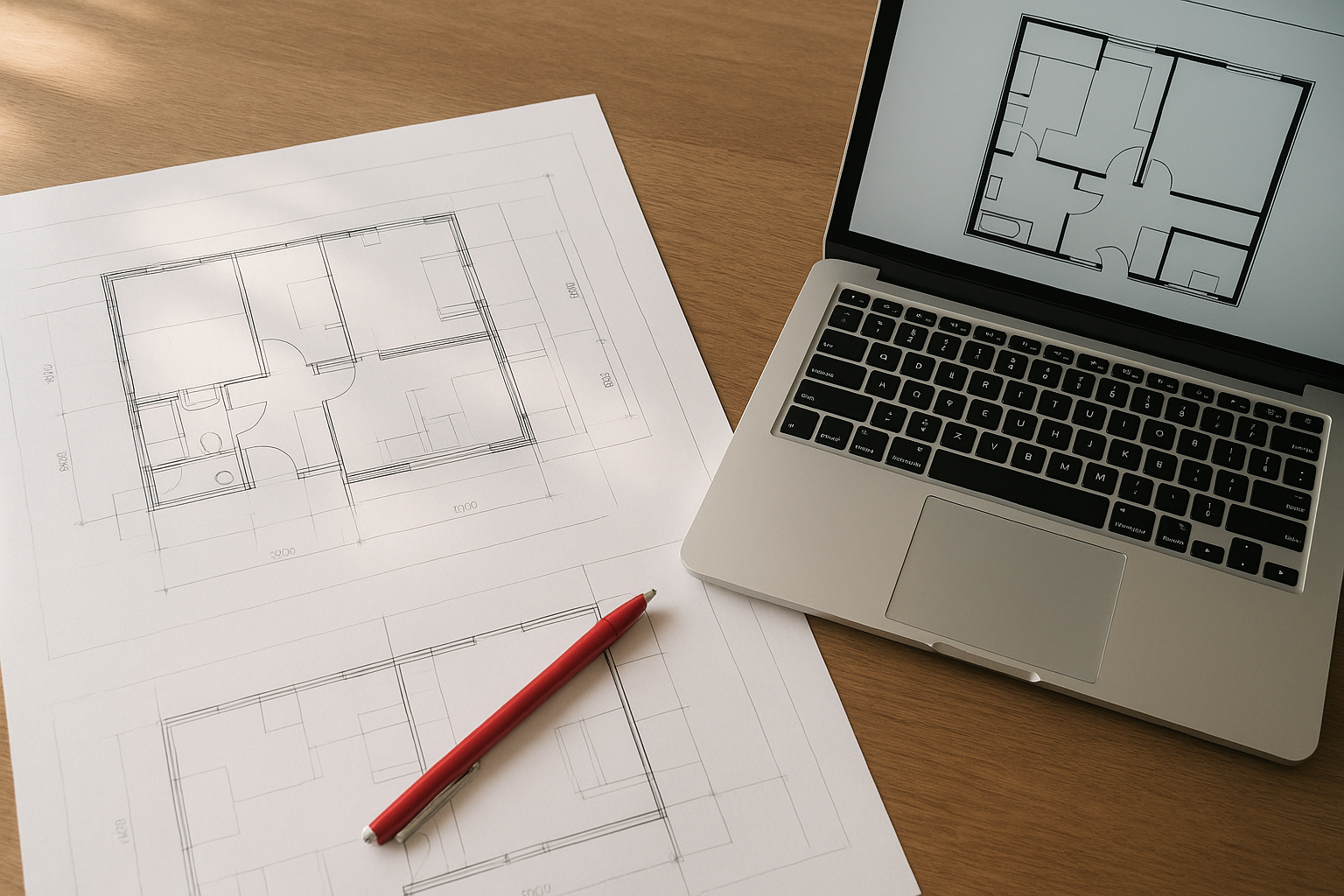
Complete, code-checked plan sets are the fastest path through adu permitting services southern california homeowners rely on.
Common ADU Permitting Mistakes That Cause Delays
Most permitting delays are avoidable. Specifically, they tend to fall into a handful of recurring categories that a design-build team can catch before submittal rather than after rejection.
- Submitting plans without completed structural calculations, which almost always triggers a correction letter.
- Misjudging setback or easement lines, especially on corner lots or lots with existing accessory structures.
- Skipping a formal site assessment, which can lead to a redesign after the city flags a code conflict.
- Incomplete or incorrect Title 24 energy compliance forms attached to the submittal package.
- Assuming one city’s rules apply everywhere, when neighboring jurisdictions often differ on parking or unit size.
According to the California HCD, statewide ADU permit issuance grew from roughly 5,400 units in 2017 to well over 20,000 units annually in more recent reporting years, reflecting a sharp rise in demand across the state, including Southern California. That growth has also increased plan-check backlogs in some high-volume cities, which makes a complete, error-free first submittal even more valuable.
Why Homeowners Choose Professional ADU Permitting Services in Southern California
When design, structural engineering, and permit coordination happen under one accountable team, corrections get resolved faster because the same people who drew the plans respond to the city’s comments directly. In contrast, homeowners who hire separate designers, engineers, and permit runners often lose weeks simply passing correction letters between vendors who do not share context.
The ADU Pro, based in Chino, CA, handles adu permitting services southern california homeowners need as part of a single design-build contract that also covers site assessment, engineering, and construction. The company holds an active CSLB license and reports a BuildZoom score in the top 1% of California contractors, which reflects a track record of permit compliance and project completion. Similarly, homeowners exploring custom ADU plans in Pasadena or ADU plans for Malibu homeowners can see how site-specific plan sets are tailored to each city’s local review standards before submittal.
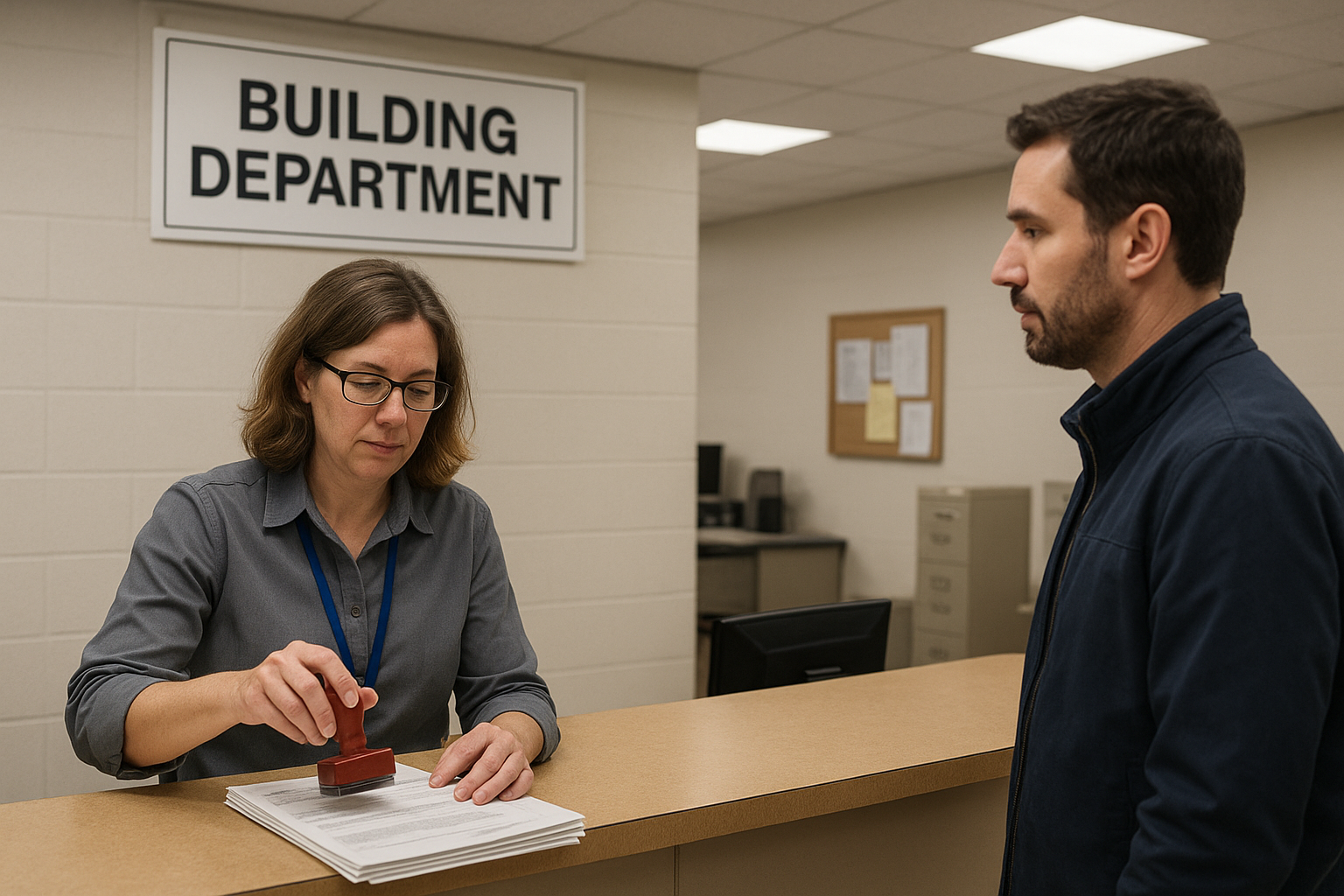
Local building department review still varies city by city, even under statewide ADU rules.
ADU Permitting Costs and Financing Considerations
Permitting fees vary widely across Southern California, often ranging from a few thousand dollars to more than $10,000 depending on the city, unit size, and utility connections required. Above all, homeowners should confirm whether quoted permitting fees include structural review, Title 24 documentation, and any required school or impact fees, since these line items are easy to overlook in a rough estimate.
Because ADU projects often require financing, it also helps to coordinate permitting timelines with loan disbursement schedules. The ADU Pro connects clients with third-party lending partners for HELOCs, construction loans, and ADU-specific financing programs, though it does not issue loans directly. Homeowners can review general project guidance at theadupro.com or browse a broader collection of project examples through the site’s ADU resource library before requesting a quote.
Does an ADU Permit Trigger a Property Tax Reassessment?
Adding an ADU generally results in a partial reassessment of only the new construction’s value, not the entire property. Therefore, the existing home and land retain their prior assessed value, which keeps most ADU projects far less costly on the tax side than homeowners initially assume. For background on how ADUs are legally defined and regulated nationally, see the Wikipedia overview of accessory dwelling units.
Choosing the Right ADU Permit Partner in Southern California
Not every contractor handles permitting the same way. Some subcontract engineering and plan submittal entirely, which can slow down response time when a city sends correction comments. Others, like The ADU Pro’s design-build team, keep engineering and permit coordination in-house, so questions from a building department get answered the same week rather than passed through a chain of outside vendors.
Before signing a contract, homeowners should ask who specifically handles permit submittal, how many plan-check rounds are typical for that company in their city, and whether structural engineering is done in-house. For a look at how a full-service Orange County team approaches these questions from the first consultation, review the overview at The ADU Pro’s Orange County ADU builder profile. State-level requirements governing this entire process are outlined in California Government Code Section 65852.2, which sets the statewide baseline every city must follow.

Once permits are issued, construction can move quickly with the right team in place.
Frequently Asked Questions About ADU Permitting Services Southern California
What is included in adu permitting services southern california?
ADU permitting services southern california typically include site feasibility review, custom plan preparation, structural engineering coordination, Title 24 energy compliance documentation, and full submittal and follow-up with the local building department. A design-build contractor manages these steps under one contract instead of handing the homeowner off between separate vendors.
How long does ADU permit approval take in Southern California?
State law generally requires cities and counties to act on a complete ADU application within 60 days. In practice, approval often takes 8 to 16 weeks once corrections, utility coordination, and staff workload are factored in.
Why do ADU permits get delayed or rejected?
Most delays trace back to incomplete plan sets, missing structural calculations, setback or easement conflicts, or Title 24 documentation errors. Submitting a fully engineered, code-checked package the first time is the single biggest factor in avoiding repeated plan-check cycles.
How much do ADU permitting services cost in Southern California?
Permitting fees alone often range from a few thousand dollars to over $10,000 depending on the city, unit size, and utility connections required. When permitting is bundled into a design-build package, homeowners typically see one combined fee rather than separate design, engineering, and permit-runner invoices.
What is the difference between ADU permitting and a standard building permit?
ADU permits must satisfy state-mandated streamlined review timelines and specific accessory dwelling unit code sections in addition to standard building, structural, and Title 24 requirements. A standard remodel permit does not carry the same 60-day statutory review clock.
Do all Southern California cities apply the same ADU permitting rules?
No, cities interpret state ADU law differently even within the same county. Setback requirements, parking exceptions, and fee schedules can vary between neighboring cities in Orange County, Los Angeles County, and Riverside County.
Can a homeowner handle ADU permitting without a contractor?
Yes, homeowners can self-submit ADU plans, but they remain responsible for engineering, plan-check corrections, and inspection scheduling. Most find that a contractor with in-house engineering and permit staff moves the process faster and with fewer costly missteps.
What documents are required for an ADU permit application?
A typical ADU submittal includes site plans, floor plans, structural calculations, and Title 24 energy compliance forms. Some jurisdictions also require a plot plan showing setbacks and utility locations, or a soils report depending on the lot.
Does an ADU need a separate utility connection to get permitted?
Not always. Many detached ADUs and most garage conversions can share the main home’s water, sewer, and electrical service under current state ADU law, which simplifies permitting. Larger detached units sometimes require separate metering depending on the utility provider.
Will permitting an ADU trigger a property tax reassessment?
Adding an ADU generally results in a partial reassessment of only the new construction value, not the entire property. The existing home and land retain their prior assessed value under California property tax rules.
What is Title 24 compliance and why does it matter for ADU permits?
Title 24 is California’s building energy efficiency standard, and every ADU permit application must include compliance documentation covering insulation, windows, and mechanical systems. Missing or incorrect Title 24 forms are one of the most common causes of plan-check rejection.
How does bundling design and permitting with one contractor help?
When design, engineering, and permit coordination happen under one team, plan corrections get resolved faster because the same people who drew the plans respond to the city’s comments. Separate vendors often create delays because each hands off responsibility when a correction letter arrives.
What common mistakes cause ADU permit delays?
Common mistakes include submitting plans without a completed structural review, underestimating setback requirements, and failing to confirm sewer or septic capacity before submittal. Skipping a formal site assessment before design also leads to costly redesigns after initial rejection.
Are there expedited ADU permitting programs in Southern California?
Some cities offer pre-approved ADU plan programs that can shorten review time significantly. Availability and eligibility vary by jurisdiction, so it is worth confirming with a local site assessment before assuming a pre-approved plan fits a specific lot.
What happens after an ADU permit is issued?
Once the permit is issued, construction can begin, followed by scheduled inspections at framing, electrical, plumbing, and final stages. The process concludes with a final inspection and certificate of occupancy before the unit can be legally occupied or rented.
Final Takeaways on ADU Permitting in Southern California
In summary, adu permitting services southern california homeowners rely on succeed or fail based on preparation, not luck. A complete plan set, accurate structural engineering, and correct Title 24 documentation submitted the first time consistently move faster through city review than incomplete packages that require multiple correction rounds. Because permitting rules shift from city to city, working with a team that already knows local requirements in Orange County, Los Angeles County, and western Riverside County removes much of the guesswork. Ultimately, whether the goal is rental income, multigenerational housing, or simply better use of a garage or backyard, a well-managed permitting process is what turns an ADU idea into an occupied, income-producing unit on schedule.