
ADU zoning laws are the set of state and local regulations that determine where you can build an accessory dwelling unit (ADU), how large it can be, and what design standards it must meet. For California homeowners, understanding these rules is the single most important step before breaking ground on any new living space.
California has made significant strides in loosening restrictions on ADUs over the past several years. However, local cities and counties still retain the authority to layer their own standards on top of state minimums. As a result, the rules in Anaheim differ from those in Pasadena, and both differ from Riverside. Knowing the difference can save you thousands of dollars and months of delays.
What Are ADU Zoning Laws and Why Do They Matter?
ADU zoning laws exist to balance community planning goals with the growing demand for housing. Specifically, they address concerns like neighborhood density, parking availability, privacy, and infrastructure capacity. Without these rules, unregulated construction could strain utilities and alter the character of established neighborhoods.
Furthermore, these laws protect homeowners by ensuring that new structures are safe, code-compliant, and properly permitted. A unit built without permits can trigger costly fines, forced demolition, or complications when you sell your property. Therefore, compliance is not just a legal obligation — it is a sound financial decision.
According to the California Department of Housing and Community Development (HCD), local agencies must approve ADU applications within 60 days of receiving a complete submission. This mandate reflects the state’s commitment to accelerating ADU construction as part of its broader housing strategy.

A detached backyard ADU in Southern California — understanding ADU zoning laws ensures your project is built right the first time.
California State ADU Law: The Foundation
California’s state ADU framework, shaped by landmark legislation including AB 68 and subsequent bills, establishes a baseline that every California city and county must honor. No local ordinance can outright ban ADUs on single-family or multifamily residential lots. In addition, local agencies cannot impose requirements that effectively make ADU construction infeasible.
Under state law, key standards include the following:
- Detached ADUs may be up to 1,200 square feet in size.
- Minimum side and rear setbacks are set at four feet.
- Detached ADUs can reach a height of 16 feet, with some jurisdictions allowing up to 25 feet.
- Replacement parking is not required when a garage is converted to an ADU.
- Junior ADUs (JADUs) are capped at 500 square feet and must be created within the existing home’s walls.
Consequently, these protections give homeowners a strong baseline to work from. However, local rules can still add meaningful complexity, particularly around design standards and utility connections.
How Local Zoning Ordinances Add Layers
While state law sets the floor, each city and county in Orange County, Los Angeles County, and Riverside County can impose additional standards. For example, some cities require architectural compatibility with the primary dwelling. Others limit lot coverage percentages or require owner-occupancy in certain zones.
For a deeper look at specific regulatory requirements, the team at theadupro.com outlines the key ADU regulations homeowners need to know before starting their project. This resource covers both state minimums and common local additions across Southern California jurisdictions.
Setbacks, Height Limits, and Lot Coverage Explained
Three zoning standards affect ADU design more than any others: setbacks, height limits, and lot coverage. Understanding each one helps you plan a realistic project from the start.
Setbacks define how far your ADU must sit from property lines. The state-mandated four-foot side and rear setback applies broadly, but some cities require larger buffers — particularly in fire hazard zones or hillside areas. Front setbacks typically mirror those of the primary home.
Height limits directly influence whether a two-story ADU is feasible on your lot. In most Southern California cities, a detached ADU is limited to 16 feet. However, cities near transit corridors may allow taller structures under state density bonus provisions. If you are considering a taller unit, review our guide on 2-story ADU design, costs, and what to know before committing to a plan.
Lot coverage rules cap the total percentage of your lot that can be covered by structures. For instance, if your city allows 40% lot coverage and your primary home already occupies 35%, you have limited room for a detached ADU footprint. In such cases, a garage conversion or attached addition may be a smarter choice.
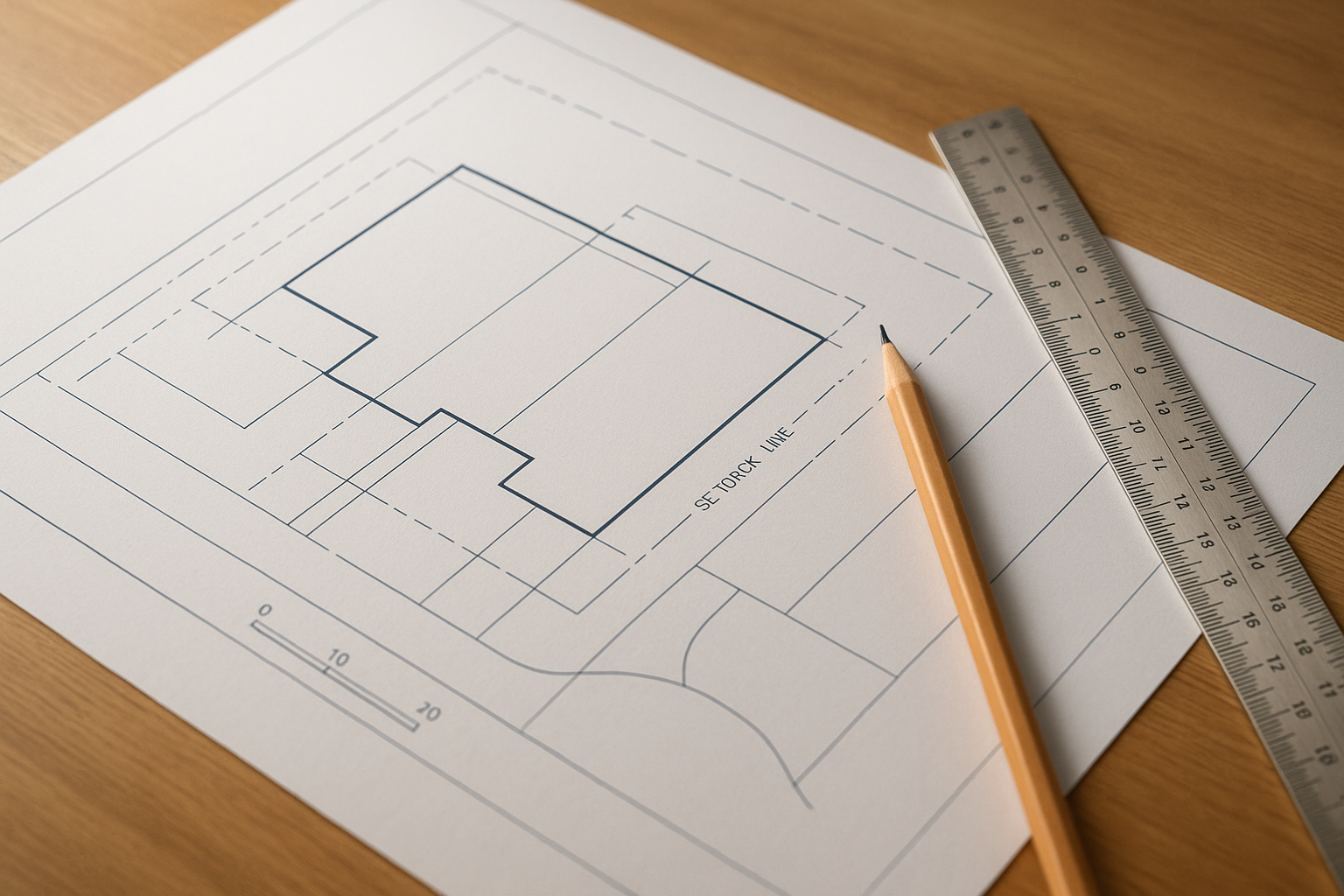
Reviewing a site plan for setback compliance is a critical early step in any ADU project.
How to Navigate ADU Zoning Laws Step by Step
Successfully building an ADU requires following a clear process. Each step builds on the last, so skipping ahead can cause costly setbacks. Here is a practical roadmap:
- Research state and local zoning rules. Start with the California HCD’s ADU handbook, then pull your city’s specific ADU ordinance from its planning department website.
- Evaluate your property’s eligibility. Measure your lot, identify existing structures, and check utility connections. Determine which ADU types are physically and legally feasible.
- Work with a licensed designer or architect. Hire someone experienced in local ADU zoning compliance. They will prepare plans that satisfy both state standards and city-specific requirements.
- Submit your permit application. File a complete application with your local building department. California law requires a response within 60 days of a complete submission.
- Complete construction and pass inspections. Work with a licensed contractor who schedules required inspections at each phase. A final inspection yields your certificate of occupancy.
Additionally, explore the full range of ADU types you can build on your property to determine which format best fits your lot, budget, and goals.
Zoning Differences Across Orange County, LA County, and Riverside County
Southern California’s three major counties each contain dozens of individual cities, and each city interprets state ADU law differently. For example, the City of Los Angeles has its own comprehensive ADU ordinance that addresses design review, utility fees, and owner-occupancy rules. In contrast, many cities in Riverside County have adopted simpler ordinances that closely mirror the state minimum.
Orange County cities like Irvine and Anaheim have distinct standards around architectural compatibility and landscaping. Therefore, a plan approved in one city may not qualify in another just a few miles away. This is precisely why local expertise matters so much.
The team at theadupro.com specializes in navigating these county-specific and city-specific rules across all three regions. Their project managers understand the nuances of each jurisdiction, which streamlines permitting and reduces the risk of costly revisions.
The Impact of SB 9 on Residential Zoning
Senate Bill 9 (SB 9), effective January 2022, further expanded housing options by allowing lot splits and duplexes on single-family lots statewide. In practice, this means some homeowners can now build multiple ADUs or combine SB 9 provisions with existing ADU law to maximize density on a single parcel.
However, SB 9 comes with its own set of eligibility criteria and restrictions. Not all lots qualify, and owner-occupancy conditions apply in some scenarios. Consequently, consulting with a knowledgeable contractor before assuming SB 9 applies to your property is strongly advisable.
Common Zoning Mistakes Homeowners Make
Even well-intentioned homeowners run into problems when they misread or overlook key zoning rules. The most frequent mistakes include:
- Assuming state law is the only law. Local ordinances can add design requirements, utility fees, and size restrictions beyond state minimums.
- Starting construction before permits are issued. Unpermitted work can result in stop-work orders, fines, and mandatory demolition.
- Ignoring fire zone restrictions. Properties in Very High Fire Hazard Severity Zones face stricter setback and material requirements.
- Overlooking HOA rules. Homeowners association (HOA) covenants may impose design restrictions that go beyond city zoning — though state law limits HOA power to outright ban ADUs.
For a comprehensive breakdown of all the legal considerations involved, browse the ADU legal requirements resource library for in-depth guidance on permits, compliance, and more.
Frequently Asked Questions About ADU Zoning Laws
What are ADU zoning laws?
ADU zoning laws are local and state regulations that govern where, how, and what type of accessory dwelling unit you can build on a residential property. In California, state law sets minimum standards that every city and county must follow, though local jurisdictions may add additional requirements.
Can every residential property in California have an ADU?
Yes. California state law generally allows at least one ADU on any single-family or multifamily residential lot. Local zoning cannot outright ban ADUs, though specific standards like setbacks and height limits may still vary by city.
What is the minimum setback for an ADU in California?
State law requires a minimum four-foot side and rear setback for most new detached ADUs. Front setbacks typically follow the primary dwelling’s local zoning rules. Some cities allow reduced setbacks for garage conversions.
How tall can an ADU be in California?
Detached ADUs can generally be up to 16 feet tall under California state law, with some jurisdictions permitting up to 25 feet. Two-story ADUs are possible in many areas but require careful review of local height and design standards.
Do I need a permit to build an ADU?
Yes, a building permit is required for virtually all ADU construction in California. The permit process includes plan review, inspections, and final sign-off to ensure the unit meets building codes and zoning requirements.
How long does ADU permit approval take in Southern California?
Under California law, local agencies must act on a complete ADU permit application within 60 days. However, the total timeline from design to permit approval often ranges from 2 to 6 months depending on the jurisdiction and plan complexity.
What is a Junior ADU and how does it differ from a standard ADU?
A Junior ADU (JADU) is a unit created within the existing walls of a primary residence and is capped at 500 square feet. Unlike a standard ADU, a JADU must include an efficiency kitchen and the property owner must typically live on-site.
Can I convert my garage into an ADU?
Yes, garage conversions are one of the most common and cost-effective ADU types in California. State law prohibits cities from requiring replacement parking when a garage is converted, making this option accessible for most homeowners.
Are there owner-occupancy requirements for ADUs in California?
California suspended owner-occupancy requirements for standard ADUs from 2020 through 2024. Beginning in 2025, local jurisdictions may reinstate these rules for standard ADUs, though JADUs still carry an owner-occupancy requirement under state law.
How does an ADU affect my property taxes?
Building an ADU triggers a partial reassessment limited to the value added by the new unit. Your existing home’s assessed value is not recalculated. This means your property tax increase is proportional only to the ADU’s appraised value.
What is the maximum size allowed for a detached ADU in California?
California state law sets the maximum size for a detached ADU at 1,200 square feet. Some cities may impose stricter size limits based on lot coverage rules or local ordinances, so always verify with your local planning department.
Do ADU zoning laws differ between Orange County, LA County, and Riverside County?
Yes, while all three counties must comply with California state ADU law, each city within those counties can set its own standards for setbacks, height, design, and parking. Working with a local ADU contractor familiar with each jurisdiction is strongly recommended.
Conclusion: Know the Rules Before You Build
Understanding ADU zoning laws is the foundation of every successful accessory dwelling unit project in California. From state-mandated setbacks and height limits to city-specific design requirements and permit timelines, these rules shape every decision you make — from initial design through final inspection. Homeowners who invest time in understanding the regulatory landscape before construction begins consistently experience fewer delays, lower costs, and better outcomes. Whether you are planning a detached guest house, a garage conversion, or a junior ADU, partnering with experienced professionals who know Southern California’s zoning landscape makes all the difference. Explore all available resources at theadupro.com’s ADU resource hub to take your next step with confidence.