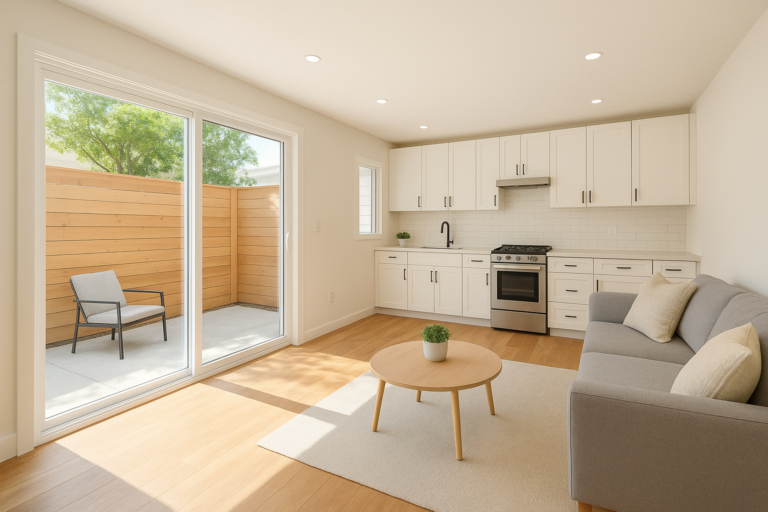
The right customizations for ADUs — accessory dwelling units — turn a plain backyard structure or garage conversion into a fully functional living space built around your exact needs. Whether you’re building in Orange County, Los Angeles County, Riverside County, or San Diego County, the design decisions you make before and during construction determine how well your ADU serves you for decades. Fortunately, today’s market gives Southern California homeowners more customization freedom than ever, and this guide covers every option available — from floor plans and finishes to energy systems, accessibility features, and real construction costs.
What Are Customizations for ADUs, Exactly?
Customizations for ADUs are every deliberate design, layout, finish, and feature decision that separates a generic prefab unit from one built specifically for your lifestyle or investment goals. In other words, they cover everything from the floor plan down to the cabinet hardware — the choices that shape how an accessory dwelling unit looks, feels, and performs over time.
According to the California Department of Housing and Community Development, ADUs can be attached, detached, converted, or built as junior ADUs (JADUs) — and each structure type opens up different customization possibilities. Understanding these categories early in the planning process helps you make smarter, more cost-effective decisions before you ever pick up a hammer.
Furthermore, well-chosen customizations directly influence rental income potential and long-term property value. A 2023 report from the Zillow Research Center found that properties with ADUs sell for an average of 35% more than comparable homes without them — and interior quality plays a major role in that premium. As a result, the money you invest in thoughtful customization tends to come back multiple times over through resale value and monthly rent.
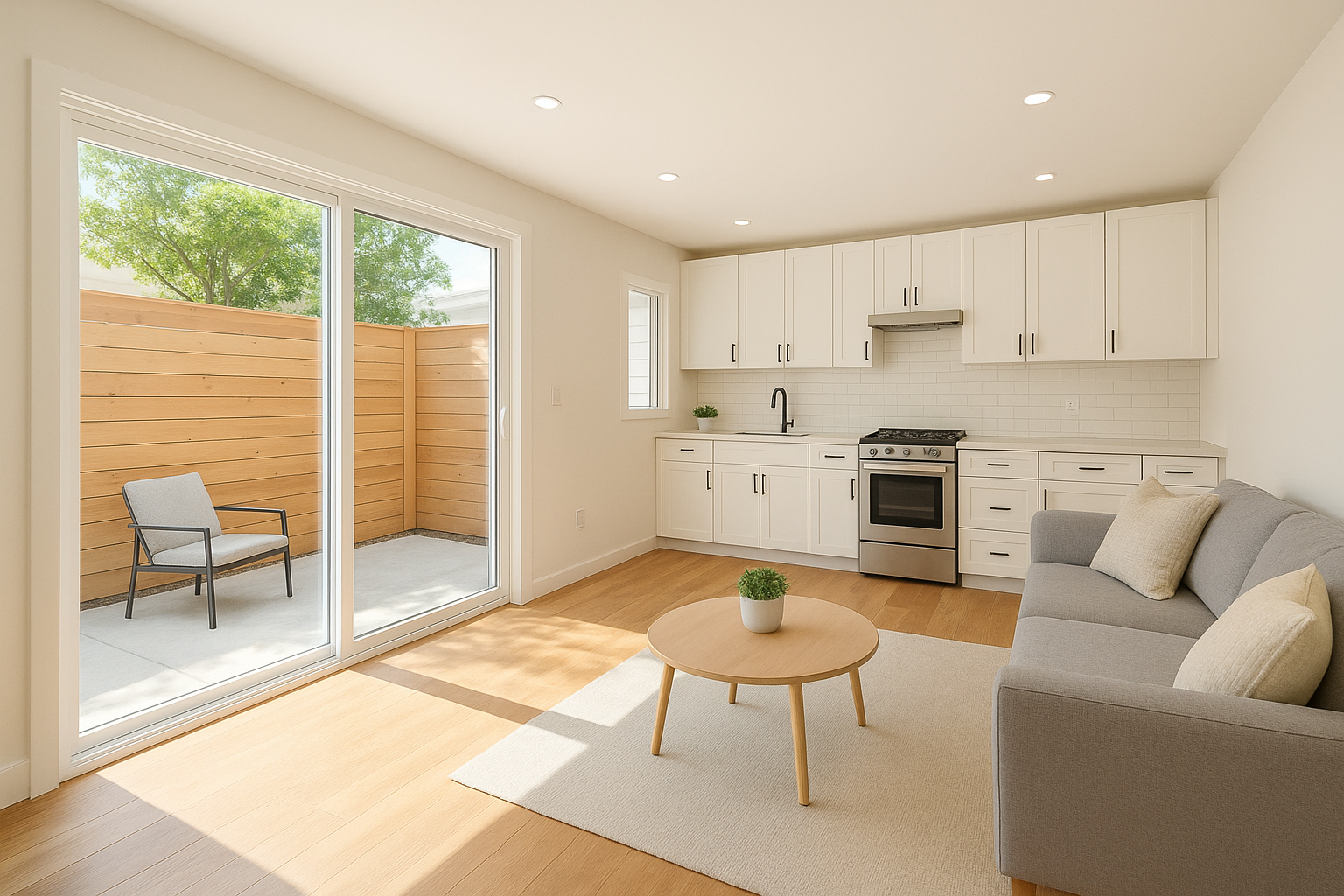
Open-concept layouts are among the most popular customizations for ADUs, creating a sense of spaciousness in compact footprints.
Why ADU Customization Pays Off: Value, ROI, and Livability
Above all, customization is what separates an ADU that merely meets code from one that maximizes rental income and resale value. A generic, builder-grade unit satisfies zoning requirements, but it rarely commands premium rent or wows a future buyer. In contrast, a thoughtfully customized ADU signals quality at first glance — and quality is exactly what tenants and appraisers pay for.
Specifically, customization affects three financial outcomes at once: the monthly rent you can charge, the resale value of your primary property, and the long-term maintenance costs you’ll absorb. For example, durable flooring and quartz countertops cost more upfront but reduce wear-and-tear expenses over a ten-year rental cycle. Similarly, energy-efficient systems lower utility bills, which makes your unit more attractive to cost-conscious renters.
Quick Fact: According to the Zillow Research Center, homes with ADUs sell for an average of 35% more than comparable properties without them. Strategic customizations for ADUs amplify that premium further by improving rental appeal and day-to-day livability.
How to Plan Your ADU Customizations in 7 Simple Steps
Planning your customizations in a structured order prevents costly mid-construction changes. Below is a proven seven-step process used by experienced contractors across Southern California.
- Define your ADU’s purpose. Decide whether the unit will serve as a rental, a guest house, or a multigenerational space, since this single decision shapes every customization choice that follows.
- Set a realistic customization budget. Research typical costs for finishes and features in your area, then allocate funds across layout, kitchen, bathroom, and energy systems before finalizing any selections.
- Work with a designer to finalize the floor plan. Collaborate with a qualified ADU designer to create a compliant, functional layout that maximizes every square foot. Explore the design process at theadupro.com for a clear example of professional ADU design.
- Select finishes, fixtures, and features. Choose flooring, cabinetry, countertops, lighting, and plumbing fixtures that balance durability with visual appeal for your intended use and budget.
- Choose energy-efficient and smart home systems. Decide on HVAC type, water heating, solar readiness, and smart device integration early, because these systems affect wall placement, electrical panel capacity, and overall build cost.
- Confirm compliance with local codes and secure permits. Review your plans against local zoning ordinances, California’s Title 24 energy requirements, and any applicable HOA guidelines before breaking ground.
- Begin construction and monitor progress. Work closely with your contractor throughout the build to ensure all custom features are installed correctly, on schedule, and within the approved scope of work.
ADU Types and Their Customization Potential
Not every ADU offers the same customization flexibility. Detached ADUs — freestanding structures built separately from the main house — offer the most design freedom, since they aren’t constrained by an existing footprint or structural system. Attached ADUs, which share a wall with the primary residence, require customizations that respect the existing structure’s load paths and utility lines, though they still allow significant interior flexibility.
Garage conversions, meanwhile, are among the most cost-effective ADU types because the shell already exists — however, they typically need new insulation, plumbing, and electrical infrastructure to become livable. Finally, junior ADUs (JADUs), which are built within the existing footprint of a single-family home, have the tightest customization constraints due to their smaller size (generally capped at 500 square feet) but still allow for kitchenette upgrades, separate entrances, and interior finish choices.
Floor Plan and Layout Customization Options
Layout is arguably the most impactful of all ADU customization decisions, since the floor plan determines how livable and marketable the unit will be over its lifetime. Three configurations dominate the Southern California market.
Studio layouts combine sleeping, living, and kitchen areas into one open space, making them ideal for single occupants or short-term rental guests. In contrast, one-bedroom plans separate the sleeping area, offering greater privacy — a feature that attracts long-term tenants. Meanwhile, two-bedroom configurations suit multigenerational households where multiple family members need independent sleeping spaces.
Additionally, vaulted or raised ceilings can dramatically improve the feel of any layout. Even raising ceiling height from 8 to 10 feet can make a compact ADU feel open and airy without adding a single square foot of floor space. Browse ADU design examples in Santa Ana, ADU design projects in Burbank, ADU design ideas in Aliso Viejo, and ADU design projects in Irvine to see how these layout decisions play out in real builds.
Kitchen and Bathroom Finish Customizations
Kitchens and bathrooms are the two spaces where custom ADU finishes have the greatest impact on perceived value. For kitchens, compact appliance packages, quartz countertops, and soft-close cabinetry deliver a premium look without overwhelming a small footprint. Under-cabinet lighting and a tile backsplash add polish at a relatively modest cost.
For bathrooms, walk-in showers with frameless glass enclosures, floating vanities, and heated floors are consistently popular upgrades. These features appeal strongly to rental tenants and add measurable resale value. Therefore, even on a limited budget, prioritizing one or two statement bathroom features is a smart investment.
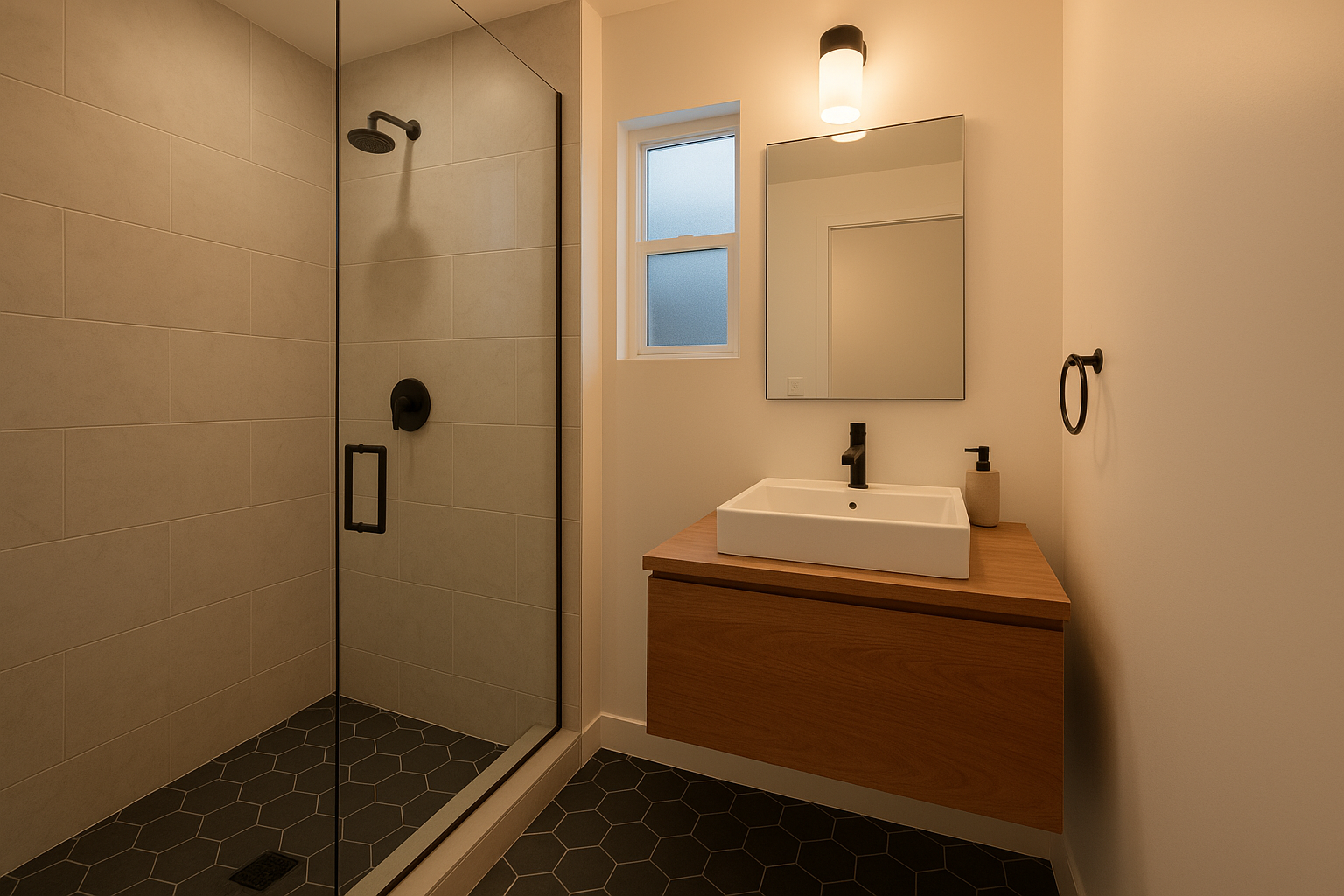
High-end bathroom finishes are among the most value-adding customizations homeowners choose for their ADU projects.
Energy-Efficient and Smart Home Customizations for ADUs
Energy efficiency isn’t just a trend — it’s a California code requirement. Under Title 24, new ADU construction must meet strict energy performance standards. However, many homeowners go beyond the minimum to add features that reduce long-term operating costs.
Popular energy-efficient upgrades include solar panel integration, tankless water heaters, mini-split HVAC systems (compact units that provide both heating and cooling with high efficiency), and smart thermostats. In addition, LED lighting throughout and Energy Star-rated appliances are low-cost ways to meet compliance while keeping utility bills low for tenants or family members.
Smart home features — such as keyless entry, video doorbells, and app-controlled lighting — are increasingly common ADU customizations, especially for rental units. Consequently, these features can justify higher monthly rents and reduce vacancy rates in competitive markets like Los Angeles and Orange County.
Exterior and Outdoor Customization Ideas
The exterior of your ADU creates the first impression for guests, tenants, and appraisers alike. Therefore, exterior customizations deserve as much attention as interior ones. Matching the ADU’s roofline, siding material, and color palette to the main house creates a cohesive property aesthetic that many local design review boards require or strongly encourage.
Private outdoor spaces add significant livability. A small dedicated patio, a pergola for shade, or a landscaped pathway to a separate entrance all enhance the feeling of independence for ADU occupants. Similarly, dedicated parking, exterior lighting, and privacy fencing are practical customizations that improve day-to-day comfort and safety.
For homeowners in San Diego County, local design standards may influence exterior choices. Reviewing ADU design guidelines for San Diego County before finalizing your exterior plan can save time and avoid costly revision requests during permit review. Likewise, homeowners in the San Gabriel Valley can review ADU design examples in Pasadena for inspiration on matching historic architectural character.
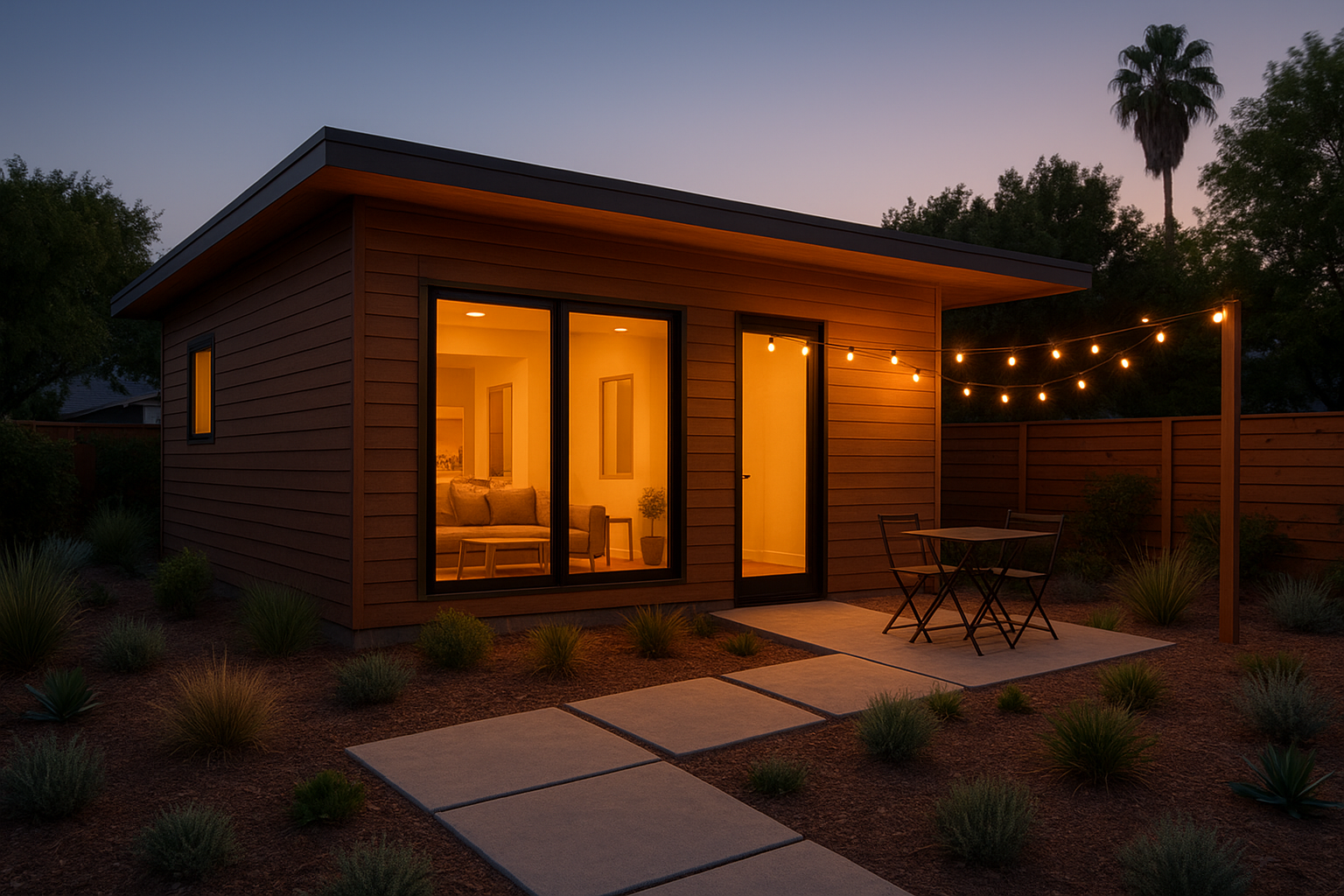
Thoughtful exterior customizations — including private patios and cohesive siding — significantly enhance ADU curb appeal and tenant satisfaction.
Storage and Space-Saving Interior Features
In smaller ADUs, built-in storage solutions are among the most practical customizations available. Built-in bookshelves, under-stair storage, Murphy beds with integrated desk units, and window seat benches with hidden compartments all maximize usable square footage without making the space feel cramped.
Multifunctional furniture is another effective strategy. For example, a kitchen island that doubles as a dining table, or a sofa with built-in storage drawers, reduces the need for additional pieces that would crowd a compact floor plan. Furthermore, using consistent flooring throughout the unit — rather than breaking it up with rugs or transitions — creates a visual flow that makes the space feel larger.
For a deeper look at how design choices translate into finished ADU projects, explore the ADU customization portfolio at theadupro.com. You’ll find real examples of how Southern California homeowners have used these strategies to build ADUs that are both beautiful and highly functional.
Accessibility and Universal Design Customizations
Many homeowners build ADUs specifically to house aging parents or family members with mobility needs. Consequently, accessibility features deserve their own place in any customization plan, rather than being treated as an afterthought. Zero-step entries, wider doorways (at least 32 inches clear), roll-in showers, and lever-style door handles all make a unit livable for wheelchair users and people with limited mobility.
In addition, grab bars near toilets and showers, lower countertop heights in at least one kitchen zone, and slip-resistant flooring reduce fall risk without making the space feel clinical. These principles align closely with the universal design philosophy, which aims to make spaces usable by people of all ages and abilities without a separate “accessible” aesthetic. Because these features often cost very little extra when planned during design rather than retrofitted later, addressing them at the floor-plan stage is far more cost-effective.
Sustainable Materials and Building Choices
Beyond energy systems, the actual building materials you choose can meaningfully reduce an ADU’s environmental footprint while improving durability. Fiber cement siding, recycled-content insulation, low-VOC (volatile organic compound) paints, and FSC-certified wood framing are all increasingly common requests among Southern California homeowners who want a healthier, longer-lasting build.
Similarly, drought-tolerant landscaping around the ADU’s exterior reduces water use — an important consideration given California’s ongoing water conservation mandates. Together, these material choices often qualify for local rebate programs, which can offset a portion of the added upfront cost.
ADU Customization Costs: What to Expect in Southern California
Customization costs vary widely depending on scope, finishes, and square footage. The table below breaks down typical price ranges by customization tier, so you can budget with more confidence before meeting your designer.
| Customization Tier | Typical Cost Range | What’s Included |
|---|---|---|
| Basic finish upgrades | $10,000 – $25,000 | Improved flooring, standard cabinetry, basic lighting |
| Mid-tier customization | $25,000 – $60,000 | Quartz countertops, tile backsplash, mini-split HVAC, smart thermostat |
| Premium full customization | $60,000 – $100,000+ | Solar integration, heated floors, frameless glass showers, smart home systems, custom millwork |
Keep in mind that these figures cover customization and finish work only — not the base structural shell, permitting, or site work. Consequently, it’s wise to request an itemized quote from your contractor that separates structural costs from customization costs, so you can adjust finishes without renegotiating the entire contract.
Permits, Codes, and Regulatory Considerations
California state law grants homeowners significant flexibility in ADU design, but local jurisdictions can still impose height limits, setback requirements, and design review standards that shape which customizations are allowed. For instance, some cities restrict exterior color palettes near historic districts, while others cap window placement to preserve neighbor privacy.
Therefore, before finalizing any custom feature, confirm it against your city’s municipal code and, where applicable, your HOA’s architectural guidelines. Working with an experienced ADU contractor who already understands these local nuances is the single best way to avoid a rejected permit application or a costly redesign mid-project.
Working With an Expert ADU Contractor in Southern California
Choosing the right contractor is as important as choosing the right finishes. An experienced ADU builder understands local permitting requirements, code compliance timelines, and the specific design preferences of each submarket — from Burbank to Santa Ana to Riverside. As a result, working with a specialist reduces delays, avoids costly mistakes, and ensures your customizations are executed exactly as planned.
theadupro.com specializes in end-to-end ADU development across Orange County, Los Angeles County, and Riverside County. Their team guides homeowners through every phase — from initial design and permitting to full construction and final inspection — making the customization process as smooth and stress-free as possible. For a deeper walkthrough, see our ADU design and construction guide.
Frequently Asked Questions About Customizations for ADUs
What are the best customizations for ADUs to increase home value?
The best customizations for ADUs include open-concept layouts, high-quality kitchen finishes, spa-inspired bathrooms, and energy-efficient systems. These upgrades consistently attract higher rental income and boost overall property value in California markets.
How much do ADU customizations typically cost in Southern California?
ADU customization costs vary widely depending on scope, finishes, and square footage. Basic upgrades may start around $10,000, while full custom builds with premium finishes can reach $100,000 or more in Southern California markets.
Can I customize an ADU to match my main house’s architectural style?
Yes, ADUs can be designed to closely match the architectural style of your main residence. Coordinating rooflines, exterior materials, and color palettes creates a cohesive property aesthetic and may also satisfy local design guidelines.
What are the most popular layout customizations for ADUs?
Open-concept studio layouts, one-bedroom plans with dedicated living areas, and two-bedroom configurations are the most popular ADU layout choices. The right layout depends on intended use — whether for rental income, guest accommodation, or multigenerational living.
Are there California regulations that limit ADU customizations?
California state law allows significant flexibility in ADU design, but local jurisdictions may impose height limits, setback requirements, and design review standards. Working with an experienced ADU contractor ensures your customizations comply with all applicable codes.
What kitchen customizations work best in a small ADU?
In small ADUs, compact appliance packages, built-in cabinetry, and multifunctional islands maximize kitchen utility without sacrificing space. Light-colored finishes and under-cabinet lighting also make small kitchens feel larger and more inviting. See Riverside ADU plans for region-specific examples.
How can I make an ADU feel more spacious through design choices?
Using open floor plans, large windows, vaulted or raised ceilings, and light neutral color palettes can make an ADU feel significantly more spacious. Built-in storage solutions and multifunctional furniture further reduce visual clutter.
What energy-efficient upgrades are recommended for ADU customization?
Solar panels, tankless water heaters, smart thermostats, and high-efficiency HVAC systems are top energy-efficient upgrades for ADUs. These features lower utility costs and align with California’s Title 24 energy code requirements.
Can a garage conversion be customized into a full living space?
Yes, garage conversions are among the most versatile ADU types and can be fully customized with insulation, plumbing, electrical upgrades, and high-end finishes. Many homeowners add skylights and glass doors to improve natural light in converted garages.
How long does it take to complete ADU customizations during construction?
The customization and finish phase of ADU construction typically takes four to eight weeks, depending on the complexity of selected features. Overall ADU project timelines in California generally range from six to twelve months, including permitting.
What outdoor customizations can enhance an ADU?
Private patios, landscaped pathways, separate entrances, and dedicated parking areas are popular outdoor customizations for ADUs. These features improve tenant privacy and enhance the overall appeal of the accessory unit.
Should I prioritize rental appeal or personal use when choosing ADU customizations?
Your intended use should guide customization priorities. For rental income, focus on durable finishes, functional layouts, and in-unit laundry. For personal or multigenerational use, prioritize comfort features, accessibility, and aesthetic alignment with your lifestyle.
What accessibility features can be added to an ADU?
Zero-step entries, wider doorways, roll-in showers, grab bars, and lower countertop zones are common accessibility customizations. Planning these features during design, rather than retrofitting later, keeps costs manageable and results in a more comfortable unit for aging family members.
Are sustainable or eco-friendly materials available for ADU customization?
Yes, fiber cement siding, recycled-content insulation, low-VOC paints, and FSC-certified wood framing are all common sustainable customizations. Many of these choices also qualify for local rebate programs that help offset added upfront costs.
Conclusion: Making the Most of Your ADU Customizations
Ultimately, investing thoughtfully in customizations for ADUs is one of the highest-return decisions a Southern California homeowner can make. From layout and finishes to energy systems, accessibility, sustainable materials, and outdoor spaces, each choice shapes the long-term value, livability, and rental potential of your accessory dwelling unit. By planning carefully, budgeting realistically, and working with experienced professionals, you can build an ADU that exceeds expectations on every level — whether your goal is generating rental income, housing family members, or simply adding functional space. For personalized guidance on your project, visit theadupro.com to connect with a top-rated ADU contractor serving Orange County, Los Angeles County, and Riverside County.