
Finding the right detached guest house builders Southern California homeowners can trust often feels harder than the actual construction. Detached guest house builders Southern California are licensed contractors who design, permit, and build freestanding accessory dwelling units, or ADUs, on residential lots across the region. In Orange County, Los Angeles County, and western Riverside County, the builder you choose determines whether your project finishes on schedule, passes inspection, and eventually produces rental income. This guide explains what these builders actually do, what a detached guest house typically costs, and how to evaluate a contractor before signing anything.
Quick answer: The best detached guest house builders in Southern California are design-build ADU contractors who manage site assessment, custom architectural design, structural engineering, permitting, and construction under a single contract. This reduces delays, avoids finger-pointing between separate architects and contractors, and keeps one team accountable from lot survey to final inspection.
What Detached Guest House Builders in Southern California Do
A detached guest house ADU is a self-contained living unit, usually between 500 and 1,200 square feet, built as a separate structure from the primary residence on the same property. Unlike a garage conversion or an attached addition, it has its own kitchen, bathroom, and entrance, so it functions as an independent home. In fact, California law refers to this structure as an accessory dwelling unit, and it can be rented out, used for family, or kept as flexible guest space. For homeowners who want true separation between the main house and the new unit, a detached ADU offers the most privacy and design freedom of any ADU type. Learn more about how these units are classified and permitted in our complete guide to detached guest house ADUs.
Why Southern California Homeowners Are Building Detached ADUs
Several factors are pushing Southern California homeowners toward detached guest houses. First, state housing reforms since 2017 have removed many local barriers that once made ADU permits difficult to obtain. According to the California Department of Housing and Community Development, statewide ADU permit issuance rose from roughly 1,200 units in 2017 to more than 20,000 annually within a few years of those reforms, as cities streamlined review processes. In addition, rising home prices across Orange County and Los Angeles County have made multigenerational living and rental income far more attractive than a decade ago. Consequently, many families now view a detached guest house as a practical way to house aging parents, adult children, or long-term tenants without giving up their own privacy. For a broader look at how these units compare to other housing additions, see our full guide to detached additional dwelling units.
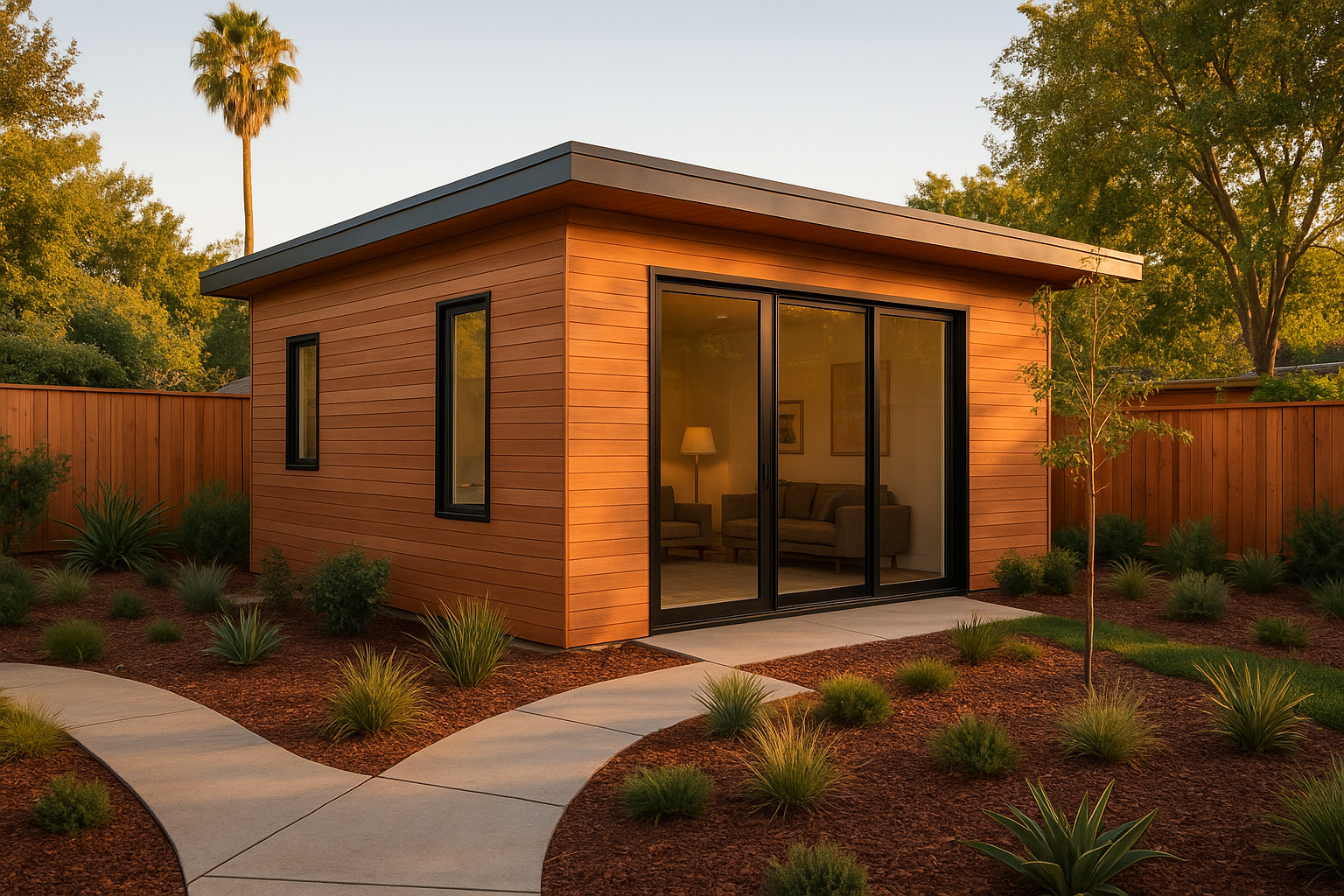
A finished detached ADU built by experienced detached guest house builders Southern California homeowners can rely on.
Detached ADU vs. Attached ADU vs. Garage Conversion
Homeowners often ask which ADU type fits their lot best. A detached ADU stands alone in the backyard, which usually costs more per square foot but offers the most privacy and design flexibility. An attached ADU shares a wall with the main house, which can lower costs but limits floor plan options. A garage conversion reuses an existing structure, so it is typically the fastest and least expensive path, though available square footage is fixed by the garage itself. Therefore, the right choice depends on lot size, budget, and how independent you want the new unit to feel. Homeowners weighing these trade-offs can review specific floor plans, pricing ranges, and permit timelines in our detached guest house plans and cost guide, or read a broader homeowner-level breakdown in our complete guide to detached dwellings.
How to Choose Detached Guest House Builders Southern California Homeowners Trust
Not every contractor who builds houses understands ADU-specific permitting, setback rules, or Title 24 energy compliance. As a result, choosing among detached guest house builders in Southern California requires a slightly different vetting process than hiring a general remodeler. The following steps outline a practical approach.
- Verify licensing and track record. Confirm the contractor holds an active CSLB license and check their standing before requesting a bid.
- Request a site assessment. A qualified builder should evaluate your lot’s setbacks, utility access, and slope before proposing a design.
- Compare design-build versus separate contractors. Ask whether design, engineering, permitting, and construction happen under one contract.
- Review sample floor plans and materials. Look at completed projects, finish quality, and net-zero-focused construction methods.
- Confirm permit and financing support. Ask how the builder handles city plan submittals and whether they connect clients with lenders.
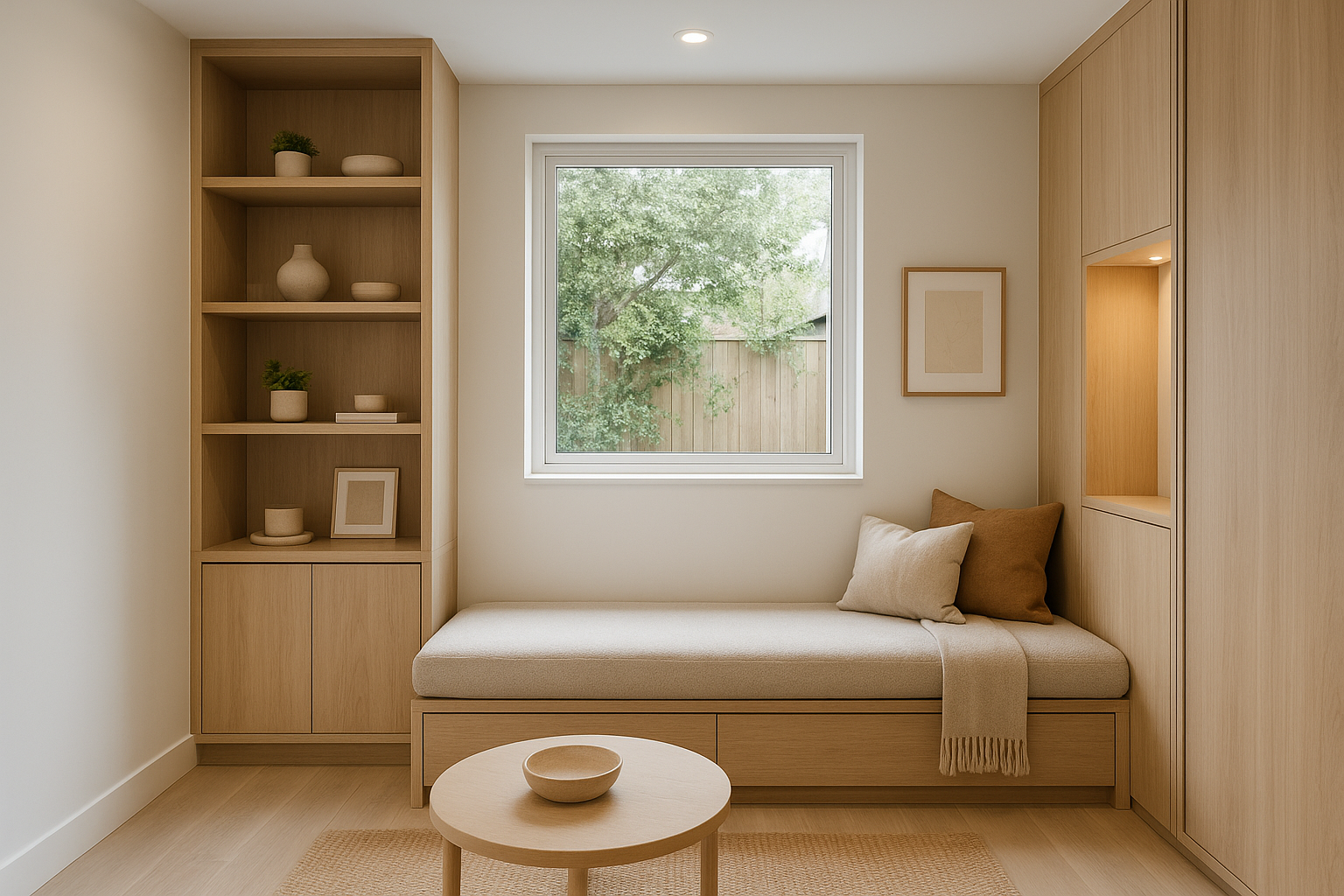
Custom built-ins are a common request handled by full-service detached ADU builders.
What Does a Detached Guest House Cost in Southern California?
Cost is usually the first question homeowners ask, and the honest answer is that it varies by lot, size, and finish level. Detached ADUs generally cost more per square foot than garage conversions because they require new foundations, utility connections, and full structural systems. In Orange County and Los Angeles County specifically, most detached guest houses in the 500 to 1,200 square foot range fall into a wide price band that depends heavily on site conditions like grading, sewer lateral distance, and electrical panel capacity. For that reason, an accurate number only comes from a site-specific assessment rather than a generic online calculator. Homeowners can review detailed cost breakdowns by size and finish tier in our detached guest house cost and design guide, which walks through permit fees, engineering costs, and typical construction timelines.
Financing a Detached ADU Project
Because detached ADUs represent a meaningful investment, financing is often the deciding factor in whether a project moves forward. Common options include home equity lines of credit, dedicated construction loans, and ADU-specific financing programs offered by select lenders. In contrast to a typical home purchase mortgage, these products are underwritten around the future value the ADU adds to the property, not just current equity. Therefore, working with a builder who coordinates with third-party lending partners can simplify the process considerably, since the builder already understands what documentation lenders typically require. It is worth noting that ADU builders themselves do not issue loans directly; they coordinate with outside lenders on the homeowner’s behalf.
Permits, Setbacks, and Timelines: What to Expect
Permit timelines vary significantly by city, even within the same county. Some jurisdictions process ADU permits in a matter of weeks, while others take several months depending on staffing and plan check backlog. Meanwhile, setback requirements, height limits, and lot coverage rules differ from one municipality to the next, which is why a single floor plan rarely works everywhere. Above all, homeowners should confirm early whether their HOA has any restrictions, since state law limits, but does not always eliminate, an HOA’s ability to block an ADU. For general background on state ADU law and definitions, the Wikipedia overview of accessory dwelling units is a useful starting point before speaking with a builder.
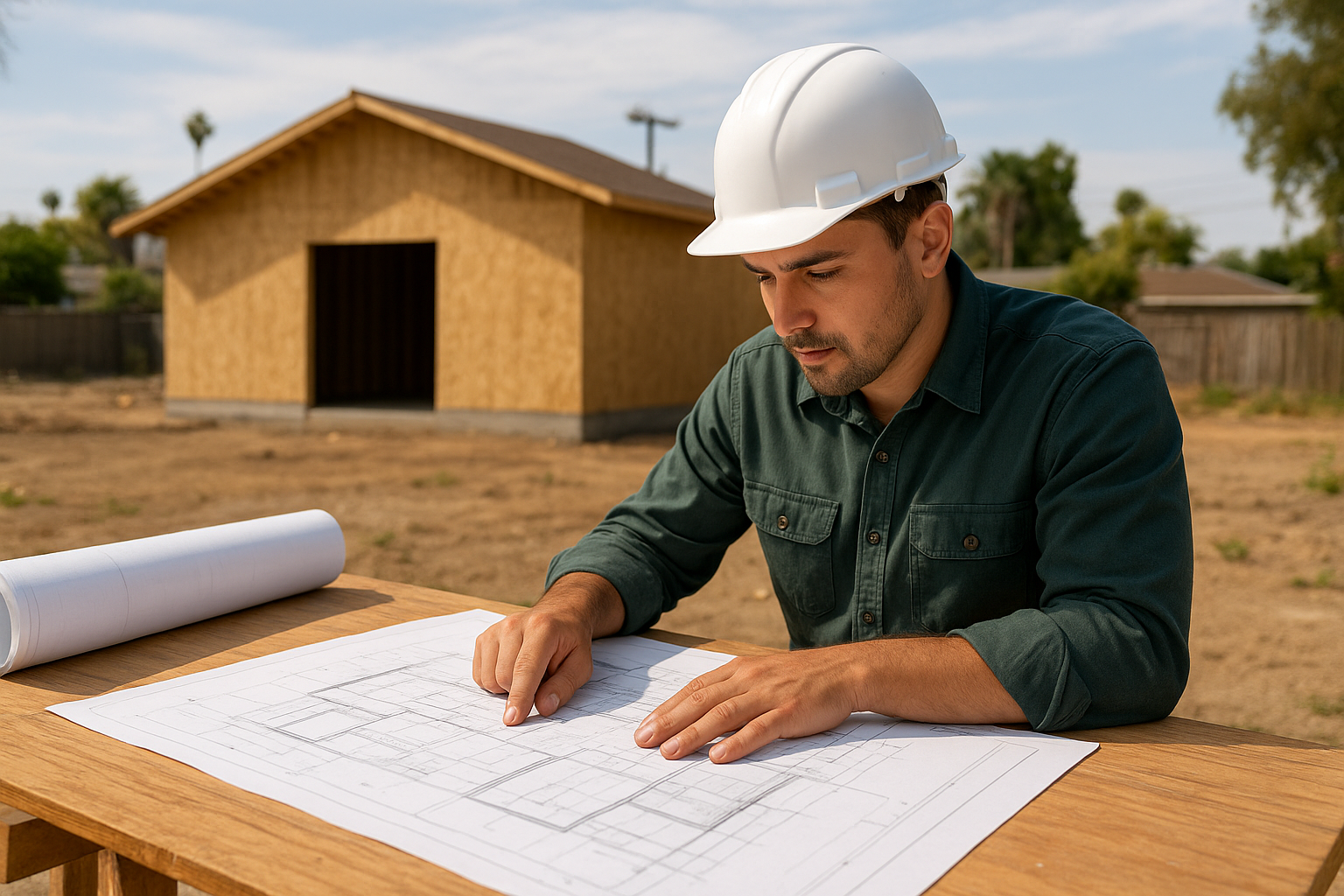
Permit coordination is one of the most valuable services experienced detached ADU builders provide.
Why Homeowners Choose The ADU Pro for Detached Guest House Construction
TheADUPro is a Southern California design-build contractor that focuses exclusively on ADU construction, rather than treating it as a side service alongside general remodeling. The company holds an active CSLB license, carries a BuildZoom score in the top 1% of California contractors, and maintains an average client rating near 4.9 stars. Its founder brings more than 30 years of broader construction experience before specializing entirely in ADUs. In practice, this means site assessment, custom floor plan design, structural engineering, permit coordination, and construction all happen under one accountable team, with net-zero-focused methods and USA-sourced materials built into the process. Homeowners interested in custom built-ins and interior millwork for a new guest house can review specific design ideas in our guide to the best interior features for a guest house ADU. To see current service areas and request a site assessment, visit theadupro.com.
Frequently Asked Questions About Detached Guest House Builders Southern California
What is a detached guest house ADU?
A detached guest house ADU is an independent living unit built separately from the main home on the same lot, complete with its own kitchen, bathroom, and entrance. It typically ranges from 500 to 1,200 square feet and can be used as rental housing, guest space, or multigenerational housing.
How much does it cost to build a detached guest house in Southern California?
Costs vary widely based on lot conditions, size, and finish level, since detached units require new foundations and full utility connections. A site-specific assessment from a qualified builder is the only reliable way to get an accurate number for a given property.
How long does it take to design and build a detached ADU?
Most projects take several months for design and permitting, followed by additional months for construction, though exact timelines depend on the city’s plan check process. Homeowners should ask any builder for a realistic, city-specific timeline before signing a contract.
Do I need a permit to build a detached guest house?
Yes, a building permit is required for any detached ADU in California, along with compliance with local setback, height, and lot coverage rules. A qualified builder handles the permit application, plan submittal, and city coordination on the homeowner’s behalf.
Can an HOA block a detached ADU?
State law limits how much an HOA can restrict ADU construction, but it does not eliminate every HOA rule entirely. Homeowners should review their HOA’s governing documents and confirm any restrictions before finalizing a design.
Will building a detached guest house trigger a property tax reassessment?
Adding a detached ADU typically results in a partial reassessment that adds the new structure’s value to the property tax bill, while the existing home’s assessed value stays the same under California law. Homeowners should confirm current rules with their county assessor’s office.
What is the difference between a detached ADU and a garage conversion?
A detached ADU is a brand-new freestanding structure, while a garage conversion reuses an existing garage’s footprint and foundation. Garage conversions are usually faster and less expensive, but detached units offer more design flexibility and privacy.
What size detached guest house can I build?
Most detached guest houses in Southern California range from 500 to 1,200 square feet, though the exact maximum depends on lot size, local zoning, and setback requirements. A site assessment determines the realistic buildable footprint for a specific property.
What financing options are available for a detached ADU?
Common options include home equity lines of credit, dedicated construction loans, and ADU-specific financing programs offered through third-party lenders. Builders typically coordinate with lending partners rather than issuing loans directly.
How do I find detached guest house builders Southern California homeowners trust?
Reliable detached guest house builders Southern California homeowners trust typically hold an active CSLB license, maintain strong client ratings, and offer design-build services that combine design, permitting, and construction under one contract. Checking licensing status and reviewing completed projects are the two most important verification steps.
What rental income can a detached guest house generate?
Rental income depends heavily on local market rents, unit size, and finish quality, so figures vary significantly by city and neighborhood. Homeowners should research comparable rental listings in their specific area rather than relying on regional averages alone.
What common mistakes do homeowners make when hiring an ADU builder?
The most common mistakes include skipping a proper site assessment, choosing the lowest bid without checking licensing, and underestimating permit timelines. Working with a builder who manages design, permitting, and construction together helps avoid many of these issues.
Building the Right Detached Guest House Starts With the Right Builder
Ultimately, the best detached guest house builders Southern California homeowners choose are the ones who combine active licensing, real ADU experience, and a design-build process that keeps design, permitting, and construction accountable to one team. As this guide has shown, detached ADUs offer more privacy and design freedom than garage conversions or attached additions, though they generally require a larger budget and a longer permit runway. Above all, a proper site assessment remains the only reliable way to know what is buildable on a specific lot, what it will cost, and how long the process will take. Homeowners who verify licensing, compare design-build options, and confirm financing support early tend to avoid the most common delays and budget surprises.