
Houses with a mother-in law suite have become one of the most requested home upgrades across Southern California, as families look for practical ways to house aging parents, adult children, or long-term guests under one roof. Whether you call it an in-law suite, a granny flat, or an accessory dwelling unit (ADU) — a secondary, self-contained living unit on a residential lot — the idea stays the same: a private, functional space attached to or near the main home. For homeowners in Orange County, Los Angeles, and the Inland Empire, adding this kind of suite can also raise property value and open the door to rental income. This guide walks through what these homes look like, what they cost, and how to plan one the right way. Learn more in our mother-in-law suite guide for Southern California homeowners.
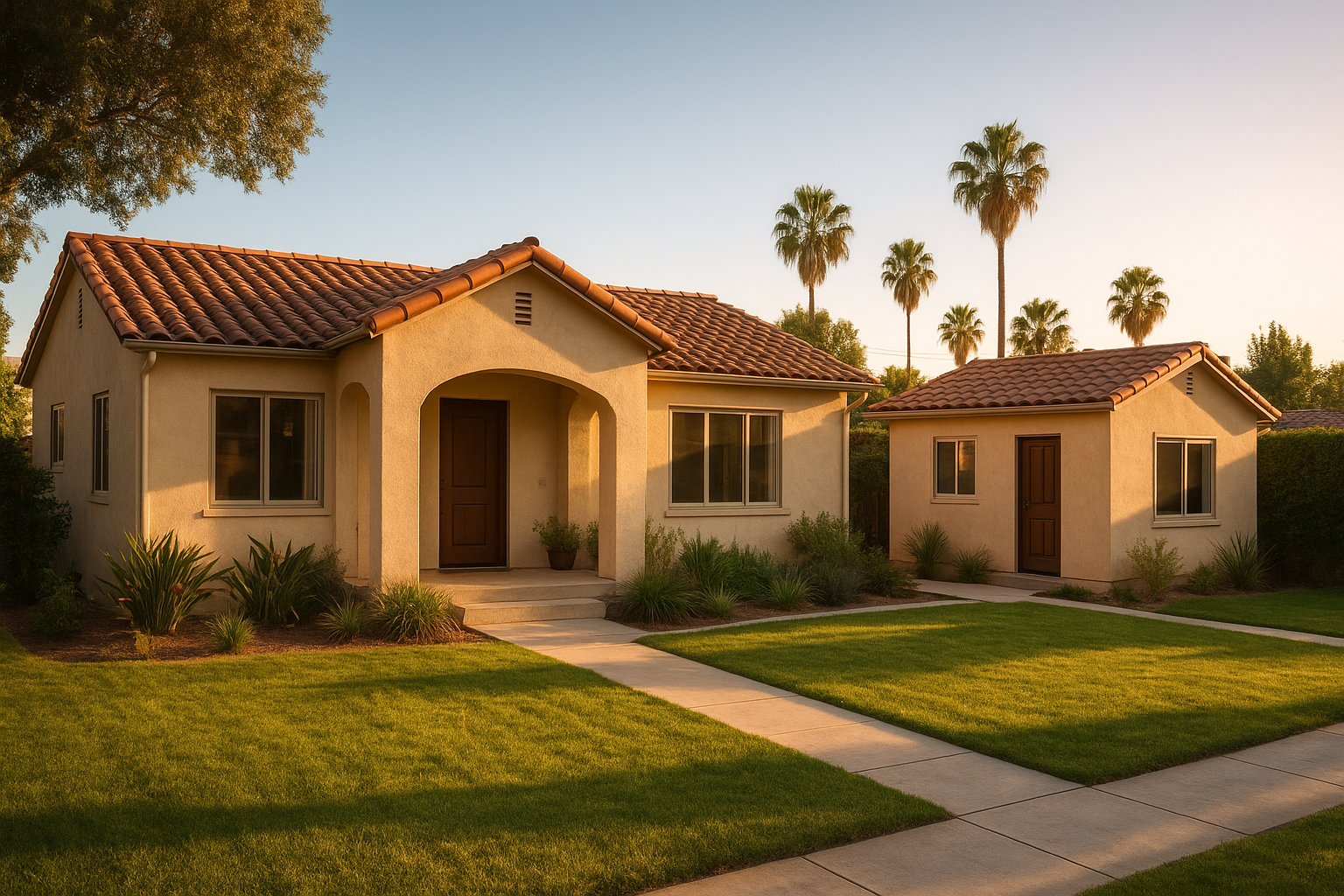
Houses with a mother-in law suite often pair a detached unit with the main residence for privacy and flexibility.
What Are Houses With a Mother-in Law Suite?
Houses with a mother-in law suite are homes that include a self-contained secondary living space — often called an in-law suite, ADU, or granny flat — built for aging parents, adult children, or long-term guests. The suite usually has its own entrance, bathroom, and small kitchen, keeping residents independent while staying close to family.
In practice, this suite can take several forms. Some are converted garages, others are additions built onto the side of the main house, and many are fully detached backyard structures. According to California’s Department of Housing and Community Development, the state has actively encouraged ADU construction through streamlined permitting laws passed over the last several years. As a result, thousands of Southern California homeowners have added these suites without the red tape that once slowed similar projects.
For a deeper look at floor plan options, the guide on the best designs for a mother-in-law suite ADU breaks down layouts by lot size and budget.
Why Southern California Families Choose an In-Law Suite ADU
Multigenerational living has grown steadily across the country. In fact, the Pew Research Center reports that roughly one in five Americans now live in a multigenerational household, a share that has nearly doubled since 1971. Southern California families reflect this trend closely, particularly in high-cost markets like Los Angeles and Orange County where housing multiple generations under one roof reduces overall living expenses.
Beyond cost savings, an in-law suite also supports caregiving. Parents can stay near adult children as they age, while still keeping their own space and routine. Similarly, adult children returning home after college often prefer a private suite over sharing a bedroom in the main house. To compare ADU types side by side, see this breakdown of which ADU type works best for family living.
Popular Layouts for a Granny Flat or Mother-in-Law Suite
Layout choice depends heavily on lot size and existing structures; see our mother-in-law suites guide for floor plan examples. A garage conversion is usually the fastest and most affordable option since the shell already exists. In contrast, a detached guest house offers the most privacy but requires new foundation work and utility connections.
Attached additions strike a middle ground, sharing a wall with the main home while still functioning as a separate unit. For a full comparison of layouts, costs, and permitting timelines, the resource on detached guest house plans, designs, costs, and permits covers each option in detail.
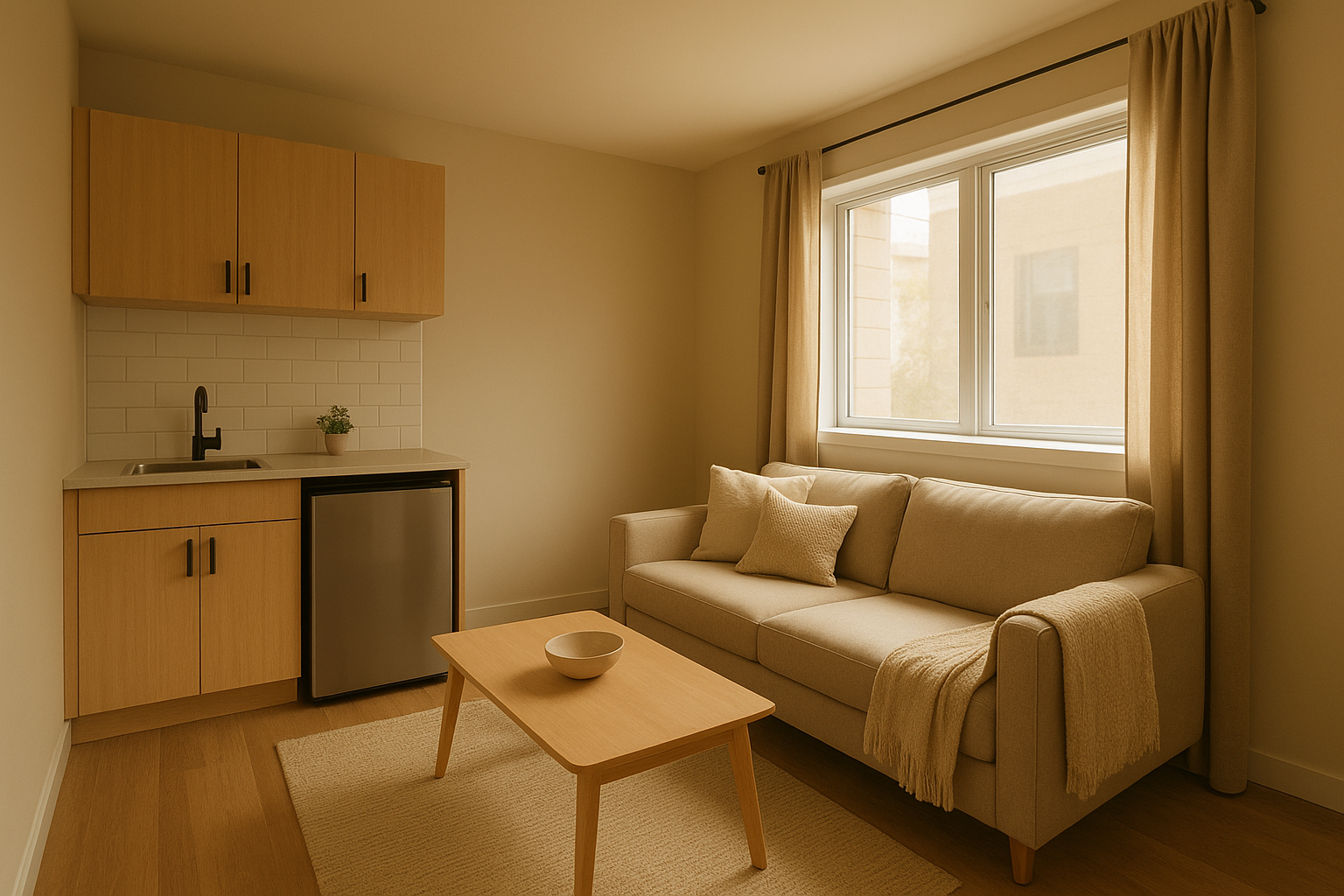
A compact kitchenette keeps a mother-in-law suite fully independent from the main home.
How to Add a Mother-in-Law Suite to Your Home
Building a suite involves several distinct phases. Here is the general process most Southern California homeowners follow, from first consultation to move-in day. See our step-by-step ADU guide for a detailed checklist and timeline.
- Schedule a feasibility consultation to review your lot size, zoning rules, and budget so you know what type of suite is realistically possible on your property.
- Choose a floor plan by deciding whether the suite will be a garage conversion, attached addition, or detached structure that fits the resident’s daily needs.
- Secure permits and approvals by submitting architectural plans to the local building department before any construction work begins on the property.
- Begin construction with a licensed contractor who can complete framing, plumbing, electrical, and finish work while keeping the project on schedule and code compliant.
- Complete final inspection and move-in prep, then furnish the suite so it is ready for a resident, guest, or renter to move in safely.
Cost to Build Houses With a Mother-in Law Suite
Costs for houses with a mother-in law suite vary widely depending on size, materials, and construction type. Garage conversions typically run from $100,000 to $180,000, while attached additions and new detached units often range from $200,000 to $350,000. Location, permitting fees, and finish quality all affect the final number. For a deeper ROI discussion, read our analysis on rental ADU investment and expected returns.
Homeowners in cities like Cypress often want city-specific pricing and design guidance before committing to a project. The page covering ADU plans in Cypress outlines local permitting steps and typical price ranges for that area specifically.
California ADU Regulations to Know
California has passed several laws since 2017 that limit how much cities can restrict ADU construction, including reduced parking requirements and faster permit review timelines. As a result, most Southern California cities now approve compliant ADU applications within 60 days. Homeowners should still confirm setback rules, height limits, and utility connection requirements with their local building department, since specifics vary by city even under statewide law. You can learn more about the general concept of a secondary suite on Wikipedia’s overview of secondary suites.
Is a Mother-in-Law Suite Worth the Investment?
For most Southern California homeowners, the answer is yes. A well-built suite adds usable square footage, supports caregiving needs, and can generate steady rental income once completed. See our ADU costs and permits resource for typical budgets and permitting steps. Because land in this region is limited, added living space tends to hold value particularly well over time.
Of course, the return depends on quality construction and smart design choices. For a closer look at return on investment specifically for guest houses and in-law units, the article on whether it’s worth it to add a guest house breaks down real numbers from recent projects. Homeowners exploring their options can also review current services directly at theadupro.com for local design and permitting support.
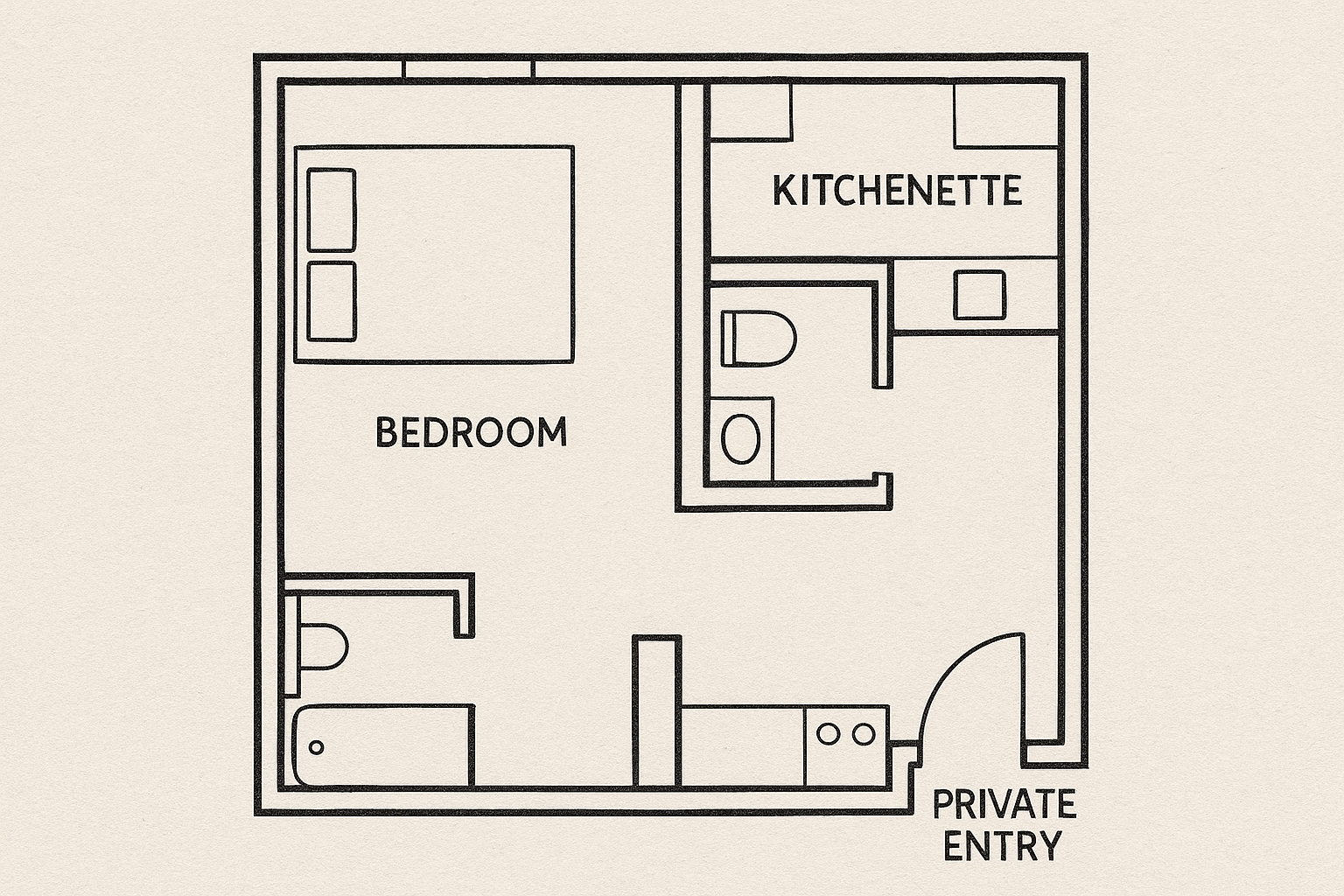
A clear floor plan helps homeowners visualize how a mother-in-law suite fits their lot before construction begins.
Frequently Asked Questions
What is a mother-in-law suite in a house?
A mother-in-law suite is a private living space within or attached to a home, typically including a bedroom, bathroom, and small kitchen area. It gives an aging parent, adult child, or guest their own space without leaving the property.
What are houses with a mother-in law suite typically used for?
Houses with a mother-in law suite are most often used to shelter aging parents, host adult children, or generate rental income. Many Southern California families also use them for long-term guests or caregivers.
How much does it cost to add a mother-in-law suite in Southern California?
Costs typically range from $150,000 to $350,000 depending on size, finishes, and whether the unit is detached or attached. Garage conversions tend to cost less, while new detached structures cost more.
How long does it take to build an in-law suite ADU?
Most projects take between 8 and 14 months from design through final inspection. Timelines vary based on permitting speed in the city where the home is located.
What is the difference between a mother-in-law suite and a junior ADU?
A junior ADU is built within the existing footprint of the main house, often converting a bedroom, while a mother-in-law suite can be a junior ADU, an attached addition, or a fully detached structure. The main difference is location and construction scope.
How do I add a mother-in-law suite to my existing house?
Start with a feasibility consultation, choose a floor plan, secure permits, then move into construction and final inspection. Working with an experienced ADU contractor helps avoid costly delays.
What features should a good mother-in-law suite include?
A well-designed suite includes a private entrance, a bathroom, a small kitchen or kitchenette, and adequate storage. Accessibility features like grab bars and step-free entries are also valuable for aging residents.
Do I need a permit to build a mother-in-law suite in California?
Yes, nearly all mother-in-law suites and ADUs require building permits and must meet state and local codes. California’s streamlined ADU laws have made approval faster in many cities.
Does a mother-in-law suite increase home value?
Yes, adding a mother-in-law suite generally increases property value and can create rental income potential. The exact increase depends on local market conditions and unit quality.
What mistakes should I avoid when planning a mother-in-law suite?
Common mistakes include skipping permits, underestimating utility costs, and choosing a layout that doesn’t fit the resident’s needs. Planning with an experienced contractor helps avoid these issues.
Can I rent out a mother-in-law suite for income?
In most Southern California cities, yes, you can legally rent a mother-in-law suite once it passes final inspection. Some jurisdictions have owner-occupancy rules, so it’s worth checking local regulations first.
Which Southern California cities allow mother-in-law suites?
Most cities across Orange County, Los Angeles County, and Riverside County allow mother-in-law suites under California’s statewide ADU laws. Specific setback and size rules still vary by city.
Final Thoughts
Houses with a mother-in law suite give Southern California families a practical way to support aging parents, welcome adult children home, or add rental income without moving. From garage conversions to fully detached units, the right layout depends on lot size, budget, and how the space will be used day to day. As a result, working with a local contractor who understands California’s ADU rules can make the difference between a smooth project and a stalled one. Homeowners ready to explore designs, costs, and permitting for their own property can start the conversation at theadupro.com. Author: The ADU Pro. Last updated: 2026-08-10.