
The junior ADU benefits available to Southern California homeowners are compelling reasons to explore this housing option in 2025. A junior ADU — also called a JADU — is a self-contained living unit, up to 500 square feet, created within the existing walls of a single-family home. It must have its own exterior entrance and an efficiency kitchen. It may share a bathroom with the main residence. Learn about easy-to-finance options.
In contrast to a full detached ADU, a JADU requires no new construction footprint. As a result, the costs are substantially lower, the permitting timeline is shorter, and the disruption to your daily life is minimal. For many homeowners across Orange County, Los Angeles County, and Riverside County, a junior ADU is the smartest first step toward unlocking their property’s potential. See the benefits of building an ADU for more context.
What Is a Junior ADU and How Does It Work?
A junior ADU is defined under California’s ADU state law as a unit created within the four walls of an existing single-family home. The maximum size is 500 square feet. It must include a separate exterior entrance, an efficiency kitchen with a cooking appliance and food preparation counter, and a sink. For basic ADU terminology, see What ADU stands for.
Furthermore, California law requires the property owner to occupy either the main home or the JADU as their primary residence. This owner-occupancy rule is one key distinction between a JADU and a standard ADU. However, this requirement is currently suspended in some jurisdictions under recent legislative updates, so it’s worth confirming local rules with a qualified contractor.
Common spaces converted into JADUs include attached garages, oversized bedrooms, bonus rooms, and finished basement areas. In essence, if the space already exists inside your home, it may qualify. This flexibility is one reason why so many homeowners are drawn to the junior ADU model.
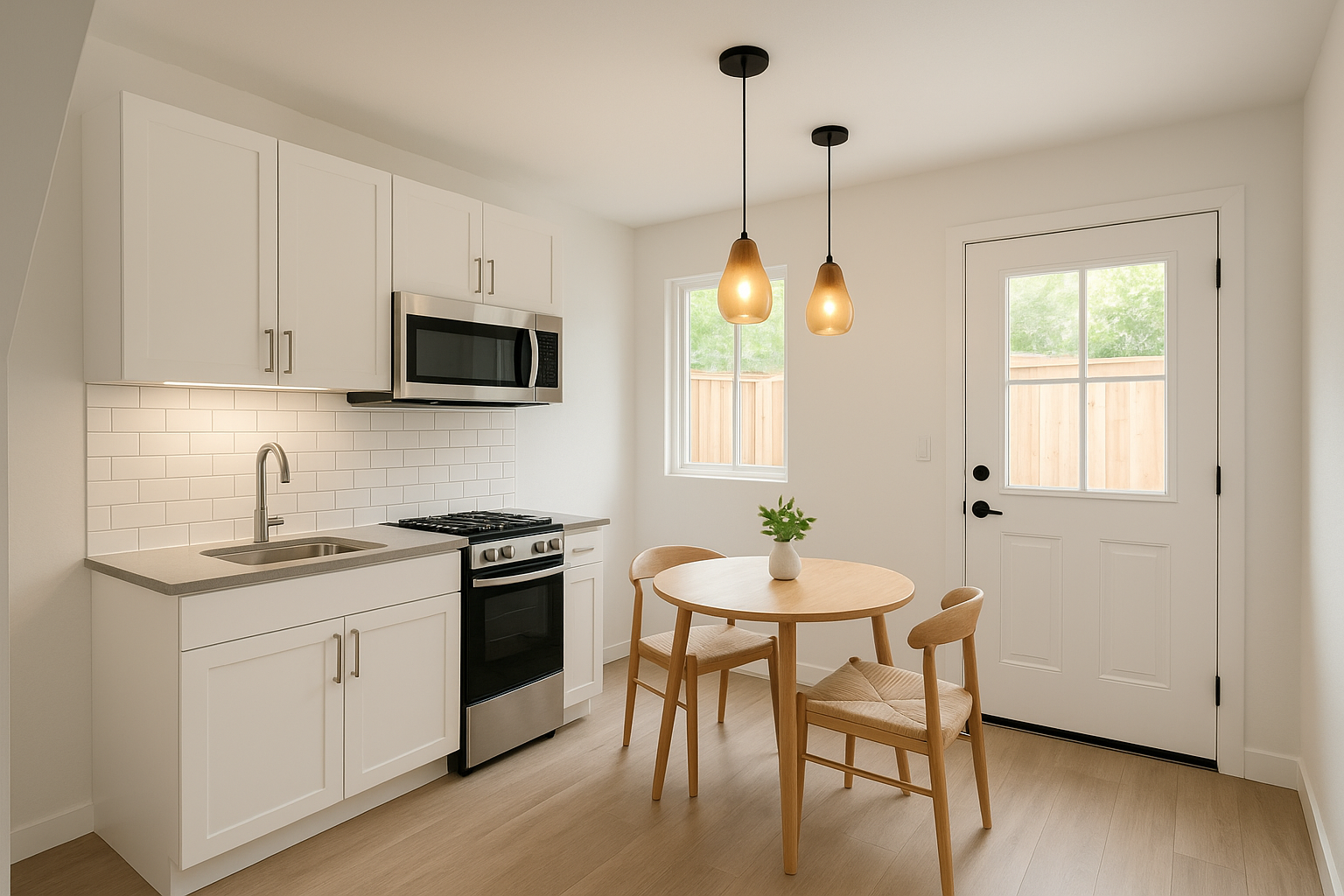
A well-designed junior ADU conversion can transform an underused garage into a fully functional living space. See our ADU financial return analysis.
The Core benefits of adding an ADU Every Homeowner Should Know
The junior ADU benefits span financial, practical, and lifestyle dimensions. Therefore, whether your goal is to earn rental income, support a family member, or simply increase your home’s value, a junior ADU guide can help you decide. Below are the most important advantages to consider.
1. Lower Construction Costs Than a Full ADU
Because a JADU uses your home’s existing structure, you avoid the expense of new foundations, exterior framing, and roofing. According to industry estimates, a junior ADU in Southern California typically costs between $20,000 and $75,000, compared to $150,000 or more for a detached ADU. See permitted ADU designs for planning and permit considerations. Consequently, the return on investment timeline is much shorter.
Additionally, permit fees for JADUs are capped under California state law, which further reduces upfront costs. Homeowners looking for financing options can explore resources like easy ADU financing designed specifically for this type of project.
2. Rental Income Potential
One of the most attractive junior ADU benefits is the ability to generate passive rental income. In high-demand rental markets like Los Angeles and Orange County, even a 400-square-foot unit can command $1,200 to $2,000 per month in rent. ADU plans in Bel Air show design options that maximize rental appeal. Over time, that income can offset your mortgage, fund renovations, or supplement retirement savings.
Moreover, the rental demand for smaller, affordable units in Southern California remains strong. According to the Zillow Research Center, rental vacancy rates in the Los Angeles metro area consistently rank among the lowest in the nation. This means your JADU is unlikely to sit empty for long.
3. Increased Property Value
Adding livable square footage to your home almost always increases its appraised value. Furthermore, a JADU adds an income-producing asset to your property, which buyers and appraisers recognize. For more detail see the benefits of building an ADU and how it affects resale premiums.
For a deeper look at how ADUs affect overall property value, the team at theadupro.com covers the full range of ADU property benefits in detail. In short, a JADU is one of the most cost-effective ways to boost your home’s market appeal.
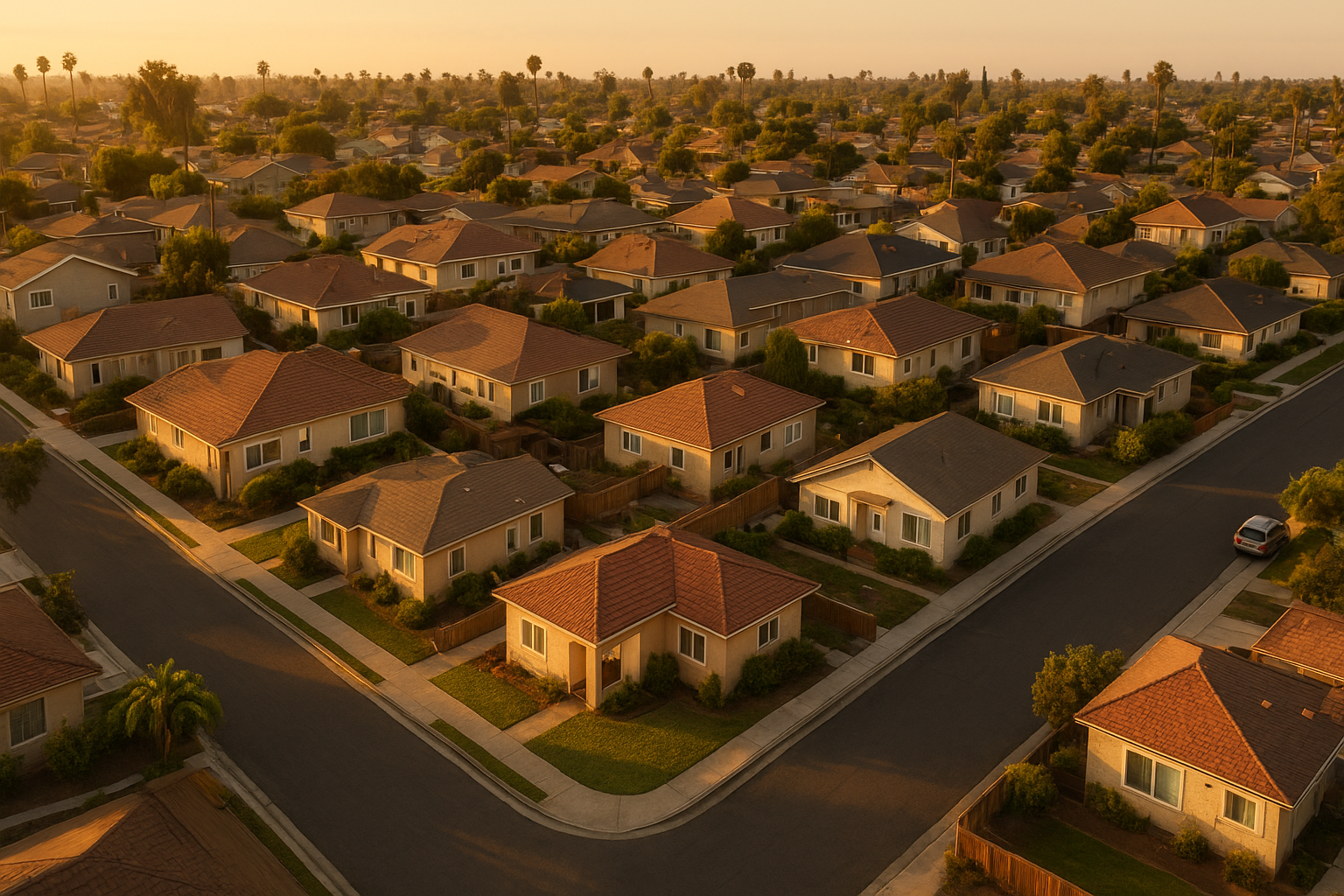
Southern California homeowners are increasingly adding junior ADUs to maximize property value and rental potential. Learn what ADU stands for and how terminology affects financing, permits, and listing descriptions.
Multigenerational Living and Lifestyle Advantages
Beyond financial gains, junior ADUs offer powerful lifestyle benefits. Specifically, they are an ideal solution for multigenerational households — a growing trend across Southern California. According to the Pew Research Center, approximately 59.7 million Americans lived in multigenerational households as of 2021, a number that continues to rise.
A junior ADU allows aging parents to live independently while remaining close to family. Similarly, it gives adult children a private space as they transition to financial independence. In both cases, the setup preserves personal privacy while maintaining family proximity — a balance that many households find invaluable.
Home Office, Studio, or Guest Suite Uses
Not every JADU needs to be a rental unit or family suite. In addition to residential uses, many homeowners convert the space into a dedicated home office, art studio, or guest accommodation. These non-rental uses still add functional square footage and can make day-to-day life significantly more comfortable.
Furthermore, having a separate entrance means guests or workers can come and go without entering the main home — a practical benefit that many homeowners only appreciate after the fact.
How to Build a Junior ADU: A Step-by-Step Process
Building a JADU involves a clear sequence of steps. Therefore, understanding the process helps set realistic expectations for timeline and budget. See our backyard ADU benefits guide for closely related projects.
- Evaluate Your Existing Space: Walk through your home to identify rooms or attached structures that meet the 500-square-foot maximum and can accommodate a private entrance and efficiency kitchen.
- Consult a Licensed ADU Contractor: Hire an experienced contractor who understands local zoning codes and California state law to assess feasibility and estimate construction costs.
- Submit Plans and Obtain Permits: Work with your contractor to ADU construction guide to prepare architectural plans and submit a complete permit application. California law requires local agencies to respond within 60 days.
- Complete Construction and Pass Inspections: Coordinate all trades — framing, electrical, plumbing, insulation, and finishes — and schedule required inspections at each phase.
- Obtain Final Approval and Begin Use: After passing the final inspection and receiving a certificate of occupancy, your JADU is legally ready for occupancy.
Homeowners in Fullerton and surrounding areas can explore local project options through the team’s ADU construction services in Fullerton. Similarly, coastal communities in San Diego County can learn more about ADU building in Oceanside.
Why Southern California Is the Ideal Market for JADUs
California’s housing shortage makes the junior ADU model especially powerful in this region. The state has actively reformed ADU laws since 2017, reducing barriers to construction and streamlining permitting. As a result, Southern California homeowners now have more flexibility than ever to add housing units to their properties.
Cities like Los Angeles, Anaheim, Riverside, and Irvine have seen dramatic increases in JADU permit applications. Moreover, the combination of high rents, strong demand, and favorable state law makes this region one of the best in the country for JADU investment. The team at theadupro.com brings deep local expertise across all three counties, guiding homeowners from design through final inspection. Learn about our ADU innovation and design approach.
Homeowners interested in connecting with experienced professionals in the ADU space can also explore the contractor member directory to find vetted local experts.
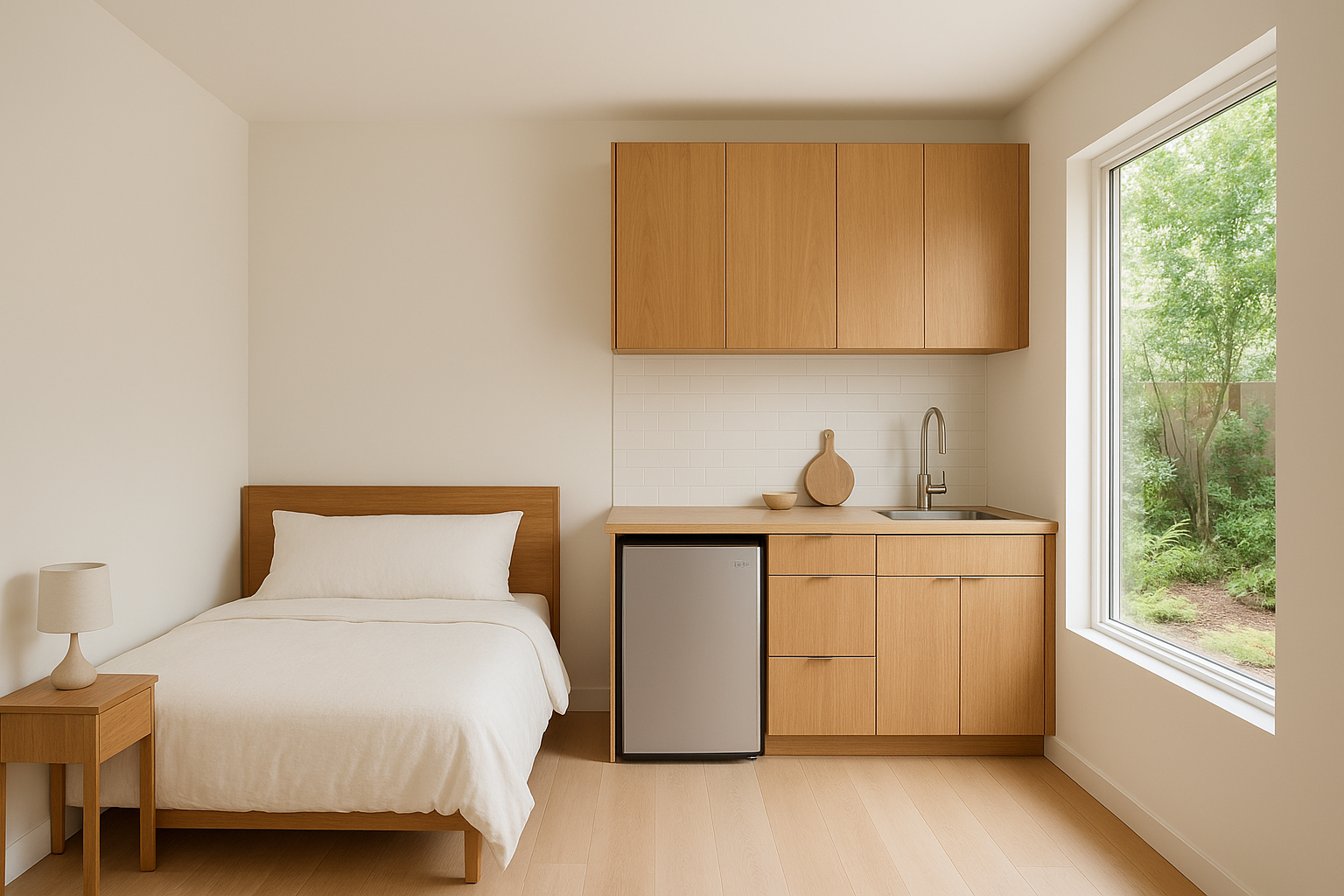
Thoughtful interior design maximizes comfort and functionality within a junior ADU’s compact footprint; see our ADU innovation approaches for space-saving ideas and design examples.
Frequently Asked Questions About Junior ADU Benefits
What are the main junior ADU benefits for homeowners?
The main junior ADU benefits include generating rental income, increasing property value, providing space for family members, and doing so at a lower cost than a full ADU. ADU construction in Downey demonstrates cost-effective conversion approaches. JADUs are created within the existing footprint of a home, which significantly reduces construction expenses.
What is a junior ADU (JADU)?
A junior ADU, or JADU, is a self-contained living unit of up to 500 square feet created within the existing walls of a single-family home. It must include its own entrance and an efficiency kitchen, and it may share a bathroom with the main home.
How much does it cost to build a junior ADU in California?
Building a junior ADU in California typically costs between $20,000 and $75,000, depending on the scope of renovation, finishes, and local permit fees. ADU plans in Temecula outline cost-effective layouts and material choices. Because a JADU uses existing space, costs are considerably lower than constructing a full detached ADU.
Can I rent out a junior ADU?
Yes, you can rent out a junior ADU, but California law requires the owner to occupy either the main home or the JADU as their primary residence. This owner-occupancy requirement distinguishes JADUs from standard ADUs.
Does a junior ADU increase property value?
Yes, adding a junior ADU generally increases property value by adding livable square footage and rental potential. In high-demand markets like Orange County and Los Angeles, a JADU can significantly boost resale appeal.
How big can a junior ADU be?
Under California state law, a junior ADU can be a maximum of 500 square feet. It must be created within the existing structure of a single-family home and cannot be a newly constructed addition.
What is the difference between a junior ADU and a regular ADU?
A junior ADU is smaller (max 500 sq ft), must be within the existing home, and requires owner occupancy. A standard ADU can be detached, larger, and does not require the owner to live on-site.
Do I need a permit to build a junior ADU in California?
Yes, a building permit is required to create a junior ADU in California. However, state law streamlines the approval process, and local agencies must act on a complete JADU application within 60 days.
Can a junior ADU be used for multigenerational living?
Absolutely. One of the most popular junior ADU benefits is providing a private, independent space for aging parents, adult children, or other relatives — all within the same property. This setup supports close family proximity while preserving personal privacy.
Are there financing options available for junior ADU construction?
Yes, homeowners can finance a junior ADU through home equity loans, cash-out refinancing, construction loans, or specialized ADU lending programs. Some California cities also offer low-interest ADU financing programs.
How long does it take to build a junior ADU?
A junior ADU typically takes 3 to 6 months from permit approval to completion, depending on the complexity of the conversion and contractor availability. The permitting phase alone can take 4 to 8 weeks in most Southern California jurisdictions.
What rooms can be converted into a junior ADU?
Common conversion candidates include attached garages, large bedrooms, bonus rooms, and basement spaces. The key requirement is that the conversion stays within the existing structure of the home.
Conclusion: Are Junior ADU Benefits Right for Your Property? (Last updated: 2026)
The junior ADU benefits are clear, measurable, and well-suited to the Southern California housing landscape. From lower construction costs and passive rental income to multigenerational living solutions and increased property value, a JADU delivers real results for homeowners who are ready to maximize their investment. Furthermore, California’s supportive regulatory environment makes now an ideal time to act. Whether you own property in Orange County, Los Angeles County, or Riverside County, the experienced team at theadupro.com is ready to help you explore your options, navigate permitting, and build a high-quality junior ADU that meets both your lifestyle goals and local building codes. Last updated: 2026-08-10. Author: The ADU Pro Team, licensed California ADU contractors with local permitting experience. Last updated: 2026-06-26. Author: The ADU Pro team.