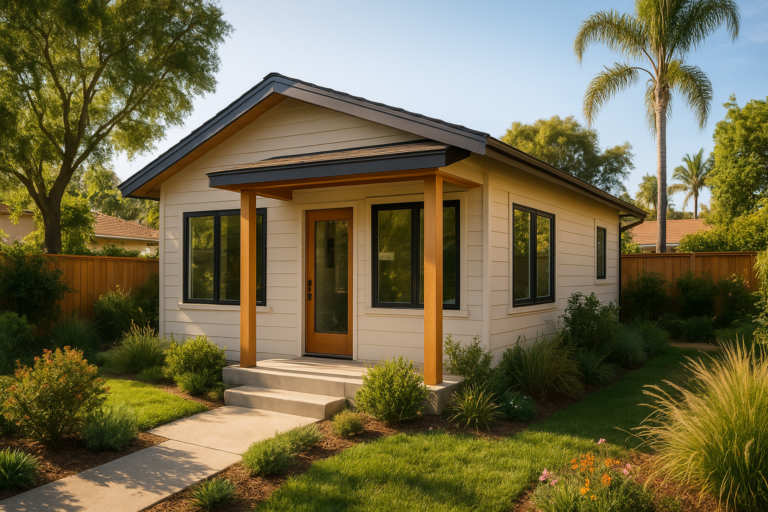
A Jurupa Valley ADU — short for accessory dwelling unit — is one of the smartest real estate moves available to homeowners in the Inland Empire right now. Whether you want steady rental income, space for aging parents, or a private home office with a full bath, building an ADU in Jurupa Valley delivers flexibility that few other home upgrades can match. In fact, according to the California Department of Housing and Community Development, statewide ADU permit applications surged by more than 1,000% between 2016 and 2022 — and Riverside County cities like Jurupa Valley are a major part of that boom. This guide covers everything the competition leaves out: zoning specifics, exact fee ranges, financing programs, and a complete step-by-step permit roadmap.
What Is a Jurupa Valley ADU?
A Jurupa Valley ADU is a secondary housing unit — sometimes called a backyard cottage, granny flat, or in-law suite — located on the same parcel as a primary single-family or multi-family residence. It can be detached (a standalone structure), attached (an addition to the main home), or converted from an existing space such as a garage or basement. In technical terms, an accessory dwelling unit (a fully independent housing unit with its own kitchen, bathroom, and entrance) must meet building code standards just like the main house, even though it is smaller in scale.
California state law governs most ADU rules, which means Jurupa Valley must follow the state’s streamlined approval process. Therefore, many restrictions that once blocked ADU projects — like excessive parking requirements or discretionary design review — have been significantly reduced or eliminated. As a result, homeowners today face far fewer obstacles than they did even five years ago. For background on the underlying legal framework, the Wikipedia entry on secondary suites offers useful general context on how these units function across different jurisdictions.
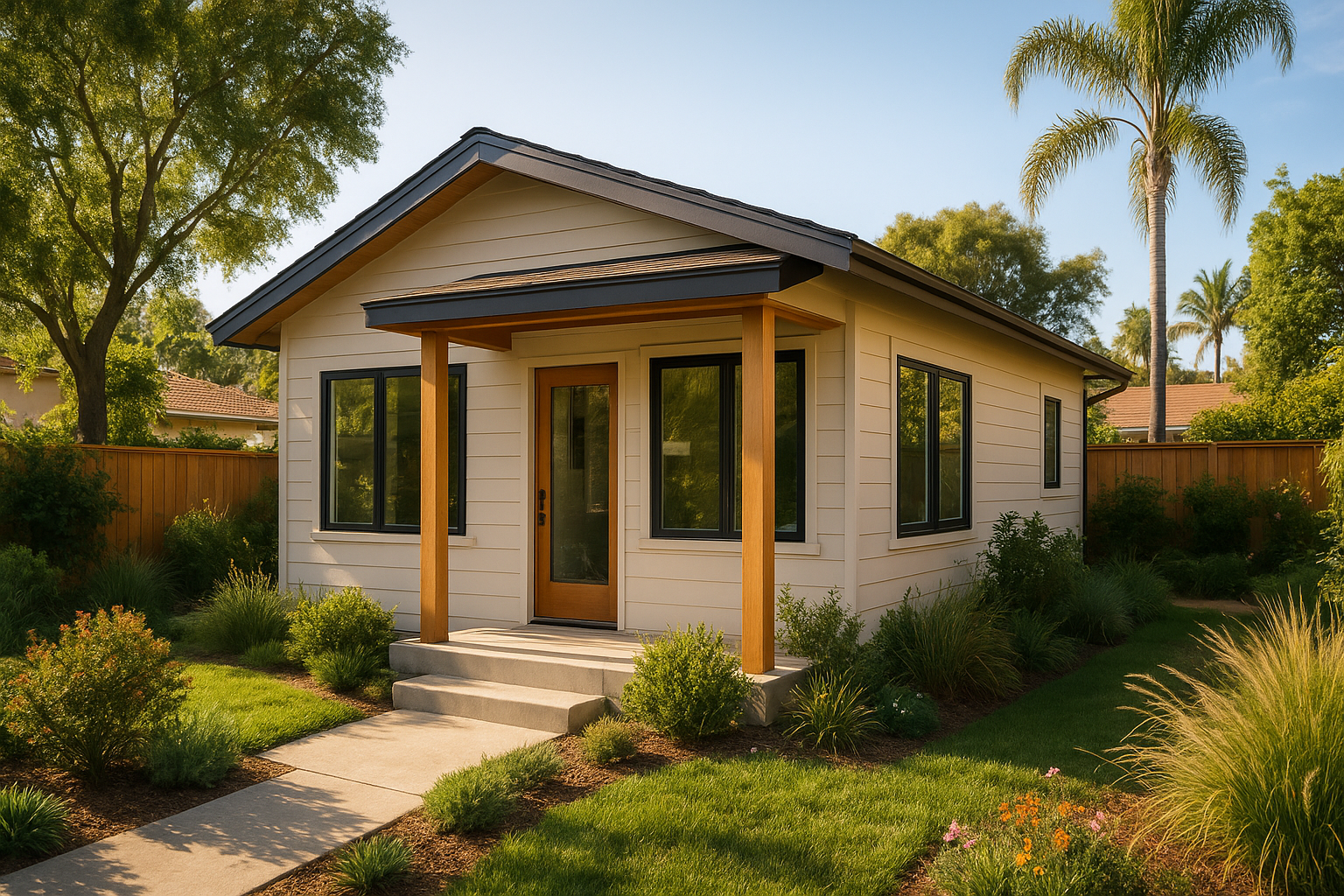
A detached Jurupa Valley ADU can add significant living space and rental income potential to your property. For a deeper walkthrough of turning a unit into cash flow, see our Investing in ADU Rental: Maximize Your ROI in 2025.
Types of ADUs You Can Build in Jurupa Valley
Homeowners in Jurupa Valley have several ADU options, and each type suits a different budget, timeline, and property layout. Understanding the differences upfront saves time and prevents costly redesigns later.
- Detached ADU: A fully separate structure in the backyard. This is the most versatile option and can reach up to 1,200 square feet under California law.
- Attached ADU: An addition connected to the main home. It shares at least one wall but has its own entrance, kitchen, and bathroom. For a deeper walkthrough, see our The Expert Guide to Home Extension Contractors 2026.
- Garage Conversion ADU: Transforming an existing attached or detached garage into a livable unit. This is often the most affordable route since the shell already exists.
- Junior ADU (JADU): A unit of up to 500 square feet created within the existing walls of the primary residence. It requires an owner-occupancy condition and typically includes an efficiency kitchen.
- Multifamily Conversion ADU: On lots with an existing multifamily building, state law allows converting portions of non-livable space — such as storage rooms or hallways — into up to 25% of the existing units as ADUs, plus up to two detached units.
Consequently, nearly every Jurupa Valley homeowner can find at least one ADU type that fits their property. Working with a local ADU builder in Jurupa Valley early in the process helps you pick the option that maximizes both livability and return on investment.
Jurupa Valley ADU Zoning: Where Can You Actually Build?
Unlike some guides that only summarize state law, it helps to understand exactly where an accessory dwelling unit is allowed within the city. In Jurupa Valley, ADUs are permitted on any lot zoned for a single-family or multifamily residential use, which covers the vast majority of residential parcels across neighborhoods such as Pedley, Glen Avon, Rubidoux, Mira Loma, and Belltown.
However, a few site-specific factors still matter. Lots in flood zones, agricultural preserve areas, or hillside overlay districts may face additional review before a permit is finalized. Similarly, properties served by septic systems rather than municipal sewer sometimes require a soil percolation review to confirm the added wastewater load can be handled safely. Before finalizing your design, confirm your parcel’s zoning designation directly with the Jurupa Valley Building and Safety Division, since this single step prevents the majority of permit rejections.
Jurupa Valley ADU Rules and Regulations
Because California preempts most local ADU restrictions, Jurupa Valley must follow state standards set out in the California Government Code Section 65852.2. However, there are still important local details to understand before you start designing.
Setbacks and Height Limits for a Jurupa Valley Accessory Dwelling Unit
State law caps rear and side setbacks at four feet for detached ADUs. Front setbacks follow the primary zone’s standards. In addition, detached ADUs are generally limited to 16 feet in height, though two-story units up to 18 feet may be permitted under specific conditions, including proximity to transit or attachment to a multifamily dwelling.
Size Limits and Lot Coverage
A detached ADU may reach 1,200 square feet regardless of lot size, while an attached ADU is generally capped at 50% of the existing primary home’s livable area, up to that same 1,200-square-foot maximum. Notably, the city cannot enforce a lot-coverage ratio, floor-area ratio, or minimum lot size that would prevent an 800-square-foot ADU with four-foot setbacks — this is one of the strongest protections state law offers Jurupa Valley homeowners.
Parking Requirements
No additional parking space is required for an ADU when the property sits within half a mile of public transit, or when a garage is converted. This rule removes one of the most common barriers that previously stopped homeowners from moving forward, and it applies automatically without a variance request.
Owner-Occupancy Rules
California suspended owner-occupancy requirements for standard ADUs through January 1, 2025. After that date, local agencies may reinstate them. Therefore, verify the current status with the City of Jurupa Valley before finalizing your plans, since a JADU still requires owner-occupancy regardless of this broader exemption.
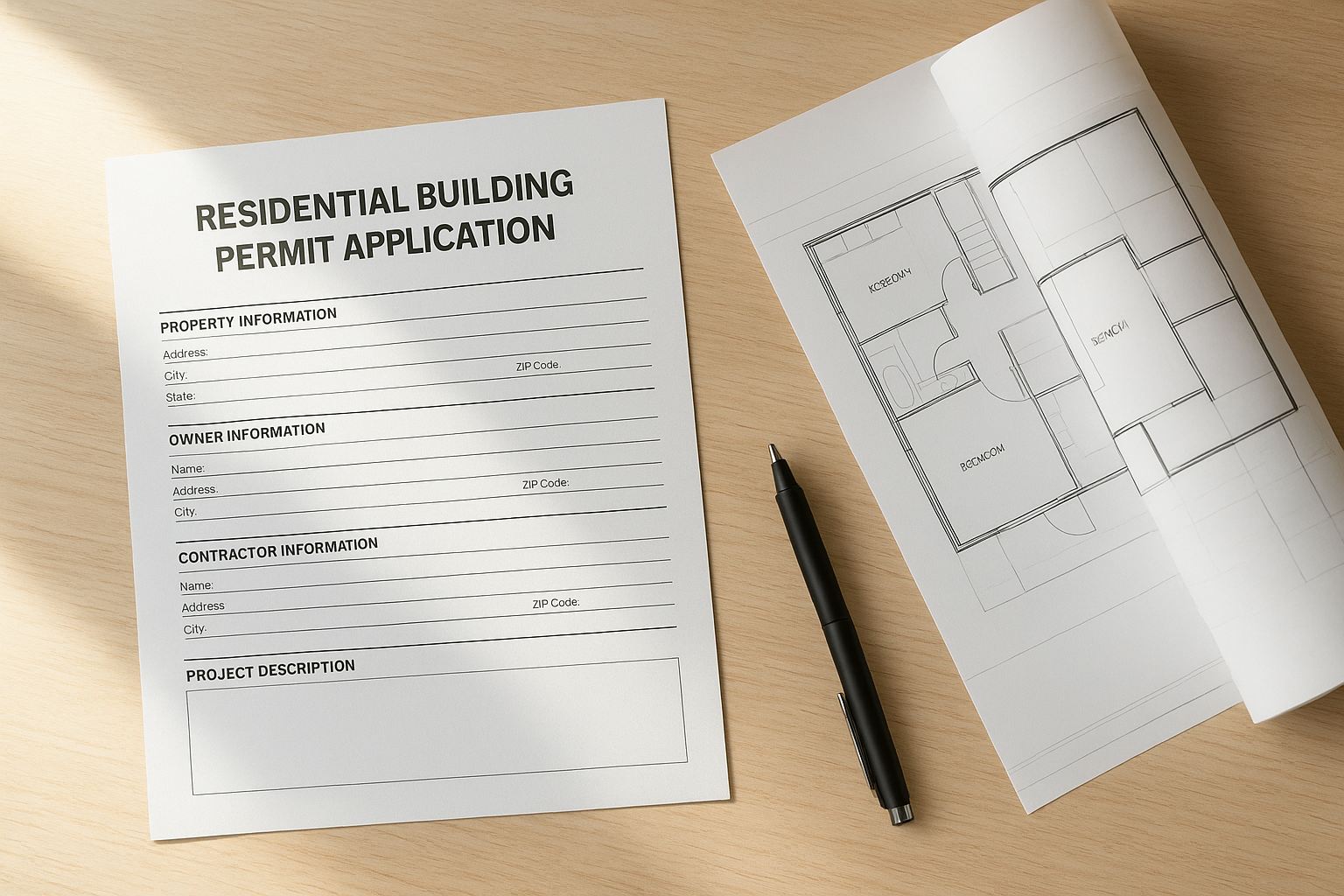
Submitting a complete permit application with accurate drawings speeds up ADU approval in Jurupa Valley.
How to Build an ADU in Jurupa Valley: Step-by-Step
Building an accessory dwelling unit involves several sequential stages. Following each step carefully helps you avoid costly delays and rework.
- Assess Your Property. Review your lot size, zoning designation, and existing structures to determine which ADU types are feasible. Check whether utilities have adequate capacity for an additional unit. See our ADU planning guide for planning worksheets and next steps.
- Choose Your ADU Type. Decide between a detached unit, attached addition, garage conversion, or JADU based on your budget, timeline, and property layout. See our ADU Temecula guide.
- Hire a Designer or Architect. Work with a professional experienced in California ADU projects to produce ADU plans that comply with all applicable codes.
- Submit Your Permit Application. File your complete application — including site plans, floor plans, and elevations — with the Jurupa Valley Building and Safety Division. California law requires a decision within 60 days.
- Complete Construction and Final Inspection. Once approved, hire a licensed general contractor. Schedule inspections at each required phase and secure your certificate of occupancy before occupying the unit. See our construction guide.
For expert guidance through every stage, resources like The ADU Pro can help you navigate local requirements and connect with qualified professionals in the Jurupa Valley area. Author: The ADU Pro team. Last updated: 2026-06-26.
Permit and Impact Fees You Should Budget For
Beyond construction costs, expect building permit fees, plan check fees, and school impact fees. In particular, state law exempts ADUs under 750 square feet from most impact fees, which meaningfully lowers total project cost for smaller detached units and JADUs. Utility connection fees for water and sewer, however, still apply and vary based on meter size and whether a new service line is required.
How Much Does a Jurupa Valley ADU Cost?
Cost is one of the first questions every homeowner asks. Generally, ADU costs in the Inland Empire fall into three broad ranges: See Riverside ADU plans for design, permitting, and cost examples.
- Garage conversion: $80,000 – $130,000. This is the most budget-friendly option because the shell already exists.
- Attached addition: $120,000 – $180,000. Costs vary based on size and how much structural work is needed.
- Detached new construction: $160,000 – $280,000+. Site preparation, utility connections, and finishes drive the higher price.
Furthermore, permit fees, design fees, and utility connection charges add to the total. However, rental income can offset these costs significantly. A well-located Jurupa Valley ADU can generate $1,400 to $2,200 per month in rent, depending on size and amenities — meaning many projects pay for themselves within eight to twelve years while adding permanent equity.
Financing Your Accessory Dwelling Unit
Several financing options exist for Jurupa Valley homeowners. Home equity loans and HELOCs (home equity lines of credit) are the most common. Additionally, cash-out refinancing and construction loans are worth exploring. Some lenders now offer ADU-specific loan products that factor in projected rental income when calculating approval amounts. The CalHFA ADU Grant Program, for instance, has previously offered up to $40,000 toward pre-development costs like design fees and permits for qualifying low-to-moderate income households — a resource frequently overlooked by first-time ADU builders.
Consequently, it pays to compare lenders before committing to one financing path. Explore our breakdown of ADU loan options in Jurupa Valley to see which structure fits your equity position and timeline.
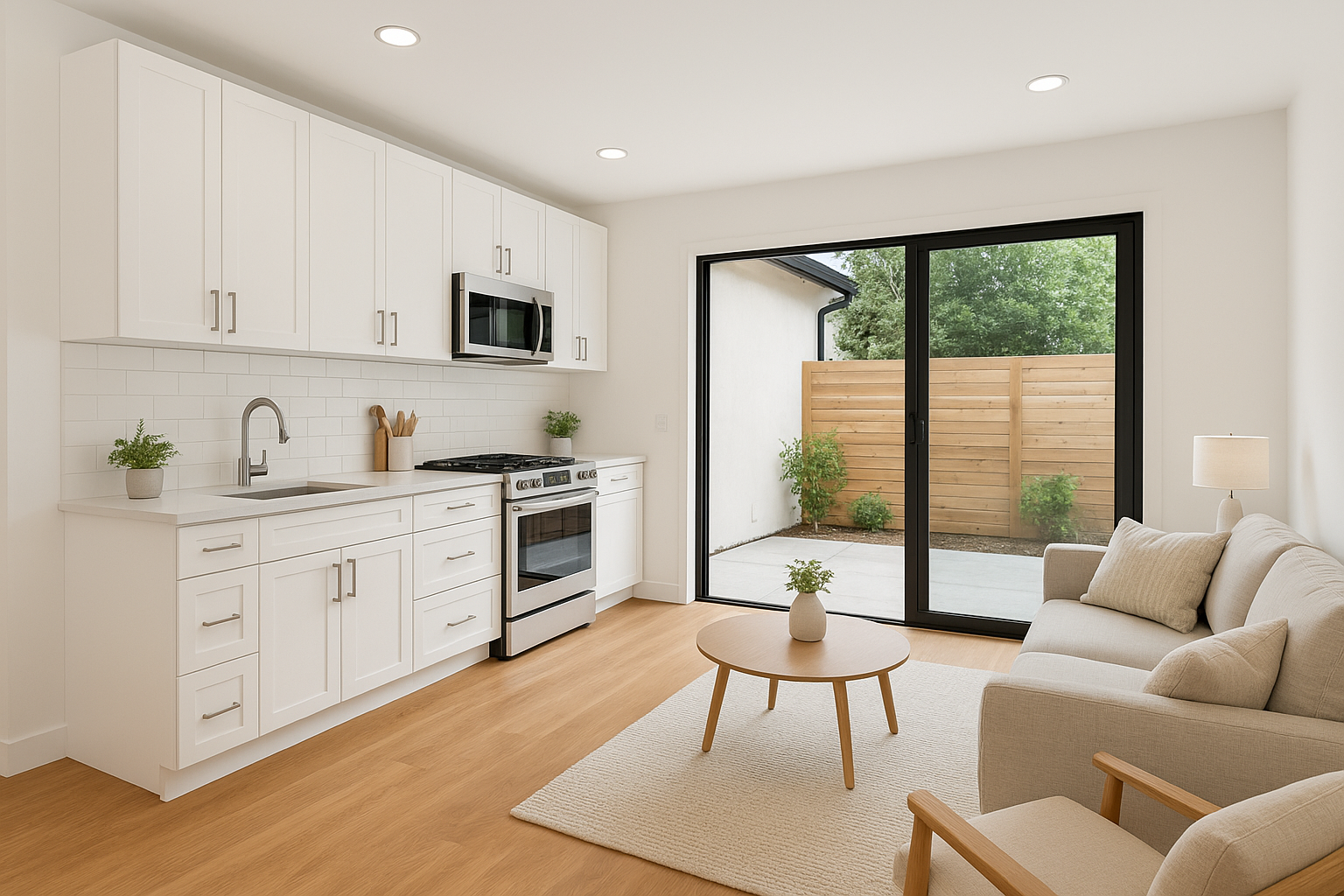
A well-designed ADU interior maximizes livability even within a compact footprint.
Benefits of Adding an ADU to Your Jurupa Valley Property
Beyond rental income, a Jurupa Valley accessory dwelling unit delivers a range of long-term benefits. Studies suggest ADUs can increase home values by 20% to 30% in high-demand California markets. That means your investment builds equity while generating monthly cash flow.
In addition, ADUs support multigenerational living. Many Jurupa Valley families use their unit to house elderly parents nearby while maintaining privacy. Similarly, young adult children benefit from an affordable place to live close to family.
Finally, ADUs contribute to the broader housing supply in a region where affordability remains a serious challenge. As a result, local and state governments have made the permitting process easier than ever before. You can also explore ADU financing options to fund your project with confidence.
Common Mistakes to Avoid When Building an ADU in Jurupa Valley
Even with streamlined state laws, homeowners still make avoidable errors. Understanding these pitfalls can save you time and money.
- Starting construction before permit approval. Unpermitted work creates serious legal and financial problems when you try to sell or refinance.
- Underestimating utility upgrade costs. Older homes may need panel upgrades or sewer lateral work before an ADU can connect.
- Choosing the wrong contractor. Always verify that your contractor holds a current California contractor’s license and carries adequate insurance.
- Ignoring HOA rules. If your property is in a homeowners association, check the CC&Rs (Covenants, Conditions, and Restrictions) early. However, note that California law limits HOA power to block ADUs in many circumstances.
- Skipping a soil or utility capacity check. A percolation test or sewer capacity review can surface hidden costs before you commit to a design, rather than after.
Working with an experienced ADU specialist, such as the team at The ADU Pro, can help you sidestep these common mistakes from the start. You can also review our guide on ADU design tips for practical planning advice.
Jurupa Valley ADU vs. Other Inland Empire Markets
Because state law applies uniformly, ADU rules in Jurupa Valley look similar to neighboring cities — but rental demand and construction costs still vary by market. For comparison, homeowners exploring pre-approved ADU plans in Pomona often see slightly higher land values, while those researching ADU financing programs in Murrieta typically work with larger lot sizes that support bigger detached units. Understanding these regional differences helps you set realistic expectations for your Jurupa Valley project’s budget and rental return.
Frequently Asked Questions About Jurupa Valley ADU Projects
What is a Jurupa Valley ADU?
A Jurupa Valley ADU is a secondary residential unit built on the same lot as a primary home. It can be detached, attached, or converted from an existing structure like a garage, and it functions as a fully independent living space.
Do I need a permit to build an ADU in Jurupa Valley?
Yes. A building permit is required from the City of Jurupa Valley. The city follows ADU regulations, which streamlines the process and limits local restrictions that could otherwise delay approval.
How much does it cost to build an ADU in Jurupa Valley?
Costs range from roughly $80,000 for a garage conversion to $280,000 or more for a fully detached new-construction unit. Size, finishes, and site conditions are the main cost drivers. For a deeper cost breakdown and permitting impacts, see ADU Construction Riverside.
What is the maximum size for a detached ADU in Jurupa Valley?
Under California state law, a detached ADU can be up to 1,200 square feet. Jurupa Valley must comply with this state standard and cannot impose a lower limit.
Can I rent out my Jurupa Valley ADU?
Yes, you can rent your ADU to a long-term tenant. Short-term rentals under 30 days may face separate local rules, so confirm with the city before listing on vacation rental platforms.
What is a Junior ADU (JADU) and how does it differ from a standard ADU?
A Junior ADU is up to 500 square feet and must be created within the existing walls of the primary home. Unlike a standard ADU, it typically requires owner-occupancy and shares some utilities with the main residence.
How long does the ADU permit process take in Jurupa Valley?
California law requires the city to act within 60 days of receiving a complete application. Straightforward, well-prepared submissions are often approved more quickly.
Are there owner-occupancy requirements for ADUs in Jurupa Valley?
California suspended owner-occupancy requirements for standard ADUs through January 1, 2025. After that date, local agencies may reinstate them. Verify the current rule with the city before finalizing your project.
Can I convert my garage into an ADU in Jurupa Valley?
Yes. Garage conversions are a popular and affordable ADU path. The city cannot require you to replace the lost parking if your property is within half a mile of public transit.
What setbacks apply to ADUs in Jurupa Valley?
State law limits rear and side setbacks to a maximum of four feet for detached ADUs. Front setbacks follow the primary zone’s standards unless a state exemption applies.
How can an ADU increase my property value in Jurupa Valley?
ADUs add livable square footage and rental income potential, both of which appraisers consider. Research suggests ADUs can increase home values by 20% to 30% in high-demand California markets.
What utilities does an ADU need in Jurupa Valley?
An ADU requires water, sewer, and electrical service. New detached units may need separate meters, while attached or converted units can sometimes share the primary home’s existing connections.
Are impact fees waived for a small Jurupa Valley ADU?
Yes. State law exempts ADUs under 750 square feet from most impact fees, though standard building permit and utility connection charges still apply regardless of unit size.
Conclusion: Is a Jurupa Valley ADU Right for You?
A Jurupa Valley ADU is one of the smartest investments a homeowner can make in today’s market. It generates rental income, increases property value, supports multigenerational living, and benefits from a streamlined permitting process backed by California state law. Whether you choose a detached backyard cottage, a garage conversion, or a Junior ADU tucked inside your home, the key is careful planning, accurate permit applications, and working with qualified professionals who understand local zoning, fees, and financing options. Therefore, if you are considering adding an accessory dwelling unit to your Jurupa Valley property, now is an excellent time to take the first step.