
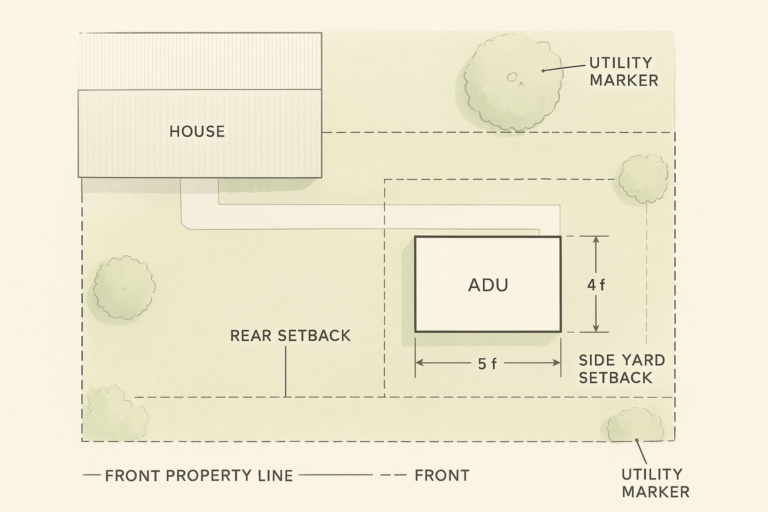
A lot feasibility study for ADU in Riverside is the first real checkpoint on any accessory dwelling unit project, and it determines whether a homeowner’s backyard, side yard, or garage can legally support new construction. Before a single floor plan is drawn, a qualified contractor needs to confirm zoning limits, setback rules, and utility capacity. Skipping this step is, above all, the most common reason ADU projects stall midway through design or permitting.
Riverside County’s mix of suburban tracts, hillside parcels, and older neighborhoods means no two lots behave the same way. As a result, a feasibility study is less about paperwork and more about protecting a homeowner’s time and money before design costs are committed.
Direct answer: A lot feasibility study for ADU in Riverside evaluates zoning, setbacks, lot coverage, utility access, and site constraints to confirm whether a property qualifies for a detached ADU, attached ADU, garage conversion, or JADU before design work begins.
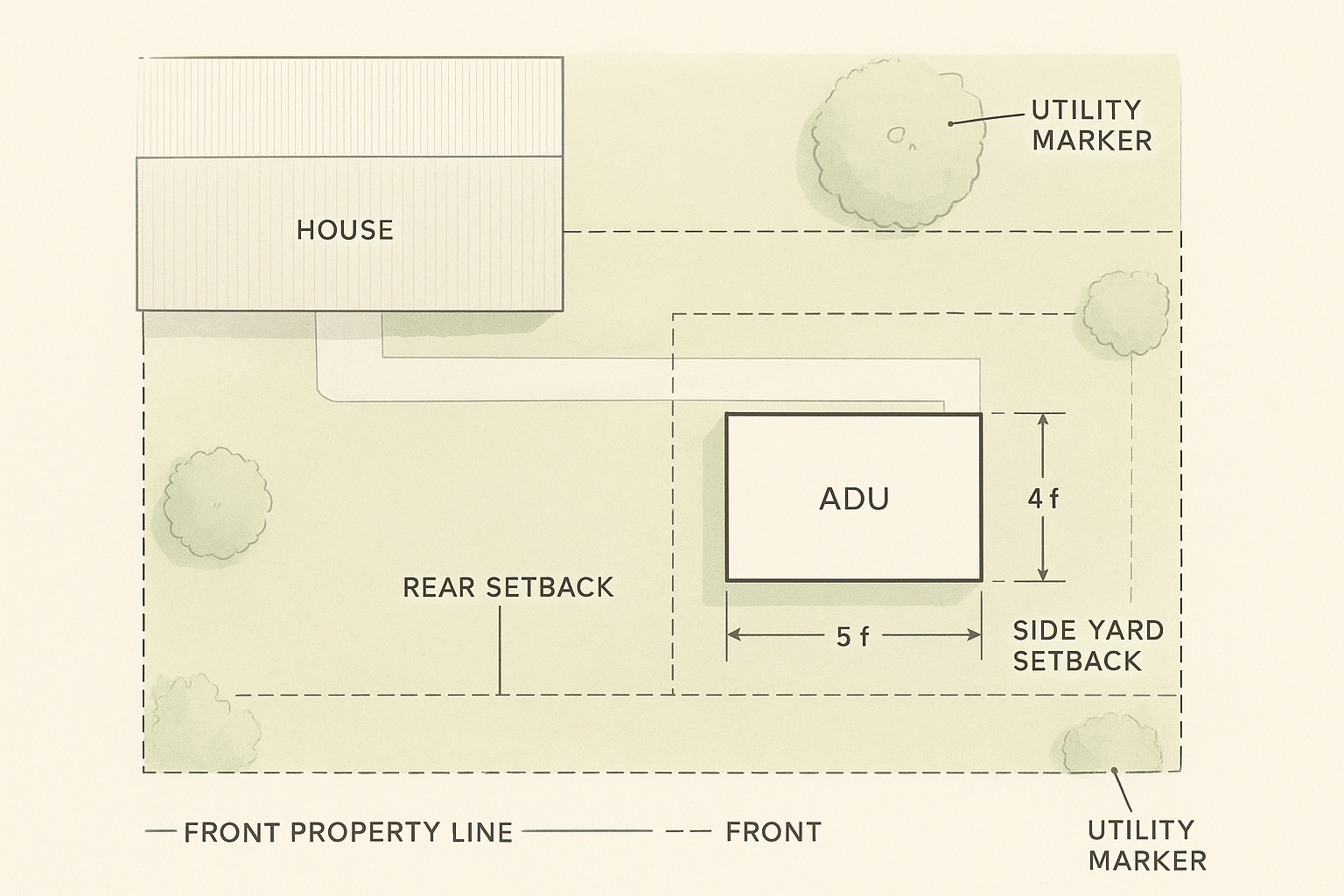
A lot feasibility study for ADU in Riverside maps setbacks and utilities before design begins.
What Is a Lot Feasibility Study for ADU in Riverside?
A lot feasibility study for ADU in Riverside is a documented review of a specific property’s ability to support an accessory dwelling unit under current state and local rules. It typically combines a physical site visit with a zoning and utility records check.
In particular, the study answers three practical questions: how large can the unit be, where can it sit on the lot, and what will it cost to connect utilities. Homeowners who skip this step often discover setback conflicts or utility upgrade costs only after paying for full architectural plans.
Why a Riverside ADU Site Assessment Matters
A thorough ADU site assessment matters because Riverside County spans flatland tracts, hillside communities, and semi-rural parcels with very different zoning overlays. Consequently, a rule that applies in Corona may not apply the same way in Temecula or Jurupa Valley.
For example, a lot near a flood control easement may need the ADU shifted several feet from where the homeowner originally imagined it. Similarly, a hillside lot may require a geotechnical review before foundation work can even be priced accurately.
According to the California Department of Housing and Community Development, state ADU law sets baseline setback and size standards that local jurisdictions can adjust within limits. Therefore, checking both state and Riverside County ordinances is a required step, not an optional one.

Measuring lot dimensions is one of the first steps in an ADU site assessment.
Key Factors Reviewed in a Feasibility Study in Riverside County
Several factors get evaluated together, since each one can influence the others. Above all, reviewers look at lot coverage limits, setback distances, existing structures, slope, and access for construction equipment.
- Zoning designation and any overlay districts affecting the parcel
- Front, side, and rear setback requirements for the proposed ADU type
- Sewer, septic, water, gas, and electrical capacity
- Easements, flood zones, or fire-access lanes
- Parking replacement rules when converting an existing garage
Homeowners comparing options across the region often start with a broader overview, such as this Riverside County ADU options guide, before narrowing down to a lot-specific review.
How the ADU Lot Feasibility Process Works
The feasibility process follows a fairly consistent sequence, whether the goal is a detached unit, an attached addition, or a garage conversion. Below is the typical order of operations.
- Request an initial site consultation. A contractor visits the property to measure the lot, note slope, and photograph existing structures and access points.
- Review zoning and setback requirements. The lot is checked against Riverside County zoning maps and any city-specific ADU ordinance amendments.
- Assess utility capacity. Sewer, septic, water, gas, and electrical service are reviewed to confirm they can support the new unit without major upgrades.
- Identify site constraints. Easements, flood overlays, mature trees, and fire-access lanes are flagged as factors that may shift the buildable footprint.
- Receive a feasibility summary. The homeowner gets a written recommendation on ADU type, size, and next steps toward custom design and permitting.
Common Zoning and Setback Challenges in Riverside
Even experienced homeowners are sometimes surprised by how much setback rules limit usable yard space. In contrast to a simple backyard shed, an ADU has to clear fire-access distances and, in many cases, maintain separation from the primary residence.
Corner lots, narrow lots, and pie-shaped parcels present unique challenges because setback lines can eat into a large share of the available yard. Consequently, some homeowners end up choosing a garage conversion instead of a detached unit simply because the numbers work better once setbacks are applied.
For a closer look at how these constraints affect design choices, see this guide on the best ADU design options for Riverside County lots.
How Much Does a Riverside ADU Feasibility Review Cost?
Many design-build contractors fold the initial feasibility review into the design process rather than charging it as a standalone fee. However, additional costs can arise if a licensed surveyor, geotechnical engineer, or arborist report is required for a complex lot.
These upfront costs are typically small compared to the risk of paying for full architectural plans on a lot that later turns out to be non-compliant. For a broader breakdown of what full ADU construction runs in the region, this Riverside County ADU cost guide outlines typical price ranges by ADU type and size.
Choosing the Right ADU Type After Your Feasibility Study
Once a lot passes feasibility review, the next decision is which ADU type fits best. Detached units generally work well on larger, flatter lots, while garage conversions suit homeowners with limited yard space but an underused garage.
Attached additions and second-story ADUs can be practical where lot coverage is tight but the existing home has structural capacity to expand. Specifically, a feasibility study should recommend one or two viable configurations rather than leaving the homeowner to guess.
Homeowners ready to move from feasibility into design details often review floor plan and permit specifics next, such as in this 2026 guide to ADU plans, permits, and costs in Riverside.
Financing Your ADU After Feasibility Confirmation
Once a lot is confirmed feasible, financing becomes the next practical hurdle. Homeowners commonly use HELOCs, construction loans, or ADU-specific loan programs offered through third-party lending partners rather than direct lending from the contractor itself.
In addition, having a completed feasibility summary in hand makes conversations with lenders more productive, since it clarifies project scope and estimated size early. Homeowners exploring financing next steps can review options through this ADU financing selection page.
A recent industry estimate from the U.S. Department of Housing and Urban Development notes that ADUs remain one of the most cost-efficient ways to add housing units on existing residential lots, which is part of why California continues to streamline ADU approval rules statewide.
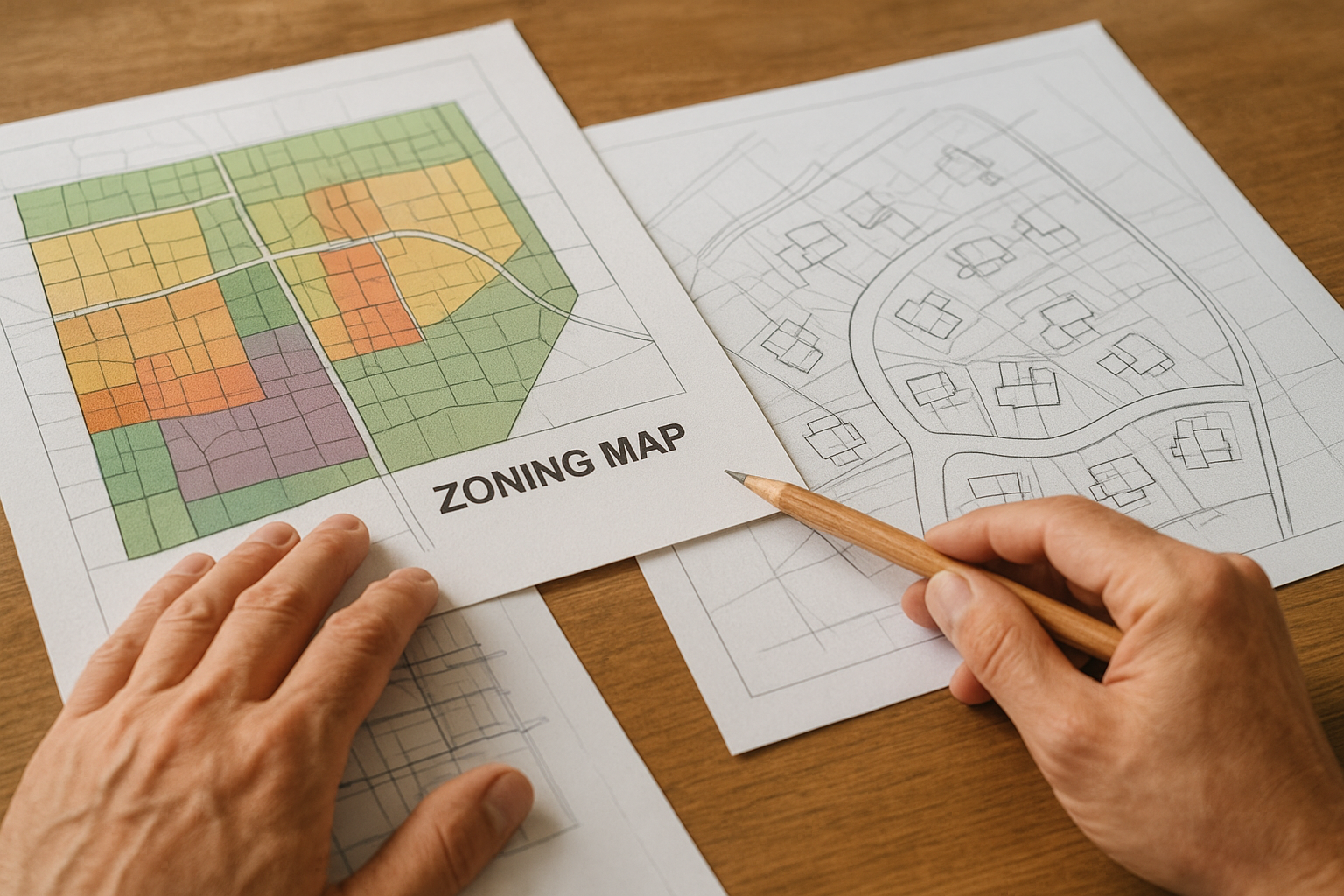
Reviewing zoning maps alongside site plans helps confirm setback compliance early.
Working With an Accountable ADU Team
TheADUPro, headquartered in Chino, CA, handles feasibility review, custom design, structural engineering, permitting, and construction under one team for homeowners across Orange County, Los Angeles County, and western Riverside County. Because the same team manages every phase, setback conflicts or utility issues found during feasibility get addressed directly in the design rather than discovered later during permitting.
The company holds an active CSLB license and a BuildZoom score in the top 1% of California contractors, with an average client rating near 4.9 stars. More information on the company’s approach and service area is available at theadupro.com.
Frequently Asked Questions About Lot Feasibility Study for ADU in Riverside
What is a lot feasibility study for ADU in Riverside?
A lot feasibility study for ADU in Riverside is a site review that checks zoning, setbacks, utility access, and lot dimensions to confirm whether an accessory dwelling unit can legally and physically be built on a property.
How long does an ADU feasibility study take in Riverside County?
Most feasibility studies take one to two weeks once a site visit is scheduled. Complex lots with slope, easements, or flood zone overlays can take slightly longer.
How much does a feasibility study cost?
Many design-build ADU contractors, including TheADUPro, include an initial site assessment as part of the design process rather than charging a separate upfront fee. Costs vary if a licensed surveyor or geotechnical report is required.
Can every lot in Riverside County support an ADU?
No. Some lots are too small, lack adequate setback space, or sit on easements or hazard zones that limit or prevent ADU construction.
What setbacks apply to ADUs in Riverside County?
State law generally allows a minimum of four feet from side and rear property lines for detached ADUs, though local Riverside County ordinances may add specific front-yard or fire-access requirements.
Does a garage conversion require the same feasibility review as a detached ADU?
Garage conversions still require a feasibility review, though the process is often faster since the structure already exists. Reviewers focus on utility access, structural condition, and parking replacement rules.
Will an ADU trigger a property tax reassessment in Riverside County?
Adding an ADU typically increases assessed value only for the new construction, not the entire property, under California’s Proposition 13 rules. Homeowners should confirm current details with the Riverside County Assessor.
Can an HOA block an ADU in Riverside County?
California law limits an HOA’s ability to fully block ADUs, though HOAs can impose reasonable restrictions on size, design, or placement. A feasibility study should flag any recorded HOA conditions early.
What utilities are checked during a lot feasibility study?
Reviewers check sewer or septic capacity, water line access, electrical panel capacity, and gas service. Insufficient utility capacity can add cost or change the recommended ADU type.
Should I choose a detached ADU or a garage conversion?
The right choice depends on lot size, existing garage condition, and budget, which is exactly what a feasibility study evaluates. Homeowners with limited yard space often lean toward garage conversions.
What financing options exist after a feasibility study confirms my lot qualifies?
Common options include HELOCs, construction loans, and ADU-specific loan programs offered through third-party lending partners. TheADUPro connects homeowners with lending partners once a project scope is confirmed.
Who performs the feasibility study for my ADU project?
A design-build ADU contractor typically coordinates the feasibility study alongside in-house structural engineering and permit specialists. This keeps zoning research, design, and permitting under one accountable team.
What size ADU can I build on my Riverside lot?
Size depends on lot coverage limits, setbacks, and local ordinances, but many Riverside County ADUs range from about 500 to 1,200 square feet. The feasibility study confirms the maximum buildable footprint for a specific lot.
Does TheADUPro build in every Riverside County city?
TheADUPro serves western Riverside County alongside Orange County and Los Angeles County, with additional site assessment reach into San Bernardino County. Homeowners should confirm coverage for their specific city before scheduling a site visit.
What happens if my lot fails the feasibility review?
A failed review doesn’t always mean an ADU is impossible; it often means the design needs adjustment, such as a smaller footprint or an attached configuration instead of detached. In rare cases, a variance or alternate ADU type may resolve the constraint.
Final Thoughts
In summary, a lot feasibility study for ADU in Riverside is the foundation that every later decision rests on, from floor plan size to financing amount. Skipping it, or treating it as a formality, tends to cost homeowners more time and money than the review itself would have taken.
Therefore, homeowners considering a detached ADU, attached addition, garage conversion, or JADU in western Riverside County should start with a proper site assessment before committing to design fees. A clear feasibility summary makes every following step, from permitting to construction, considerably more predictable.