
Title 24 is California’s mandatory building energy efficiency code, and if you’re planning an accessory dwelling unit (ADU) anywhere in Orange County, Los Angeles County, or Riverside County, it will shape nearly every material and system decision you make. Whether you’re building a detached backyard cottage, converting a garage, or adding an attached suite, Title 24 governs your insulation, windows, HVAC equipment, water heater, and lighting long before an inspector ever steps onto your property. Understanding these rules early, rather than after your plans are drawn, is the single best way to avoid permit delays and unexpected redesign costs. Unlike a basic definition page, this guide walks through the entire compliance process, the paperwork involved, realistic costs, and the mistakes that trip up first-time ADU owners across Southern California.
Quick answer: Title 24 is Part 6 of the California Code of Regulations, governing energy efficiency for insulation, HVAC, water heating, and lighting. Nearly every new ADU must meet these standards, and compliance is verified through an energy report, compliant materials, and, in most cases, a HERS field inspection before the building department signs off on your permit.
What Is Title 24? A Complete Definition
Title 24 is the section of the California Code of Regulations that sets mandatory energy efficiency standards for residential and commercial buildings statewide. Specifically, Part 6 of Title 24 addresses building energy efficiency, while Part 11, known as CALGreen, addresses broader green building practices such as water conservation and construction waste diversion.
For ADU construction specifically, Title 24 dictates how much insulation your walls need, what performance your windows must achieve, and how efficient your heating and cooling equipment has to be. According to the California Energy Commission, these standards have reduced statewide energy consumption significantly since they were first adopted, and they are updated roughly every three years to reflect new technology and climate goals.
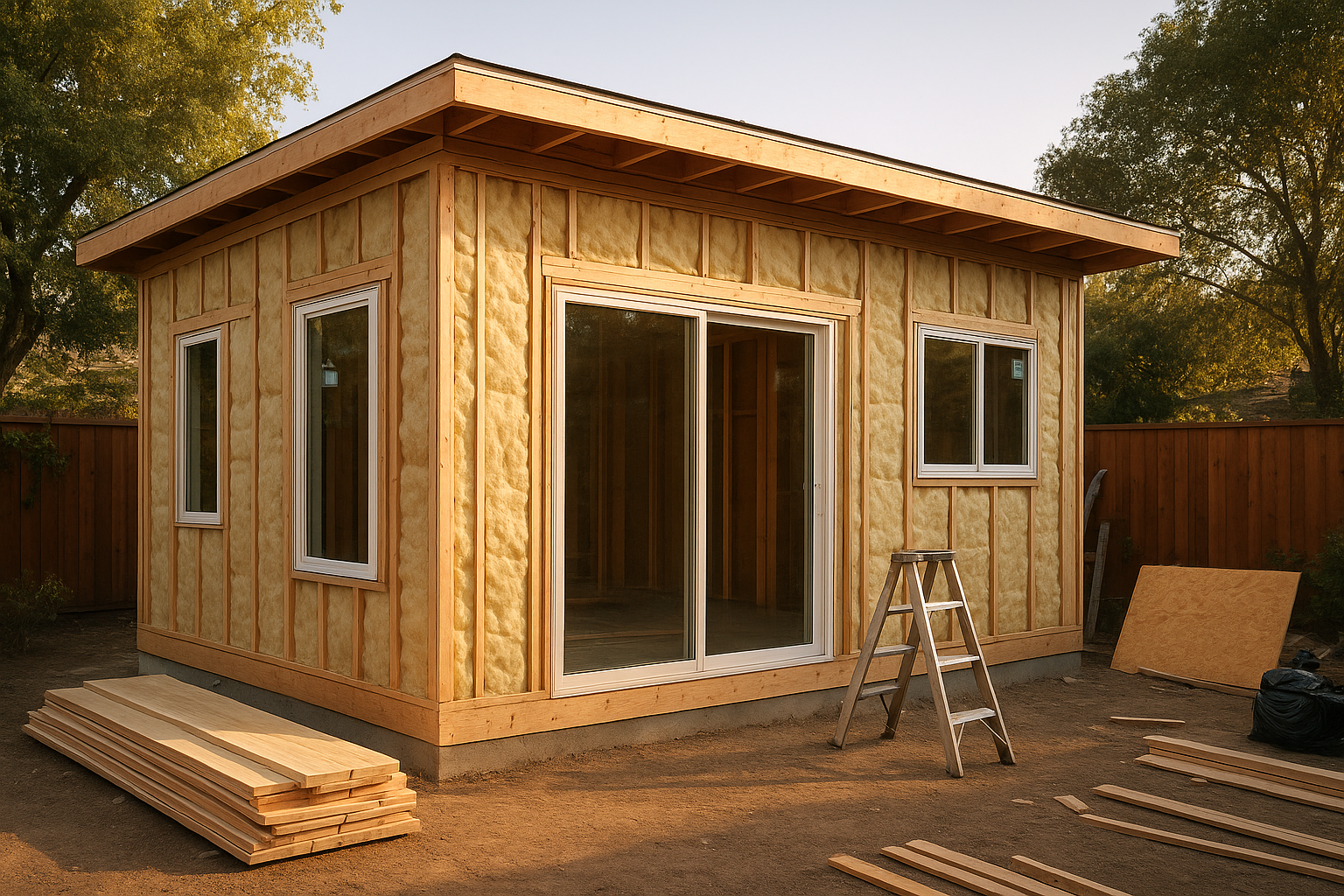
Meeting Title 24 insulation standards is one of the first steps in ADU construction.
A Brief History of Title 24: Why California Created This Code
California first adopted its building energy efficiency standards in 1978, in direct response to the national energy crisis of the 1970s. At that time, the state recognized that buildings consumed a disproportionate share of electricity and natural gas, and that smarter construction practices could meaningfully reduce demand without sacrificing comfort.
Since then, the California Energy Commission has revised the standards on a triennial cycle, incorporating new technology such as LED lighting, heat pump water heaters, and, more recently, solar requirements for certain new construction. As a result, a Title 24 report written under an older code cycle will not necessarily satisfy today’s requirements, which is exactly why ADU projects need current, project-specific energy calculations rather than a generic template. This historical context matters because it explains why the code keeps evolving, and why staying current is part of responsible ADU planning rather than a one-time checkbox.
California’s Building Standards Code: How the 12 Parts Fit Together
Many homeowners assume Title 24 is a single rulebook, but in reality it is an umbrella of twelve separate parts within the California Code of Regulations. Understanding where energy efficiency fits among the other parts helps clarify why your ADU plans get reviewed by multiple departments at once.
- Part 1 – Building Standards Administration: Sets the administrative rules for how all other parts are adopted and enforced.
- Part 2 – California Building Code: Covers structural safety, occupancy classification, and fire-resistance requirements.
- Part 2.5 – California Residential Code: Applies structural and safety standards specifically to detached one- and two-family dwellings, including many ADUs.
- Part 3 – California Electrical Code: Governs wiring, panel capacity, and electrical safety.
- Part 4 – California Mechanical Code: Covers ventilation, ductwork, and mechanical equipment installation.
- Part 5 – California Plumbing Code: Regulates water supply, drainage, and fixture requirements.
- Part 6 – California Energy Code: The section most people mean when they say “Title 24,” covering insulation, HVAC efficiency, and lighting.
- Part 9 – California Fire Code: Addresses fire prevention and life-safety measures.
- Part 11 – CALGreen: Governs sustainability measures beyond energy, such as water efficiency and recycling.
- Part 12 – California Referenced Standards Code: Compiles the technical standards referenced throughout the other parts.
In short, your ADU plan check touches several of these parts simultaneously, but Part 6 is the one that determines your insulation values, window ratings, and mechanical equipment efficiency. For a broader view of how these parts interact with local permitting in practice, our guide on ensuring your ADU follows local building codes walks through jurisdiction-specific differences in detail.
Who Enforces Title 24 Compliance?
The California Energy Commission writes and updates the statewide standards, but enforcement happens locally. Specifically, your city or county building department reviews your Title 24 energy report during plan check, then verifies field installation through inspections. Because enforcement practices can vary slightly between jurisdictions, confirming local expectations with your contractor, as covered in our guide on how to ensure your ADU complies with local codes, is worth doing before you finalize your design.
In addition, certified HERS raters play an independent verification role. They are not employed by the building department, but their field reports are required before many building departments will grant final approval, which adds a layer of accountability beyond the initial plan review.
Why Title 24 Matters for Your Southern California ADU
Because ADUs are treated as new construction, they cannot bypass California’s energy code, even when they are small or attached to an existing home. As a result, every ADU project needs an approved energy compliance report before the building department will issue a permit.
In addition, Southern California’s climate zones vary considerably between coastal Orange County, inland Riverside County, and the Los Angeles basin. Consequently, the specific insulation and HVAC requirements for your ADU will depend on your exact address, not just a general statewide standard.
Furthermore, skipping or underestimating Title 24 requirements is one of the most common reasons ADU permits get sent back for revisions. Therefore, addressing energy compliance during the design phase, rather than after construction drawings are finalized, tends to save both time and money.
Title 24 Energy Efficiency Standards for ADUs
Title 24 requirements typically cover four main categories for an ADU: building envelope, mechanical systems, water heating, and lighting. Specifically, the building envelope includes wall, roof, and floor insulation along with window performance ratings measured in U-factor and solar heat gain coefficient.
Mechanical systems, on the other hand, must meet minimum efficiency ratings for heating, cooling, and ventilation equipment. Similarly, water heaters need to meet efficiency benchmarks, and many jurisdictions now favor heat pump water heaters over traditional gas units. Finally, lighting fixtures throughout the ADU generally must be high-efficacy, meaning LED or similarly efficient technology.
Notably, some smaller ADUs may qualify for a simplified prescriptive compliance path instead of full performance modeling. However, this depends on unit size, climate zone, and the specific systems chosen, so it’s worth confirming eligibility early with your contractor or energy consultant. Material selection plays a large role here too — our detailed guide on the best materials for ADU construction breaks down which insulation and window products actually help you clear Title 24 thresholds without overspending. If you want a broader view of how these standards fit within statewide policy, our overview of the latest ADU regulations for 2024–2025 covers recent legislative updates.
Understanding Title 24 Compliance Documents: CF1R, CF2R, and CF3R
One area where general overviews of Title 24 fall short is the actual paperwork trail, so it’s worth breaking down clearly. The compliance process centers on three linked forms that follow your ADU from design through final sign-off.
- CF1R (Certificate of Compliance): Generated before permit issuance, this document shows the energy features your design is required to include, based on your plans and equipment selections.
- CF2R (Certificate of Installation): Completed during construction, this confirms that installers have followed the specifications listed in the CF1R.
- CF3R (Certificate of Verification): Prepared by the HERS rater after field testing, this confirms the finished ADU actually performs as designed, and it is typically required before final inspection sign-off.
Because these three forms must align with each other, a mismatch between what was designed, what was installed, and what was verified is one of the fastest ways to trigger a failed inspection. Keeping all three synchronized from day one is far easier than reconciling them after drywall is closed up.
How to Achieve Title 24 Compliance: A Step-by-Step Process
Meeting Title 24 requirements is a sequential process that starts long before construction begins. Below is the general path most Southern California ADU projects follow, from first sketch to final sign-off.
- Finalize your design and square footage. Work with your designer or contractor to lock in the floor plan, wall assemblies, and window placement, and confirm local building codes, since every one of these choices feeds directly into the energy calculations.
- Hire a certified energy consultant. A licensed consultant or HERS rater runs approved Title 24 software using your finalized plans and mechanical equipment selections to generate the compliance report.
- Select compliant materials and systems. Choose insulation, windows, water heaters, and HVAC equipment that meet or exceed the minimum ratings identified in the energy report before ordering materials.
- Submit the report with your permit plans. Attach the completed CF1R compliance forms to your building permit package so the local building department can review energy compliance alongside structural plans.
- Complete HERS field verification. Schedule inspections at key construction milestones so the rater can confirm insulation, duct sealing, and equipment installation match the approved plans.
- Pass final inspection and close permits. Submit final CF3R verification forms and pass your building department’s final inspection to receive certificate of occupancy approval.

An energy consultant verifies Title 24 documentation before permit submission.
Common Mistakes That Delay Title 24 Approval
Even experienced homeowners run into the same handful of issues when tackling Title 24 for the first time. For instance, choosing windows before the energy report is complete often forces costly substitutions later. Similarly, mismatched HVAC equipment specifications between the compliance report and the actual installed unit is a frequent cause of failed inspections.
Another common misstep involves garage conversions, where existing wall cavities may not accommodate the insulation thickness required for compliance. As a result, additional furring or rigid foam insulation is often necessary. Because these issues surface most often during permit review, working with a contractor who understands local code nuances, as outlined in our guide on key regulations for building an ADU, can help avoid repeated resubmissions.
Finally, homeowners sometimes underestimate how equipment choice affects compliance margins. For example, switching from a gas furnace to an all-electric heat pump system can change your entire energy budget calculation. If you’re weighing that decision, our analysis of whether all-electric ADUs are better in California explains how electrification interacts with Title 24 performance targets.
How Title 24 Compliance Affects ADU Costs and Timelines
Generally, Title 24 compliance adds a modest but real cost to an ADU budget, usually covering the energy consultant’s fee, upgraded materials, and HERS verification visits. In most Southern California markets, this represents a few thousand dollars out of the total project cost, though it varies with unit size and equipment choices.
Timeline-wise, plan review that includes energy compliance typically takes two to six weeks depending on the jurisdiction. However, projects that submit an incomplete or inconsistent Title 24 report often face longer delays due to plan check corrections. Above all, coordinating your energy consultant and architect early tends to keep the schedule on track. The California Department of Housing and Community Development notes that streamlined ADU permitting has become a statewide priority, which has helped many cities speed up review times in recent years.
Title 24 vs. CALGreen: What’s the Difference?
It’s easy to confuse Title 24 with CALGreen since both are part of the same regulatory code. In particular, Title 24 Part 6 focuses purely on energy efficiency, covering insulation, HVAC, and water heating performance. CALGreen, listed as Title 24 Part 11, instead addresses broader sustainability measures like construction waste recycling, water conservation fixtures, and electric vehicle charging infrastructure.
In practice, most ADU projects must satisfy both parts simultaneously. According to the California Building Standards Code reference, the state updates both codes on the same triennial cycle, so staying current with the latest edition matters when planning a build. Homeowners considering aging-in-place features alongside energy upgrades may also find our guide on designing accessible ADUs for aging in place useful when planning a multigenerational unit.
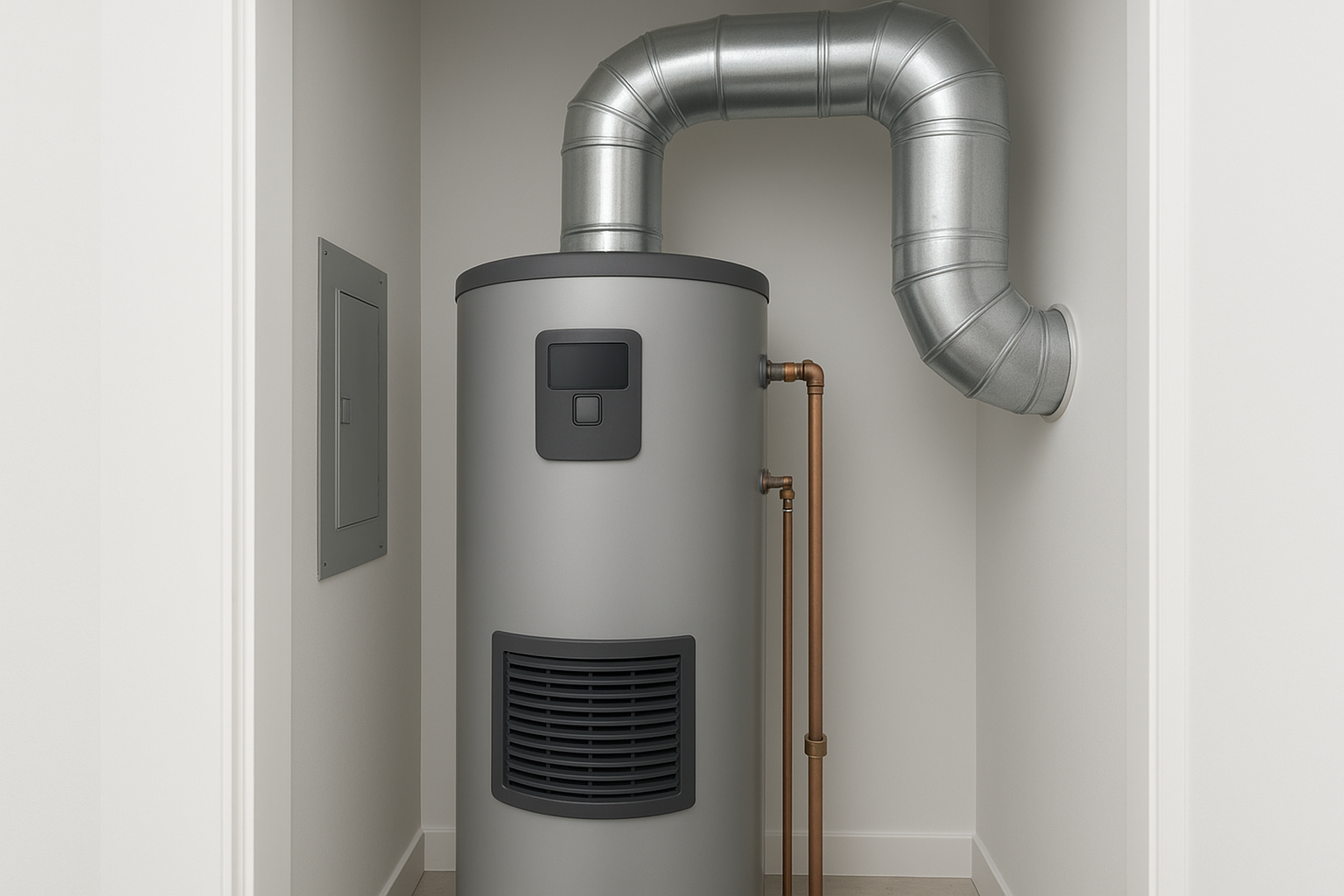
Efficient water heating equipment is a core part of California’s energy code compliance.
Does Title 24 Apply to Remodels, Additions, and Junior ADUs?
This is a gap many general overviews skip entirely, yet it’s one of the most common questions homeowners ask. Generally, Title 24 applies whenever new conditioned floor area is created or an existing building envelope is significantly altered. Therefore, a detached ADU almost always triggers full compliance, while a junior ADU carved out of existing conditioned space may follow a lighter-touch review, since the envelope itself often isn’t changing.
In contrast, an addition that expands square footage will typically need its own Title 24 documentation for the new portion, even if the rest of the house is untouched. Because these distinctions depend heavily on your specific scope of work, confirming your project’s exact compliance path with your building department before finalizing plans avoids surprises later.
Title 24 and Solar Requirements for New ADUs
Since 2020, California’s energy code has included solar photovoltaic requirements for many new residential buildings, and this occasionally extends to newly constructed detached ADUs. However, exemptions frequently apply based on unit size, roof shading, or local amendments, so a blanket assumption either way can be costly.
Consequently, the safest approach is to have your energy consultant confirm your specific solar obligation as part of the same CF1R report that covers insulation and HVAC. In many cases, homeowners find that pairing a smaller ADU with efficient all-electric systems, rather than solar panels alone, offers a more cost-effective path to compliance.
Frequently Asked Questions About Title 24
What is Title 24?
Title 24 is California’s building energy efficiency code, part of the California Code of Regulations, that sets minimum standards for insulation, HVAC, lighting, and water heating in new construction, including ADUs.
Does Title 24 apply to every ADU?
Yes, nearly all newly constructed ADUs in California must meet Title 24 energy standards, whether they are detached units, garage conversions, or attached additions.
How is Title 24 different from CALGreen?
Title 24 Part 6 governs energy efficiency, while CALGreen (Title 24 Part 11) covers green building practices like water conservation and waste reduction. Both typically apply to the same ADU project.
How much does Title 24 compliance add to ADU costs?
Title 24 compliance typically adds a few thousand dollars to an ADU budget, covering energy modeling, upgraded insulation, and efficient mechanical systems. Costs vary based on unit size and design choices.
Who prepares the Title 24 energy calculations?
A licensed energy consultant or certified HERS rater typically prepares the compliance report using approved software before permit submission.
Can an existing garage conversion meet Title 24 standards?
Yes, garage conversions can meet these requirements, though they often need added insulation, upgraded windows, and new mechanical systems to pass energy compliance review.
What happens if an ADU fails Title 24 inspection?
If an ADU fails inspection, the contractor must correct the deficiency, such as adding insulation or replacing equipment, before the building department issues final approval.
How long does Title 24 compliance review take?
Plan review usually takes two to six weeks depending on the jurisdiction, though working with an experienced ADU contractor can help streamline the timeline.
Are solar panels required under Title 24 for ADUs?
Solar requirements generally apply to newly constructed detached ADUs in many jurisdictions, though exemptions exist depending on unit size and local amendments.
What is a HERS rating and why does it matter?
A HERS rating verifies that installed insulation, ductwork, and HVAC equipment perform as designed. Many compliance paths require HERS field verification before final sign-off.
Can I use prescriptive compliance instead of performance modeling?
Some smaller ADUs qualify for prescriptive compliance, which uses preset component specifications instead of full energy modeling, simplifying the approval process.
What are the most common mistakes homeowners make?
Common mistakes include underestimating insulation requirements, choosing inefficient windows, and failing to coordinate energy calculations with final construction drawings before permit submission.
Does Title 24 affect window and insulation choices?
Yes, Title 24 sets minimum U-factor and R-value requirements for windows and insulation, which directly influences material selection and overall construction cost for an ADU.
Does Title 24 apply to ADU remodels and additions, not just new construction?
Yes, Title 24 generally applies whenever a remodel, addition, or junior ADU conversion changes the building envelope or adds conditioned square footage, though the compliance path may differ from new detached construction.
Who enforces Title 24 compliance in Southern California?
Local building departments enforce Title 24 during plan check and field inspections, while the California Energy Commission sets the statewide standards that every jurisdiction must follow.
Final Thoughts on Title 24 Compliance
In summary, Title 24 is a non-negotiable part of building an ADU anywhere in California, and understanding it early makes the entire permitting process smoother. From insulation and windows to HVAC and water heating, every major system in your ADU needs to align with these energy standards before you can secure final approval.
Because the rules vary by climate zone and update on a regular cycle, working with a contractor who tracks these changes, like the team at The ADU Pro, can help homeowners across Orange County, Los Angeles County, and Riverside County avoid costly surprises. For a broader look at how Title 24 fits into the state’s overall ADU framework, our detailed breakdown of California’s 2025 ADU laws is a helpful next read. Ultimately, planning for Title 24 from day one, rather than treating it as a last-minute paperwork step, is the simplest way to keep your ADU project on time and on budget.