By Daniel Messina, Licensed General Building Contractor. By Daniel Messina, Licensed General Building Contractor. The 2 bedroom ADU cost is the single most critical number a homeowner needs before breaking ground — and in 2025, that figure spans a wide range depending on type, location, and finish level. A fully detached unit typically runs 0,000 to 0,000, while attached and conversion ADUs land closer to ,000 to 0,000. An Accessory Dwelling Unit (ADU) is a self-contained secondary residence on the same lot as your primary home, and the two-bedroom configuration is the most in-demand size for both rental income and multigenerational living. This guide breaks down every cost layer — construction, permits, site work, finishes, financing, and ROI — so you can build a realistic budget before committing to a single contractor. Written by The ADU Pro editorial team; add an author bio and last-updated date for E-E-A-T.
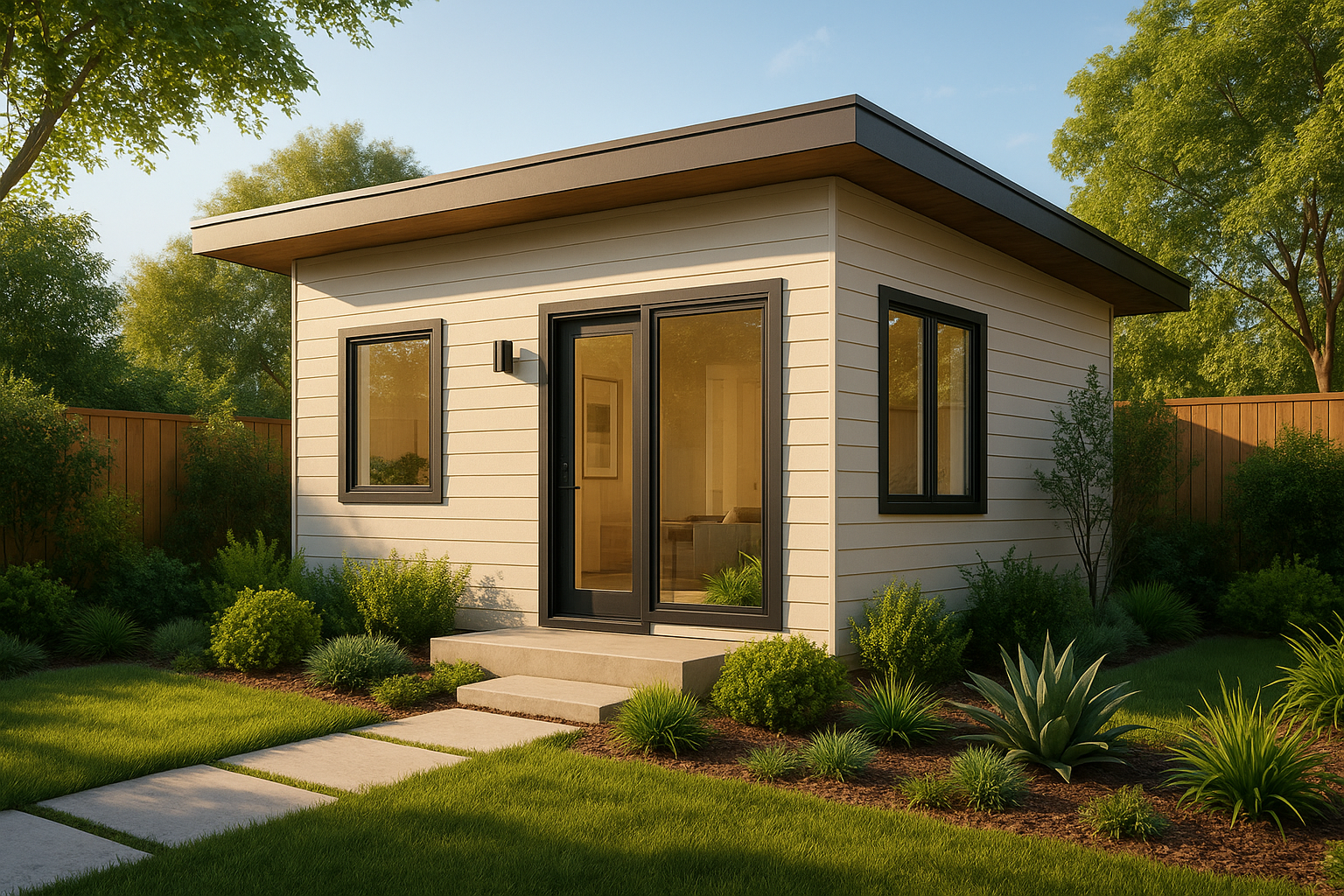
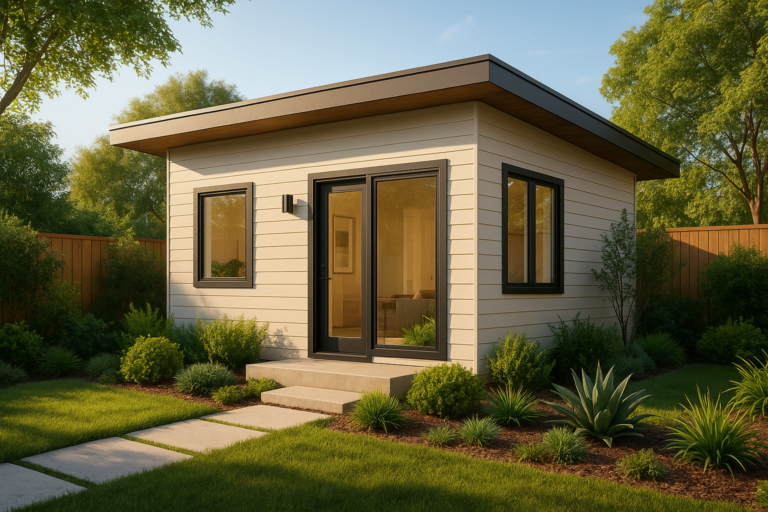
A completed 2 bedroom ADU adds livable space and significant rental income potential to any residential lot.
Quick Answer: A 2 bedroom ADU costs $180,000 to $400,000 for a detached build in 2025. Garage conversions and attached units run $90,000 to $220,000. Total cost depends on ADU type, location, size, site conditions, and finish quality. For a detailed pricing breakdown and up-to-date ADU cost estimates, see our ADU cost estimate. Always budget an additional 15–20% contingency on top of your base estimate.
2 Bedroom ADU Cost by Type: Full Breakdown for 2025 — Accessory Dwelling Units Cost
Not all ADUs are built the same way, and the type of ADU you choose is the single biggest lever on your total budget. Here is a comprehensive cost breakdown across every major ADU category for a two-bedroom configuration:
For context, a typical two-bedroom detached ADU is 700 to 1,200 square feet. At a mid-range rate of $280 per square foot, a 950-square-foot unit costs approximately $266,000 in construction costs alone — before soft costs like permits, design, and site work are layered on top. See our additional dwelling unit cost guide for related budget scenarios.
2 Bedroom ADU Cost by State and City
Geography is one of the most powerful cost drivers. Labor rates, material costs, permit fee structures, and local zoning complexity all vary significantly by region. Here is what to expect across major U.S. markets:
California note: California leads the nation in ADU construction volume due to state legislation (AB 68, SB 9, and SB 13) that streamlined permitting. Impact fees for ADUs under 750 square feet were eliminated by state law. However, high labor and material costs still make California one of the most expensive places to build.
Breaking Down Every Cost Category for a 2 Bedroom ADU
Every 2 bedroom ADU budget has the same core cost buckets. Understanding each one in detail helps you avoid surprises, catch contractor padding, and negotiate more effectively. Below is a comprehensive breakdown of all major and minor line items.
1. Design, Architecture, and Engineering Fees
Before a permit is filed, you need a complete set of stamped architectural and structural drawings. For a two-bedroom ADU, design fees typically range from $8,000 to $25,000, depending on complexity and whether you hire a full-service architect or an ADU-specialist firm. See our architect cost guide for detailed price breakdowns. Structural engineering adds another $2,000 to $6,000. Some firms offer pre-designed ADU plan libraries at a flat fee of $3,000 to $8,000, which can cut both design time and cost significantly.
- Full custom design (architect): $12,000 – $25,000
- ADU-specialist semi-custom plans: $6,000 – $14,000
- Pre-designed plan library (prefab/modular): $3,000 – $8,000
- Structural engineering: $2,000 – $6,000
- Title 24 energy compliance report (CA): $1,500 – $3,000
2. Permits, Plan Check, and Government Fees
Permit costs are notoriously variable by jurisdiction. Most homeowners budget $5,000 to $25,000 for building permits and plan check fees. Additional government-imposed fees can include:
- Building permit fee: $3,000 – $15,000
- Plan check / review fee: $1,500 – $6,000
- School impact fees: $1,000 – $8,000 (varies widely by district; waived in some CA cities for small ADUs)
- Fire sprinkler requirement (some jurisdictions): $4,000 – $12,000
- Green building / CalGreen compliance: $500 – $2,000
Important: In California, AB 68 and SB 13 (2020) eliminated impact fees for ADUs under 750 square feet and capped permit fees for larger units. Always request an itemized fee estimate from your local building department before finalizing your budget.
3. Site Preparation, Grading, and Foundation
Site work is the most variable line item in any ADU budget. The cost of preparing your lot for construction can range from $10,000 to $80,000+ depending on conditions:
- Flat lot with good soil (slab foundation): $10,000 – $25,000
- Standard lot with minor grading: $20,000 – $40,000
- Sloped or hillside lot: $40,000 – $80,000+
- Geotechnical / soil report (often required): $2,000 – $5,000
- Tree removal / demolition of existing structure: $3,000 – $15,000
- Raised foundation or pier-and-beam: $18,000 – $45,000
A flat, accessible lot with good soil and an existing concrete pad can save $20,000 to $40,000 compared to a hillside property requiring extensive grading and engineered foundations. This is often the first question an experienced contractor will ask before providing a bid.
4. Construction, Framing, and Labor
Labor and materials are the largest single cost category — typically 55% to 70% of the total project budget. For a 900-square-foot two-bedroom detached ADU, expect the following ranges in a mid-cost market:
- Framing (lumber, labor): $30,000 – $65,000
- Roofing (materials + installation): $12,000 – $28,000
- Windows and exterior doors: $8,000 – $22,000
- Insulation and air sealing: $5,000 – $12,000
- Exterior siding / stucco: $10,000 – $25,000
- HVAC system: $8,000 – $20,000
- Plumbing rough-in and fixtures: $14,000 – $32,000
- Electrical rough-in and panel: $10,000 – $24,000
Always collect at least three detailed, itemized bids from licensed general contractors. Ensure every bid covers the same exact scope of work — broad “lump sum” bids are often a red flag for budget blowout later.
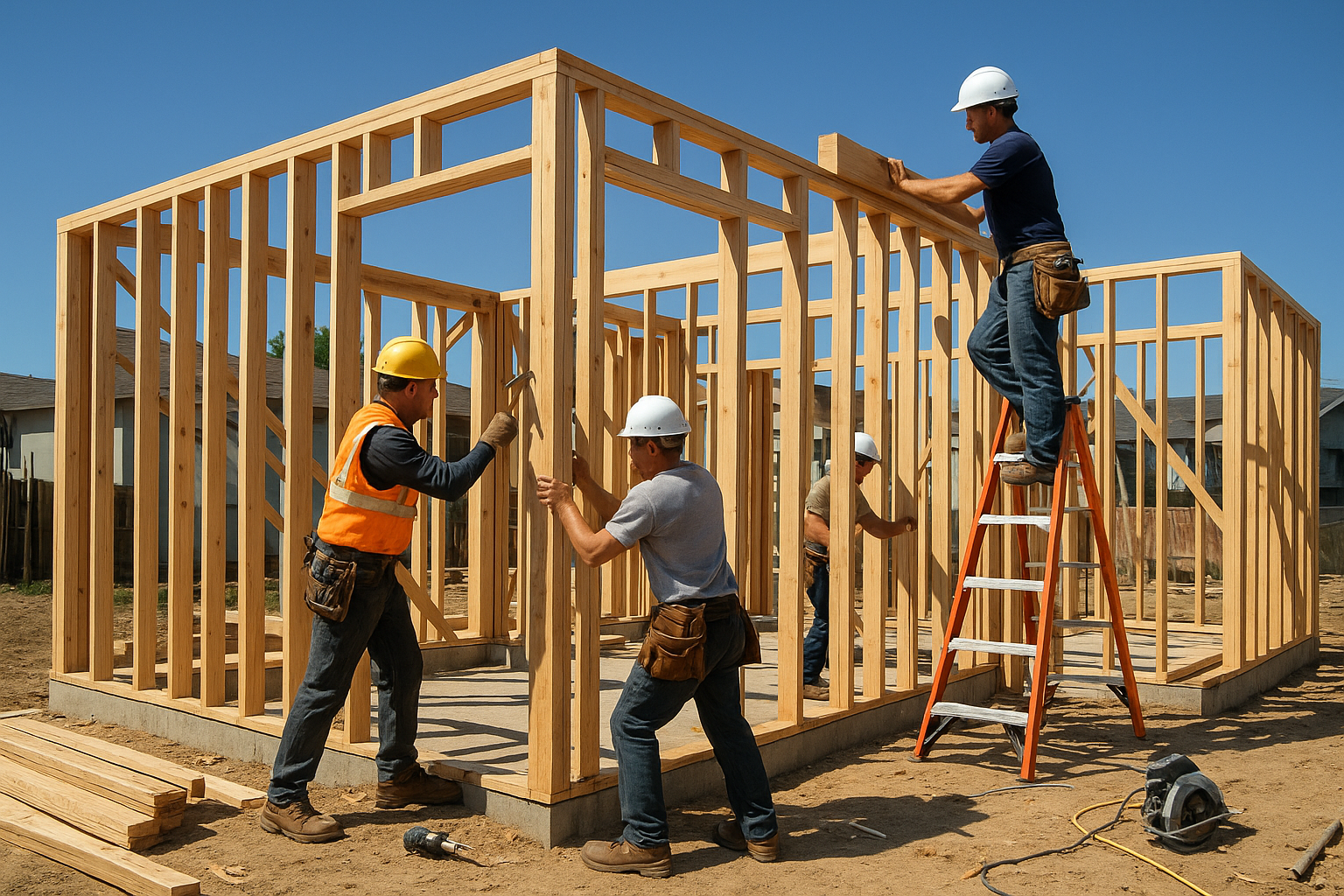
Framing and labor represent 55–70% of the total 2 bedroom ADU cost in most markets. For a deeper walkthrough, see our Accessory Dwelling Unit Cost Estimate: 2026 Pricing Guide.
5. Utility Connections (Often Underestimated)
Utility connections are one of the most frequently underestimated line items in 2 bedroom ADU cost planning. A new detached ADU almost always requires its own dedicated connections, which can add $15,000 to $50,000 to your budget depending on distance from the street and local utility company requirements: See our 500 sq ft ADU cost examples to understand small-unit utility implications.
- New electrical panel and service: $3,000 – $8,000
- Electrical utility connection fee (PG&E, SCE, etc.): $5,000 – $15,000
- Water meter / lateral connection: $5,000 – $20,000
- Sewer lateral: $6,000 – $22,000
- Gas line extension: $1,500 – $5,000 (or $0 if all-electric)
In California, some municipalities allow an attached ADU to share the primary home’s water and sewer connection without a new meter — saving $10,000 to $25,000. Verify this with your local utility and building department early in the design phase.
6. Interior Finishes and Fixtures
Interior finish quality is entirely in your control and represents one of the best opportunities to manage your budget. The range is wide:
- Budget / builder-grade package: $20,000 – $35,000
- Standard / mid-range package: $35,000 – $65,000
- Premium / luxury package: $65,000 – $100,000+
A mid-range finish package for a rental-focused two-bedroom ADU should include LVP flooring, stock cabinetry, quartz countertops, stainless appliances, and durable lighting — all achievable for $35,000 to $55,000. Because rental tenants prioritize durability and function over luxury, investing beyond mid-range finishes rarely improves rent yield proportionally.
Complete 2 Bedroom ADU Cost Summary Table
Use this table as a master reference when assembling your total project budget. All figures are for a 900 sq ft detached 2 bedroom ADU in a mid-cost U.S. market (2025):
*High estimates reflect high-cost metros such as San Francisco, Los Angeles, and Seattle with premium finishes and challenging site conditions.
Hidden Costs That Regularly Surprise Homeowners
Even well-prepared homeowners encounter line items that weren’t in the original bid. Here are the most common hidden costs associated with a 2 bedroom ADU, along with realistic estimates for each:
- Utility connection and capacity fees: $10,000 – $50,000. The utility company may require you to upgrade the main line from the street, not just the connection on your property.
- Geotechnical (soils) report: $2,000 – $5,000. Required in seismic zones and hillside lots. If the report reveals expansive soils, foundation costs can increase by $15,000 or more.
- Fire sprinkler system: $4,000 – $12,000. Many California cities (and some national jurisdictions) require fire suppression in new ADUs over a certain size.
- Landscape and hardscape restoration: $3,000 – $15,000. Construction equipment and trenching for utilities will damage your yard, driveway, and existing landscaping.
- Temporary relocation costs: $0 – $10,000+. Some construction types require you to vacate portions of your home during work. Short-term rentals add up quickly.
- School impact fees: $1,000 – $8,000. Not waived in every California city; check your specific jurisdiction before assuming they don’t apply.
- Design revisions and change orders: $2,000 – $20,000. Every plan change after permit submission triggers additional design fees and resubmission costs.
- Material cost escalation: Lumber and material prices fluctuate. Building contracts that don’t include material price locks can expose you to mid-project price increases.
Budget Tip: Add a minimum 15% contingency buffer to your base estimate — 20% for hillside lots, older properties, or high-cost metro areas. Hidden costs in ADU projects average 12–18% of the initial estimate according to contractor surveys.
Prefab vs. Site-Built: Which Costs Less for a 2 Bedroom ADU?
Prefabricated and modular ADUs have grown rapidly in popularity because they promise faster timelines and more predictable pricing. Here’s a realistic side-by-side comparison for a two-bedroom configuration:
The key takeaway: A prefab ADU typically saves 10% to 25% on the structure itself compared to custom construction. However, site preparation, foundation, utility connections, delivery, and crane fees still apply to any ADU regardless of how it was built. For more on construction schedules, code impacts, and realistic build timelines, see ADU construction costs. A manufacturer’s advertised price of $120,000 for a two-bedroom unit can easily become $200,000 to $240,000 once all site costs are added. Always request a fully itemized all-in quote before comparing prefab to site-built options.
How to Build Your 2 Bedroom ADU Budget Step by Step
Planning a realistic 2 bedroom ADU budget requires a structured approach — not just a per-square-foot estimate. Follow these seven steps to build a reliable, defensible number before committing to any contractor or financing product. For a deeper line-item view, see our ADU cost breakdown page.
- Choose your ADU type first. Decide between detached, attached, garage conversion, or prefab. This single decision shifts your base budget by $50,000 to $150,000 and determines your entire permitting pathway. For a deeper walkthrough, see our 2-Car Garage ADU Conversion: Complete Planning Guide.
- Request a fee estimate from your local building department. Before hiring a designer, call or visit your local planning and building department to request a permit fee schedule. Ask specifically about school impact fees, utility connection requirements, and fire sprinkler mandates for your jurisdiction.
- Hire a designer and get stamped plans. Obtain a design quote from at least two firms — one full-service architect and one ADU specialist. Request a breakdown of design fees, structural engineering, and any compliance reports (Title 24, CalGreen, etc.). For help assembling a realistic project budget and contractor checklist, read Figuring out your ADU Budget.
- Collect at least three itemized construction bids. Require each contractor to provide a line-item bid that breaks out foundation, framing, roofing, MEP (mechanical, electrical, plumbing), finishes, and site work separately. Never compare lump-sum bids — they conceal scope differences.
- Verify all utility connection costs in writing. Contact your local water, sewer, and electrical utility companies directly to get written fee estimates for new service connections. Do not rely on your contractor’s verbal estimate for this line item.
- Build in a 15–20% contingency. Add at least 15% to your total estimated budget for unforeseen costs. Use 20% for hillside properties, older homes with unknown site conditions, or high-cost metro areas.
- Secure financing before you break ground. Research HELOCs, construction-to-permanent loans, cash-out refinancing, and state/local ADU loan programs. Get pre-approved before signing a construction contract — funding delays are one of the most common causes of project cost overruns.
How to Finance a 2 Bedroom ADU
The majority of homeowners do not pay cash for an ADU. Fortunately, multiple financing options exist — each with different qualification requirements, interest rates, and draw structures. Here is a comprehensive breakdown: For broader ADU planning context, consult our Accessory Dwelling Units guide.
Home Equity Line of Credit (HELOC)
A HELOC is the most popular financing vehicle for ADUs among existing homeowners. It draws against the equity in your primary home, typically at lower interest rates than construction loans. Draw limits are usually 80–90% of home equity minus existing mortgage balance. Interest is only paid on the amount drawn, making it flexible for a phased construction process. Best for: homeowners with significant equity who want flexible draw access.
Cash-Out Refinance
Replaces your existing mortgage with a larger loan, releasing a lump sum for construction. This approach makes sense when current interest rates are close to or below your existing mortgage rate. Best for: homeowners who can secure a competitive new rate and need a large upfront lump sum.
Construction-to-Permanent Loan
Covers construction costs with draws disbursed as work is completed, then converts to a standard mortgage upon project completion. Typically requires detailed construction plans and a licensed general contractor for approval. Best for: homeowners without substantial home equity who are building from the ground up.
ADU-Specific and Government Loan Programs
Several state and local programs offer below-market financing specifically for ADU construction:
- California CalHFA ADU Grant Program: Offered up to $40,000 in pre-development cost assistance (availability varies by year and funding).
- Local housing authority programs: Many California counties and cities offer 0% or low-interest deferred loans for ADUs that will be rented at below-market rates.
- Fannie Mae HomeStyle Renovation Loan: Allows ADU construction costs to be rolled into a purchase or refinance mortgage.
- FHA 203(k) Rehabilitation Loan: Can fund ADU conversion projects when the primary home is also being renovated.
ADU Financing Comparison at a Glance
Return on Investment: Rental Income and Property Value
Despite the substantial upfront cost, a two-bedroom ADU can deliver compelling financial returns through both monthly rental income and long-term property value appreciation.
Rental Income Potential by Market
Property Value Impact
Research consistently shows that a well-built ADU increases the appraised value of the primary property by 20% to 35% depending on market conditions and unit quality. On a $700,000 home, that represents $140,000 to $245,000 in added equity — often approaching or exceeding the total construction cost. For investors and long-term homeowners, this means the ADU essentially pays for itself in equity before rental income is even factored in.
Sample ROI Calculation
Example: $260,000 detached 2BR ADU in a mid-tier market
- Monthly rent: $2,200
- Annual gross rental income: $26,400
- Gross yield: 10.2%
- Estimated property value increase: $160,000
- Combined first-year return (rent + equity): $186,400 equivalent value created
- Simple payback period (rental income only): ~9.8 years
For multigenerational use — housing a parent, adult child, or in-law — the ADU’s value extends well beyond rental income. Avoiding assisted living facility costs (which average $4,000 to $8,000/month) can justify the entire 2 bedroom ADU cost within two to three years of use.
ADU Regulations and Zoning: What You Need to Know
Zoning and local regulations directly affect what you can build, how big it can be, and how much it will cost. Understanding the rules in your jurisdiction before hiring a designer can save you thousands in redesign fees.
Key Zoning Factors That Affect 2 Bedroom ADU Cost
- Maximum ADU size: Most California jurisdictions allow up to 1,200 sq ft for a detached ADU. Some cities allow larger. Confirm before finalizing your floor plan.
- Setback requirements: Detached ADUs typically must be set back 4–5 feet from rear and side property lines. Some cities allow less with a variance.
- Height limits: Many ordinances cap detached ADUs at 16 feet. Two-story ADUs are permitted in some jurisdictions with additional approvals.
- Owner-occupancy requirements: Some cities require the primary homeowner to live on-site. California state law removed owner-occupancy requirements through 2025 for many ADU types.
- Parking requirements: California state law eliminated replacement parking requirements for most ADUs near transit. Other states may still require 1–2 off-street spaces.
- Fire access: Some jurisdictions require fire truck access within a certain distance of the new unit, which affects placement and may require driveway widening.
Always verify current ADU rules with your local planning department or a licensed ADU consultant before committing to a design. Zoning codes change frequently, and a design that was approved last year may face new restrictions — or new opportunities — this year.
ADU Construction Timeline: What to Expect
Understanding the timeline of a 2 bedroom ADU project helps you plan your financing draws, temporary housing (if needed), and rental start date. Here is a realistic phase-by-phase timeline:
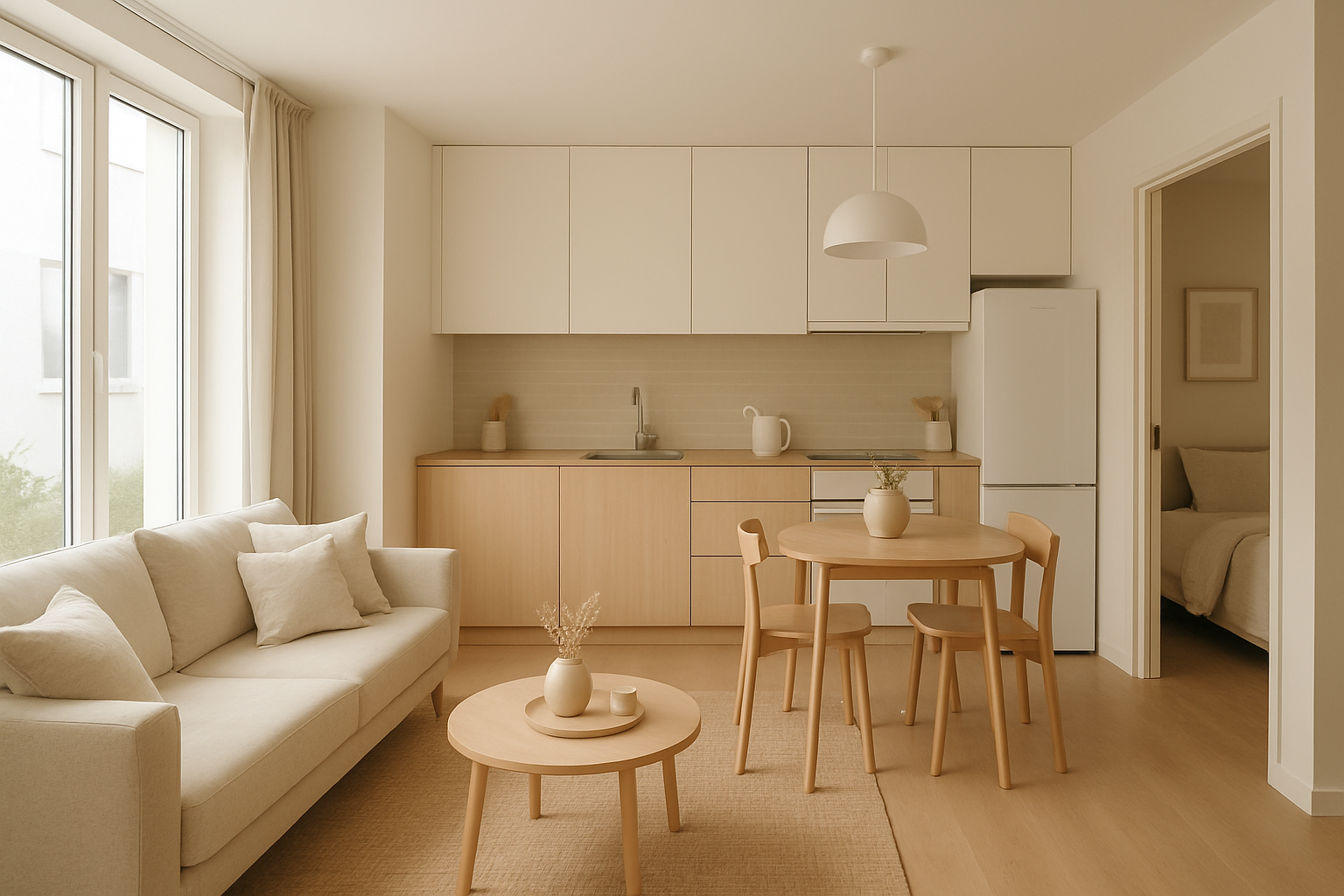
Interior finish quality directly affects both rental income potential and the total 2 bedroom ADU cost — mid-range finishes offer the best return for rental-focused projects.
10 Ways to Reduce Your 2 Bedroom ADU Cost Without Sacrificing Quality
Smart planning decisions made early in the process can reduce your 2 bedroom ADU cost by $20,000 to $80,000 without compromising livability or rental appeal. Here are the most effective strategies:
- Choose a simple rectangular footprint. L-shaped or complex floor plans require more framing material and labor. A clean rectangle of the same square footage costs 10–15% less to build.
- Use a pre-designed ADU plan. Purchasing a pre-designed plan set from an ADU-specialist firm saves $5,000 to $15,000 in design fees compared to fully custom architecture.
- Convert an existing garage. If your two-car garage is large enough (typically 400–600 sq ft per stall), converting it to living space avoids foundation and framing costs entirely.
- Build a single-story unit. Two-story ADUs require staircases, stronger foundations, and additional structural engineering. A single story on a flat lot can save $15,000 to $35,000.
- Opt for an all-electric ADU. Eliminating gas infrastructure saves the cost of a gas lateral, gas meter, and appliance connections — typically $3,000 to $8,000 in upfront cost and simplifies permit approval in many California cities.
- Reduce the number of plumbing fixtures. Each additional bathroom adds $8,000 to $18,000 in plumbing and fixture cost. A well-designed two-bedroom ADU with one full bathroom and one half-bath satisfies most rental demands at lower cost than two full baths.
- Select mid-range finishes from the start. Upgrading from builder-grade to mid-range finishes (not premium) adds only 15–20% to finish costs while significantly improving rental appeal and durability.
- Bid the project during slower construction seasons. Contractor availability and material costs fluctuate seasonally. Bidding in late fall or winter (November–January) often yields more competitive pricing.
- Owner-supply selected materials. Purchasing your own appliances, fixtures, and flooring directly (Costco, Floor & Decor, etc.) and supplying them to your contractor removes the contractor markup, which can be 15–25% on materials.
- Lock in material prices in your contract. Include a materials price lock or allowance cap in your construction contract to protect against mid-project lumber or appliance price increases.
Is a 2 Bedroom ADU Worth It? Final Analysis
A two-bedroom ADU is one of the highest-return residential construction investments available to homeowners in 2025. The combination of rental income, property value appreciation, and multigenerational utility creates a financial case that few other home improvements can match. The key is entering the process with a complete understanding of all cost layers — not just the headline construction number.
The total 2 bedroom ADU cost will range from approximately $90,000 for a basic garage conversion to $500,000+ for a premium detached unit in a high-cost metro. For most homeowners in mid-cost markets building a standard detached two-bedroom ADU, budgeting $220,000 to $330,000 all-in (including contingency) is a realistic target in 2025.
Plan carefully, get multiple bids, verify every utility connection fee in writing, and always maintain a contingency buffer. Whether your goal is rental income, multigenerational housing, or long-term property appreciation, a well-executed two-bedroom ADU remains one of the most powerful financial decisions a homeowner can make.
Frequently Asked Questions: 2 Bedroom ADU Cost
What is the average 2 bedroom ADU cost in 2025?
The average 2 bedroom ADU cost in 2025 ranges from $180,000 to $400,000 for a detached unit, depending on location and finish level. Attached ADUs typically cost $120,000 to $280,000, while garage conversions run $90,000 to $180,000. Homeowners in high-cost metros like San Francisco or Los Angeles should budget $300,000 to $500,000+ for a detached two-bedroom unit.
What is the cost per square foot for a 2 bedroom ADU?
Cost per square foot for a 2 bedroom ADU typically ranges from $200 to $450 in most U.S. markets. High-cost metros like San Francisco and Los Angeles frequently exceed $500 per square foot for fully finished detached units. Garage conversions and attached ADUs cost significantly less per square foot due to shared infrastructure.
What size is a typical 2 bedroom ADU?
A typical 2 bedroom ADU ranges from 700 to 1,200 square feet. California state law caps most detached ADUs at 1,200 square feet, though some jurisdictions allow larger units. Most two-bedroom ADU designs target 850 to 1,000 square feet to balance livability with construction cost.
How much do permits cost for a 2 bedroom ADU?
Permit fees typically range from $5,000 to $25,000 depending on your municipality. Utility connection fees add another $15,000 to $50,000 for a detached unit. In California, state law (AB 68, SB 13) eliminated impact fees for ADUs under 750 square feet and capped fees for larger units in many cities — but school impact fees and fire sprinkler requirements may still apply.
What factors most affect 2 bedroom ADU cost?
The biggest cost drivers for a 2 bedroom ADU are: (1) ADU type (detached vs. conversion), (2) geographic location and local labor rates, (3) site conditions and foundation requirements, (4) utility connection distance and fees, (5) interior finish level, and (6) design complexity. Location and ADU type together can account for a $200,000+ swing in total project cost.
What are the biggest hidden costs in building a 2 bedroom ADU?
The most common hidden costs are utility connection fees ($10,000–$50,000), fire sprinkler systems ($4,000–$12,000), geotechnical reports and soil work ($2,000–$20,000), school impact fees ($1,000–$8,000), landscape restoration ($3,000–$15,000), and design change orders ($2,000–$20,000). These items can add $25,000 to $70,000 to a budget that did not account for them.
Is a prefab ADU cheaper than a site-built ADU?
Prefab ADUs can save 10–25% on structure cost compared to custom site-built construction. However, the factory unit price does not include site preparation, foundation, utility connections, delivery, or crane fees — which add $50,000 to $120,000 regardless of build method. Always compare all-in quotes, not just the manufacturer’s base price.
Does a 2 bedroom ADU add value to my property?
Yes. Research consistently shows that a well-built 2 bedroom ADU increases a property’s appraised value by 20% to 35%. On a $700,000 home, that represents $140,000 to $245,000 in added equity — often approaching or exceeding the total construction cost. Combined with rental income, the financial case for an ADU is strong in most U.S. markets.
How long does it take to build a 2 bedroom ADU?
The full timeline from initial design to move-in for a 2 bedroom ADU is typically 12 to 24 months. Design and permitting alone take 3 to 9 months, depending on your jurisdiction’s plan check backlog. Physical construction after permit approval takes 6 to 14 months. Permitting delays are the #1 cause of project timeline overruns.
Can I finance a 2 bedroom ADU?
Yes. Common financing options include HELOCs (most popular), cash-out refinancing, construction-to-permanent loans, Fannie Mae HomeStyle loans, and government ADU loan programs. In California, the CalHFA ADU Grant Program has offered up to $40,000 in pre-development cost assistance. Always secure financing approval before signing a construction contract.
Can I rent out my 2 bedroom ADU?
Yes. Renting a 2 bedroom ADU is one of the primary motivations for building one. Monthly rents range from $1,200 in lower-cost markets to $5,000+ in high-demand metros like San Francisco. At $2,200 per month, a $260,000 ADU generates a gross annual yield of approximately 10.2%, outperforming most passive investment alternatives.
Do I need an architect to build a 2 bedroom ADU?
Most jurisdictions require stamped architectural drawings prepared by a licensed architect or designer for building permit submission. Design fees range from $6,000 to $25,000 depending on complexity and whether you use a custom architect or a pre-designed ADU plan. Structural engineering is typically required separately and adds $2,000 to $6,000.
What is the difference between an ADU and a JADU?
A Junior ADU (JADU) is a smaller unit — maximum 500 square feet — created within the walls of an existing primary residence, such as a converted bedroom with an efficiency kitchen. A true 2 bedroom ADU requires significantly more space (700–1,200 sq ft) and is typically a detached, attached, or garage-conversion unit with its own full kitchen, bathroom(s), and separate entrance. JADUs cost $40,000–$100,000 but cannot accommodate a true two-bedroom layout.