
An accessory dwelling unit (often shortened to ADU) is a self-contained secondary home built on the same lot as an existing house — and it has quickly become one of the smartest investments a homeowner can make. Whether you call it a granny flat, an in-law suite, a backyard cottage, or a carriage house, the concept stays the same: a fully independent living space with its own kitchen, bathroom, and sleeping area, sharing a single residential lot with the primary home. Because zoning rules, size limits, and permitting steps vary enormously from one city to the next, understanding exactly what an accessory dwelling unit is — and how to build one correctly — is the essential first step before you spend a single dollar.
This guide covers everything the competition leaves out: the full range of ADU types, real 2025 cost ranges, state-by-state legal context, financing paths, design strategy, and the mistakes that quietly derail otherwise promising projects. In short, this is the only accessory dwelling unit resource you should need to open.
What Exactly Is an Accessory Dwelling Unit Near Me?
An accessory dwelling unit is a fully independent living space built on a residential lot alongside the main home. According to the U.S. Department of Housing and Urban Development, ADUs are increasingly recognized as a key tool for expanding affordable housing supply without requiring new land development. In addition, independent research on secondary housing units shows this housing type has existed in various forms for over a century — it’s only the modern regulatory push that’s new.
Unlike a standard bedroom addition, an ADU must include its own kitchen (or kitchenette), a full bathroom, and a separate entrance in most jurisdictions. Consequently, it can be legally rented, lived in by a family member, or used as a private home office — all while remaining on the same parcel as the primary residence.
ADU Terminology: Granny Flats, In-Law Suites, and Backyard Cottages
Because ADU rules are relatively new in many states, older regional terms are still common. A granny flat or mother-in-law suite typically refers to the exact same structure as an ADU — the naming difference is regional, not legal. Similarly, a backyard cottage usually describes a detached ADU, while a carriage house often sits above a garage. As a result, if a contractor or real estate agent uses any of these terms, they are almost certainly describing an accessory dwelling unit.
The Four Types of Accessory Dwelling Units
There are four primary configurations to consider, and choosing the right one depends heavily on your lot size, budget, and long-term goals.
First, a detached ADU is a fully separate structure built in the backyard or side yard, offering maximum privacy. Second, an attached ADU shares a wall with the primary home, such as a converted basement or a new addition. Third, a garage conversion repurposes an existing garage structure, which typically keeps costs lower since the foundation and framing already exist. Finally, a Junior ADU (JADU) is carved entirely from within the existing home’s footprint and is capped at 500 square feet in most jurisdictions.
| ADU Type | Typical Size Limit | Best For | Privacy Level |
|---|---|---|---|
| Detached ADU | 800–1,200 sq ft | Rental income, in-laws | Highest |
| Attached ADU | 600–1,000 sq ft | Adult children, home office | Moderate |
| Garage Conversion | 400–800 sq ft | Tight budgets | Moderate |
| Junior ADU | Up to 500 sq ft | First-time builders | Lower |
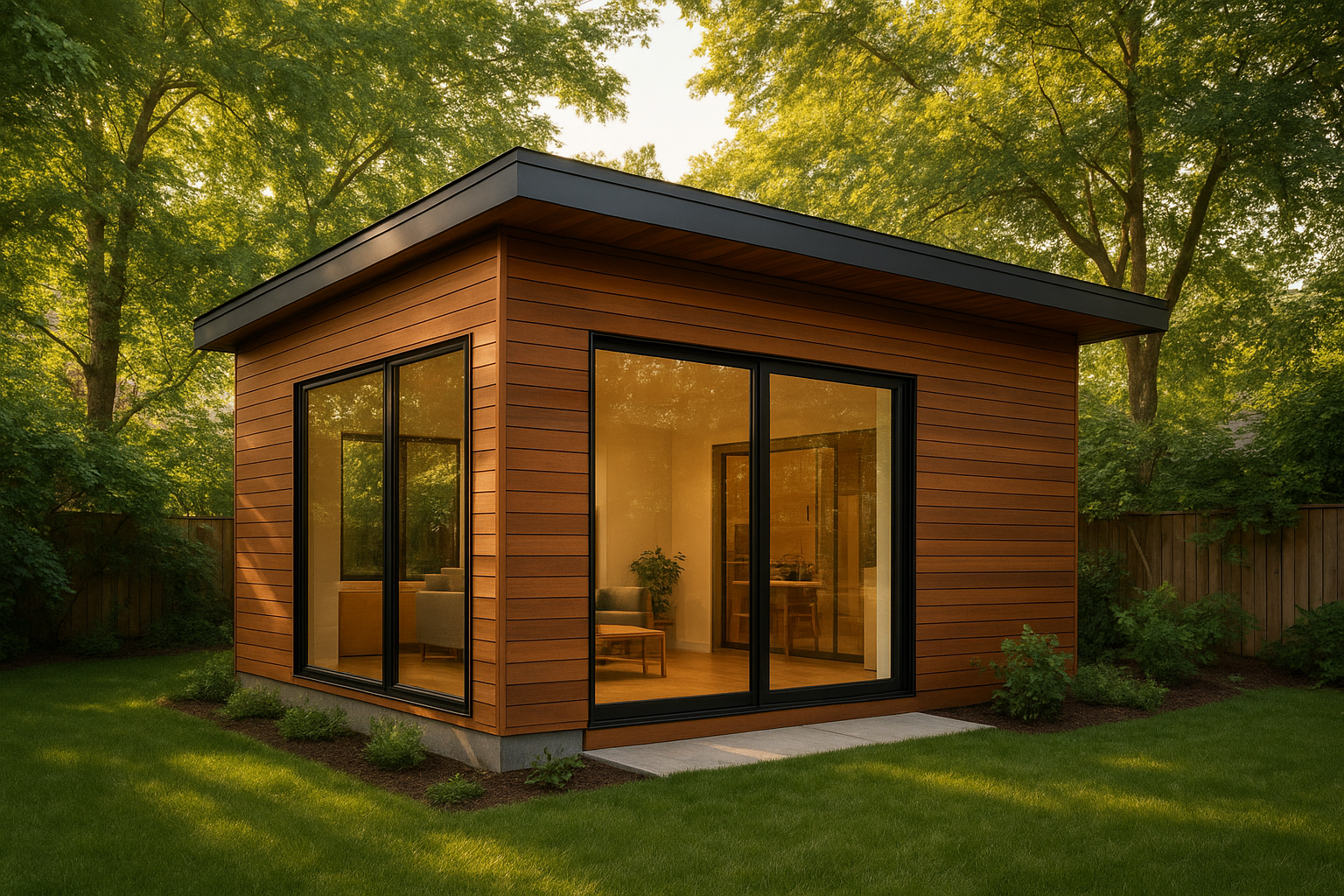
A well-designed detached accessory dwelling unit adds living space and rental income potential to a standard residential lot. For a deeper walkthrough, see our ADU design ideas.
Why Homeowners Are Building Accessory Dwelling Units Right Now
Above all, homeowners choose to build an accessory dwelling unit for one of three reasons: rental income, family housing, or long-term property value. Specifically, a well-built ADU can generate meaningful monthly cash flow, house an aging parent close to home, or give an adult child a private, affordable place to start out.
Furthermore, appraisers increasingly recognize ADUs as value-adding square footage, not just bonus space. As a result, many homeowners see a meaningful bump in resale value that often exceeds the original construction cost. If you’d like a deeper breakdown of how an ADU affects your home’s overall value, our guide on maximizing your property’s potential with an ADU walks through the numbers in detail.
Accessory Dwelling Unit Laws and Zoning Rules by State
Zoning is where most ADU projects succeed or fail before construction ever begins. In particular, California has led the nation with statewide ADU legislation that overrides restrictive local ordinances, while states like Oregon, Washington, and Minnesota have followed with their own permissive frameworks. For an authoritative breakdown of state-level rules, the California Department of Housing and Community Development’s ADU handbook is one of the most detailed public resources available.
Most cities publish their zoning codes online, and many now offer address-based ADU eligibility checkers. Therefore, your first action should be to visit your city or county planning department’s website and search specifically for ADU ordinances rather than general residential zoning.
Key Zoning Factors to Review Before You Build
Specifically, look for minimum lot size requirements, setback distances from property lines, maximum ADU square footage, height limits, parking replacement rules, and owner-occupancy requirements. For example, some jurisdictions require that the homeowner live on-site, while others have eliminated that rule entirely to encourage more housing supply.
Step-by-Step: How to Build an Accessory Dwelling Unit
- Check local zoning eligibility. Enter your address on your city’s planning portal to confirm whether your lot allows an accessory dwelling unit and what size or setback limits apply.
- Choose your ADU type. Compare detached, attached, garage conversion, and Junior ADU options against your lot size, budget, and long-term goals before committing to a design direction.
- Hire a designer or ADU specialist. Work with a licensed professional who has produced code-compliant ADU plans in your specific city, not just general residential blueprints.
- Submit permit applications. File building, electrical, plumbing, and mechanical permits with your local building department, and budget several months for plan review.
- Secure financing. Arrange a HELOC, cash-out refinance, or construction loan before breaking ground so funds are available when draws are needed.
- Begin construction and inspections. Hire a licensed contractor and complete every required phase inspection, from foundation to final occupancy sign-off.
Real Costs: What to Budget for Your Accessory Dwelling Unit
Cost is often the biggest concern for homeowners considering an accessory dwelling unit. In practice, budgets vary widely based on type, location, and finish level. However, having a realistic range up front helps you plan financing correctly from the very start.
Garage Conversion
$80K–$150K
Lowest cost; existing structure reused
Attached ADU
$100K–$200K
Shares utilities with the main home
Detached ADU
$150K–$300K+
Most private; highest resale value
Junior ADU
$40K–$80K
Built within existing home footprint
Additionally, don’t overlook soft costs such as architectural drawings, permit fees, utility connection fees, and soil reports. These can add $15,000 to $40,000 to your total budget, so factor them in early rather than discovering them mid-project. For a full worksheet-style breakdown of every line item, see our guide to figuring out your realistic ADU budget.
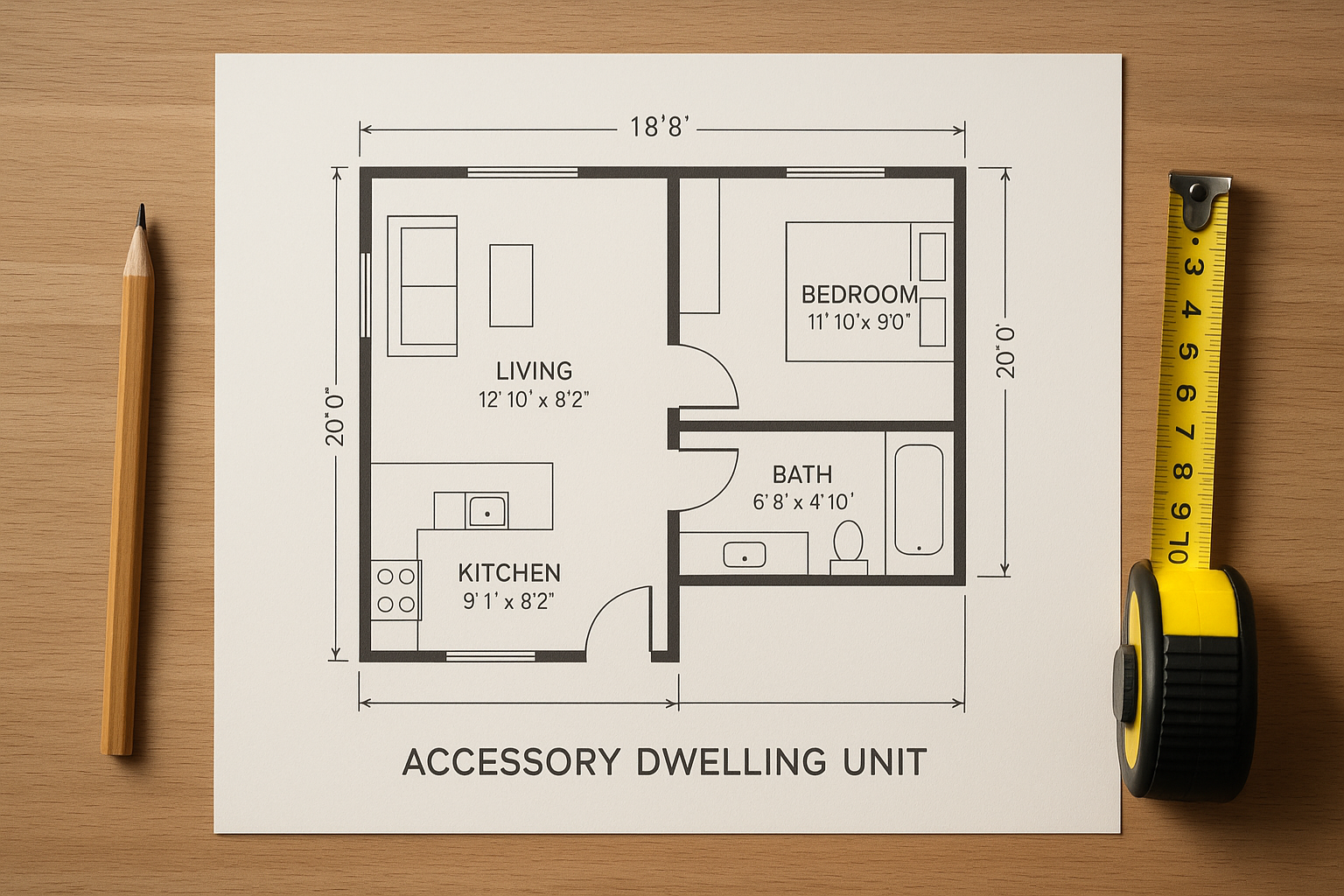
A detailed floor plan is essential for permit approval and helps keep construction costs on track.
Financing Options That Work in Today’s Market
Because most ADU projects cost six figures, choosing the right financing structure is critical. Fortunately, several proven options exist for homeowners with sufficient equity.
A home equity line of credit (HELOC) is the most flexible choice, allowing you to draw funds as construction progresses. A cash-out refinance works well if current interest rates are favorable compared to your existing mortgage. Meanwhile, a construction-to-permanent loan covers the build phase and then converts to a standard mortgage at completion. Some states — notably California, Oregon, and Minnesota — also offer dedicated ADU loan programs with below-market rates for income-qualifying homeowners. Industry research from Freddie Mac’s housing research division further confirms that ADU-secured loan products are expanding as lenders recognize their income-generating potential.
For professional guidance on navigating both the design and financing process, resources like The ADU Pro can connect you with specialists who understand local rules and realistic project timelines.
Renting vs. Using Your Accessory Dwelling Unit for Family
Once built, you face a meaningful decision: rent the unit for income or use it for a family member. Both paths offer real advantages, and the right choice depends on your financial goals and household needs.
Renting to a long-term tenant typically generates $1,200 to $2,800 per month depending on your market, which can offset your mortgage significantly. In contrast, housing an aging parent or adult child eliminates vacancy risk and keeps caregiving close to home. Some homeowners also start with a family member and later transition to rental income once circumstances change.
If you plan to rent, verify your city’s short-term rental ordinances. Although platforms like Airbnb offer higher nightly rates, many municipalities restrict or ban short-term ADU rentals to preserve neighborhood housing stock.
Common Mistakes to Avoid When Building an Accessory Dwelling Unit
Even well-intentioned projects run into trouble. Therefore, knowing the most common pitfalls in advance can save you thousands of dollars and months of delays.
- Underestimating permit timelines: In busy cities, plan reviews can take 3 to 6 months. Always start the permit process before finalizing your construction contract.
- Hiring unlicensed contractors: Unpermitted work can trigger stop-work orders, fines, and costly demolition. Always verify contractor licenses through your state licensing board.
- Ignoring utility connection costs: Adding a separate water meter, sewer lateral, or electrical panel connection can add $10,000 to $30,000 to your budget.
- Skipping a feasibility study: Soil conditions, easements, and existing utility locations can make certain ADU placements impractical or prohibitively expensive.
- Designing before confirming zoning: Paying an architect before verifying eligibility often means paying twice when the design doesn’t fit local rules.
How to Find a Qualified ADU Builder in Your Area
Finding a reliable contractor with genuine ADU experience is not the same as hiring a standard home builder. ADU projects involve navigating complex permitting, tight lot constraints, and utility coordination that requires specialized knowledge.
Start by asking for references from completed ADU projects specifically — not just general remodels. Additionally, verify that your contractor has pulled ADU permits in your specific city, since local plan checkers and inspectors have unique requirements. Platforms like The ADU Pro specialize in matching homeowners with vetted ADU professionals who have a proven track record in their local market.

Working with an experienced local contractor is one of the most important decisions in any ADU project.
Design Tips to Maximize Space and Value in a Secondary Dwelling Unit
Good design matters just as much as good permitting. In fact, a thoughtfully designed accessory dwelling unit can feel far larger than its square footage suggests. Above all, prioritize natural light, multi-purpose furniture, and an open kitchen-living layout to avoid a cramped feel.
For broader inspiration, our collection of creative ADU design ideas for maximizing space and style covers layout strategies for units as small as 400 square feet. Meanwhile, if you’re located in Southern California, our local breakdowns of ADU design in Irvine and ADU design in Pasadena walk through neighborhood-specific style considerations and permitting quirks.
Conclusion: Taking the Next Step Toward Your Accessory Dwelling Unit
Building an accessory dwelling unit is a realistic goal for millions of homeowners — provided you approach it with the right information and the right team. As a result, starting with a thorough zoning check, building a realistic budget, and partnering with experienced local professionals will dramatically increase your chances of a smooth, successful project. Whether your goal is rental income, multigenerational living, or long-term property value, an accessory dwelling unit remains one of the highest-return investments available in residential real estate today.
Frequently Asked Questions About Accessory Dwelling Units
What is an accessory dwelling unit?
An accessory dwelling unit is a secondary, self-contained residential unit built on the same lot as a primary home. It includes its own kitchen, bathroom, and sleeping area. Local zoning laws govern whether your specific property qualifies and what restrictions apply.
How do I find out if my property allows an accessory dwelling unit?
Visit your city or county planning department’s website and look for an ADU eligibility tool or zoning code search. Many municipalities now let you enter your address to instantly see setback rules, size limits, and permit fees.
How much does it cost to build an accessory dwelling unit?
Costs range from roughly $80,000 for a basic garage conversion to over $300,000 for a fully custom detached unit. The average new detached ADU costs between $150,000 and $250,000 depending on size, finishes, and local labor rates.
Do I need a permit to build an accessory dwelling unit?
Yes, virtually all jurisdictions require a building permit along with separate electrical, plumbing, and mechanical permits. Skipping permits can result in fines, stop-work orders, and forced removal of the unpermitted structure.
What is the difference between a detached and attached accessory dwelling unit?
A detached ADU is a completely separate structure, such as a backyard cottage. An attached ADU shares at least one wall with the primary home, like a converted basement or new addition. Detached units generally cost more but provide greater privacy for both occupants.
Can I rent out my accessory dwelling unit?
Yes, most jurisdictions allow long-term tenant rentals in an ADU. However, many cities restrict short-term rentals through platforms like Airbnb. Always verify local short-term rental ordinances before listing your unit online.
How long does it take to build an accessory dwelling unit?
From permit application to move-in, expect 6 to 18 months for a new detached ADU. Garage conversions and attached units can be completed in 3 to 9 months. Permit approval timelines vary widely by city and can add several months to the overall schedule.
What is a Junior ADU (JADU)?
A Junior ADU is a secondary unit of up to 500 square feet created entirely within the walls of an existing single-family home. JADUs are common in California and typically have a lower permit threshold than standard ADUs, making them a cost-effective entry point.
Will an accessory dwelling unit increase my property taxes?
Building an ADU will likely trigger a partial reassessment covering the new structure, modestly increasing your property taxes. However, rental income generated by the unit typically far outweighs the additional tax burden over time.
What financing options exist for building an accessory dwelling unit?
Common options include a cash-out refinance, HELOC, construction loan, or renovation loan such as an FHA 203(k). Additionally, some states and cities offer low-interest ADU-specific loan programs for qualifying homeowners.
How big can an accessory dwelling unit be?
Most jurisdictions cap detached ADUs at 800 to 1,200 square feet or a percentage of the primary home’s floor area. California state law, for example, allows detached ADUs up to 1,200 square feet in most cases regardless of lot size.
What are the most common mistakes when building an accessory dwelling unit?
The most common mistakes include underestimating permit timelines, hiring unlicensed contractors, ignoring utility connection costs, and failing to verify local owner-occupancy requirements. A thorough feasibility study before committing to a design prevents most of these costly errors.
Is an accessory dwelling unit the same as a granny flat or in-law suite?
Yes. Granny flat, in-law suite, backyard cottage, and accessory dwelling unit all describe the same type of structure. The terminology simply varies by region, while the underlying zoning definition — a self-contained secondary unit on a single-family lot — stays consistent.