
If you want to know how to build an ADU on your Southern California property, this guide walks you through every stage of the process — from feasibility and design through permits, construction, and final inspection. An accessory dwelling unit, or ADU, is a self-contained secondary home built on the same lot as your existing house, and it can become a rental unit, a guest house, or a home for aging parents or adult children.
According to the California Department of Housing and Community Development, ADU permit applications statewide have surpassed 23,000 in a single year, reflecting an enormous surge in homeowner interest. In addition, industry research suggests a well-built ADU can raise property values by 20% to 35% in high-demand markets such as Los Angeles and Orange County. Consequently, more homeowners than ever are researching exactly how to build an ADU before they ever call a contractor.
However, the path from idea to move-in day involves far more than pouring a foundation and framing walls. Zoning checks, design decisions, permit review, licensed construction, and inspections all have to happen in the right order. Therefore, this guide breaks down every step in plain language, adds real cost and timeline numbers, and answers the questions homeowners ask most, so you can plan your project with total confidence.
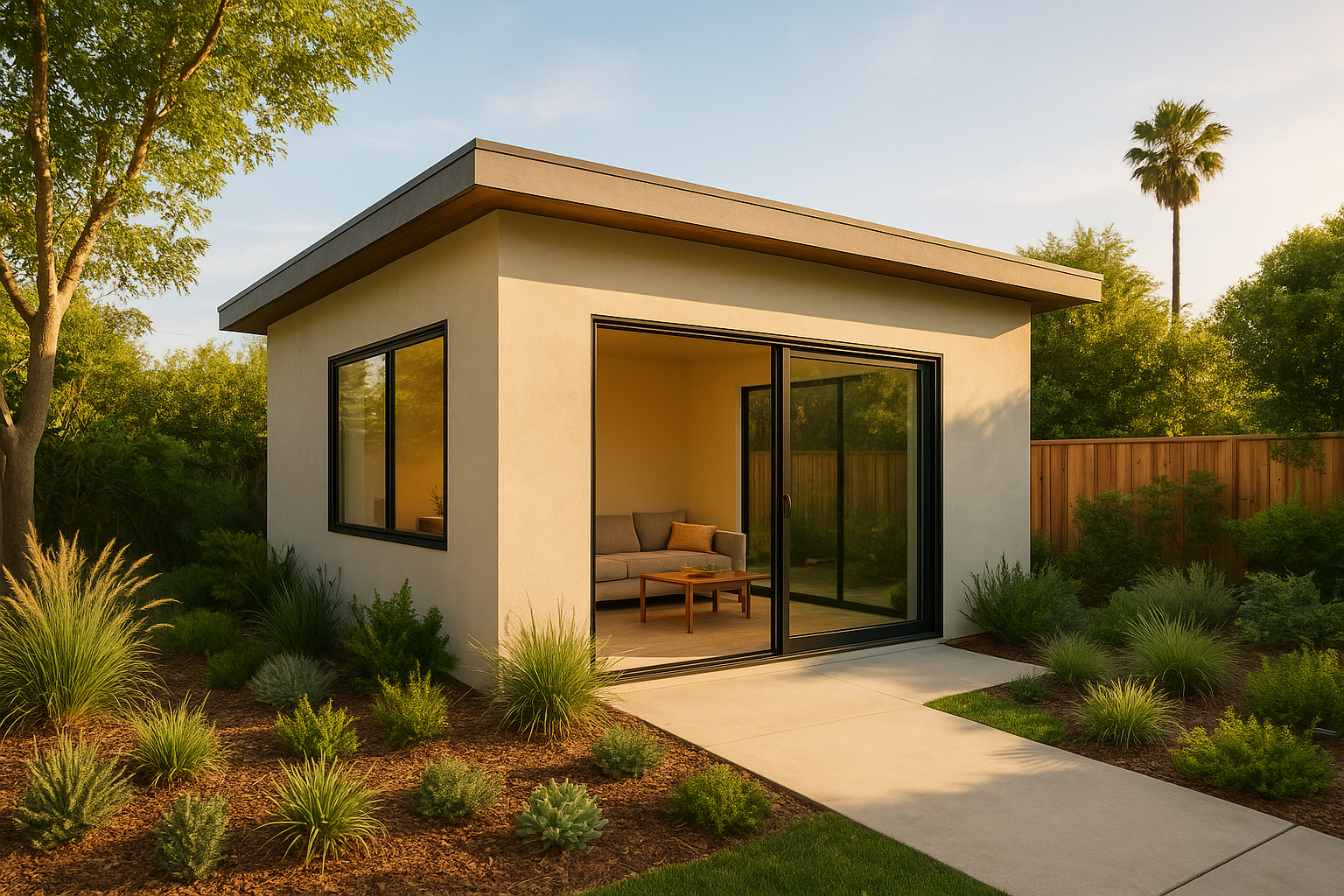
A completed detached ADU adds living space and rental income potential — a key reason homeowners want to know how to build an ADU.
What Is an ADU, and Why Are So Many Homeowners Building One?
An accessory dwelling unit (ADU) is a self-contained residential unit located on the same parcel as a single-family or multifamily home. It has its own kitchen, bathroom, and sleeping area, and it functions as a fully independent home. Specifically, ADUs come in four main forms: detached structures, attached additions, garage conversions, and junior ADUs (JADUs) carved out of the existing house.
For a closer look at how each option compares, see this breakdown of the types of ADUs you can build on your property, which explains which configuration fits different lot sizes and budgets.
Why Homeowners Choose to Build an ADU
Homeowners throughout Orange County, Los Angeles County, and Riverside County are turning to ADUs for several overlapping reasons. First, an ADU generates rental income that can offset a mortgage payment or fund retirement. Second, it provides a private space for aging parents or adult children without the cost of a full second home. Third, as noted above, it can meaningfully boost resale value. For a full rundown of these advantages, review this guide to the benefits of adding an ADU to your property.
Above all, California has streamlined its ADU approval process through recent legislation, making this the easiest era in state history to get a project approved. For a broader statewide overview, explore this guide to building accessory dwelling units in California, or, if you live closer to the coast or inland valleys, this complete Southern California ADU guide.
How to Build an ADU: The Complete 6-Step Process
Building an ADU follows a structured sequence, and skipping or rushing any stage typically causes costly delays. Below is the full process broken into six clear steps — including one stage most guides leave out entirely: what happens after your ADU is finished.
1Assess Your Property’s Feasibility
Before drawing a single line, confirm your property can legally support an ADU. This means reviewing your lot’s zoning classification, setback requirements (the minimum distance a structure must sit from property lines), lot coverage limits, and utility access.
For example, California state law generally requires a minimum 4-foot rear and side setback for detached ADUs. However, local jurisdictions — such as the City of Los Angeles or Anaheim — may add extra rules on top of the state standard. Therefore, always verify requirements with your city or county planning department before assuming your lot qualifies.
An experienced ADU contractor can run this feasibility check quickly and flag obstacles early, such as a slope, an easement, or an undersized sewer lateral. This upfront step prevents expensive surprises once permitting begins.
2Choose Your ADU Type and Finalize the Design
Once feasibility is confirmed, select the ADU type that matches your goals and budget. Detached ADUs offer the most privacy and the strongest rental appeal, while garage conversions are usually the most cost-effective route. Attached ADUs expand your home’s existing footprint, and junior ADUs work well when you already have unused interior space.
Next, work with a licensed designer or architect to produce construction drawings. These plans must comply with the California Building Code, Title 24 energy standards, and local zoning rules. Additionally, if you are considering a two-story option to maximize square footage on a small lot, review the 2-story ADU design costs and what to know before committing to a design direction.
Good design at this stage saves significant money later. Specifically, well-prepared plans reduce the likelihood of plan-check corrections, which can otherwise delay permitting by weeks or even months.
3Submit Plans and Obtain Building Permits
Permitting is one of the most misunderstood stages when homeowners research how to build an ADU. You must submit architectural drawings, structural calculations, energy compliance reports, and site plans to your local building department.
Plan check times vary widely. In some jurisdictions, over-the-counter approvals are available for pre-approved ADU designs. In others, the review process takes four to twelve weeks. Furthermore, California’s SB 9 and AB 2221 legislation have mandated faster ADU approvals at the state level, which has shortened timelines in many cities across the region.
For detailed guidance on navigating this stage, the ADU design, planning, and permitting guide from theadupro.com is an excellent resource. For a deeper walkthrough of design and build together, see our Design and Build ADU: Complete Guide for Homeowners.
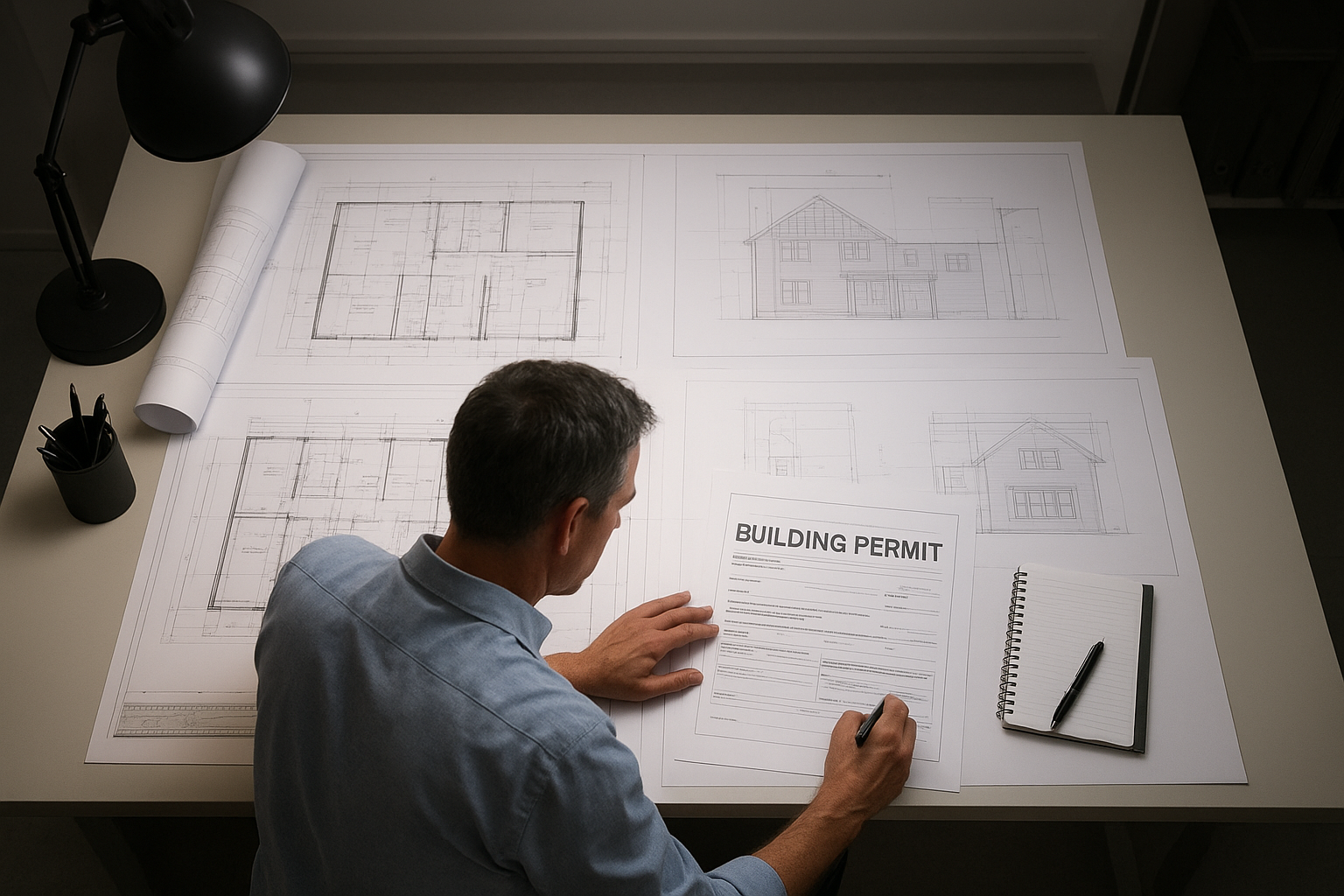
Thorough plan preparation is critical for a smooth permit approval when building an ADU.
4Begin Construction With a Licensed Contractor
With permits in hand, construction can begin — see the ADU construction process. This phase includes site preparation, foundation work, framing, roofing, rough-in plumbing and electrical, insulation, drywall, and finish work. Each trade must be coordinated carefully to keep the project on schedule.
Always hire a licensed general contractor with proven ADU experience. In California, verify your contractor’s license through the Contractors State License Board (CSLB). An unlicensed contractor not only risks your investment but can also void your permits and create serious legal liability.
As a top-rated ADU contractor serving Orange County, Los Angeles County, and Riverside County, theadupro.com manages every construction phase — from breaking ground to final finishes — so homeowners experience a streamlined, stress-free build from start to finish.
5Pass Inspections and Obtain a Certificate of Occupancy
Building inspections occur at multiple phases: foundation, framing, rough-in utilities, insulation, and final completion. Each inspection must be passed before the next stage proceeds. Consequently, scheduling inspections promptly avoids costly construction delays.
Upon passing all inspections, your local building department issues a Certificate of Occupancy (CO). This document legally permits the unit to be occupied or rented. Without it, your ADU cannot be legally used, and renting it out without a CO can result in significant fines.
For a deeper walkthrough of each stage, see this comprehensive step-by-step ADU building guide for Southern California homeowners. And if funding is still an open question at this point, see our What’s the Best Way to Finance an ADU Project? A Complete Guide for California H.
6Move In, Rent Out, or Insure Your New ADU
Most guides stop at the Certificate of Occupancy, but there is still important work to do once your ADU is complete. If you plan to rent the unit, update your homeowner’s insurance policy to reflect a rental structure on the property, since standard policies often exclude tenant-occupied secondary units.
In addition, check whether your city requires a separate rental business license or short-term rental registration, and confirm your property tax reassessment, since adding an ADU typically increases assessed value only for the new construction, not the entire parcel. Similarly, schedule routine maintenance — gutter cleaning, HVAC servicing, and pest inspections — just as you would for your primary home.
Above all, keep copies of your permits, inspection sign-offs, and Certificate of Occupancy in a permanent file. Future buyers, appraisers, and lenders will ask for this documentation, and having it ready protects the value you just built.
How Much Does It Cost to Build an ADU in Southern California?
Costs vary widely based on ADU type, size, site conditions, and finish level. However, most Southern California projects fall within these general ranges:
- Garage conversion ADU: $80,000 – $180,000
- Junior ADU (JADU): $40,000 – $120,000
- Attached ADU addition: $150,000 – $280,000
- Detached new-construction ADU: $200,000 – $400,000+
In addition to construction costs, budget for design fees (typically 8%–15% of construction cost), permit fees ($5,000–$20,000 depending on jurisdiction), and utility connection fees for water, sewer, gas, and electrical service upgrades. Therefore, a realistic total budget should include a 10%–15% contingency reserve on top of every line-item estimate you receive.
Site conditions can also swing the total significantly. For example, a sloped lot, poor soil, or a distant utility connection point can add tens of thousands of dollars to grading, retaining walls, and trenching. As a result, always request a site-specific estimate rather than relying on a generic per-square-foot number.
How to Finance an ADU Project
For financing, options include home equity lines of credit (HELOCs), cash-out refinancing, renovation and construction loans, and California’s ADU Grant Program for qualifying low-income homeowners. Exploring these options early helps you plan a realistic budget before committing to a design.
Specifically, a HELOC uses your existing home equity as collateral and offers flexible draw periods, which suits homeowners who already have substantial equity built up. In contrast, a construction loan releases funds in stages tied to project milestones, which can better match a ground-up build. Meanwhile, cash-out refinancing replaces your existing mortgage entirely and may make sense if current rates are favorable.
Some lenders will also underwrite future projected rental income from the ADU itself, which can increase your borrowing power. For a full comparison of every option available to California homeowners, our dedicated financing guide walks through eligibility, typical rates, and application timelines in detail.
ADU Zoning Rules, Size Limits, and Legal Requirements
California state law allows detached ADUs up to 1,200 square feet, while junior ADUs are capped at 500 square feet. However, local jurisdictions may impose additional restrictions related to lot coverage, height limits, or design review, so always confirm current rules with your city or county planning department before finalizing a design.
In particular, state law now prohibits most cities from requiring extra off-street parking for an ADU located within a half-mile of public transit, and it eliminates owner-occupancy requirements for many ADU applications through 2025. Similarly, HOAs cannot categorically ban ADUs, though they may impose reasonable design standards. Therefore, if you live in a planned community, review your HOA’s covenants alongside city zoning before you begin.
For a countywide breakdown of these rules, revisit the guide to building accessory dwelling units in California, which covers how these state laws are applied differently across local jurisdictions.
How Long Does It Take to Build an ADU?
Overall, most Southern California ADU projects take between 6 and 18 months from initial feasibility check to move-in day. Feasibility and design typically take 4 to 8 weeks. Permit review adds another 4 to 12 weeks, depending on jurisdiction and whether a pre-approved design is used. Construction itself generally runs 5 to 9 months, and final inspections plus Certificate of Occupancy issuance add a few final weeks.
As a result, homeowners who plan for the full 12-to-18-month window, rather than the fastest-possible 6-month case, tend to experience far less stress and fewer scheduling conflicts along the way.
Common Mistakes to Avoid When Building an Accessory Dwelling Unit
Even well-intentioned homeowners make avoidable errors. Here are the most common pitfalls:
- Starting without permits. Unpermitted ADUs must be demolished or retroactively permitted — both costly outcomes.
- Underestimating total costs. Many homeowners budget only for construction and forget design, permits, and utility fees.
- Choosing the wrong ADU type. A detached ADU may not be feasible on a small lot. Always confirm feasibility first.
- Hiring an inexperienced contractor. ADU construction requires specific knowledge of California codes. General contractors without ADU experience often cause delays and compliance issues. For a deeper walkthrough, see our The Expert Guide to Home Extension Contractors 2026.
- Ignoring HOA rules. Some homeowners associations have additional restrictions that may limit ADU construction even when local zoning allows it.
- Skipping insurance updates. Renting out an ADU without updating your homeowner’s policy can leave you personally liable for tenant-related claims.
Working with a specialized ADU builder from the beginning significantly reduces the risk of these mistakes. For further reading on finding the right professional, see this guide to ADU builders in California.
Quick Answer: How to Build an ADU
Building an ADU involves six core stages: property feasibility assessment, design and plan preparation, permit submission and approval, licensed construction, final inspections to receive a Certificate of Occupancy, and post-build steps like insurance and rental setup. In Southern California, the process typically takes 6 to 18 months and costs between $80,000 and $400,000 depending on the ADU type and scope.
Frequently Asked Questions About How to Build an ADU
What does it mean to build an ADU?
To build an ADU means to construct an accessory dwelling unit — a secondary, self-contained living space on a residential property. ADUs can be detached structures, garage conversions, attached additions, or junior units inside the main home.
What are the basic steps for how to build an ADU?
The basic steps for how to build an ADU are: assess property feasibility, choose an ADU type and finalize design, submit plans for permits, complete licensed construction, pass inspections for a Certificate of Occupancy, and set up insurance or rental logistics once the unit is finished.
How long does it take to build an ADU in California?
The timeline typically ranges from 6 to 18 months, depending on design complexity, permitting speed, and construction scope. Prefabricated or simpler designs can be completed faster than fully custom builds.
How much does it cost to build an ADU in Southern California?
Costs generally range from $80,000 to $400,000 or more in Southern California, depending on size, type, finishes, and site conditions. Garage conversions tend to cost less than detached new-construction ADUs.
Do I need a permit to build an ADU?
Yes, a building permit is required to build an ADU in California. The permitting process involves submitting plans, paying fees, and receiving approval from your local building department before construction begins.
What types of ADUs can I build on my property?
Common ADU types include detached ADUs, attached ADUs, garage conversions, and junior ADUs (JADUs). The best type depends on your lot size, budget, zoning rules, and intended use.
What are California’s ADU size limits?
California state law allows detached ADUs up to 1,200 square feet. Junior ADUs are capped at 500 square feet. Local jurisdictions may have additional restrictions, so always check with your city or county planning department.
What is the difference between an ADU and a JADU?
A junior ADU (JADU) is created within the walls of an existing home and is limited to 500 square feet. A standard ADU is a fully independent unit that can be attached or detached and is generally larger, up to 1,200 square feet.
How do I finance building an ADU?
Common financing options include home equity loans, HELOCs, cash-out refinancing, and construction loans. Additionally, some California programs offer grants or low-interest loans for qualifying homeowners through the state ADU Grant Program.
Does building an ADU increase property value?
Yes, studies show ADUs can increase property values by 20% to 35% in high-demand markets like Southern California. They also generate rental income that can meaningfully offset mortgage costs over time.
What mistakes should I avoid when building an ADU?
Common mistakes include starting construction without permits, underestimating total project costs, and hiring contractors without ADU-specific experience. Working with a specialized ADU builder from the start significantly reduces these risks.
Can I act as my own contractor when building an ADU?
California allows owner-builder permits in limited cases, but this route removes the licensed contractor’s warranty and liability protections. Consequently, most homeowners still hire a licensed general contractor to manage code compliance and scheduling.
Is a separate entrance required for an ADU?
Yes, most California jurisdictions require an ADU to have its own independent entrance, separate from the primary home’s entrance, so the unit can function as a fully self-contained residence.
Conclusion: Your Path to a Successful ADU Build
Understanding how to build an ADU is the first and most important step toward unlocking your property’s full potential. From feasibility assessment and thoughtful design to permitting, licensed construction, final inspection, and post-build setup, each phase requires careful planning and the right professional support.
For Southern California homeowners in Orange County, Los Angeles County, and Riverside County, partnering with a proven ADU specialist makes all the difference. The team at theadupro.com guides clients through every phase — from initial design to final certificate of occupancy — ensuring a smooth, code-compliant build that adds lasting value to your home. Author: Daniel Messina, Licensed General Building Contractor (CSLB #1128679).
Whether you’re planning a detached guest house, a garage conversion, or a junior ADU, the right guidance and the right contractor will transform your vision into reality. Start with a feasibility assessment, invest in quality design, and work with licensed professionals — and your ADU project will be set up for success from day one. Last updated July 11, 2026. Author: The ADU Pro team (licensed ADU specialists).