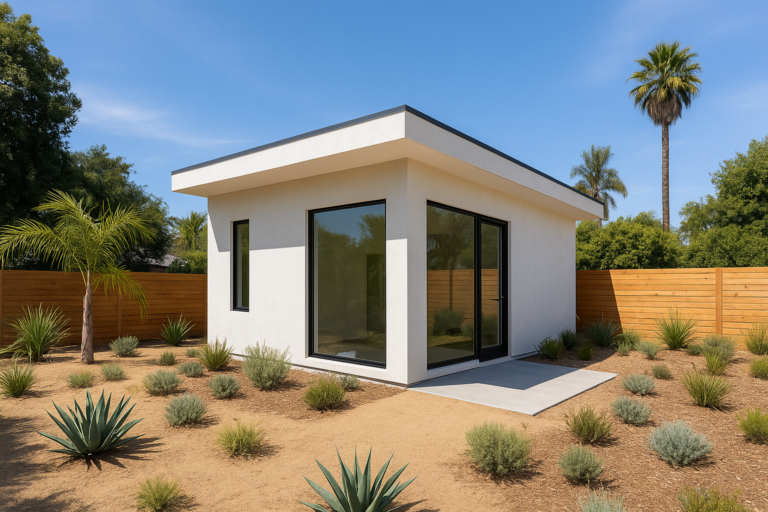
An ADU cost estimator is the single most useful tool a homeowner can use before signing a construction contract, because it turns a vague renovation dream into a real, itemized number. Whether you’re planning a detached backyard cottage in Orange County or converting a garage in Los Angeles, an accurate estimate is what separates a smooth project from a budget disaster. This guide gives you a more complete, more current, and more usable ADU cost estimator than anything else online today — with real dollar ranges, a step-by-step formula, hidden costs most calculators skip, and financing details you can actually act on.
According to the California Department of Housing and Community Development, the state added over 23,000 permitted ADUs in 2022 alone — a 15% increase from the prior year. As demand climbs, so does the risk of underbudgeting. In particular, homeowners who skip a detailed estimate are far more likely to run out of money mid-build. This guide walks through every cost category so that never happens to you.
What Is an ADU Cost Estimator, Exactly?
An ADU cost estimator is a budgeting framework — sometimes a downloadable worksheet, sometimes an interactive calculator — that breaks a project into categories: hard construction costs, soft costs like design and permits, site preparation, and utility connections. Together, these categories produce a realistic total project budget rather than a single guessed-at figure.
In Southern California specifically, costs swing widely by city, lot condition, and unit type. Consequently, a good estimator never produces just one number — it produces a range with clear assumptions behind each figure, so you know exactly why your number is what it is. For deeper pricing benchmarks, the 2026 ADU pricing guide at theadupro.com is a strong next step once you finish this one.
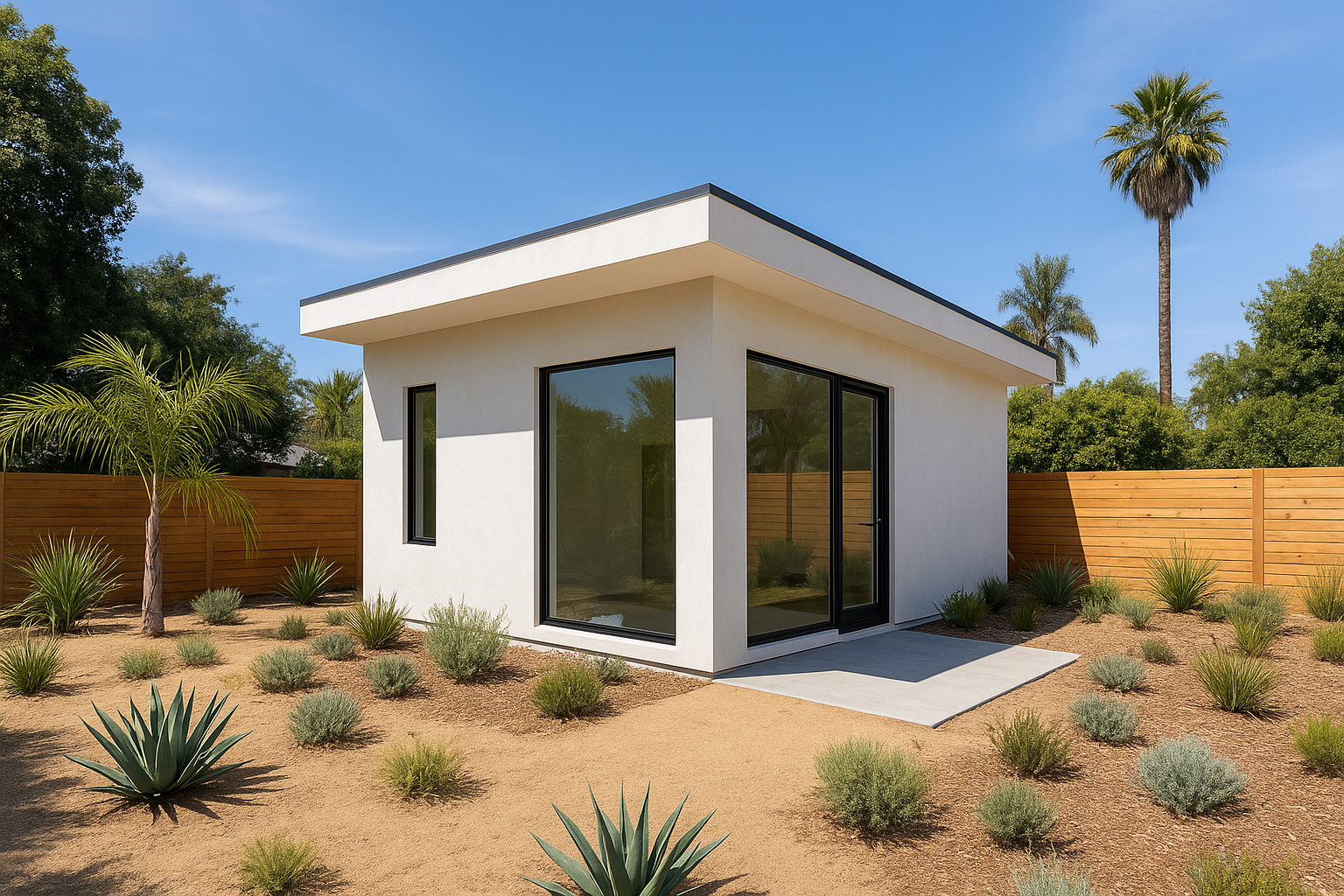
A detached ADU like this one is the most common project type homeowners use an ADU cost estimator to plan; review Best ADU designs for family-friendly layouts and space planning ideas.
Why an ADU Cost Estimator Beats a Generic Renovation Calculator
Generic home renovation calculators lump every project into one national average, which is nearly useless for ADU planning. An ADU-specific estimator, however, accounts for factors unique to accessory units — separate utility meters, egress requirements, fire separation, and California’s ADU-specific fee caps. As a result, it gives you a number you can actually take to a lender or contractor.
Before you dive into the numbers below, it’s worth bookmarking our full library of ADU cost resources, which we update as material prices and permit fees shift throughout the year.
ADU Types and Their Typical Cost Ranges
Not all ADUs cost the same. In fact, unit type is the single biggest variable in any estimate. Below is a breakdown of the four main ADU types and their typical 2025 cost ranges in Southern California.
| ADU Type | Typical Cost Range | Best For |
|---|---|---|
| Detached ADU | $200,000 – $400,000+ | Rental income, guest house |
| Attached Addition | $150,000 – $300,000 | Multigenerational living |
| Garage Conversion | $80,000 – $150,000 | Budget-friendly option |
| Junior ADU (JADU) | $30,000 – $80,000 | Minimal disruption, low cost |
Therefore, your first decision — before anything else — should be which unit type fits your property and goals. For a detailed look at garage conversion pricing specifically, see this guide on ADU costs at theadupro.com.
Cost by Square Footage: A Quick Reference Table
Unit type sets the category, but square footage sets the scale within it. Use this table alongside the type breakdown above to sanity-check any quote you receive.
| Size | At $300/sq ft | At $450/sq ft |
|---|---|---|
| 500 sq ft (JADU-scale) | $150,000 | $225,000 |
| 800 sq ft | $240,000 | $360,000 |
| 1,000 sq ft | $300,000 | $450,000 |
| 1,200 sq ft (max in most cities) | $360,000 | $540,000 |
For the most common size homeowners request, our dedicated 800 sq ft ADU cost guide walks through a full line-item budget you can compare against your own numbers.
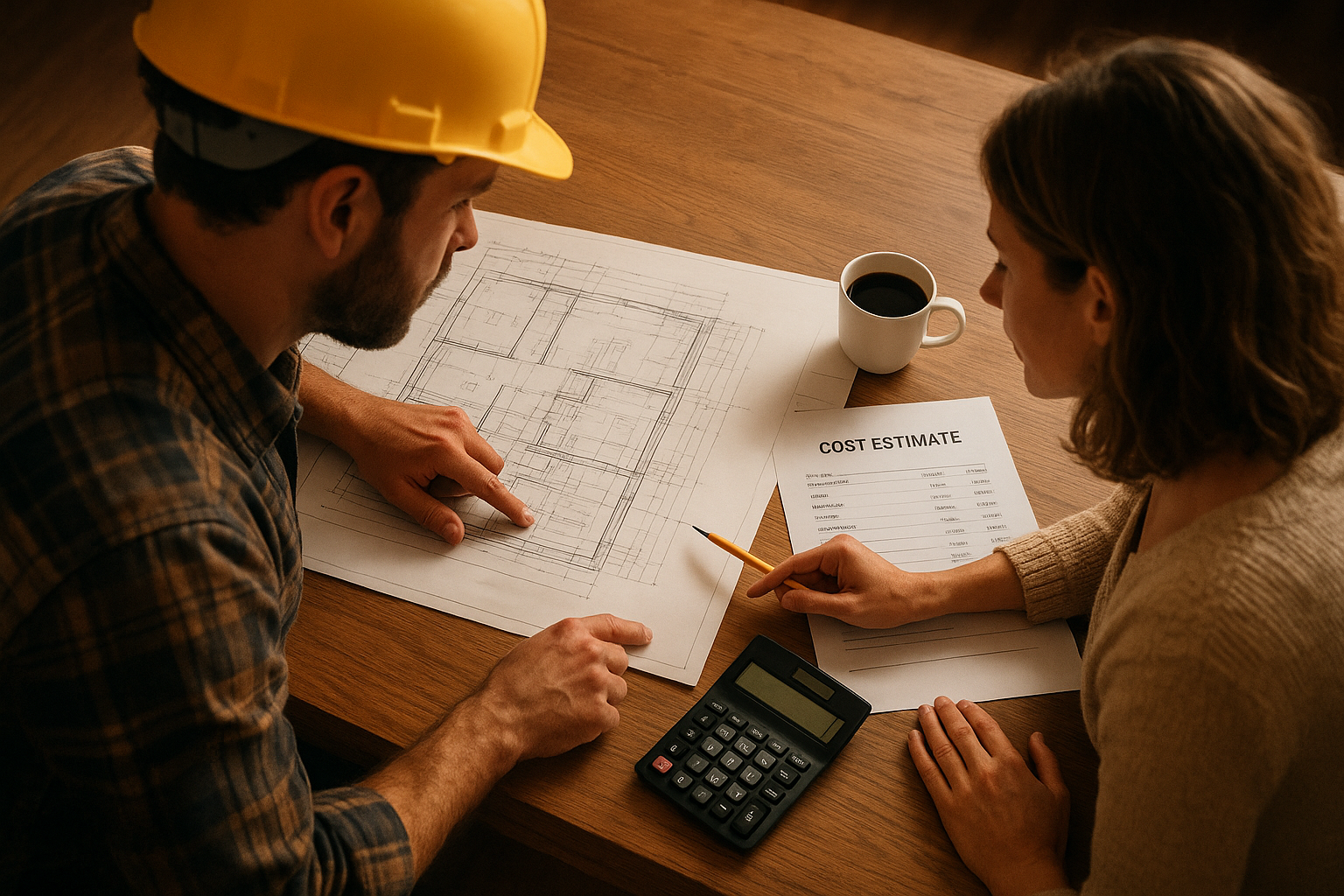
Reviewing itemized estimates with a licensed contractor is a critical step in accurate ADU budget planning.
How to Use an ADU Cost Estimator: A 5-Step Formula
Building a reliable estimate requires working through each cost layer systematically. Follow these five steps in order, and you will land on a number you can genuinely use.
- Choose your ADU type. Decide between detached, attached, garage conversion, or junior ADU. Each type carries a fundamentally different cost profile, so this choice anchors everything else in your estimate.
- Determine your target square footage. Multiply your desired square footage by the local cost-per-square-foot benchmark. In Southern California, that benchmark typically runs $250 to $500 per square foot for standard construction. For example, an 800 sq ft detached unit at $300/sq ft yields a $240,000 construction baseline.
- Add soft costs: design, engineering, and permits. Architectural design fees typically run $5,000 to $20,000. Structural engineering adds another $2,000 to $8,000. Permit fees vary by city but commonly range from $5,000 to $25,000. Altogether, soft costs often add 15% to 25% on top of hard construction. Check local ADU permit process for city-specific fees and timelines.
- Assess site preparation and utility connection costs. Grading, soil work, and connecting new electrical, plumbing, and sewer lines to existing systems can add $10,000 to $40,000. Sloped lots or older properties with outdated infrastructure tend to fall at the higher end of this range.
- Add a contingency buffer and get contractor quotes. Always add 10% to 15% to your subtotal for unexpected costs. Then request itemized quotes from at least three licensed contractors to validate your estimate before committing to any contract.
Why Soft Costs Are Almost Always Underestimated
Many homeowners focus entirely on construction labor and materials. However, soft costs — design, engineering, permits, and inspections — frequently account for 20% or more of the total project budget. Ignoring them is the single most common reason ADU projects run out of money before completion.
Fortunately, California law has capped certain impact fees for ADUs under 750 square feet, according to California Senate Bill 1069. This means smaller units can offer real savings on government fees. Even so, always verify current fee schedules with your local building department before finalizing your estimate, since caps and exemptions change by jurisdiction.
Complete ADU Construction Cost Breakdown
A complete ADU budget includes several distinct cost categories. Understanding each one helps you spot where a quote is inflated — or suspiciously low.
Foundation & Framing
Typically 25–35% of hard costs. Slab foundations cost less; raised foundations or hillside lots cost more.
Mechanical, Electrical & Plumbing
MEP systems often run 20–30% of total construction cost. New utility connections add to this figure.
Interior Finishes
Flooring, cabinetry, countertops, and fixtures vary widely. Budget $30–$80 per sq ft for standard finishes.
Roofing & Exterior
Roofing, siding, windows, and exterior doors typically add $20,000–$60,000 depending on materials chosen.
For a more granular breakdown of these categories, the ADU cost breakdown guide from theadupro.com offers essential pre-building insights, and our full cost breakdown archive covers even more line items by category.
Hidden ADU Costs Most Calculators Skip
Beyond the obvious categories, several costs quietly inflate ADU budgets. In particular, watch for these often-overlooked line items:
- Fire sprinkler retrofits — some cities require these if the primary home lacks them, adding $5,000–$15,000.
- Solar mandate compliance — California’s energy code may require solar panels on new detached units.
- Sewer lateral upgrades — older homes sometimes need a full lateral replacement before a new connection is approved.
- Landscaping and drainage restoration — construction often disturbs yards that then need regrading or replanting.
- HOA or coastal commission review fees — applicable in specific neighborhoods and can add weeks and dollars.
How Location Affects Your ADU Estimate
Location matters more than most homeowners expect. In high-cost cities like Santa Monica or Irvine, labor and material costs run higher, and local permit fees can be steeper. In contrast, parts of Riverside County often see lower construction costs thanks to reduced labor market competition.
Additionally, lot characteristics — slope, soil type, access for construction vehicles — can add or subtract tens of thousands of dollars from your final number. According to the National Association of Home Builders (NAHB), site work and preparation costs have increased by over 12% since 2021, driven by rising equipment and labor rates nationwide.
| Area | General Cost Trend |
|---|---|
| Los Angeles County | Higher labor and permit fees; tighter lot access in many areas |
| Orange County | Mid-to-high range; strong contractor availability |
| Riverside County | Generally lower construction and labor costs |
For a comprehensive look at what homeowners across Southern California are actually spending, review the accessory dwelling units cost guide for 2025, which covers real budget scenarios across multiple unit types.
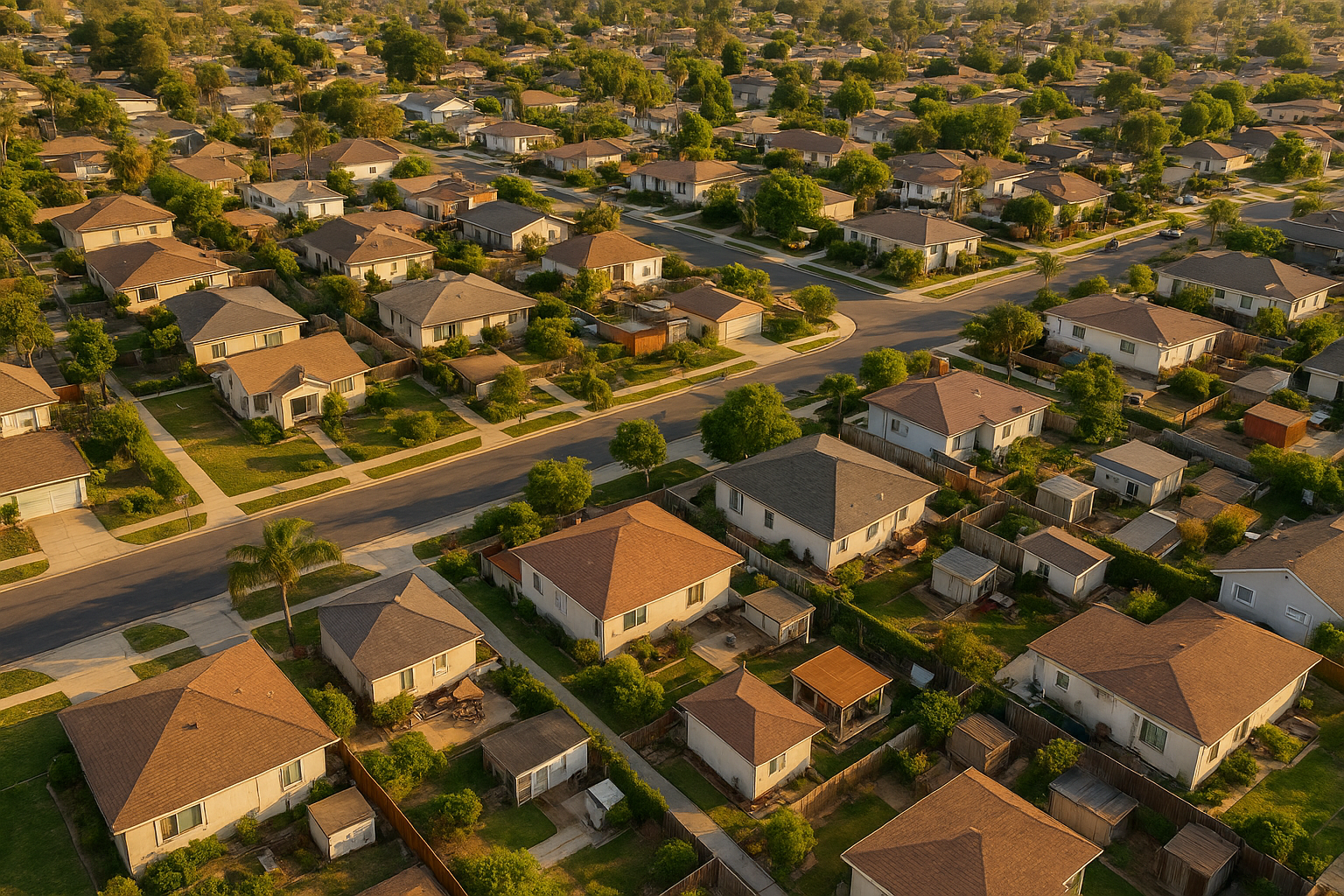
Location within Southern California significantly influences ADU construction costs and permitting timelines.
Financing Your ADU: What to Know Before You Build
Once your estimate is in hand, the next question is how to fund the project. Fortunately, several financing options are available to Southern California homeowners.
- Home equity loans and HELOCs — the most common route, especially given the equity many California homeowners have built.
- Cash-out refinancing — an option, though rising interest rates have made it less attractive recently.
- Construction loans — disbursed in draws tied to project milestones, often paired with a permanent mortgage afterward.
- The CalHFA ADU Grant Program — has offered up to $40,000 in pre-development cost assistance to eligible homeowners, though funding availability changes annually. See the CalHFA ADU Grant Program for current eligibility.
In any case, having a detailed estimate before approaching a lender significantly improves your chances of securing the right loan amount, since lenders want itemized project costs rather than rough guesses. If your existing mortgage will factor into your financing plan, our primary mortgage financing resource explains how equity and existing loan terms affect your ADU borrowing power.
Does an ADU Pay for Itself? A Quick ROI Look
Naturally, most homeowners want to know whether the investment pays off. Studies suggest an ADU can add 20% to 30% to a home’s resale value, and rental income potential makes properties with an existing ADU especially attractive in high-cost markets like Los Angeles and Orange County.
For example, a $250,000 detached ADU renting for $2,200 a month generates roughly $26,400 a year before expenses — meaning many homeowners see a payback horizon well within a decade, especially when equity growth is factored in alongside rental income.
Working with a Trusted ADU Contractor in Southern California
Ultimately, the most accurate ADU cost estimate comes from a qualified, experienced contractor who knows your local market. A reputable contractor provides a detailed, itemized quote that accounts for your specific lot, your chosen unit type, and current local labor and material costs.
theadupro.com serves homeowners throughout Orange County, Los Angeles County, and Riverside County, guiding each client from initial design and permitting through full construction and final inspection. Their team’s deep knowledge of California’s ADU regulations means fewer surprises and a more predictable budget from day one.
Furthermore, working with a contractor who handles the entire process end-to-end reduces the coordination overhead that often inflates costs on projects managed by multiple vendors.
Common ADU Budgeting Mistakes to Avoid
Even careful homeowners make predictable mistakes when running their own numbers. Above all, watch for these:
- Underestimating permitting timelines and fees, which vary sharply by city.
- Ignoring utility connection and upgrade costs until mid-construction.
- Skipping a contingency buffer, leaving no room for surprises.
- Choosing the cheapest bid without verifying licensing, insurance, or past ADU experience.
To keep your own project on track, download our printable ADU budgeting checklist and work through it before you request contractor bids.
Frequently Asked Questions About ADU Cost Estimator
What is an ADU cost estimator?
An ADU cost estimator is a tool or framework that helps homeowners calculate the expected expenses of building an accessory dwelling unit. It accounts for construction, permitting, design, and site preparation costs to produce a realistic budget range. Add an author byline and a short bio with credentials to improve credibility and trust.
How much does it cost to build an ADU in Southern California in 2025?
In Southern California, ADU construction costs typically range from $150,000 to $400,000 or more depending on unit type, size, and location. Garage conversions tend to cost less, while new detached units cost the most.
What factors affect ADU construction costs the most?
The biggest cost drivers include the ADU type (detached vs. attached vs. garage conversion), square footage, site conditions, local permitting fees, and the level of interior finishes selected. Each variable can shift your total by tens of thousands of dollars.
How much does a garage conversion ADU cost?
Garage conversion ADUs in Southern California typically cost between $80,000 and $150,000. The lower cost reflects the existing foundation and structure, which reduces new construction labor significantly.
What is a junior ADU and how much does it cost?
A junior ADU (JADU) is a unit of 500 square feet or less created within the existing walls of a primary residence. JADUs are the most affordable ADU type, often costing between $30,000 and $80,000.
How much do ADU permits cost in California?
ADU permit fees in California vary by city and county but typically range from $5,000 to $25,000. California law has capped certain impact fees for ADUs under 750 square feet to encourage construction.
Can I finance an ADU construction project?
Yes, homeowners can finance ADU construction through home equity loans, HELOCs, cash-out refinancing, construction loans, or ADU-specific lending programs. California also offers state-backed ADU financing through the CalHFA ADU Grant Program.
How long does it take to build an ADU in Southern California?
The typical ADU project takes 6 to 12 months from design to final inspection. Permitting alone can take 2 to 4 months depending on the jurisdiction, and construction typically runs 3 to 6 months.
What is the cost per square foot to build an ADU?
In Southern California, ADU construction costs typically range from $250 to $500 per square foot. Higher-end finishes, complex sites, or custom designs can push costs above that range.
Does an ADU increase property value?
Yes, ADUs generally increase property value. Studies suggest an ADU can add 20% to 30% to a home’s resale value, and rental income potential makes them attractive to buyers in high-cost markets like Los Angeles and Orange County.
What common mistakes should I avoid when budgeting for an ADU?
Common mistakes include underestimating permitting costs, ignoring utility connection fees, failing to budget for site prep, and choosing the cheapest contractor without verifying experience. Always add a 10% to 15% contingency buffer to your estimate.
Are ADU construction costs tax deductible?
ADU construction costs are generally not immediately tax deductible, but they may be depreciated over time if the unit is rented out. Consult a tax professional to understand how ADU expenses apply to your specific situation.
How accurate is an online ADU cost estimator compared to a contractor quote?
An online ADU cost estimator is best used to set expectations and compare unit types, typically landing within 10% to 20% of a final contractor quote. However, only a licensed contractor who has inspected your lot can give you a truly binding number, so treat the estimator as your starting point, not your final budget.
Conclusion: Start With a Solid ADU Cost Estimate
Using a reliable ADU cost estimator is the smartest first step any Southern California homeowner can take before breaking ground. By understanding the cost differences between unit types, accounting for soft costs and hidden fees, and building in a contingency buffer, you give your project the financial foundation it needs to succeed. Furthermore, partnering with an experienced local contractor ensures your estimate reflects real market conditions — not generic national averages. Whether you’re planning a detached guest house, a garage conversion, or a junior ADU, accurate cost planning makes the entire process smoother, faster, and far less stressful.