
The ADU financial return is one of the most compelling reasons Southern California homeowners are adding accessory dwelling units to their properties at a record pace. In simple terms, ADU financial return refers to the measurable financial gain — through rental income, property value appreciation, or both — that a homeowner realizes after investing in an accessory dwelling unit. Whether you own a home in Orange County, Los Angeles County, or Riverside County, understanding how this return works can help you make a smarter, more confident investment decision. To begin, start planning your ADU with our complete guide.
According to the California Department of Housing and Community Development, ADU permit applications have grown by over 1,000% since 2017, reflecting a dramatic shift in how homeowners view their properties. Furthermore, this growth is not simply about housing supply — it is driven by real, measurable financial opportunity.
What Is ADU Financial Return?
ADU financial return is the total economic benefit a homeowner receives from building an accessory dwelling unit, measured against the cost of construction. It includes two primary components: ongoing rental income and the property’s resale value. In practice, most homeowners benefit from both simultaneously.
For example, a homeowner in Anaheim who spends $220,000 building a detached ADU might collect $2,400 per month in rent while also seeing their home’s assessed value rise by $180,000 or more. That combination creates a powerful dual return that few other home improvement projects can match.
Quick Answer
ADU financial return combines monthly rental income (typically $1,800–$3,500 in Southern California) with a property value increase of 20%–35%. Together, these returns often allow homeowners to recoup construction costs within 8 to 15 years while generating income every month.
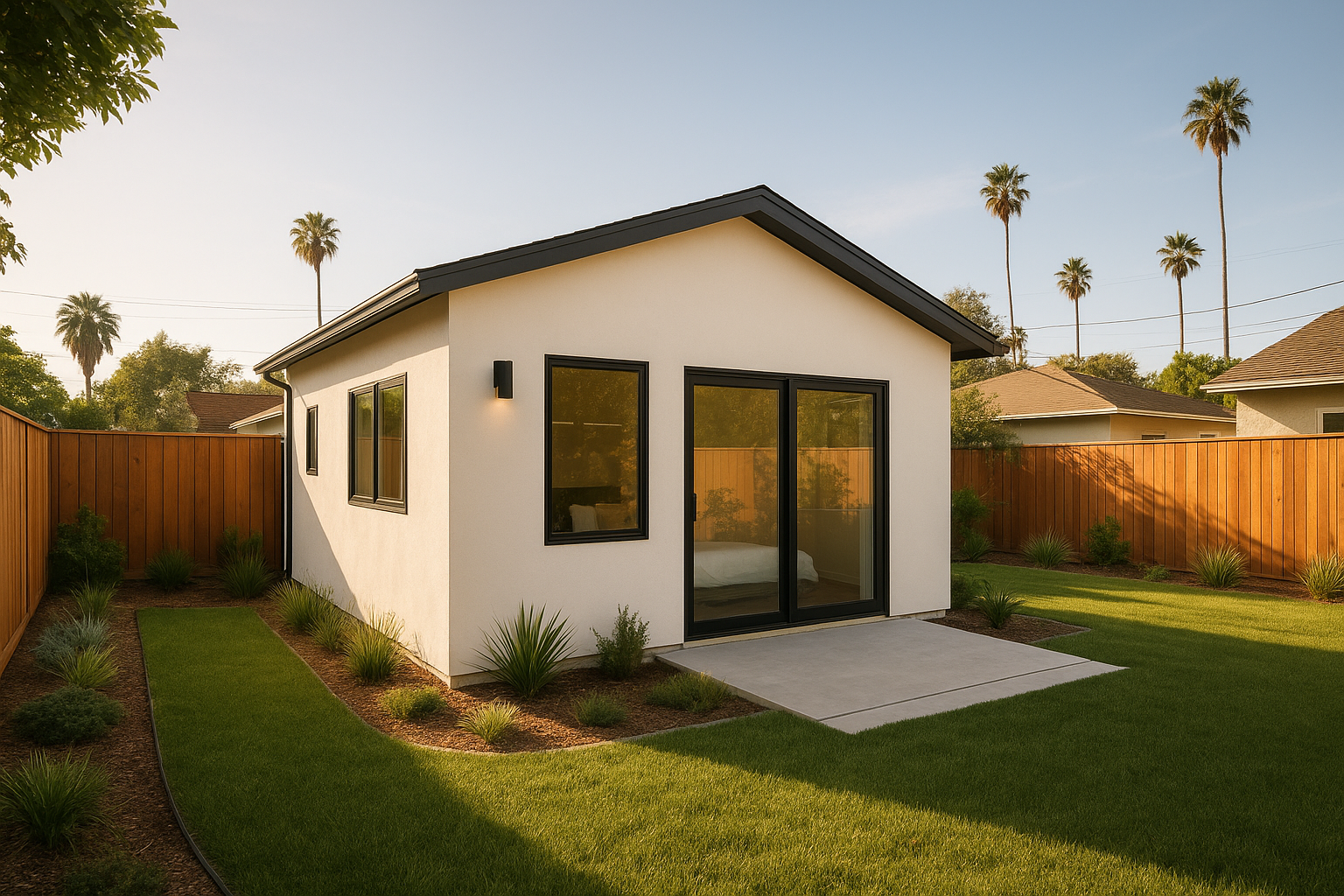
A well-designed detached ADU can generate significant rental income while boosting overall property value in competitive Southern California markets.
How Rental Income Drives Your Return on Investment
Rental income is the most immediate and tangible component of any ADU investment. In high-demand rental markets across Southern California, monthly rents for ADUs range from $1,800 to $3,500 depending on size, location, and amenities. Consequently, a homeowner renting a two-bedroom ADU in Irvine at $2,800 per month earns $33,600 annually — before any property value gains. Learn how to maximize ADU rental potential to increase net income and reduce vacancy.
To calculate a simple rental yield, divide your annual rental income by the total construction cost. For instance, $33,600 divided by $250,000 equals a 13.4% gross annual yield — a figure that compares favorably with most traditional investment vehicles. However, it is important to subtract operating expenses such as insurance, maintenance, and property management fees to arrive at your net yield. Use our ADU cost estimator to model scenarios and refine your payback timeline.
For a deeper breakdown of what these numbers look like in practice, the comprehensive ADU project financial breakdown on theadupro.com offers detailed cost and income projections by unit type.
ADU Types and Their Rental Income Potential
Not all ADUs generate the same rental income. In general, larger and more independent units command higher rents. Here is a comparison of common ADU types in Southern California: Explore prefab ADU options for cost and timeline comparisons.
| ADU Type | Avg. Monthly Rent | Typical Build Cost |
|---|---|---|
| Detached ADU | $2,200 – $3,500 | $200,000 – $400,000 |
| Garage Conversion | $1,800 – $2,800 | $80,000 – $180,000 |
| Attached ADU | $1,900 – $3,000 | $150,000 – $300,000 |
| Junior ADU (JADU) | $1,200 – $1,900 | $50,000 – $100,000 |
As the table shows, garage conversions often deliver the strongest return relative to cost. Therefore, many homeowners start with this option to minimize upfront investment while still generating meaningful monthly income. You can explore more about what to expect when building an ADU to better plan your budget.
Property Value Appreciation: The Hidden Wealth Builder
Beyond monthly rent checks, ADU property value increase. Research from the Zillow Research Center and other real estate analysts consistently shows that homes with ADUs sell for 20% to 35% more than comparable homes without them in California markets. For a home valued at $800,000, that translates to an additional $160,000 to $280,000 in resale value.
This appreciation is particularly pronounced in supply-constrained markets like Los Angeles and Orange County, where buyers actively seek income-generating properties. In addition, California’s evolving ADU regulations — which have dramatically streamlined the permitting process since 2020 — have made ADU-equipped homes even more attractive to investors and owner-occupants alike. Read more on how an ADU increases value with local examples and appraisal considerations.
For homeowners interested in understanding the full investment picture, ADUs from an investor’s perspective provides a detailed breakdown of how professional real estate investors evaluate these assets.
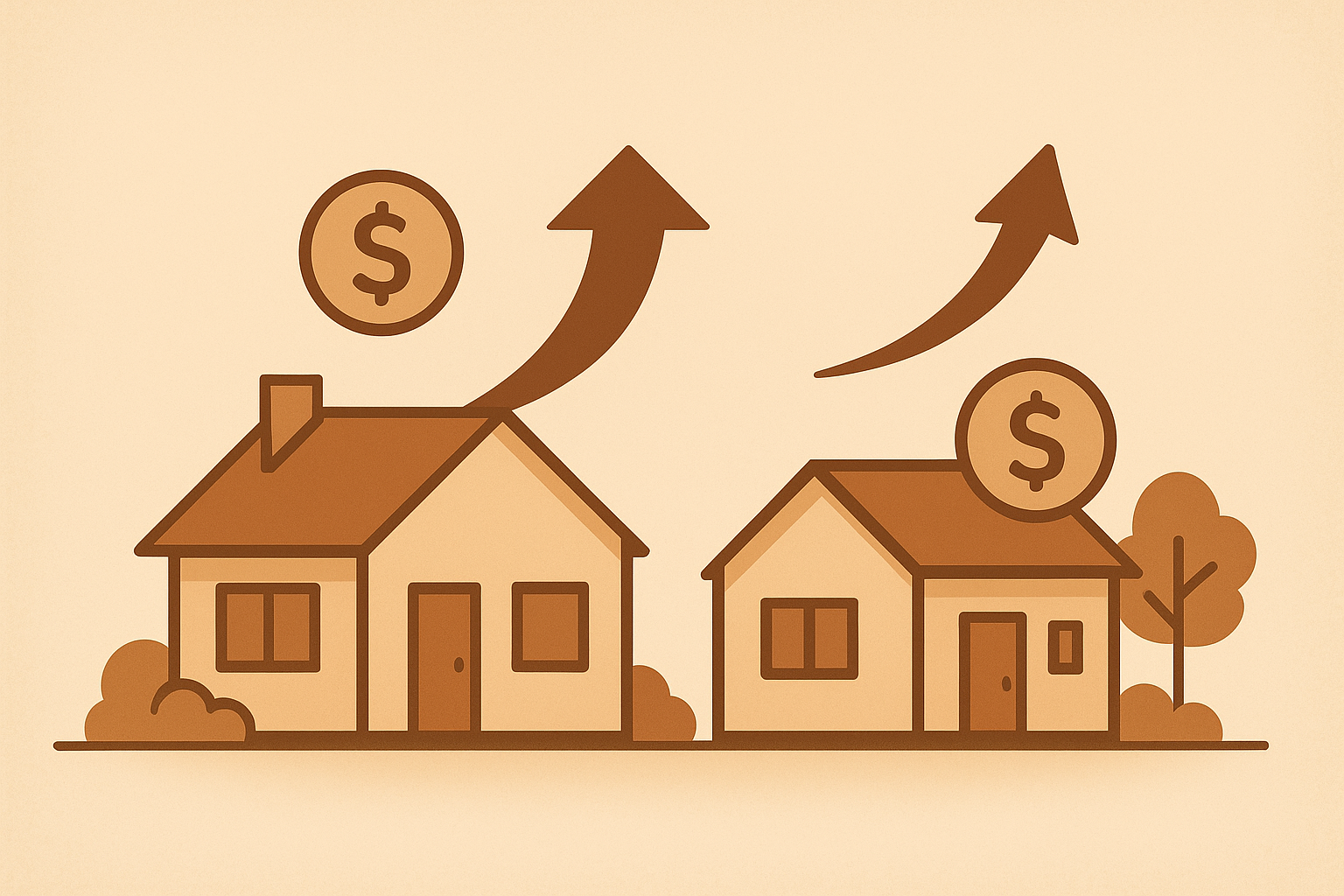
An ADU delivers a dual financial return: consistent monthly rental income and a meaningful boost to your property’s long-term resale value.
How to Maximize Your ADU Financial Return: A Step-by-Step Guide
Maximizing your return requires thoughtful planning before the first shovel hits the ground. Specifically, the decisions you make in the early stages — from unit type to financing — have the greatest impact on your long-term outcome. See residential ADU solutions for design templates and budgeting recommendations.
- Evaluate your property and local rental market. Research comparable rental listings within a one-mile radius. Determine which ADU type fits your lot and generates the strongest demand. A two-bedroom unit in a family-oriented neighborhood will often outperform a studio in the same location.
- Set a realistic budget and secure smart financing. Overbuilding relative to your neighborhood’s price ceiling can reduce your net ROI. Explore financing options such as RenoFi loans, which allow you to borrow against your home’s future value after the ADU is built — a significant advantage over traditional HELOCs.
- Design for rental appeal and low maintenance. Choose durable, attractive finishes that appeal to tenants and minimize repair costs. Features like in-unit laundry, private outdoor space, and energy-efficient appliances consistently command higher rents.
- Navigate permits and approvals efficiently. Delays in permitting directly cost you rental income. Working with an experienced contractor who knows local building departments — such as the team at theadupro.com — can shave weeks or months off your timeline.
- Price your rental competitively and screen tenants carefully. Set rent based on current market data, not construction costs. A thorough tenant screening process reduces vacancy and protects your property, both of which directly support your net return.
Financing Your ADU Without Sacrificing Returns
The financing method you choose has a direct impact on your net ADU return. High-interest financing erodes monthly cash flow, while smart loan structures can actually accelerate your payback period. According to the Consumer Financial Protection Bureau, home equity products remain among the most cost-effective ways to fund home improvements.
RenoFi loans, in particular, are gaining popularity among ADU builders because they base the borrowing limit on the projected post-renovation value of your home rather than its current value. This means you can often access significantly more capital at competitive rates. Furthermore, California offers state-backed ADU financing programs for qualifying homeowners, which can reduce upfront costs even further.
To explore the full range of financial advantages available to you, the financial advantages of building an ADU resource covers tax benefits, depreciation strategies, and income projections in detail.
Common Mistakes That Reduce Your ADU Investment Return
Even well-intentioned homeowners can inadvertently reduce their ADU return through avoidable errors. Understanding these pitfalls in advance is therefore essential to protecting your investment.
Over-building for the neighborhood. Adding luxury finishes in a modest rental market raises your construction cost without proportionally raising your rent. As a result, your payback period stretches unnecessarily.
Skipping proper permits. Unpermitted ADUs cannot be legally rented and may need to be demolished or brought into compliance before a home sale. This risk can eliminate your entire return and then some.
Underestimating operating costs. Vacancy, maintenance, insurance, and property management fees typically reduce gross rental income by 20% to 30%. Consequently, always model your return using net figures, not gross rent.
Choosing the wrong contractor. Construction delays and quality problems are expensive. Working with a top-rated, experienced ADU contractor who manages the entire process — from design through final inspection — is one of the most reliable ways to protect your investment.

Partnering with an experienced ADU contractor from the start helps homeowners avoid costly mistakes that reduce their overall financial return.
Frequently Asked Questions About ADU Financial Return
What is the typical ADU financial return for homeowners?
The typical ADU financial return combines annual rental yields of 5% to 10% on construction investment with property value increases of $100,000 to $300,000 in Southern California markets. Both components together make ADUs one of the strongest residential investment options available. In high-demand areas like Orange County and Los Angeles, returns tend to be even more pronounced. See increase my property value for local examples and numbers.
How much does it cost to build an ADU in Southern California?
Building an ADU in Southern California typically costs between $150,000 and $400,000 depending on type, size, and finishes. Garage conversions are the most affordable option, while detached new-construction ADUs cost the most. Costs also vary by city due to differing permit fees and labor markets.
How long does it take to recoup the cost of building an ADU?
Most homeowners recoup their ADU construction costs within 8 to 15 years through rental income alone. However, the total return is often realized much sooner when factoring in the increase in property resale value. In strong rental markets, payback periods closer to 7 to 9 years are achievable.
Does adding an ADU increase property value?
Yes, adding an ADU consistently increases property value. Studies show ADUs can increase a home’s resale value by 20% to 35% in competitive California markets, making them one of the highest-ROI home improvements available. This increase is especially significant in areas with tight housing supply.
What type of ADU offers the best return on investment?
Garage conversions typically offer the best return on investment because construction costs are lower while rental income potential remains similar to other ADU types. However, detached ADUs often command higher rents and add more to property value, making them the better long-term choice in premium markets.
Can I use rental income from an ADU to qualify for a loan?
Yes, many lenders allow projected or actual ADU rental income to count toward qualifying income when applying for construction or renovation loans. Specialized products like RenoFi loans are designed specifically for this purpose. Always confirm with your lender what documentation is required to use rental income in your application.
What are the tax implications of renting out an ADU?
Rental income from an ADU is generally taxable as ordinary income. However, homeowners can often deduct expenses such as mortgage interest, depreciation, repairs, and property management fees to reduce their taxable rental income. Consulting a tax professional familiar with rental property is strongly recommended.
How much rental income can an ADU generate in Orange County?
In Orange County, ADUs typically rent for $1,800 to $3,500 per month depending on size, location, and amenities. This means annual gross rental income of $21,600 to $42,000 is realistic for most units. Larger two-bedroom units in coastal or high-demand cities tend to reach the upper end of this range.
What is a junior ADU and how does its financial return compare?
A junior ADU (JADU) is a smaller unit of up to 500 square feet created within the existing footprint of a home. Its construction cost is lower, typically $50,000 to $100,000, but rental income is also lower, making it a good entry-level investment option. JADUs are particularly effective for homeowners who want to generate income with minimal disruption to their primary living space.
Are there financing options specifically for building an ADU?
Yes, there are several financing options tailored to ADU construction, including home equity loans, HELOCs, cash-out refinances, and specialized renovation loans like RenoFi. California also offers state-backed ADU financing programs for qualifying homeowners. Comparing multiple options before committing ensures you minimize interest costs and maximize your net return.
What mistakes reduce ADU financial return?
Common mistakes that reduce ADU financial return include over-building for the neighborhood, choosing poor-quality finishes that increase maintenance costs, failing to obtain proper permits, and underpricing rent. Working with an experienced ADU contractor helps avoid these pitfalls and keeps your project on budget and on schedule.
How do California ADU laws affect my investment?
California’s ADU laws, updated significantly since 2020, have made it easier and faster to build ADUs by reducing permit fees, eliminating many setback requirements, and streamlining approvals. These changes have improved the financial return for ADU investors by lowering upfront costs and reducing timeline risk. Staying current with local regulations is essential for maximizing your return.
Conclusion: Is the ADU Financial Return Worth It?
For most Southern California homeowners, the ADU financial return is not just worth it — it is one of the most powerful wealth-building strategies available today. By combining consistent rental income with meaningful property value appreciation, a well-planned ADU can transform an underutilized backyard or garage into a long-term financial asset. Furthermore, with California’s regulatory environment more favorable than ever, the barriers to entry have never been lower.
The key to maximizing that return lies in smart planning, appropriate financing, and partnering with an experienced contractor who understands both the construction process and the local regulatory landscape. The team at theadupro.com specializes in guiding Orange County, Los Angeles County, and Riverside County homeowners through every phase of ADU development — from initial design and permitting to final inspection. If you are ready to explore what an ADU could mean for your financial future, reaching out to a trusted local expert is the best first step you can take. Add internal links from related guides to improve discoverability and crawl depth. Author: The ADU Pro team, licensed ADU contractors. Last updated: 2026-06-26.