
Riverside County ADU options are among the most flexible and financially rewarding opportunities available to Southern California homeowners today. An accessory dwelling unit (ADU) is a secondary residential structure built on the same lot as a primary home, and Riverside County’s alignment with California’s state ADU laws means property owners enjoy fewer barriers than ever before. Whether you want to generate rental income, house a family member, or simply boost your home’s long-term value, understanding which ADU type fits your property is the essential first step.
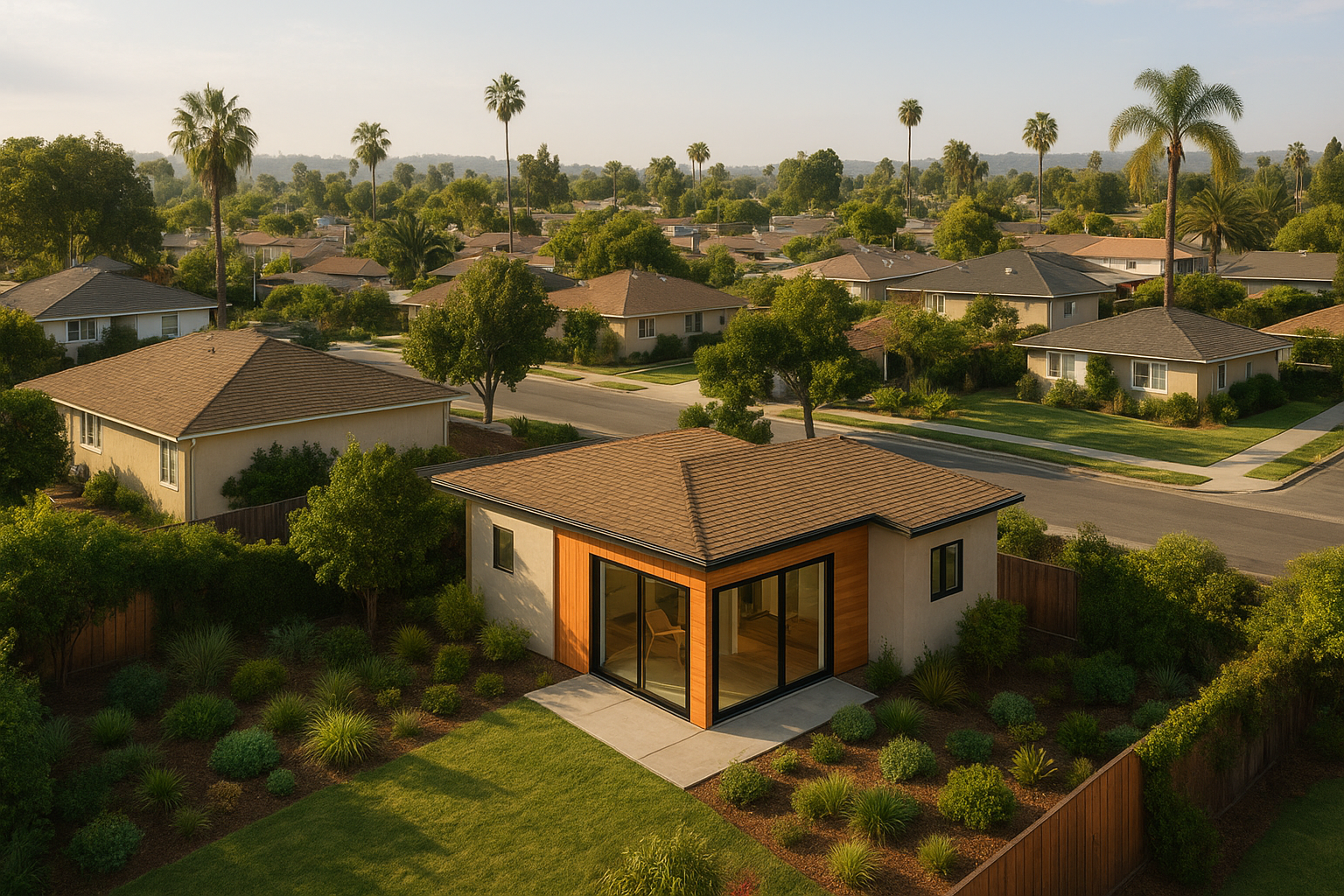
Riverside County ADU options range from detached backyard cottages to converted garages, each designed to maximize your property’s potential.
What Are Riverside County ADU Options?
Riverside County ADU options refer to the range of legally permitted secondary dwelling structures that homeowners can build or convert on their residential lots. California’s Department of Housing and Community Development has established statewide standards that Riverside County must follow, significantly expanding what homeowners can build. As a result, property owners now have five primary ADU categories to consider.
In short: Riverside County allows detached ADUs, attached ADUs, garage conversions, internal conversions, and Junior ADUs (JADUs) — each with distinct size limits, cost profiles, and use cases. Choosing the right type depends on your lot size, existing structures, and financial goals.
1. Detached ADUs: Maximum Privacy and Value
A detached ADU is a fully independent structure built separately from the main home. It can be up to 1,200 square feet under California state law, making it the largest standalone option available. Furthermore, detached ADUs command the highest rental rates because tenants enjoy complete privacy with no shared walls.
Costs for detached units in Riverside County typically range from $150,000 to $350,000 depending on size, finishes, and site preparation requirements. However, the long-term return on investment is often the strongest of all ADU types. For homeowners with sufficient yard space, this is frequently the top recommendation from experienced ADU contractors in Riverside.
2. Attached ADUs: Efficient Use of Existing Footprint
An attached ADU shares at least one wall with the primary residence. This design is particularly cost-effective because it reduces the need for entirely new exterior construction. In addition, attached units connect more easily to existing utility infrastructure, which lowers both construction time and overall cost.
Attached ADUs are ideal for multigenerational households where proximity matters — for example, an aging parent who benefits from being close but still needs independent living space. Similarly, homeowners who want to maximize square footage without consuming the full backyard often prefer this configuration.
Garage Conversions and Internal Conversions
Garage conversions are one of the most popular ADU types throughout Riverside County because they leverage an existing structure. Consequently, they tend to cost significantly less than new construction — typically $80,000 to $150,000. The existing foundation, roof, and walls are reused, which reduces both material and labor costs considerably.
An internal conversion, by contrast, transforms unused interior space — such as a bonus room, basement, or large storage area — into a livable unit. Both conversion types must meet California building codes for habitability, including proper insulation, ventilation, egress windows, and separate utility metering where required.
According to the Riverside County Planning Department, conversion projects still require full building permits and inspections — a step that many homeowners underestimate. Working with a knowledgeable contractor from the start prevents costly mid-project corrections.
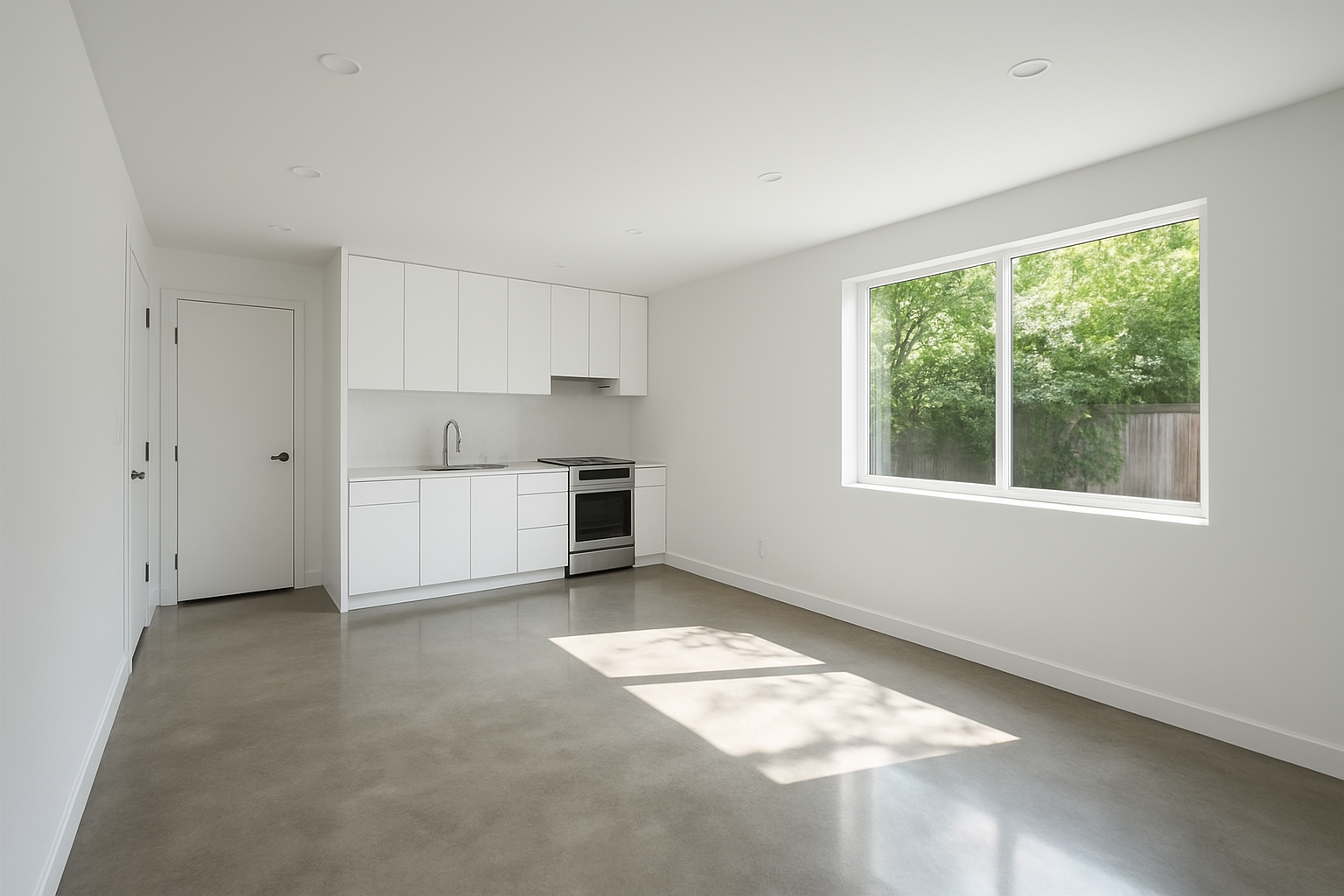
Garage conversions are among the most cost-effective Riverside County ADU options, transforming underused space into a fully habitable unit.
3. Junior ADUs: The Most Affordable Entry Point
A Junior ADU (JADU) is a unit of up to 500 square feet created entirely within the existing walls of a single-family home. Because no new exterior construction is required, JADUs are typically the least expensive option — often costing $40,000 to $80,000. However, California law requires the owner to occupy either the primary residence or the JADU itself.
JADUs must have their own separate entrance and at minimum an efficiency kitchen. Importantly, they may share a bathroom with the main house. For homeowners who want to generate rental income with minimal upfront investment, a JADU is frequently the fastest path forward.
How to Plan and Build an ADU in Riverside County
Successfully developing an ADU involves several sequential steps. Therefore, approaching the process in an organized manner prevents delays and cost overruns. Here is a practical step-by-step overview:
- Assess your property and goals. Evaluate your lot size, existing structures, and primary objective — rental income, multigenerational living, or property value growth — to determine which ADU type suits your situation best.
- Choose your ADU type. Select from detached, attached, garage conversion, internal conversion, or JADU based on your budget, available space, and desired unit size.
- Hire a licensed ADU contractor. Engage a contractor experienced with Riverside County regulations to manage design, engineering, and permit applications efficiently.
- Submit permit applications. Prepare and submit complete documentation — site plans, floor plans, and structural drawings — to the Riverside County Planning Department for review.
- Secure financing. Arrange funding through a home equity loan, construction loan, or specialized ADU lending program. Explore ADU financing options in Riverside early to avoid delays once permits are approved.
- Begin construction and pass inspections. Your contractor manages all construction phases and coordinates required inspections at each milestone, concluding with a final inspection and certificate of occupancy.
Permit Requirements and Setback Rules
Every ADU type in Riverside County requires a building permit — no exceptions. California state law mandates a minimum 4-foot rear and side setback for most ADUs, though local jurisdictions within the county may impose additional requirements. As a result, always verify setback rules with the specific city or unincorporated area where your property is located.
Additionally, owner-occupancy requirements were significantly relaxed by California legislation effective January 1, 2020. Currently, Riverside County does not require owner occupancy for standard ADUs — only for JADUs. This change has made ADU investment more accessible to a broader range of property owners. For detailed current regulations, the California Legislature’s ADU reform bills provide authoritative guidance.
Property Tax Impact of Adding an ADU
A common concern among homeowners is the property tax effect of building an ADU. Fortunately, California’s Proposition 13 protections mean that only the newly constructed ADU value triggers reassessment — your existing home’s assessed value remains unchanged. In practice, this keeps the annual tax increase modest relative to the rental income potential.
For example, a $200,000 detached ADU might add approximately $2,200 to $2,500 per year in property taxes. Meanwhile, the same unit could generate $1,500 to $2,200 per month in rental income depending on location within Riverside County. The financial case for ADU development is therefore compelling for most property owners.

Working with an experienced ADU contractor ensures your Riverside County ADU project meets all local code requirements from day one.
ADU Financing Solutions in Riverside County
Financing is one of the most critical factors in making an ADU project a reality. Fortunately, homeowners in Riverside County have access to several practical options. Home equity lines of credit (HELOCs) and cash-out refinancing are the most common approaches, particularly for homeowners who have built significant equity over recent years.
Specialized ADU construction loans are also available and are specifically structured for this type of project. Homeowners in Moreno Valley, for instance, can explore dedicated ADU loan programs in Moreno Valley designed to streamline the lending process. Similarly, broader ADU loan options throughout Riverside County are available through specialized lenders who understand the unique nature of ADU construction timelines.
Serving Specific Cities Within Riverside County
Riverside County encompasses dozens of cities and unincorporated communities, each with its own local planning nuances. Lake Elsinore, for example, has seen significant ADU development activity in recent years. Homeowners in that area benefit from working with a dedicated ADU builder in Lake Elsinore who understands local permit timelines and zoning specifics.
The team at theadupro.com serves homeowners throughout Riverside County, Orange County, and Los Angeles County, providing end-to-end ADU development from initial design through final inspection. Their local expertise and deep familiarity with California’s evolving ADU regulations make them a trusted partner for property owners at every stage of the process.
Key Statistic
According to the California Department of Housing and Community Development, ADU permit applications statewide increased by over 1,000% between 2016 and 2022 — and Riverside County has been one of the fastest-growing regions in that trend. This surge reflects both the easing of regulations and the growing financial appeal of ADU development for California homeowners.
Frequently Asked Questions About Riverside County ADU Options
What are the main Riverside County ADU options available to homeowners?
Riverside County ADU options include detached ADUs, attached ADUs, garage conversions, internal conversions, and Junior ADUs (JADUs). Each type has different size limits, setback requirements, and cost ranges depending on your lot and existing structures.
How large can an ADU be in Riverside County?
Detached ADUs can be up to 1,200 square feet. Junior ADUs are limited to 500 square feet and must be contained within the existing primary residence.
Do I need a permit to build an ADU in Riverside County?
Yes, all ADU types require building permits. You must submit plans to the Riverside County Planning Department for review and approval before construction begins. Skipping this step can result in fines and mandatory demolition.
How much does it cost to build an ADU in Riverside County?
Garage conversions typically range from $80,000 to $150,000, while detached ADUs can cost $150,000 to $350,000 or more. JADUs are the most affordable, often falling between $40,000 and $80,000.
Can I rent out my ADU in Riverside County?
Yes, homeowners can rent out their ADU. Short-term rentals may be subject to additional local regulations, so verify the rules in your specific city or unincorporated area before listing the unit.
What is a Junior ADU (JADU) and how is it different from a standard ADU?
A JADU is a smaller unit of up to 500 square feet created within the walls of an existing single-family home. Unlike a standard ADU, a JADU requires the owner to occupy either the primary home or the JADU itself.
How long does it take to build an ADU in Riverside County?
Garage conversions may take 3 to 6 months, while new detached ADUs typically take 6 to 12 months from design to final inspection. Permitting timelines vary by jurisdiction and can affect the overall schedule significantly.
Are there financing options available for Riverside County ADU construction?
Yes, several financing options exist including home equity loans, cash-out refinancing, construction loans, and ADU-specific lending programs. Exploring ADU financing in Riverside early in the process helps set a realistic budget and avoids construction delays.
Can I build an ADU on a property with an existing rental unit?
California state law generally allows one ADU and one JADU per single-family lot regardless of existing rental arrangements. Multifamily properties may qualify for additional ADUs under separate state provisions.
What setback rules apply to ADUs in Riverside County?
State law requires a minimum 4-foot rear and side setback for most ADUs. However, local jurisdictions within Riverside County may have additional requirements, so always verify with your local planning department before finalizing your design.
Does adding an ADU increase my property taxes in California?
Adding an ADU triggers a reassessment only for the new construction value, not the entire property. Your existing home’s assessed value is protected under Proposition 13, keeping the overall tax increase relatively modest.
What is the best ADU type for generating rental income in Riverside County?
Detached ADUs generally command the highest rental rates because they offer complete privacy and independence. However, garage conversions offer a lower entry cost and can still generate $1,200 to $1,800 per month in many Riverside County markets.
Conclusion: Choosing the Right ADU for Your Riverside Property
Understanding your Riverside County ADU options is the foundation of a successful project. Whether you pursue a spacious detached unit, a budget-friendly garage conversion, or a compact JADU, each path offers genuine financial and lifestyle benefits. In addition, California’s regulatory environment continues to evolve in favor of homeowners, making now an excellent time to act.
The most important step is partnering with a contractor who knows Riverside County’s specific requirements inside and out. Consequently, you avoid costly permitting delays, design revisions, and code violations that can derail even well-intentioned projects. Above all, a well-planned ADU is one of the most effective ways to increase your property’s value, create passive income, and support your family’s evolving needs for years to come.