
Multigenerational living spaces are homes — or additions to homes — that let two, three, or even four generations of one family share a single property while each generation still keeps its own kitchen, bathroom, entrance, and privacy. Across Southern California, rising home prices, aging parents, and boomerang adult children have pushed this housing style from niche to necessity. Specifically, accessory dwelling units (ADUs) have emerged as the fastest, most cost-effective way to build these spaces, and this guide walks through every decision you will need to make — from ADU type to floor plan features to financing — so you can build a home that genuinely works for your whole family.
What Are Multigenerational Living Spaces, Exactly?
In simple terms, multigenerational living spaces combine independence with proximity. Instead of forcing grandparents, adult children, or extended relatives into one shared bathroom and kitchen, these arrangements give every generation its own self-contained footprint — while keeping everyone on the same lot. As a result, families get the emotional and practical benefits of living close together without sacrificing personal space.
In practice, this looks different depending on the property. Some families build these spaces directly into a new home’s floor plan — think a downstairs suite with its own entrance. Others add a fully detached backyard ADU. Either way, the goal is the same: independence under one roof, or on one lot.
Why Multigenerational Living Spaces Are Surging Across Southern California
According to Pew Research Center, approximately 59 million Americans — nearly 18% of the U.S. population — lived in multigenerational households as of 2021, a figure that has more than doubled since 1971. Similarly, data compiled by the U.S. Census Bureau shows that shared-household living has grown fastest in exactly the markets where housing costs have climbed the most, including Los Angeles, Orange, and Riverside counties.
Furthermore, California’s evolving ADU legislation has made it dramatically easier to add a legal secondary unit to a single-family lot. Consequently, homeowners are choosing to build dedicated multigenerational living spaces rather than absorb the cost of two separate mortgages, two sets of rent, or an expensive assisted-living facility.
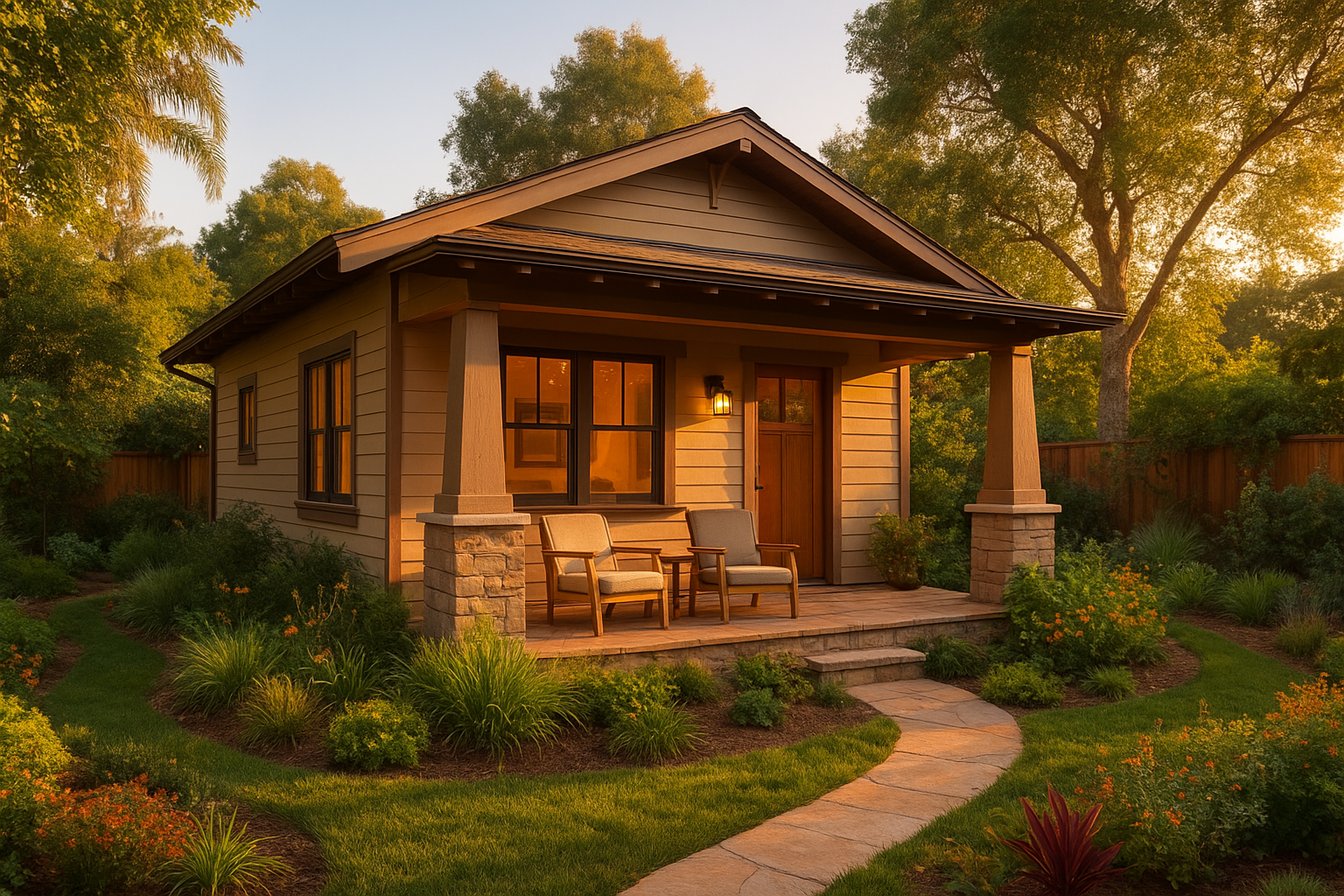
A well-designed detached ADU creates truly independent multigenerational living spaces without leaving the family property.
Multigenerational Floor Plans vs. Backyard ADUs: Which Fits Your Family?
Many builders talk about “multigenerational floor plans” as if a single new-construction home is your only option. However, that is only half the picture. In reality, Southern California families weighing multigenerational living spaces usually choose between two distinct approaches, and understanding both prevents costly regret.
Built-In Multigenerational Floor Plans
This approach embeds a secondary suite — often a downstairs bedroom, private bath, and small kitchenette — inside one new home. It works well for buyers purchasing new construction from the ground up. On the other hand, it locks your family into whatever square footage the builder offers, and it usually costs more upfront since it is bundled into the home’s total price.
Standalone Multigenerational ADUs
By contrast, an ADU is added to a home you already own — no need to move, sell, or buy new construction. As a result, this route is typically far more affordable, faster to obtain permits for thanks to California’s streamlined ADU laws, and more flexible since it can later be rented out or repurposed. For most existing Southern California homeowners, this is why ADUs help with multigenerational living situations in ways that a built-in floor plan simply cannot match.
Which ADU Types Work Best for Multigenerational Living Spaces?
Not every ADU is built the same way, and choosing the right type is one of the most important early decisions you will make. Each format offers different advantages depending on your lot, budget, and how much separation your family needs.
Here is a breakdown of the four most common ADU types suited to multigenerational households:
- Detached Guest House: A fully separate structure in the backyard. Ideal for maximum privacy and independence. Best suited for parents or adult children who need their own complete home. See ADU design Lake Forest for layout examples.
- Garage Conversion: Transforms an existing garage into livable square footage. Generally the most cost-effective option, with construction costs often starting around $80,000.
- Attached Addition: Built onto the side or rear of the main home. Provides convenient access between units while still offering a private entrance.
- Junior ADU (JADU): A compact unit of up to 500 square feet carved from the existing home’s footprint. A practical choice when budget or lot size is limited.
For detailed inspiration on layouts and design approaches, explore these ADU design ideas for maximizing space and style from The ADU Pro’s resource library, or browse these multigenerational ADU design ideas for SoCal homes for layouts built specifically for shared-family living.
Essential Floor Plan Features for Seamless Multigenerational Coexistence
Above all, a floor plan either supports peaceful coexistence or quietly creates friction. Specifically, the following features consistently make the biggest difference in real multigenerational households:
- A private, separate entrance: This single feature does more for family harmony than almost anything else, since it lets each generation come and go on their own schedule.
- A full kitchenette or kitchen: Even a compact kitchenette prevents the daily friction of sharing one cooking space between multiple households.
- Sound isolation: Insulated interior walls, solid-core doors, and staggered stud framing dramatically reduce noise transfer between units.
- A flexible bonus room: A den or flex space allows the unit to shift from home office to nursery to guest room as family needs change over time.
- Shared outdoor space: A common patio, garden, or yard keeps generations connected without requiring them to share indoor square footage.
In contrast to a generic guest suite, a floor plan built with these five features in mind functions as a genuine second home — which is exactly what makes multigenerational living spaces sustainable for years, not just months.
How to Plan a Multigenerational ADU: Step-by-Step
Planning a family ADU involves more than picking a floor plan. It requires a clear process that balances design, budget, and regulatory compliance. The following steps reflect the proven approach used by experienced Southern California ADU contractors.
- Assess your property and family needs. Start by evaluating your lot size, existing structures, and what each generation specifically requires — from accessibility features for elderly parents to workspace needs for adult children. See our ADU planning guide for step-by-step preparation.
- Choose the right ADU type. Match the ADU format to your budget, lot constraints, and desired level of separation, since a detached unit offers the most independence while a JADU costs the least.
- Work with a designer on the floor plan. Prioritize accessibility, soundproofing, and efficient kitchen and bathroom layouts, because wider doorways, no-step entries, and grab bars are especially important when housing older relatives.
- Submit plans and obtain permits. Your contractor submits architectural drawings to the local building department, and California’s streamlined ADU permitting laws, including HCD-backed regulations, have reduced wait times significantly in many jurisdictions.
- Begin construction and monitor progress. Stay in regular contact with your project manager and address any issues quickly to keep the project on schedule and within budget.
- Complete final inspection and move in. After construction wraps, schedule the final inspection to receive a certificate of occupancy so your family members can officially move into their new home.
Accessibility: A Critical Design Priority
When designing for older family members, accessibility is non-negotiable. Specifically, features like zero-threshold showers, lever-style door handles, and open floor plans with wider hallways can make a dramatic difference in daily comfort and long-term usability. In addition, planning for these features from the start is far less expensive than retrofitting them later.
For more targeted guidance on maximizing every square foot, visit The ADU Pro’s guide on how to maximize space in a small ADU. Similarly, reviewing ADU design resources can help you explore proven layout strategies, and this comprehensive guide to designing accessible ADUs for aging in place covers universal-design details worth reviewing before finalizing your floor plan.
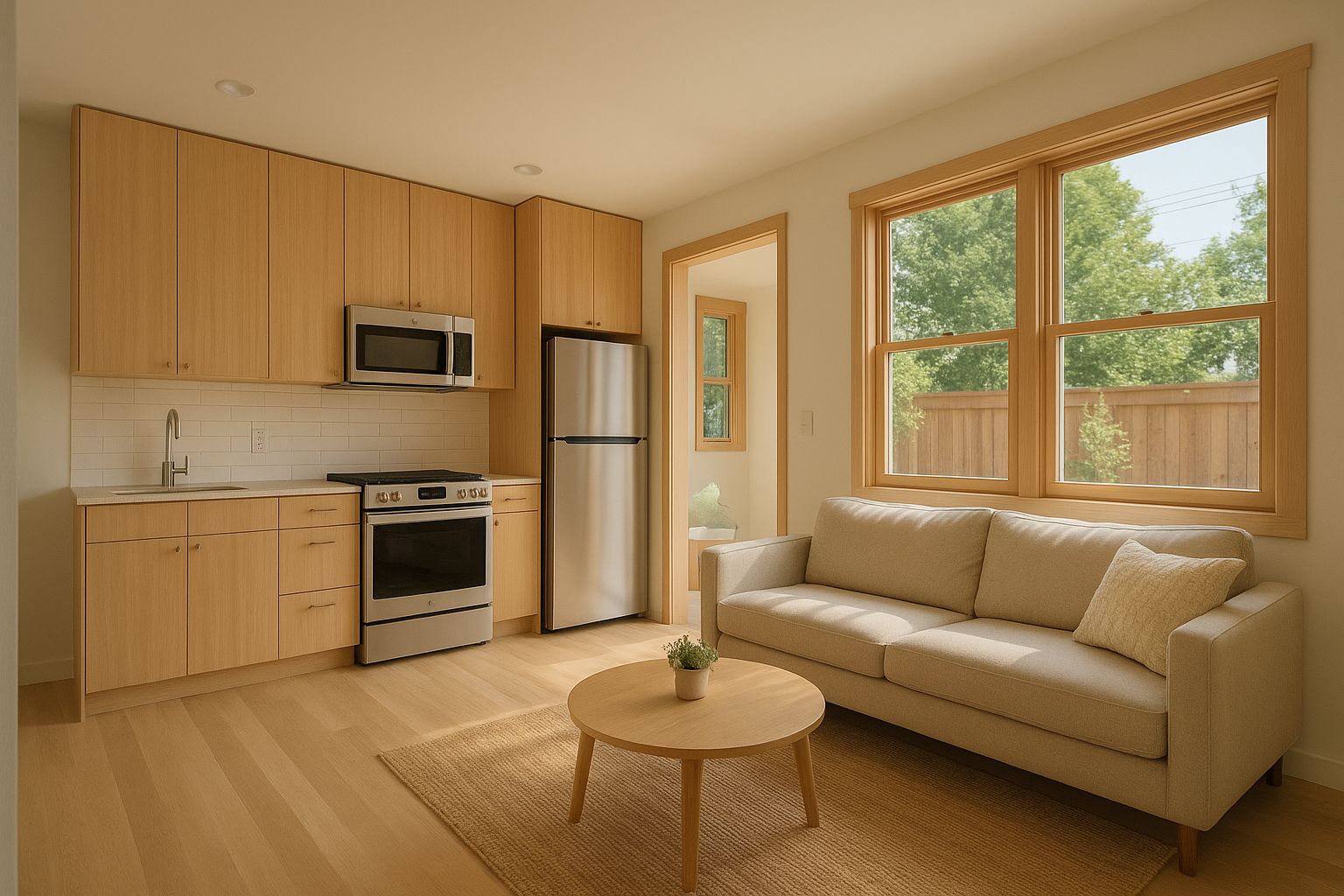
Accessible, open-plan interiors make ADUs more comfortable and practical for older family members in multigenerational households.
Financial Benefits of Building a Family ADU
Beyond the emotional and practical rewards, multigenerational living spaces deliver measurable financial benefits. First, they can significantly increase your property’s appraised value. Research indicates that ADUs can add between 20% and 30% to a home’s market value in high-demand California markets, according to industry analyses and real estate professionals familiar with Southern California trends.
Moreover, when the ADU is not being used by family, it can generate rental income. In Orange County and Los Angeles County, well-designed ADUs routinely command $1,500 to $2,800 per month in long-term rental markets. That income can offset your mortgage, fund the ADU construction loan, or simply build financial security over time.
Additionally, families who use an ADU to house elderly parents often reduce or eliminate costly assisted living expenses, which in California can exceed $5,000 per month. Therefore, the return on investment for a well-planned family ADU is often compelling from multiple angles.
California ADU Laws That Favor Families
California has passed several landmark laws — including AB 68, SB 9, and related legislation — that have dramatically lowered the barriers to ADU construction. Consequently, most single-family lots in Orange County, Los Angeles County, and Riverside County are now eligible to add at least one ADU and one junior ADU. Local municipalities can no longer impose the strict setback rules or owner-occupancy requirements that once made ADU projects impractical for many homeowners.
You can review the latest statewide ADU requirements directly on the California HCD ADU resource page. For local guidance specific to Newport Beach and surrounding communities, explore the ADU design options in Newport Beach available through The ADU Pro.
Choosing the Right Contractor for Your Multigenerational Project
The quality of your ADU depends heavily on the contractor you choose. Specifically, you want a team with deep experience in California ADU permitting, a track record of on-time delivery, and transparent communication from the first consultation through the final walkthrough.
The ADU Pro serves homeowners throughout Orange County, Los Angeles County, and Riverside County with end-to-end ADU development — covering design, permitting, construction, and final inspection. As the top-rated ADU contractor in Southern California, their team brings local regulatory knowledge and skilled craftsmanship to every multigenerational project. If you want a closer look at who leads this space, this roundup of the best ADU builders for multigenerational living spaces in Southern California is a useful starting point.
Furthermore, working with a single firm that handles the entire project — rather than coordinating between separate designers, permit expediters, and builders — dramatically reduces stress and the risk of miscommunication. It also tends to keep projects on schedule and within budget.
Common Mistakes That Undermine Multigenerational Living Spaces
Even a well-intentioned project can fall short if a few common pitfalls go unaddressed. Below are the mistakes we see most often, along with how to avoid each one.
- Skipping family conversations before design starts: Above all, sit down with every generation early to align on privacy expectations, shared spaces, and daily routines before drawings are finalized.
- Underestimating accessibility needs: A family member’s mobility needs can change quickly, so building in accessibility now avoids an expensive retrofit later.
- Choosing the cheapest ADU type without weighing long-term needs: A JADU may save money upfront, however it may not suit a family that needs true separation for the long term.
- Ignoring soundproofing: Without it, even a well-designed unit can create friction between generations who keep different schedules.
- Hiring separate designers, permit expediters, and builders: This fragmented approach frequently causes delays; a single accountable contractor is almost always faster and less stressful.
Frequently Asked Questions About Multigenerational Living Spaces
What are multigenerational living spaces?
Multigenerational living spaces are residential areas designed to accommodate two or more generations of a family under one property. They often take the form of ADUs, in-law suites, or attached additions that provide private living quarters while keeping family members close. This arrangement supports both independence and proximity.
What types of ADUs work best for multigenerational living spaces?
Detached guest houses, garage conversions, attached additions, and junior ADUs are all popular choices. The best option depends on your lot size, budget, and how much privacy each generation needs.
How much does it cost to build a multigenerational ADU in Southern California?
Costs typically range from $80,000 for a basic garage conversion to over $300,000 for a fully custom detached ADU. Factors like size, finishes, permitting fees, and site conditions all influence the final price.
Do I need a permit to build a multigenerational living space in California?
Yes, a building permit is required for virtually all ADU construction in California. California’s ADU laws have streamlined the permitting process significantly, but you still must submit plans and receive approval before construction begins.
How long does it take to build an ADU for multigenerational use?
Construction timelines typically range from four to twelve months, depending on the ADU type and local permitting speed. Garage conversions are usually faster, while custom detached units take longer to complete.
Can a multigenerational ADU increase my home’s value?
Yes, adding an ADU generally increases property value in Southern California. Studies show that ADUs can add between 20% and 30% to a home’s appraised value depending on location and quality of construction.
What California laws apply to ADU construction?
California’s ADU laws, including AB 68, SB 9, and related legislation, have significantly reduced barriers to building ADUs. These laws limit local restrictions on setbacks, owner-occupancy requirements, and permitting timelines, making it easier for families to add secondary units.
What is a junior ADU and is it suitable for multigenerational living?
A junior ADU (JADU) is a small unit of up to 500 square feet created within the existing footprint of a home. It can be a good fit for multigenerational living when a family member needs a private space but the budget or lot size is limited.
Can I rent out my ADU if my family no longer needs it for multigenerational use?
Yes, most ADUs in California can be rented out as long-term rentals. This flexibility makes ADUs a smart investment whether you use them for family or as a source of rental income over time.
What design features are most important in a multigenerational living space?
Accessibility features such as wider doorways, no-step entries, and grab bars are especially important when housing older relatives. Additionally, soundproofing, separate entrances, and efficient kitchen layouts improve daily comfort for all generations who share the property.
How do I choose the right ADU contractor for a multigenerational project?
Look for a licensed contractor with proven ADU experience in your county, strong references, and familiarity with local permitting requirements. A contractor who handles design through final inspection provides the most streamlined and stress-free experience.
Are there financing options available for building a multigenerational ADU?
Yes, homeowners can use home equity loans, cash-out refinancing, construction loans, or California’s ADU financing programs to fund their project. Consulting a lender familiar with ADU projects in Southern California is highly advisable before committing to a budget.
What’s the difference between a multigenerational floor plan and a backyard ADU?
A multigenerational floor plan is built into one new-construction home, while a backyard ADU is added to a property you already own. In contrast to a built-in suite, an ADU is usually faster to permit, less expensive, and more flexible since it can later be rented independently.
Conclusion: Building a Better Future With Multigenerational Living Spaces
In summary, multigenerational living spaces represent one of the most meaningful investments a Southern California homeowner can make — for their family, their finances, and their property’s long-term value. As housing costs rise and family needs evolve, ADUs provide a flexible, legal, and cost-effective solution that keeps generations connected without sacrificing independence. Whether you are considering a detached guest house, a garage conversion, or a junior ADU, the key is starting with a clear plan, the right floor plan features, and a contractor who understands California’s regulatory landscape. Explore your options with the team at The ADU Pro and take the first step toward a home that truly works for your whole family. For additional space-planning ideas, browse the space-focused ADU resources on their site.