
Custom ADU design is the process of creating a personalized accessory dwelling unit — a secondary living space on your residential property — tailored specifically to your lot dimensions, lifestyle goals, and local building codes. For homeowners in Southern California, a well-executed custom ADU design can unlock significant rental income, increase property value, and solve real housing challenges for multigenerational families. Whether you’re envisioning a detached backyard cottage, a garage conversion, or a compact junior ADU, the design phase is where the entire project takes shape. — Article by The AdU Pro team. Last updated: 2026-07-26.
What Is Custom ADU Design?
Custom ADU design is a tailored architectural and planning approach that differs from Complete SoCal ADU guide pre-approved or stock ADU plans. Instead of using a one-size-fits-all template, a custom design accounts for your specific parcel shape, soil conditions, sun orientation, existing structures, and personal preferences. The result is a unit that feels intentional — not generic.
According to the California Department of Housing and Community Development, ADU permitting statewide has grown dramatically since 2020, with over 23,000 ADU permits issued in California in 2022 alone. That surge reflects growing homeowner demand for flexible, income-generating living spaces — and a well-designed ADU is at the heart of each successful project; see our ADU construction guide for step-by-step construction details.
Furthermore, a custom approach ensures your new unit complements the architectural character of your primary home, which matters both aesthetically and at resale. A cohesive property simply commands more on the open market — see our design and build guide for integrated design-build planning.
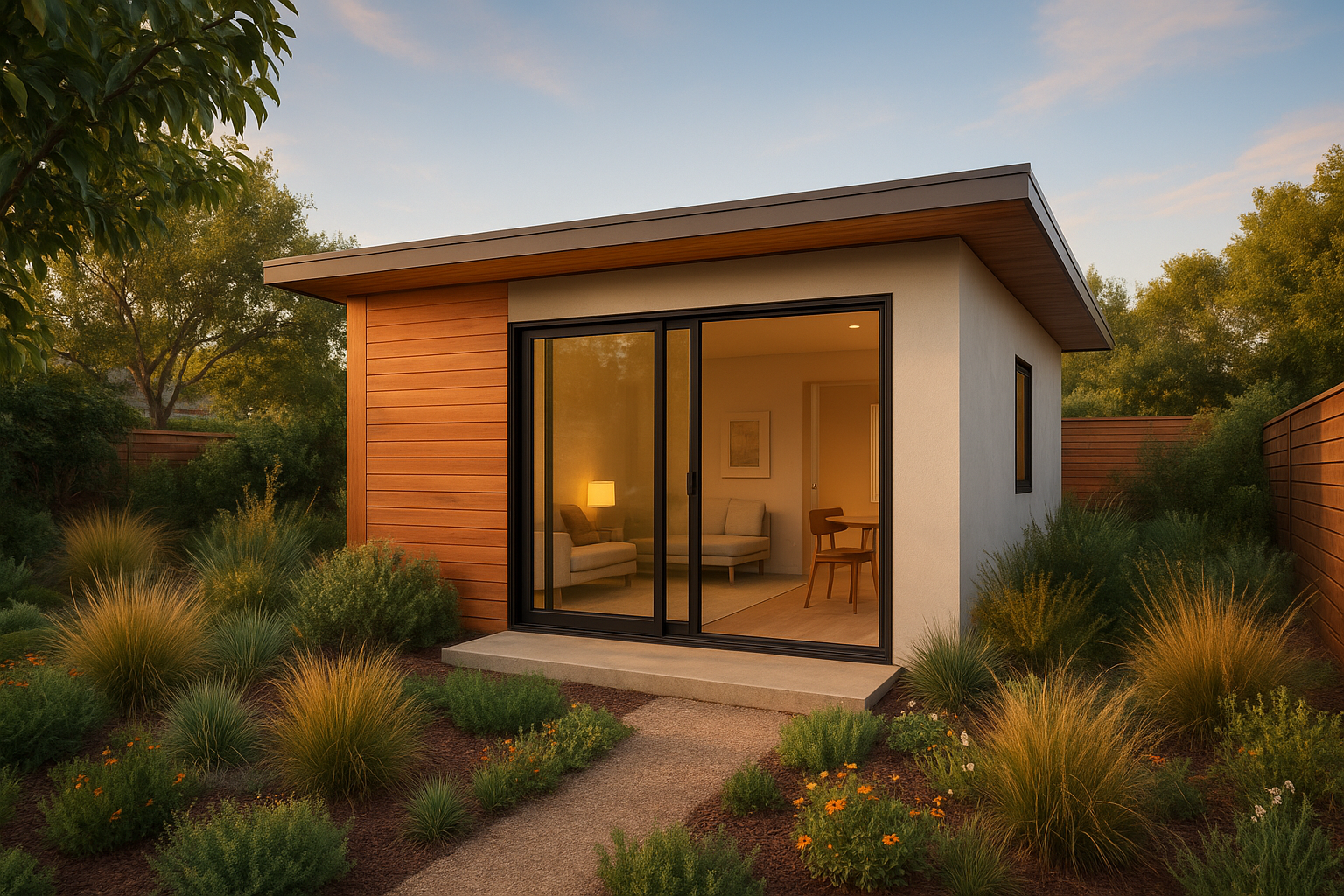
A detached custom ADU design blends seamlessly with its backyard surroundings, combining modern architecture with warm natural materials.
Types of ADUs You Can Customize
Before diving into the design process, it helps to understand which ADU type suits your property. Each category has different size limits, setback rules, and construction requirements under California law.
- Detached ADU: A fully separate structure built in the backyard or side yard. State law allows these up to 1,200 square feet, making them the most spacious option.
- Attached ADU: An addition connected to the main house, typically sharing one wall. Size is capped at 50% of the primary home’s floor area.
- Garage Conversion ADU: An existing attached or detached garage converted into habitable living space. This is often the most cost-effective path.
- Junior ADU (JADU): A unit carved out of the existing home’s interior, capped at 500 square feet. Ideal for homes with a large unused bedroom wing.
- Interior Conversion ADU: Similar to a JADU but not restricted to the 500-square-foot cap when permitted as a full ADU within the primary structure.
Each type presents unique design challenges and opportunities. For example, a garage conversion requires careful attention to insulation, ceiling height, and natural light — elements that a custom design addresses from the very first sketch. You can explore specific ADU design ideas for maximizing space and style to find inspiration for your project type.
How to Plan Your Custom ADU Design Step by Step
A successful project follows a clear sequence. Skipping steps — particularly early planning and permitting — is the most common reason ADU projects go over budget or stall. Here is the process that top-rated contractors in Southern California recommend, and our Accessory Dwelling Units guide explains jurisdictional differences in detail.
- Assess Your Property and Set Goals. Walk your lot and measure available space, note utility locations, and identify setback distances from property lines. Define your primary goal — rental income, multigenerational living, or a home office — so the design directly reflects your needs.
- Research Local Zoning and ADU Regulations. Check your city or county’s zoning code for ADU-specific rules including maximum unit size, height limits, setback requirements, and parking exemptions. California’s state ADU laws set baseline allowances, but local jurisdictions may add further standards.
- Work With a Designer to Create Custom Plans. Hire a licensed architect or ADU design specialist to draft floor plans and elevations that fit your lot, comply with local codes, and reflect your aesthetic vision. Review multiple iterations before finalizing drawings for permit submission. The team at theadupro.com’s design process walks clients through this stage with full transparency and links to our ADU homes guide for sample plans and case studies.
- Submit Permit Applications. Submit your completed architectural drawings, site plan, and required engineering reports to the local building department. Respond promptly to plan-check corrections to avoid delays.
- Begin Construction and Pass Inspections. Once permits are approved, your licensed contractor breaks ground and schedules required inspections at each phase — foundation, framing, rough mechanical, and final. Each passed inspection confirms the work meets California Building Code.
- Obtain Your Certificate of Occupancy. After the final inspection, the building department issues a certificate of occupancy, legally authorizing use of the new ADU. At this point, you can move in a tenant, a family member, or begin using the space as intended.
Choosing the Right Design Style for Your ADU
Design style is more than aesthetics — it affects resale value, tenant appeal, and how the unit integrates with your neighborhood. In Southern California, popular ADU styles include California Modern, Spanish Colonial, Craftsman, and Farmhouse. Ideally, the ADU should echo the architectural language of the primary residence.
For example, if your main home has stucco walls and clay tile roofing, a matching ADU creates a cohesive property that looks intentional rather than tacked on. Conversely, a dramatically different style can actually hurt appraisal value. If you’re unsure which direction to take, reading about how to choose the right design for your ADU can help clarify your priorities before you meet with a designer.
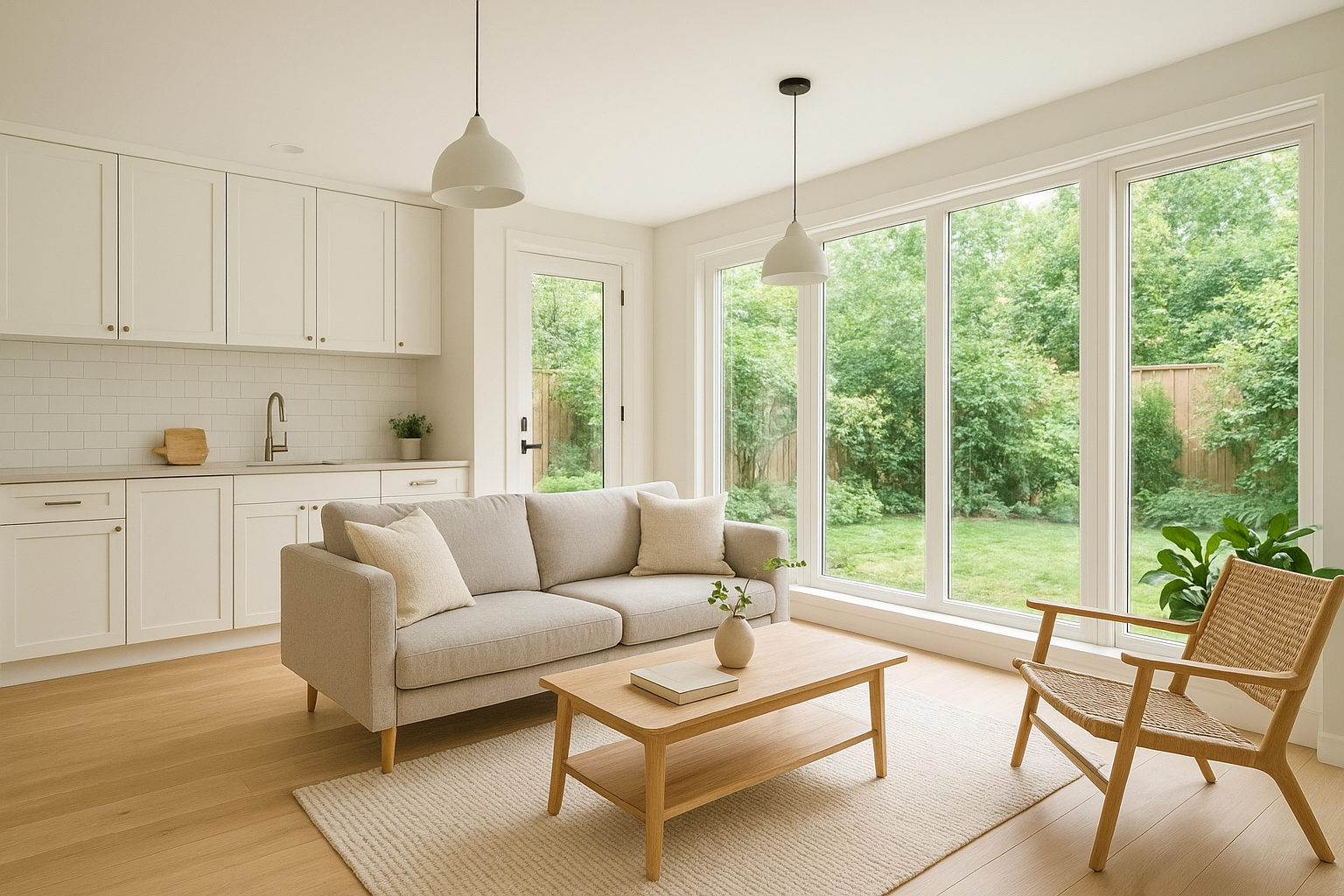
Thoughtful interior planning in a custom ADU design maximizes every square foot while maintaining a bright, livable atmosphere; for an in-depth checklist and planning framework, consult our complete ADU guide.
Key Design Elements That Maximize ADU Value
Certain design decisions have an outsized impact on both livability and return on investment. Specifically, the following elements consistently deliver the most value in Southern California ADU projects.
Natural light and ventilation. Residential ADU solutions with open-plan layouts and large windows make small spaces feel significantly larger. In addition, cross-ventilation reduces cooling costs — a meaningful benefit in hot inland climates like Riverside County.
Efficient storage integration. Built-in cabinetry, under-stair storage, and loft areas turn every cubic foot into functional space. Therefore, a skilled designer will prioritize vertical space in units under 600 square feet — read our functional ADU design tips to optimize layouts.
Separate entrance and privacy. A private entry — ideally screened from the main house — dramatically improves the unit’s rental appeal. Tenants and family members alike value independence, and a thoughtful site plan delivers exactly that.
Energy efficiency features. California’s Title 24 energy code requires efficient insulation, windows, and HVAC systems. However, going beyond minimum requirements — such as adding solar-ready conduit or a heat-pump water heater — reduces long-term operating costs and appeals to environmentally conscious renters.
Research from the Terner Center for Housing Innovation at UC Berkeley found that ADUs in Los Angeles County generate average monthly rents of $1,600 to $2,800, depending on size and location. Consequently, smart design choices that maximize ADU rental can pay for themselves within just a few years.
ADU Design Considerations Specific to Southern California
Local conditions in Orange County, Los Angeles County, and Riverside County each introduce specific design considerations. For instance, coastal cities like Long Beach may have stricter height limits and view-protection ordinances. Meanwhile, inland areas in Riverside face more extreme heat, making passive cooling strategies critical in the design.
Seismic design is also non-negotiable throughout California. All new structures must meet current California Building Code requirements for earthquake resistance, which affects foundation design and framing specifications. An experienced local contractor understands these nuances — and builds them into the custom plan from day one.
If your project spans multiple jurisdictions or you’re exploring options in neighboring areas, it’s worth reviewing region-specific guidance such as ADU design in Burbank to understand how local rules shape the design process.
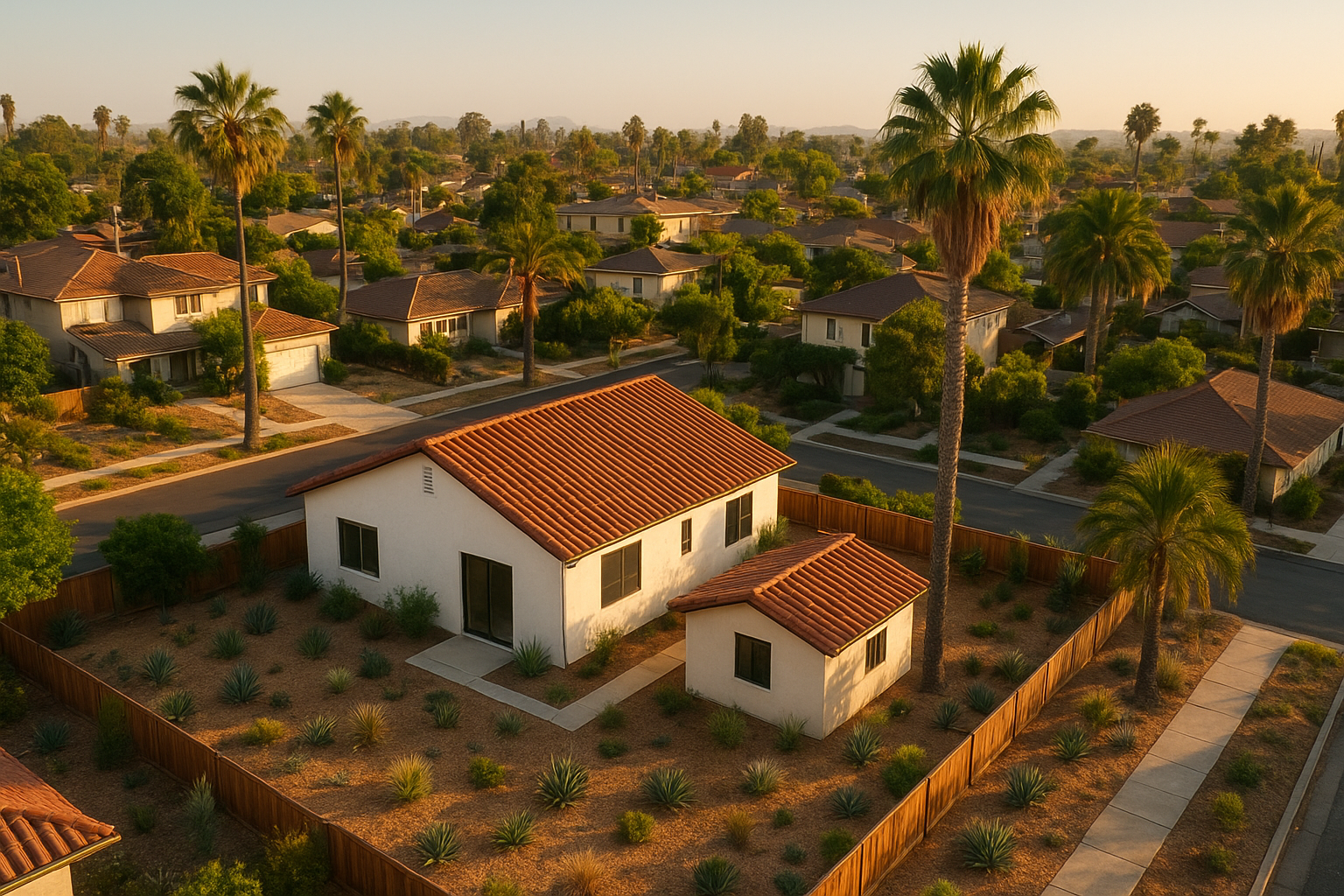
An aerial perspective shows how a custom ADU design fits naturally within a Southern California residential lot without overwhelming the primary structure.
Working With a Professional ADU Design and Build Team
Attempting to manage design, permitting, and construction separately often leads to miscommunication, delays, and cost overruns. As a result, many Southern California homeowners choose a design-build firm that handles everything under one roof. This approach aligns incentives — the same team that designs your ADU is also responsible for building it, so they have every reason to create plans that are both beautiful and constructible.
Furthermore, working with a local specialist means faster permit approvals. Local contractors have established relationships with municipal plan-check departments and know exactly what documentation each jurisdiction requires. That familiarity translates directly into fewer revision cycles and a faster path to breaking ground.
For homeowners in the San Diego area, region-specific expertise is equally important. Exploring options like ADU design in San Diego County gives a clear picture of how local regulations and lot conditions shape what’s possible.
Frequently Asked Questions About Custom ADU Design
What is custom ADU design?
Custom ADU design is the process of creating a personalized accessory dwelling unit tailored to a homeowner’s specific lot, lifestyle, and budget. Unlike stock plans, a custom design accounts for unique site conditions, local zoning rules, and the owner’s functional preferences.
How much does custom ADU design cost in Southern California?
Design fees typically range from $5,000 to $20,000 depending on project complexity. See ADU costs and process for a deeper breakdown. Full construction costs can range from $100,000 to $400,000 or more for a detached unit, depending on size, finishes, and site conditions.
How long does the ADU design process take?
The design phase generally takes four to twelve weeks, depending on scope and revisions. Permitting review adds another four to twelve weeks in most Southern California jurisdictions, so plan accordingly.
What types of ADUs can be custom designed?
Homeowners can commission custom designs for detached ADUs, attached ADUs, garage conversions, interior conversions, and junior ADUs. Each type has different size limits and zoning requirements under California law.
Do I need an architect for a custom ADU design?
While not always legally required, a licensed architect or designer is strongly recommended. A professional ensures plans meet California Building Code, local zoning ordinances, and structural requirements before permit submission.
Can a custom ADU increase my property value?
Yes. Research indicates that adding an ADU can increase a property’s value by 20% to 30% in high-demand markets like Los Angeles and Orange County. Rental income potential further strengthens the financial return over time.
What is the maximum size for a custom ADU in California?
California state law allows detached ADUs up to 1,200 square feet. Attached ADUs may be up to 50% of the primary dwelling’s square footage, and junior ADUs are capped at 500 square feet within the existing structure.
What should I consider when choosing an ADU design style?
Consider the architectural style of your main home, the intended use of the ADU, natural light orientation, and outdoor connection. A cohesive design that complements the primary residence typically performs better at resale.
What are common mistakes to avoid in ADU design?
Common mistakes include underestimating utility connection costs, ignoring setback requirements, and designing without future use in mind. Working with an experienced local contractor helps avoid costly errors before construction begins.
How does custom ADU design differ from pre-approved ADU plans?
Pre-approved ADU plans are standardized drawings many California cities offer to speed up permitting. Custom ADU design is tailored specifically to your property’s dimensions, soil conditions, and personal preferences, offering far greater flexibility.
What permits are needed for a custom ADU in California?
Most ADU projects require a building permit and separate permits for electrical, plumbing, and mechanical work. A grading permit may also be needed if significant site work is required. Your contractor typically submits these on your behalf.
Can I rent out my custom ADU immediately after construction?
Yes, once a certificate of occupancy is issued, you may legally rent the ADU. California law prohibits local governments from requiring owner-occupancy as a condition of renting an ADU built after January 1, 2020, according to AB 881.
Conclusion: Start Your Custom ADU Design with Confidence
Custom ADU design is one of the most impactful investments a Southern California homeowner can make. By tailoring every detail — from floor plan and exterior style to energy systems and site layout — to your specific property and goals, you create a living space that delivers lasting value. The key takeaways are clear: start with a thorough site assessment, work with experienced local professionals, prioritize code compliance from day one, and choose design elements that maximize both livability and rental appeal. Whether you’re building a detached guest house in Orange County or converting a garage in the Inland Empire, a thoughtful custom ADU design is the foundation of a successful project. To explore what’s possible on your property, visit theadupro.com and connect with Southern California’s top-rated ADU construction team. This guide is produced by The ADU Pro® team, licensed ADU contractors serving Orange County, Los Angeles County, and Riverside County — add an author bio, credentials, and a visible "Last updated" date on the post to strengthen E-E-A-T.