
CA prefab homes are transforming how Southern California homeowners add living space, offering faster construction timelines and more predictable pricing than traditional site-built additions. Whether you’re considering a detached backyard unit, a garage conversion, or a full accessory dwelling unit (ADU) — a secondary, independent housing unit built on the same lot as a single-family home — prefabricated construction has become a popular path toward affordable housing in one of the country’s most expensive coastal markets. This guide breaks down costs, types, permitting realities, and how to choose the right builder for your project. By The ADU Pro — Last updated: 2026-08-10.
Quick Answer: CA prefab homes are factory-built residential structures — modular, panelized, or manufactured — constructed off-site in a controlled environment, then transported and assembled on a homeowner’s property. This method typically cuts build time by 30 to 50 percent compared to conventional construction.
What Are Factory-Built Homes?
CA prefab homes refer to any residential structure built partially or fully in a factory before being shipped to a lot for final assembly. In particular, this category covers modular units built to state building code, panelized systems shipped as flat components, and manufactured homes built to federal HUD standards. As a result, homeowners get a finished product that meets the same safety requirements as a site-built house, but with fewer weather delays.
Because factories build in controlled conditions, quality control tends to be more consistent. Consequently, many Southern California homeowners now choose prefab construction specifically for ADU projects, since local demand for rental income units and multigenerational housing keeps climbing. For a deeper look at pricing across the region, see the pre-built homes guide for costs and unit-type breakdowns.
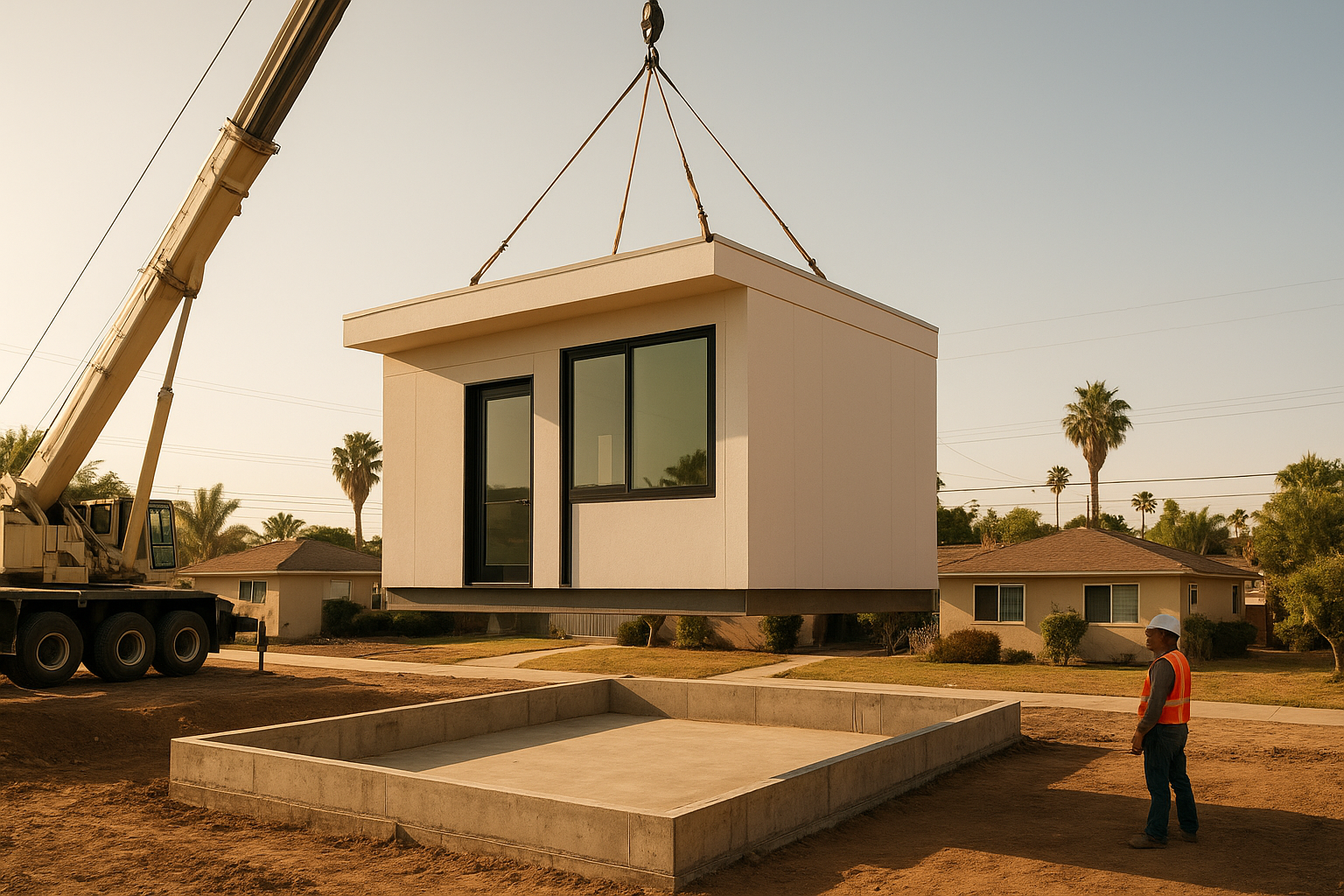
Factory-built CA prefab homes are craned into place, often completing installation in a single day. See backyard ADU features.
How Much Do CA Prefab Homes Cost?
Pricing for CA prefab homes generally ranges from $150 to $400 per square foot, depending on finish level, foundation type, and site conditions. For instance, a 600-square-foot prefab ADU often totals between $120,000 and $250,000 once utility hookups, permitting, and site prep are included. (See prefabricated homes options for regional price examples.)
Data point: According to the California Department of Housing and Community Development, ADU permit applications statewide grew by more than 60 percent between 2019 and 2022, driven largely by state law changes that streamlined approvals for prefab and modular units. Source: California HCD.
In contrast, comparable site-built ADUs often run 10 to 20 percent higher due to longer labor schedules and weather-related delays. However, site preparation costs — grading, utility trenching, and foundation work — remain similar regardless of construction method, so it’s worth budgeting carefully. Homeowners comparing options across the buyer’s guide at this prefabricated homes cost guide will find a full cost matrix by square footage.
Types of Prefab Homes and Modular ADUs in California
Several construction types fall under the CA prefab homes umbrella, and each suits different budgets and lot configurations. Specifically, homeowners typically choose between:
- Modular units — built in sections to state building code, then assembled on a permanent foundation.
- Manufactured homes — built entirely off-site to federal HUD code, often placed on a steel chassis.
- Panelized systems — shipped as flat wall and roof panels, then assembled on-site by a local crew.
- Container-based ADUs — repurposed shipping containers converted into compact living units.
Above all, the right choice depends on lot access, budget, and whether the unit will be a detached backyard structure, a garage conversion, or a junior ADU built within the existing home footprint. Readers exploring a full buyer’s guide to prefab ADUs in the region can review the options at this SoCal prefab ADU buyer’s guide.
CA Prefab Homes vs. Traditional Site-Built Construction
Compared with traditional construction, CA prefab homes offer faster timelines, more predictable budgets, and less exposure to weather delays. Traditional site-built ADUs, on the other hand, allow more design flexibility since every element is custom-built on location.
Similarly, financing and appraisal treatment differ. Modular homes on permanent foundations are typically appraised like conventional real estate, while manufactured homes on a chassis may face stricter lending terms. Therefore, it’s worth confirming financing eligibility with a lender before committing to a specific construction type. The California Building Standards Commission outlines code requirements that apply to modular construction; see the California Building Standards Commission for reference.
How to Build a Prefab Home in California: Step-by-Step Process
Building a prefab ADU or home involves a sequence of clearly defined stages. Below is the prefabricated ADU guide that outlines the typical process homeowners follow from concept to move-in.
- Assess your property and goals. Evaluate lot size, utility access, and setback requirements, then decide whether the unit will serve as a rental, guest space, or multigenerational housing.
- Select a floor plan and manufacturer. Choose a modular or manufactured plan that fits your lot and budget, and confirm the manufacturer delivers to your county.
- Secure permits and approvals. Submit plans for zoning, foundation, and utility permits; California’s ADU laws streamline approval timelines in most jurisdictions.
- Prepare the site and foundation. Grade the lot, pour the foundation, and run utility lines before the prefab modules arrive.
- Install and finalize the unit. The factory-built modules are craned into place, then final connections, inspections, and finish work complete the project.
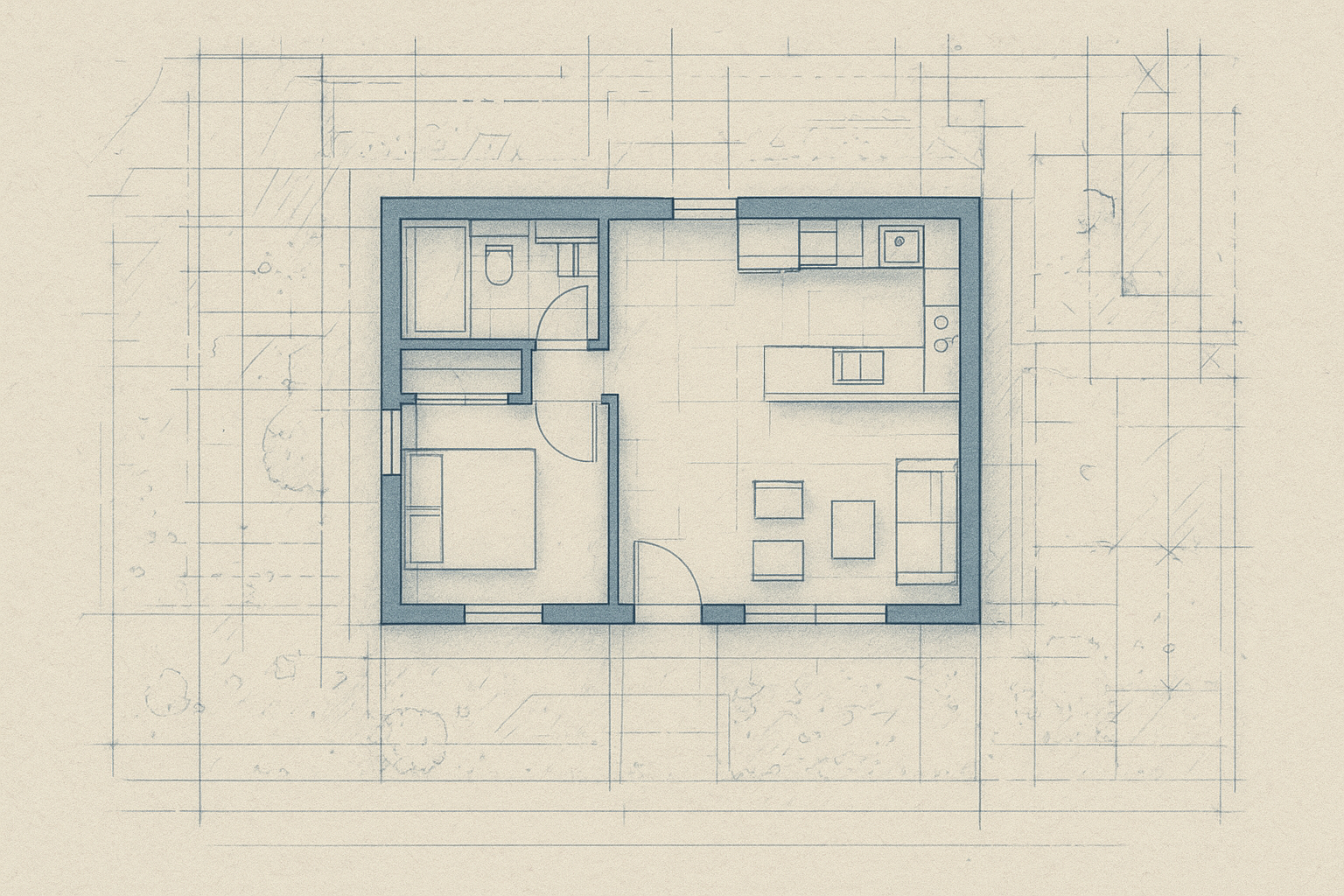
Careful floor plan selection early in the process keeps CA prefab homes on schedule and on budget. See our prefab houses guide for permit and cost details.
Choosing the Right Prefab ADU Builder in Southern California
Selecting an experienced local contractor matters just as much as choosing the right floor plan. In particular, look for a builder who understands county-specific permitting quirks across Orange County, Los Angeles County, and Riverside County, since requirements can vary significantly between jurisdictions. Learn more in our ADU plan guide.
For example, theadupro.com specializes in end-to-end ADU development throughout Southern California, guiding homeowners from initial design through permitting, construction, and final inspection. Their team handles detached guest houses, garage conversions, attached additions, and junior ADUs, which makes them a relevant option for homeowners evaluating prefab construction alongside traditional building methods. Furthermore, working with a contractor familiar with local codes reduces the risk of costly redesigns mid-project. Additional cost comparisons are available in this prefab ADU options overview and this complete prefab ADU building process guide.
Frequently Asked Questions About CA Prefab Homes
What are CA prefab homes?
CA prefab homes are factory-built residential structures assembled off-site in California, then transported and installed on a homeowner’s property. They include modular, panelized, and manufactured construction types.
How much do CA prefab homes cost?
Most CA prefab homes range from $150 to $400 per square foot depending on finishes and site prep. A typical 600-square-foot prefab ADU often lands between $120,000 and $250,000 fully installed.
Are prefab homes cheaper than traditional construction in California?
Yes, prefab homes are often 10 to 20 percent cheaper than comparable site-built construction. However, site costs like utility hookups can offset some of the savings.
How long does it take to build a prefab home in California?
Prefab construction typically takes 3 to 6 months from design approval to move-in, compared to 8 to 14 months for traditional builds. Permitting timelines can extend this depending on the jurisdiction.
Do CA prefab homes require the same permits as regular houses?
Yes, prefab homes on a foundation must meet California Building Code and local zoning requirements just like site-built homes. Manufactured homes on a HUD chassis follow federal standards instead.
What is the difference between modular and manufactured prefab homes?
Modular homes are built to state building codes and placed on a permanent foundation, while manufactured homes follow federal HUD code and often sit on a steel chassis. Modular units are generally treated like site-built homes for financing.
Can I use a CA prefab home as an ADU?
Yes, prefab units are one of the most popular ways to build an accessory dwelling unit in California. They qualify under the same state ADU laws as conventional construction when properly permitted.
Do prefab homes hold their value in California’s housing market?
Modular prefab homes on permanent foundations generally appreciate similarly to site-built homes. Manufactured homes on a chassis tend to appreciate more slowly.
What financing options exist for CA prefab homes?
Homeowners can use construction loans, home equity lines of credit, cash-out refinances, or ADU-specific financing programs. Some California cities also offer low-interest ADU loan programs.
What are common mistakes when buying a prefab home in California?
Common mistakes include underestimating site prep costs, skipping soil and utility surveys, and choosing a manufacturer without local delivery experience. Working with a licensed local contractor helps avoid these pitfalls.
Are CA prefab homes energy efficient?
Most modern prefab homes exceed California’s Title 24 energy efficiency standards because factory construction allows tighter insulation control. Many builders also offer solar-ready packages.
How do I choose a reliable prefab ADU builder in Southern California?
Look for a licensed contractor with proven experience navigating local permitting, transparent pricing, and a portfolio of completed ADU projects in your county. Checking references and past project timelines is essential.
Can prefab homes be customized to match an existing house?
Yes, most manufacturers offer customizable floor plans, exterior finishes, and roofing styles to match the primary residence. Custom options add cost and may extend the design phase.
What size prefab ADU can I build in California?
California state law generally allows detached ADUs up to 1,200 square feet, though local jurisdictions may set additional limits. Junior ADUs are capped at 500 square feet within the existing home footprint.
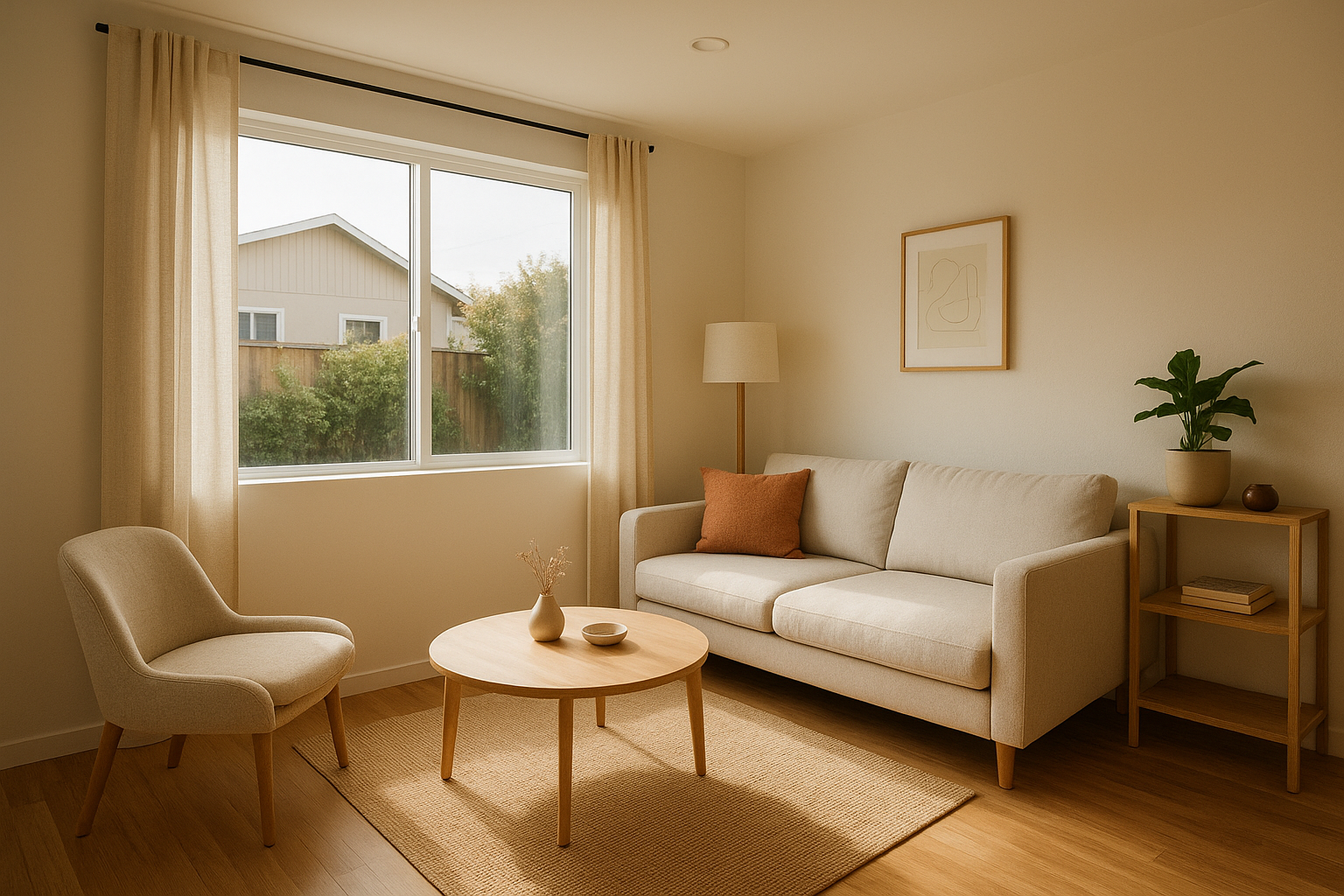
A completed prefab ADU interior showing the livable space possible with CA prefab homes.
Final Thoughts on CA Prefab Homes
In summary, CA prefab homes give Southern California homeowners a faster, more predictable path to added living space, whether the goal is rental income, multigenerational housing, or simply more room. As shown above, costs typically run $150 to $400 per square foot, timelines average 3 to 6 months, and multiple construction types — modular, manufactured, panelized, and container-based — fit different budgets and lots. Ultimately, working with an experienced local contractor who understands county permitting rules remains the single biggest factor in a smooth build. For homeowners ready to move forward, reviewing options with a specialist like theadupro.com is a practical next step toward turning a CA prefab home into a finished, livable reality; see the prefab houses permit guide for permit and code details.