A factory built ADU is becoming one of the most popular ways for Southern California homeowners to add living space without the long timelines of traditional construction. A factory built ADU is a fully engineered accessory dwelling unit that is manufactured off-site in a controlled factory setting, then transported and installed on your property. For homeowners in Orange County, Los Angeles County, and Riverside County weighing their options, understanding how this construction method works can make the difference between a smooth project and a stressful one.
Quick answer: A factory built ADU is a detached or attached accessory dwelling unit assembled in modular sections inside a factory, then delivered and installed on-site. It typically cuts overall build time by several weeks compared with fully site-built construction, while still meeting local building codes.
What Is a Factory Built ADU?
In short, a factory built ADU is constructed largely indoors, in sections, using precision equipment and a controlled environment, then shipped to the homeowner’s lot for final assembly. This differs from a manufactured home, which follows federal HUD standards; most factory built ADUs are instead built to the same state and local building codes that apply to site-built homes.
Because the bulk of the work happens off-site, weather delays and material exposure are minimized. Consequently, quality control tends to be more consistent, since factory crews work under the same roof every day rather than switching job sites. However, foundation work, utility hookups, and final finishing still happen on your property, so a factory built ADU is never a fully “instant” solution.
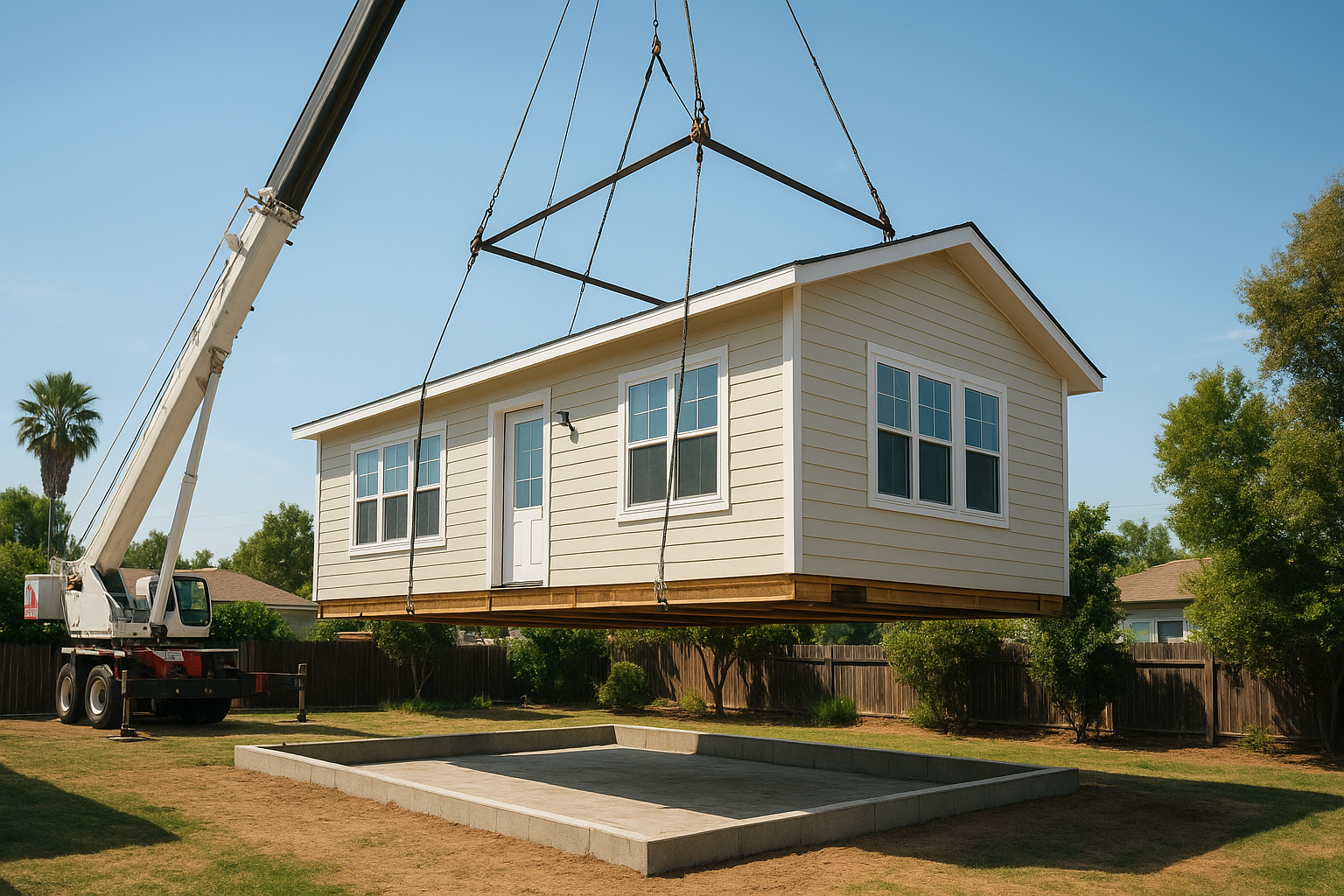
A factory built ADU module arrives largely finished, reducing the time crews spend working outdoors on-site.
How Prefab ADUs Differ From Traditional Site-Built Construction
A prefab ADU and a traditional site-built addition ultimately aim for the same result: livable, code-compliant square footage. Yet the construction sequence looks quite different. With site-built construction, framing, insulation, drywall, and finishing all happen in the open, exposed to weather and subject to trade scheduling delays.
In contrast, a prefab ADU moves through an assembly-line process indoors, with electrical, plumbing, insulation, and interior finishes often completed before the unit ever leaves the factory. As a result, on-site work is mostly limited to foundation prep, delivery, craning, and utility connections. For homeowners juggling busy schedules, this shorter on-site window can meaningfully reduce disruption to daily life.
Benefits of a Modular ADU for Southern California Homeowners
A modular ADU offers several practical advantages, particularly in a region where permitting timelines and contractor availability can stretch a project out. In particular, factory conditions allow for tighter tolerances and less material waste, which can translate into more predictable final costs.
- Faster overall timeline, since fabrication happens while permits are processed
- Consistent quality control from indoor, climate-protected assembly
- Reduced exposure to weather delays common in coastal and inland SoCal climates
- Often lower labor costs due to efficient factory workflows
- Easier compliance with Title 24 energy standards through standardized components
For homeowners in cities such as Pasadena or Anaheim, where lot sizes and setback rules vary block by block, working with a team that understands local requirements is just as important as the construction method itself.
Potential Drawbacks to Consider
Despite the benefits, a factory built ADU is not the right fit for every lot. Above all, tight or oddly shaped properties may struggle to accommodate crane access or module transport, especially in dense urban neighborhoods.
Additionally, customization options can be more limited than fully site-built designs, since manufacturers typically offer a set catalog of floor plans and finish packages. Similarly, transportation costs can rise for properties located far from a manufacturer’s factory, which is worth discussing early in the feasibility process.
Factory Built ADU Costs in Orange County, LA, and Riverside
Pricing for a factory built ADU generally falls between $180 and $300 per square foot in Southern California, according to industry cost data commonly cited by ADU designers and lenders. Therefore, a 600-square-foot unit often totals between roughly $150,000 and $220,000 once site work, permits, and utility connections are included.
| Unit Size | Typical Cost Range |
|---|---|
| 400–500 sq ft (Studio/JADU) | $100,000–$150,000 |
| 600–800 sq ft (1 bed) | $150,000–$220,000 |
| 900–1,200 sq ft (2 bed) | $220,000–$320,000 |
Ultimately, final pricing depends on lot access, grading needs, utility distance, and finish selections. A detailed site assessment remains the most reliable way to get an accurate number for your property.
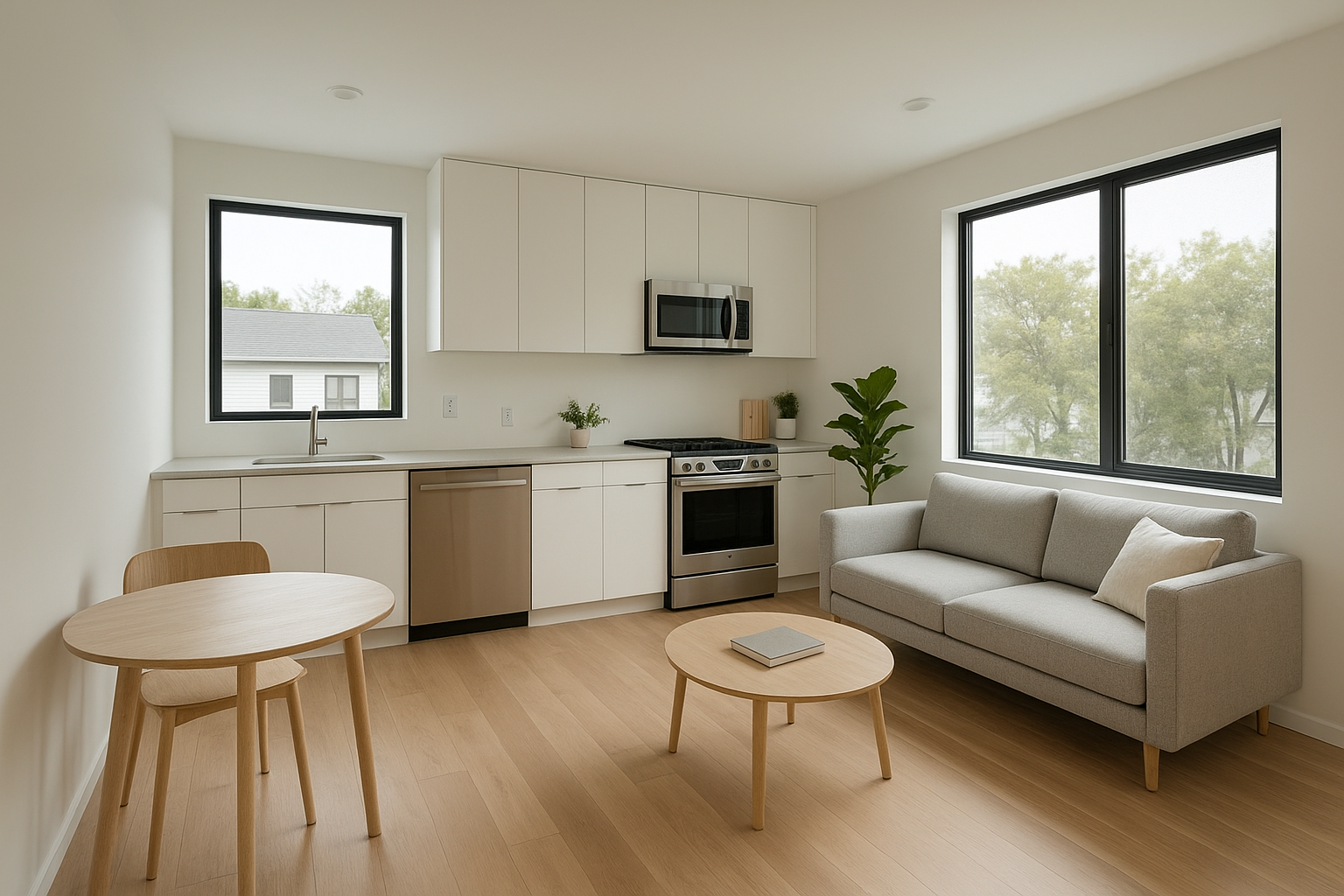
Interior finishes on a modular ADU are frequently completed before the unit leaves the factory floor.
Step-by-Step Process for Building a Prefabricated ADU
Building a prefabricated ADU follows a fairly predictable sequence, even though timelines vary by city and lot condition. Below is the general process most Southern California homeowners can expect.
- Site Assessment and Feasibility Study: A contractor evaluates lot size, setbacks, and utility access to confirm what your property can support.
- Design Selection and Customization: You choose a floor plan, generally between 500 and 1,200 square feet, and select finishes and exterior details.
- Permit Submittal and City Coordination: Architectural and structural drawings go to the local building department for plan review and approval.
- Factory Fabrication: While permits process, your ADU is built indoors, reducing weather delays and material waste.
- Site Preparation and Foundation: Crews grade the lot, pour the foundation, and run utility trenching ahead of delivery.
- Delivery and Installation: The finished module is transported and set onto the foundation using a crane or specialized equipment.
- Final Utility Hookups and Inspections: Electricians and plumbers connect utilities, and the city performs final inspection before issuing occupancy approval.
Permitting and Title 24 Compliance
Even though a factory built ADU is manufactured off-site, it still must clear the same permitting hurdles as any other addition. In particular, cities across Los Angeles County and Orange County require building, electrical, and plumbing permits, along with grading permits when foundation work is extensive.
Furthermore, California’s Title 24 energy code applies to factory built ADUs just as it does to site-built homes, covering insulation ratings, window performance, and mechanical systems. Reputable manufacturers build these standards into their base designs, which simplifies plan review. For more background on state-level ADU rules, the California Department of Housing and Community Development publishes an ADU handbook covering statewide requirements.
Financing Options for Your Project
Many homeowners fund a factory built ADU through a home equity line of credit, a construction loan, or a lending program designed specifically for ADUs. In addition, some lenders now factor projected rental income from the new unit into loan qualification, which can expand borrowing power.
Because financing timelines often run parallel to permitting, it helps to start conversations with a lender early. Working with a design-build contractor who coordinates directly with lenders, similar to the process outlined at theadupro.com, can prevent financing delays from stalling construction. For federal context on manufactured and factory-built housing standards, the U.S. Department of Housing and Urban Development outlines relevant construction standards.
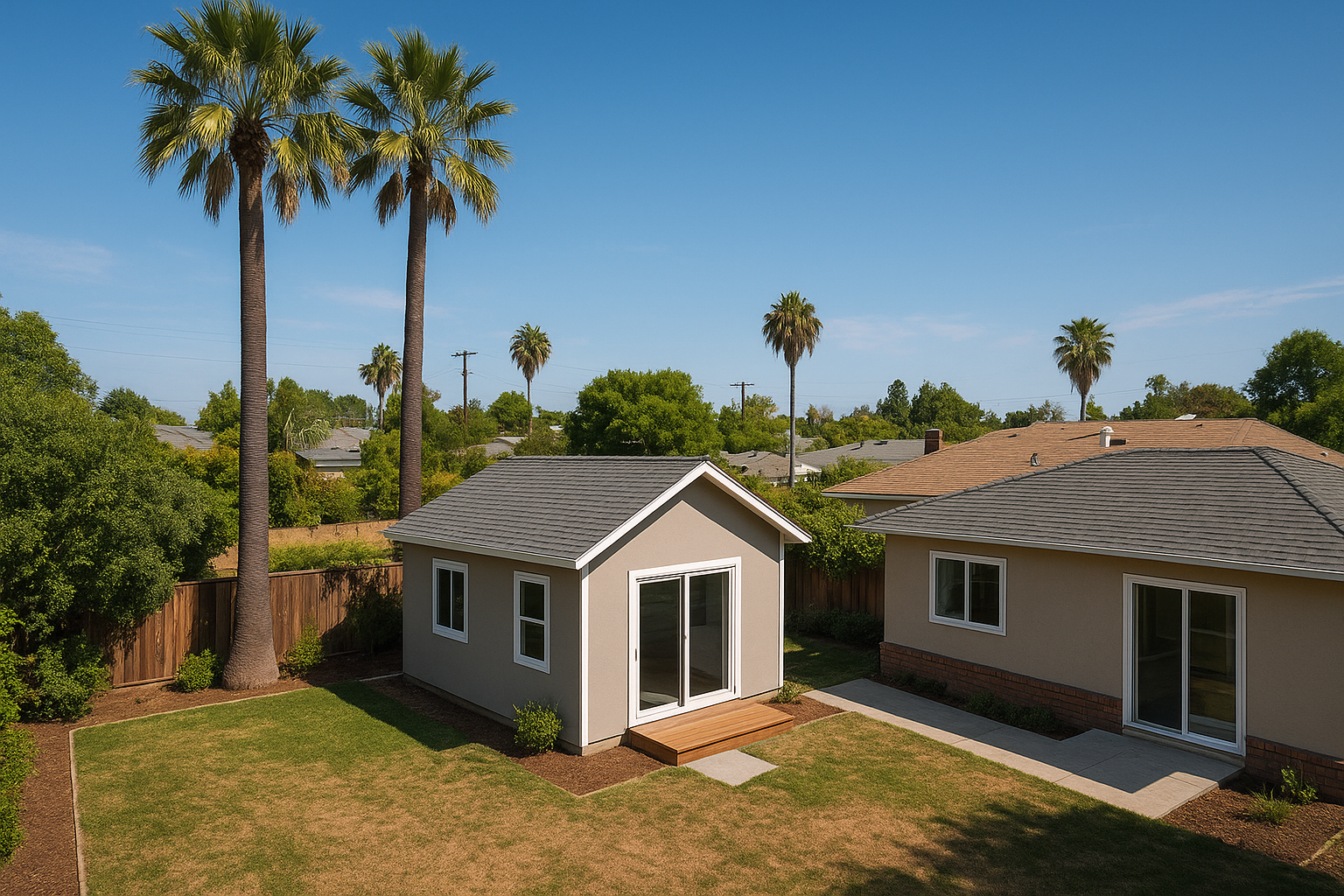
A completed factory built ADU sits behind the main residence, ready for rental income or family use.
Is a Factory Built ADU Right for Your Property?
Whether a factory built ADU makes sense depends heavily on lot access, local zoning, and your budget priorities. For example, properties with narrow side yards may face crane access challenges, while corner lots often accommodate delivery more easily.
Homeowners exploring options in Pasadena, Temecula, Irvine, Malibu, or Anaheim each face slightly different zoning nuances, which is why a site-specific feasibility study remains the best starting point before committing to a design.
Frequently Asked Questions About Factory Built ADUs
What is a factory built ADU?
A factory built ADU is an accessory dwelling unit constructed in modular sections inside a factory, then transported to a homeowner’s lot for final assembly. This method shortens outdoor construction time compared with traditional site-built additions.
How long does it take to build a factory built ADU?
Most factory built ADU projects take four to eight months from design approval to final inspection, including permitting and site work. Factory fabrication itself often takes only four to six weeks.
How much does a factory built ADU cost in California?
Factory built ADUs in Southern California typically range from $180 to $300 per square foot, depending on finishes, site conditions, and utility hookups. A 600-square-foot unit often lands between $150,000 and $220,000 all-in.
Is a factory built ADU the same as a manufactured home?
No, factory built ADUs are typically built to the same local building codes as site-built homes, while manufactured homes follow federal HUD standards. This distinction affects permitting, financing, and long-term property value.
Do factory built ADUs meet California Title 24 energy codes?
Yes, reputable manufacturers design factory built ADUs to comply with California’s Title 24 energy efficiency standards. This includes insulation ratings, window performance, and mechanical system requirements verified before delivery.
Can I finance a factory built ADU with a HELOC?
Many homeowners finance a factory built ADU using a home equity line of credit, a construction loan, or an ADU-specific lending program. Working with a contractor who coordinates with lenders can simplify the approval process.
What permits are required for a factory built ADU?
Cities generally require building permits, electrical and plumbing permits, and sometimes grading permits for foundation work. Permit requirements vary by jurisdiction across Orange County, Los Angeles County, and Riverside County.
What size options are available for factory built ADUs?
Factory built ADUs commonly range from about 500 to 1,200 square feet, covering studio layouts up to two-bedroom units. Lot size, setback rules, and local ordinances ultimately determine the maximum allowable footprint.
Are factory built ADUs allowed in Los Angeles and Orange County?
Yes, both Los Angeles County and Orange County permit factory built ADUs as long as they meet local zoning, setback, and building code requirements. Specific rules can differ by city, so a site assessment is recommended before design begins.
What is the difference between a modular ADU and a manufactured ADU?
A modular ADU is built in sections to state and local building codes, similar to site-built construction, while a manufactured ADU follows federal HUD code and sits on a permanent chassis. Modular construction is more common for ADUs seeking long-term property value alignment.
Do factory built ADUs hold their value like site-built additions?
When built to local code and properly permitted, factory built ADUs generally appraise similarly to comparable site-built additions. Quality of materials, finish level, and proper foundation work all influence long-term resale value.
What are common mistakes homeowners make with factory built ADU projects?
Common mistakes include skipping a professional feasibility study, underestimating site prep and utility connection costs, and choosing a manufacturer without local code experience. Working with a design-build team familiar with Southern California permitting helps avoid costly delays.
How does foundation work affect a factory built ADU installation?
Foundation preparation, including grading, utility trenching, and footing work, happens on-site before the factory built modules arrive. Poor foundation planning is one of the most common causes of installation delays.
Final Thoughts
In summary, a factory built ADU can offer a faster, more predictable path to added living space, rental income, or multigenerational housing for Southern California homeowners. However, success still depends on proper site assessment, permitting, and Title 24 compliance, regardless of construction method. As a result, partnering with an experienced design-build team that understands local zoning across Orange County, Los Angeles County, and Riverside County remains the best way to move from concept to a finished, code-approved home. For homeowners ready to explore whether a factory built ADU fits their lot, starting with a feasibility study at theadupro.com is a practical next step. You can also review general prefabrication background via Wikipedia’s overview of prefabrication for additional context.