
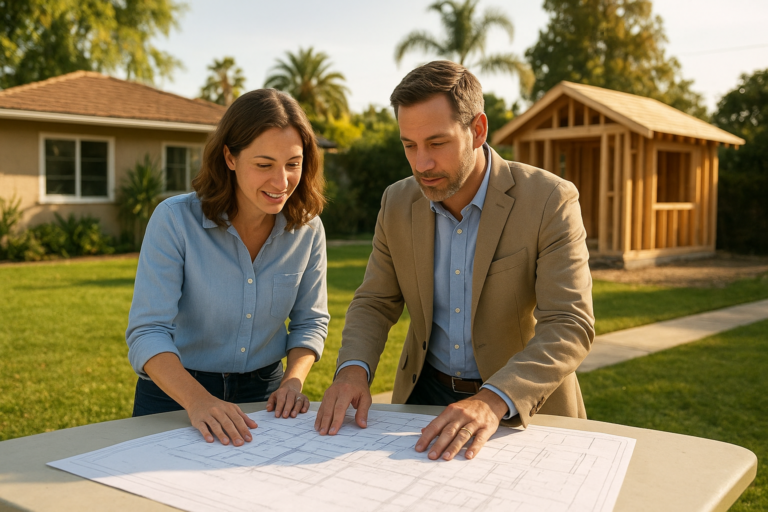
ADU permitting assistance in Los Angeles County is often the single biggest hurdle standing between a homeowner’s idea and an actual, income-producing accessory dwelling unit. Because every city and unincorporated area within the county interprets state ADU law a little differently, a plan that sails through approval in one jurisdiction can stall for months in another. This guide breaks down what permitting assistance actually involves, how the process works step by step, and what to watch for so your project stays on schedule.
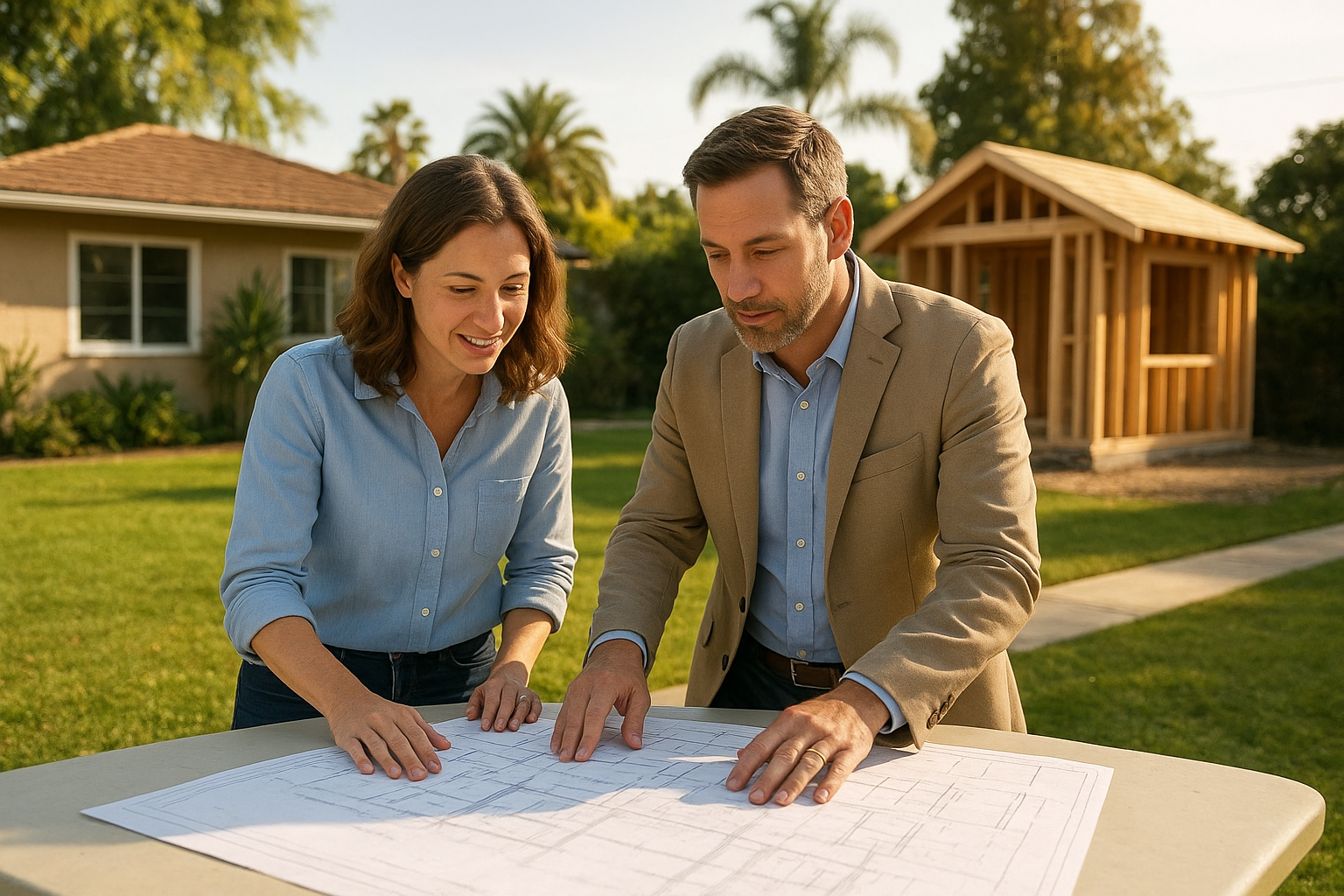
Reviewing site-specific plans is one of the first steps in ADU permitting assistance in Los Angeles County.
What Is ADU Permitting Assistance in Los Angeles County?
ADU permitting assistance in Los Angeles County is professional support that helps a homeowner prepare, submit, and manage the permit application for a detached ADU, garage conversion, attached addition, or JADU. In short, it means someone handles the plans, engineering, and city coordination so the homeowner does not have to navigate the building department alone.
In practice, this support usually comes from a design-build contractor who employs, or works closely with, licensed designers and structural engineers. Because ADU rules changed significantly under recent state legislation, many general contractors are still unfamiliar with the nuances. As a result, choosing a team that specializes exclusively in ADUs, rather than general remodeling, tends to produce fewer plan check rejections and faster approvals.
Why the ADU Permit Process Feels So Complicated
Los Angeles County contains dozens of incorporated cities, each with its own building department, plus large unincorporated areas overseen by the county itself. Consequently, setback requirements, parking rules, and fire-separation standards can shift dramatically within just a few miles. For example, a homeowner in Pasadena may face different lot coverage rules than a homeowner near Los Alamitos, even though both are technically building the same type of unit.
Furthermore, California’s statewide ADU law requires a ministerial, non-discretionary review, meaning cities cannot simply deny a compliant application based on subjective preference. According to California Government Code Section 65852.2, jurisdictions must approve or deny a complete ADU application within 60 days. That said, “complete” is the key word — incomplete submittals routinely restart the clock, which is exactly where permitting assistance proves valuable.
Step-by-Step: How ADU Permitting Works in LA County
Above all, understanding the sequence of events helps homeowners set realistic expectations. Here is the typical path from initial site visit to move-in ready ADU:
- Site assessment and feasibility review. A contractor evaluates lot size, setbacks, zoning, and utility access to confirm what size and type of ADU the property can support.
- Custom design and structural engineering. Site-specific floor plans are drafted alongside stamped engineering drawings that satisfy California building code requirements.
- Permit application submittal. Complete plan sets, engineering calculations, and Title 24 energy compliance documents go to the applicable building department.
- Plan check corrections and resubmittal. The department returns comments, and the design team resolves each item before resubmitting for approval.
- Permit issuance and construction start. Once approved and fees are paid, the permit is issued and construction can legally begin.
- Final inspections and certificate of occupancy. Inspections continue throughout the build, and passing the final one leads to occupancy approval.
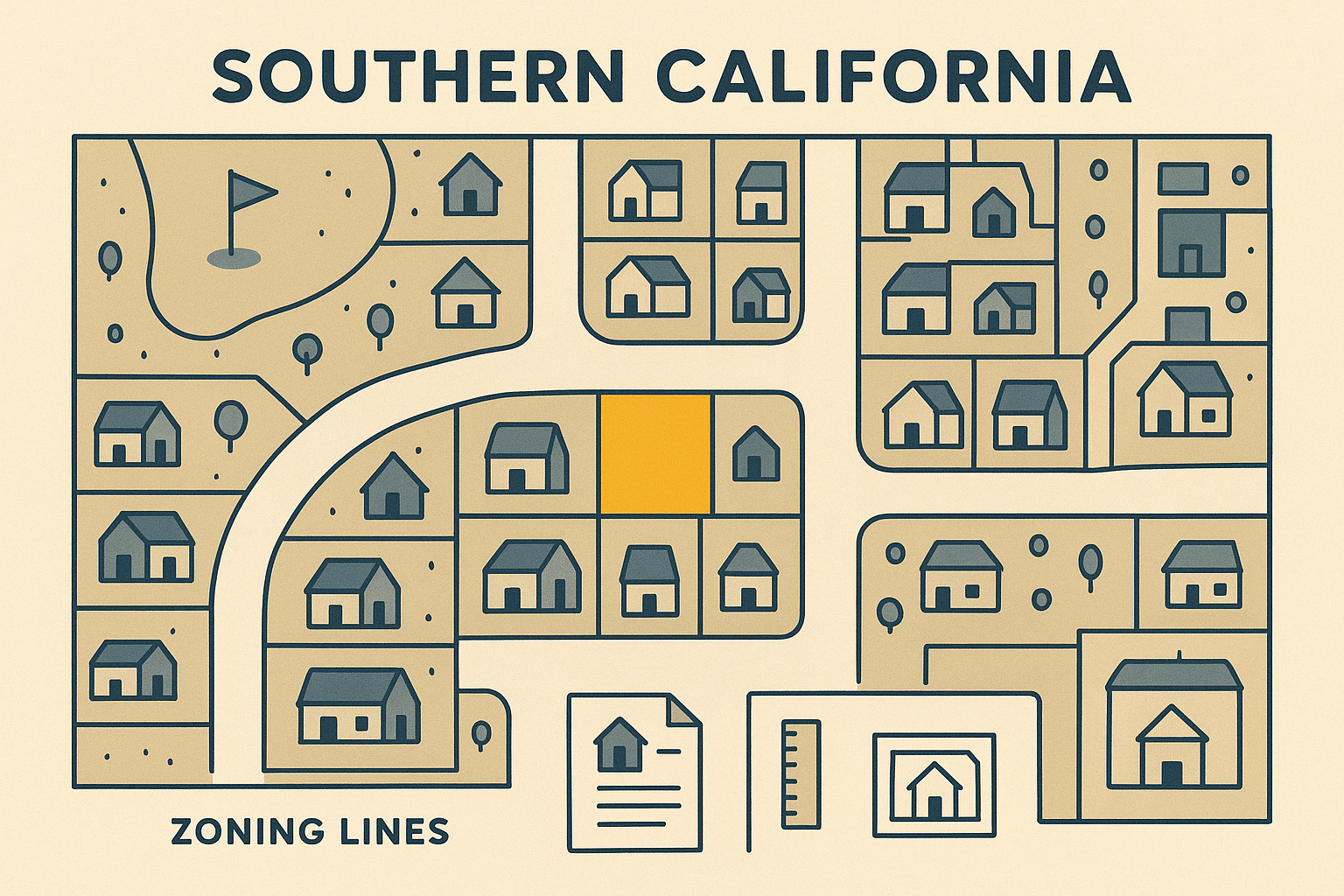
Each Los Angeles County jurisdiction reviews ADU permits against slightly different zoning overlays.
Common Permitting Delays and Mistakes to Avoid
Even a well-designed ADU can stall in plan check if the application is missing information. In particular, incomplete structural calculations, unclear fire-separation details between a garage conversion and the main house, and unconfirmed utility capacity are frequent culprits. Similarly, homeowners who design first and check zoning second often discover setback conflicts too late, forcing costly redesigns.
Meanwhile, cities juggling high application volume may take longer than the statutory 60-day window if corrections are unclear or resubmittals are slow. Because of this, having a single accountable team manage design, engineering, and city coordination — rather than splitting the work across separate vendors — tends to reduce back-and-forth significantly. This is precisely the kind of coordination behind the ADU contractor services in Los Angeles that many homeowners rely on.
How Much Does ADU Permitting Cost in Los Angeles County?
Permit and plan check fees vary by jurisdiction and by the size of the proposed ADU. Generally, homeowners should budget anywhere from a few thousand dollars to well over ten thousand dollars for permit-related fees alone, separate from actual construction costs. For instance, larger detached units near the 1,200 square foot maximum typically carry higher fees than a small JADU conversion within an existing garage footprint.
In addition, some cities charge separate school district fees or utility connection fees that are easy to overlook during early budgeting. Therefore, requesting an itemized fee estimate during the site assessment phase — rather than after design is finalized — helps avoid budget surprises later in the project.
Financing the Permitting and Construction Timeline
Because permitting can take several months before a shovel ever hits the ground, cash flow planning matters. Many homeowners use a HELOC, a construction loan, or an ADU-specific financing program to cover design, permitting, and build costs together. A design-build contractor that maintains relationships with third-party lending partners can help homeowners understand which financing structure fits their timeline, though the final loan decision always rests with the lender.
Consequently, pairing financing conversations with the site assessment early on — rather than waiting until permits are already submitted — gives homeowners more flexibility to adjust scope if costs shift during plan check.
Choosing the Right ADU Permit Help in LA County
Specifically, homeowners should look for a contractor with an active CSLB license, a strong track record across multiple LA County jurisdictions, and in-house structural engineering rather than outsourced, disconnected design. For example, a team already familiar with permitting nuances in Pasadena ADU plans or Los Alamitos ADU construction can anticipate local requirements before submittal, rather than reacting to corrections after the fact.
Likewise, homeowners closer to the coast exploring options such as Malibu ADU plans should confirm coastal zone review requirements early, since those can add an extra layer to standard county permitting. For a broader look at ADU types and regulations, the ADU resource library covers detached units, garage conversions, and JADUs in more depth. You can also visit theadupro.com directly to review site assessment options for a specific property.
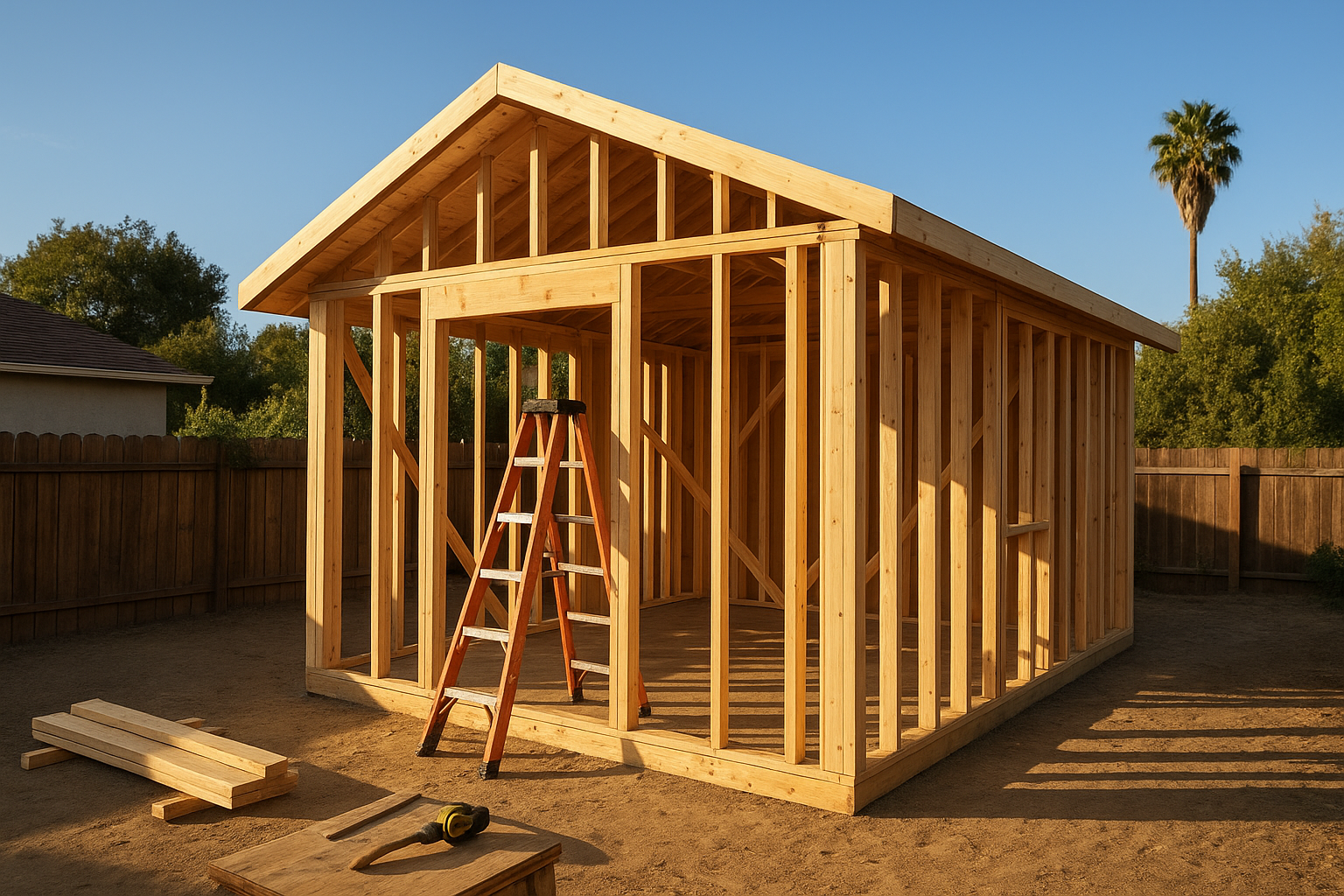
Construction begins only after ADU permitting assistance in Los Angeles County results in an issued permit.
Frequently Asked Questions About ADU Permitting Assistance in Los Angeles County
What is ADU permitting assistance in Los Angeles County?
ADU permitting assistance in Los Angeles County is professional support that helps homeowners prepare, submit, and manage the permit application for a detached ADU, attached addition, garage conversion, or JADU. It typically includes plan preparation, structural engineering coordination, city or county submittal, and follow-up through plan check and inspection.
How long does ADU permitting take in Los Angeles County?
State law generally requires a ministerial ADU permit decision within 60 days once an application is complete. In practice, initial plan check corrections and city workload often stretch the full process to several months before a permit is issued.
How much does ADU permitting cost in Los Angeles County?
Permit fees, plan check fees, and school or utility fees vary by jurisdiction and ADU size, and can range from a few thousand dollars to well over ten thousand for larger units. A site-specific quote from a licensed contractor is the most reliable way to estimate total permitting costs.
Which department handles ADU permits in Los Angeles County?
Unincorporated areas go through the Los Angeles County Department of Regional Planning and Building and Safety, while incorporated cities such as Pasadena or Los Alamitos process ADU permits through their own local building departments. Requirements and review timelines can differ noticeably between jurisdictions.
Do I need a structural engineer for an ADU permit?
Most detached ADUs and many garage conversions require stamped structural engineering drawings before a building department will approve the permit. A design-build contractor with in-house engineering coordination can usually shorten this step considerably.
Can an HOA block an ADU in Los Angeles County?
California law limits how much an HOA can restrict ADUs, and an HOA generally cannot outright ban a legally compliant unit. However, an HOA may still apply reasonable design or architectural review standards, so early coordination is recommended.
Will building an ADU trigger a full property tax reassessment?
Adding an ADU typically results in a partial reassessment that adds the value of the new construction to the property tax bill, not a full reassessment of the entire property. The existing home retains its prior assessed value under California law.
What size ADU can I build on my lot?
State ADU law generally allows detached units up to 1,200 square feet, though local zoning, lot coverage, and setback rules can further influence the maximum size. A site assessment is the fastest way to confirm what is buildable on a specific lot.
Should I choose a detached ADU or a garage conversion?
A garage conversion is often faster and less expensive to permit because the existing structure is already built, while a detached ADU offers more design flexibility and often a larger footprint. The right choice depends on lot size, budget, and how the space will be used.
What are common mistakes during ADU permitting?
Common mistakes include submitting incomplete plan sets, underestimating setback or fire-separation requirements, and failing to confirm utility capacity before design begins. These errors are the leading cause of repeated plan check rejections and permit delays.
What financing options exist for ADU permitting and construction?
Homeowners commonly use HELOCs, construction loans, or ADU-specific financing programs offered through third-party lenders to cover design, permitting, and construction costs. A design-build contractor can often connect homeowners with lending partners familiar with ADU projects.
Who handles inspections and the certificate of occupancy?
The general contractor typically schedules and coordinates all required inspections with the local building department throughout construction. Once final inspection passes, the contractor assists with obtaining the certificate of occupancy so the ADU can be legally occupied.
Does the 60-day ministerial review rule apply everywhere in LA County?
The 60-day ministerial review requirement applies statewide to qualifying ADU applications, including throughout Los Angeles County. That said, actual processing speed still varies by city depending on staffing, application volume, and how complete the initial submittal is.
Final Thoughts on ADU Permitting Assistance in Los Angeles County
Ultimately, ADU permitting assistance in Los Angeles County is less about paperwork and more about avoiding the delays that quietly stretch a six-month project into a year-long one. In summary, a complete site assessment, accurate structural engineering, and a contractor who already understands local jurisdictional quirks are the three factors that consistently keep projects on schedule. For more detail on California’s statewide ADU rules, the California HCD ADU handbook and the Wikipedia overview of accessory dwelling units are useful starting points, alongside the statutory text in California Government Code Section 65852.2. Whether a homeowner is evaluating a garage conversion, a detached backyard unit, or a second-story addition, getting permitting assistance right from the start remains the most reliable way to move from idea to occupied ADU without unnecessary delay.

