
Hiring the right garage conversion contractor in Riverside County can determine whether your project finishes on budget and on schedule, or turns into a permitting headache that drags on for a year. Because Riverside County spans dozens of cities, each with its own building department, ADU rules, and inspection timelines, choosing a builder who understands local code is just as important as choosing one who can swing a hammer. This guide walks through what a garage conversion contractor actually does, how much the work typically costs, what the permitting process looks like, and how to vet a builder before signing a contract.
Homeowners across Corona, Moreno Valley, Temecula, and the surrounding communities are increasingly turning garages into rentable living space. As a result, understanding the process upfront protects both your budget and your timeline.
Quick answer: A garage conversion contractor in Riverside County is a licensed builder who transforms an existing garage into a permitted living space, typically an ADU or JADU, handling design, engineering, permitting, and construction under one contract.
What Is a Garage Conversion Contractor in Riverside County?
A garage conversion contractor in Riverside County is a licensed builder who converts an existing attached or detached garage into livable square footage, typically as an accessory dwelling unit (ADU) or junior ADU (JADU). This work involves removing the garage door, framing new insulated walls, adding plumbing and electrical systems, and bringing the space up to residential building code. Unlike a general remodeler, a specialized contractor coordinates structural engineering, permit submittals, and Title 24 energy compliance in-house.
In Riverside County, that specialization matters more than it might elsewhere. Building departments in cities such as Riverside, Corona, and Temecula each apply state ADU law with local variations in setback requirements, parking exceptions, and plan-check turnaround times. Therefore, a contractor who has already pulled permits in your specific city can often shave weeks off the timeline compared with one navigating the process for the first time. According to the California Department of Housing and Community Development, state law generally requires cities to approve or deny complete ADU permit applications within 60 days, though local backlogs can extend that window in practice.
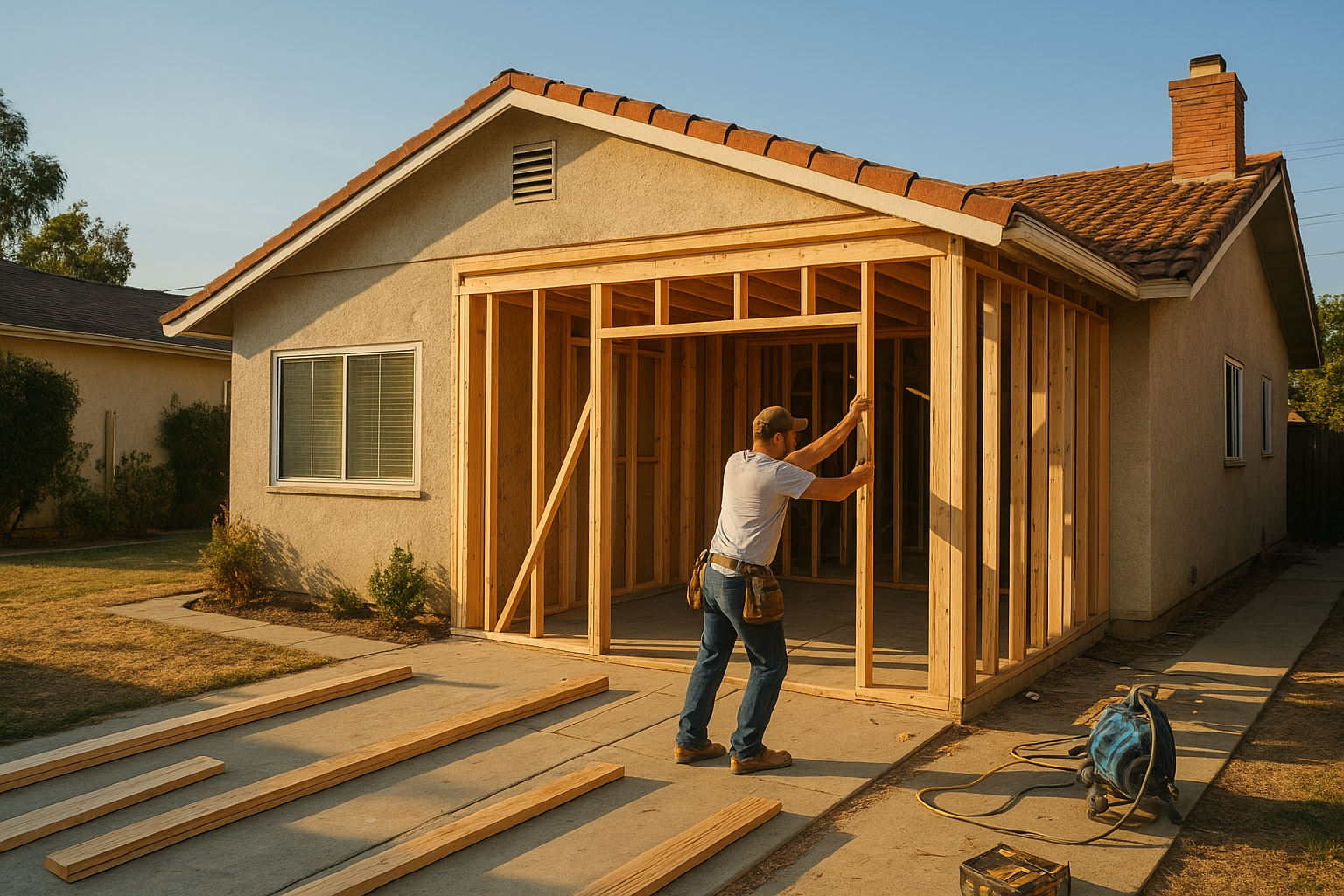
A garage conversion contractor in Riverside County framing a garage-to-ADU conversion project.
Why More Riverside County Homeowners Are Converting Garages Into ADUs
Garage conversions have become one of the most popular ADU types across Southern California, largely because they reuse an existing structure instead of requiring new foundation work. In particular, homeowners pursue these projects for a mix of reasons: generating rental income, housing aging parents or adult children, or simply reclaiming a garage that has been used for storage rather than parking for years.
Compared with building a detached ADU from scratch, a garage conversion generally costs less and finishes faster because the roof, slab, and exterior walls already exist. However, cost savings depend heavily on the condition of the existing structure and how much of the utility system needs upgrading. Homeowners weighing overall project economics can review broader budgeting strategies on ADU savings and financing considerations before committing to a design.
How Much Does a Garage Conversion Cost in Riverside County?
Garage conversion costs vary widely depending on square footage, finish level, and how far the garage sits from existing water and sewer lines. Consequently, two projects of similar size can carry very different price tags once utility runs, permit fees, and structural upgrades are factored in.
Rather than relying on a single ballpark figure, it helps to review a detailed cost breakdown before budgeting. For a full walkthrough of pricing factors, see garage conversion costs and what to budget, along with a step-by-step explanation of how garage conversion pricing is typically calculated. Above all, get a written, itemized estimate before signing any contract.
The Garage Conversion Process: Step by Step
Most garage conversions follow a similar sequence, regardless of which Riverside County city the property sits in. Understanding each stage helps homeowners set realistic expectations for both timeline and communication with their builder.
- Site assessment: A contractor visits the property to evaluate garage size, existing utility lines, setbacks, and overall lot feasibility for the conversion.
- Design and engineering: The team develops custom floor plans and structural engineering drawings tailored to the garage footprint and any structural upgrades required.
- Permit submittal: Completed plans go to the local building department for plan check, including Title 24 energy compliance documentation and structural review.
- Construction: Crews remove the garage door, frame new walls, run plumbing and electrical, insulate, and install finishes according to the approved plans.
- Final inspection: A city inspector reviews the completed space against the approved plans before issuing final sign-off and occupancy clearance.
Permits, Setbacks, and Code Requirements in Riverside County
Every garage conversion in Riverside County requires a building permit, and most projects also trigger a plan check for structural, electrical, and plumbing systems. Setback requirements, parking replacement rules, and lot coverage limits differ from one incorporated city to the next, so it is worth confirming specifics with the applicable jurisdiction before finalizing a floor plan. The Riverside County Transportation and Land Management Agency Planning Department publishes current zoning and ADU guidance for unincorporated areas.
In addition, homeowners often ask whether an HOA can block a conversion. In practice, California law limits how restrictive an HOA can be toward ADU and garage conversion projects, although architectural review requirements can still apply. Similarly, many homeowners worry about property tax reassessment; generally, only the new construction value is reassessed, not the entire property, under California’s Proposition 13 protections.
How to Choose the Right ADU Contractor in Riverside County
Not every general contractor understands ADU-specific code, so vetting matters. Above all, confirm the contractor holds an active license through the California Contractors State License Board, and ask how many garage conversions they have permitted in your specific city within the past two years.
It also helps to review third-party performance data rather than relying solely on marketing claims. A BuildZoom score, for instance, reflects a contractor’s permit history, project value, and complaint record over time. For a curated comparison of local builders, see this list of top-rated ADU contractors in Riverside County, or explore a dedicated profile of an ADU contractor serving the Riverside area for a closer look at services offered.

Reviewing garage conversion floor plans is one of the first steps a garage conversion contractor in Riverside County takes with homeowners.
Financing Your Garage Conversion
Financing is often the deciding factor in whether a garage conversion moves forward. Common options include home equity lines of credit (HELOCs), dedicated construction loans, and ADU-specific financing programs designed around future rental income potential. A design-build contractor cannot issue loans directly, but a reputable one can connect homeowners with lending partners who understand ADU underwriting. For general strategies on managing project costs, see this overview of ADU cost-saving approaches.
Meanwhile, statewide interest in ADU construction has grown substantially over the past several years. According to HCD data, California cities issued more than 28,000 ADU permits in a recent reporting year, reflecting a decade of steady growth since the state streamlined ADU laws. That trend has pushed more Riverside County builders to specialize in garage conversions specifically, rather than treating them as a side offering.
Why Homeowners Choose The ADU Pro for Garage Conversions
The ADU Pro operates as a design-build ADU specialist across Orange County, Los Angeles County, and western Riverside County, with additional site-assessment reach into San Bernardino County. The company holds an active CSLB license, a BuildZoom score in the top 1% of California contractors, and an average client rating near 4.9 stars. Consequently, homeowners get design, structural engineering, permitting, and construction managed by one accountable team rather than several disconnected vendors.
The founder brings more than 30 years of broader construction experience before specializing exclusively in ADUs, and the company emphasizes net-zero-focused construction using USA-sourced materials and custom built-in millwork. Homeowners can learn more about current service offerings directly at theadupro.com.
Budgeting Ahead: 2025 Cost Trends Worth Knowing
Because material and labor pricing shift over time, it is worth reviewing recent budgeting benchmarks before finalizing a project scope. This breakdown of garage conversion costs and 2025 budgeting guidance outlines how finish level, permit fees, and utility upgrades typically affect the final number. In particular, homeowners who plan for contingency costs upfront tend to avoid mid-project financing scrambles.
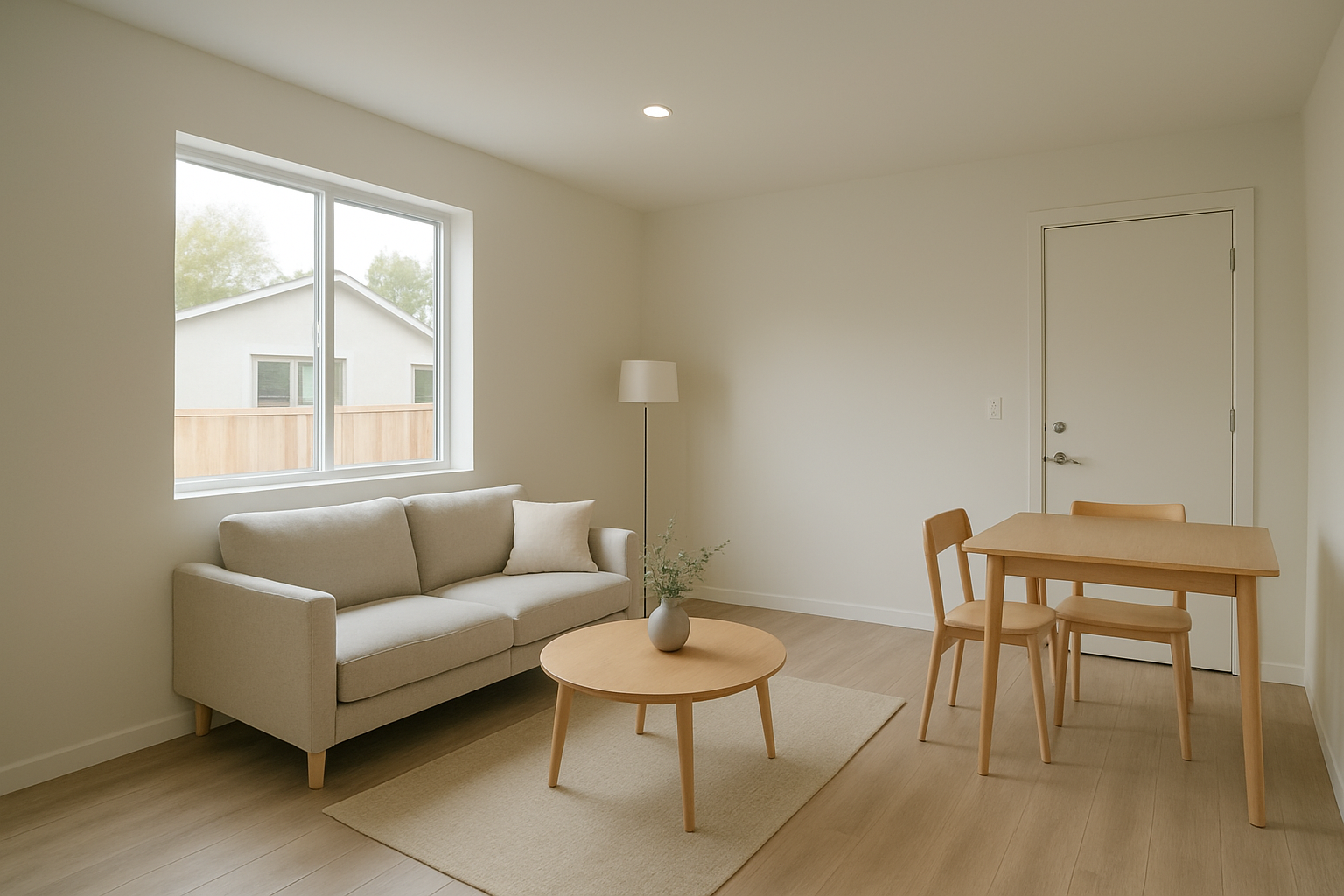
A completed garage conversion ADU, showing the kind of livable space a garage conversion contractor in Riverside County can create.
Frequently Asked Questions About Garage Conversion Contractor Riverside County
What does a garage conversion contractor in Riverside County actually do?
A garage conversion contractor in Riverside County converts an existing garage into livable space, handling design, structural engineering, permits, and construction. This typically includes framing new walls, adding plumbing and electrical, insulating, and bringing the space up to residential code as an ADU or JADU.
How much does a garage conversion cost in Riverside County?
Costs vary based on square footage, finish level, and existing utility access, so ranges differ from project to project. Reviewing a detailed cost breakdown before finalizing a design helps set realistic budgeting expectations.
How long does a garage conversion take from design to occupancy?
Most garage conversions take between four and nine months total, including design, permitting, and construction. Permit review timelines vary by city, which is often the biggest variable affecting the overall schedule.
Do I need a permit to convert my garage into an ADU in Riverside County?
Yes, a building permit is required for any garage conversion that adds living space, plumbing, or electrical work. Unpermitted conversions can create complications during a future home sale or refinance.
Can an HOA block a garage conversion in Riverside County?
California law limits how much an HOA can restrict ADU and garage conversion projects, though HOAs can still enforce reasonable design standards. It is worth reviewing your CC&Rs and discussing the project with your HOA board early in the process.
Will converting my garage trigger a property tax reassessment?
Only the new construction value is typically reassessed, not the entire property. Your existing home retains its current assessed value under California’s Proposition 13 protections.
What financing options are available for a garage conversion?
Common options include home equity lines of credit, construction loans, and ADU-specific financing programs offered through third-party lenders. A design-build contractor cannot issue loans directly but can refer homeowners to lending partners familiar with ADU projects.
What size can a garage conversion ADU be in Riverside County?
Most garage conversions are limited by the existing garage footprint, commonly ranging from roughly 400 to 700 square feet. Some projects add square footage through a bump-out, subject to local setback and lot coverage rules.
What is the difference between a garage conversion and a detached ADU?
A garage conversion reuses an existing structure, which generally lowers cost and shortens timelines compared with new construction. A detached ADU is built from the ground up, offering more design flexibility but typically at a higher price point.
What common mistakes do homeowners make when hiring a garage conversion contractor?
Common mistakes include skipping a formal site assessment, hiring a contractor unfamiliar with the local building department, and underestimating utility upgrade costs. Rushing the permit phase to save time often backfires with plan-check rejections.
How do I choose the best garage conversion contractor in Riverside County?
Look for an active CSLB license, verifiable local permit experience, and a strong BuildZoom or client review history. It also helps to choose a contractor who manages design, engineering, and permitting in-house rather than outsourcing each step.
What rental income can I expect from a converted garage in Riverside County?
Rental income depends on unit size, finish quality, and local market rates, which vary widely across Riverside County cities. Many homeowners use a converted garage to offset mortgage payments or support multigenerational family members instead of renting it out.
Final Thoughts on Hiring a Garage Conversion Contractor
Choosing the right garage conversion contractor in Riverside County comes down to three things: verified licensing, local permit experience, and a transparent, itemized budget. As a result, homeowners who take time to vet contractors, review realistic cost ranges, and understand their city’s permitting process tend to avoid the delays and surprise costs that derail so many ADU projects.
Whether the goal is rental income, multigenerational housing, or simply reclaiming an underused garage, working with a specialized garage conversion contractor in Riverside County who manages design, permitting, and construction under one roof gives homeowners a clearer, more accountable path from first sketch to final inspection.