
Detached ADU permits Riverside County approvals stand between a promising backyard sketch and a finished, rentable unit. For homeowners across Riverside County, the permitting stage often decides whether a project stays on schedule or drags on for months. However, once you understand what the Riverside County Planning Department and Building and Safety Division actually require, the process becomes far more predictable. This guide breaks down the requirements, timelines, and common mistakes so you can plan with confidence.
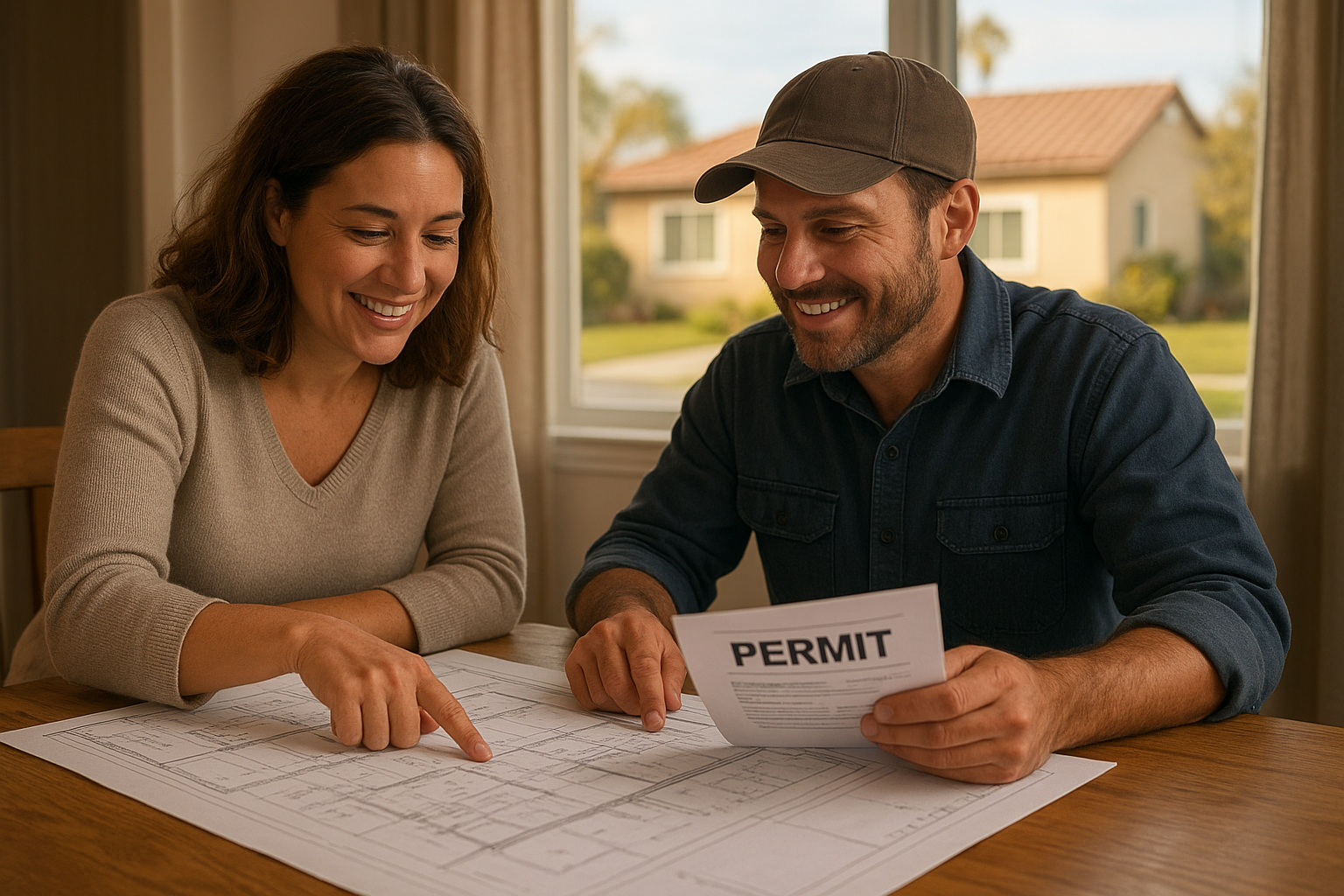
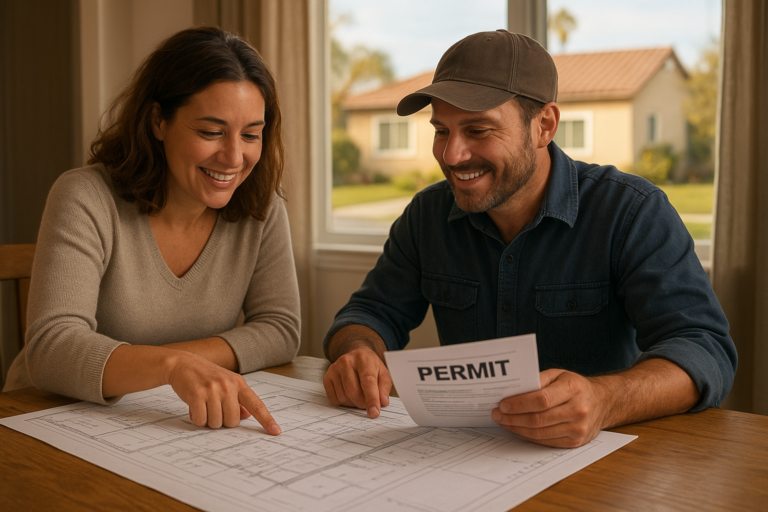
Reviewing plans early helps homeowners avoid delays when applying for detached ADU permits Riverside County officials require.
Detached ADU Permits Riverside County: What Homeowners Need to Know
Detached ADU permits Riverside County are the official building, zoning, and utility approvals issued by the county before construction of a standalone accessory dwelling unit can begin. In short, you need a zoning clearance plus building, electrical, plumbing, and mechanical permits, and every step must comply with both state ADU law and local development standards.
An accessory dwelling unit, often called an ADU, is a self-contained secondary home built on the same lot as an existing house. Riverside County treats detached ADUs differently from garage conversions or junior ADUs, since new construction triggers full structural and foundation review. As a result, the plan check process for a detached unit is more involved than for a conversion project. For a deeper look at how these categories differ locally, see this complete guide to Riverside County ADU options. In addition, the California Department of Housing and Community Development publishes statewide ADU guidance that county reviewers use as a baseline.
How Long Does the Riverside County ADU Permit Timeline Take?
California state law requires local agencies to approve or deny a complete ADU application within 60 days, as established in Government Code Section 65852.2. You can review the exact statute through the California Legislative Information site. In practice, however, most detached ADU projects in Riverside County take between 8 and 16 weeks from submittal to final approval once plan check corrections and utility coordination are included.
Several factors influence where a project lands within that range. For instance, incomplete structural calculations or missing Title 24 energy documents almost always add extra review cycles. Similarly, unincorporated county lots versus incorporated city lots can follow slightly different submittal portals and fee schedules. If you want a city-by-city breakdown of local rules, the local ADU building codes guide covers jurisdiction-specific differences in more detail.
Riverside County Detached ADU Permit Requirements Explained
Before submitting an application, homeowners should confirm several baseline requirements. Setbacks, lot coverage, and parking rules all shape what can actually be built.
- Side and rear setbacks are generally limited to 4 feet under state ADU law, though front setbacks follow standard zoning.
- Detached ADUs up to 1,200 square feet are typically allowed on qualifying lots, subject to lot coverage limits.
- Structural engineering drawings and Title 24 energy compliance documentation must accompany the plan set.
- Utility connections, including sewer or septic capacity, must be verified before plan check approval.
Above all, confirming eligibility early prevents wasted design fees. The Riverside County Planning Department publishes current zoning maps and standards that a contractor or architect should cross-reference before finalizing any layout. For design considerations that fit these constraints, this design options guide is a useful next step.
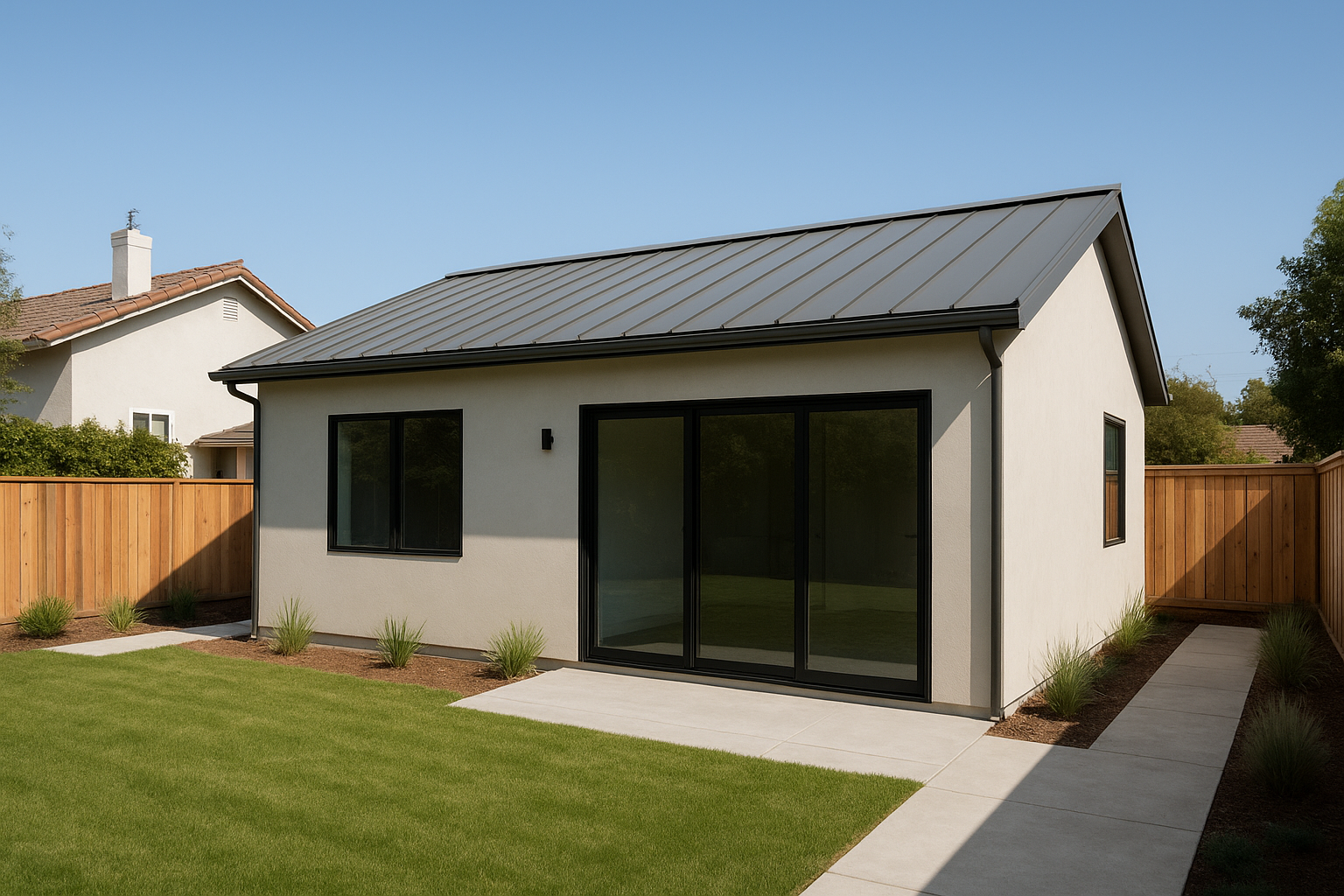
A completed detached ADU built after clearing the Riverside County permit and inspection process.
Step-by-Step: How to Get Detached ADU Permits Approved
Although every property differs slightly, the permit path generally follows the same sequence. Here is how the process typically unfolds:
- Confirm lot eligibility. Verify the parcel’s zoning designation, lot size, and existing structures to confirm a detached ADU is permitted before spending money on design work.
- Complete a site assessment. Have a contractor or engineer measure setbacks, utility locations, and slope conditions to identify constraints that will shape the final floor plan.
- Finalize architectural and structural drawings. Produce site-specific plans with structural engineering calculations and Title 24 energy compliance documentation ready for county plan check submittal.
- Submit the permit application. File the complete plan set with Riverside County Building and Safety along with required fees, which starts the 60-day statutory review clock.
- Respond to plan check corrections. Address any structural, energy, or zoning corrections the reviewer requests and resubmit promptly to avoid restarting the timeline.
- Schedule inspections and close out permits. Coordinate foundation, framing, and final inspections, then obtain the certificate of occupancy once every correction clears.
Common Reasons Riverside County ADU Permits Get Delayed
Even well-planned projects run into snags. In particular, incomplete structural calculations, missing Title 24 forms, and unresolved utility questions cause the majority of plan check corrections. Furthermore, homeowners who submit plans without first confirming setback compliance often face a full redesign mid-process. Consequently, working with a team that handles engineering and permitting in-house tends to reduce the number of correction cycles significantly, since the same people who drew the plans can respond quickly to reviewer questions.
What Does Detached ADU Permitting Cost in Riverside County?
Permit and plan check fees for a detached ADU in Riverside County typically fall between roughly $4,000 and $9,000, depending on square footage, project valuation, and whether school or utility connection fees apply to the specific parcel. These fees sit separate from design, engineering, and construction costs. For a full cost breakdown covering design, permitting, and build expenses together, review this Riverside County ADU cost guide. Homeowners exploring financing options for these combined costs can also learn more about lending programs through the legal requirements and regulations category.

Final inspections close out the detached ADU permits Riverside County homeowners submit earlier in the process.
Choosing a Contractor to Manage Your ADU Permit Process
Because permitting involves architecture, structural engineering, and city coordination all at once, many homeowners prefer a single accountable team rather than juggling separate vendors. The ADU Pro, based in Chino and serving Riverside County alongside Orange and Los Angeles counties, handles design, engineering, permitting, and construction under one roof. The company holds an active CSLB license, carries a BuildZoom score in the top 1% of California contractors, and maintains an average client rating near 4.9 stars. Therefore, homeowners weighing detached ADU permits Riverside County requirements against their own bandwidth may find it more efficient to let one team manage the entire submittal and correction process. You can review site assessment and design-build services directly at theadupro.com.
Frequently Asked Questions About Detached ADU Permits Riverside County
What are detached ADU permits Riverside County homeowners need?
Detached ADU permits Riverside County homeowners need include building, electrical, plumbing, and mechanical permits issued by Riverside County Building and Safety, plus a zoning clearance from the Planning Department confirming the lot qualifies.
How long does it take to get a detached ADU permit approved in Riverside County?
State law requires a decision within 60 days of a complete application. However, many Riverside County projects take 8 to 16 weeks once plan check corrections and utility coordination are factored in.
What size detached ADU can I build in Riverside County?
Most unincorporated Riverside County lots allow detached ADUs up to 1,200 square feet. That said, actual size also depends on lot coverage limits, setbacks, and the specific city jurisdiction where the property sits.
Do I need a separate permit for a garage conversion versus a detached ADU?
Yes, garage conversions follow a slightly different plan check path than new detached construction, since inspectors review the existing structure’s foundation and framing before approving the conversion scope.
How much do detached ADU permit fees cost in Riverside County?
Permit and plan check fees typically range from roughly $4,000 to $9,000, depending on square footage, valuation, and whether school or utility connection fees apply to the parcel.
Can an HOA block a detached ADU in Riverside County?
State law limits an HOA’s ability to fully block a code-compliant ADU. Still, the HOA can enforce reasonable design standards, so it is worth reviewing CC&Rs before finalizing plans.
What setbacks apply to detached ADUs in Riverside County?
State law generally requires no more than a 4-foot side and rear setback for detached ADUs. Front setbacks and specific plan overlay zones, however, can add further restrictions.
Will a detached ADU trigger a property tax reassessment?
Adding a detached ADU typically increases the assessed value of the new structure only, not the entire property. As a result, the existing home’s base value stays protected under Proposition 13 rules.
Who handles permit submittals and city coordination for an ADU project?
A design-build contractor typically manages plan submittals, corrections, and inspector coordination directly, which removes the burden from the homeowner and reduces the chance of missed deadlines.
What is the most common mistake homeowners make with ADU permits?
The most frequent mistake is submitting incomplete structural or Title 24 energy documentation. Consequently, this triggers plan check corrections and can add several weeks to the approval timeline.
Does financing affect the permit timeline for a detached ADU?
Financing itself does not slow permitting. Many lenders, however, require an approved permit set before releasing construction loan funds, so homeowners often coordinate both processes in parallel.
How do detached ADU permits differ from JADU permits in Riverside County?
JADUs convert space within the existing home footprint and follow a simplified permit path. Detached ADU permits, in contrast, require full new-construction review, including foundation and structural engineering sign-off.
Final Thoughts on Detached ADU Permits Riverside County Homeowners Face
Securing detached ADU permits Riverside County requires patience, complete documentation, and a clear understanding of local zoning standards. In summary, confirming lot eligibility early, preparing thorough structural and Title 24 documentation, and responding quickly to plan check corrections all shorten the path to approval. Above all, partnering with a team that manages design, engineering, and permitting together tends to prevent the delays that catch first-time applicants off guard. Whether you are planning a detached unit, a garage conversion, or a second-story addition, understanding the permit process now saves both time and money later. For further reading on local codes, visit the Riverside County building codes guide, and explore related ADU topics on Wikipedia’s overview of accessory dwelling units for broader context.

