
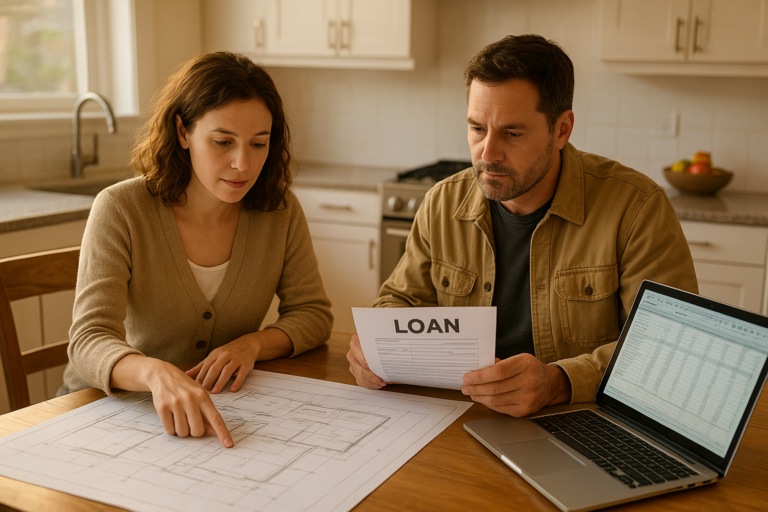
ADU construction loans California homeowners use to fund a new backyard unit, garage conversion, or attached addition come in several forms, and choosing the right one can make or break a project budget. Many homeowners start their accessory dwelling unit (ADU) — a secondary, independent living unit built on an existing residential lot — journey with a strong design idea but no clear plan for paying for it. As a result, this guide breaks down how ADU financing actually works across Orange County, Los Angeles County, and Riverside County, what lenders look for, and how to avoid the funding delays that stall so many projects.
Quick answer: ADU construction loans California lenders offer typically fall into four categories — home equity lines of credit (HELOCs), cash-out refinances, renovation/construction loans, and ADU-specific state programs. Most homeowners qualify based on home equity, credit score, and projected after-construction value rather than current income alone.
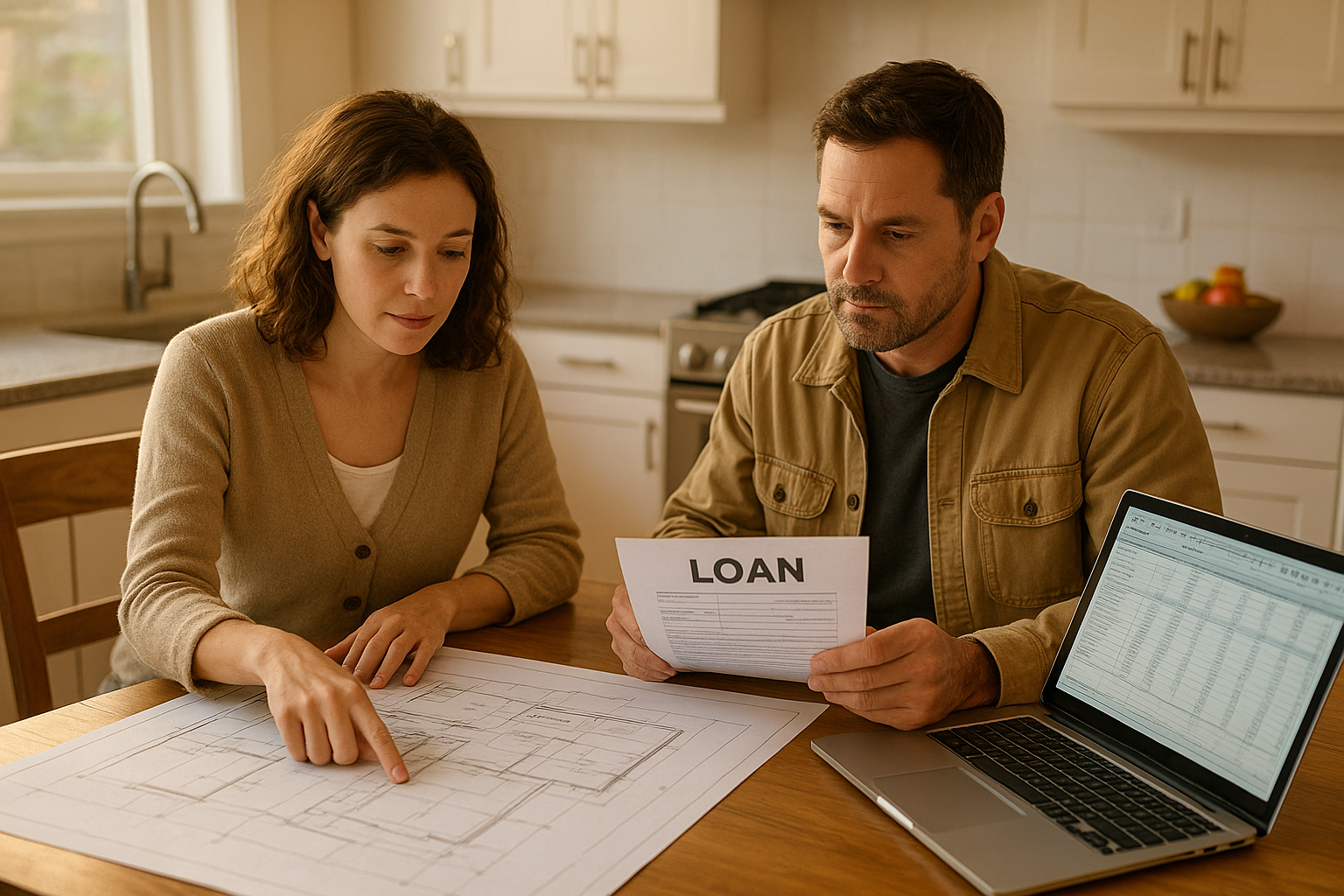
Reviewing financing paperwork early helps homeowners move through adu construction loans california underwriting faster.
What Are ADU Construction Loans in California?
An ADU construction loan is financing built to cover the design, permitting, and construction phases of an accessory dwelling unit project. Unlike a standard mortgage, funds are usually released in draws tied to construction milestones instead of handed over in one lump sum.
In California, these loans typically draw on the equity already built up in the primary home, since most ADU projects are not stand-alone purchases. Consequently, lenders look closely at combined loan-to-value ratio, the homeowner’s credit profile, and the projected rental income or appraised value once construction wraps up. For a closer look at how these pieces fit together, The ADU Pro’s project resources outline typical cost ranges for detached units, garage conversions, and attached additions.
Types of ADU Financing Options in Southern California
Homeowners across the region generally choose from four main paths, and each one comes with different tradeoffs in cost, speed, and flexibility.
- Home equity line of credit (HELOC): A revolving credit line secured by your home, useful for projects with a flexible timeline or phased scope changes.
- Cash-out refinance: Replaces your existing mortgage with a larger one, releasing the difference in cash for construction costs.
- Renovation and construction loans: Programs such as Fannie Mae’s HomeStyle Renovation loan bundle purchase or refinance with construction funds in a single close.
- ADU-specific state programs: The CalHFA ADU Grant Program has, in past funding cycles, offered up to $40,000 toward pre-development costs such as design and permitting.
Homeowners weighing a first-mortgage refinance against a HELOC can review primary mortgage resources before comparing these ADU-specific programs side by side.
ADU Construction Loans California: How Lenders Evaluate Your Project
Lenders underwriting adu construction loans california applications generally focus on four factors: combined loan-to-value ratio (often capped near 85-90%), credit score, debt-to-income ratio, and whether permitted plans already exist. In particular, a finalized, permit-ready design speeds approval significantly, since it removes much of the cost uncertainty that makes underwriters cautious.
According to California’s Department of Housing and Community Development, statewide ADU permit issuance grew from fewer than 2,000 units annually before 2017 to well over 20,000 per year by the early 2020s, a shift that pushed more lenders to publish dedicated ADU underwriting guidelines. As a result, working with a licensed, design-build contractor who coordinates engineering and city permitting in house — rather than juggling separate architects, engineers, and permit expediters — often removes friction during the loan process.
How to Secure an ADU Construction Loan in California (Step-by-Step)
Securing financing is a sequential process, and skipping steps is the most common reason approvals stall. Here is the order that tends to work best:
- Request a free site assessment and feasibility review to confirm your lot can support an ADU and to estimate rough square footage before approaching any lender.
- Work with a design-build team to produce preliminary floor plans and a cost estimate, since most lenders require projected construction costs before approving a loan.
- Gather financial documentation, including proof of income, existing mortgage statements, two years of tax returns, and a recent home equity estimate from an appraisal.
- Compare at least three financing options, such as a HELOC, cash-out refinance, renovation loan, or an ADU-specific program, to find the lowest total cost for your timeline.
- Submit your loan application along with permitted architectural and structural plans, since many lenders will not fund construction draws until the city issues a building permit.
- Close the loan and begin phased construction draws, releasing funds to your contractor as each inspection milestone is completed and verified.
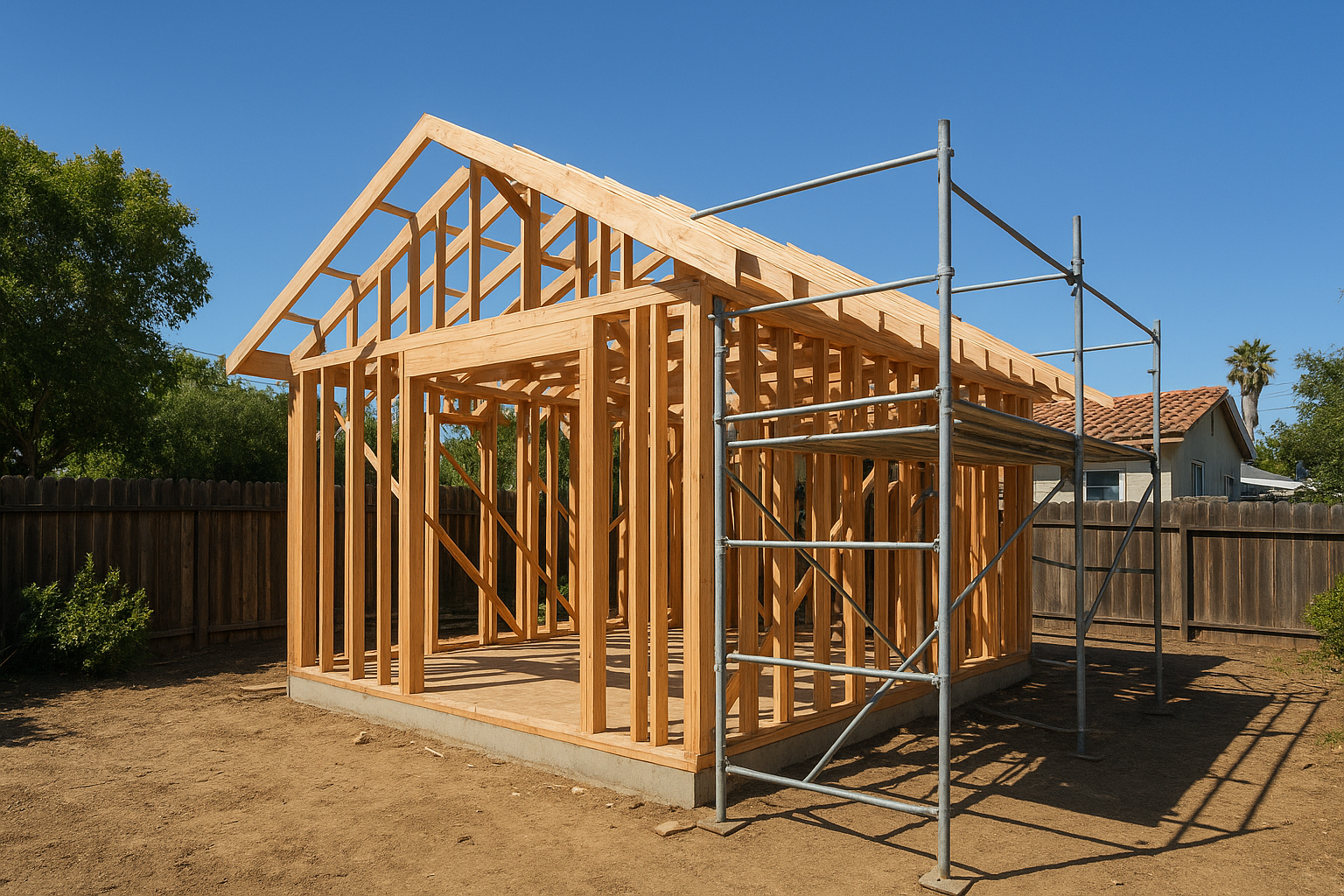
Construction draws release in stages as framing, roofing, and final inspections are completed.
How Much Does ADU Construction Cost in California?
Costs vary widely depending on ADU type and size, which typically ranges from about 500 to 1,200 square feet for custom layouts. In general, detached new-construction ADUs in Orange County, Los Angeles County, and Riverside County run roughly $150,000 to $300,000, while garage conversions and junior ADUs cost considerably less since they reuse existing foundations and utility connections.
Because loan amounts are tied directly to these estimates, an accurate budget matters more than it might seem. Therefore, homeowners who obtain a detailed cost breakdown before applying tend to avoid the mid-project funding gaps that force expensive change orders or project delays.
Common Mistakes When Financing an ADU Build
- Applying for a loan before plans are permitted, which slows underwriting and delays draw schedules.
- Underestimating soft costs such as engineering, utility upgrades, soil testing, and permit fees.
- Choosing a lender without first comparing combined loan-to-value limits across HELOCs, refinances, and renovation loans.
- Hiring separate architects, engineers, and contractors instead of a single accountable design-build team, which often creates documentation gaps lenders flag during review.
Choosing the Right ADU Lender for Your Project
Above all, the right lender depends on your equity position, timeline, and whether your plans are already permitted. Homeowners should compare at least two or three offers, since rates and draw schedules vary meaningfully between HELOCs, renovation loans, and ADU-specific programs.
Localized guidance also helps, since permit timelines and typical loan sizes shift by city. For example, homeowners can review financing breakdowns for ADU loans in Moreno Valley, ADU loans in Gardena, ADU construction financing in Long Beach, and ADU financing resources for Escondido to see how local permit costs and timelines shape loan sizing.
Reputable sources on home equity borrowing, including the Consumer Financial Protection Bureau’s HELOC overview, are worth reading before signing any financing agreement, since terms and risk disclosures differ by lender.
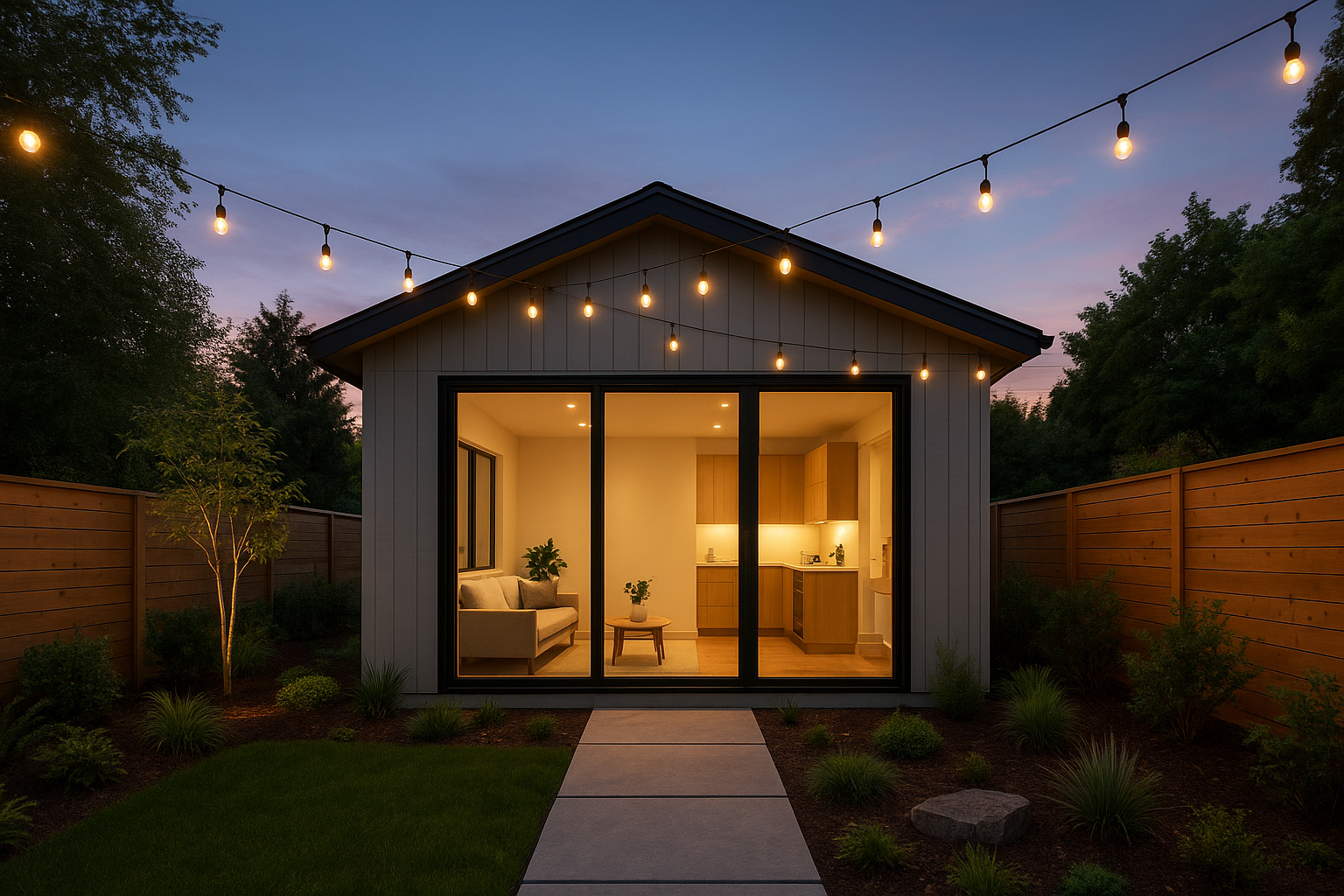
A completed detached ADU, the typical end result of a well-structured construction loan process.
What Is an Accessory Dwelling Unit, and Why Does It Matter for Financing?
An accessory dwelling unit, sometimes called a secondary suite, is a self-contained living space located on the same lot as a primary home. For further background on the concept and its variations nationally, the Wikipedia entry on secondary suites offers useful general context, while the California HCD accessory dwelling unit page covers the state’s specific legal framework.
Because an ADU adds livable square footage and, often, rental income potential, it directly affects how lenders size a construction loan. In other words, the better documented the design and projected value, the more financing options become available.
Frequently Asked Questions About ADU Construction Loans California
What are ADU construction loans California homeowners typically use?
ADU construction loans California homeowners typically use include HELOCs, cash-out refinances, renovation loans, and ADU-specific state programs. Each option draws on existing home equity or projected after-construction value, since standalone ADU-only loans are rare outside a few specialized lenders.
How do ADU construction loans differ from a traditional mortgage?
Unlike a mortgage used to purchase a home, ADU construction loans release funds in stages tied to inspection milestones. Lenders also evaluate projected post-construction value alongside current equity, rather than basing the loan solely on an existing sale price.
How much does it typically cost to build an ADU in Southern California?
Most detached ADUs in Orange County, Los Angeles County, and Riverside County range from roughly $150,000 to $300,000 depending on size, finishes, and site conditions. Garage conversions and junior ADUs are generally less expensive since they reuse an existing structure.
How long does it take to get approved for an ADU construction loan?
Approval typically takes two to six weeks once documentation, permitted plans, and an appraisal are in hand. Projects without finalized plans or permits often wait longer, since many lenders require a building permit before releasing funds.
What credit score do I need to qualify?
Most lenders look for a credit score of 680 or higher for HELOCs and renovation loans, though requirements vary by lender and loan type. Stronger equity positions can sometimes offset a lower credit score.
What is the difference between a HELOC and a construction loan for an ADU?
A HELOC is a revolving credit line secured by home equity that you can draw from as needed. A dedicated construction loan disburses funds in scheduled draws tied to project milestones and often converts to a standard mortgage once building is complete.
Can I use a cash-out refinance to build an ADU?
Yes, a cash-out refinance replaces your existing mortgage with a larger one and provides the difference in cash for construction. This option can make sense when current mortgage rates are close to your existing rate, since refinancing resets your full loan term.
Are there ADU-specific loan programs in California?
Some programs, such as the CalHFA ADU Grant Program, have offered up to $40,000 toward pre-development costs like design, permits, and soil tests for qualifying homeowners. Availability and funding levels change over time, so confirming current terms directly with the program administrator is important.
What common mistakes do homeowners make when financing an ADU?
The most common mistake is applying for financing before finalizing permitted plans, which slows underwriting and draw schedules. Homeowners also frequently underestimate soft costs such as engineering, utility upgrades, and permit fees, leaving a funding gap mid-project.
Will building an ADU increase my property taxes?
Adding an ADU typically triggers a reassessment of only the new construction’s value, not the entire property, under California’s Proposition 13 rules. The existing home’s assessed value generally stays the same, while the new square footage is added at current market rates.
Does The ADU Pro provide the loan directly?
No, The ADU Pro does not issue loans directly. Instead, the company connects homeowners with third-party lending partners offering HELOCs, construction loans, and ADU-specific financing programs while handling design, permitting, and construction in house.
What documents do lenders require for an ADU construction loan?
Lenders generally request two years of tax returns, recent pay stubs, mortgage statements, a title report, and permitted architectural and structural plans. Some also require a construction contract and draw schedule from a licensed contractor before final approval.
Which ADU type is cheapest to finance?
Garage conversions and junior ADUs usually require the smallest loan amounts because they reuse existing foundations, framing, and utility connections. Detached new-construction ADUs and second-story additions typically need larger loans since they involve full ground-up or structural work.
Final Thoughts on Financing Your ADU
Finding the right adu construction loans california offers takes more than comparing interest rates — it requires aligning financing with permitted plans, realistic cost estimates, and a construction timeline a lender can actually underwrite. Homeowners who start with a feasibility study and finalized design typically move through approval faster than those who finance first and design later.
Ultimately, whether the goal is rental income, multigenerational housing, or added property value, pairing a licensed design-build team with the right financing structure remains the most reliable path from idea to move-in day. For a next step, homeowners can visit theadupro.com to request a site assessment and start matching a project budget with available loan programs.

