
Junior ADU contractors Southern California homeowners hire today handle a very specific type of project: converting existing space, usually a garage or an attached room, into a legally permitted junior accessory dwelling unit, commonly called a JADU. Unlike a detached ADU, a JADU shares at least one wall with the primary home and generally costs less while still creating a rentable or livable second unit. Because every city across Orange County, Los Angeles County, and western Riverside County applies its own permitting rules, choosing the right contractor matters just as much as choosing the right design.
Quick Answer: Junior ADU contractors Southern California homeowners choose are licensed, CSLB-registered design-build firms that manage feasibility review, permitting, structural engineering, and construction for garage or attached-space JADU conversions. The strongest contractors handle every phase under one accountable team, from the initial site visit through the final city inspection.
What Are Junior ADU Contractors in Southern California?
In short, junior ADU contractors Southern California relies on are contractors who specialize in converting part of an existing home or garage into a small, permitted secondary living space. Specifically, a JADU is capped at 500 square feet and must share a wall with the main structure, which separates it from a larger, freestanding detached ADU.
Because the work happens inside an existing building envelope, these projects require a different skill set than ground-up construction. For example, contractors must assess existing framing, plumbing routes, and electrical panels rather than starting from a blank lot. As a result, homeowners benefit from working with a team that regularly handles conversions rather than only new builds.
According to the accessory dwelling unit concept outlined on Wikipedia, these secondary units have become a widely used housing strategy across California as cities look for ways to add housing supply without new land development.

Reliable junior ADU contractors Southern California homeowners trust always start with a detailed site walkthrough before drafting plans.
What Does a JADU Conversion Involve?
A JADU conversion typically starts with evaluating whether an existing garage or room can structurally support new plumbing, insulation, and an exterior entrance. In addition, the contractor must confirm that the conversion does not eliminate required parking spaces without a city-approved exception.
Once feasibility is confirmed, the project moves into custom design. Floor plans for JADUs usually range from a few hundred square feet up to the 500-square-foot maximum, and they often include an efficiency kitchen rather than a full kitchen. Consequently, mechanical and plumbing planning becomes a central part of the design phase rather than an afterthought.
How JADUs Differ From Detached ADU Conversions
Detached ADUs stand alone on the property and can reach up to 1,200 square feet, while JADUs stay attached to the main home and remain smaller. Therefore, homeowners deciding between the two should weigh lot size, budget, and long-term use before committing to one path. Homeowners comparing both options can review a broader breakdown of contractor selection on this guide to picking the best ADU contractor in Southern California.
How to Choose the Right ADU Contractor for Your JADU Project
Choosing a contractor starts with verifying licensing. Specifically, homeowners should confirm the contractor holds an active license issued by the California Contractors State License Board (CSLB), which regulates construction contractors statewide. A valid license number can be checked directly on the CSLB’s public database.
Beyond licensing, in-house design and permitting capability matters a great deal. When one team manages design, structural engineering, and construction together, miscommunication between separate architects, engineers, and builders becomes far less likely. Homeowners in Los Angeles County can see examples of this approach on the top JADU contractors guide for Los Angeles County.
Above all, past performance tells the real story. A BuildZoom score, a documented average client rating, and photos of completed garage conversions give far more useful information than a sales pitch alone.
Licensing, Permits, and Energy Code Requirements
Every JADU conversion in California requires a building permit, regardless of how small the project seems. In addition, the project must meet Title 24 energy compliance standards, which govern insulation, window efficiency, and overall energy performance for new and converted living space.
For a deeper look at statewide JADU and ADU rules, the California Department of Housing and Community Development’s ADU resource page offers an official reference point that contractors and homeowners both rely on. Notably, permit processing time varies by city, so homeowners in specific communities, such as Rowland Heights, often benefit from a contractor already familiar with that city’s planning department, as described on this Rowland Heights ADU contractor overview.
Step-by-Step: How to Hire a Junior ADU Contractor in Southern California
- Confirm your lot’s zoning eligibility and local JADU rules before contacting contractors.
- Request a site assessment and feasibility study from a licensed ADU specialist.
- Compare each contractor’s CSLB license status, BuildZoom score, and verified client reviews.
- Review custom floor plans and structural engineering drawings prepared specifically for your home.
- Confirm permit timelines and financing details before signing the final construction contract.
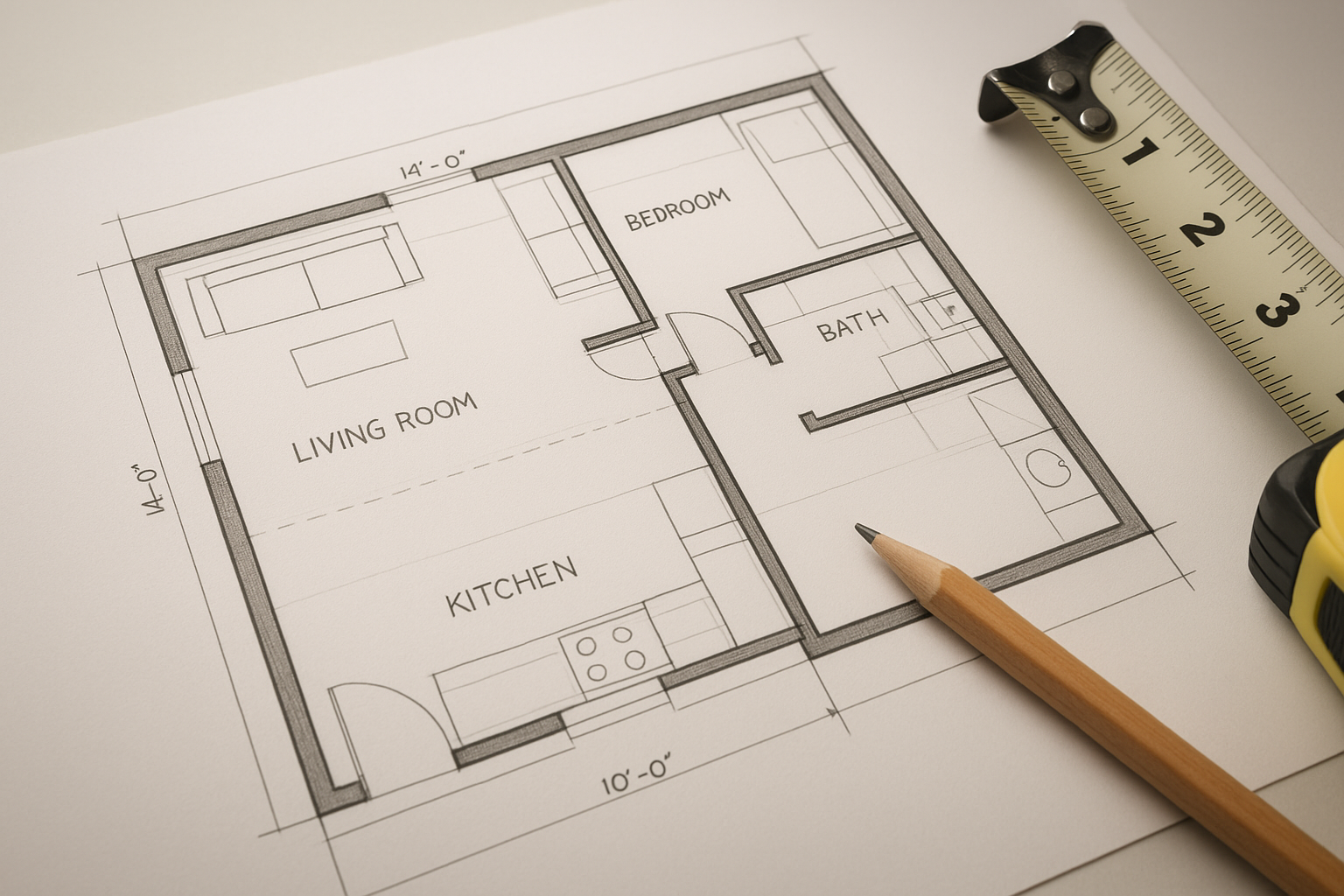
Custom floor plans tailored to the existing garage footprint help avoid costly redesigns later.
Typical Costs and Timelines for JADU Conversions
JADU conversions generally cost less than detached ADUs because they reuse an existing foundation, roof, and at least one wall. However, final pricing still depends heavily on plumbing relocation, electrical panel upgrades, and finish selections such as flooring and cabinetry.
Timelines vary by city, but the combined design, permitting, and construction process for a typical JADU conversion commonly spans several months from first consultation to final inspection. Specifically, permit review time differs across Orange County, Los Angeles County, and Riverside County jurisdictions, so homeowners should ask contractors for a realistic, city-specific estimate rather than a generic number.
Financing Your Junior ADU Project
Most homeowners fund a JADU conversion using a home equity line of credit, a construction loan, or an ADU-specific lending program. In contrast to a typical remodel loan, ADU-focused financing programs often account for the added rental income potential when calculating loan terms.
A design-build contractor cannot issue loans directly, but a well-connected firm can refer clients to third-party lending partners familiar with JADU and ADU projects specifically. This connection often saves homeowners significant research time during an already complex process.

Reviewing financing options early helps homeowners plan a realistic JADU construction budget.
Why Homeowners Choose The ADU Pro for JADU Conversions
The ADU Pro, headquartered in Chino, California, is a design-build contractor that focuses exclusively on ADUs and JADUs across Orange County, Los Angeles County, and western Riverside County, with additional site assessment reach into San Bernardino County. The company holds an active CSLB license and a BuildZoom score placing it in the top 1% of California contractors, alongside an average client rating near 4.9 stars.
Furthermore, the founder brings more than 30 years of broader construction experience to every project, having specialized exclusively in ADUs since the company’s founding in 2022. The team manages design, in-house structural engineering, permit handling, and construction together, while emphasizing net-zero-focused methods, USA-sourced materials, and custom built-in interior work.
Homeowners researching personalized design support can also review this comparison of personalized ADU design consultations, or visit The ADU Pro’s website directly to request a site assessment.
Frequently Asked Questions About Junior ADU Contractors Southern California
What is a junior ADU (JADU)?
A junior accessory dwelling unit, or JADU, is a small living space of up to 500 square feet created within the existing footprint of a single-family home, often by converting part of a garage. It must share at least one wall with the main house and typically includes its own entrance and efficiency kitchen.
How are junior ADU contractors Southern California firms different from general ADU builders?
Junior ADU contractors Southern California homeowners hire focus specifically on converting existing structures, such as garages or attached rooms, rather than building new detached units. This specialization means they understand shared-wall requirements, existing foundation limits, and the specific permit category cities use for JADUs.
How much does a JADU conversion typically cost?
JADU conversions generally cost less than detached ADUs because they reuse existing walls, roofs, and foundations. However, final pricing still depends on plumbing relocation, electrical upgrades, and the finish level a homeowner selects.
How long does a garage-to-JADU conversion take?
A typical JADU conversion takes several months from design through final inspection, with permit review time varying significantly by city. Some jurisdictions process JADU permits faster than full ADU permits because the project scope is smaller.
Do I need a permit to build a JADU?
Yes, a building permit is required for any JADU conversion in California, even when the work occurs inside an existing garage. Skipping permits can create major problems later, including issues when selling the home or renting the unit.
Can I rent out my JADU?
In most cases, yes, state law allows JADUs to be rented, though some cities require the homeowner to live in either the main house or the JADU. It is worth confirming local owner-occupancy rules before finalizing a rental plan.
What size can a JADU be?
California law caps JADUs at 500 square feet, which is smaller than the typical detached ADU limit. This size restriction is one reason JADU conversions tend to cost less than building a separate structure.
Is a JADU different from a detached ADU?
Yes, a JADU must share a wall with the existing home and stay within 500 square feet, while a detached ADU is a freestanding structure that can reach up to 1,200 square feet. Detached ADUs also typically require a full kitchen, whereas JADUs often use an efficiency kitchen.
What financing options exist for a JADU project?
Homeowners commonly use home equity lines of credit, construction loans, or ADU-specific financing programs to fund a JADU conversion. A design-build contractor can connect clients with third-party lending partners familiar with these loan types.
Will building a JADU trigger a property tax reassessment?
Adding a JADU generally results in a partial reassessment that reflects only the value added by the new construction, not the entire property. The existing home retains its original assessed value under California’s Proposition 13 protections.
What should I look for when choosing junior ADU contractors Southern California offers?
Look for an active CSLB license, documented client reviews, in-house design and permitting capability, and clear communication about timelines. A contractor who manages design, engineering, and construction together usually reduces miscommunication between phases.
What cities does The ADU Pro serve for JADU conversions?
The ADU Pro builds throughout Orange County, Los Angeles County, and western Riverside County, with additional site assessment reach into San Bernardino County. The company is headquartered in Chino, California.
What common mistakes should I avoid when hiring a JADU contractor?
Common mistakes include skipping a formal feasibility assessment, hiring a contractor without an active CSLB license, and signing a contract before confirming local setback and parking rules. These oversights often cause costly redesigns mid-project.
How do I know if my lot or garage qualifies for a JADU?
A licensed contractor can confirm eligibility through a site assessment that reviews zoning, existing structure condition, and utility access. In general, any single-family lot with a legally permitted garage is a strong candidate for a JADU conversion.
Final Thoughts on Hiring Junior ADU Contractors Southern California Homeowners Trust
Ultimately, choosing between the many junior ADU contractors Southern California offers comes down to verified licensing, transparent cost expectations, and a team that manages design, permitting, and construction together. In particular, homeowners who confirm feasibility early, compare credentials carefully, and plan financing before signing a contract tend to avoid the most common delays. Therefore, taking the time to research a contractor’s CSLB status, BuildZoom score, and past JADU projects pays off throughout the entire build.