An attached ADU addition contractor designs, permits, and builds an accessory dwelling unit (ADU) — a secondary living space with its own kitchen and bathroom — that connects directly to your existing home rather than standing alone in the backyard. For homeowners across Orange County, Los Angeles County, and western Riverside County, choosing the right one often determines whether a project finishes on budget and functions the way it was planned. In addition, this guide explains what these contractors do, how to evaluate one, and what the process typically looks like from the first site visit through final inspection.
In short: An attached ADU addition contractor handles site feasibility, custom design, structural engineering, permitting, and construction for an ADU built onto an existing house. A design-build firm manages all of these steps as one accountable team, instead of homeowners coordinating separate architects, engineers, and builders themselves.
What Is an Attached ADU Addition Contractor?
An attached ADU addition contractor is a licensed contractor who specializes in building accessory dwelling units that share a wall, roofline, or structural connection with an existing single-family home. Unlike a detached ADU, which stands separately on the lot, an attached addition extends the primary structure. As a result, permitting, structural engineering, and setback rules — the minimum distance a structure must sit from a property line — often work differently than they do for a standalone unit.
In Southern California, this distinction matters because cities in Orange County, Los Angeles County, and Riverside County apply different standards depending on whether the ADU attaches to the house or sits apart from it. Therefore, working with a contractor who understands both the construction and the code side of attached additions reduces plan-check delays.
Why Southern California Homeowners Add an Attached ADU
Homeowners pursue an attached ADU addition for several reasons. Many want rental income to offset a mortgage, while others need independent space for aging parents or adult children, an arrangement often called multigenerational housing. In addition, state housing law has made attached and detached ADUs considerably easier to permit than in the past.
According to the California Department of Housing and Community Development (HCD), state reforms including SB 13 and AB 68 streamlined local ADU approval processes and removed many barriers that once blocked these projects. Consequently, cities across Orange County, Los Angeles County, and Riverside County now process ADU permits on a more predictable timeline, though local requirements still vary by jurisdiction. For broader context on how this housing type is defined, see Wikipedia’s overview of secondary suites.
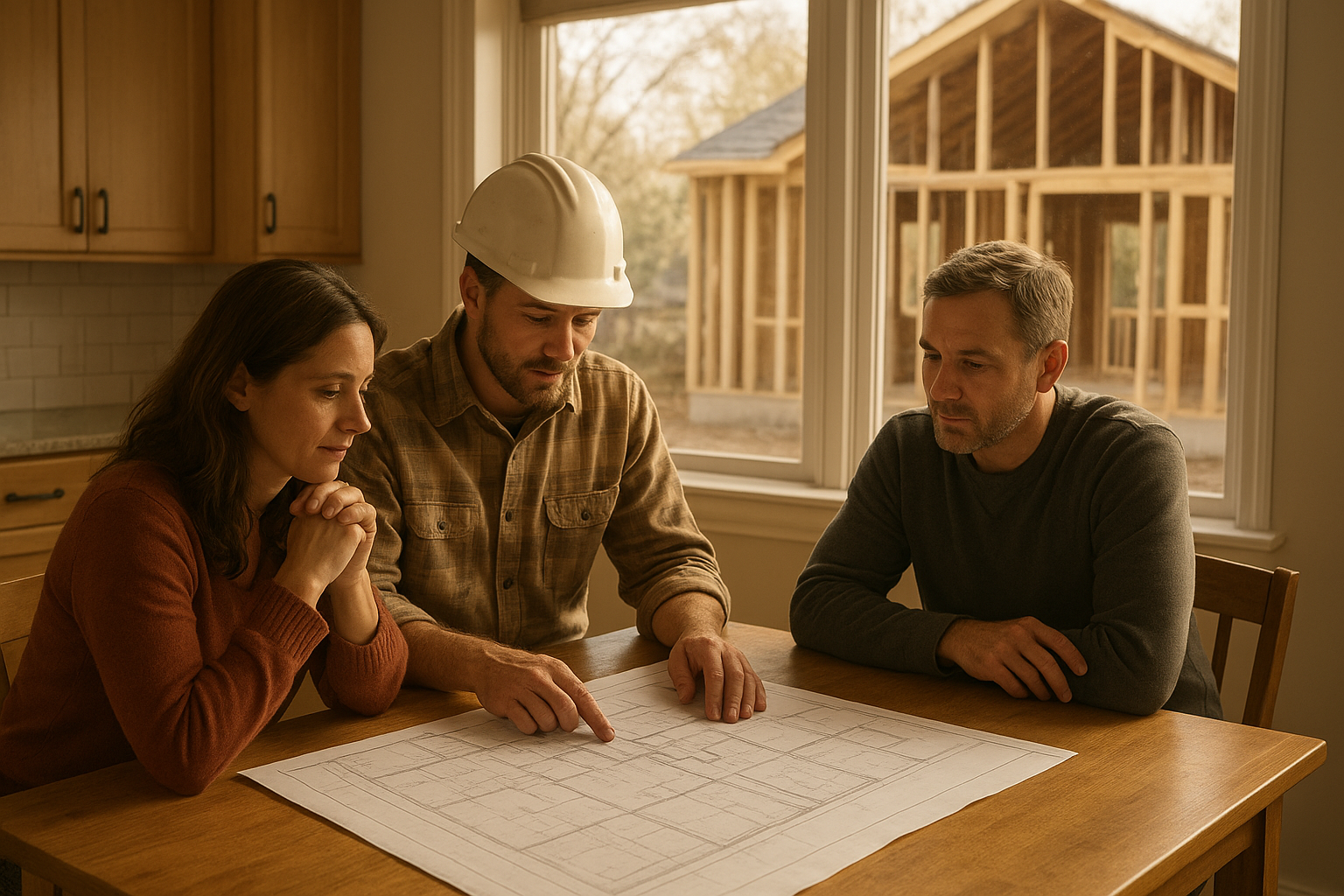
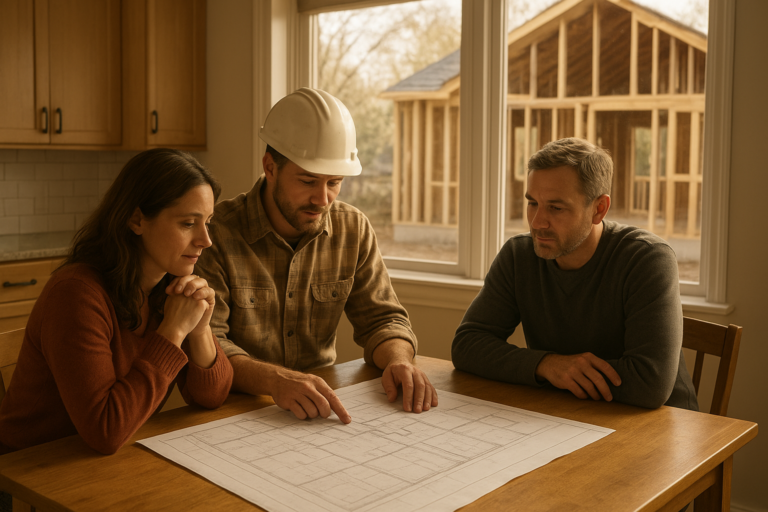
An attached ADU addition contractor walking homeowners through site-specific floor plans.
What Does an Attached ADU Addition Contractor Handle?
A full-service attached ADU addition contractor typically manages the entire project as one accountable process. The sequence generally looks like this:
- Site assessment and feasibility — A contractor visits the property to confirm lot coverage, setbacks, utility access, and whether the house can structurally support an attached addition before any design work begins.
- Custom floor plan design — The design team creates site-specific floor plans, typically between 500 and 1,200 square feet, matching the homeowner’s goals for rental income, guest space, or multigenerational living.
- Structural engineering and plan submittal — In-house or coordinated structural engineers prepare drawings that satisfy local building codes and Title 24 energy compliance before plans go to the city for review.
- Permit coordination and city review — The contractor submits plans, responds to plan-check corrections, and coordinates directly with city building departments so homeowners aren’t navigating the bureaucracy alone.
- Construction and custom built-ins — Crews frame, wire, plumb, and finish the addition, often including custom built-in cabinetry and millwork tailored to the new space.
- Final inspection and occupancy — The contractor schedules and manages final inspections, then assists with certificate of occupancy paperwork so the unit can legally be occupied or rented.
How to Choose the Right Attached ADU Addition Contractor
Selecting an attached ADU addition contractor isn’t just about price. Above all, homeowners should verify licensing, review track record, and understand exactly how the company manages design, permitting, and construction together.
Check Licensing and Track Record
Always confirm that a contractor holds an active license through the California Contractors State License Board (CSLB). In addition, third-party platforms such as BuildZoom score contractors based on permit history, licensing standing, and complaint records, giving homeowners an independent reference point beyond online reviews. For instance, a contractor with decades of broader construction experience who has since specialized exclusively in ADUs brings a different depth of knowledge than a general remodeler taking on an occasional ADU project.
Ask About Design-Build vs. Separate Trades
A design-build contractor handles design, engineering, permitting, and construction under one contract and one point of accountability. In contrast, hiring a separate architect, then a separate engineer, then a separate builder, often creates coordination gaps when problems arise during construction. Similarly, ask whether the contractor coordinates financing referrals, since many homeowners fund an attached ADU addition through a HELOC (a home equity line of credit) or a construction loan rather than cash savings.
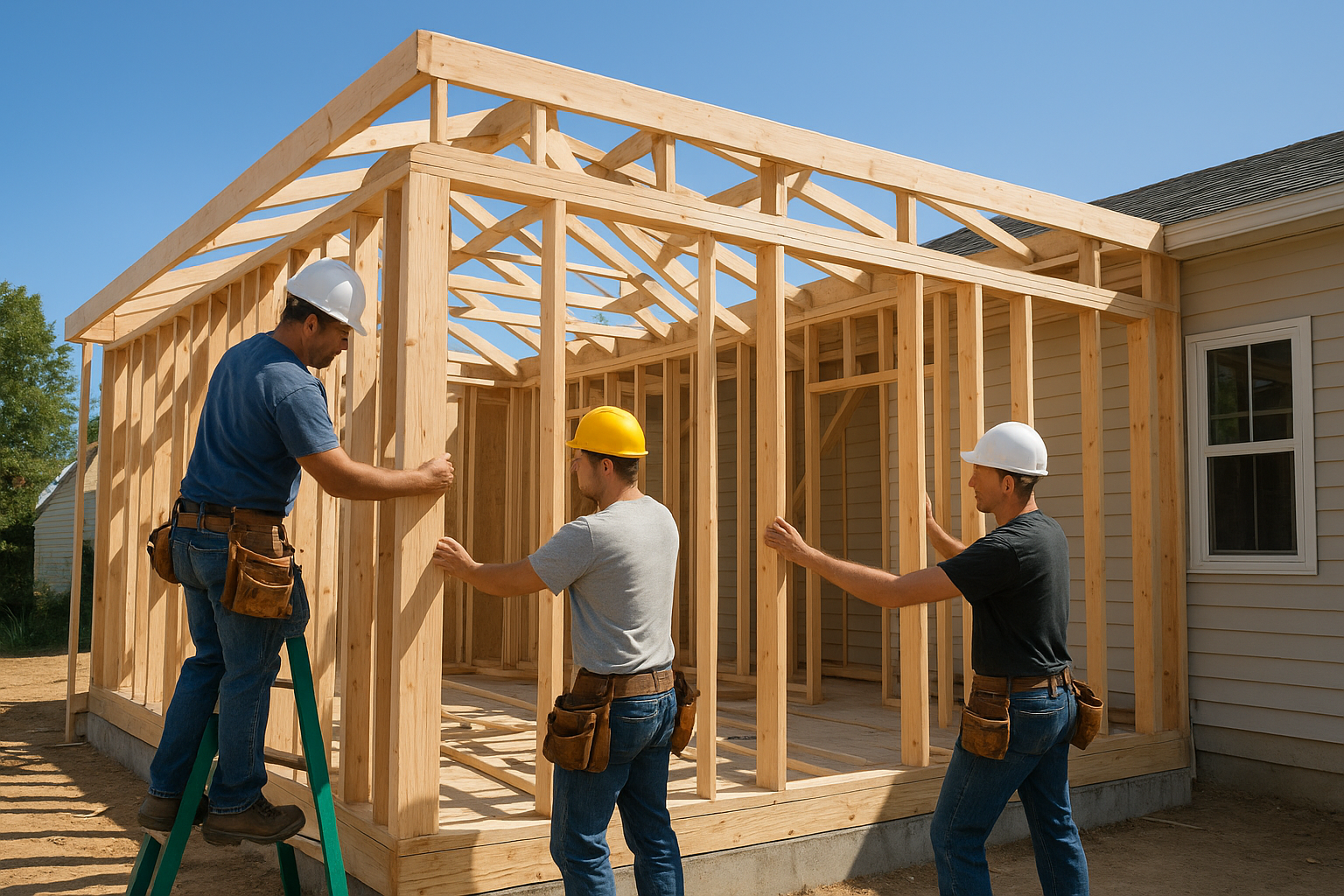
Framing underway on an attached ADU addition connected to the primary home.
Attached ADU vs. Detached ADU vs. Garage Conversion
Homeowners evaluating an ADU addition contractor should understand how an attached ADU compares to the alternatives. An attached ADU shares a wall or roofline with the main house, which can lower some construction costs since it uses existing utility connections and foundations. A detached ADU stands alone in the backyard, offering more privacy for tenants or family members. A garage conversion repurposes existing structure into living space, generally the fastest and least expensive path when the garage is structurally sound.
A junior ADU (JADU) is a smaller option, up to 500 square feet, converted from existing space within the home and sharing some systems with the main house. Specifically, the right choice depends on lot size, budget, desired privacy, and how the finished space will be used.
Cost and Financing Considerations for an Attached ADU Addition
Costs for an attached ADU addition vary based on square footage, finish level, site conditions, and local permit fees. Because attached units often connect to existing electrical, plumbing, and foundation systems, they can sometimes cost less per square foot than a fully detached unit, though this isn’t guaranteed on every lot.
Many homeowners finance the project through a HELOC, a dedicated construction loan, or an ADU-specific lending program. A design-build contractor that coordinates with third-party lending partners, rather than issuing loans directly, can help homeowners understand realistic options without pressure from a sales-driven lender relationship. For a closer look at how one Southern California firm structures design, permitting, and financing coordination together, see theadupro.com.
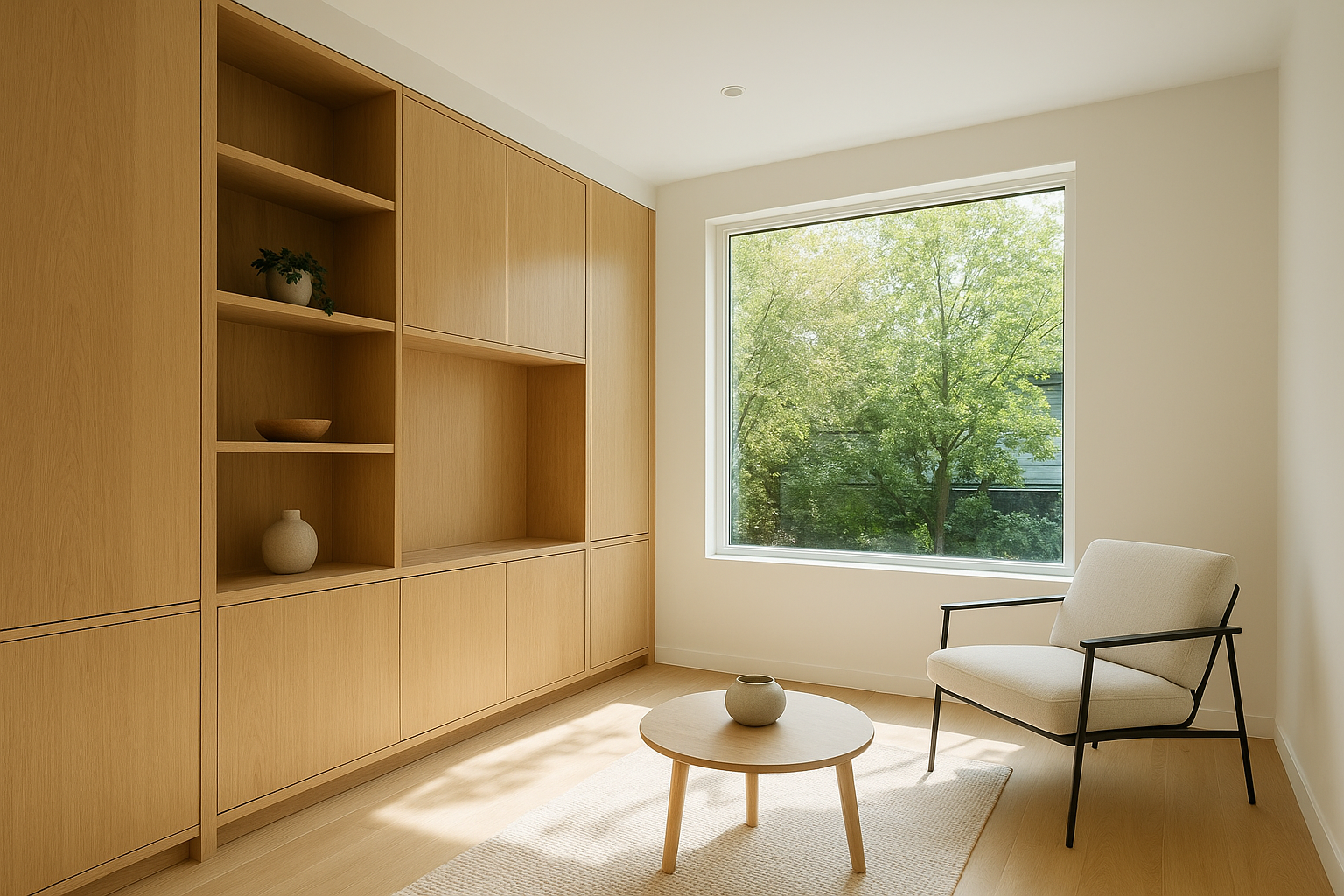
A finished attached ADU interior featuring custom built-ins and energy-efficient windows.
Permitting and Timeline Expectations Across Orange County, LA, and Riverside
Permit timelines for an attached ADU addition depend heavily on the city. Some jurisdictions process straightforward ADU permits in a matter of weeks, while others with heavier plan-check backlogs take several months. As a result, homeowners in different cities should expect different timelines even for similar floor plans.
For homeowners weighing contractor options in western Riverside County, this guide on which contractor to contact for an attached ADU addition in Riverside County breaks down local considerations in more detail. Likewise, homeowners researching options in Sun City or Eastvale, or further west in Redondo Beach, can find city-specific guidance through local resource pages. Because code requirements shift from one jurisdiction to the next, working with a contractor familiar with your specific city’s building department shortens the review process.
Working With an ADU-Focused Design-Build Team
Some contractors treat ADUs as a side offering alongside general remodeling. Others work exclusively within this space, which often means deeper familiarity with Title 24 energy compliance, net-zero-focused construction methods, and city-specific permit nuances. For example, The ADU Pro, headquartered in Chino, CA, focuses exclusively on detached ADUs, attached ADU additions, garage conversions, and JADUs across Orange County, Los Angeles County, and western Riverside County, with site assessment reach into San Bernardino County, and holds an active CSLB license with a BuildZoom score in the top 1% of California contractors.
Homeowners comparing contractors should ask how many years the company has focused specifically on ADUs, not general construction, since code requirements and city relationships differ meaningfully from standard remodeling work. You can review service areas and request a site assessment directly through theadupro.com.
Frequently Asked Questions About Attached ADU Addition Contractors
What is an attached ADU addition contractor?
An attached ADU addition contractor is a licensed contractor who designs, permits, and builds an accessory dwelling unit that connects to an existing home’s structure. Unlike contractors who only build detached units, they manage the added complexity of tying the new space into existing walls, rooflines, and utility systems.
How is an attached ADU different from a detached ADU?
An attached ADU shares a wall or roofline with the main house, while a detached ADU stands separately on the lot. This difference affects construction cost, privacy, permitting rules, and how utilities connect to the new space.
How much does an attached ADU addition cost in Southern California?
Costs vary widely based on square footage, finish level, and site conditions, so there is no single fixed price across Orange County, Los Angeles County, and Riverside County. Homeowners should request a site-specific estimate rather than relying on general online averages.
How long does an attached ADU addition take to build?
Timelines depend on design complexity, city permit review speed, and construction scope, and can range from several months to a year or more from first site visit to final inspection. Cities with heavier plan-check backlogs typically add extra weeks.
Can an HOA block an attached ADU addition?
In California, HOAs generally cannot outright ban ADUs, though they may apply reasonable restrictions related to aesthetics or size under current state law. Homeowners in HOA communities should still confirm specific requirements before finalizing a design.
Will building an attached ADU trigger a property tax reassessment?
Typically, only the new construction value of the ADU is reassessed, not the entire property’s existing assessed value, under California property tax rules. Homeowners should confirm specifics with their county assessor’s office since rules can vary.
What size can an attached ADU addition be?
Attached ADU additions commonly range from roughly 500 to 1,200 square feet, depending on lot size, local zoning, and the homeowner’s goals. Local setback and lot coverage rules ultimately determine the maximum buildable size.
Do I need a licensed general contractor for an attached ADU addition?
Yes, an active contractor’s license through the CSLB is essential for legal construction, inspection sign-off, and consumer protection. Homeowners can verify license status directly through the CSLB website before signing any contract.
What’s the difference between a design-build contractor and hiring separate architects and builders?
A design-build contractor manages design, engineering, permitting, and construction under one team and one contract, while separate trades require homeowners to coordinate each phase independently. Design-build generally reduces miscommunication and keeps one party accountable.
What financing options exist for an attached ADU addition?
Common options include a HELOC, a dedicated construction loan, or an ADU-specific financing program offered through third-party lenders. Many design-build contractors coordinate with lending partners but do not issue loans directly.
What common mistakes should homeowners avoid when hiring an attached ADU addition contractor?
Common mistakes include skipping a license and reference check, assuming a detached ADU quote applies to an attached project, and failing to confirm who handles permitting if plan-check issues arise. Clarifying scope in writing before construction begins helps avoid costly disputes.
What should homeowners look for in a good attached ADU addition contractor?
Look for an active CSLB license, a strong track record on platforms like BuildZoom, in-house or coordinated structural engineering, and clear communication about permitting timelines. Above all, confirm the contractor has specific experience with attached additions, not only detached units.
Final Takeaways
Choosing the right attached ADU addition contractor shapes nearly every part of the project, from how smoothly permitting goes to whether the finished space functions the way it was designed. In addition, verifying licensing, asking about design-build coordination, and understanding financing options upfront helps homeowners avoid the most common and costly mistakes. Because attached additions involve tying new construction into an existing home’s structure, experience with this specific ADU type matters as much as general construction background. Homeowners across Orange County, Los Angeles County, and western Riverside County evaluating this decision should prioritize an attached ADU addition contractor who can speak clearly about site feasibility, permitting, and construction before signing any contract.