What Is an Accessory Dwelling Unit? The Complete Guide to ADUs in California
Updated guide covering every aspect of accessory dwelling unit planning, design, financing, and construction in California.
California is at the forefront of the accessory dwelling unit movement, giving homeowners a powerful opportunity to add livable space, generate rental income, and contribute meaningfully to the state’s housing supply. This comprehensive guide covers everything you need to know — from the definition of an accessory dwelling unit to regulations, costs, design, permitting, and what happens after construction is complete. Whether you’re just beginning to explore the idea or are ready to break ground, this is the only resource you’ll need.
Key Takeaways
- Definition: An accessory dwelling unit is a secondary, self-contained residence on a single-family or multi-family lot — distinct from the primary dwelling.
- Multiple Types Exist: Detached, attached, garage conversion, Junior ADU (JADU), and modular ADUs each suit different properties and budgets.
- California Law Has Changed Dramatically: Since 2020, sweeping statewide legislation has simplified permitting, reduced fees, and expanded where ADUs are allowed.
- Costs Vary Widely: Depending on type, expect to spend $40,000–$350,000+ to build an accessory dwelling unit in California.
- Financing Is Available: HELOCs, ADU-specific loans, state programs, and local grants can all fund your project. For a deeper walkthrough, see our TheADUPro: Your Premier Local ADU Building Contractor in Southern California.
- ROI Is Strong: Rental income, increased property value, and multi-generational living benefits make ADUs one of the highest-return home investments.
- Local Rules Still Apply: Statewide minimums set the floor — your city or county may have additional (but not more restrictive) requirements.
What Is an Accessory Dwelling Unit? A Clear Definition
An accessory dwelling unit (ADU) is a secondary residential unit located on the same lot as a primary single-family or multi-family home. It is a complete, independent living space — meaning it contains its own kitchen or kitchenette, bathroom, sleeping area, and separate entrance. An accessory dwelling unit is not a spare bedroom or a shared living arrangement; it functions as a fully independent home in a smaller footprint.
The term “accessory” simply means the unit is secondary to the primary home on the property. ADUs go by many names — granny flats, in-law suites, backyard cottages, secondary suites, carriage houses — but under California law, they are all governed by the same category: the accessory dwelling unit.
California’s legal definition (Government Code Section 65852.2) describes an ADU as “an attached or detached residential dwelling unit that provides complete independent living facilities for one or more persons and is located on a lot with a proposed or existing primary residence.”
What Makes an Accessory Dwelling Unit Different from Other Housing?
Unlike a room addition, a bedroom addition, or a permitted basement conversion, an accessory dwelling unit is legally recognized as a separate dwelling. It has its own address, can be independently rented, and must meet independent habitability standards including egress, ventilation, and minimum square footage. This legal distinction matters enormously — it defines what you can do with the unit, how it is taxed, and what rights tenants or occupants have.
Quick Fact: California’s accessory dwelling unit laws were significantly reformed in 2020 and again in 2023. Today, most residential properties in California are legally entitled to at least one ADU and one Junior ADU (JADU) by right — meaning approval cannot be discretionarily denied.
Why Are Accessory Dwelling Units So Important Right Now?
California faces a well-documented housing crisis. The state needs an estimated 3.5 million additional homes by 2025 to meet demand. Traditional housing development is slow, expensive, and politically contested. Accessory dwelling units represent one of the fastest, most cost-effective paths to adding housing stock — on land that is already developed, with infrastructure already in place.
For individual homeowners, the appeal is equally strong. An accessory dwelling unit on your property can:
- Generate significant rental income — median ADU rents in California range from $1,200 to $3,500/month depending on location and unit size
- Increase your property value — studies show ADUs increase home sale prices by 25–35% in many California markets
- House family members — aging parents, adult children, or relatives with disabilities can live nearby with privacy and independence
- Offset your mortgage — rental income from an ADU can cover a substantial portion of your monthly housing costs For a deeper walkthrough, see our ADU Builders Irvine: Planning and Building Your ADU.
- Add flexibility to your estate — an ADU gives you long-term options to rent, sell, or occupy as needs change For a deeper walkthrough, see our ADU Building Glendale.
Types of Accessory Dwelling Units: Which One Is Right for You?
Not all accessory dwelling units are alike. California recognizes several distinct ADU types, each with its own construction approach, cost range, and regulatory treatment. Understanding which type fits your property and goals is the most important early decision you’ll make.
1. Detached Accessory Dwelling Unit
A detached ADU is a completely separate structure from the main house — its own freestanding building on the same lot. This is the most popular and desirable type for rental purposes because it offers complete privacy for both the homeowner and the tenant. Detached ADUs are also called backyard cottages or granny flats. For a deeper walkthrough, see our ADU Building Garden Grove.
- Typical cost: $150,000–$350,000+
- Best for: Maximum privacy, highest rental income potential
- Max size in California: Up to 1,200 sq ft (or the size of the primary dwelling, whichever is less)
2. Attached Accessory Dwelling Unit
An attached ADU shares at least one wall with the primary residence but has its own separate entrance and independent living facilities. This type often requires less site work and foundation work than a detached unit, which can reduce costs, but it offers less separation between the primary and secondary households.
- Typical cost: $100,000–$250,000
- Best for: Properties with limited yard space, multi-generational living
3. Garage Conversion ADU
Converting an existing attached or detached garage into a livable accessory dwelling unit is one of the fastest and most cost-effective ADU paths available. Because the structure already exists, the primary work involves insulation, HVAC, plumbing, electrical upgrades, and interior finishing.
- Typical cost: $60,000–$150,000
- Best for: Budget-conscious homeowners, faster timelines
- Note: California law prohibits requiring replacement parking when a garage is converted to an ADU in most cases. For a deeper walkthrough, see our ADU Building Fontana.
4. Junior Accessory Dwelling Unit (JADU)
A Junior ADU (JADU) is created within the existing walls of the primary single-family home — often from a bedroom, converted garage space within the home, or an interior suite. JADUs are limited to 500 square feet and must share bathroom facilities or have a separate bathroom. The owner must occupy the primary residence or the JADU itself.
- Typical cost: $40,000–$80,000
- Best for: Minimum disruption, lowest cost entry point, owner-occupied rental situations
- Key limitation: Cannot exceed 500 sq ft; owner-occupancy required
5. Modular and Prefabricated ADU
A modular ADU is built in a factory and delivered to your site for installation. This approach significantly reduces on-site construction time and can lower overall costs compared to site-built detached units. Quality has improved dramatically in recent years, and modular ADUs are increasingly popular throughout California.
- Typical cost: $80,000–$200,000
- Best for: Faster construction, tighter budget, predictable costs
- Timeline advantage: Site work and manufacturing happen simultaneously, cutting overall timeline by 30–50%
6. Above-Garage and Interior Conversion ADUs
Some homeowners convert unused interior space — a basement, an attic, or space above a garage — into an accessory dwelling unit. These conversions avoid new footprint but require structural, plumbing, and code compliance work.
- Typical cost: $75,000–$175,000
- Best for: Properties with existing underutilized interior space
Pro Tip: California law (AB 68 and SB 9) now allows most single-family lots to have both one ADU and one Junior ADU simultaneously. Multi-family properties may be entitled to even more units depending on lot size and existing structure. For a deeper walkthrough, see our ADU Building Corona.
California ADU Regulations: What the Law Actually Says
California has undergone dramatic regulatory change to encourage accessory dwelling unit construction. Understanding both statewide law and local ordinances is essential before you build.
Statewide ADU Laws: The 2020–2024 Reform Landscape
A wave of legislation beginning in 2020 fundamentally reshaped California’s accessory dwelling unit rules. Key provisions include:
- AB 68 / SB 13: Eliminated owner-occupancy requirements for standard ADUs (through 2025), reduced setbacks to 4 feet for rear and side yards, prohibited excessive impact fees for ADUs under 750 sq ft.
- AB 881: Banned local agencies from requiring minimum lot sizes or lot coverage limits that would prevent ADUs in single-family zones.
- SB 9: Allows up to 4 units on many previously single-family lots by allowing lot splits and duplexes.
- AB 2221 (2023): Further clarified 4-foot setback rules and streamlined the ministerial approval process.
- SB 897 (2023): Required local agencies to approve ADUs that comply with state law within 60 days — no exceptions.
- Ministerial Approval: ADU permits that meet state law must be approved ministerially — no hearings, no discretionary review, no neighborhood veto.
Key Statewide Standards Every ADU Must Meet
| Standard | Requirement |
|---|---|
| Maximum Size | 1,200 sq ft for detached ADUs; 500 sq ft for JADUs |
| Minimum Size | At least 150 sq ft (efficiency unit standard) |
| Setbacks | 4 feet from rear and side lot lines for detached ADUs |
| Height | Up to 16 feet for most detached ADUs; up to 25 feet when within ½ mile of transit |
| Parking | No new parking required for ADUs within ½ mile of transit or in historic districts |
| Separate Entrance | Required for all ADUs (own exterior access) |
| Impact Fees | Prohibited for ADUs under 750 sq ft; proportional for larger units |
| Permit Timeline | Local agencies must act within 60 days of complete application |
Local Ordinances: What Cities and Counties Can (and Cannot) Do
While state law sets the floor, local governments retain some authority over accessory dwelling units. Cities and counties can:
- Require design compatibility with the neighborhood (materials, colors, architectural style)
- Set owner-occupancy requirements for JADUs
- Impose reasonable short-term rental restrictions
- Add specific fire safety or utility connection requirements
Local governments cannot:
- Deny an ADU that meets state standards
- Require lot sizes larger than state minimums
- Require replacement parking when a garage is converted
- Impose fees that are disproportionate to ADU size
- Require owner-occupancy for standard ADUs (through 2025 under current law)
Action Step: Always check your specific city or county’s ADU ordinance in addition to state law. Your local planning department website is the best starting point — many now have dedicated ADU pages with updated rules and pre-approved plan libraries.
How Much Does It Cost to Build an Accessory Dwelling Unit?
Cost is one of the most searched and least clearly answered questions about accessory dwelling units. The honest answer: it depends heavily on type, size, location, site conditions, and material choices. Here is a realistic breakdown.
ADU Cost by Type (California Averages)
| ADU Type | Cost Range | Cost per Sq Ft |
|---|---|---|
| Junior ADU (JADU) | $40,000 – $80,000 | $150 – $300 |
| Garage Conversion | $60,000 – $150,000 | $200 – $350 |
| Interior Conversion | $75,000 – $175,000 | $200 – $400 |
| Modular / Prefab ADU | $80,000 – $200,000 | $200 – $350 |
| Attached ADU (new construction) | $100,000 – $250,000 | $250 – $450 |
| Detached ADU (new construction) | $150,000 – $350,000+ | $300 – $550+ |
What Drives ADU Costs Up or Down?
- Site preparation: Sloped lots, poor soil, or remote utilities can add $20,000–$50,000
- Utility connections: New electrical panels, water, and sewer hookups are often the biggest cost surprises
- Design complexity: Custom architecture costs more than pre-approved plans
- Labor market: Bay Area and Los Angeles contractors charge significantly more than Central Valley or Inland Empire
- Permits and fees: Vary by jurisdiction — some cities have waived or reduced fees for affordable ADUs
- Finishes and fixtures: Budget finishes vs. high-end choices can swing costs by $30,000–$80,000
ADU Cost vs. Return on Investment
At $1,800/month rent on a $180,000 construction cost, an accessory dwelling unit pays back its full build cost in approximately 8.3 years — then generates pure income. In high-rent markets like San Francisco, San Jose, or Los Angeles, a $250,000 ADU renting at $3,000/month achieves payback in under 7 years. These are some of the strongest returns available in residential real estate.
How to Finance an Accessory Dwelling Unit
Financing is where many ADU projects stall. But homeowners in California have more options than ever — and more lenders are now offering ADU-specific products.
Home Equity Line of Credit (HELOC)
The most common accessory dwelling unit financing tool. A HELOC lets you borrow against your existing home equity at relatively low interest rates. You draw funds as needed during construction, which aligns well with phased payments to contractors. Requires significant existing equity — typically 20% of home value after the HELOC is in place.
Cash-Out Refinance
Refinance your existing mortgage and pull out equity as cash for ADU construction. Best used when current interest rates are comparable to or lower than your existing mortgage rate. Less flexible than a HELOC but provides a lump sum upfront.
ADU-Specific Construction Loans
A growing number of lenders (including RenoFi, Mosaic, and regional credit unions) offer construction loans specifically designed for accessory dwelling units. These may use the projected post-construction value (including the ADU) to calculate loan eligibility, enabling you to borrow more than traditional equity-based products allow.
CalHFA ADU Grant Program
The California Housing Finance Agency (CalHFA) has offered grants of up to $40,000 to help homeowners cover pre-development costs — including site prep, architectural drawings, permits, and soil tests. Income limits apply. These funds do not need to be repaid and are specifically designed to lower the financial barrier to accessory dwelling unit construction.
Local Government Programs and Grants
Many California cities and counties — including Los Angeles, Sacramento, Santa Cruz, and San Jose — have their own ADU financing or grant programs, often focused on affordable housing commitments. Some programs require you to offer reduced rents or priority access to Section 8 tenants in exchange for forgivable loans or grants.
Renovation Loan (FHA 203k or Fannie Mae HomeStyle)
If you’re purchasing a home with ADU potential, renovation loans let you finance both the purchase and the construction in a single mortgage. Can be complex to execute but highly effective for buyers with a clear ADU plan.
Designing Your Accessory Dwelling Unit: What to Consider
Good design is the difference between an accessory dwelling unit that commands premium rents and one that sits vacant. Design decisions also affect your permit timeline, construction costs, and long-term maintenance.
Space Planning and Layout Efficiency
ADUs are compact by nature. Every square foot matters. Focus on:
- Open floor plans that make small spaces feel larger
- Multifunctional furniture — murphy beds, fold-out dining tables, built-in storage
- High ceilings where allowed — creates the perception of spaciousness
- Strategic window placement for natural light and cross-ventilation
- Outdoor connection — a small patio or deck makes an ADU feel dramatically larger For a deeper walkthrough, see our INNOVATION – The ADU Pro®.
Pre-Approved ADU Plans: Save Time and Money
Many California jurisdictions now offer pre-approved ADU plans (also called standard plan programs) that have already passed building department review. Using a pre-approved plan can cut permit timelines from months to weeks and reduce design fees significantly. Los Angeles, San Jose, Sacramento, and many other cities offer these libraries for free.
Sustainable and Energy-Efficient Design
California’s Title 24 energy efficiency standards apply to ADUs, and meeting them thoughtfully — rather than just minimally — delivers real financial benefits. Consider:
- Solar-ready or solar-equipped roofs (required for new construction in California)
- High-efficiency mini-split HVAC systems — both heating and cooling in one unit
- Spray foam or rigid insulation for superior thermal performance
- Energy Star appliances throughout
- Low-flow water fixtures to reduce utility costs
- Smart home controls for remote thermostat and lock management — valuable for rental management
ADA and Accessibility Considerations
If you plan to house an aging parent or a person with mobility limitations, incorporating accessibility features at the design stage costs far less than retrofitting. Consider wider doorways (36 inches minimum), no-step entries, roll-in shower access, and lever-style hardware throughout.
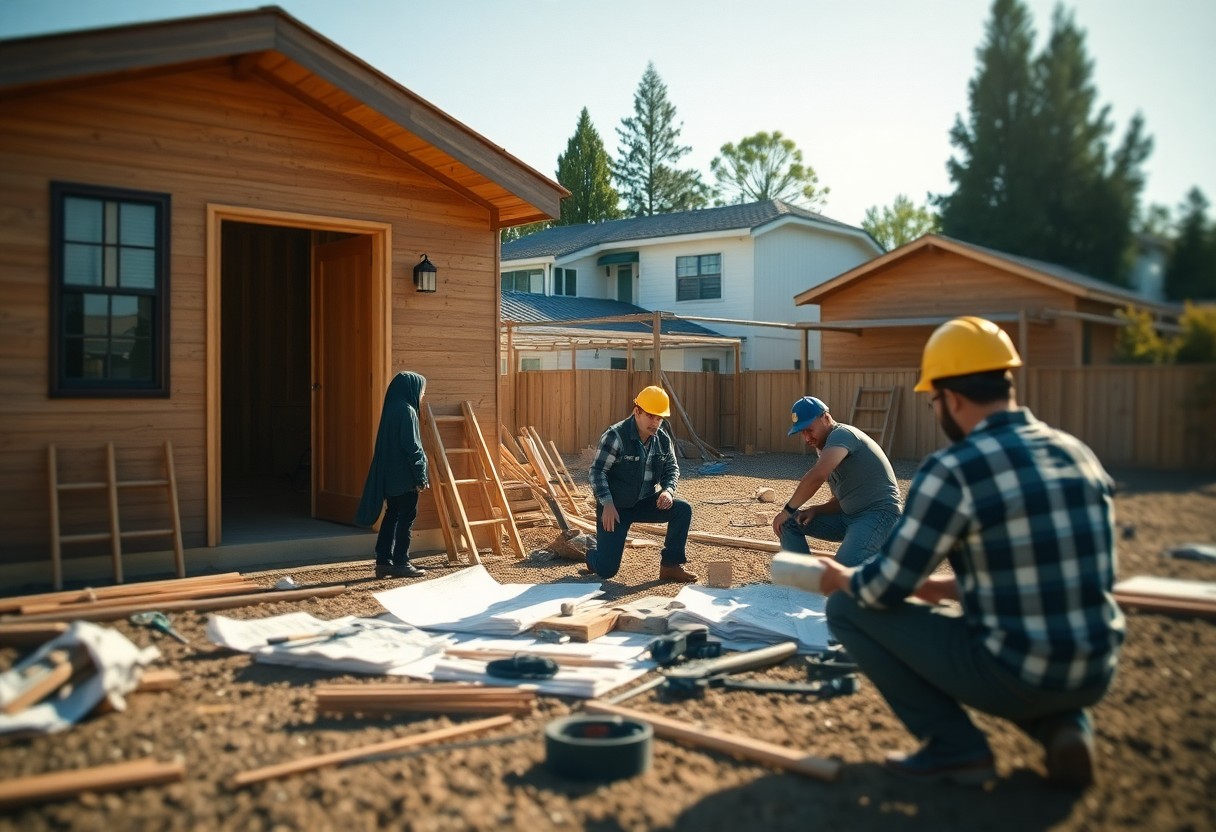
How to Build an Accessory Dwelling Unit: Step-by-Step Process
Here is the complete sequential process for building an accessory dwelling unit in California — from initial feasibility to certificate of occupancy. For a deeper walkthrough, see our ADU Building Chula Vista.
-
Step 1: Assess Your Property’s ADU Feasibility
Evaluate your lot size, existing structures, setbacks, utility locations, and any HOA or deed restrictions. Check your city or county’s ADU ordinance online. Determine which ADU types are allowed and what size constraints apply to your specific parcel.
-
Step 2: Define Your Goals and Budget
Clarify whether the ADU is for rental income, family use, or future sale value. Set a realistic budget including 15–20% contingency. Research current comparable rents in your area to validate the financial case. Decide whether you’ll use a general contractor, design-build firm, or manage the project yourself.
-
Step 3: Hire an Architect or Choose Pre-Approved Plans
Work with a licensed architect or ADU design specialist to develop plans that meet both state and local requirements. Alternatively, use your city’s pre-approved plan library to save time and design fees. Ensure plans include structural, mechanical, electrical, and plumbing details.
-
Step 4: Secure Financing
Apply for your HELOC, construction loan, or grant program before submitting for permits. Having financing in place before you begin prevents project delays mid-construction. Compare at least three lenders and evaluate total loan cost, not just interest rate.
-
Step 5: Submit Permit Application
Submit your complete application to your local planning and building department, including site plan, floor plans, elevations, energy compliance forms (Title 24), and any required supporting documents. Ensure your application is complete — incomplete applications are the primary cause of delay. Under California law, the department must respond within 60 days.
-
Step 6: Address Plan Check Comments
Most first-round submittals receive plan check comments requiring corrections or clarifications. Work with your architect to address these promptly and resubmit. Track correction cycles carefully — each round can add 2–4 weeks.
-
Step 7: Hire Your General Contractor and Break Ground
Get at least three bids from licensed, insured contractors with verifiable ADU experience. Check their CSLB license status, verify insurance, and review 3–5 references from recent ADU projects. Negotiate a detailed written contract covering scope, payment schedule, timeline, and change order procedures before any work begins.
-
Step 8: Manage Construction and Required Inspections
Coordinate with your contractor to schedule required inspections at each construction phase — foundation, framing, rough electrical, rough plumbing, insulation, and final. Failing to schedule inspections in order can require costly rework. Maintain a written project log and photo documentation throughout.
-
Step 9: Obtain Certificate of Occupancy
Once all inspections pass, your local building department issues a Certificate of Occupancy (CO). This is the legal document that certifies your accessory dwelling unit is safe and habitable. You cannot legally rent or occupy the ADU until the CO is issued. For a deeper walkthrough, see our ADU Building Anaheim.
-
Step 10: Rent, Sell, or Occupy Your ADU
With your CO in hand, you can rent the unit at market rate, use it for a family member, or factor it into a home sale. If renting, comply with local rent control laws (which may apply in your city), provide required lease disclosures, and document the unit’s condition at move-in with written and photographic records.
ADU Permitting Timeline: What to Realistically Expect
One of the most common frustrations with accessory dwelling unit projects is permitting delays. Here is a realistic timeline breakdown:
| Phase | Typical Duration | Notes |
|---|---|---|
| Design & Plans | 4–12 weeks | Faster with pre-approved plans |
| Permit Review (1st round) | 4–8 weeks | State law mandates 60-day max |
| Plan Check Corrections | 2–6 weeks per round | 1–3 rounds typical |
| Permit Issuance | 1–2 weeks after approval | Pay fees, receive permit |
| Construction | 3–9 months | Varies by type and complexity |
| Certificate of Occupancy | 1–3 weeks after final inspection | All inspections must pass first |
Total realistic timeline: 9–18 months from start to CO. Projects using pre-approved plans, experienced ADU-focused contractors, and complete permit applications from the start can land at the lower end of this range.
Renting Out Your Accessory Dwelling Unit: What Landlords Must Know
Once your ADU is complete and has its Certificate of Occupancy, renting it out is one of the most financially compelling uses. But California landlord-tenant law is among the most complex in the nation. Here’s what you must understand before accepting a tenant. For a deeper walkthrough, see our Everything to KnowBefore You Build an ADU in Southern California.
Rent Control and AB 1482
California’s Tenant Protection Act (AB 1482) caps annual rent increases at 5% + local CPI (max 10%) for covered units. ADUs are generally exempt from AB 1482 if the certificate of occupancy was issued within the last 15 years — but this exemption is time-limited. Additionally, many cities have local rent control ordinances that may be stricter.
Short-Term Rental Restrictions
California state law generally prohibits using ADUs as short-term rentals (Airbnb, VRBO) — specifically, ADUs may not be rented for periods less than 31 consecutive days. Some local ordinances are even stricter. This restriction is designed to ensure ADUs contribute to long-term housing supply, not the vacation rental market.
Just Cause for Eviction
After 12 months of tenancy, California’s just cause eviction protections typically apply. Landlords cannot evict a tenant without a legally recognized reason. Understanding these protections before selecting a tenant is critical — tenant screening and a well-drafted lease matter enormously.
Tax Implications of Renting Your ADU
ADU rental income is taxable as ordinary income. However, landlords can deduct depreciation, mortgage interest attributable to the ADU, repairs and maintenance, property management fees, and utilities. Consult a CPA familiar with California rental property taxation before your first tenant moves in.
Common ADU Mistakes to Avoid
Even well-intentioned ADU projects can go sideways. Here are the most common and costly mistakes California homeowners make: For a deeper walkthrough, see our ADU Building Huntington Beach.
- Starting construction before permits are issued: Unpermitted work can result in stop-work orders, fines, and mandatory demolition — even years after completion.
- Underestimating site costs: Grading, drainage, utility extensions, and soil remediation are frequently underbudgeted. Always get a soils report and utility feasibility study before finalizing your budget.
- Choosing a contractor based solely on price: The lowest bid often wins through incomplete scope or inexperienced labor. Verify CSLB license status and check reviews on multiple platforms.
- Ignoring neighbor notification requirements: While most ADU permits are ministerial, some local jurisdictions still require neighbor notification. Failing to comply can trigger delays or legal challenges.
- Forgetting HOA restrictions: State law preempts most HOA prohibitions on ADUs, but HOAs may still have enforceable design and aesthetic standards. Review your CC&Rs carefully.
- Designing without considering renters: An ADU designed for personal aesthetics may not command market rents. Neutral finishes, practical layouts, and separate utility metering maximize rental desirability.
- Skipping utility separation: Sharing utilities with your tenant creates billing conflicts and management headaches. Installing a sub-meter for electricity and a separate water heater at the design stage is far cheaper than retrofitting.
ADU vs. Other Housing Options: How Does It Compare?
Many homeowners wonder how an accessory dwelling unit stacks up against other options for generating income or adding space.
| Option | Avg. Cost | Rental Income Potential | Property Value Impact |
|---|---|---|---|
| Detached ADU | $150K–$350K | High ($1,500–$3,500/mo) | +25–35% |
| Room Addition | $80K–$200K | None (not rentable) | +10–15% |
| Investment Property | $500K–$1M+ | High (but high entry cost) | Separate asset |
| Garage ADU Conversion | $60K–$150K | Medium ($1,200–$2,200/mo) | +15–25% |
Frequently Asked Questions About Accessory Dwelling Units
What exactly is an accessory dwelling unit?
An accessory dwelling unit is a self-contained secondary residence on the same lot as a primary home. It includes its own kitchen, bathroom, sleeping area, and separate entrance. It is legally recognized as an independent dwelling — distinct from a room addition or a shared living space. In California, both attached and detached ADUs are permitted by right on most residential lots.
Can I build an accessory dwelling unit on any residential lot in California?
In most cases, yes. California state law (Government Code 65852.2) entitles most single-family and multi-family residential lots to at least one accessory dwelling unit. There are minimal grounds on which a local jurisdiction can deny an ADU permit that complies with state standards. However, practical constraints like lot size, setbacks, utility capacity, and existing structure locations may limit what type and size of ADU is feasible on your specific property.
How much does it cost to build an accessory dwelling unit in California?
Costs range widely depending on type. Junior ADUs and garage conversions can be completed for $40,000–$150,000. New detached accessory dwelling units typically cost $150,000–$350,000 or more. Key cost drivers include site conditions, utility connections, labor market, design complexity, and finish level. Always budget a 15–20% contingency for unexpected costs.
How long does it take to get an ADU permit in California?
California law requires local agencies to approve or deny a complete ADU permit application within 60 days. In practice, the full permitting process — from design completion to permit issuance — typically takes 3–6 months depending on local jurisdiction workload, plan check comments, and correction rounds. Using pre-approved plans or working with an experienced ADU designer can significantly compress this timeline.
Can I use my accessory dwelling unit as a short-term rental (Airbnb)?
No. California state law generally prohibits using an accessory dwelling unit as a short-term rental for periods of less than 31 consecutive days. This restriction applies statewide and exists to ensure ADUs contribute to long-term housing supply. Some local jurisdictions have even stricter short-term rental regulations. Always verify your specific city’s rules before listing any property on short-term rental platforms.
Does building an ADU increase my property taxes?
Yes, but only incrementally under California’s Proposition 13 framework. When you add an accessory dwelling unit, your property is reassessed for the value of the new construction only — your existing home’s assessed value is not reset. The tax increase is typically proportional to the ADU’s construction value, not the full market value of the improved property, which makes the tax impact relatively modest compared to the rental income potential.
What financing options are available for building an accessory dwelling unit?
Common financing options include Home Equity Lines of Credit (HELOCs), cash-out refinancing, ADU-specific construction loans, the CalHFA ADU Grant Program (up to $40,000 for pre-development costs), local government grants and forgivable loans, FHA 203k renovation loans, and Fannie Mae HomeStyle loans. The best option depends on your current equity position, credit profile, and whether you are purchasing or already own the property.
What is the difference between an ADU and a Junior ADU (JADU)?
An accessory dwelling unit (ADU) is a fully independent living unit that can be attached or detached and typically ranges from 150 to 1,200 square feet. A Junior ADU (JADU) is created entirely within the existing footprint of the primary single-family home, is limited to 500 square feet, may share bathroom facilities, and requires the property owner to live on-site (in either the primary home or the JADU). Both types can coexist on the same single-family lot under California law.
Final Thoughts: Is an Accessory Dwelling Unit Right for You?
An accessory dwelling unit is one of the highest-leverage investments a California homeowner can make. It adds livable space, generates income, increases property value, and — when properly designed and managed — requires relatively little ongoing effort to maintain.
The path to a completed ADU is not without challenges. Permitting takes patience. Construction requires careful contractor selection. And California’s rental laws demand attention before you welcome your first tenant. But for homeowners who do the work upfront — researching regulations, budgeting realistically, choosing experienced professionals, and designing for the rental market — the rewards are substantial and durable.
Whether your goal is to house aging parents with dignity, generate income to offset your mortgage, or build long-term wealth through real estate — an accessory dwelling unit in California is one of the most powerful tools available to you today. Start with feasibility, plan meticulously, and execute with the right team. The results speak for themselves.