

If you’re comparing ADU built in millwork contractors SoCal homeowners hire, you’re likely trying to turn a small detached unit or garage conversion into a space that feels finished, functional, and permanent. Custom cabinetry, desks, and shelving built into the walls of an accessory dwelling unit (ADU) can make a 500 to 1,200 square foot layout live much larger. However, not every ADU builder handles millwork the same way, and that difference shows up in cost, timeline, and final quality.
Quick answer: ADU built-in millwork is custom, permanently installed wood cabinetry, shelving, and trim made for an accessory dwelling unit’s exact dimensions. The strongest contractors handle this work alongside structural engineering, permits, and construction, rather than as a separate add-on trade.
What Is ADU Built-In Millwork?
Built-in millwork refers to custom wood cabinetry, shelving, desks, closet systems, and trim work that is fabricated to fit a specific space and then permanently attached to the structure. Unlike furniture you buy and move in later, millwork is measured, designed, and installed as part of the ADU itself. As a result, it tends to use every inch of a compact layout more efficiently than standard furnishings.
In Southern California, where many ADUs are built on tight lots or converted from existing garages, this matters even more. For example, a built-in desk nook with overhead storage can replace a freestanding desk and dresser combination, freeing up floor space in a studio-style unit.
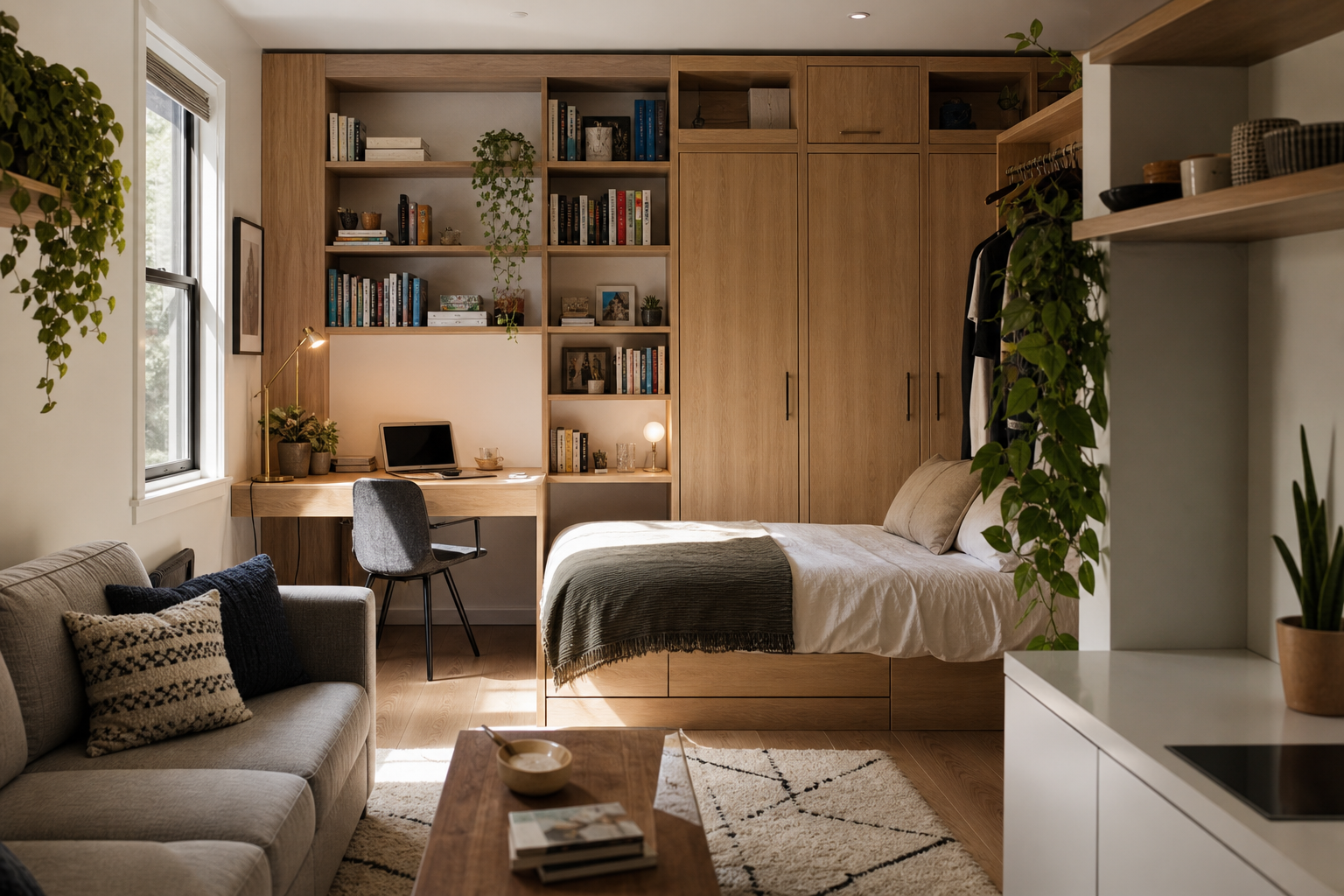
Custom built-in millwork helps a compact ADU interior feel organized and intentional.
Why the Right ADU Built In Millwork Contractors SoCal Homeowners Choose Matter
Choosing the right contractor affects more than appearance. Specifically, millwork that is designed and installed by the same team building the ADU can be planned around electrical outlets, plumbing chases, and framing from the start. In contrast, bringing in a separate cabinet shop after construction often means working around obstacles that could have been avoided.
Furthermore, a contractor with in-house structural engineering and permit handling, like the approach described on theadupro.com, can make sure built-in elements comply with the ADU’s approved plans. This reduces the risk of rework, which is one of the most common sources of budget overruns on small residential projects.
A Note on Licensing and Track Record
Before hiring any millwork or ADU contractor, verify their license status through the California Contractors State License Board (CSLB), the state agency responsible for licensing construction professionals. Additionally, checking a contractor’s performance history on a platform like BuildZoom can offer a useful, independent data point on reliability and permit activity.
Key Benefits of Custom Built-In Cabinetry for a SoCal ADU
Custom built-ins offer several practical advantages over standard furniture, especially in smaller ADU footprints. Consider the following benefits:
- Space efficiency: Built-ins are designed around the exact dimensions of a room, which reduces wasted space compared to off-the-shelf furniture.
- Durability: Permanently fixed cabinetry and shelving are typically built from more durable materials than mass-produced furniture.
- Resale and rental appeal: A well-finished interior can make a detached ADU more attractive to renters or future buyers.
- Consistent design: Built-ins can match trim, flooring, and cabinetry finishes throughout the unit for a cohesive look.
As a result, many homeowners view millwork as part of the long-term value of the ADU, not just a cosmetic upgrade.
How to Choose a Reliable ADU Millwork Contractor
Selecting a contractor for built-in work inside an ADU involves more than comparing price quotes. Instead, homeowners should evaluate experience, licensing, and how millwork fits into the overall construction schedule.
Step-by-Step: The Design-Build Millwork Process
Here is a general sequence most reputable contractors follow when custom millwork is part of an ADU project:
- Schedule a site assessment and design consultation to review the lot, layout, and storage goals.
- Finalize the millwork design, wood species, and finish selections before fabrication starts.
- Coordinate structural engineering and permit review so built-ins comply with approved plans.
- Fabricate and install the cabinetry once framing and rough utilities are complete.
- Complete a final walkthrough and inspection alongside the rest of the ADU construction.
Notably, this process works best when one team manages both the ADU build and the millwork, since it avoids handoff delays between separate contractors.
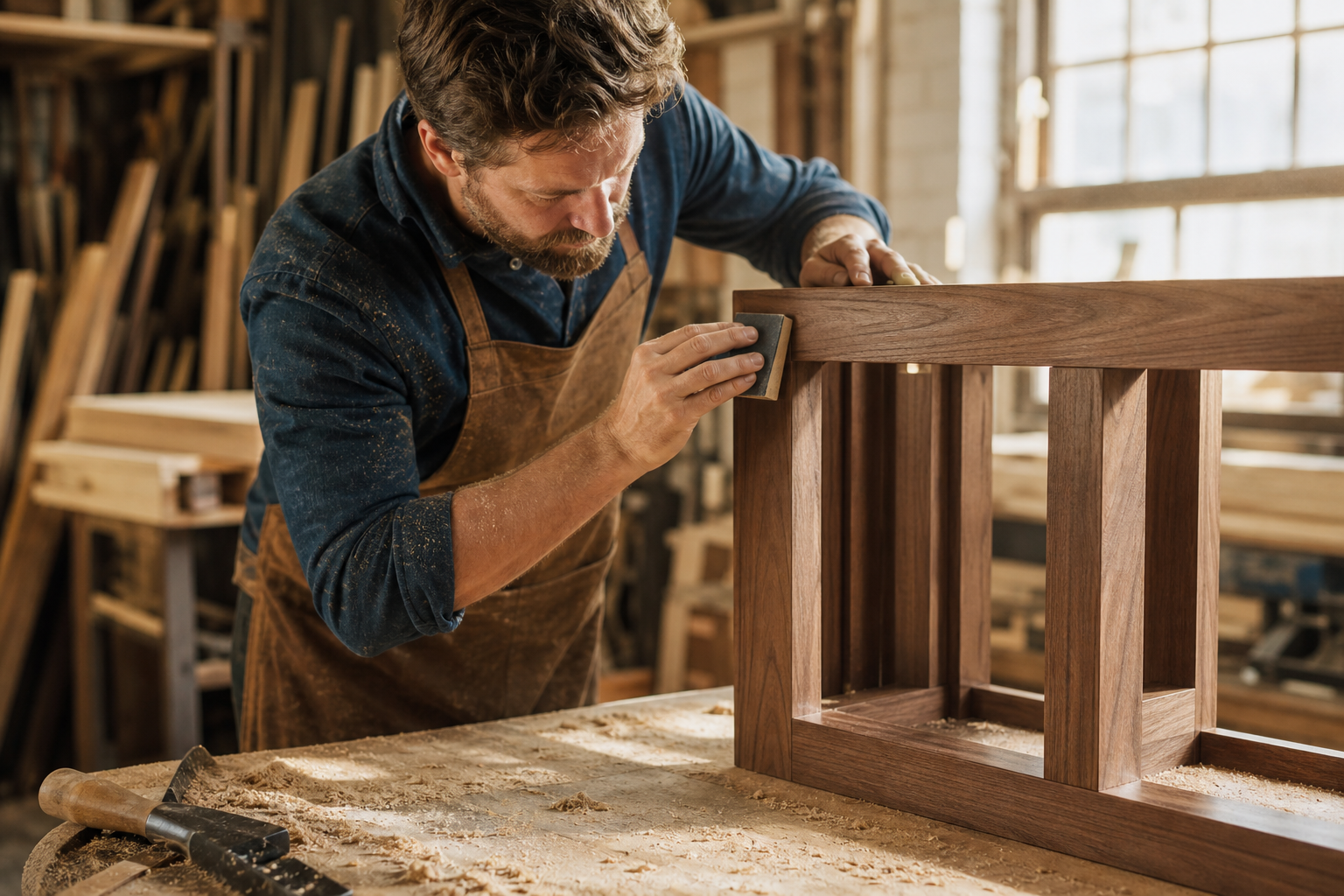
Fabrication quality plays a major role in how long built-in millwork lasts inside an ADU.
What Does ADU Built-In Millwork Cost in Southern California?
Costs vary widely depending on scope, materials, and finish level. The table below offers general ranges homeowners can use as a starting point for budgeting.
| Millwork Scope | Typical Cost Range | Typical Timeline |
|---|---|---|
| Shelving or closet system | $3,000 – $8,000 | 1 – 2 weeks |
| Kitchenette cabinetry | $8,000 – $18,000 | 2 – 4 weeks |
| Full-unit built-in suite | $15,000 – $35,000 | 3 – 6 weeks |
These figures are general estimates; actual pricing depends on your city, materials, and design complexity. For context, California’s housing department has reported more than 20,000 ADU permits issued statewide in a single recent year, according to state housing production data, which reflects how common these projects have become across the region.
Common Mistakes Homeowners Make With ADU Millwork
Several recurring mistakes can add cost and delay to a millwork project. Being aware of them in advance can save both time and money.
Hiring millwork separately from the ADU builder. This often creates scheduling conflicts and mismatched finishes between the unit and the built-ins. In contrast, a single design-build team can plan millwork alongside framing and utilities from day one.
Skipping detailed drawings before fabrication. Without precise measurements and plans, cabinetry may not fit properly once installed, leading to costly rework. Similarly, choosing materials without considering California’s Title 24 energy compliance requirements, which govern insulation and window performance, can create conflicts during inspection.
Overlooking garage conversion constraints. Homeowners converting a garage into an ADU sometimes forget that existing structural elements limit where built-ins can be placed. A contractor experienced with garage conversions and JADUs, such as the team behind the ADU building services in El Monte, typically accounts for these limitations early in design.
Working With a Design-Build Contractor for Millwork
Many Southern California homeowners find that working with a single, accountable design-build team simplifies the entire process. Instead of juggling separate architects, engineers, and cabinet shops, one team manages design, permitting, construction, and finish carpentry together.
For a deeper look at how interior millwork fits into the broader ADU building process, see this ADU interior millwork contractor guide for SoCal homes. It’s also worth reviewing how a contractor approaches code compliance, since built-ins must work within an approved structural plan, as outlined in this overview of building ADUs to code.
Homeowners exploring their options more broadly can also review general guidance on choosing a trusted ADU home builder before finalizing design decisions. For a general definition and legal background on accessory dwelling units, the Wikipedia overview of secondary suites offers useful context, while California’s own HCD accessory dwelling unit resource page covers state regulations in more depth.
Frequently Asked Questions
What is built-in millwork for an ADU?
Built-in millwork is custom-made wood cabinetry, shelving, and trim that is permanently attached to the walls or floor of an accessory dwelling unit. It is fabricated and installed to fit the exact dimensions of the space, unlike store-bought furniture.
How do ADU built-in millwork contractors SoCal homeowners hire differ from furniture installers?
ADU built-in millwork contractors SoCal homeowners hire typically handle design, structural coordination, and permanent installation as part of the construction process. Furniture installers, by comparison, only assemble freestanding, movable pieces that aren’t attached to the structure.
Why should I add custom built-ins to my ADU instead of buying furniture?
Custom built-ins maximize every inch of a small floor plan, which matters most in ADUs that often range from 500 to 1,200 square feet. They also tend to hold up better over time and can increase the unit’s appraised value.
How much does custom ADU millwork typically cost?
Small built-in shelving or closet systems often run $3,000 to $8,000, while a full suite of custom cabinetry, desks, and storage can reach $15,000 to $35,000. Final pricing depends on materials, finish level, and square footage.
How long does built-in millwork installation take?
Simple built-ins can be fabricated and installed in one to two weeks, while a full-unit millwork package often takes three to six weeks. Timing depends on design complexity and whether custom materials need to be ordered.
What materials are used in custom ADU millwork?
Common materials include hardwood plywood, solid wood face frames, laminate or quartz countertops, and USA-sourced lumber for durability. Material choice affects both cost and the finished look of the ADU interior.
Can built-in millwork increase my ADU’s rental value?
Yes, thoughtfully designed built-ins add usable storage and polish that can make a rental unit more appealing to tenants. A well-finished interior often supports higher rental rates in competitive Southern California markets.
What’s the difference between built-in millwork and modular cabinetry?
Built-in millwork is custom-fabricated for a specific space, while modular cabinetry uses pre-manufactured, standardized units assembled on site. Millwork offers more design flexibility but generally costs more than modular options.
What common mistakes should I avoid when hiring a millwork contractor?
A common mistake is hiring the millwork crew separately from the ADU builder, which can cause scheduling conflicts and mismatched finishes. Another mistake is skipping detailed drawings before fabrication begins, which often leads to costly rework.
Do built-in millwork projects require permits in California?
Built-in millwork itself usually does not require a separate permit, but it must comply with the ADU’s approved plans if it affects electrical, plumbing, or structural elements. A licensed contractor coordinates this within the overall ADU permit.
What should I look for in the best ADU built-in millwork contractors SoCal has to offer?
Look for an active CSLB license, a strong contractor performance score, in-house design and engineering capability, and experience coordinating millwork within a full ADU build. The best ADU built-in millwork contractors SoCal homeowners recommend usually manage design, permits, and construction under one team.
Can millwork be customized for small ADU floor plans under 500 square feet?
Yes, custom millwork is especially valuable in smaller ADUs because every drawer, shelf, and nook can be designed around the exact footprint. This approach often outperforms off-the-shelf furniture in tight layouts.
Does working with a design-build contractor save time on millwork projects?
Yes, a design-build contractor coordinates millwork design alongside framing, electrical, and finish schedules, which reduces delays from miscommunication. This single-team approach generally shortens the overall project timeline compared to hiring separate trades.
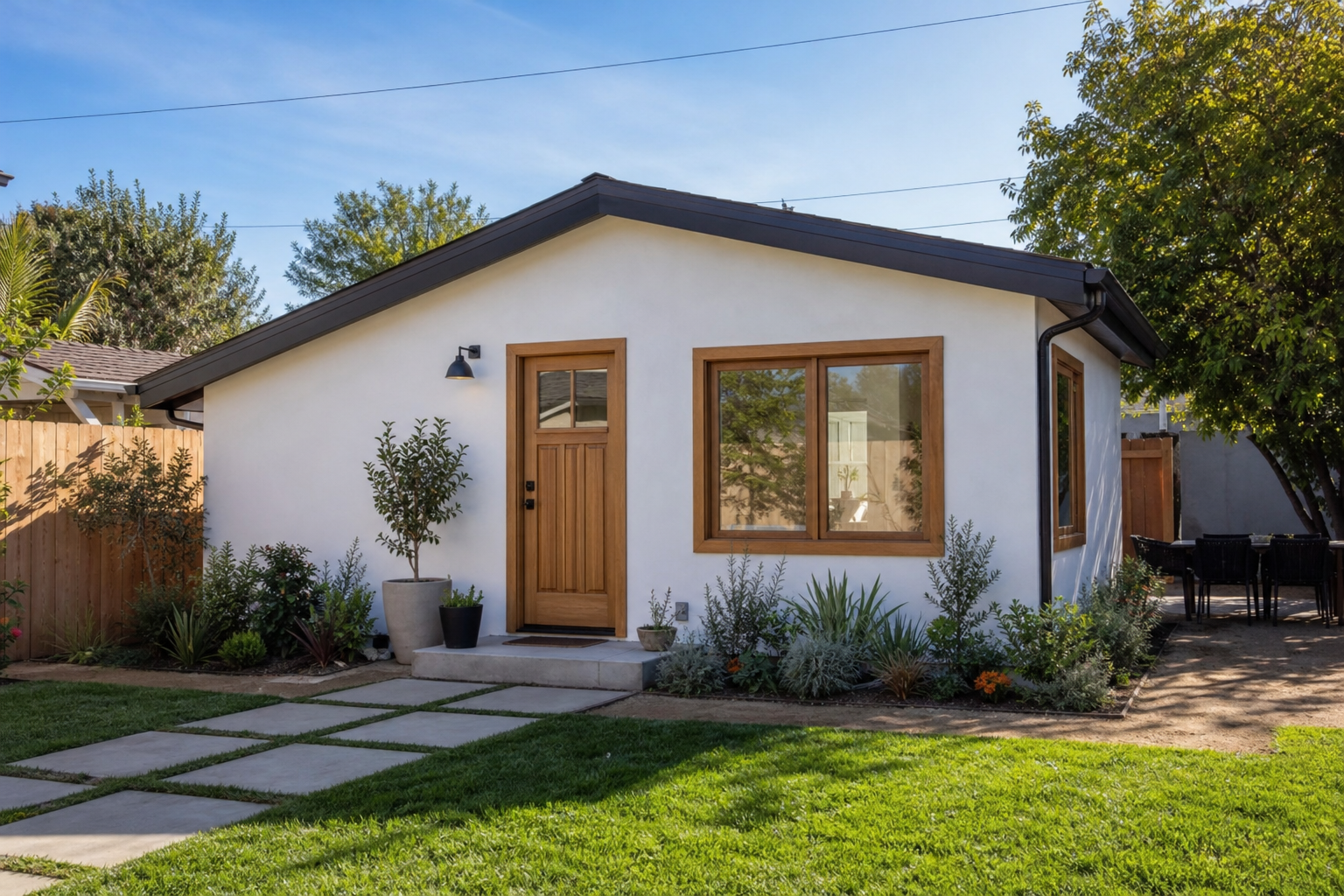
A finished detached ADU, where exterior trim and interior millwork work together for a cohesive result.
Final Thoughts on Choosing Built-In Millwork Contractors
In summary, finding the right ADU built in millwork contractors SoCal homeowners can rely on comes down to coordination, licensing, and experience managing both construction and custom carpentry together. Because millwork is installed as part of the structure itself, it works best when planned alongside framing, permits, and engineering rather than added as an afterthought. Therefore, homeowners who prioritize a design-build approach, verify licensing through the CSLB, and ask detailed questions about process tend to avoid the most common delays and budget surprises. Ultimately, a well-built ADU with thoughtful custom millwork can add lasting value, comfort, and rental potential to a Southern California property for years to come.


