

Energy efficient ADU construction CA is the practice of designing and building accessory dwelling units that meet California’s Title 24 energy code while minimizing long-term utility costs. For homeowners in Orange County, Los Angeles County, and Riverside County, this usually means better insulation, high-performance windows, efficient HVAC systems, and sometimes solar. As a result, an energy-efficient ADU costs less to run every month than one built to the bare minimum. This guide explains what the code actually requires, what net-zero focused construction looks like in practice, and how to plan a build that performs well for decades.
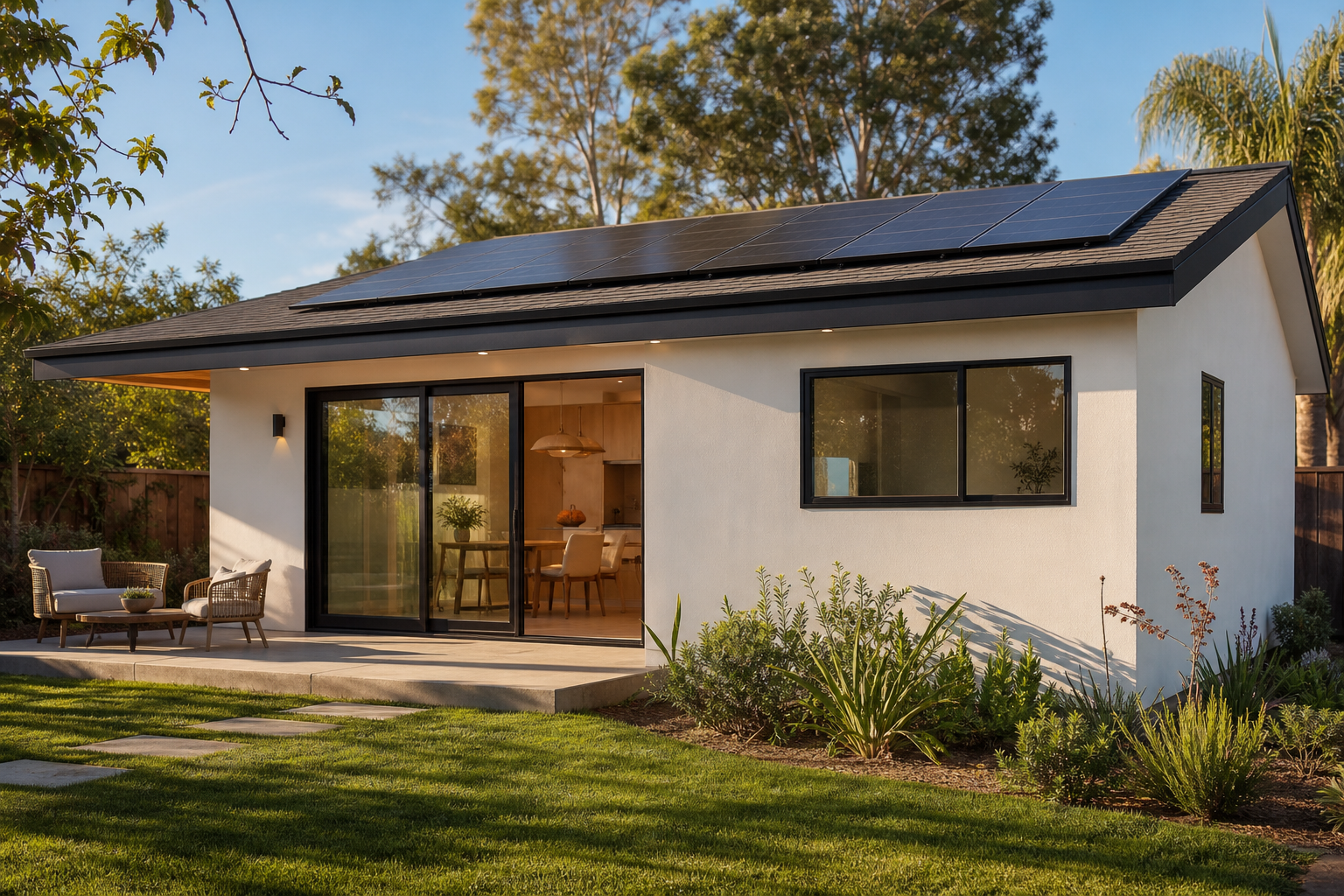
An example of energy efficient ADU construction CA, pairing a compact footprint with rooftop solar.
What Is Energy Efficient ADU Construction CA?
Energy efficient ADU construction CA means building a secondary unit that meets California’s Title 24 energy standards through improved insulation, glazing, and mechanical systems. In practice, it reduces heating and cooling loads, which lowers monthly utility bills for whoever occupies the unit.
In Southern California, this definition matters because the state’s energy code is not optional. Every new ADU, regardless of size, must pass a Title 24 compliance review before a permit is issued. Consequently, the design decisions made in the first weeks of planning — window placement, wall assembly, HVAC sizing — determine how comfortable and affordable the finished unit will be.
Because an accessory dwelling unit is typically smaller than a primary home, small inefficiencies have an outsized effect on comfort. A poorly insulated 600-square-foot unit can feel hotter or colder than a larger, better-built home, simply because there is less thermal mass to buffer temperature swings.
Why Energy-Efficient ADU Building Matters in Southern California
Southern California’s climate creates a specific energy challenge: long, hot summers drive cooling costs higher than heating costs in most inland cities. Therefore, a well-insulated envelope and a correctly sized air conditioning system matter more here than in milder coastal climates.
In addition, homeowners building an ADU for rental income have a direct financial incentive to control operating costs. A tenant paying their own utilities will notice high bills quickly, and that can affect how long a unit stays rented and at what rate. Similarly, homeowners planning multigenerational living often want a unit that stays comfortable without running the HVAC system constantly.
Above all, energy performance affects resale value. Buyers increasingly ask about insulation, window ratings, and solar readiness when evaluating a property with an existing ADU, which means efficient construction is also a long-term investment protection strategy.
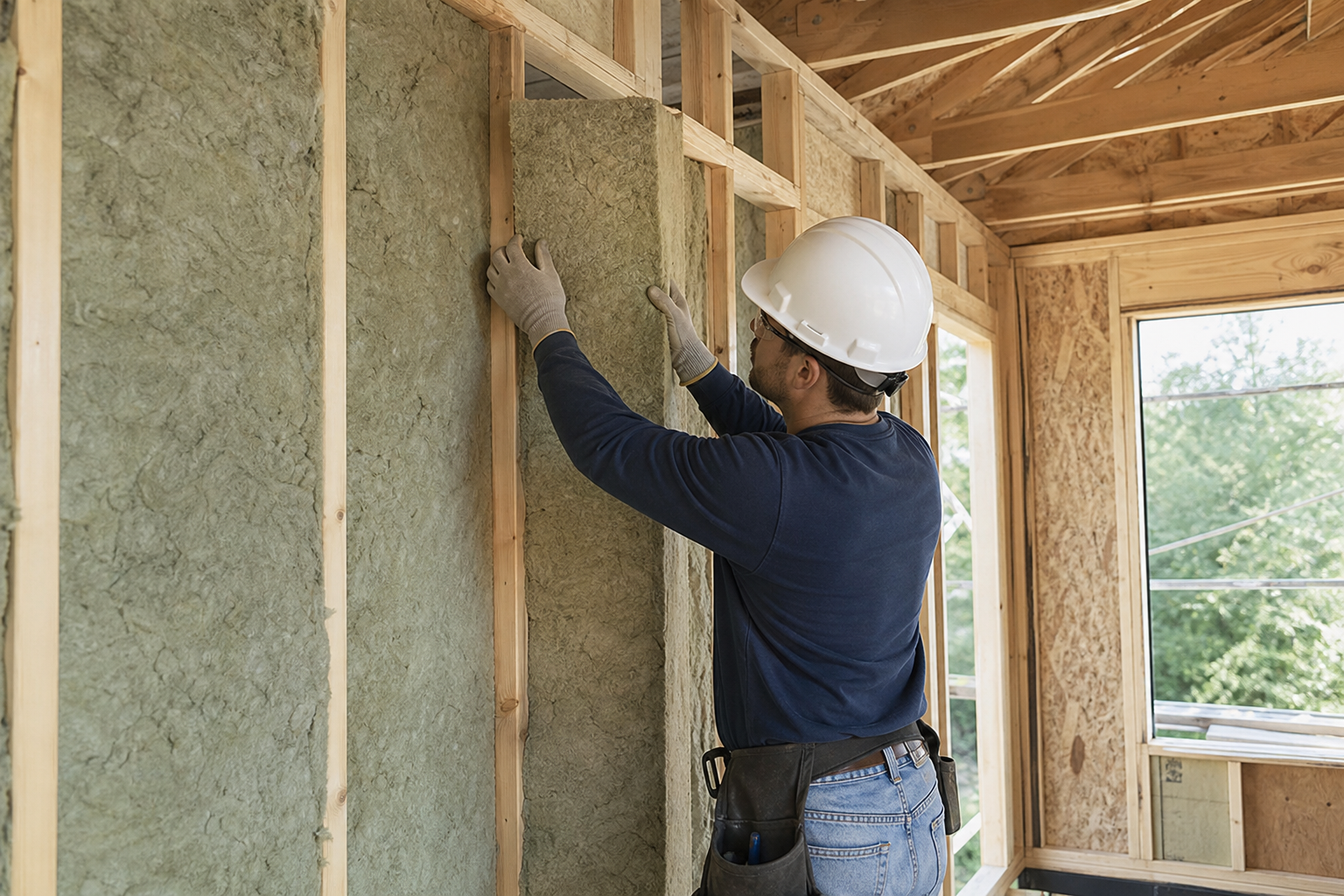
Proper insulation installation is one of the most important steps in energy efficient ADU construction.
Title 24 Energy Code Requirements for ADUs in California
California’s Title 24 Building Energy Efficiency Standards, maintained by the California Energy Commission, set mandatory minimums for insulation, window performance, duct sealing, and lighting in every new residential structure, including ADUs. These standards are updated on a regular cycle, so a code-compliant ADU built today performs noticeably better than one built a decade ago.
Specifically, Title 24 requires documentation showing that the planned building envelope, HVAC equipment, and lighting meet or exceed baseline performance targets. A licensed energy consultant or the design team typically prepares this report as part of the permit package.
| Component | Typical Title 24 Focus |
|---|---|
| Wall and ceiling insulation | Minimum R-values based on climate zone |
| Windows | Maximum U-factor and solar heat gain coefficient |
| HVAC equipment | Efficiency ratings and correct equipment sizing |
| Ductwork | Sealing standards to reduce air leakage |
For a broader look at how California defines and regulates ADUs statewide, the California Department of Housing and Community Development publishes homeowner guidance that complements local Title 24 requirements.
Core Features of Net-Zero Focused ADU Construction
Net-zero focused construction goes beyond the Title 24 minimum by aiming to offset most or all of a unit’s energy consumption with on-site generation, usually solar. However, the foundation of any net-zero approach is still a tightly built envelope, because it is far cheaper to reduce energy demand than to generate extra power to cover waste.
In practical terms, a net-zero focused ADU typically includes upgraded wall and ceiling insulation beyond code minimums, high-performance windows with low solar heat gain, a correctly sized heat pump system, and sealed ductwork. USA-sourced materials are often specified to support consistent quality control and domestic supply chains.
Custom built-ins and interior millwork also play a quiet role here. For example, well-designed closets and cabinetry reduce the need for freestanding furniture that can block airflow near vents, which helps HVAC systems work as intended. If you want a closer look at how layout decisions affect comfort and performance, this guide to what makes a great ADU design covers the planning side in more detail.
Steps to Plan an Energy-Efficient ADU Build
Planning an energy-efficient ADU follows a fairly consistent sequence, regardless of which Southern California city you build in. The steps below outline that process from feasibility through final inspection.
- Conduct a site assessment to evaluate lot size, setbacks, sun orientation, and existing utility connections before committing to a design.
- Select a floor plan and orientation that minimizes west-facing glass and keeps the building envelope compact for easier efficiency gains.
- Specify upgraded insulation, low solar heat gain windows, and correctly sized, efficient HVAC equipment for the finished square footage.
- Confirm Title 24 compliance documentation is prepared and submitted alongside the permit application package to the city.
- Coordinate financing, such as a HELOC or construction loan, to cover both base construction and any chosen energy upgrades.
- Move through construction with scheduled inspections, confirming insulation, duct sealing, and window installation match approved plans.
Energy Efficient ADU Construction Costs and Financing
Energy upgrades add a modest percentage to overall ADU construction cost, though the exact figure depends on unit size, finish level, and whether solar is included. Upgraded insulation and windows tend to cost less than a full solar package, so many homeowners phase these decisions based on budget.
Furthermore, financing for an ADU typically covers both the base build and these energy features together, rather than treating them as a separate line item. Homeowners commonly explore HELOCs, dedicated construction loans, or ADU-specific lending programs through third-party lending partners. A design-build contractor cannot issue loans directly, but can help connect you with lenders familiar with ADU underwriting.
For reference on broader energy-saving strategies that apply beyond California-specific code, the U.S. Department of Energy’s home weatherization resources offer useful context on insulation and air sealing priorities that translate well to ADU construction.
Choosing an Energy-Efficient ADU Contractor in Orange County, LA & Riverside
Not every general contractor specializes in energy-focused ADU work, so it helps to ask direct questions about insulation specs, window ratings, and Title 24 documentation before signing a contract. A contractor who handles design, engineering, permitting, and construction under one team tends to move compliance documentation through city review faster than a fragmented group of separate vendors.
TheADUPro, based in Chino, CA, holds an active CSLB license, a BuildZoom score in the top one percent of California contractors, and an average client rating near 4.9 stars. The company focuses exclusively on detached ADUs, attached ADUs, garage conversions, and JADUs across Orange County, Los Angeles County, and western Riverside County, with net-zero focused construction and USA-sourced materials as part of its standard approach.
If you’re researching local options, project examples are available for ADU design in Orange, ADU design in Mission Viejo, ADU design in Westminster, and ADU design in Irvine. You can also review the company’s broader approach to energy-focused building at theadupro.com.
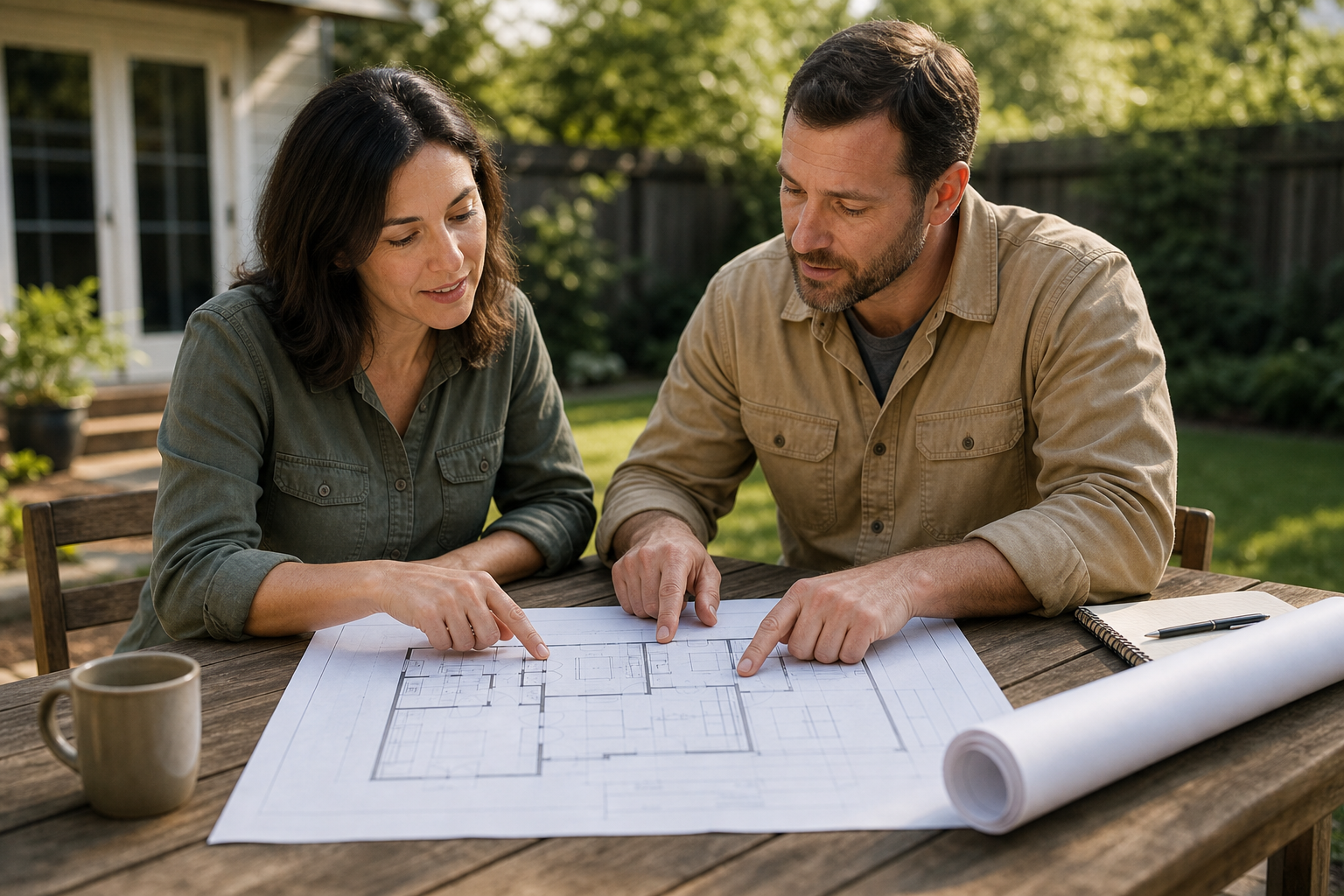
Reviewing energy performance details early helps avoid costly changes later in construction.
Frequently Asked Questions About Energy Efficient ADU Construction CA
What is energy efficient ADU construction CA?
Energy efficient ADU construction CA refers to building accessory dwelling units that meet or exceed California’s Title 24 energy code through better insulation, high-performance windows, efficient HVAC systems, and optional solar. The goal is lower utility bills and a more comfortable unit year-round.
How does Title 24 affect ADU energy requirements?
Title 24 sets mandatory minimums for insulation, window performance, duct sealing, and lighting efficiency for every new ADU in California. Your architect or builder must submit compliance documentation before permits are approved.
Why does energy efficient ADU construction matter for Southern California homeowners?
Southern California’s hot summers make cooling the biggest energy cost for most ADUs, so efficient envelopes and correct HVAC sizing directly affect monthly bills. In addition, an energy-efficient unit tends to attract renters faster and support higher resale value.
How much more does an energy efficient ADU cost compared to a standard build?
Upgraded insulation, high-performance windows, and efficient mechanical systems typically add a modest percentage to overall construction cost, though exact figures depend on size and finishes. Many of these costs are offset over time through lower utility bills and available incentives.
How long does energy efficient ADU construction take in California?
Design, permitting, and construction for a typical energy-efficient ADU usually takes between seven and twelve months from initial site assessment to final inspection. Permit review timelines vary significantly by city, which can shift this range.
What is the difference between net-zero and energy efficient ADU construction?
Energy efficient construction reduces energy use through better materials and systems, while net-zero construction aims to offset remaining energy use with on-site generation such as solar. A net-zero focused ADU is built efficiently first, then sized for solar to approach zero net energy consumption.
What are common mistakes homeowners make with ADU energy efficiency?
A frequent mistake is oversizing the HVAC system instead of right-sizing it to the building envelope, which wastes money and energy. Skipping proper duct sealing or choosing standard-grade windows to save upfront cost are also common errors that increase long-term bills.
What financing options help cover energy efficient ADU upgrades?
Homeowners commonly use HELOCs, construction loans, or ADU-specific financing programs through third-party lending partners to cover both base construction and energy upgrades. A design-build contractor can help connect you with appropriate lenders, though the contractor does not issue loans directly.
Can solar panels be added to an ADU?
Yes, solar panels can be added to most detached and attached ADUs, provided the roof structure and orientation support it. Solar is often the final step in a net-zero focused build, added after the envelope and systems are optimized.
Does an energy efficient ADU qualify for rebates or incentives?
Some utility providers and state programs offer rebates for high-efficiency appliances, heat pumps, or solar installations, though availability changes over time. Homeowners should verify current programs with their local utility before finalizing specifications.
What insulation and window standards apply to ADUs in CA?
Title 24 sets minimum R-values for walls, ceilings, and floors along with maximum U-factor and solar heat gain limits for windows. Builders typically exceed these minimums slightly to improve year-round comfort in hot inland areas.
Who handles Title 24 compliance documentation for my ADU project?
An energy consultant or the design-build team typically prepares the Title 24 compliance report as part of the permit set. When design, engineering, and permitting are handled under one roof, this documentation moves faster through city review.
Is energy efficient ADU construction required by law in California?
Yes, every new ADU built in California must comply with the current Title 24 energy code, making baseline energy efficiency mandatory rather than optional. Builders can choose to exceed these minimums for additional savings and comfort.
Final Thoughts on Energy Efficient ADU Construction CA
Energy efficient ADU construction CA is not a single feature you add at the end of a project; it is a set of decisions made from the first site assessment through final inspection. Title 24 sets the legal floor, but homeowners who go further with insulation, windows, and correctly sized systems typically see lower utility bills and stronger long-term property value. Consequently, the contractor you choose matters as much as the materials you specify, since permit speed and build quality both depend on experienced coordination between design, engineering, and construction teams. Whether you’re planning a detached backyard unit, a garage conversion, or a second-story addition in Orange County, Los Angeles County, or western Riverside County, starting with a clear-eyed site assessment is the most reliable way to plan an energy-efficient ADU that performs well for years to come.


