Hiring an ADU interior millwork contractor is often the difference between an accessory dwelling unit that feels cramped and one that feels custom-built for its exact footprint. Because most ADUs in Southern California run between 500 and 1,200 square feet, every closet, shelf, and cabinet run has to earn its space. In this guide, we’ll walk through what this specialty involves, how to choose the right partner, and what it typically costs.
Direct answer: An ADU interior millwork contractor is a design-build professional who plans, fabricates, and installs custom cabinetry, trim, and built-in storage specifically sized to an accessory dwelling unit’s compact layout. The work is coordinated with structural engineering and permit drawings so finishes integrate cleanly with the rest of the build.
What Is an ADU Interior Millwork Contractor?
An ADU interior millwork contractor handles the finish carpentry and custom built-ins inside an accessory dwelling unit, or ADU (a secondary housing unit built on a residential lot). This includes kitchen cabinetry, closet systems, window seats, and shelving designed to fit a specific floor plan rather than pulled from a standard catalog.
Unlike a general remodeling carpenter, this specialty involves shop drawings, material selection, and installation sequencing that must line up with framing, electrical rough-ins, and final inspection requirements. Consequently, the best results happen when millwork is planned during the design phase, not bolted on afterward.
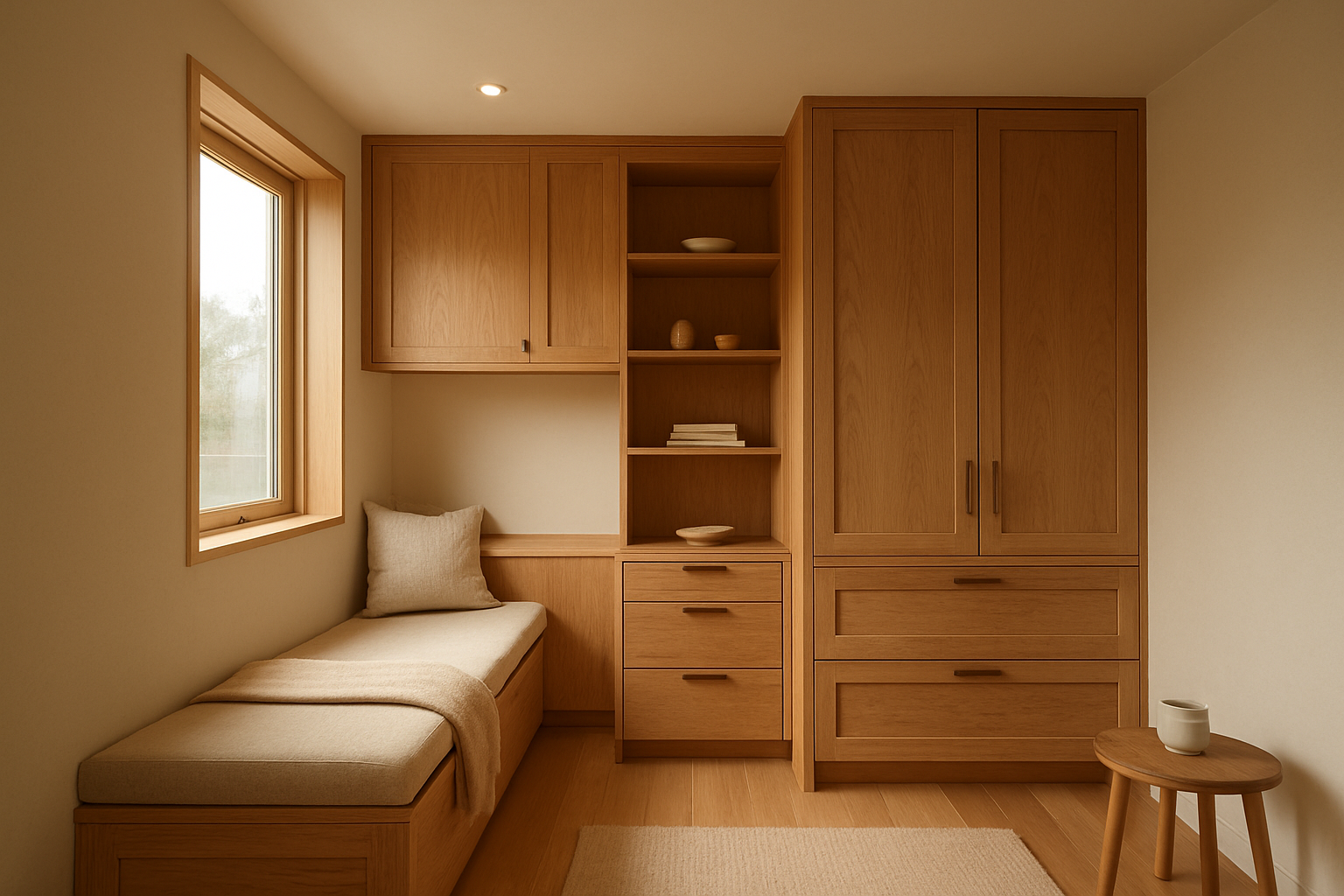
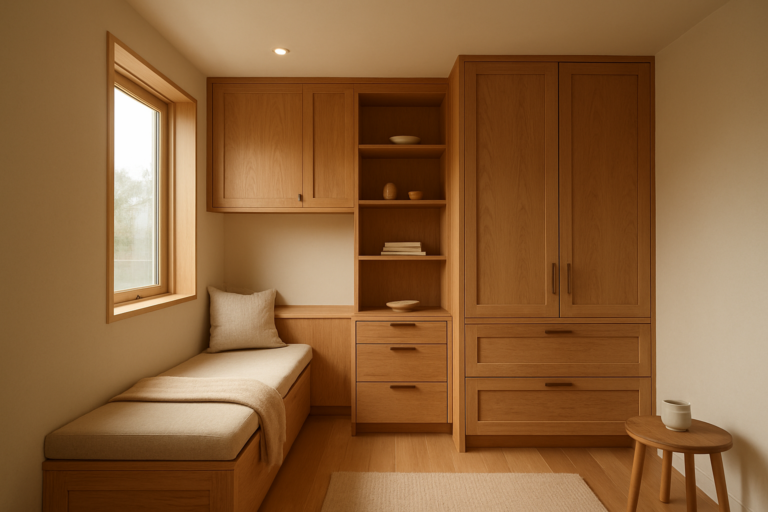
Custom cabinetry from an ADU interior millwork contractor maximizes storage in a compact floor plan.
Why Custom Built-Ins Matter in Small ADU Layouts
In a full-size home, a missing linen closet is an inconvenience. In a 600-square-foot detached ADU, it can eat into livable floor space entirely. That’s why built-in millwork contractor work focuses heavily on multi-purpose storage: a bench that hides bedding, a kitchen island that doubles as a dining counter, or shelving built into a knee wall.
Furthermore, custom built-ins tend to hold up better over time than freestanding furniture that shifts, wobbles, or doesn’t survive a move-out. For rental units in particular, durable, well-fitted storage can support tenant satisfaction and reduce wear-and-tear complaints.
In garage conversions and JADUs (junior accessory dwelling units), where wall lines are often irregular from the original structure, custom millwork is especially valuable. A skilled contractor can shape cabinetry around existing framing rather than forcing the room to work around off-the-shelf furniture.
How to Choose an ADU Millwork Partner: 5 Steps
Selecting the right contractor involves more than comparing price quotes. Below is a practical sequence homeowners can follow when vetting an ADU interior millwork contractor.
- Assess layout and storage needs — Walk the proposed floor plan and mark where closets, kitchen storage, and workspace built-ins are needed before design drawings are finalized.
- Verify licensing and fabrication capability — Confirm an active CSLB (California Contractors State License Board) license and ask whether millwork is built in-house.
- Request material and finish samples — Physical samples of wood species and hardware prevent quality surprises after installation.
- Coordinate millwork with structural and permit drawings — Built-in locations should be reflected in engineering plans so framing and rough-ins align correctly.
- Schedule installation within the construction timeline — Confirm when cabinetry goes in relative to drywall and final inspection to avoid delays near certificate-of-occupancy sign-off.
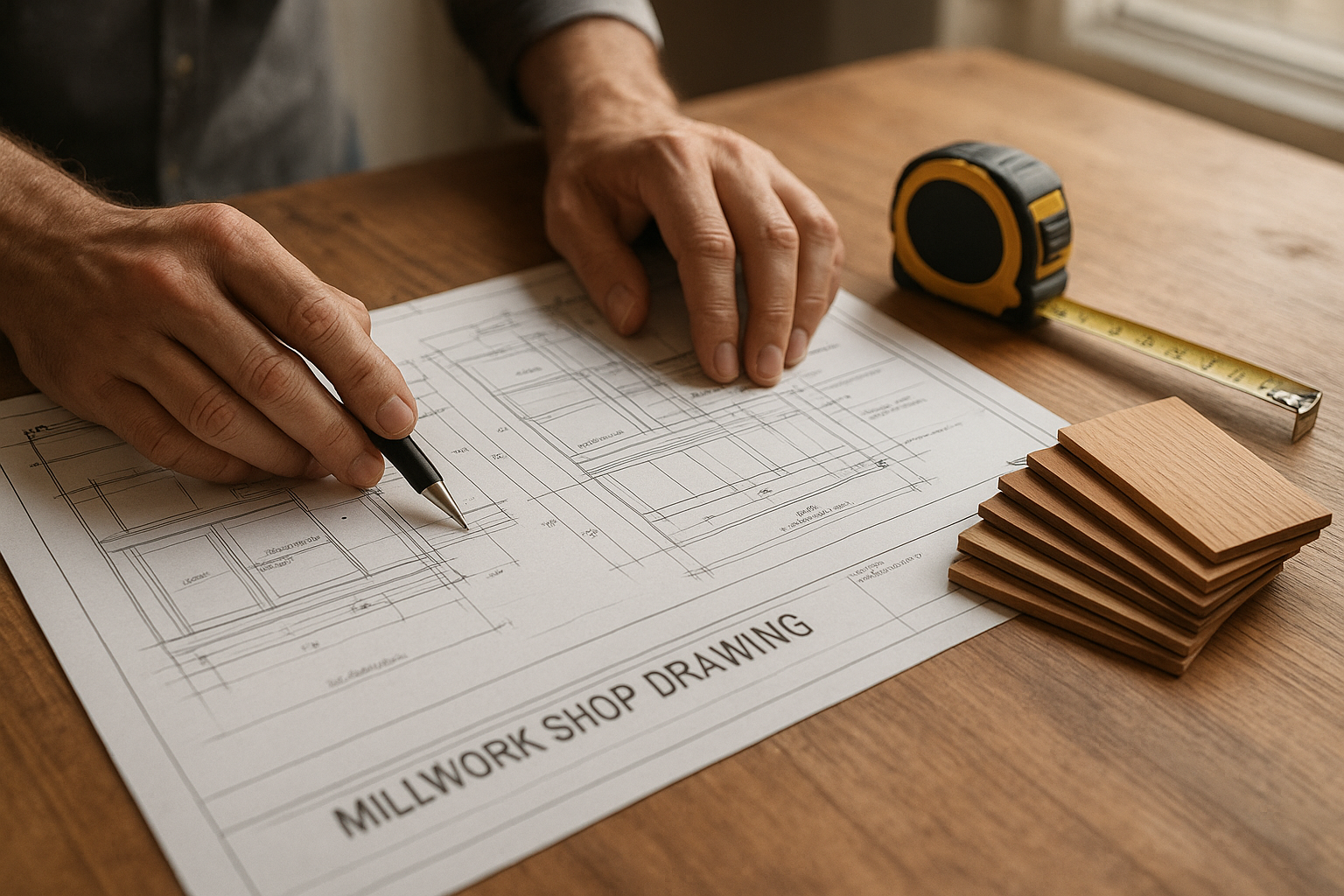
Coordinating shop drawings early avoids costly rework once framing is complete.
Materials, Finishes, and Net-Zero Considerations
An experienced interior finish contractor will factor energy performance into material choices, not just appearance. USA-sourced wood products, low-VOC finishes, and hardware that holds up to daily use all contribute to a longer-lasting build.
For net-zero-focused ADUs, millwork decisions also intersect with Title 24 energy compliance, since window placement, insulation, and cabinetry near exterior walls all affect thermal performance. Additionally, choosing durable, non-toxic finishes supports better indoor air quality in a small, tightly sealed unit.
According to the Wikipedia entry on accessory dwelling units, ADUs have become an increasingly common housing strategy in California as cities look for ways to add density without new subdivisions. As a result, interior efficiency — including smart millwork — has become a bigger part of ADU design conversations statewide.
What Does ADU Millwork Cost?
Costs vary based on cabinetry length, wood species, and finish detailing, but built-ins commonly add several thousand dollars to a project budget on top of general construction costs. For context, the California Department of Housing and Community Development notes that ADU project scope and finish level are among the biggest cost variables statewide.
Homeowners should request an itemized millwork line item separate from framing and drywall so it’s clear what’s included. In particular, kitchen cabinetry tends to carry the highest per-linear-foot cost, while closet and shelving systems are typically more budget-friendly.
Financing Your ADU’s Interior Build-Out
Many homeowners fund custom millwork as part of a broader ADU construction loan or HELOC rather than paying separately. Working with a contractor that connects clients to third-party lending partners can simplify this process, since financing programs are often ADU-specific and may account for finish carpentry within the total scope.
Where TheADUPro Builds Custom ADU Millwork
TheADUPro is a design-build ADU contractor serving Orange County, Los Angeles County, and western Riverside County from its Chino, CA headquarters, with in-house structural engineering, permit handling, and custom built-in design work included under one team. The company holds an active CSLB license and a BuildZoom score in the top 1% of California contractors.
Homeowners exploring a project can review examples of recent work, including ADU construction in Los Alamitos, ADU contracting services in Montclair, and ADU builds in the City of Industry. Coverage also extends to ADU projects in Lake Elsinore and custom ADU design in Laguna Beach. For a broader overview of services, visit theadupro.com.
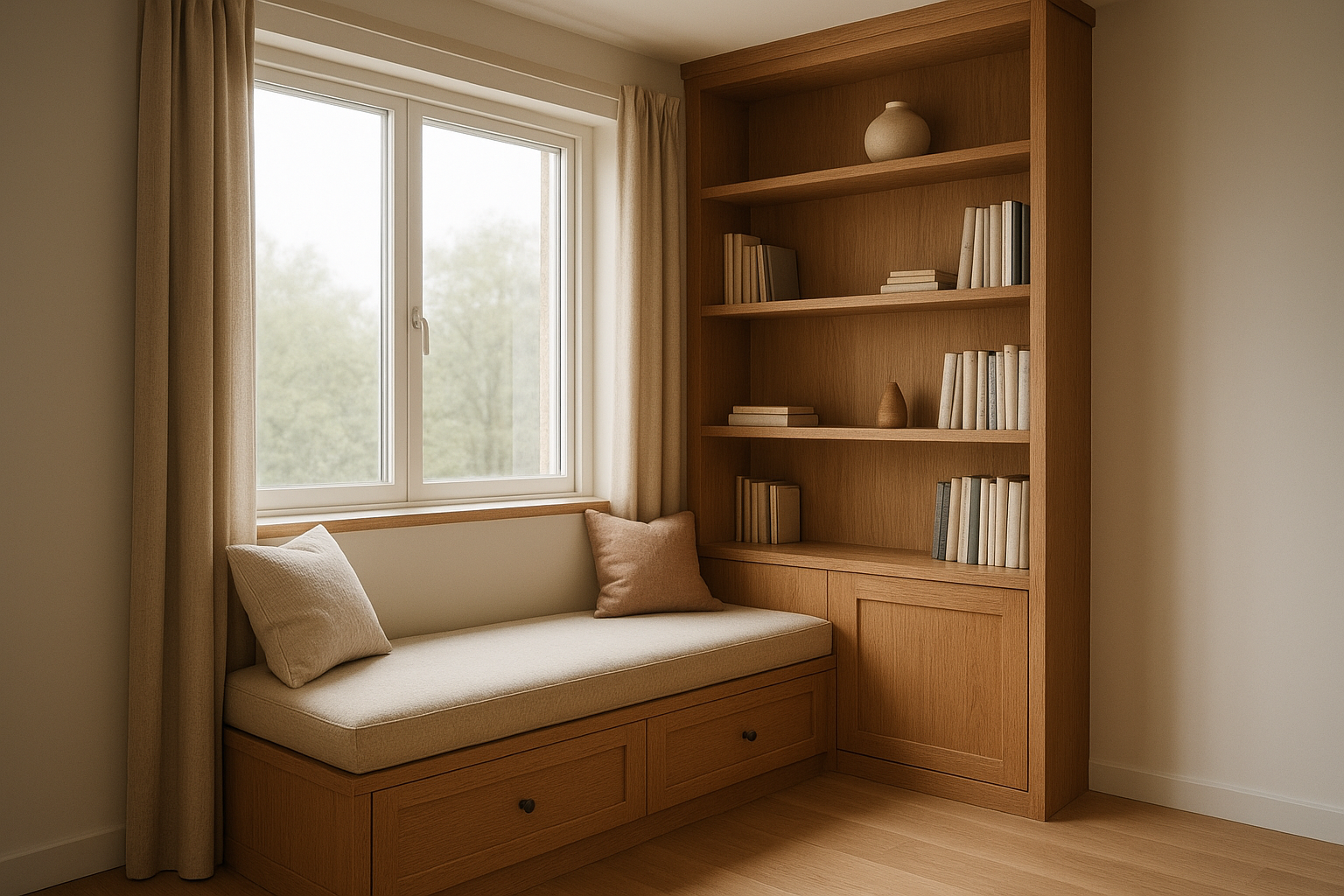
A built-in window seat with hidden storage makes efficient use of a compact ADU floor plan.
Frequently Asked Questions About ADU Interior Millwork Contractor Services
What is an ADU interior millwork contractor?
An ADU interior millwork contractor designs and builds custom cabinetry, trim, shelving, and built-in storage sized specifically for an accessory dwelling unit’s floor plan. This work is usually coordinated alongside structural and permit drawings so finishes integrate cleanly with walls, plumbing, and electrical.
Why does millwork matter more in an ADU than a full-size home?
ADUs typically run between 500 and 1,200 square feet, so every inch of storage needs to be planned rather than added as an afterthought. Built-in cabinetry, window seats, and closet systems replace bulky furniture and free up living space.
How much does custom ADU millwork typically cost?
Costs vary by material, finish, and scope, but custom built-ins commonly add several thousand dollars to an ADU budget depending on cabinetry length and detailing. Homeowners should request itemized millwork pricing separate from general construction costs.
How long does interior millwork installation take?
Shop-built cabinetry and trim usually take two to six weeks to fabricate once designs are finalized, then install in a few days on site. Timelines depend on material sourcing and how far along the ADU structure is.
Should millwork be designed before or after the ADU permit is submitted?
Millwork layouts should be roughed into the design phase before permit submittal whenever built-ins affect electrical, plumbing, or structural framing. Adding custom cabinetry after permits are approved can trigger costly revisions.
Can a garage conversion include custom built-ins?
Yes, garage conversions and JADUs benefit significantly from built-in millwork because they often have irregular wall lines and limited square footage. Custom shelving and cabinetry can be shaped around existing garage framing to maximize usable space.
What materials are used in net-zero-focused ADU millwork?
Net-zero-focused builds often pair USA-sourced wood products with low-VOC finishes and energy-efficient window and insulation packages to support Title 24 compliance. Material choice also affects long-term durability in cabinetry and trim.
Do I need a separate contractor for millwork, or does my ADU contractor handle it?
A design-build ADU contractor that offers in-house millwork avoids the coordination gaps that happen when a separate cabinetmaker is brought in mid-project. This keeps design intent, permitting, and construction accountable to one team.
What is the difference between a millwork contractor and a general carpenter?
A millwork contractor specializes in custom-fabricated cabinetry, trim, and built-ins designed to exact room dimensions, while a general carpenter typically handles broader framing and finish tasks. Millwork work usually involves shop drawings and off-site fabrication.
What common mistakes do homeowners make with ADU millwork?
The most frequent mistake is finalizing furniture layouts before confirming built-in dimensions, which leads to wasted space or clashing designs. Skipping material samples before installation is another common issue that causes finish-quality surprises.
Can built-in millwork increase ADU rental value?
Well-designed built-ins can make a compact ADU feel more livable and organized, which can support stronger rental appeal and tenant satisfaction. Storage-efficient layouts are frequently highlighted in rental listings for smaller units.
Does financing cover interior millwork costs?
Many ADU-specific construction loans and HELOCs bundled through third-party lenders can include finish carpentry and built-in costs as part of the total project budget. Homeowners should confirm scope inclusions with their lender before finalizing loan terms.
What questions should I ask an ADU interior millwork contractor before hiring?
Ask about licensing, in-house fabrication capability, material sourcing, and whether millwork design is coordinated with structural and permit drawings. It also helps to request a portfolio of completed ADU built-ins in similar square footage.
Final Takeaway
Choosing the right ADU interior millwork contractor comes down to coordination: storage plans should be part of the design conversation, not an afterthought bolted on after permits are pulled. In particular, verifying licensing, requesting material samples, and confirming how built-ins align with structural drawings will help avoid costly revisions later. Above all, custom cabinetry and trim can make a compact accessory dwelling unit feel considerably larger and more livable, whether it’s built for rental income, multigenerational housing, or guest space. Homeowners in Orange County, Los Angeles County, or western Riverside County who want design, permitting, financing coordination, and construction handled under one accountable team can start with a site assessment through theadupro.com.