
ADU net-zero home construction experts help Southern California homeowners design and build accessory dwelling units that produce roughly as much energy as they consume. For many property owners across Orange County, Los Angeles County, Riverside County, and San Bernardino County, an energy-efficient backyard home is no longer just an upgrade — it is a practical answer to rising utility costs and shrinking lot space. This guide explains what net-zero ADU construction actually involves, how the building process works step by step, and what to look for when choosing a qualified team to get it right the first time.
What Are ADU Net-Zero Home Construction Experts?
ADU net-zero home construction experts are licensed contractors who design and build accessory dwelling units engineered to offset most or all of their annual energy consumption. They combine structural engineering, Title 24 energy compliance, and high-performance materials to lower a unit’s utility costs and environmental footprint.
In practice, this means pairing airtight building envelopes, high-efficiency HVAC systems, and advanced insulation with optional solar generation. According to the U.S. Department of Energy, a zero-energy building produces enough renewable energy on-site to match the total amount of energy it uses over a year. For an ADU, that typically involves passive design choices — orientation, window placement, insulation — paired with efficient appliances and, when the budget allows, rooftop solar. You can read a broader breakdown of local requirements in this net-zero ADU construction guide.
Why Southern California Homeowners Choose Net-Zero ADU Specialists
Southern California’s climate, utility rates, and building codes make net-zero construction especially practical for accessory dwelling units. In particular, California’s Title 24 energy code already pushes new residential construction toward higher efficiency standards, so a net-zero approach often requires only a modest additional investment on top of code-minimum requirements.
Furthermore, homeowners building a rental ADU benefit directly from lower operating costs. A tenant paying minimal utility bills is more likely to renew a lease, and a lower-cost unit can command competitive rent across Orange County and Los Angeles County. Similarly, families building a multigenerational ADU reduce their household’s combined energy expenses over the life of the structure.
For these reasons, more homeowners specifically search for ADU net-zero home construction experts rather than general contractors, since energy modeling and Title 24 compliance require specialized knowledge that a generalist may not have on staff. You can review examples of these eco-friendly building practices in action.
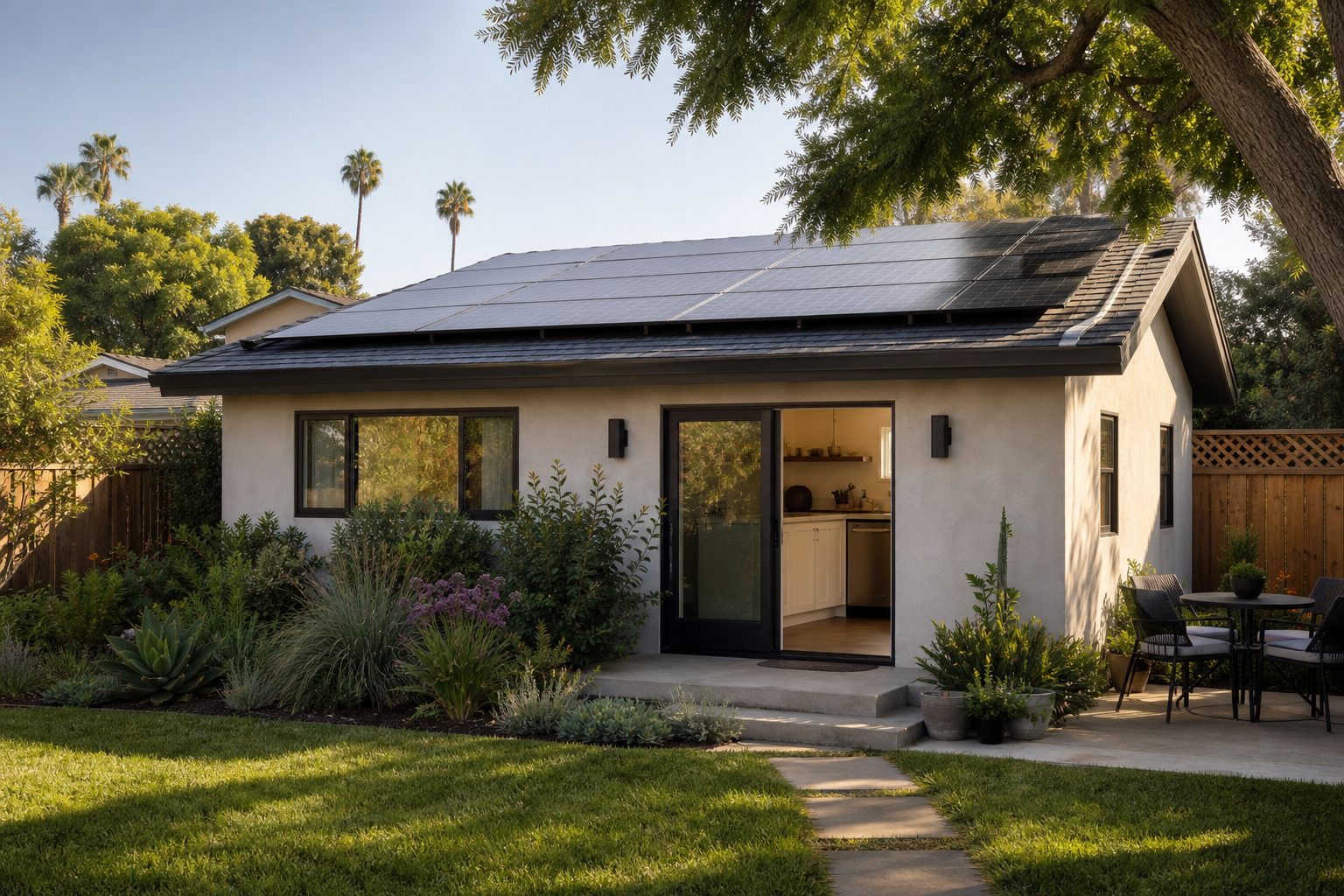
A finished detached ADU designed around net-zero energy principles in a Southern California backyard.
How Net-Zero ADU Construction Works
Building a net-zero ADU follows the same general sequence as any accessory dwelling unit project, with extra energy modeling and material selection steps layered in. Below is the typical process used by ADU net-zero home construction experts, from the first site visit through final inspection.
- Site assessment and feasibility study. A contractor evaluates lot size, setbacks, utility access, and solar exposure to confirm whether the property can support a net-zero ADU and which configuration makes the most sense.
- Custom energy-efficient design and Title 24 modeling. In-house designers create a site-specific floor plan while an energy consultant models insulation, window placement, and HVAC equipment to meet or exceed Title 24 requirements.
- Permit submittal and city coordination. The design-build team submits structural drawings and energy compliance documents to the local building department and manages plan check corrections.
- Energy-efficient construction and installation. Crews install upgraded insulation, high-performance windows, efficient HVAC systems, and optional solar equipment while maintaining airtight construction methods throughout the build.
- Final inspection and certificate of occupancy. The local building department inspects the completed unit for code compliance, including energy standards, before issuing a certificate of occupancy so the ADU can be used or rented.
Key Features of Energy-Efficient ADU Design
Energy-efficient ADU design relies on several features working together rather than any single product. High-performance windows reduce heat gain in summer and heat loss in winter, while upgraded wall and attic insulation keeps indoor temperatures stable with less HVAC effort.
In addition, USA-sourced materials and careful air sealing reduce drafts and improve indoor air quality. Custom built-ins and interior millwork can also support efficiency goals indirectly, since well-planned storage reduces the need for additional square footage — and therefore additional energy load. For a closer look at these methods, see this overview of energy-efficiency standards used in ADU construction.
The California Energy Commission periodically updates Title 24 standards, and staying current on these requirements is part of what separates experienced ADU net-zero home construction experts from contractors building to minimum code alone.
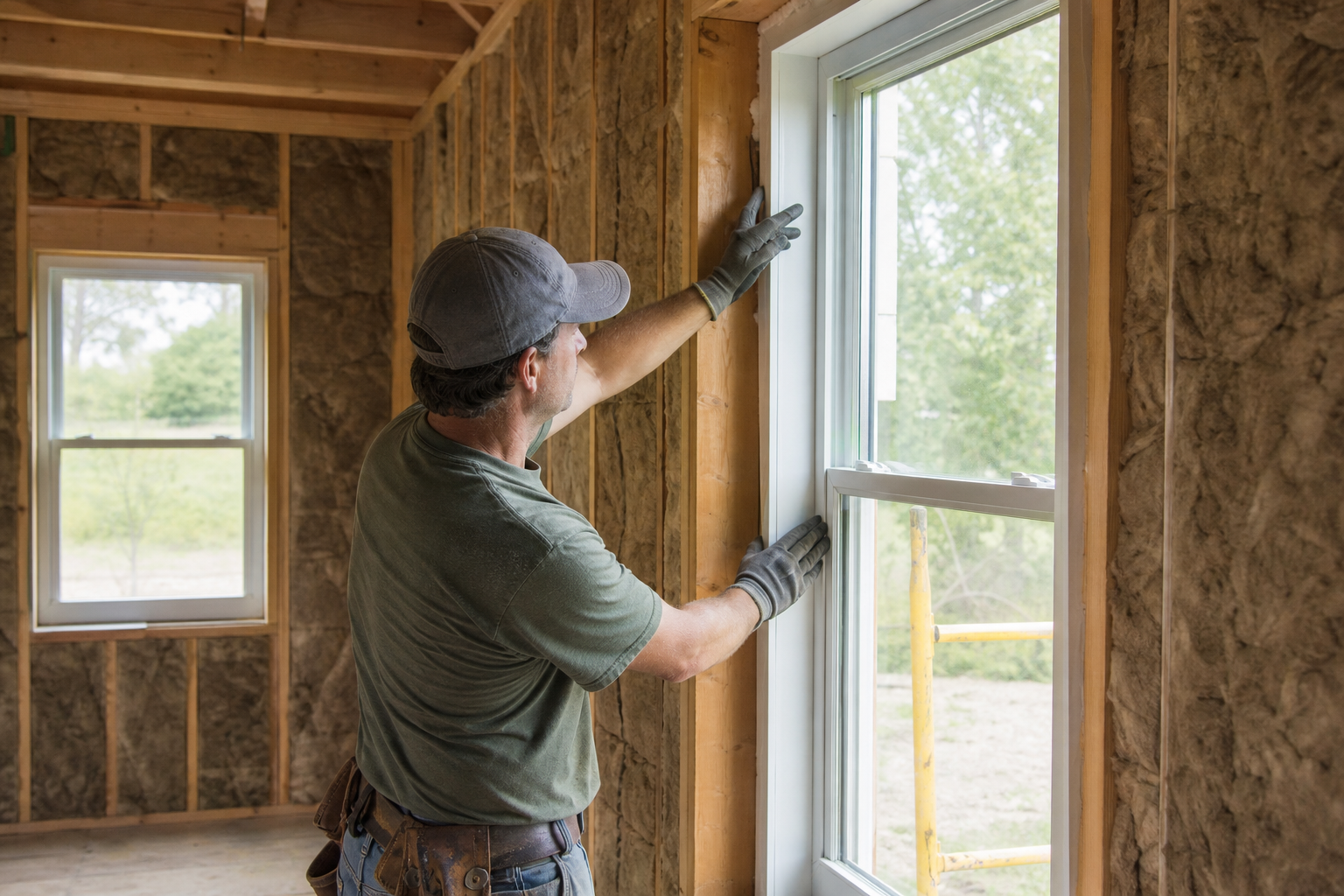
Upgraded insulation and window installation are core steps in net-zero ADU construction.
Choosing an ADU Net-Zero Construction Partner in Southern California
Not every contractor who builds ADUs has experience with net-zero methods. Therefore, homeowners should ask specifically about Title 24 energy modeling, in-house structural engineering, and past net-zero or solar-ready projects before signing a contract.
TheADUPro is one option homeowners in Orange County, Los Angeles County, Riverside County, and San Bernardino County can consider. The company, headquartered in Chino, CA, holds an active CSLB license. It handles design, structural engineering, permitting, and construction under one team, with a net-zero-focused approach and USA-sourced materials. Homeowners in that service area, including those exploring ADU design services in Westminster, can review the company’s approach directly at theadupro.com.
However, the company does not serve San Diego County, the Inland Empire high desert, or Northern California, so homeowners outside the Southern California service area will need a different local contractor.
What Does Net-Zero ADU Construction Cost?
Net-zero-focused features commonly add a modest percentage to a project’s base construction budget. Industry estimates widely cited in the building trade — including analysis referenced by the U.S. Department of Energy — suggest net-zero-ready construction can add roughly 3% to 8% on top of standard code-minimum building costs, largely driven by upgraded insulation, windows, and optional solar equipment.
As a result, many homeowners recover part of that added cost over time through lower monthly utility bills. Specifically, a well-insulated, properly sealed ADU with efficient HVAC can use significantly less energy than a comparable code-minimum unit, which matters whether the ADU is rented out or used by family.
For financing, homeowners commonly use HELOCs, construction loans, or ADU-specific lending programs through third-party lenders. A design-build contractor can coordinate introductions to lending partners, though it does not issue loans directly. You can read more about typical project value in this summary of the benefits of building an ADU with TheADUPro.
Common Mistakes to Avoid With Net-Zero ADU Projects
Even well-intentioned homeowners run into avoidable problems when planning a net-zero ADU. In particular, these mistakes tend to show up most often:
- Adding solar as an afterthought instead of planning the roof structure and wiring during initial design.
- Skipping proper air sealing around windows, doors, and penetrations, which undermines insulation performance.
- Hiring a contractor without in-house structural engineering or Title 24 energy modeling experience.
- Underestimating permit timelines in cities with stricter plan check processes.
- Choosing finishes or layouts before confirming lot setbacks and feasibility.
Consequently, working with a team that manages design, engineering, permitting, and construction together — rather than coordinating separate vendors — tends to reduce the risk of these issues.
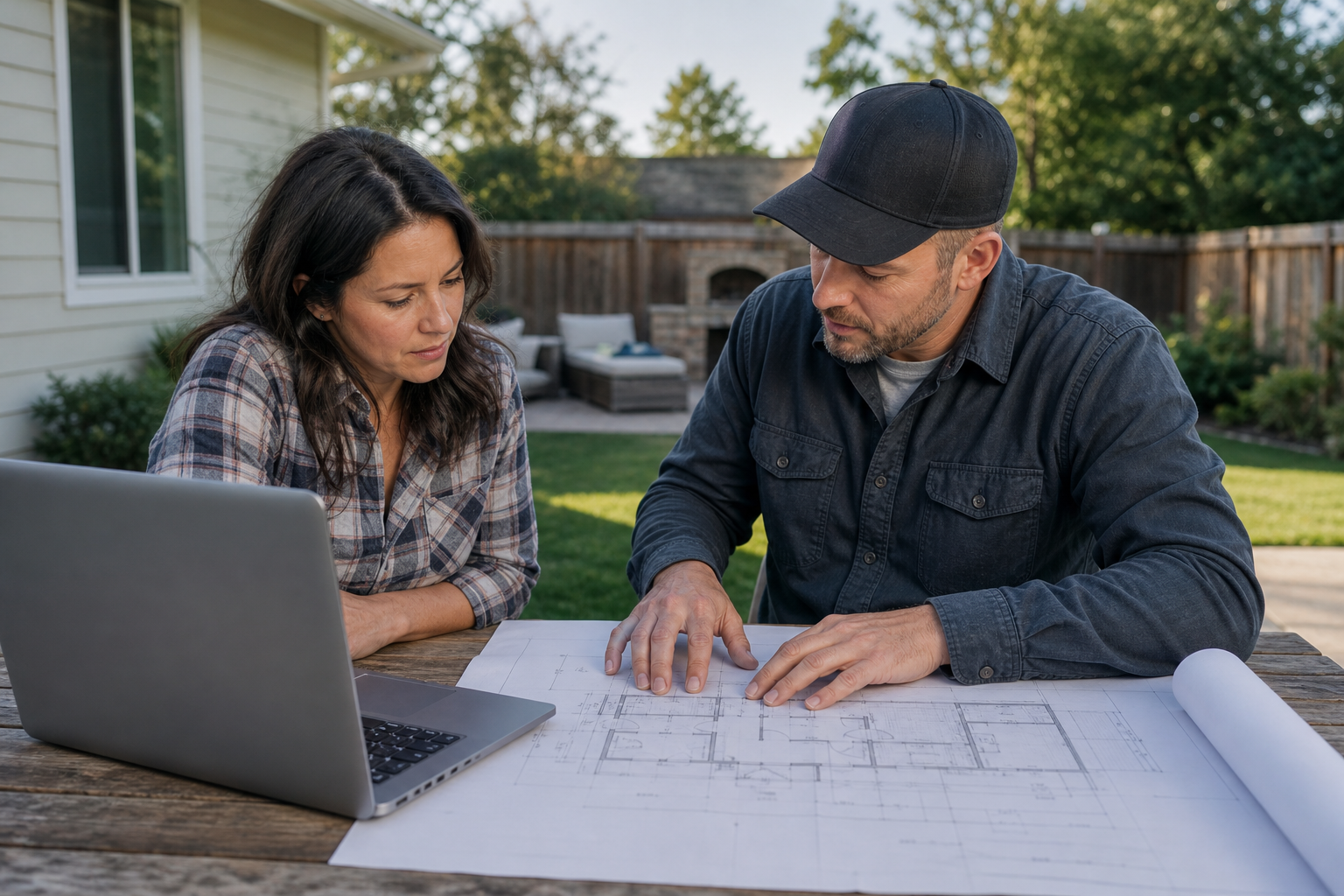
Reviewing custom floor plans with a contractor is an early step before net-zero ADU construction begins.
Frequently Asked Questions About ADU Net-Zero Home Construction Experts
What is net-zero ADU construction?
Net-zero ADU construction means building an accessory dwelling unit designed to produce as much energy as it consumes over a year, typically through efficient insulation, high-performance windows, and optional solar power. The goal is to reduce or eliminate the unit’s annual utility costs.
How do ADU net-zero home construction experts make a unit energy efficient?
ADU net-zero home construction experts combine tight building envelopes, upgraded insulation, energy-efficient windows, and efficient HVAC equipment with Title 24 energy modeling. Many also add optional solar panels to offset remaining energy use.
Why should I build a net-zero ADU instead of a standard ADU?
A net-zero ADU typically costs less to operate month to month, which matters whether you plan to rent the unit or house family members. Lower utility bills can also make the unit more attractive to renters in a competitive market.
How much does a net-zero ADU cost compared to a standard ADU?
Net-zero-focused features commonly add a modest percentage to the base construction budget, largely driven by upgraded insulation, windows, and optional solar equipment. Many homeowners recover part of that added cost through lower long-term utility bills.
How long does net-zero ADU construction take?
Most ADU projects in Southern California take several months for design and permitting plus additional months for construction, depending on the city and unit size. Net-zero features generally do not add significant time if they are planned from the start.
Can a garage conversion be built to net-zero standards?
Yes, garage conversions can incorporate net-zero features such as upgraded insulation, efficient windows, and solar-ready wiring. The existing structure may need additional work to meet the same efficiency standards as new construction.
Do net-zero ADUs require solar panels?
Solar panels are not always required, but they are one of the most common ways to offset remaining energy use after efficiency upgrades are in place. Some homeowners choose solar-ready wiring now and add panels later.
What is Title 24 and how does it affect ADU construction?
Title 24 is California’s building energy efficiency code, which sets minimum insulation, window, and HVAC performance standards for new residential construction, including many ADUs. Net-zero-focused design often builds on top of these baseline requirements.
What are common mistakes homeowners make with net-zero ADU projects?
Common mistakes include adding solar as an afterthought instead of planning for it during design, skipping proper air sealing, and choosing a contractor without in-house structural engineering or energy modeling experience. These issues can increase costs or delay permitting.
Will a net-zero ADU increase my property value?
An ADU generally adds usable living space and potential rental income, both of which can support property value. Energy-efficient features may add further appeal for buyers focused on lower long-term operating costs.
What financing options exist for net-zero ADU construction?
Homeowners commonly use HELOCs, construction loans, or ADU-specific financing programs offered through third-party lenders. A design-build contractor can connect you with lending partners but does not issue loans directly.
Does TheADUPro build net-zero ADUs outside Orange County?
TheADUPro primarily builds across Orange County, Los Angeles County, Riverside County, and San Bernardino County. The company is headquartered in Chino, CA.
What size ADU can be built to net-zero standards?
Net-zero principles can apply to custom floor plans ranging from roughly 500 to 1,200 square feet, covering detached ADUs, attached additions, and garage conversions. Larger units typically require more efficiency measures or solar capacity to reach the same energy balance.
How do I know if my lot qualifies for a net-zero ADU?
A site assessment and feasibility study will review setbacks, lot coverage, utility access, and solar exposure to determine what is possible. This step comes before design and is essential for planning an efficient, code-compliant unit.
What best practices should I follow when choosing ADU net-zero home construction experts?
Look for a licensed contractor with in-house structural engineering, verifiable Title 24 compliance experience, and a track record of completed ADU projects in your city. Checking license status and client reviews before signing a contract is also a sound best practice.
Final Thoughts on Building a Net-Zero ADU
Choosing ADU net-zero home construction experts over a general contractor can make a meaningful difference in long-term utility costs, code compliance, and overall build quality. From site assessment through final inspection, energy modeling and Title 24 compliance need to be built into the process from day one rather than added later.
In summary, homeowners across Orange County, Los Angeles County, Riverside County, and San Bernardino County who are weighing a detached ADU, attached addition, garage conversion, or JADU should prioritize a design-build team with proven structural engineering, energy-efficiency experience, and transparent financing coordination. Working with the right ADU net-zero home construction experts from the start helps homeowners avoid costly rework and get a unit that performs as promised, year after year.