
ADU planning services are professional end-to-end solutions that guide homeowners through every stage of building an accessory dwelling unit (ADU) — from initial site analysis and design to permitting and construction. In Southern California, where housing demand continues to surge, these services have become an essential resource for homeowners looking to add livable space, generate rental income, or accommodate multigenerational families. Furthermore, California’s evolving ADU laws have made professional guidance more valuable than ever.

Professional ADU planning services connect homeowners with expert guidance from design through construction.
What Are ADU Planning Services?
ADU planning services encompass a full suite of professional offerings designed to take an ADU project from concept to completion. Specifically, these services typically include feasibility assessments, architectural design, structural engineering, permit application management, and construction coordination. In short, they remove the guesswork from one of the most complex home improvement projects a property owner can undertake.
According to the California Department of Housing and Community Development, the state approved over 23,000 ADU permits in 2022 alone — a figure that underscores just how mainstream ADU development has become. Consequently, the demand for skilled planning professionals has grown alongside that number.
Why Professional ADU Planning Matters in Southern California
Southern California’s regulatory landscape is uniquely complex. Each city within Orange County, Los Angeles County, and Riverside County maintains its own zoning ordinances, setback rules, and design standards — all layered on top of state law. Therefore, homeowners who attempt to navigate this process alone often encounter costly delays, permit rejections, or code violations.
Professional planners bring local expertise that is genuinely difficult to replicate. For example, a planner familiar with Placentia’s specific requirements will know exactly what the city’s building department expects — saving weeks of back-and-forth. You can explore tailored options through ADU plans in Placentia designed specifically for that city’s codes.
The Financial Case for Adding an ADU
Beyond convenience, the financial upside is substantial. Studies from the National Association of Realtors suggest that adding an ADU can increase property value by 20% to 30% in high-demand markets. Additionally, rental income from a well-built ADU can offset a significant portion of your mortgage payment each month.
In markets like Laguna Woods and the greater Los Angeles area, rental rates for ADUs frequently exceed $1,500 to $2,500 per month. As a result, many homeowners recoup their investment within five to eight years. Professional ADU design in Laguna Woods ensures your unit is built to command those premium rents.
How ADU Planning Services Work: A Step-by-Step Process
Understanding what to expect from a professional planning engagement helps homeowners feel confident before they begin. Below is the typical process followed by experienced ADU contractors in Southern California.
- Site Feasibility Assessment: A qualified planner visits your property to evaluate zoning, lot coverage, setbacks, utility access, and any deed restrictions. This step determines what type of ADU is possible and roughly what it will cost.
- ADU Type Selection and Design: Working with your planner, you choose between a detached unit, attached addition, garage conversion, or Junior ADU (JADU). Permit-ready architectural drawings are then developed to reflect your goals and budget.
- Permit Application Submission: Your planning team prepares and submits a complete application to the local building department, including architectural plans, structural engineering documents, and Title 24 energy compliance reports.
- Plan Check Response: If the city requests corrections or additional information, your planner coordinates prompt, accurate responses to avoid timeline delays.
- Construction and Inspections: Once permits are approved, your contractor begins construction and schedules all required inspections — foundation, framing, electrical, plumbing, and final — to ensure full code compliance.
This structured approach is what separates professional ADU planning from a disorganized DIY attempt. Furthermore, having a single team manage the entire process reduces miscommunication and keeps projects on schedule.
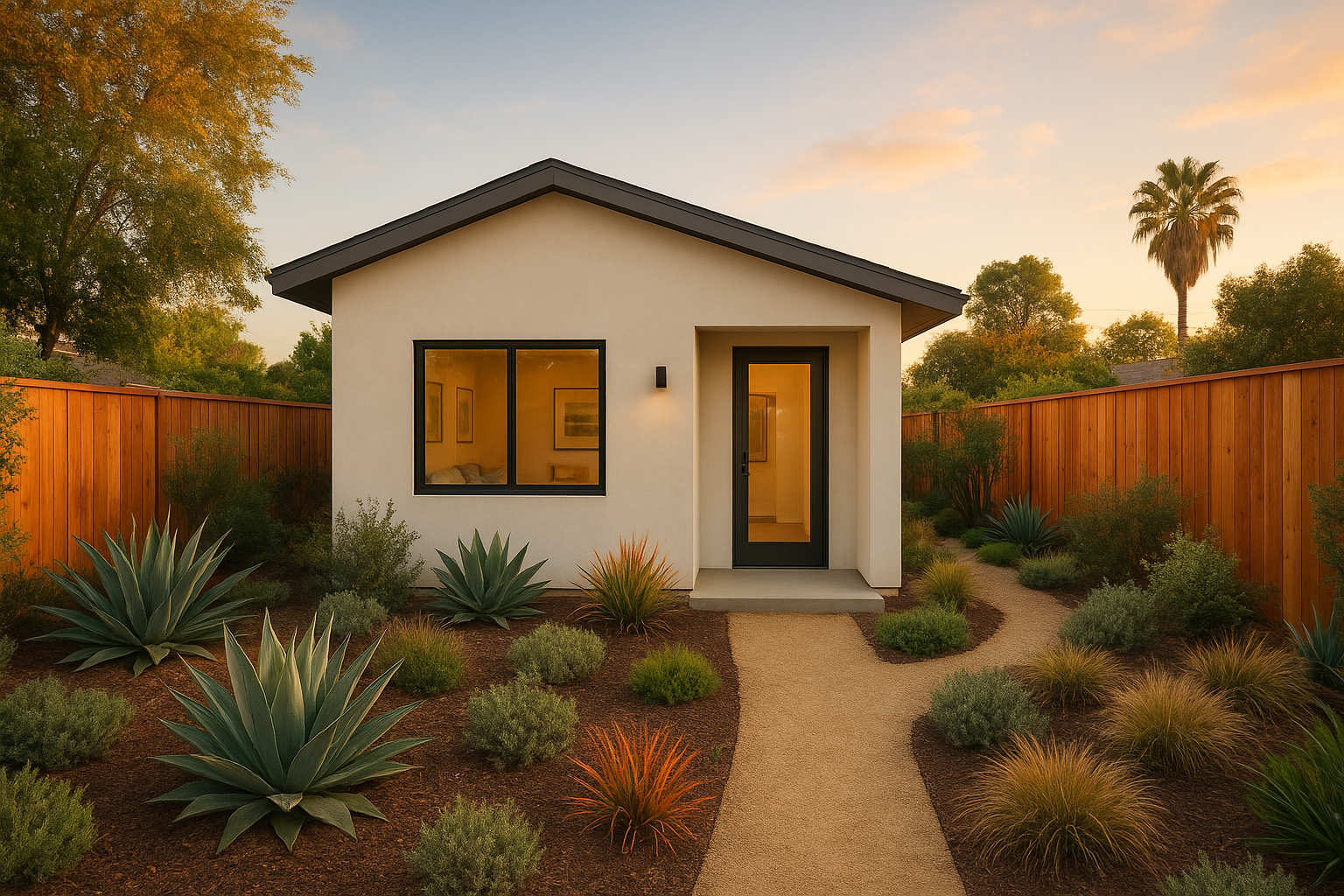
A finished detached ADU — the result of thorough planning, expert design, and skilled construction.
Types of ADUs Covered by Planning Services
Not all ADUs are created equal. In fact, California law recognizes several distinct categories, each with its own size limits, setback rules, and permitting pathways. A knowledgeable planning team will help you choose the right type for your property and lifestyle.
- Detached ADU: A fully separate structure built on the same lot as the primary home. These offer the most privacy and are ideal for long-term rental use.
- Attached ADU: An addition connected to the main house, sharing at least one wall. This option often costs less because it leverages existing structural elements.
- Garage Conversion: One of the most cost-effective ADU types. An existing garage is converted into a habitable living space, typically saving on foundation and framing costs.
- Junior ADU (JADU): A unit of up to 500 square feet created within the existing footprint of the primary residence, often from a bedroom or interior space.
Each type requires a distinct planning approach. For instance, garage conversions must meet habitability standards that differ from new construction. Similarly, JADUs require specific deed restrictions under California law. Custom ADU design services for permit-ready plans ensure that whichever type you choose, your project moves forward without unnecessary complications.
Choosing the Right ADU Contractor for Your Project
Selecting the right team is arguably the most important decision in the entire ADU journey. Specifically, you want a contractor who combines design expertise, permitting knowledge, and construction skill under one roof. This integrated model eliminates the coordination gaps that arise when you hire separate architects, engineers, and builders.
theadupro.com — Southern California’s premier local ADU building contractor — provides exactly this kind of end-to-end service. Their team manages design, permitting, and construction across Orange County, Los Angeles County, and Riverside County, giving homeowners a single point of accountability throughout the project.
Key Questions to Ask Before Hiring a Planner
Before signing any contract, consider asking potential planners these important questions:
- How many ADU projects have you completed in my specific city?
- Do you handle both design and permitting, or only one phase?
- What is your average permit approval timeline for this jurisdiction?
- Can you provide references from recent ADU clients in my area?
- How do you handle plan check corrections or unexpected site conditions?
The answers to these questions will quickly reveal whether a firm has the depth of local experience your project demands. Additionally, transparency in communication is a reliable indicator of how smoothly the construction phase will run.
Understanding California ADU Regulations
California has passed several landmark laws since 2017 to encourage ADU construction, including AB 68, SB 13, and AB 881. Collectively, these laws reduced setback requirements, eliminated parking mandates in many cases, and capped impact fees for smaller units. As a result, building an ADU in California is more accessible today than at any point in history.
However, local jurisdictions retain authority over certain design standards. For example, cities may still regulate exterior materials, roof pitch, and landscaping requirements. Therefore, working with a planner who stays current on both state and local regulations is absolutely essential. You can learn more about statewide ADU policy through California’s official legislative information portal.
Permit Timelines and What to Expect
Under California law, local agencies must act on a complete ADU permit application within 60 days. In practice, many jurisdictions process applications in 30 to 45 days when the submission is thorough and accurate. Consequently, the quality of your permit application directly affects how quickly you can break ground.
Professional ADU planning services in Placentia and other Southern California cities know exactly what each building department requires. Specifically, they prepare applications that anticipate common plan check comments, reducing the likelihood of costly revision rounds. Explore how ADU design in Placentia is tailored to meet that city’s specific requirements.
Quick Answer: ADU planning services are professional services that guide homeowners through feasibility assessment, architectural design, permit applications, and construction coordination for accessory dwelling units. In Southern California, they are especially valuable given the region’s complex layering of state and local regulations.
Frequently Asked Questions About ADU Planning Services
What are ADU planning services?
ADU planning services are professional services that guide homeowners through every phase of building an accessory dwelling unit, including site evaluation, design, permitting, and construction coordination. They help ensure the project meets local zoning laws and building codes. Most full-service firms in Southern California handle everything under one contract.
How much do ADU planning services typically cost in California?
Planning and design fees in California typically range from $5,000 to $20,000, depending on the ADU type and project scope. This does not include construction costs, which can range from $100,000 to over $300,000. Getting a detailed quote early helps homeowners budget accurately.
How long does the ADU planning and permitting process take?
In California, the permitting process typically takes 30 to 60 days after a complete application is submitted, thanks to state-mandated review timelines. However, design and preparation before submission can add several additional weeks. Working with an experienced planner helps compress the overall timeline.
Do I need a professional for ADU planning, or can I do it myself?
Hiring a professional is strongly recommended. Professionals understand local zoning codes, can avoid costly mistakes, and significantly speed up the permitting process. Self-managed projects frequently encounter permit rejections and construction delays that cost more than professional fees.
What types of ADUs can be built in Southern California?
Southern California homeowners can build detached ADUs, attached ADUs, garage conversions, and Junior ADUs (JADUs). Each type has different size limits, setback requirements, and permitting rules under California state law. A professional planner will recommend the best option for your specific property.
What is included in a full ADU planning service package?
A full package typically includes a site feasibility assessment, architectural design, structural engineering, permit application preparation, and coordination with local building departments. Some firms also include construction management and post-construction inspection support.
Can ADU planning services help increase my property value?
Yes. Adding an ADU can increase property value by 20% to 30% in high-demand markets like Southern California, according to studies by the National Association of Realtors. Professional planning ensures the unit is built to maximize that value and attract quality tenants or buyers.
What is the difference between a Junior ADU and a standard ADU?
A Junior ADU (JADU) is a smaller unit of up to 500 square feet created within the existing walls of a primary residence, often from a bedroom. A standard ADU can be larger and built as a separate structure or addition, offering more flexibility in design and use.
Are there owner-occupancy requirements for ADUs in California?
As of 2020, California eliminated owner-occupancy requirements for ADUs built before 2025, allowing non-resident owners to build and rent ADUs. However, rules may vary by city, so checking local ordinances with a qualified planner is always important.
What common mistakes should I avoid when planning an ADU?
Common mistakes include underestimating costs, ignoring setback and height restrictions, skipping a professional feasibility study, and failing to account for utility connection fees. Working with experienced ADU planning services helps homeowners avoid all of these costly pitfalls from the start.
Can a garage be converted into an ADU in Orange County?
Yes, garage conversions are one of the most popular and cost-effective ADU types in Orange County. Professional ADU planning services will assess your garage’s structural suitability and handle all permitting requirements. In many cases, conversions can be completed faster than new construction.
How do ADU planning services handle utility connections?
Professional ADU planners coordinate with local utility providers to plan electrical, plumbing, and gas connections for your new unit. They also help homeowners understand associated fees, which can range from a few thousand to over $20,000 depending on the municipality and scope of work required.
Conclusion: Start Your ADU Journey with the Right Planning Partner
In summary, ADU planning services are the foundation of every successful accessory dwelling unit project in Southern California. They bring together the design expertise, regulatory knowledge, and construction coordination that homeowners need to move from idea to finished unit without costly mistakes or delays. Furthermore, the financial rewards — increased property value, rental income, and multigenerational flexibility — make professional planning a sound investment by any measure. Whether you are considering a detached guest house, a garage conversion, or a junior ADU, partnering with an experienced team like theadupro.com gives your project the best possible foundation for success across Orange County, Los Angeles County, and Riverside County.