
Long Beach ADU builders are licensed California contractors who design, permit, and construct accessory dwelling units — independent living spaces added to an existing residential lot — so homeowners can generate rental income, house family members, or boost resale value. Because California’s housing shortage keeps intensifying, the demand for reliable ADU builders in Long Beach has climbed sharply over the past several years. Consequently, picking the right contractor is often the single factor that separates a smooth, code-compliant build from a delayed, over-budget headache.
According to the California Department of Housing and Community Development, statewide ADU permit applications more than doubled between 2018 and 2022. Long Beach, as one of Los Angeles County’s most densely populated coastal cities, sits right in the middle of that surge. For context, an accessory dwelling unit (a secondary, self-contained home built on the same lot as a primary residence) is also sometimes called a “granny flat” or “in-law suite” — terms you’ll hear used interchangeably throughout this guide.
What Are Long Beach ADU Builders and What Do They Actually Do?
Long Beach ADU builders are specialized contractors who manage every phase of accessory dwelling unit development: architectural design, city permit submissions, foundation work, framing, utility connections, interior finishes, and final city inspections. In other words, they act as a single point of contact so homeowners never have to coordinate an architect, a permit expediter, and a general contractor separately.
Furthermore, experienced Long Beach ADU builders understand the city’s specific zoning codes, setback requirements, and utility connection rules. This local knowledge matters because Long Beach Development Services runs its own review process, which differs in small but important ways from Los Angeles, Signal Hill, or Lakewood. A contractor unfamiliar with these nuances can trigger permit delays that stretch a six-month project into a year or more.
Long Beach ADU Builders vs. General Contractors: Why the Distinction Matters
Not every licensed general contractor is truly an ADU specialist. Standard home remodeling and ground-up ADU construction require very different skill sets. Specifically, ADU-focused builders stay current on Title 24 energy compliance, fire sprinkler thresholds, and the state’s evolving ADU statutes (AB 68, SB 9, and subsequent updates). As a result, a dedicated ADU builder in Long Beach typically moves through plan check faster than a generalist contractor who only occasionally takes on secondary-unit projects.
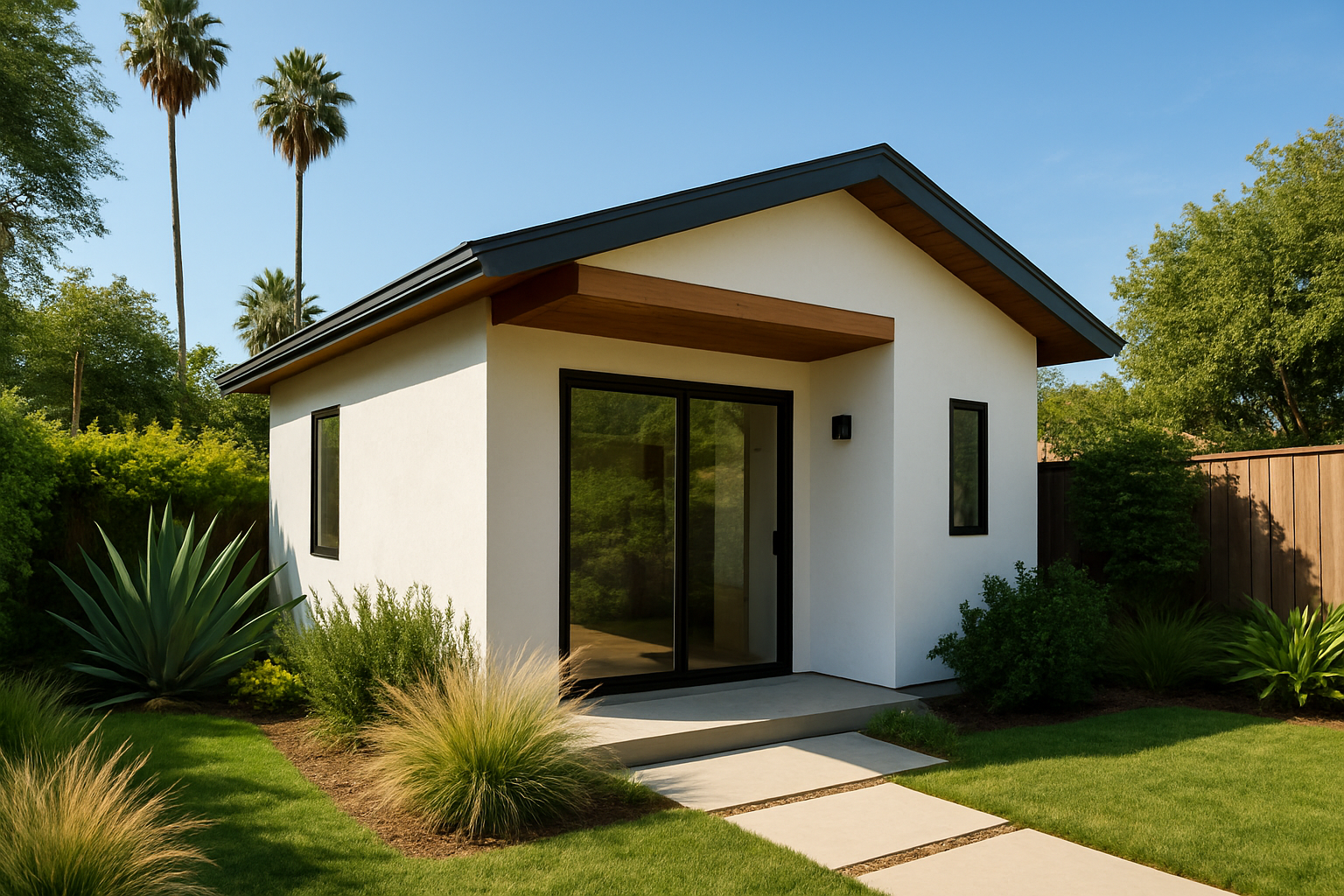
A professionally built detached ADU showcasing the craftsmanship top Long Beach ADU builders deliver for homeowners.
Types of ADUs Available in Long Beach
Long Beach homeowners have several ADU formats to consider, and each one suits different lot sizes, budgets, and goals. Therefore, understanding these distinctions before you contact a builder helps you arrive at the first consultation with realistic expectations.
- Detached ADU: A fully separate structure built on the same lot as the primary home. This is the most versatile option and, under California state law, can reach up to 1,200 square feet.
- Attached ADU: An addition connected to the main house, sharing at least one wall. This option is often more cost-effective than a fully detached build because it shares an existing foundation edge.
- Garage Conversion ADU: An existing garage transformed into a livable unit. Notably, California law prohibits cities from requiring replacement parking when a garage is converted, which makes this a highly accessible route.
- Junior ADU (JADU): A unit of up to 500 square feet created within the existing footprint of the primary home. JADUs require an owner-occupancy condition on the property.
- Interior Conversion ADU: Converting existing interior space — a basement, garage-adjacent room, or unused floor area — into a separate dwelling unit without expanding the building’s footprint.
For a deeper look at local size limits, setbacks, and design considerations, visit our dedicated page on ADU building in Long Beach. In addition, the Wikipedia overview of secondary suites offers useful general background on how ADUs are classified across different jurisdictions.
How to Build an ADU in Long Beach: Step-by-Step Process
Understanding the construction process in advance helps set realistic expectations and prevents surprises. Below is a clear, sequential overview of how a typical project with Long Beach ADU builders unfolds from first phone call to final sign-off.
- Assess Your Property and Goals: Evaluate your lot size, zoning designation, and existing structures. Decide whether your priority is rental income, a guest suite, or multigenerational housing, since this decision shapes the ADU type and size you pursue.
- Choose a Licensed Long Beach ADU Builder: Research at least three licensed California contractors with documented ADU experience. Verify their license on the California Contractors State License Board (CSLB) website and confirm references directly.
- Complete Architectural Design and Plans: Work with your builder’s design team to produce drawings that comply with Long Beach zoning codes, setback requirements, and current California ADU regulations.
- Submit Permit Applications to the City: Your builder submits a complete permit package to the City of Long Beach Development Services Department, including site plans, structural drawings, and Title 24 energy compliance documents.
- Begin Construction and Pass Inspections: Once permits are approved, construction begins with scheduled city inspections at the foundation, framing, rough mechanical, and final completion stages.
- Receive Certificate of Occupancy: After passing all required inspections, the city issues a Certificate of Occupancy, legally allowing the ADU to be occupied or rented out to a tenant.
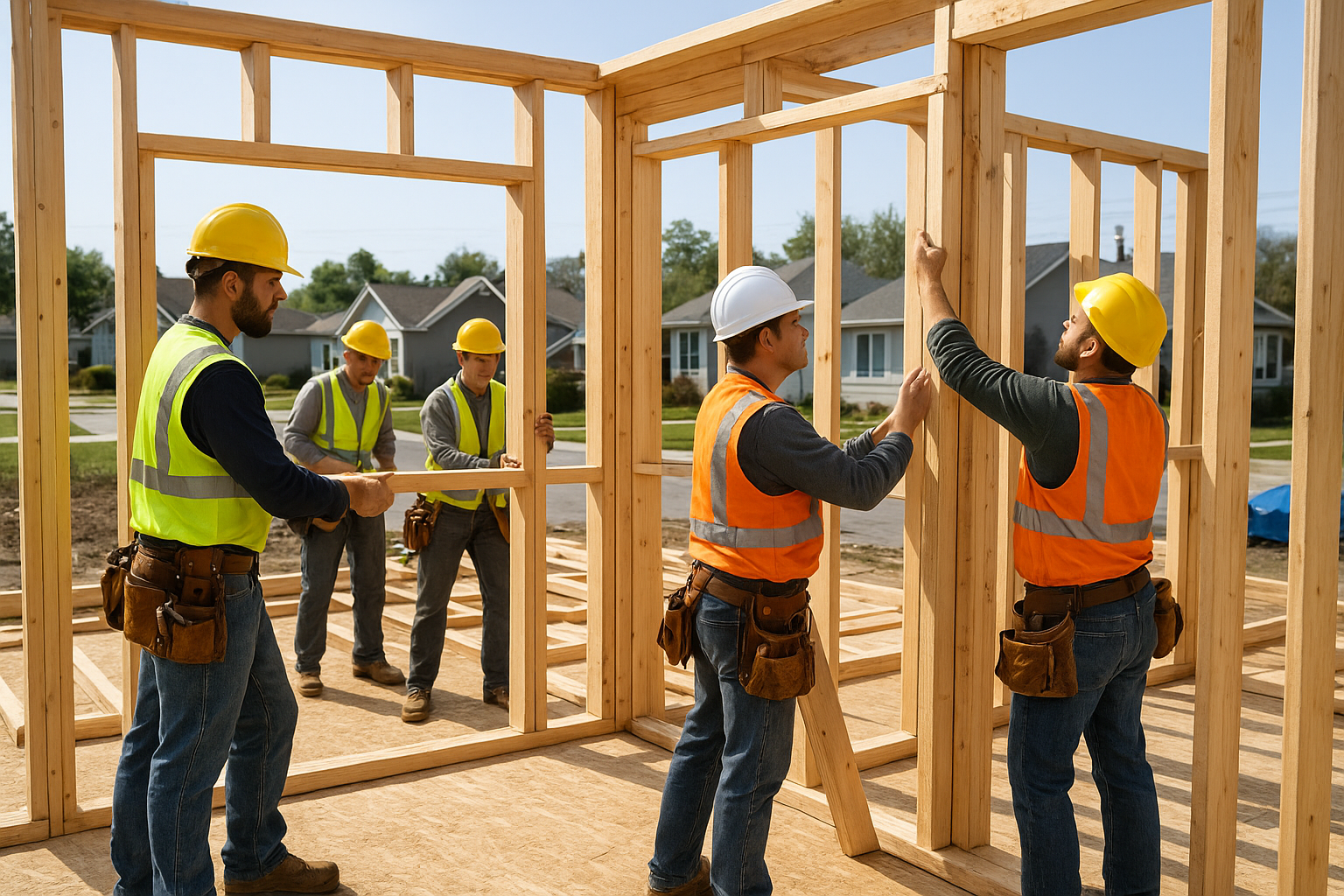
Framing is one of the most critical stages in the ADU construction process, requiring skilled, code-savvy local contractors.
What to Look for in a Long Beach ADU Contractor
Not every general contractor is equipped to handle ADU projects efficiently. Consequently, homeowners should evaluate several specific qualities before signing a contract with any ADU builder in Long Beach.
First, confirm the contractor holds a valid California B-General Building Contractor license. Second, ask for a portfolio of completed ADU projects specifically in Long Beach or greater Los Angeles County. Third, verify that they manage permitting in-house rather than leaving that burden entirely on the homeowner.
In addition, transparent pricing matters enormously. A trustworthy Long Beach ADU builder provides a detailed written estimate that breaks down design, permitting, materials, labor, and contingency costs. Vague or unusually low bids often signal hidden costs waiting to surface mid-project. For a closer look at what a working relationship with a specialist should feel like, see our Long Beach ADU contractor page, or compare notes on our Long Beach ADU builder resource for a side-by-side of qualifications to demand. If you’re weighing options further north along the coast, our Manhattan Beach ADU contractor resource covers that market as well.
Why Local Expertise Matters for ADU Projects
Long Beach enforces its own municipal code requirements that layer on top of California state ADU law. For example, the city has specific utility connection procedures and, in some neighborhoods, additional design standards. Therefore, a builder who works consistently in Long Beach and the surrounding Los Angeles County cities will navigate these requirements far more efficiently than an out-of-area contractor learning the ropes on your dime.
Furthermore, local contractors typically have established relationships with city plan checkers and inspectors. These relationships can meaningfully cut down on back-and-forth during plan review, which often saves several weeks of otherwise idle project time.
Red Flags: Warning Signs of an Unreliable Long Beach ADU Builder
Before you sign anything, watch for these warning signs. Specifically, be cautious of builders who ask for large upfront deposits before any permits are pulled, refuse to provide a written itemized scope of work, or cannot name a single completed project within Long Beach city limits. Similarly, a contractor who dismisses questions about Title 24 energy compliance or fire separation requirements likely lacks the specialized ADU knowledge your project needs. In contrast, a builder who welcomes detailed questions and offers to walk you through past permit files is demonstrating exactly the transparency you should expect.
ADU Construction Costs in Long Beach
Cost is one of the first questions every homeowner asks. In Long Beach, ADU construction costs vary widely based on unit type, size, and finish level. However, the general benchmarks below help set realistic expectations before you request formal bids.
Typical Long Beach ADU Cost Ranges (2024–2025)
- Junior ADU (JADU): $40,000 – $90,000
- Garage Conversion ADU: $60,000 – $130,000
- Attached ADU: $120,000 – $220,000
- Detached ADU: $150,000 – $350,000+
These figures include design, permitting, and construction, but they exclude financing costs. As a result, homeowners should budget an additional 10–15% contingency for unforeseen site conditions such as poor soil quality or aging utility lines. For a comprehensive breakdown by project phase, visit our ADU construction in Long Beach resource page.
Hidden Costs Many Long Beach ADU Builders Don’t Mention
Beyond the headline numbers, several line items frequently catch homeowners off guard. Specifically, sewer lateral upgrades, electrical panel upsizing, and impact fees charged by the city can add several thousand dollars to a final bill. Similarly, if your lot has limited access, a builder may need to bring in smaller equipment or hand-dig portions of the foundation, which raises labor costs. Above all, insist that your written estimate explicitly states which of these items are included versus billed separately, so nothing surprises you mid-build.
Financing Your Long Beach ADU Project
Several financing routes are available to Long Beach homeowners. Home equity loans and HELOCs (home equity lines of credit) are the most common choices, since they typically carry lower interest rates than personal loans. Cash-out refinancing is another popular option, particularly for homeowners who have built significant equity in recent years.
Additionally, California’s CalHFA ADU Grant Program has provided eligible homeowners with grants of up to $40,000 to offset predevelopment costs such as design fees, permits, and impact fees. While program funding cycles vary from year to year, it is worth checking current availability early in your planning process, since funds can be limited.
Long Beach ADU Regulations and Zoning Rules You Need to Know
On top of California’s statewide ADU law, Long Beach applies its own local overlays that every homeowner should understand before breaking ground. For instance, setback requirements generally require a minimum of 4 feet from side and rear property lines for detached units, though exact figures depend on your specific zone. Similarly, height limits for detached ADUs typically cap out around 16 feet, with some allowances for two-story units on qualifying lots near transit corridors.
Moreover, Long Beach requires a separate utility connection or sub-metering arrangement in many cases, and historic district overlays in neighborhoods like Rose Park or Wrigley may impose additional design review. Consequently, an experienced Long Beach ADU builder will flag these constraints during the initial site assessment rather than after plans are already drawn, which prevents costly redesigns later in the process.
The Return on Investment: Why Long Beach Homeowners Are Building ADUs
Long Beach’s rental market remains robust. According to recent market data, average monthly rents for one-bedroom units in Long Beach exceed $1,800, which makes ADU rental income a compelling financial proposition. Over time, a well-built ADU can generate enough rental revenue to offset construction costs entirely, especially when financed through a low-interest home equity product.
Beyond rental income, ADUs increase property values significantly. Research consistently shows that ADUs can add 20% to 35% to a home’s market value in high-demand California cities. In Long Beach, where real estate prices remain elevated, this appreciation represents a substantial financial gain — often exceeding the appreciation a homeowner would see from a comparable kitchen or bathroom remodel.
For homeowners near the coast, our ADU building in Huntington Beach guide offers relevant comparisons for similar Southern California coastal markets.
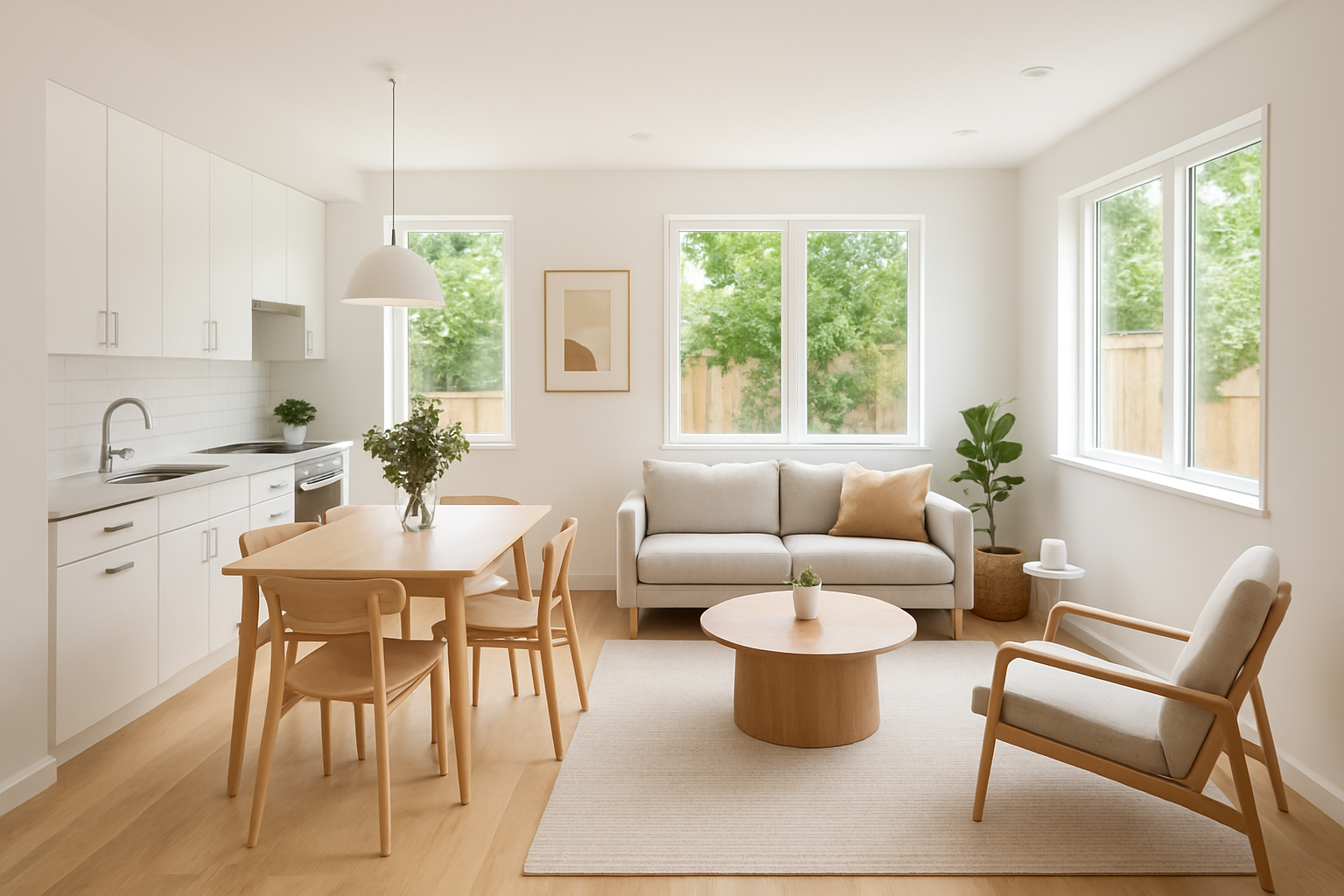
A well-designed ADU interior maximizes livability and rental appeal for Long Beach homeowners.
Neighborhoods Long Beach ADU Builders Commonly Serve
Because lot sizes and zoning overlays vary block by block, established ADU builders in Long Beach typically serve the entire city rather than a single pocket. Common project areas include Belmont Shore, Bixby Knolls, California Heights, Los Altos, Naples, and Wrigley, along with denser central neighborhoods where garage conversions are especially popular due to smaller lot footprints. In contrast, larger-lot neighborhoods near the eastern city limits tend to favor detached units, since they have more usable rear-yard space to work with.
Why theadupro.com Is a Top Choice Among Long Beach ADU Builders
theadupro.com is a top-rated ADU construction and contracting firm serving homeowners across Orange County, Los Angeles County, and Riverside County — including Long Beach. Their team manages every phase of ADU development, from initial design and permitting through full construction and final inspection, so homeowners get one accountable point of contact from start to finish.
Specifically, they specialize in detached guest houses, garage conversions, attached additions, and junior ADUs. Their deep understanding of California’s evolving ADU regulations translates into fewer permit delays and more predictable project timelines for Long Beach homeowners.
In addition, their transparent communication model keeps homeowners informed at every milestone, from the day plans are submitted to the day the final inspection is signed off. For homeowners ready to explore their options, the team at theadupro.com offers consultations tailored to the specific characteristics of your Long Beach property.
Frequently Asked Questions About Long Beach ADU Builders
Conclusion: Choosing the Right Long Beach ADU Builders
Working with experienced Long Beach ADU builders is the single most important decision you will make in your ADU project. The right contractor brings local permit knowledge, transparent pricing, and end-to-end project management that transforms a complex construction process into a manageable, rewarding experience. As a result, homeowners who invest in qualified professionals consistently achieve better outcomes — faster timelines, fewer cost overruns, and higher-quality finished units.
Whether you are considering a detached guest house, a garage conversion, or a junior ADU, Long Beach’s regulatory environment and strong rental market make now an excellent time to build. Above all, partnering with a contractor who knows this city’s specific requirements — from setback rules to utility connection procedures — gives your project the best possible foundation for success.
To get started, visit theadupro.com to connect with a top-rated ADU specialist serving Long Beach and the greater Southern California region. Request internal links from related site pages (costs, permits, builder profiles) to this Long Beach ADU builders page to improve discovery and crawlability.