
If you want to design and build an ADU — an accessory dwelling unit — on your Southern California property, you are making one of the smartest real estate decisions available to a homeowner today. An ADU is a secondary residential unit built on the same lot as a primary single-family or multifamily home, and it can serve as a rental income source, a multigenerational living space, or a private guest house. Furthermore, California’s evolving ADU-friendly legislation has made it easier than ever to add this type of structure to your property. This guide walks you through everything you need to know, from design concepts to the final inspection.
Quick Answer: Designing and building an ADU involves assessing your property, hiring a licensed designer, obtaining permits, and working with a qualified contractor through construction and inspection. In Southern California, the full process typically takes 6 to 18 months and costs between $150,000 and $400,000 depending on ADU type and size.
What Is an ADU and Why Should You Build One?
An accessory dwelling unit (ADU) is a self-contained living space — complete with a kitchen, bathroom, and sleeping area — located on the same parcel as a primary residence. These units go by many names: granny flats, in-law suites, backyard cottages, or secondary suites. Regardless of the label, they all serve the same core purpose: expanding livable space on an existing lot.
The financial case for building an ADU is compelling. According to the California Department of Housing and Community Development, ADUs are a critical tool for addressing the state’s housing shortage. In high-demand markets like Orange County and Los Angeles, a well-built ADU can generate $1,500 to $3,000 or more in monthly rental income. Moreover, research consistently shows that ADUs can add $100,000 to $200,000 or more to a home’s appraised value.
Beyond financial returns, ADUs are increasingly popular for multigenerational households. Specifically, many Southern California families use them to house aging parents, adult children, or other relatives while maintaining privacy for everyone involved.
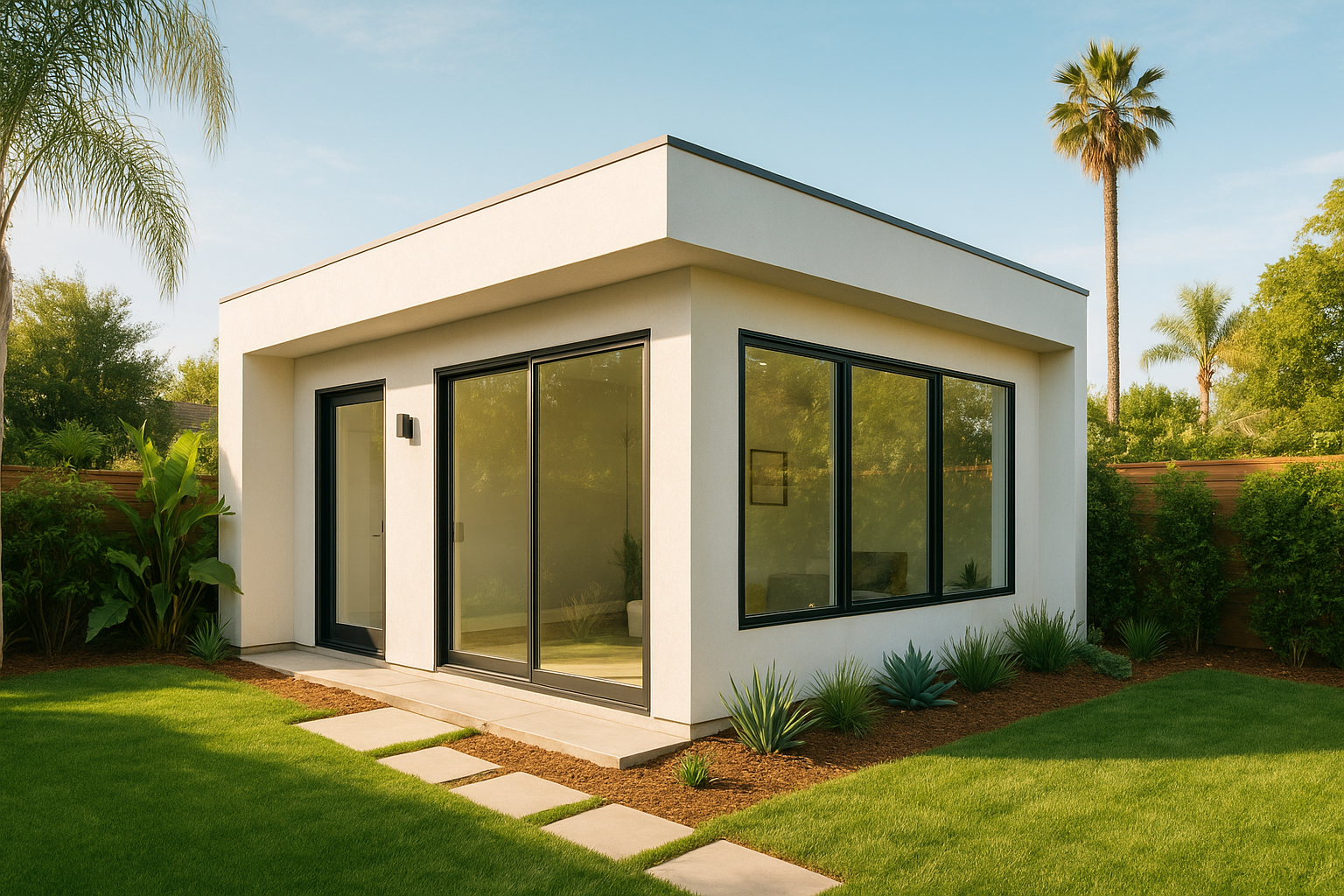
A well-designed detached ADU can transform unused backyard space into a fully functional living unit.
Types of ADUs You Can Design and Build
Before you start the planning process, it helps to understand the different ADU types available. Each comes with distinct advantages depending on your property layout, budget, and goals.
- Detached ADU: A fully separate structure in the backyard or side yard. This offers the most privacy and typically commands the highest rental rates.
- Attached ADU: An addition connected to the primary home, sharing at least one wall. It is generally less expensive than a detached build.
- Garage Conversion ADU: An existing attached or detached garage converted into a living space. This is often the most cost-effective option since the foundation and structure already exist.
- Interior Conversion ADU: A portion of the main home — such as a basement or large bedroom suite — converted into a separate unit with its own entrance.
- Junior ADU (JADU): A compact unit of up to 500 square feet created within the existing walls of a single-family home, requiring its own entrance and at minimum an efficiency kitchen.
For example, homeowners in Costa Mesa and Westminster often favor garage conversions due to their cost efficiency. In contrast, properties in Placentia or Bel Air with larger lots frequently accommodate impressive detached units. You can explore location-specific design options for ADU design in Costa Mesa and ADU design in Placentia to see what works best in your area.
How to Design and Build an ADU: Step-by-Step Process
The process to design and build an ADU follows a logical sequence. Each phase builds on the previous one, so skipping steps can cause costly delays. Here is a clear breakdown of the full process.
- Assess Your Property and Set Goals. Start by evaluating your lot size, existing structures, zoning designation, and utility connections. Determine which ADU type fits your space and whether your primary goal is rental income, family housing, or resale value. A feasibility review at this stage saves significant time and money later.
- Hire an ADU Designer or Architect. Engage a licensed professional experienced in ADU projects to produce compliant floor plans, elevation drawings, and a site plan. Good design maximizes square footage while meeting California’s building codes and local setback requirements. Check out these ADU design ideas for maximizing space and style for inspiration.
- Submit Permit Applications. File your complete permit package with your local building department. Under California state law, agencies must approve or deny ADU applications within 60 days of receiving a complete submittal — a significant improvement over older timelines.
- Break Ground and Begin Construction. Once permits are approved, your licensed contractor mobilizes the crew, orders materials, and begins foundation or framing work. Consistent communication with your contractor at this stage is essential for staying on schedule and budget.
- Pass Inspections and Receive Certificate of Occupancy. Schedule required inspections at key milestones — framing, electrical, plumbing, insulation, and final. After passing all inspections, you receive your Certificate of Occupancy, which legally authorizes occupancy or rental of the unit.
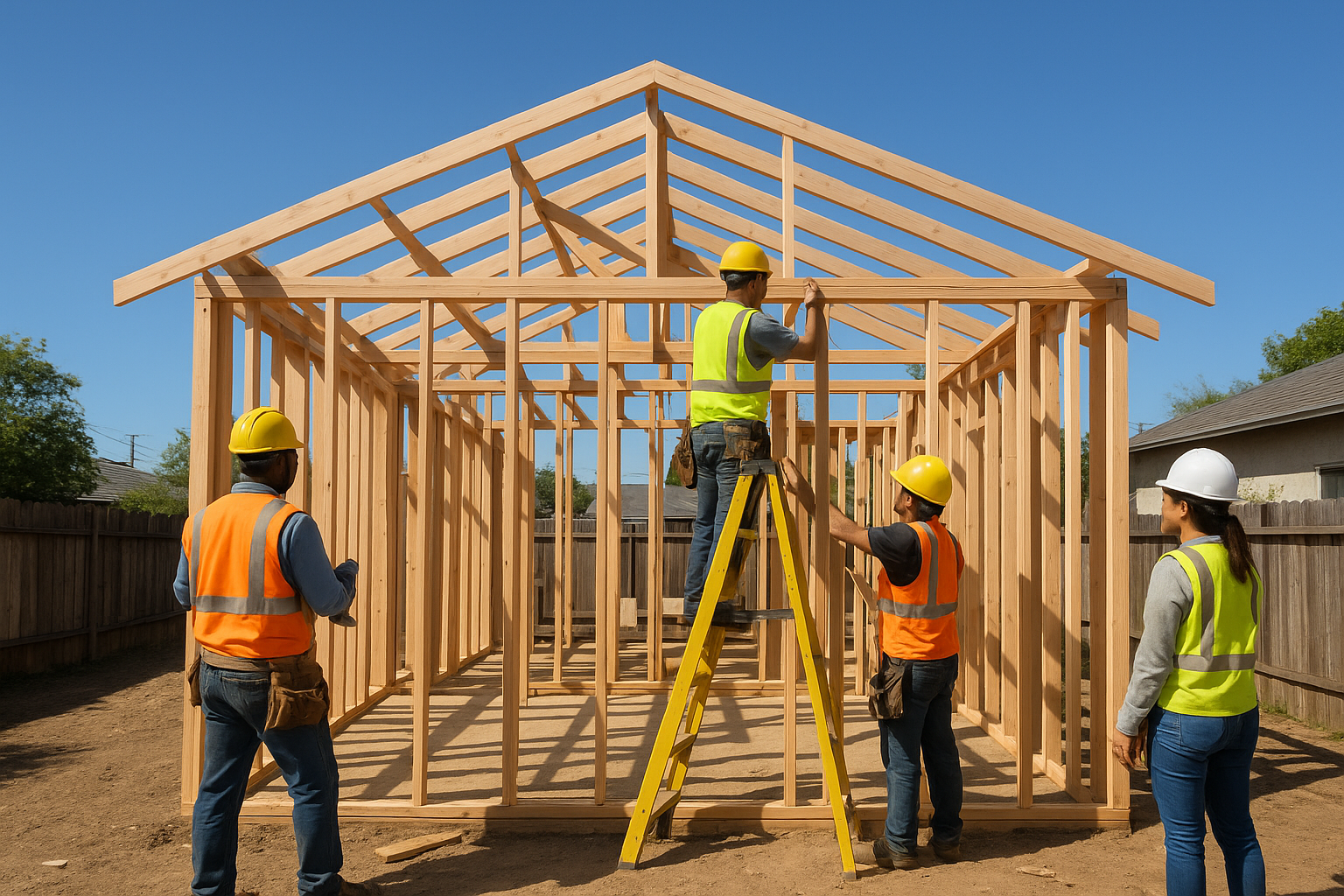
Professional ADU construction begins with careful framing, setting the structural foundation for the entire project.
Understanding ADU Costs in Southern California
Cost is often the first question homeowners ask. In Southern California, the total investment to design and build an ADU generally falls within the following ranges:
| ADU Type | Typical Cost Range | Timeline |
|---|---|---|
| Garage Conversion | $80,000 – $150,000 | 4 – 9 months |
| Attached ADU | $150,000 – $250,000 | 8 – 14 months |
| Detached ADU | $200,000 – $400,000+ | 10 – 18 months |
| Junior ADU (JADU) | $40,000 – $80,000 | 3 – 7 months |
These figures include design, permitting, materials, and labor. However, utility connection fees, soil reports, and site-specific conditions can add to the total. Therefore, always request a detailed, itemized estimate from your contractor before committing to a budget.
Financing Options for Your ADU Project
Fortunately, several financing pathways exist for Southern California homeowners. The most common options include cash-out refinancing, home equity loans, HELOCs (home equity lines of credit), and construction loans. In addition, the CalHFA ADU Grant Program has offered eligible homeowners grants of up to $40,000 to offset pre-development and non-recurring closing costs. Check current program availability, as funding cycles vary.
California ADU Regulations You Need to Know
California has passed sweeping ADU legislation over the past several years, making it significantly easier for homeowners to add these units. Key rules include:
- Setback Requirements: State law requires a minimum 4-foot rear and side setback for most ADUs. Front setbacks follow local zoning rules.
- Height Limits: Detached ADUs are generally permitted up to 16 feet in height, with some allowances up to 18 or 25 feet near transit corridors.
- Size Limits: Detached ADUs can be up to 1,200 square feet. JADUs are capped at 500 square feet.
- Permit Timeline: Local agencies must act on complete ADU applications within 60 days.
- No Parking Replacement Required: When a garage is converted to an ADU, replacement parking is not required in most circumstances.
Local jurisdictions in Orange County, Los Angeles County, and Riverside County may layer additional rules on top of state minimums. Consequently, working with a contractor who deeply understands local regulations — like the team at theadupro.com — is a significant advantage. If you are in the Bel Air or Westminster areas, you can also explore tailored guidance through ADU plans for Bel Air and ADU design in Westminster.
Design Principles That Maximize ADU Value
Smart design decisions during the planning phase directly influence both construction costs and long-term rental appeal. Specifically, these principles tend to deliver the best outcomes:
- Open Floor Plans: Smaller spaces feel larger with open layouts that combine the kitchen, dining, and living areas.
- High Ceilings: Even a modest increase in ceiling height dramatically improves the perceived spaciousness of a compact unit.
- Abundant Natural Light: Large windows and skylights reduce the need for artificial lighting and make the space more attractive to renters.
- Efficient Storage: Built-in cabinetry, under-stair storage, and murphy beds maximize every square foot.
- Private Entrance: A clearly separate entrance from the main home increases both privacy and rental marketability.
Additionally, matching the exterior materials and architectural style of the main home creates a cohesive property aesthetic that appeals to buyers if you ever decide to sell.
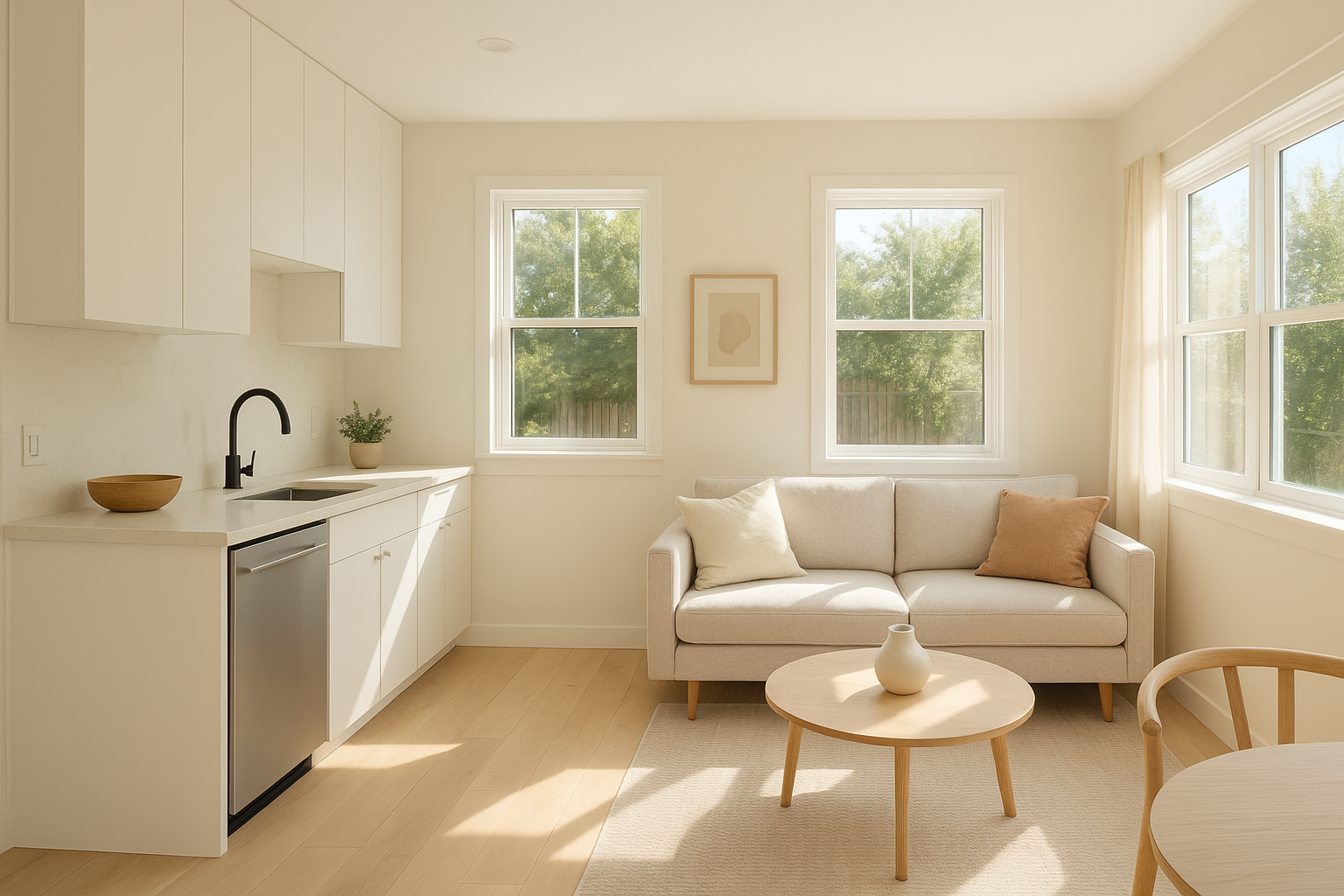
An open floor plan and abundant natural light are hallmarks of a well-designed ADU interior.
Choosing the Right Contractor to Design and Build Your ADU
Selecting the right contractor is arguably the single most important decision in the entire process. A qualified ADU contractor brings design expertise, permit knowledge, and construction management skills under one roof — reducing the risk of miscommunication, delays, and budget overruns.
When evaluating contractors, look for the following qualities:
- Valid California contractor’s license (CSLB verified)
- Demonstrated ADU project portfolio with before-and-after photos
- Familiarity with local permitting processes in your specific city or county
- Transparent, itemized project estimates with no hidden fees
- Strong client reviews and references from completed ADU projects
The ADU Pro serves homeowners throughout Orange County, Los Angeles County, and Riverside County, offering end-to-end ADU development from initial design through final inspection. Their team handles permitting, construction management, and regulatory compliance so that homeowners can focus on planning for their new space rather than navigating bureaucratic hurdles.
Frequently Asked Questions About Design and Build ADU
Conclusion
The decision to design and build an ADU is one that rewards careful planning, the right professional team, and a clear understanding of California’s regulatory landscape. Whether your goal is rental income, multigenerational living, or increasing your home’s long-term value, an ADU is a proven strategy for Southern California homeowners. By following the step-by-step process outlined in this guide — from feasibility assessment through final inspection — you can navigate the project with confidence and avoid the most common pitfalls. To explore your options and get expert guidance tailored to your property, visit The ADU Pro, Southern California’s trusted leader in ADU design and construction across Orange County, Los Angeles County, and Riverside County.