
Investing in ADU Rental has become one of the most effective wealth-building strategies for Southern California homeowners who already own land. An accessory dwelling unit — commonly called an ADU — is a self-contained secondary home built on a single-family lot. It can generate steady monthly rent while adding real, appraisable value to your property. For homeowners across Los Angeles County, Orange County, and Riverside County, turning unused space into a profitable ADU rental has never more achievable thanks to homeowner-friendly state laws and strong housing demand.
According to a 2023 report from the Zillow Research Center, median rents in Los Angeles County remain among the highest in the nation. As a result, an ADU rental unit in this market can command rent that rivals — and sometimes exceeds — comparable freestanding rental homes, all while sitting on land you already control.
Quick answer: An ADU rental is a legally permitted second home on your property — detached, attached, converted garage, or junior unit — that you lease out for monthly cash flow. Most Southern California owners see $1,500–$3,500 in monthly rent and a 5%–10% annual cash-on-cash return.
What Is an ADU Rental, Exactly?
An ADU rental refers to constructing an accessory dwelling unit — a secondary, fully self-contained residence — on your existing lot and leasing it to a tenant for ongoing income. Unlike buying a separate investment property, this strategy leverages land you already own, which dramatically lowers the barrier to entry compared with traditional real estate investing.
Furthermore, California’s state ADU laws have made it easier than ever to build and rent these units. Since 2020, legislation has trimmed permitting barriers, reduced impact fees, and expanded where ADUs can legally be built. Consequently, thousands of California homeowners have already stepped into ADU rental investment, and the pace continues to accelerate heading into 2025.
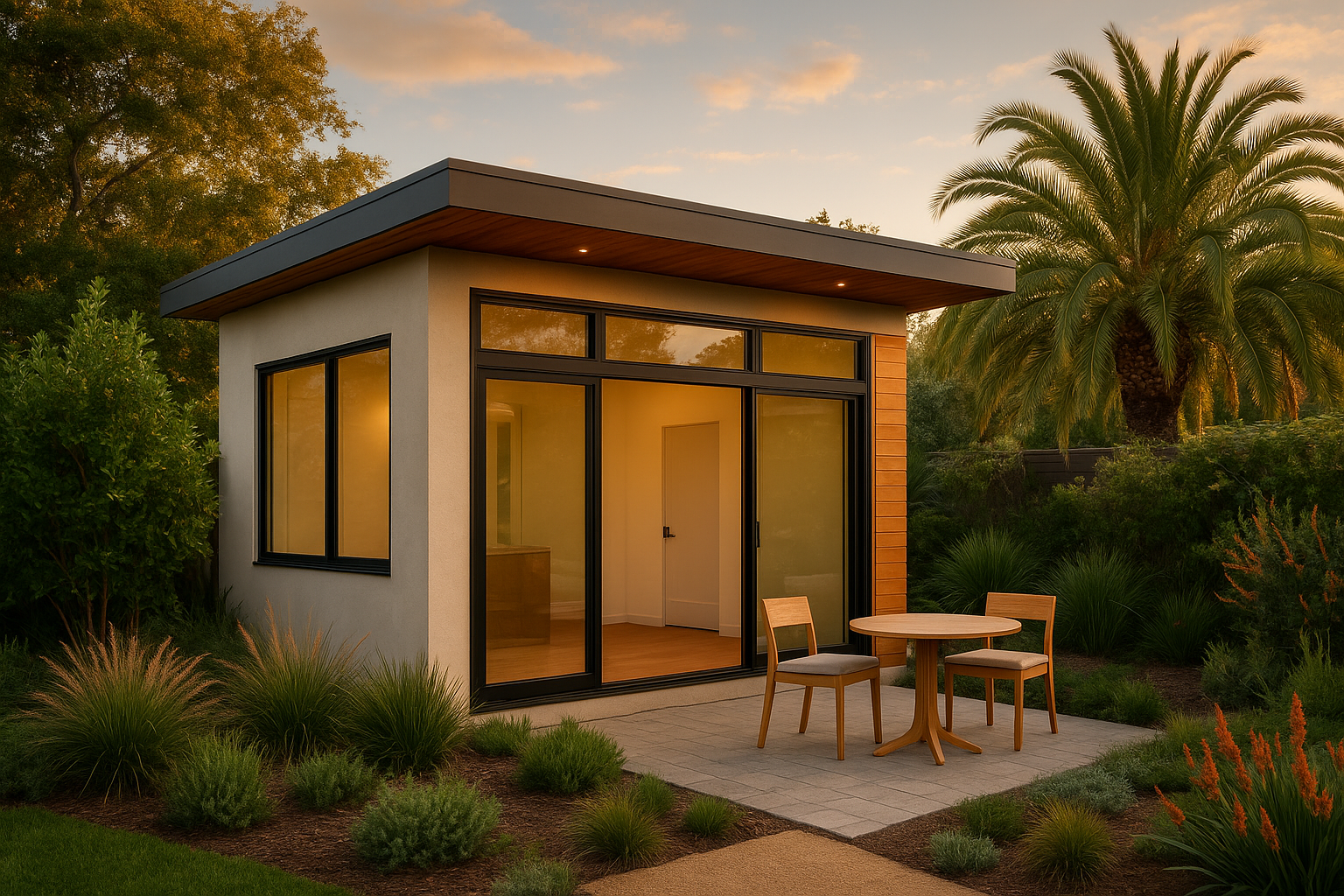
A well-designed detached ADU can command premium rental rates in Southern California’s competitive housing market.
Why Southern California Is Prime Territory for ADU Rental Income
Southern California’s housing shortage is well documented. The region consistently faces a deficit of rental units, which keeps vacancy rates low and rents high. For homeowners, this translates directly into strong, reliable income from an ADU rental — demand rarely dries up, even during broader economic slowdowns.
In addition, property values across the greater Los Angeles metro area and the Inland Empire have historically appreciated over time. Adding an ADU therefore delivers a dual benefit: monthly cash flow from rent plus long-term appreciation in overall property value. To understand the full financial upside, explore our guide on maximizing your property’s potential with ADUs.
Specifically, detached ADU rentals in desirable zip codes across Orange County and Los Angeles can rent for $1,800 to $3,500 per month, depending on size and amenities. Even a modest garage conversion can realistically generate $1,500 or more monthly, making it one of the fastest-payback ADU rental options available.
ADU Types Compared: Which Delivers the Best Rental Return?
Not all ADUs are created equal when it comes to rental income. Therefore, choosing the right type for your property and budget is a critical first step.
- Detached ADUs: Freestanding structures separate from the main home. These command the highest rents ($2,200–$3,500/mo in prime areas) due to full tenant privacy.
- Garage Conversions: Converting an existing garage into a living unit. Lower construction cost relative to rental income ($1,500–$2,400/mo) makes these a high-ROI option.
- Attached ADUs: Units added directly to the existing home. They share a wall with the main residence but still offer separate entrances and typically rent for $1,600–$2,600/mo.
- Junior ADUs (JADUs): Smaller units (up to 500 sq ft) created within the existing home’s footprint. Ideal for lower-budget entry into ADU rental investment, usually renting for $1,100–$1,800/mo.
Each type carries different construction costs, timelines, and rental income potential. Consequently, your choice should align with both your financial goals and your property’s unique characteristics.
How to Start Renting Out Your ADU: A Complete Step-by-Step Process
Getting started requires careful planning, but the process is straightforward when you work with experienced professionals. Here is a practical roadmap for turning an idea into a fully leased ADU rental.
- Assess your property’s ADU rental potential. Review your lot size, zoning designation, and existing structures. Consult with a local ADU contractor to identify which unit types are feasible before committing to any design direction.
- Choose your ADU type and design for rental appeal. Select the unit type that best matches your budget and rental income targets. Work with a designer to maximize livable square footage and tenant appeal within your available space.
- Secure financing and submit permits. Explore options such as HELOCs, construction loans, or cash-out refinancing. California’s CalHFA ADU Grant Program also offers assistance to eligible homeowners. Submit your permit application and plan for the local review period.
- Complete construction and inspections. Work with your licensed contractor to build according to approved plans and California building codes. Schedule all required inspections at each phase to stay compliant and avoid costly rework.
- Market your ADU rental and screen tenants carefully. Set a competitive rent based on comparable local listings. Conduct thorough background and credit checks, verify income, and review references before signing a lease.
- Finalize the lease agreement and activate utilities. Draft a legally compliant rental agreement, decide how utilities will be billed, and walk the tenant through move-in before handing over the keys.
For additional strategies on attracting and retaining quality tenants, visit our guide on tips for renting ADUs and boosting your income. For a deeper walkthrough of the build itself, see The Expert Guide to Home Extension Contractors 2026.
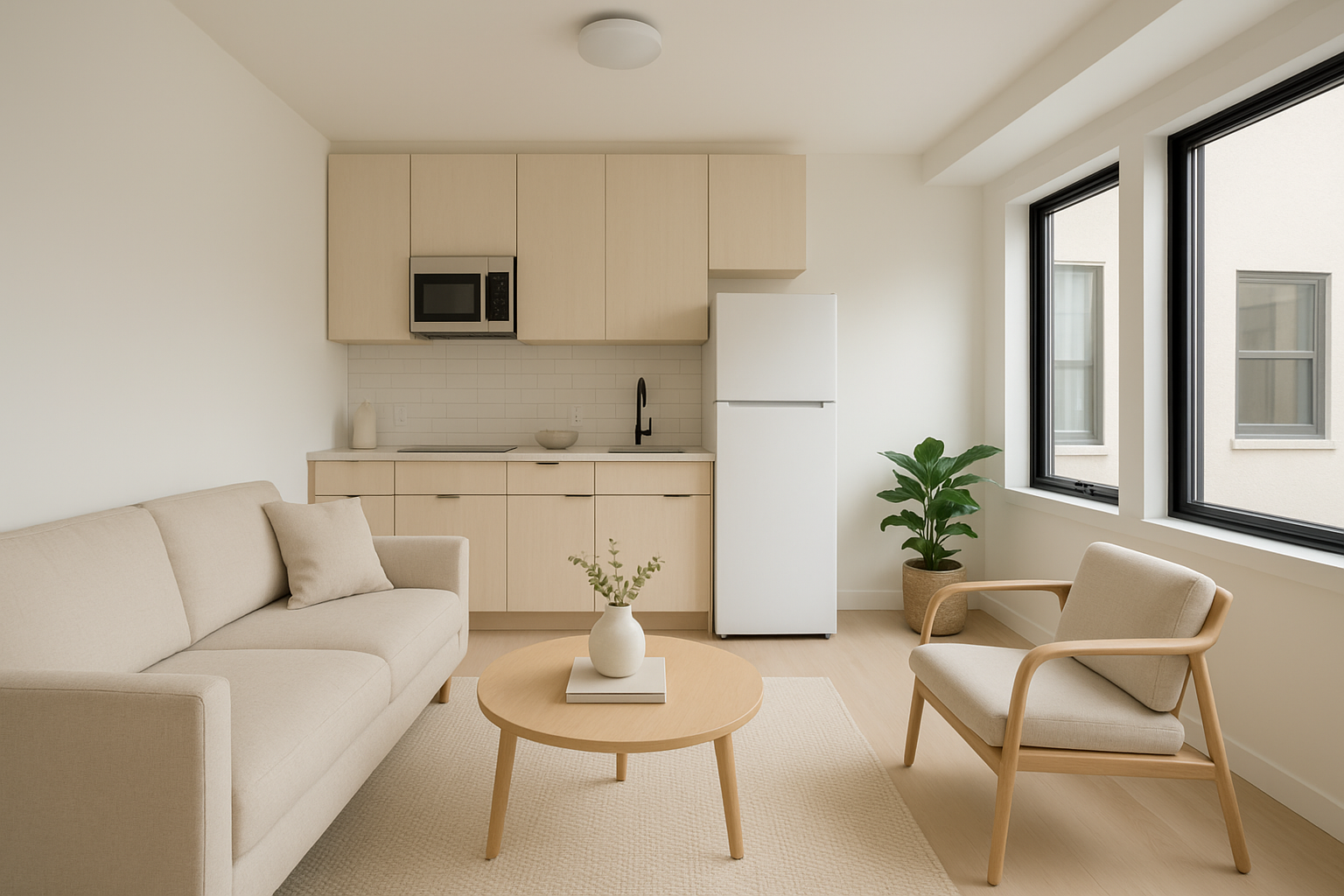
A thoughtfully designed ADU interior attracts quality long-term tenants and justifies premium rental pricing.
Calculating Your ADU Rental ROI: Real Numbers for 2025
Understanding the numbers is essential before breaking ground. In general, ADU rental investors in Southern California can expect an annual cash-on-cash return of 5% to 10% from rental income alone, with additional appreciation benefits layered on top.
For example, consider a garage conversion costing $180,000 that rents for $2,000 per month. That produces $24,000 in annual gross rental income — a 13.3% gross yield before expenses. After accounting for property taxes, maintenance, and occasional vacancies, net returns remain highly competitive compared with other investment vehicles.
Moreover, an Urban Institute study on ADUs found that properties with ADUs appreciated faster than comparable properties without them. This means your ADU rental investment builds equity on two fronts simultaneously. Still unsure whether the math works for your lot? Our breakdown on whether investing in an ADU for rental income is worth it walks through the decision in detail.
Key Factors That Affect ADU Rental ROI
Several variables directly influence how quickly your ADU rental pays off. For a deeper walkthrough of the build process itself, see our How to Build an ADU: Step-by-Step Guide. Specifically, these factors include:
- Location: Proximity to employment centers, transit, and amenities drives rental demand and pricing power.
- ADU size and quality: Larger, better-finished units command higher rents and attract more stable tenants.
- Construction cost management: Keeping build costs controlled without sacrificing quality is critical to maintaining strong returns.
- Vacancy rate: In high-demand Southern California markets, vacancy periods are typically short, but pricing competitively helps minimize them further.
To explore how investors approach ADU projects more broadly, read our in-depth piece on ADUs from an investor’s perspective.
Writing an Airtight ADU Rental Agreement
A written lease is not optional — it is the single document that protects both you and your tenant. In particular, every ADU rental agreement should spell out the monthly rent amount, due date, security deposit terms, and grace period for late payment.
Beyond the basics, your lease should also address occupancy limits, pet policies, maintenance responsibilities, parking rights, and rules around who pays for which utilities. Similarly, it should clarify entry notice requirements, since California law generally requires 24 hours’ written notice before a landlord enters an occupied unit.
If you are unfamiliar with California landlord-tenant law, the California Courts self-help center publishes plain-language guides covering leases, deposits, and eviction procedures. Consulting a real estate attorney or property manager before finalizing your first ADU rental agreement is also a smart, low-cost safeguard.
Insurance, Utilities, and Liability for Your ADU Rental
Most standard homeowners’ policies do not automatically cover a rented ADU. Therefore, notify your insurer once the unit is tenant-occupied so your policy can be updated to a landlord or rental-dwelling endorsement, which typically covers liability, lost rental income, and property damage.
According to the Insurance Information Institute, landlords who fail to update coverage before renting risk a denied claim after a loss. In addition, requiring tenants to carry renters’ insurance is a simple, low-cost way to reduce your own liability exposure.
Utility setup is the other detail investors often overlook. Specifically, you can either sub-meter the ADU so tenants pay their own gas, water, and electricity, or fold utility costs into a flat monthly rent. Sub-metering is generally more accurate over time, but it does add upfront installation cost — a tradeoff worth discussing with your contractor during design.
Marketing Your ADU Rental: Where to List for Fast, Qualified Tenants
Even the best-built ADU rental sits empty without effective marketing. Above all, high-quality photos, an accurate floor plan, and a clear, honest description of amenities dramatically shorten vacancy time.
List your ADU rental on multiple platforms simultaneously — general rental marketplaces, local community boards, and, where permitted, targeted social media groups. Meanwhile, respond to inquiries quickly, since the fastest-responding landlords consistently fill vacancies first in competitive Southern California submarkets.
Finally, price the unit using genuinely comparable listings — similar square footage, similar finish level, and the same neighborhood — rather than guessing. Overpricing by even $100 to $150 a month can add weeks of unnecessary vacancy to your ADU rental.
Long-Term vs. Short-Term ADU Rental: Which Strategy Wins?
Long-term ADU rental leases (12 months or more) offer predictable income, lower turnover costs, and far less day-to-day management. In contrast, short-term rentals can theoretically produce higher nightly rates, but they come with heavier operational demands and much greater regulatory risk.
Specifically, many Southern California cities restrict or outright prohibit short-term ADU rentals through Airbnb or VRBO-style platforms, especially for units that were permitted under state ADU streamlining laws. Consequently, for the vast majority of homeowners, a long-term ADU rental lease is the safer, more sustainable, and more profitable choice over a multi-year horizon.
Navigating California ADU Rental Regulations
California has enacted some of the most homeowner-friendly ADU legislation in the country. However, local ordinances still vary significantly between cities and counties. Understanding the regulatory landscape is therefore essential before you commit your ADU rental to the market.
Key regulatory considerations for ADU rental investors include owner-occupancy requirements (which California largely eliminated at the state level as of 2020), setback rules, height limits, and utility connection requirements. In addition, short-term rental restrictions in many Southern California cities mean most ADU rentals work best as long-term leases.
Notably, California’s statewide rent control law, the Tenant Protection Act (commonly cited as AB 1482), can apply to some ADU rentals depending on the property’s age and configuration. The California Department of Real Estate’s landlord-tenant resource center outlines which properties are covered and which are exempt, so review it before finalizing your rent increase policy.
Working with a contractor who has deep local regulatory knowledge — like the team at theadupro.com — ensures your ADU rental project stays compliant from day one and avoids costly permitting delays. Their expertise spans Orange County, Los Angeles County, and Riverside County, giving investors a significant advantage in navigating each jurisdiction’s unique requirements.
ADU Investor Resources and Community
Connecting with other ADU investors can accelerate your learning curve considerably. Browse our ADU investment resource library and explore insights from experienced ADU investors who have already navigated the process in Southern California.
Furthermore, staying informed about evolving California ADU policy through the California Department of Housing and Community Development helps you anticipate regulatory changes that could affect your ADU rental strategy.
Local ADU Rental Expertise Across Southern California
Because permitting rules and rental demand shift block by block, working with a team that knows your specific city pays off. For example, our specialists provide dedicated ADU contractor services in Hollywood and ADU design services in Burbank, tailoring layouts to what actually rents fastest in those submarkets.
Similarly, homeowners in Orange County can rely on our ADU construction services in Orange, while owners near northern Orange County benefit from our ADU design services in Placentia. Above all, local expertise translates into fewer permitting surprises and a faster path from blueprint to rent check.
Frequently Asked Questions About ADU Rental Investment
What does an ADU rental actually mean?
An ADU rental means building an accessory dwelling unit on your existing property and renting it out to generate consistent passive income. It is one of the most capital-efficient real estate strategies available to California homeowners, requiring no separate land purchase.
How much does it cost to build an ADU rental in Southern California?
ADU rental construction costs typically range from $150,000 to $350,000 depending on size, type, and finishes. Garage conversions tend to be less expensive, while custom detached units cost more due to foundation, utility, and structural work.
What is the average ROI for an ADU rental?
Many Southern California homeowners see an annual ROI of 5% to 10% through rental income alone. Property value appreciation can further increase total returns significantly over a 5- to 10-year horizon.
How long does it take to build an ADU rental unit?
The timeline from design to final inspection typically ranges from 6 to 12 months in Southern California. Permitting timelines vary by city and county, which can meaningfully affect the overall project schedule.
Do I need a permit to rent out an ADU?
Yes, all ADUs require permits from your local building department before they can legally be occupied or rented. California state law has streamlined the permitting process, but approval timelines still vary by jurisdiction and project complexity.
What types of ADU rentals generate the most income?
Detached ADUs generally command the highest rents because they offer tenants full privacy and independence. However, garage conversions often deliver strong ROI due to their lower relative construction cost compared with the rental income they produce.
Can I rent my ADU on Airbnb or short-term rental platforms?
Short-term rental regulations vary by city in California, and many municipalities restrict or prohibit short-term ADU rentals. Always check your local ordinances before listing an ADU rental on platforms like Airbnb or VRBO.
Does adding an ADU rental increase my property taxes?
Yes, adding an ADU will increase your property’s assessed value, resulting in a modest property tax increase. However, the rental income from the ADU typically far outweighs the additional tax burden within the first year of occupancy.
What financing options are available for ADU rental construction?
Common financing options include home equity loans, HELOCs, cash-out refinancing, and ADU-specific construction loans. California’s CalHFA ADU Grant Program also provides assistance to eligible homeowners to help offset upfront costs.
How do I find reliable tenants for my ADU rental?
Listing on major rental platforms, conducting thorough background and credit checks, and setting a competitive market-rate rent are the most effective strategies. Working with a local property manager can also simplify tenant screening and ongoing management.
What are the biggest mistakes investors make with ADU rentals?
Common mistakes include underestimating construction costs, skipping professional design, ignoring local zoning rules, and setting rent without researching the local market. Working with an experienced ADU contractor significantly reduces these risks.
Is an ADU rental a good investment compared to buying a rental property?
For homeowners who already own land, an ADU rental is often a more affordable entry point into real estate investing than purchasing a separate rental property. It avoids a large down payment requirement and leverages an asset you already own, making it an efficient path to passive income.
What should an ADU rental agreement include?
A solid ADU rental agreement should cover rent amount and due date, security deposit terms, maintenance responsibilities, utility arrangements, occupancy limits, and entry notice requirements. Reviewing a template with an attorney or property manager helps avoid costly gaps.
Do I need separate utility meters for my ADU rental?
Separate meters are not legally required in most jurisdictions, but they let tenants pay their own utilities and often reduce disputes. Alternatively, many landlords simply build utility costs into a flat monthly rent for simplicity.
Should I hire a property manager for my ADU rental?
Hiring a property manager makes sense if you own multiple units, live far from the property, or prefer a hands-off experience, typically for 8% to 10% of monthly rent. For a single, nearby ADU rental, many owners manage tenants directly to maximize net income.
Is ADU rental income subject to California rent control laws?
Some ADU rentals fall under California’s statewide Tenant Protection Act (AB 1482), which caps annual rent increases and restricts no-cause evictions, while certain newer or single-family-adjacent units may be exempt. Consequently, it is worth confirming your unit’s status before setting a rent-increase policy.
Conclusion: Is ADU Rental Right for You in 2025?
An ADU rental offers Southern California homeowners a compelling combination of immediate cash flow, long-term property appreciation, and relatively low entry barriers compared with traditional real estate investment. Whether you are building a detached guest house, converting a garage, or adding a junior ADU, the fundamentals are strong across every ADU type in this region’s high-demand rental market.
However, success depends on thoughtful planning, accurate budgeting, a solid lease, proper insurance, and working with a contractor who understands both construction quality and California’s evolving regulatory environment. The team at theadupro.com specializes in end-to-end ADU development across Orange County, Los Angeles County, and Riverside County — guiding homeowners from initial design through final inspection with transparent communication and proven expertise.
In summary, if you own residential property in Southern California and want to generate passive income, increase your home’s value, or create space for multigenerational living, an ADU rental deserves serious consideration. The opportunity is real, the demand is strong, and the right team can make the entire process — from permits to your first signed lease — straightforward and rewarding.