
The conversion of existing structures to ADU is one of the most cost-effective strategies available to California homeowners who want to add livable space, generate rental income, or house extended family. Rather than building from scratch, this approach transforms what you already own — a garage, a basement, a bonus room — into a fully permitted accessory dwelling unit (ADU). In Southern California, where land is scarce and housing demand is intense, this option has become increasingly popular across Orange County, Los Angeles County, and Riverside County.
According to the California Department of Housing and Community Development, ADU permits statewide surged by over 1,000% between 2016 and 2022, driven largely by legislative reforms that streamlined the approval process. Consequently, more homeowners than ever are exploring how to unlock the hidden value sitting in their existing footprint.
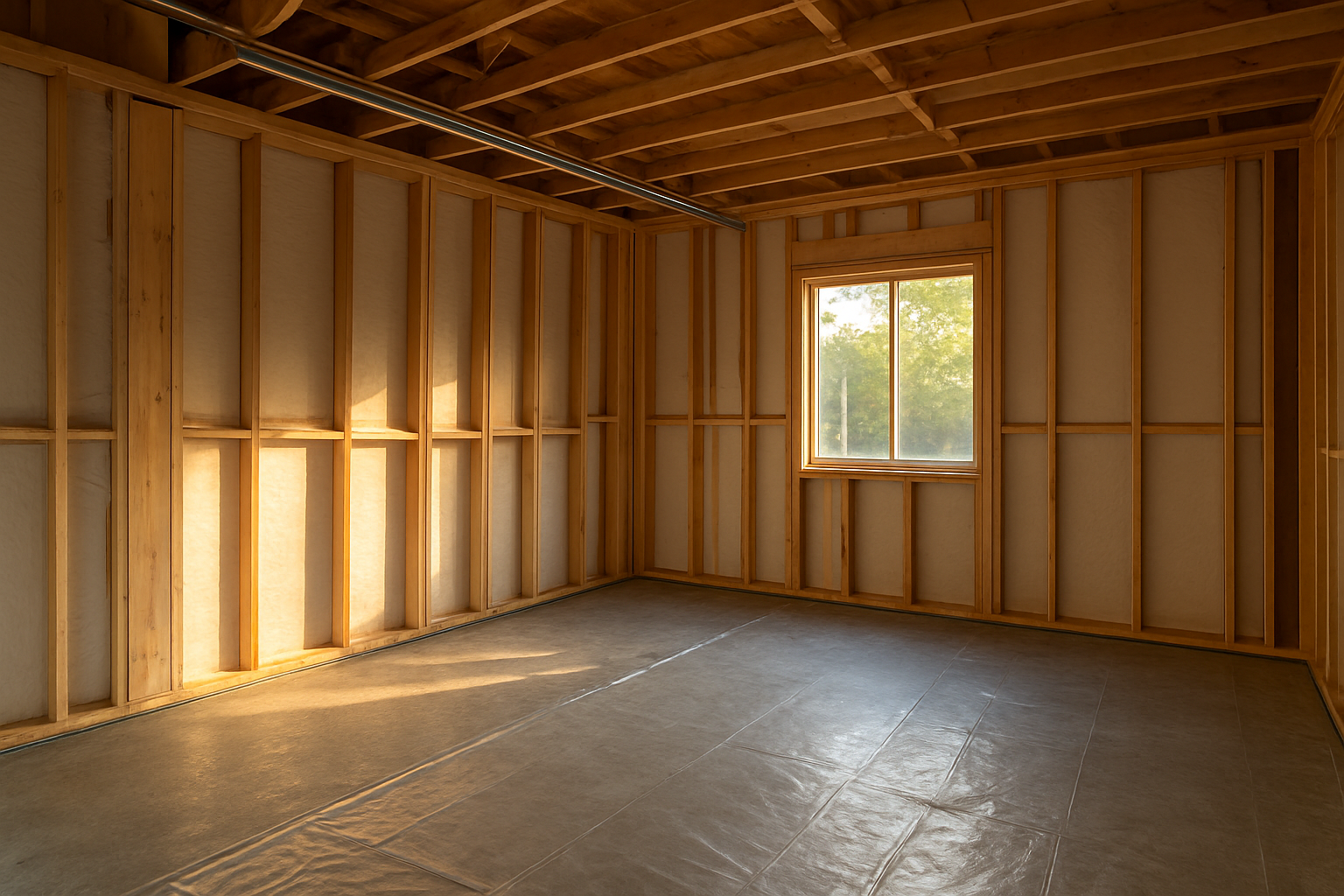
A garage conversion in progress — one of the most common approaches to the conversion of existing structures to ADU in Southern California.
What Is the Conversion of Existing Structures to ADU?
The conversion of existing structures to ADU is the process of repurposing an already-built space on your property into a self-contained residential unit. This unit must include its own kitchen, bathroom, and sleeping area to qualify as a legal ADU under California law. Unlike a new detached build, a conversion uses an existing foundation and shell, which typically reduces both cost and construction time.
California’s ADU statutes — particularly AB 2221 and SB 897, which took effect in 2023 — explicitly support structure conversions. Furthermore, local jurisdictions are required by state law to approve ministerial permits for qualifying conversions, meaning fewer discretionary hurdles for homeowners.
Which Structures Can Be Converted?
Several types of existing structures qualify for ADU conversion in California. Each comes with its own set of opportunities and challenges:
- Attached and detached garages — the most common conversion type
- Carports — often require enclosure and structural upgrades
- Storage buildings and workshops — feasible when structurally sound
- Basements — require ceiling height and egress compliance
- Bonus rooms or finished attics — ideal for Junior ADU (JADU) creation
- Attached room additions — can be reconfigured as a JADU within the main home
In particular, garage conversions remain the most popular choice throughout Southern California. For a deeper look at that specific path, the complete guide to garage ADU conversion covers eligibility, costs, and what to expect step by step.
Step-by-Step Process for Converting a Structure to an ADU
Understanding the process from start to finish helps homeowners plan realistically and avoid costly surprises. Here is the standard workflow for a structure conversion in California:
- Assess feasibility and zoning. Confirm your property’s zoning designation allows an ADU and that the existing structure meets minimum setback and size requirements. A professional feasibility review saves significant time later.
- Hire an ADU designer or architect. Work with a licensed professional to produce plans that comply with the California Building Code and your local municipality’s specific standards for habitable space conversion.
- Submit permit applications. File your building permit application with the local planning and building department. Include site plans, floor plans, and any structural calculations required. Under California law, jurisdictions must act on a complete application within 60 days.
- Complete construction and inspections. Carry out all conversion work — framing, insulation, electrical, plumbing, and finishes. Schedule required inspections at each phase. Never skip interim inspections, as doing so can trigger costly rework.
- Obtain your certificate of occupancy. After passing the final inspection, your local building department issues a certificate of occupancy. This document legally authorizes the unit to be lived in or rented out.
Therefore, working with an experienced contractor who knows local permitting workflows is critical. The team at theadupro.com manages every phase of this process for homeowners across Orange, Los Angeles, and Riverside Counties.
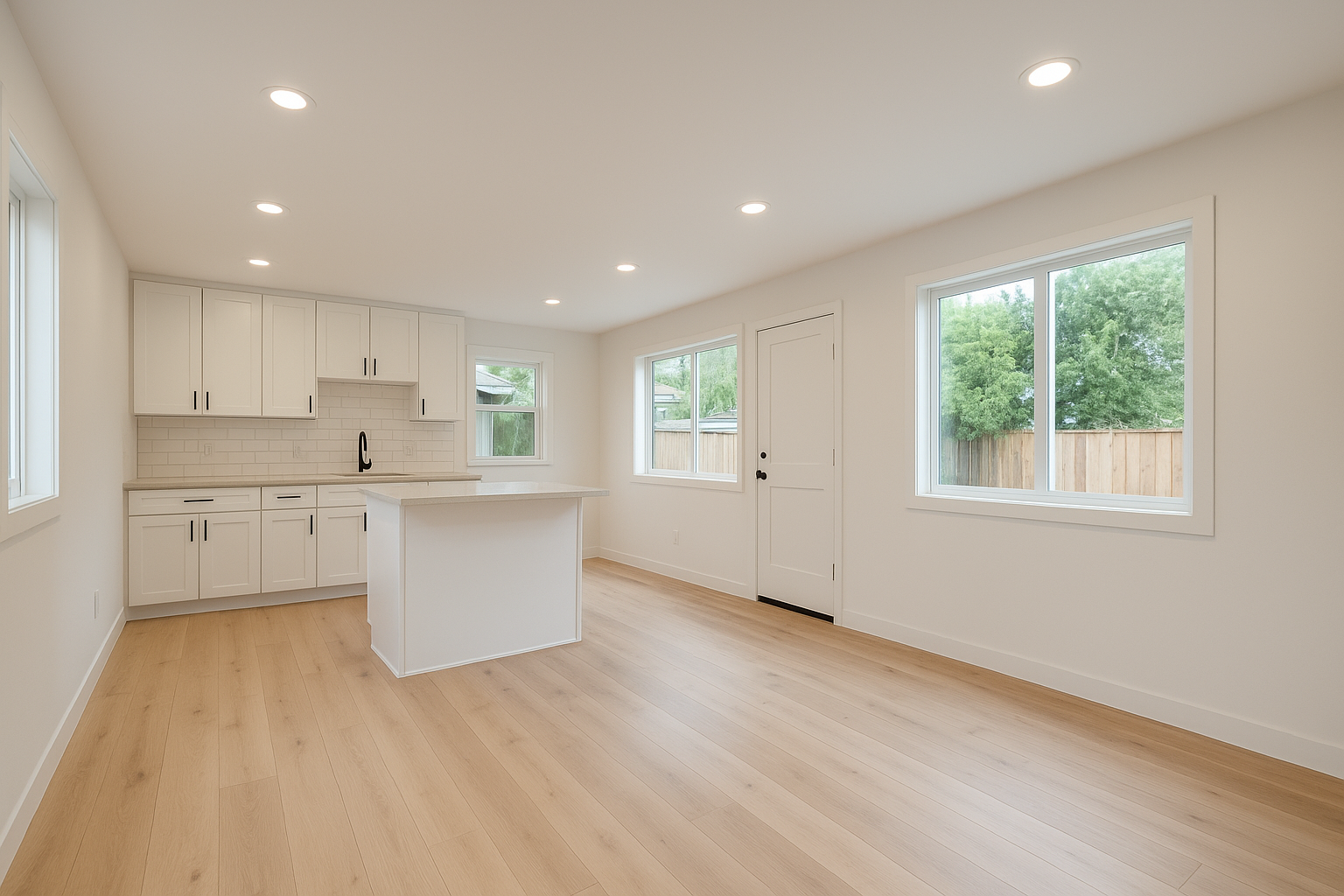
A finished ADU conversion showcasing how a standard garage becomes a fully functional living space.
Costs of Converting Existing Structures to an ADU
Cost is often the first question homeowners ask. Fortunately, conversion projects are generally less expensive than ground-up construction because the foundation and exterior shell already exist. However, costs still vary widely based on the structure type, condition, and desired finishes.
Here are typical cost ranges for common conversion types in Southern California:
| Structure Type | Typical Cost Range | Key Variables |
|---|---|---|
| Attached/Detached Garage | $80,000 – $150,000 | Panel upgrade, plumbing rough-in |
| Basement | $100,000 – $175,000 | Egress windows, waterproofing |
| Bonus Room / Attic (JADU) | $40,000 – $80,000 | Ceiling height, HVAC extension |
| Storage Building / Workshop | $70,000 – $130,000 | Structural reinforcement, utilities |
For two-car garage projects specifically, the costs and planning considerations differ from single-car conversions. The 2-car garage ADU conversion planning guide breaks down those differences in detail.
Hidden Costs to Budget For
Beyond construction, several additional costs catch homeowners off guard. Specifically, utility connections — including separate water meters, sewer laterals, and electrical panel upgrades — can add $10,000 to $30,000 to a project. In addition, permit fees in cities like Los Angeles or Irvine can range from $3,000 to $15,000 depending on project scope.
Financing options are also worth exploring early. For homeowners in Long Beach and surrounding areas, ADU loan options in Long Beach can help bridge the funding gap between savings and total project cost.
California Regulations That Support Structure Conversions
California has enacted some of the most homeowner-friendly ADU laws in the country. As a result, the conversion of existing structures to ADU has become significantly more accessible since 2020. Key provisions include:
- No replacement parking required — when a garage is converted, you are not required to replace the lost parking space in most cases.
- Reduced setback requirements — converted structures may qualify for 4-foot rear and side setbacks rather than the standard requirements.
- Impact fee exemptions — ADUs under 750 square feet are exempt from most local impact fees, reducing upfront costs considerably.
- Streamlined permit review — local agencies must approve or deny complete ADU applications within 60 days, per HCD guidelines.
Furthermore, the state’s 2023 amendments under AB 2221 clarified that local agencies cannot impose design standards that would physically preclude an ADU conversion on a qualifying property. This is a significant protection for homeowners navigating restrictive local codes.
Design Considerations for a Successful ADU Conversion
A well-designed conversion maximizes both livability and return on investment. Above all, the layout must make efficient use of the available square footage. Even a 400-square-foot garage can feel spacious with the right design choices.
Key design priorities include natural light (adding windows or skylights), ceiling height (a minimum of 7 feet is required for habitable space), and smart storage integration. For inspiration, explore these 7 smart ADU design ideas that transform living space or browse a broader collection of ADU design ideas focused on maximizing space and style.
In addition, energy efficiency matters both for comfort and for meeting California’s Title 24 energy code requirements. Proper insulation, dual-pane windows, and energy-efficient HVAC systems are not optional — they are code requirements that also reduce long-term operating costs for tenants or family members living in the unit.
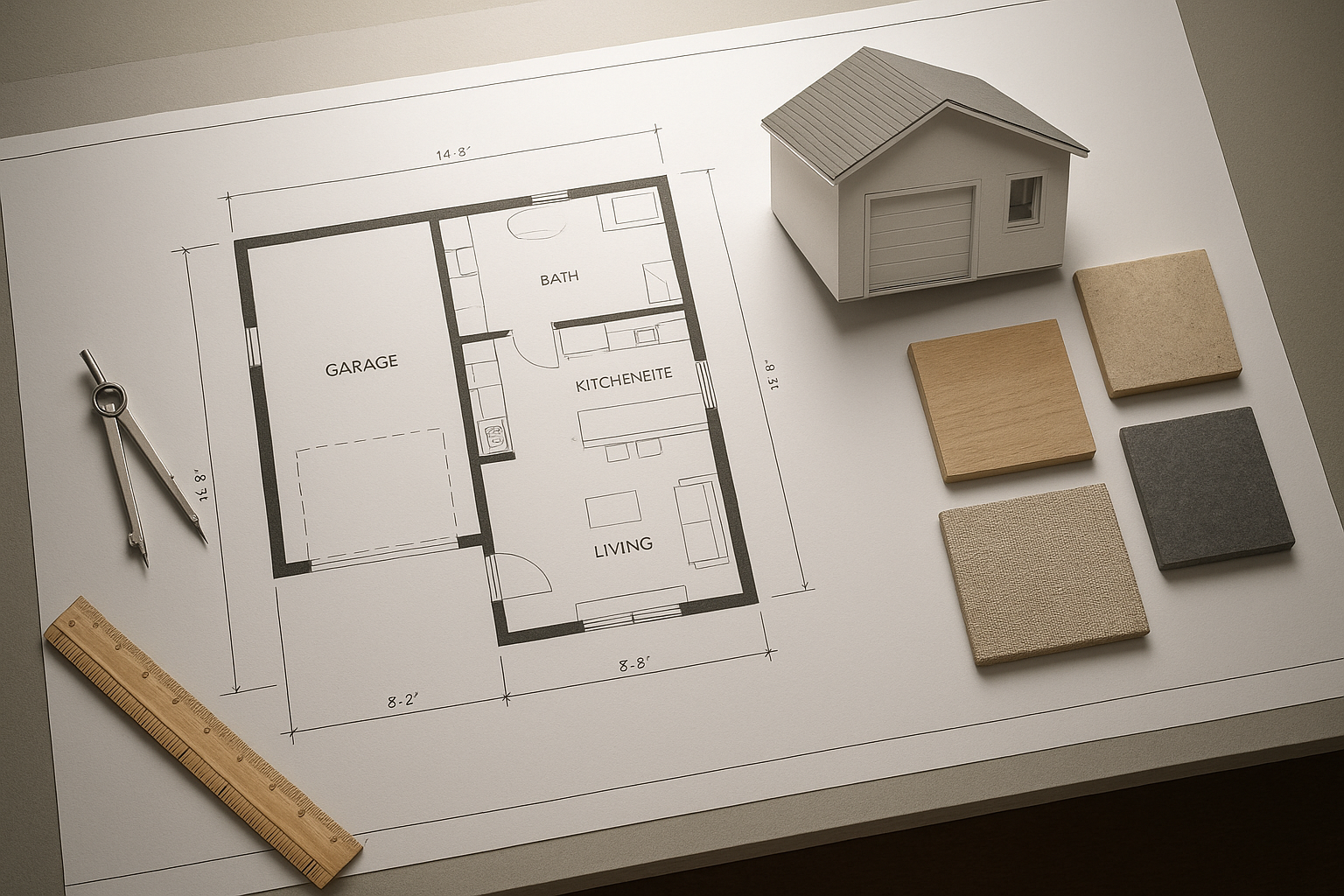
Careful planning and design are essential steps before beginning any conversion of existing structures to ADU.
Why Homeowners in Southern California Choose Structure Conversions
There are several compelling reasons to pursue an ADU conversion rather than a new build. First, the cost savings are substantial — converting an existing structure typically costs 20% to 40% less than constructing a detached ADU from the ground up. Second, the construction timeline is shorter, often by several months, because foundational and exterior work is already complete.
Third, rental income potential is significant. In Orange County and Los Angeles County, a converted ADU can command between $1,800 and $3,200 per month in rent, depending on size and location. Over time, this income can fully offset the cost of the conversion project.
Finally, multigenerational living is a growing priority for many Southern California families. A converted garage or bonus room provides a private, comfortable space for aging parents or adult children — without the separation of a distant property. According to the Pew Research Center, nearly 60 million Americans lived in multigenerational households as of 2021, a trend that continues to accelerate.
Frequently Asked Questions About Conversion of Existing Structures to ADU
What is the conversion of existing structures to ADU?
The conversion of existing structures to ADU involves transforming an already-built space — such as a garage, basement, or bonus room — into a self-contained accessory dwelling unit with its own kitchen, bathroom, and living area. California law specifically encourages this approach as a cost-effective way to add housing without new construction.
Which structures can be converted into an ADU in California?
In California, garages, carports, storage buildings, basements, attics, bonus rooms, and attached additions can all be converted into ADUs. The structure must meet minimum size requirements and be capable of supporting habitable conditions after renovation.
How much does it cost to convert a garage into an ADU?
Garage-to-ADU conversions in Southern California typically range from $80,000 to $150,000, depending on size, finishes, and the extent of structural work required. Costs vary based on local permit fees, utility connections, and whether the space needs significant insulation or foundation upgrades.
Do I need a permit to convert an existing structure to an ADU?
Yes, a building permit is required for any ADU conversion in California. Local jurisdictions must approve plans, and the finished unit must pass inspections for electrical, plumbing, and structural compliance.
How long does an ADU conversion take from start to finish?
Most ADU conversions in California take between 4 and 9 months from design to final inspection. Permitting alone can take 4 to 12 weeks depending on the local jurisdiction, while construction typically adds another 2 to 5 months.
Can I convert a detached garage into an ADU?
Yes, detached garages are among the most popular structures for ADU conversion in California. They offer natural separation from the main home, making them ideal for rental units or multigenerational living arrangements.
What are the minimum size requirements for a converted ADU in California?
California state law requires a converted ADU to be at least 150 square feet for a studio or efficiency unit. However, local jurisdictions may have different minimum and maximum size standards, so always verify with your city or county.
Will converting a structure to an ADU increase my property taxes?
In California, adding an ADU through conversion triggers a partial reassessment only on the newly converted portion, not the entire property. This means your existing home’s assessed value typically stays the same, limiting the tax impact.
Can I rent out my converted ADU?
Yes, once a converted ADU has received its certificate of occupancy, you can legally rent it out. In Southern California, ADU rentals can generate between $1,500 and $3,000 per month depending on location and size.
What is a Junior ADU (JADU) and how does it differ from a standard ADU conversion?
A Junior ADU (JADU) is a smaller unit of up to 500 square feet created within the walls of an existing primary residence. Unlike a standard ADU conversion, a JADU must share a wall with the main home and the owner is typically required to occupy either the JADU or the primary unit.
What are the most common mistakes homeowners make during an ADU conversion?
Common mistakes include underestimating permit timelines, failing to upgrade electrical panels, not accounting for utility connection costs, and skipping a professional feasibility assessment. Working with an experienced ADU contractor from the start helps avoid these costly errors.
Does California require owner-occupancy for ADU conversions?
As of January 1, 2020, California removed the owner-occupancy requirement for most ADUs until 2025. However, Junior ADUs still carry owner-occupancy requirements in many jurisdictions, so check current local rules before proceeding.
Conclusion: Is Converting an Existing Structure the Right Move?
The conversion of existing structures to ADU represents one of the smartest investments a Southern California homeowner can make. It leverages what you already own, cuts construction costs significantly, and delivers a permitted living space that adds lasting value to your property. Whether your goal is rental income, multigenerational housing, or simply maximizing your lot’s potential, a structure conversion offers a practical, well-supported path forward.
California’s regulatory environment has never been more favorable for this type of project. As a result, now is an ideal time to assess your property and explore what’s possible. The experienced team at theadupro.com specializes in guiding Orange County, Los Angeles County, and Riverside County homeowners through every phase — from feasibility and design to permitting and final inspection. Reach out today to discover how your existing structure can become your next great asset.